

8620 carbon steel premium low alloy case hardening steel with high core strength excellent machinability and global supply options.
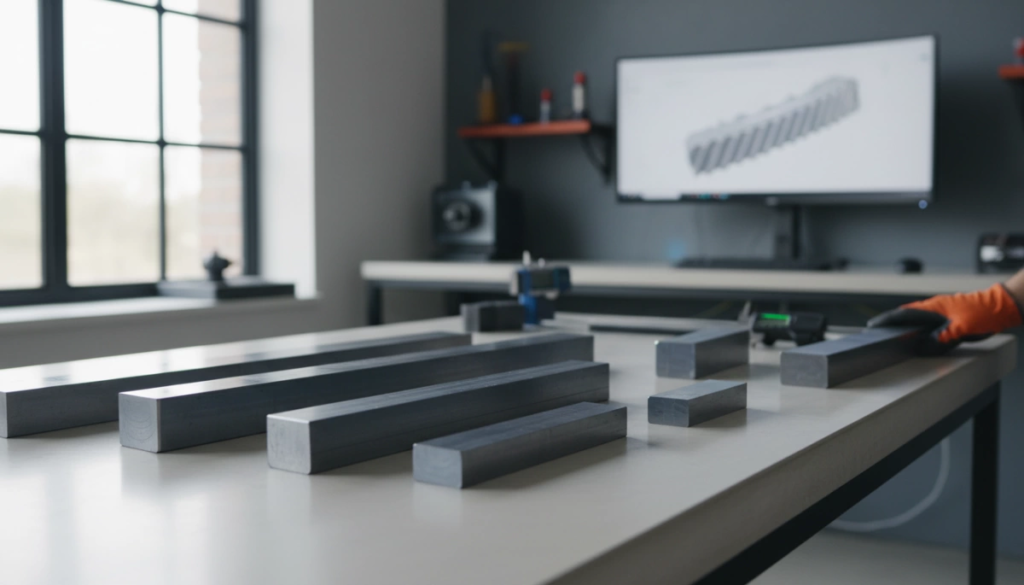
What is 8620 Carbon Steel?
When we design components for high-stress environments, balancing a tough core with a highly wear-resistant surface is a constant challenge. This is exactly where 8620 carbon steel delivers.
Metallurgically, AISI 8620 alloy steel is classified as a low-carbon, nickel-chromium-molybdenum alloy. While machine shops and engineers frequently refer to it simply as “8620 carbon steel,” the addition of nickel, chromium, and molybdenum elevates its mechanical properties far beyond standard plain carbon grades.
The primary advantage of this low carbon alloy steel is its exceptional response to heat treatment. With a base carbon content of roughly 0.20%, it is widely recognized as a premium case hardening steel 8620 grade. Through the carburizing process, the exterior surface absorbs additional carbon to achieve extreme hardness and wear resistance. Meanwhile, the internal core remains highly ductile and tough, allowing the material to absorb heavy shock loads without fracturing.
Key Material Highlights:
- Metallurgical Classification: Nickel-Chromium-Molybdenum alloy steel.
- Surface Performance: Optimized for deep case-hardening and maximum wear resistance.
- Core Integrity: Retains excellent ductility, toughness, and impact resistance post-treatment.
Chemical Composition of AISI 8620
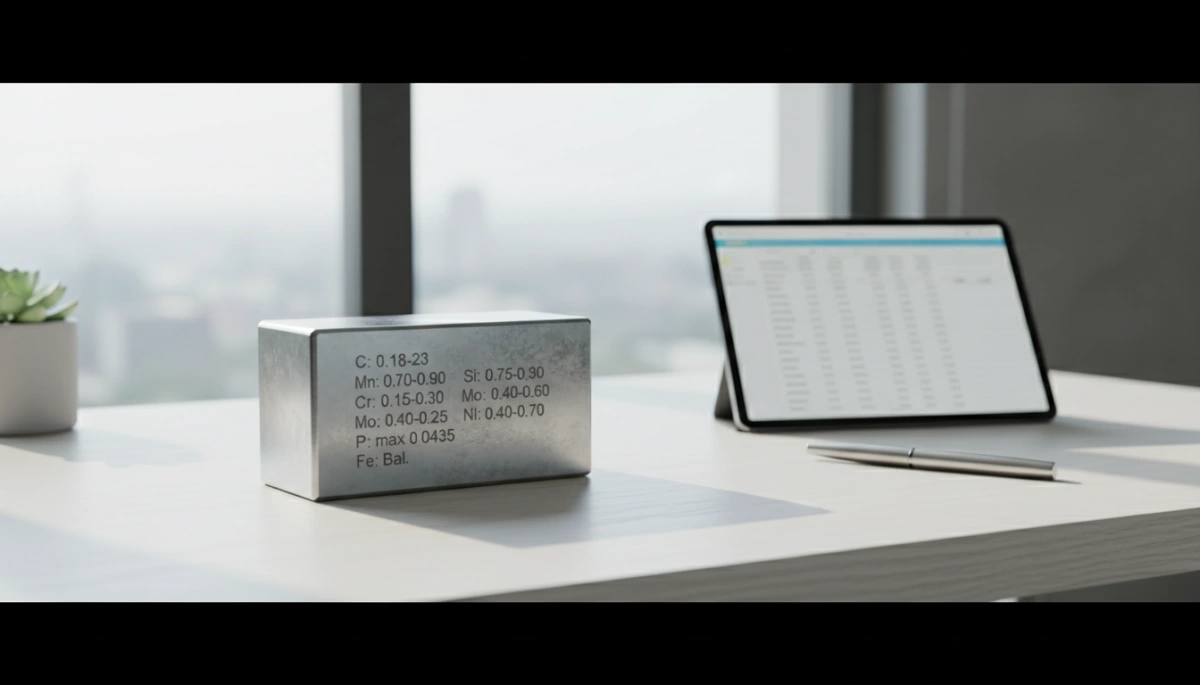
The performance of 8620 carbon steel relies entirely on its specific blend of alloying elements. As a low carbon alloy steel, it combines nickel, chromium, and molybdenum to strike the perfect balance between a tough, ductile core and a hard, wear-resistant outer case after heat treatment.
We rigorously test our materials to ensure the chemistry of our AISI 8620 alloy steel strictly adheres to industry standards. This precise chemical balance is exactly why this UNS G86200 grade is the go-to choice for carburized parts across the US manufacturing sector.
Here is the exact chemical composition breakdown for standard 8620 steel:
| Element | Symbol | Percentage (%) |
|---|---|---|
| Carbon | C | 0.18 – 0.23 |
| Manganese | Mn | 0.70 – 0.90 |
| Phosphorus | P | 0.035 max |
| Sulfur | S | 0.040 max |
| Silicon | Si | 0.15 – 0.35 |
| Nickel | Ni | 0.40 – 0.70 |
| Chromium | Cr | 0.40 – 0.60 |
| Molybdenum | Mo | 0.15 – 0.25 |
The controlled carbon content (around 0.20%) keeps the core ductile, while the addition of the “Ni-Cr-Mo” trio significantly boosts its hardenability and overall strength.
Mechanical & Physical Properties of 8620 Carbon Steel
When you are spec’ing out materials for tough industrial jobs, understanding the 8620 material properties is crucial. This low carbon alloy steel delivers an excellent balance of toughness, strength, and wear resistance once it goes through the proper heat treatment.
While some projects might require the unique benefits found in stainless steel casting, 8620 carbon steel remains the undisputed champion for heavy-duty, case-hardened machined parts.
Mechanical Properties
Here is a quick look at the typical mechanical properties for AISI 8620 (based on standard annealed/normalized conditions):
| Property | Value (Typical) |
|---|---|
| Tensile Strength | 530 – 660 MPa (76,000 – 95,000 psi) |
| Yield Strength | 360 – 380 MPa (52,000 – 55,000 psi) |
| Elongation at Break | 25% |
| Reduction of Area | 55% |
| Impact Strength (Izod) | ~115 J |
Physical Properties
For thermal and structural calculations, keep these baseline physical metrics in mind:
- Density: 7.85 g/cm³ (0.284 lb/in³)
- Melting Point: 1425 – 1540°C (2600 – 2800°F)
- Thermal Conductivity: 42.6 W/mK
- Modulus of Elasticity: 205 GPa (29,700 ksi)
8620 Steel Hardness Rockwell
The true value of 8620 carbon steel lies in its hardness profile.
- As-Supplied Hardness: Usually delivered in an annealed or hot-rolled state, hovering around 149 to 200 HB (Brinell). At this stage, it is incredibly easy to machine.
- Case-Hardened Hardness: After carburizing and quenching, the surface 8620 steel hardness Rockwell jumps to an impressive 58 to 63 HRC.
This dual-nature hardness gives you a part with a tough, ductile core that can absorb heavy impact, wrapped in a rugged outer shell that resists extreme wear and friction.
Machinability, Welding, and Heat Treatment of 8620 Steel
When working with 8620 carbon steel, understanding its processing characteristics is critical for achieving optimal shop floor efficiency and final part performance. We regularly handle this versatile material and have optimized the fabrication parameters for our US customers.
8620 Steel Machinability
The 8620 steel machinability rating sits at approximately 66% when compared to standard AISI 1112 steel. In the annealed or as-rolled condition, it machines exceptionally well.
- Tooling Recommendations: Standard high-speed steel (HSS) or carbide tooling works perfectly.
- Cutting Speeds: For turning, speeds of 90 to 120 SFM (Surface Feet per Minute) are highly effective when using conventional cutting fluids to extend tool life and clear chips.
Welding Guidelines
AISI 8620 offers excellent weldability using all standard conventional methods, including MIG, TIG, and stick welding. However, due to its alloy content, specific thermal controls are required to prevent weld cracking.
- Pre-heating: We strongly advise pre-heating the material to between 200°F and 300°F prior to welding, especially for thicker cross-sections.
- Post-heating: A post-weld stress relief at 1100°F to 1200°F ensures the structural integrity of the weld zone.
8620 Heat Treatment Process
The defining feature of 8620 is its response to case hardening. The 8620 heat treatment process requires specific temperature controls to develop a tough core and an extremely hard, wear-resistant outer layer.
- Carburizing: Heat the steel to 1650°F – 1700°F (900°C – 925°C) in a carbon-rich environment. Hold until the desired case depth is achieved.
- Core Refining: Allow the part to cool slowly from the carburizing temperature. Reheat to 1575°F – 1625°F (860°C – 885°C), followed by an oil quench to refine the core structure.
- Case Hardening: Reheat to 1425°F – 1475°F (775°C – 800°C) and quench in oil to maximize surface hardness.
- Tempering: Immediately temper at 300°F – 400°F (150°C – 200°C). This crucial final step relieves internal quenching stresses while maintaining the high Rockwell hardness of the case.
Equivalent International Grades for 8620 Carbon Steel

When sourcing materials for global manufacturing projects, matching domestic specifications with international standards is essential. While we commonly refer to it as 8620 carbon steel or AISI 8620 alloy steel in the United States, this exact same formulation is recognized under different designations worldwide.
Whether you are cross-referencing material test reports or evaluating factors affecting alloy properties for an overseas production run, knowing the exact equivalents ensures your components meet strict engineering requirements.
Below is a quick cross-reference table mapping the US standard to its global counterparts:
| Standard System | Grade Designation |
|---|---|
| USA (AISI/SAE/ASTM) | 8620 |
| USA (UNS) | UNS G86200 |
| Germany (DIN/EN) | 1.6523 / 20NiCrMo2-2 |
| Japan (JIS) | SNCM220 |
| UK (BS) | 805M20 |
Using materials like 20NiCrMo2-2 steel or SNCM220 steel provides the exact same case-hardening capabilities, core toughness, and machinability as domestic 8620. We regularly supply and certify these equivalent international grades to keep your supply chain moving without technical compromise.
Common Industrial Applications
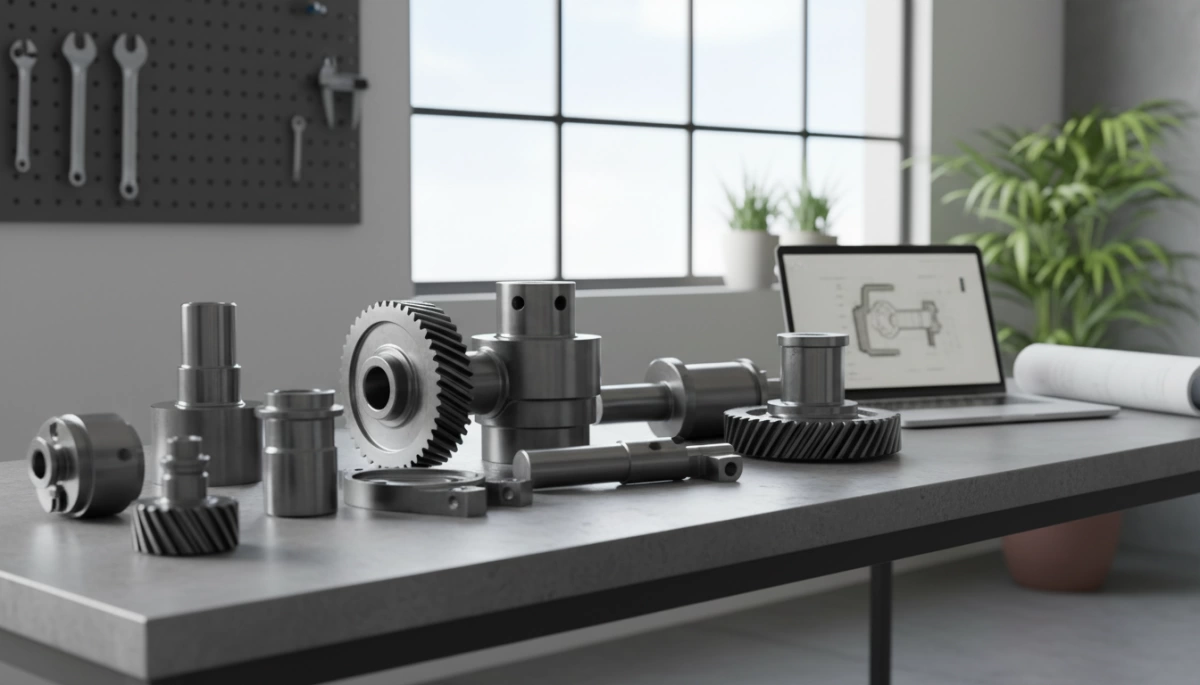
When we supply 8620 carbon steel to manufacturing facilities across the United States, we know it is destined for demanding, high-wear environments. Because it performs exceptionally well as a case hardening steel 8620, it delivers the perfect combination of a tough, ductile inner core and a highly wear-resistant outer surface.
Here are the most common parts and industries where AISI 8620 alloy steel is the go-to material:
- Gears and Pinions: The tough core prevents tooth breakage, while the hard case withstands constant friction in power transmission systems.
- Automotive Transmission Parts: Critical components like camshafts and crankshafts rely heavily on this grade for long-term reliability on the road.
- Heavy Machinery Components: Earthmoving, agricultural, and construction equipment use this material for pins, shafts, and bushings that take a daily beating.
- High-Strength Fasteners: Ideal for heavy-duty structural applications requiring exceptional holding power without snapping under pressure.
Thanks to the material’s forgiving nature in its raw state, shops frequently utilize precision CNC machining to efficiently mill and turn these components into their exact dimensions before the final heat treatment process locks in that signature surface hardness.
Available Forms, Sizes, and Custom Services
At Precisionvast, we stock a massive inventory of 8620 carbon steel to keep your production lines moving smoothly. As a trusted 8620 steel plate supplier in the United States, we know that getting the right material in the exact dimensions you need is critical for reducing machining time and minimizing scrap.
Stock Forms and Size Ranges
We carry AISI 8620 alloy steel in multiple configurations to suit diverse manufacturing requirements. Our standard inventory includes:
- 8620 steel round bar: Stocked in diameters ranging from 0.5 inches all the way up to 24 inches to accommodate both small fasteners and massive gear shafts.
- Flat bars and steel plates: Available in a wide variety of thickness parameters, typically ranging from 0.25 inches to over 12 inches thick.
- Blocks: Pre-squared blocks ready for heavy machinery components.
- Custom Forgings: For specialized applications, you can directly buy 8620 steel forgings tailored to your exact blueprints and structural demands.
Value-Added Processing
We do more than just ship raw metal. Our in-house processing capabilities ensure your material arrives prepped and ready for the shop floor. Our custom services include:
- Precision Cutting: Production band saw cutting to meet your exact length tolerances.
- Milling and Turning: Rough machining services to strip away mill scale and get you closer to your final net shape.
- Metallurgical Testing: Comprehensive material testing to verify the chemical and physical properties of your batch. We apply these same strict quality control standards across all our materials, whether you are ordering 8620 or exploring our 4130 carbon steel inventory.
Why Partner with Precisionvast for 8620 Carbon Steel?
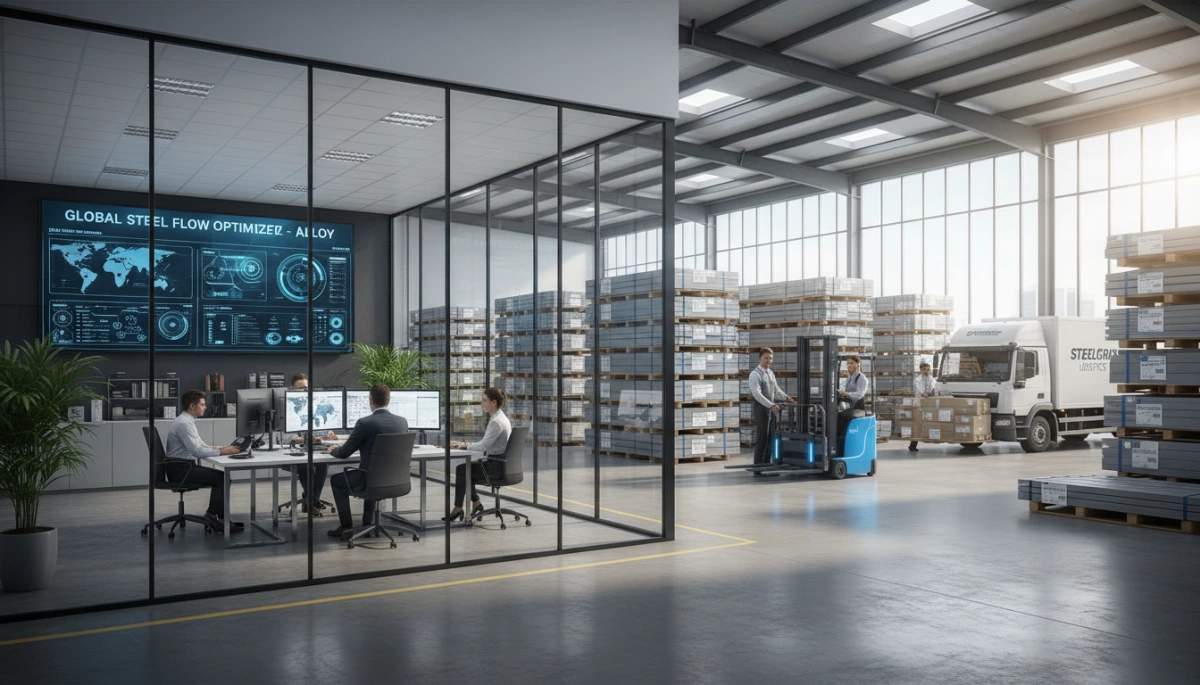
Sourcing reliable 8620 carbon steel is critical for keeping your production lines moving without a hitch. We understand the tight tolerances and strict performance standards required by modern manufacturing. When you partner with us to buy 8620 steel forgings or stock materials, you gain a dedicated supplier focused on precision, speed, and reliability.
Uncompromising Quality Assurance
We never compromise on material integrity. Every order is backed by rigorous testing to ensure it meets exact industry specifications.
- ISO Certifications: Our processing and distribution centers operate under strict ISO guidelines, guaranteeing consistent quality control from raw material to final delivery.
- Material Test Reports (MTRs): Full material traceability is our standard. We provide comprehensive MTRs with every shipment, verifying the exact chemical composition and mechanical properties of your steel.
- Extensive Material Expertise: Our metallurgical knowledge covers a massive range of industrial metals. Whether you need standard case hardening steel or advanced lightweight solutions, you can rely on our broad expertise, which extends to specialized fields like those covered in our titanium aluminum alloy comprehensive guide to properties applications and benefits.
Streamlined Logistics and Pricing
We build efficiency into your supply chain with practical, cost-effective solutions tailored to your schedule.
- Rapid Lead Times: We maintain deep material inventories and efficient processing lines to ensure fast turnarounds, eliminating costly production downtime.
- Global Shipping Logistics: Whether delivering to a local US facility or an international plant, our robust logistics network handles the transportation smoothly and securely.
- Competitive Pricing: Our streamlined operations and direct processing capabilities allow us to offer highly competitive rates for premium materials.
Precisionvast Service Overview
| Service Aspect | What We Deliver |
|---|---|
| Quality | Fully certified ISO operations with complete MTR documentation. |
| Speed | Expedited processing and rapid global shipping capabilities. |
| Value | Highly competitive, direct-to-market pricing for all AISI 8620 alloy steel orders. |
Frequently Asked Questions (FAQs) About 8620 Carbon Steel
What is the difference between 8620 and 1020 steel?
The main difference lies in their alloying elements. While 1020 is a basic plain low carbon steel, AISI 8620 alloy steel includes strategic additions of nickel, chromium, and molybdenum. These alloys make 8620 significantly stronger, tougher, and far superior for advanced heat treatment. If your project demands high wear resistance and core strength, 8620 carbon steel outperforms standard 1020 every time.
How deep can you case harden 8620 steel?
As a premium case hardening steel, 8620 takes carburizing exceptionally well. Depending on the furnace time and specific project requirements, you can typically achieve case depths ranging from 0.015″ to 0.050″. This process creates a wear-resistant outer shell that can reach up to 60 HRC while maintaining a highly ductile, shock-absorbing core.
Is 8620 steel suitable for high-stress applications?
Absolutely. The combination of a tough core and a hardened exterior makes 8620 an industry favorite for extreme, high-stress environments. It is the go-to material for heavy-duty gears, forged pinions, camshafts, and specialized custom carbon steel casting components used in automotive and industrial machinery. When under heavy shock loads or high friction, 8620 holds up reliably.

 German
  English