
Beschreibung
Overview of Alloy Steel Investment Casting
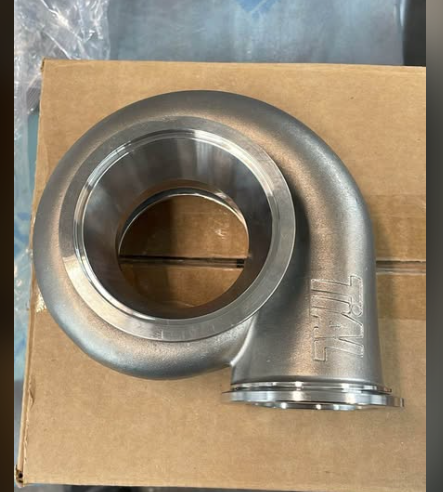
At Precisionvast, we understand the challenge of sourcing components that require both exceptional strength and intricate geometric precision. Alloy steel investment casting is our core solution for high-stress applications where standard carbon steel falls short. By adding specific alloying elements—such as chromium, molybdenum, and nickel—we enhance the mechanical properties of the steel, delivering parts with superior wear resistance, corrosion resistance, and high tensile strength. Whether you need automotive engine components or heavy machinery fittings, our process ensures your parts perform reliably under pressure.
The Lost-Wax Advantage for Alloy Steels
We utilize the precision lost wax casting alloy steel process (also known as investment casting) to produce complex parts that would be difficult or impossible to manufacture through forging or machining alone. This method involves creating a wax pattern, coating it in a ceramic shell, and melting the wax away to form a mold.
This technique is particularly suited for alloy steels because it allows for:
- Complex Internal Structures: We can create curved holes and intricate internal channels using ceramic or soluble wax cores.
- Design Freedom: It supports thin-walled components and complex geometries without the limitations of draft angles required in sand casting.
- Material Versatility: We effectively cast diverse grades like AISI 4140 and 42CrMo without compromising structural integrity.
Benefits: Near-Net-Shape Production
Our focus is on “cost-efficiency” through near-net-shape manufacturing. By casting parts close to their final dimensions, we significantly reduce the need for secondary processing.
- Reduced Machining: We achieve tight tolerances (typically ISO8062 CT4–CT8), minimizing or eliminating expensive CNC work.
- Superior Surface Finish: Our silica sol process delivers a high-precision surface finish directly from the mold, far superior to sand casting.
- Material Savings: Less waste means lower material costs, which is critical when working with higher-value alloy materials.
Comparison: Investment Casting vs. Traditional Methods
To help you decide the best manufacturing route, here is how our precision investment casting steel compares to other common methods:
| Feature | Alloy Steel Investment Casting | Sand Casting | Forging / Machining |
|---|---|---|---|
| Precision (Tolerance) | High (CT4–CT8) | Low (CT10–CT12) | High (Dependent on Machining) |
| Surface Finish | Excellent (Smooth) | Rough | Excellent (Machined) |
| Complexity | High (Intricate details, thin walls) | Low to Medium | Low (Limited by tool access) |
| Material Waste | Low (Near-net-shape) | High (Large machining allowance) | High (Subtractive process) |
| Cost Efficiency | Best for complex, medium-volume parts | Best for large, simple parts | High cost for complex shapes |
By choosing Precisionvast, you leverage over 20 years of foundry expertise to balance cost and performance, ensuring you get high-quality custom alloy steel parts tailored to your exact specifications.
Supported Alloy Steel Grades & Technical Specs
At Precisionvast, we specialize in casting a diverse range of low alloy steel castings designed for high-stress industrial applications. Selecting the right material is critical for performance, which is why we support standard AISI grades and their international equivalents. Whether you need the deep hardenability of 4340 steel lost wax casting or the surface hardness of case-hardened grades, we deliver precise metallurgical control.
Common Alloy Steel Grades
We routinely cast the following grades to meet specific mechanical property requirements such as high tensile strength, wear resistance, and toughness.
| Grade (AISI / GB) | Type | Key Characteristics & Applications |
|---|---|---|
| AISI 4130 | Chrome-Moly | Excellent weldability and structural strength. Ideal for aerospace and automotive brackets. |
| AISI 4140 / 42CrMo | Chrome-Moly | High fatigue strength and abrasion resistance. Common in AISI 4140 investment casting for shafts and gears. |
| AISI 4340 / 40CrNiMo | Ni-Cr-Mo | Superior toughness and deep hardenability. Used for heavy-duty aircraft and transmission parts. |
| AISI 8620 | Ni-Cr-Mo | Case-hardening steel. Hard outer surface with a tough, ductile core. Perfect for gears and camshafts. |
| AISI 8630 | Ni-Cr-Mo | Similar to 8620 but with higher core strength. Used in oil patch applications. |
| 35CrMo | Chrome-Moly | High static strength and high-temperature creep resistance. |
For engineers deciding between popular structural grades, understanding the differences between 4130 and 4140 steel is vital for optimizing part performance versus weldability.
Mechanical Properties & Heat Treatment
Raw chrome moly steel casting parts often require post-casting thermal processing to achieve their final mechanical specs. We provide comprehensive in-house heat treatment solutions to enhance the properties of our custom alloy steel parts.
- Quench & Temper (Q&T): The most common treatment for grades like 4140 and 42CrMo to achieve high tensile strength and yield strength.
- Normalizing: Refines the grain structure to improve machinability and dimensional stability.
- Annealing: Softens the metal for easier machining before final hardening.
- Case Hardening (Carburizing): Specifically for 8620 alloy steel castings, creating a wear-resistant surface while maintaining a shock-absorbing core.
By strictly controlling the chemical composition and thermal cycles, we ensure every batch meets ISO standards for hardness and impact resistance.
Precisionvast Manufacturing Capabilities & Process
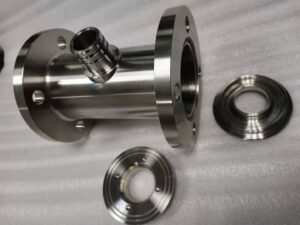
At Precisionvast, we operate a 4,000+ square meter facility in Dongying, China, dedicated to producing high-performance alloy steel investment casting components. Since 2003, we have refined our workflow to handle “problem parts” that other foundries turn away, leveraging a combination of traditional craftsmanship and modern technology. Our annual production capacity exceeds 700 tons, allowing us to manage both small-batch custom orders and large-scale industrial runs with equal efficiency.
Comprehensive 14-Step Manufacturing Workflow
We control every stage of production in-house to ensure strict adherence to ISO 9001 standards. Our process transforms raw custom alloy steel parts into finished components ready for assembly:
- Design & Simulation: We utilize CAE casting simulation software to analyze mold flow and solidification, preventing defects before the first metal is poured.
- Rapid Prototyping: We combine SLA 3D printing with precision casting to deliver prototypes quickly without expensive tooling costs upfront.
- Mold & Shell Making: We specialize in the silica sol investment casting process for high-precision surface finishes (CT5–CT6) and the water glass process for cost-effective, larger components (CT7–CT8).
- Casting & Pouring: We melt and pour various grades, including AISI 4140 investment casting alloys and 4340 steel lost wax casting materials, under controlled conditions.
- Finishing & Inspection: The process concludes with gate grinding, sandblasting, and rigorous quality checks using CMM and NDT methods.
In-House Value-Added Services
We are more than just a foundry; we are a one-stop manufacturing partner. Our integrated services minimize lead times and reduce the logistical headache of managing multiple vendors.
- CNC Machining: For tight tolerances that casting alone cannot achieve, our on-site machining center handles turning, milling, and drilling.
- Advanced Heat Treatment: We perform critical thermal processes—including quenching, tempering, normalizing, and annealing—to optimize the mechanical properties of heat treated alloy steel castings.
- Surface Finishing: From anti-rust oil and painting to zinc plating and polishing, we ensure your parts meet aesthetic and environmental resistance requirements.
Technology & Management Systems
Efficiency is central to our operations. We utilize a robust ERP management system to track production in real-time, ensuring full traceability from raw material to final shipment. This digital infrastructure supports our commitment to speed, allowing us to guarantee a detailed response to inquiries within 8 hours. Whether you need complex internal structures or thin-walled near-net-shape steel casting solutions, our technical team is equipped to deliver.
Quality Assurance & Certifications
At Precisionvast, we operate under strict ISO 9001 standards to ensure every alloy steel investment casting meets global expectations. We understand that for high-stress applications, material integrity is non-negotiable. Our quality control system is integrated into every step of production, from the initial wax pattern to the final shipment, ensuring we deliver reliable, high-performance components.
Comprehensive Testing & Inspection Methods
We utilize advanced testing equipment to validate the internal structure and mechanical properties of our investment casting steel alloy parts. Our in-house capabilities allow us to catch potential issues early, guaranteeing that only defect-free parts reach your assembly line.
- Chemical Analysis: We use spectrometry to verify the exact chemical composition of the melt, ensuring grades like AISI 4140 or 8620 meet specific metallurgical requirements.
- Non-Destructive Testing (NDT): We employ X-Ray and Magnetic Particle Inspection (MPI) to detect internal porosity, shrinkage, or surface micro-cracks without damaging the component.
- Dimensional Verification: Using a Coordinate Measuring Machine (CMM), we confirm that parts meet ISO 8062 tolerances (typically CT4–CT8).
- Mechanical Property Testing: We conduct hardness testing, tensile strength tests, and impact testing to ensure parts can withstand heavy loads, similar to the rigorous validation processes used for carbon steel castings in truck parts.
Defect Prevention & Traceability
Quality is engineered, not just inspected. We use CAE casting simulation software to analyze metal flow and solidification before we even build the shell. This allows us to optimize gating systems and prevent common defects like shrinkage or gas porosity. Furthermore, we maintain full traceability for all custom alloy steel parts. From raw material batch numbers to heat treatment charts and final inspection reports, we provide the documentation needed for complete supply chain transparency.
Industry Applications for Alloy Steel Parts
At Precisionvast, we supply alloy steel investment casting solutions to industries where failure is not an option. Our components are engineered to withstand extreme stress, wear, and corrosive environments, delivering the reliability required for critical infrastructure and machinery.
Automotive & Transportation
The automotive sector demands high-volume production with tight tolerances. We manufacture custom alloy steel parts that offer superior fatigue strength for safety-critical systems. By achieving near-net-shape results, we significantly reduce machining time for:
- Engine Components: Rocker arms, connecting rods, and valve lifters.
- Transmission Parts: Shift forks and gears requiring high hardness.
- Brake Systems: Calipers and structural brackets.
Oil, Gas, and Fluid Control
In the oil and gas industry, components must resist high pressure and corrosion. We produce robust valve bodies, pump impellers, and pipe fittings using grades like AISI 4140 and 4130. These high strength steel investment casting products ensure leak-proof performance in harsh operating conditions. For a broader look at how these components fit into industrial systems, you can explore our guide on steel casting basics and common applications.
Heavy Machinery & Mining
Mining and construction equipment operate under punishing loads. Our foundry specializes in wear-resistant parts that maintain structural integrity despite constant abrasion and impact.
- Mining: Drill bits, picks, and crushing equipment components.
- Construction: Excavator teeth, adapters, and heavy-duty hinges.
- Agriculture: Plow points and harvester brackets designed for long service life.
Aerospace & Defense
Precision is paramount in aerospace applications. We deliver investment casting steel alloy components used in structural brackets, high-stress fittings, and hydraulic system parts. The superior surface finish and dimensional accuracy of our silica sol process meet the rigorous standards required for defense and aviation hardware.
Why Partner with Precisionvast for Alloy Steel Casting
Choosing the right foundry is about more than just getting a part made; it’s about finding a partner who understands the balance between cost, quality, and speed. At Precisionvast, we operate as a direct manufacturer based in Dongying, China, a global hub for investment casting. Since our establishment in 2003, we have refined our processes to serve as a reliable precisionvast alloy steel foundry for international clients, particularly in the US market.
When you work with us, you are dealing directly with the factory floor. This eliminates the markups associated with trading companies and gives you direct access to our engineering team. If you are looking to streamline your supply chain, understanding how to import precision castings from China can further enhance the cost benefits of working with a direct source like us.
Our Core Advantages
- 20+ Years of Manufacturing Expertise: With over two decades of experience, we specialize in solving complex casting challenges. Whether it is intricate custom alloy steel parts or components requiring strict metallurgical control, our team has the technical know-how to deliver consistent results.
- One-Stop Manufacturing Solution: We handle the entire production lifecycle under one roof. From initial mold design and rapid prototyping (SLA) to casting, CNC machining, heat treatment, and surface finishing, we manage every step. This integration reduces lead times and ensures accountability for the final quality of your parts.
- Cost-Efficiency & Flexibility: We understand that project requirements vary. We offer flexible production capabilities, managing everything from low-volume prototype runs to large-scale mass production. Our focus on near-net-shape casting minimizes secondary machining, effectively lowering the total cost per part.
- Rapid Response Guarantee: Communication is critical in cross-border manufacturing. We commit to providing detailed responses to inquiries within 8 hours, ensuring your project moves forward without unnecessary delays.
Real-World Success with Alloy Steel Investment Casting
At Precisionvast, we don’t just pour metal; we solve engineering headaches. Since 2003, our team has tackled “problem parts” that other foundries turned away, specifically focusing on complex geometries and high-stress applications. By leveraging alloy steel investment casting, we help US manufacturers transition from expensive machining-from-solid processes to efficient, near-net-shape production.
Solving Complex Geometry Challenges
One of our standout capabilities involves producing components with intricate internal structures. For a recent project requiring complex fluid flow, we utilized ceramic and soluble wax cores to create curved internal holes that would be impossible to machine.
- Challenge: A hydraulic component required curved internal channels with smooth surfaces to prevent pressure loss.
- Solution: We applied our silica sol investment casting process combined with soluble wax cores.
- Result: The parts achieved ISO8062 CT5-CT6 tolerances directly out of the mold. This eliminated the need for deep-hole drilling and reduced the total part cost by over 30%.
High-Strength Wear Parts for Heavy Machinery
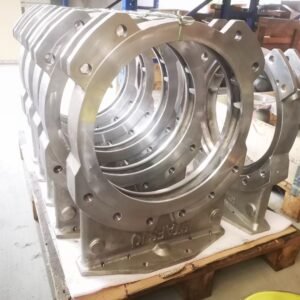
For clients in the mining and construction sectors, durability is non-negotiable. We frequently handle custom alloy steel parts using grades like AISI 4140 and 42CrMo to deliver superior wear resistance.
- Challenge: A heavy machinery client needed brackets capable of withstanding extreme shock loads without fracturing.
- Solution: We cast the parts using high-grade alloy steel followed by precise heat treatment (quenching and tempering) to optimize mechanical properties. You can read more about these material behaviors in our guide on everything you need to know about alloy steel castings.
- Outcome: The finished castings passed rigorous Magnetic Particle Inspection (MPI) and hardness testing, ensuring zero defects and extended service life in the field.
Cost Efficiency Through Near-Net-Shape Casting
Our focus is always on value. By achieving tight tolerances and fine surface finishes (Ra 1.6–6.3 µm), we significantly reduce the machining allowance required.
- Old Process: Customer machined parts from solid steel bars, resulting in 60% material waste.
- Our Process: We switched them to precision investment casting, producing a near-net shape that required only minimal finish grinding.
- Benefit: Material waste dropped to under 10%, and production speed increased, proving that high-quality investment casting steel alloy is often the most economical choice for volume production.
Frequently Asked Questions (FAQ)
What tolerances are achievable with alloy steel casting?
We strictly adhere to ISO8062 (GB/T6414) standards for all our alloy steel investment casting projects. The achievable tolerance depends on the specific casting process used:
- Silica Sol Process: This method delivers high precision, typically achieving CT5–CT6 grades. It is ideal for parts requiring intricate details and tight dimensional control.
- Water Glass Process: This is a cost-effective option for general purposes, typically achieving CT7–CT8 grades.
Is this process suitable for small batches?
Yes. At Precisionvast, we offer flexible manufacturing solutions tailored to your needs. Whether you require a single prototype or a large-scale production run, our facility is equipped to handle it. We do not enforce rigid restrictions that block small orders, making us a reliable partner for both startups and established OEMs.
What are the standard lead times?
Our team guarantees a detailed response to your inquiry within 8 hours. For production, lead times vary based on part complexity and quantity. However, we utilize advanced technologies like SLA 3D printing for rapid prototyping, which significantly accelerates the development phase compared to traditional methods. By integrating mold design and casting in-house, we streamline the timeline from concept to final delivery.
What heat treatment options are available?
Heat treatment is critical for optimizing the mechanical properties of alloy steel investment casting parts. We offer a full range of treatments to enhance strength, hardness, and wear resistance, including:
- Quenching and Tempering: Essential for grades like AISI 4140 and 42CrMo to achieve high tensile strength.
- Normalizing: Refines the grain structure for better machinability.
- Annealing: Softens the metal for easier cold working.
- Carburizing: Improves surface hardness for wear-prone components like gears.
How do I select the right alloy grade for my project?
Selecting the correct material depends on the specific mechanical stresses and environmental conditions your part will face. For example, AISI 4140 is excellent for high-stress applications requiring toughness, while AISI 8620 is preferred for parts needing a hard case and tough core. For a deeper dive into material selection, you can read our guide on understanding steel casting to help make an informed decision. Our engineering team is also available to review your specs and recommend the optimal grade.
 German
  English
Rezensionen
Es gibt noch keine Rezensionen.