

Key Takeaways: Why Precision Casting Matters
- Near-Net-Shape: Drastically reduces material waste and the need for secondary CNC machining by achieving near-final dimensions right out of the mold.
- Superior Surface Finish: Delivers typical surface roughness (Ra) of 3.2-6.3, eliminating expensive post-cast polishing.
- Extreme Versatility: Capable of casting complex geometries, undercuts, and thin walls using a wide range of metals, including stainless steel, titanium, and high-temperature superalloys.
- Cost-Effective Scalability: Offers lower initial tooling costs compared to die casting, making it ideal for both rapid prototyping and high-volume production.
What is Precision Casting?
Precision casting, technically synonymous with investment casting, is an advanced manufacturing process used to create metal parts with complex geometries, high dimensional accuracy, and superior surface finishes. Unlike coarser methods, this technique allows for the production of intricate components that require minimal secondary machining, effectively bridging the gap between raw casting and a finished product.
Defining Investment Casting vs. Precision Casting
In the industry, these terms are often used interchangeably. Precision casting is the broader descriptor emphasizing the tight tolerances and fine detail achievable, while investment casting refers to the specific technique of “investing” (surrounding) a pattern with refractory material to create a mold.
- Investment Casting: The technical process name involving ceramic shells and wax patterns.
- Precision Casting: The functional outcome—parts that meet strict engineering specifications right out of the mold.
The Lost-Wax Concept Simplified
The core of this process is the lost-wax method, a technique refined over centuries but modernized for today’s aerospace and industrial standards.
- Pattern Creation: A replica of the final part is injected in wax.
- Shell Building: This wax pattern is dipped in ceramic slurry (silica sol) to build a hard shell.
- Dewaxing: The shell is heated, melting the wax out (“lost wax”) to leave a perfect hollow cavity.
- Pouring: Molten metal is poured into this pre-heated ceramic shell.
Key Characteristic: Near-Net-Shape Manufacturing Benefits
The primary advantage of precision casting is its ability to achieve near-net-shape status. This means the cast part is produced very close to its final dimension, drastically reducing material waste and machining time.
Benefits of Near-Net-Shape Casting:
| Feature | Benefit |
|---|---|
| Material Efficiency | Reduces scrap rates; ideal for expensive alloys like Titanium or Superalloys. |
| Complex Geometries | Allows for undercuts, thin walls, and internal passages impossible with forging. |
| Surface Finish | Delivers smooth surfaces (typically Ra 3.2-6.3) requiring little to no polishing. |
| Tight Tolerances | consistently meets ISO 8062 CT4-CT6 standards, minimizing post-cast machining. |
The 14-Step Precision Casting Process
At our foundry, consistency isn’t luck; it’s engineering. We strictly follow a comprehensive 14-step precision casting workflow to ensure every component meets the tight tolerances required by industries like aerospace and automotive. From the initial wax model to the final CMM inspection, here is exactly how we transform raw alloy into high-performance parts.
Phase 1: Pattern Creation
Everything starts with a perfect replica. We begin with Wax Injection, shooting molten wax into a metal die to create a precise duplicate of your final part. These individual wax patterns are then moved to Pattern Assembly, where they are mounted onto a central wax sprue (or “tree”). This assembly setup allows us to cast multiple parts simultaneously, optimizing efficiency for bulk production runs.
Phase 2: Shell Building & Dewaxing
Once the assembly is ready, we move to Shell Building. The wax tree is dipped into a ceramic slurry and coated with sand (stuccoing). This process is repeated to build a hard, durable ceramic shell around the wax.
Next comes the “lost-wax” portion of the process. We place the shell into a Dewaxing Kettle for the Dewax Operation. High pressure and heat melt the wax away, leaving behind a perfectly hollow ceramic cavity that matches the shape of your design.
Phase 3: Metallurgy & Casting
With the mold prepared, we proceed to the critical Casting stage. Molten metal—whether it is stainless steel, carbon steel, or a superalloy—is poured into the pre-heated ceramic shell. If you are unsure which material suits your project, reviewing the properties of the best casting steel can help clarify the options for durability and performance.
After the metal solidifies and cools, we perform Shell Removing using vibration or water jets to break away the ceramic material. The raw castings then undergo Shot Blasting to remove any remaining ceramic residue, leaving a clean metal surface.
Phase 4: Finishing & Inspection
The final phase ensures the part is ready for assembly. We start by Grinding off the Inlet (the gate where metal entered the mold). The parts then go through an initial Inspection to catch any visual defects early.
To achieve a professional surface finish, we utilize Pickling to clean surface impurities and Polish operations for aesthetic requirements. If the design requires extremely tight tolerances, the parts move to our Machine Shop for CNC work. Finally, every batch concludes with CMM (Coordinate Measuring Machine) verification to guarantee dimensional accuracy before shipping.
Material Capabilities in Precision Casting
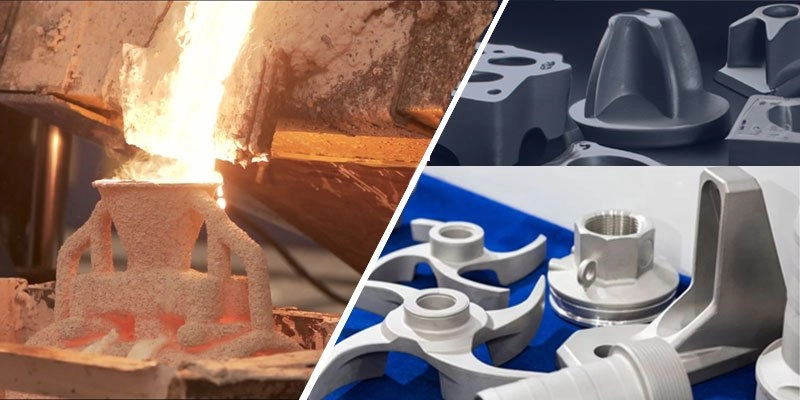
When we talk about precision casting, one of the biggest advantages is the sheer variety of metals we can pour. You are not boxed into just one or two options. The investment casting process allows us to work with almost any metal alloy composition, giving you the exact mechanical properties your project demands.
Here is a breakdown of the primary materials we handle:
- Stainless Steel Casting: If your parts face harsh environments or chemicals, stainless steel is the standard. It offers reliable corrosion resistance, making it perfect for marine hardware, medical devices, and fluid handling systems.
- Carbon & Alloy Steels: Need raw strength and durability? Carbon and alloy steels deliver high impact resistance. Knowing exactly what are the grades of carbon steel castings helps us match the right tensile strength to your heavy-duty industrial and automotive components.
- Superalloys & Titanium: For extreme environments, standard metals just won’t cut it. Titanium and superalloys are essential for aerospace components and power generation because they maintain their integrity under massive heat and stress. If your project involves these extreme conditions, seeing how high temperature alloy casting works gives you a clear picture of how we achieve these high-performance results.
- Aluminum & Custom Alloys: When reducing weight is the main goal without sacrificing structural integrity, aluminum is a top choice. We can also mix custom alloy formulations to hit very specific targets for weight, thermal conductivity, or electrical resistance.
By matching the right metal to the precision casting process, we consistently deliver near-net-shape manufacturing results that lock in the exact properties you need right out of the mold.
Precision Casting vs. Other Casting Methods
When deciding how to manufacture metal components, precision casting often stands out against other traditional methods. Understanding the differences helps in selecting the right process for your specific project requirements, balancing cost, quality, and material needs.
Comparison with Sand Casting: Surface Finish and Accuracy
Sand casting is a widely used method, but it falls short when compared to precision casting in terms of surface finish and dimensional accuracy. Precision casting, utilizing ceramic shell molds, achieves a much smoother surface finish (RMS) and tighter dimensional tolerances. This near-net-shape manufacturing capability significantly reduces or eliminates the need for secondary machining, whereas sand casting typically requires extensive finishing work to meet precise specifications.
Comparison with Die Casting: Tooling Costs and Materials
Die casting is excellent for high-volume production of non-ferrous metals like aluminum and zinc. However, precision casting offers distinct advantages, particularly regarding tooling costs and material versatility. The initial tooling costs for the investment casting process are generally lower than those for die casting. More importantly, precision casting can handle a vast array of materials, including high-temperature superalloys, stainless steel, and carbon steel, which are often not feasible with die casting.
Comparison with Machining from Solid: Waste and Cost Analysis
Machining parts directly from solid metal blocks is precise but can be incredibly wasteful and expensive, especially for complex geometries. Precision casting excels here by producing near-net-shape parts right out of the mold. This drastically cuts down on material waste and the time required for CNC machining services. For intricate designs or expensive alloys like titanium, precision casting is far more cost-effective than machining from solid stock.
| Feature | Precision Casting | Sand Casting | Die Casting | Machining from Solid |
|---|---|---|---|---|
| Surface Finish | Excellent | Poor to Fair | Good to Excellent | Excellent |
| Dimensional Accuracy | High | Low | High | Very High |
| Tooling Cost | Moderate | Low | High | None (but high programming/setup) |
| Material Waste | Low | Moderate | Low | High |
| Material Versatility | Very High (Ferrous & Non-Ferrous) | High | Low (Mostly Non-Ferrous) | High |
| Best For | Complex shapes, tight tolerances, varied alloys | Large parts, low volume, simple shapes | High volume, non-ferrous, thin walls | Low volume, simple to moderate complexity, extremely tight tolerances |
Design for Manufacturability (DFM) in Precision Casting
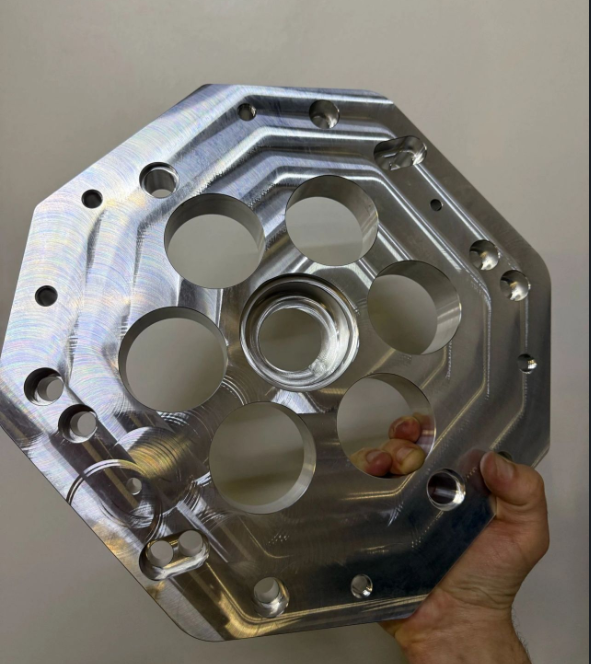
Getting the design right before pouring metal saves time and money. At our foundry, we apply strict Design for Manufacturability (DFM) principles to every precision casting project. By using advanced CAE (Computer-Aided Engineering) simulation, we optimize your part’s structural integrity and eliminate potential defects before the ceramic shell mold is even built.
Standard Tolerances and ISO Standards
Our ISO9001 certified operations guarantee consistent quality across every batch. Because precision casting is a near-net-shape manufacturing method, we achieve tight dimensional tolerances and excellent surface finishes right out of the gate.
- High Accuracy: We meet stringent industry standards for dimensional stability.
- Reduced Waste: Near-net-shape results mean you spend less time and money on secondary CNC machining services.
- Verified Quality: Comprehensive testing reports, including CMM (Coordinate Measuring Machine) data, back up our accuracy.
Minimum Wall Thickness for Lightweight Parts
Weight reduction is critical, especially for aerospace components and high-performance automotive parts. Our investment casting process allows for incredibly thin walls without compromising the part’s mechanical strength. We work directly with your engineering teams to push the limits of lightweighting while ensuring a flawless, complete pour every time.
Managing Complex Geometries
The beauty of the lost-wax casting method is its ability to handle shapes that would be impossible or far too costly to machine from solid blocks. We routinely cast highly intricate parts, easily managing:
- Undercuts: Formed naturally without the need for complex, expensive multi-part tooling.
- Internal Channels: Smooth, precise internal passageways cast directly into the metal.
- Thin Fins: Perfect for heat dissipation applications or delicate structural features.
Whether you need heavy-duty industrial valves or highly detailed components like door lock hardware, our DFM process ensures your complex geometries are manufactured flawlessly.
Custom Precision Casting Solutions for Global Industries
Finding a reliable precision casting manufacturer that can scale with your production needs is critical. At Precision Vast, we don’t just pour metal; we engineer custom solutions. Our investment casting foundry is equipped to supply high-tolerance metal components to a wide array of demanding sectors:
- Aerospace & Defense: Utilizing lightweight aluminum and heat-resistant superalloys for structural integrity at extreme altitudes.
- Automotive & Transportation: Delivering complex, near-net-shape drivetrain and engine components to keep assembly lines moving efficiently.
- Medical Devices: Ensuring flawless, biocompatible stainless steel casting for surgical tools and orthopedic implants with strict ISO compliance.
- Fluid Power & Oil/Gas: Casting robust valves, impellers, and pump housings that withstand high-pressure and corrosive environments.
By combining traditional lost wax casting with modern CAE simulation, we ensure your global supply chain remains uninterrupted, cost-effective, and fully compliant with international standards.
Why Choose Precision Vast
When you need reliable precision casting, working directly with our foundry cuts out the runaround. As a factory-direct partner, we deliver clear communication, faster updates, and pricing that keeps your US manufacturing projects highly competitive.
All-in-One Foundry Capabilities
We manage the entire investment casting process in-house. You never have to deal with the hassle of shipping parts to multiple vendors to get the job done.
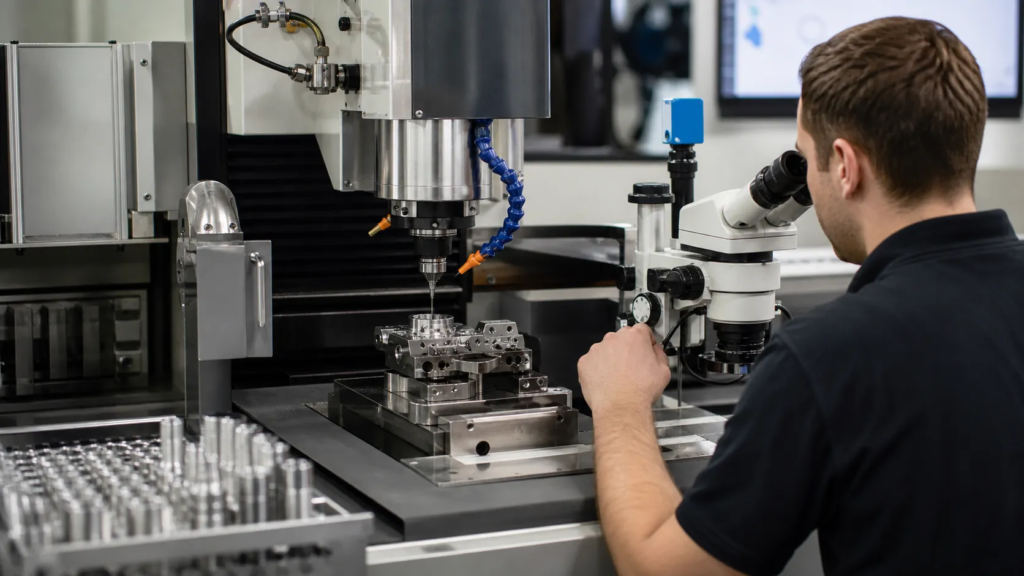
- CNC Machining Services: Dialing in exact dimensional tolerances right after casting.
- Heat Treatment: Enhancing your metal alloy composition for maximum durability.
- Polishing: Achieving the precise surface finish (RMS) your application demands.
Certified Quality Assurance
Quality is built into our daily routine. We operate under strict ISO9001 standards. For demanding industrial applications, we rigorously evaluate factors affecting heat-resistant alloy properties to guarantee your components will perform perfectly under pressure. Every batch is backed by thorough non-destructive testing (NDT) before it leaves our floor.
Fast Turnarounds
We know speed matters. Our rapid prototyping (SLA) tools allow us to move your project from a basic design to a physical near-net-shape part incredibly fast.
Precision Vast Core Benefits
| Feature | Your Advantage |
|---|---|
| Factory Direct Setup | Transparent costs and zero middleman markups. |
| Integrated Services | Casting, CNC machining, and polishing under one roof. |
| Strict NDT Testing | ISO9001 certified, defect-free parts guaranteed. |
| Rapid Prototyping | Lightning-fast turnarounds to hit your tight deadlines. |
Frequently Asked Questions about Precision Casting
What tolerances can precision casting achieve?
Our foundry meets stringent industry standards for dimensional tolerances. Because we use advanced CAE (Computer-Aided Engineering) simulation and strict quality control, you get high dimensional accuracy and an excellent surface finish on every batch.
How does lost-wax casting reduce machining needs?
It comes down to near-net-shape manufacturing. The lost-wax casting process creates parts that are incredibly close to their final dimensions right out of the ceramic shell mold. This drastically cuts down the time and money you need to spend on expensive secondary CNC machining services.
Can Precision Vast cast titanium and superalloys?
Absolutely. We excel at handling unusual or unique metal alloy compositions. Our material expertise covers titanium alloys, high-temperature superalloys, duplex stainless steel, aluminum, and carbon steel.
What are the advantages over sand casting or die casting?
Precision casting handles highly complex geometries that sand casting simply cannot match, while delivering a far superior surface finish. Compared to die casting, initial tooling costs are generally lower, and you have the flexibility to cast high-melting-point metals like stainless steel and superalloys.
How fast can I get a quote and prototype done?
We know speed matters in manufacturing. We guarantee a detailed response to your quote inquiries within 8 hours. If you need to test a design quickly before committing to full-scale production, we offer rapid prototyping via SLA printing to get physical parts in your hands fast.

 German
  English