

The Ultimate Guide to the Vacuum Casting Process for Plastics and Metal Alloys
Are you struggling to manufacture complex, low-volume parts without sinking your budget into massive tooling costs?
You might already know that the vacuum casting process is the go-to solution for rapid prototyping. But how does it handle high-stress, end-use applications?
In this comprehensive guide, you will learn exactly how to leverage this manufacturing method step-by-step. We will break down standard soft-tooling for plastics, and more importantly, the advanced vacuum investment casting required for high-performance metals.
In fact, the hard-tooling approaches shared here are the exact methods we use at Precisionvast to engineer flawless titanium and high-temperature superalloy components with unmatched metallurgical purity.
If you are looking to bridge the gap between initial design and uncompromising end-use production, this guide is for you. Let’s dive right in.
What is the Vacuum Casting Process?
Are you trying to get precise parts fast without spending a fortune on hard steel molds? Or do you need flawless, high-grade metal components with zero oxidation? The vacuum casting process is the definitive answer to both engineering hurdles.
At its core, this method uses a vacuum to draw liquid material into a mold, or to pour molten metal in an oxygen-free environment. This entirely eliminates trapped air bubbles and ensures every microscopic detail is captured perfectly. Depending on your material needs, the process splits into two distinct paths:
1. Polyurethane Vacuum Casting (Plastics)
Often referred to as the urethane casting process, this route is the ultimate shortcut for rapid prototyping services and low-volume manufacturing.
- The Method: We rely on silicone mold casting to shape advanced plastic and rubber-like polyurethane resins.
- The Sweet Spot: Perfect for visual presentation models, functional prototype testing, and short production batches ranging from 10 to 50 parts.
2. Vacuum Investment Casting (Metals)
When plastics won’t cut it and you need high-performance metals, we switch to metallurgical vacuum investment casting.
- The Method: We melt and pour high-grade metals—like titanium and high-temperature superalloys—directly inside a sealed vacuum chamber to prevent any oxygen or nitrogen contamination.
- The Sweet Spot: Engineered for aerospace components, complex medical implants, and high-stress industrial parts where structural integrity is non-negotiable.
The Polyurethane Vacuum Casting Process: Step-by-Step
When you need functional plastic parts fast, our urethane casting process is the go-to solution. Here is exactly how we execute this side of the vacuum casting process to get high-quality, production-grade parts in your hands.
- Master Pattern Creation: We start by making a highly accurate master model using high-precision CNC machining or advanced SLA/SLS 3D printing.
- Silicone Mold Casting: We suspend the master pattern inside a casting box and pour liquid silicone over it. Once cured, we cut it open along a defined parting line and remove the master, leaving a perfectly detailed hollow cavity.
- Vacuum Chamber Casting: We mix a two-part polyurethane resin (with custom color pigments if requested) and pour it into the silicone mold inside a vacuum chamber. The vacuum rapidly extracts trapped air, ensuring a bubble-free, flawless surface.
- Curing and Demolding: The filled mold is moved into a heating oven to accelerate curing. Once solid, the finished plastic part is extracted, and the silicone mold is prepped for the next pour.
The Metal Vacuum Casting Process: Step-by-Step
When dealing with demanding applications in the US market, we rely on vacuum investment casting. This process handles high-grade metals that cannot be exposed to oxygen during melting.
- Wax Pattern and Shell Building: We create precise wax patterns, assemble them onto a central sprue to form a “tree,” and repeatedly dip this tree into a ceramic slurry to build a hard outer shell.
- Dewaxing and Pre-heating: The coated assembly is fired in a high-temperature oven. This melts away the wax and strengthens the ceramic shell.
- Vacuum Melting and Pouring: The hot ceramic shell is placed into a vacuum furnace. Inside this strictly controlled, oxygen-free environment, we melt specialized metals (critical for the titanium casting process) and pour them into the shell.
- Cooling, Knockout, and Finishing: After the metal solidifies, we mechanically break away the ceramic shell, cut the parts from the sprue, and apply targeted surface treatments or CNC machining integration to hit precise tolerances.
- Rigorous Quality Inspection: Every part undergoes strict testing using Coordinate Measuring Machines (CMM), X-Ray scanning, and magnetic particle inspections to guarantee zero internal defects.
Key Advantages of the Vacuum Casting Process
Whether you need flexible polyurethane resins or rigid metals, the vacuum casting process delivers serious manufacturing benefits.
For Fast Plastics and Urethanes:
- Lightning-Fast Turnaround: Get visual models and test parts in days, not weeks.
- Low Tooling Costs: Silicone mold casting is incredibly cost-effective compared to cutting steel.
- Flawless Finishes: Achieve accurate surface textures and precise tolerances right out of the mold.
For High-Performance Metals:
- Zero Oxidation: Melting alloys inside a vacuum chamber eliminates contamination.
- Ultimate Purity: Delivers superior structural integrity for high-stress industrial parts.
- Complex Internal Geometries: We validate flow and cooling beforehand using advanced CAE casting simulation to achieve intricate designs.
Material Capabilities in Vacuum Casting
Polyurethane Resins (Plastics & Elastomers)
- ABS-like Resins: Tough, rigid, and highly reliable for standard functional parts and enclosures.
- Polycarbonate-like Resins: Delivers high strength and excellent impact resistance.
- Rubber Elastomers: Flexible materials ideal for custom seals, gaskets, and over-molded grips.
- Transparent Resins: Optically clear casting resins used for lenses and fluid flow models.
High-Grade Metals (Industrial & Aerospace)
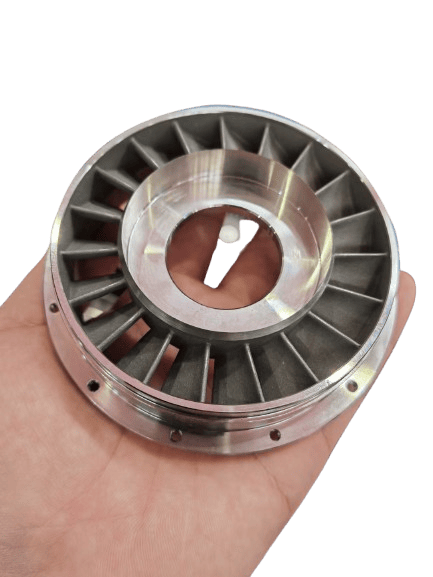
- Titanium Alloys: Lightweight with an incredible strength-to-weight ratio; the go-to for aerospace and medical implants.
- Duplex Stainless Steel: Provides top-tier structural strength alongside outstanding corrosion resistance.
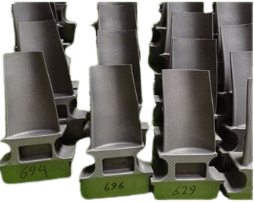
- High-Temperature Superalloys: Engineered to survive extreme heat and heavy mechanical stress.
Design Guidelines for the Vacuum Casting Process
Getting your design right the first time ensures you hit your dimensional tolerance targets every time.
- Wall Thickness (Plastics): Maintain a minimum wall thickness of 1.5mm to guarantee proper liquid resin flow.
- Wall Thickness (Metals): Specifications vary heavily depending on the exact alloy used during rapid prototype investment casting.
- Undercuts and Draft Angles: Include a draft angle of 1° to 2° for a clean release during demolding, preventing premature mold degradation.
- Managing Shrinkage (Plastics): Expect a typical shrinkage rate of 0.15% to 0.25%, which we adjust for during master pattern creation.
- Managing Shrinkage (Metals): We run a CAE casting simulation upfront to predict material behavior and perfectly match your original CAD design.
Vacuum Casting Process vs. Injection Molding
While vacuum casting is a powerhouse for low-volume manufacturing, injection molding inevitably takes over for mass production.
| Feature | Vacuum Casting Process | Injection Molding |
| Tooling Cost | Very Low (Silicone molds) | High (Steel/Aluminum molds) |
| Lead Time | 1 to 2 weeks | 4 to 8+ weeks |
| Optimal Volume | 10 to 50 parts per mold | 1,000 to 1,000,000+ parts |
| Material Options | Polyurethane resin, specialized metals | Vast array of production plastics |
| Part Cost | Higher per unit | Very low per unit |
When to Transition to Hard Tooling:
Transition to injection molding once your production run exceeds a few hundred units, if your product requires certified production-grade thermoplastics, or to avoid the natural degradation of silicone molds after 20 to 50 shots.
Why Partner with Precisionvast?
At Precisionvast, we provide a true one-stop solution tailored to the demanding requirements of the global market. You do not have to juggle multiple vendors; we manage every single step under one roof.
- CAE Casting Simulation: We catch potential defects before a single drop of material is poured.
- Expert Mold Design: Highly precise molds optimized for strict dimensional tolerances.
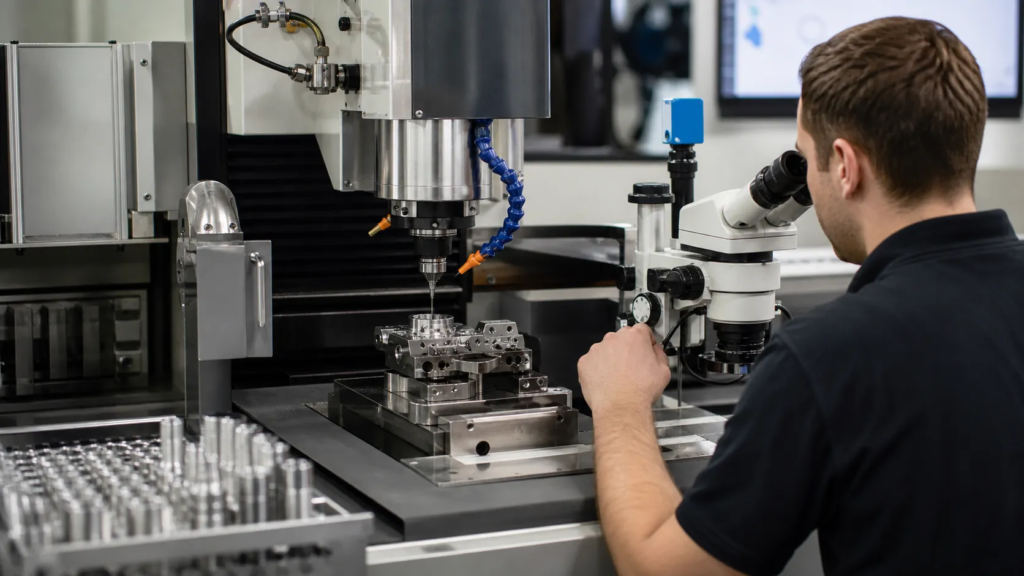
- CNC Machining Integration: We refine cast parts with tight-tolerance post-machining.
- Certified Quality: Our facilities are fully ISO9001 certified, ensuring scalable production for everything from small batches of polyurethane resins to large-scale structural metal parts.
Frequently Asked Questions (FAQs)
What is the difference between vacuum casting and investment casting?
Vacuum casting typically refers to using a vacuum to pull liquid plastic (polyurethane) into a silicone mold for rapid prototyping. Investment casting (or lost-wax casting) is used for metals. However, “vacuum investment casting” combines both: melting and pouring metal inside a vacuum chamber to prevent oxidation in advanced alloys.
How many parts can a silicone mold make in vacuum casting?
A standard silicone mold used for polyurethane casting typically yields between 15 to 25 high-quality parts before the mold begins to degrade and lose its precise dimensional tolerances.
Why is a vacuum necessary for casting titanium?
Titanium is highly reactive at melting temperatures. If exposed to open air, it absorbs oxygen and nitrogen, which makes the metal brittle and forms defects. A strict vacuum environment prevents this atmospheric contamination.

 German
  English