

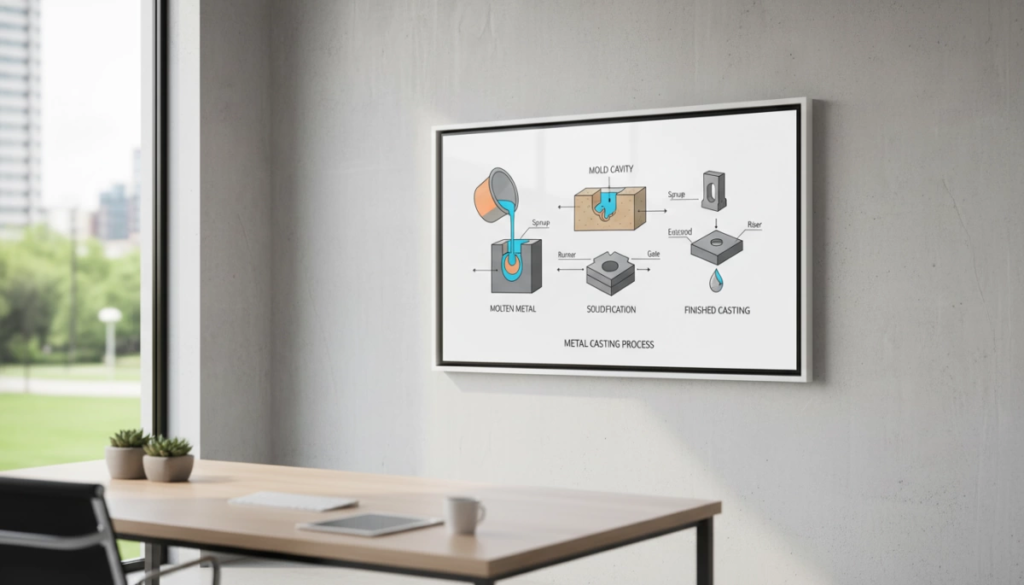
Discover how a precision casting system optimizes investment casting for accuracy, surface finish, and metallurgical integrity.
Are you struggling to find a casting system that delivers both extreme dimensional accuracy and total metallurgical integrity?
Choosing the wrong manufacturing partner can lead to costly solidification shrinkage, porous components, and missed deadlines. As an industry specialist, I know that a high-performance investment casting process is the only way to achieve the near-net-shape manufacturing required for today’s complex engineering projects.
In this guide, you’ll learn exactly how to optimize your gating system design, master the lost-wax method, and leverage CAE simulation to ensure zero-defect production for your stainless steel or titanium components.
Let’s dive right in.
Struggling with inconsistent dimensional accuracy or internal porosity in your metal components? The root cause usually lies in the foundation of your manufacturing setup. When you require complex shapes and strict international tolerances, a reliable casting system is non-negotiable. At our foundry, we engineer every phase of the investment casting process to eliminate structural defects long before the first pour.
The Anatomy of a Precision Casting System
A high-performance casting system relies on three critical pillars to transform raw alloys into near-net-shape manufacturing excellence.
Pattern Assembly
The foundation of the lost-wax method begins with creating an exact wax blueprint of the final component.
- Precision Tooling: We utilize expert mold design to inject high-quality wax, ensuring strict dimensional accuracy from day one.
- Rapid Prototyping (SLA): For highly complex geometries or fast-tracked pilot runs, we integrate SLA 3D printing to bypass traditional tooling delays.
- Tree Assembly: Individual wax patterns are meticulously welded to a central wax sprue to maximize batch efficiency.
Gating System Design
This acts as the “plumbing” of the operation. Proper gating system design dictates the molten metal flow and directly impacts metallurgical integrity.
- Laminar Flow Control: Runners and risers are engineered to ensure smooth, turbulence-free metal entry into the cavity.
- Shrinkage Mitigation: Optimized gating continuously feeds the casting as it cools, effectively preventing solidification shrinkage and internal voids.
Ceramic Mold Construction
The shell building sequence determines the thermal stability of the entire operation.
- Multi-Layered Coating: The wax tree is repeatedly dipped in a specialized slurry and coated with refractory stucco.
- Thermal Resilience: This rigorous process creates a robust ceramic mold capable of withstanding the extreme pouring temperatures of carbon steel, titanium, and high-temperature superalloys without cracking or warping.
Step-by-Step Technical Workflow: The 14 Stages of Excellence
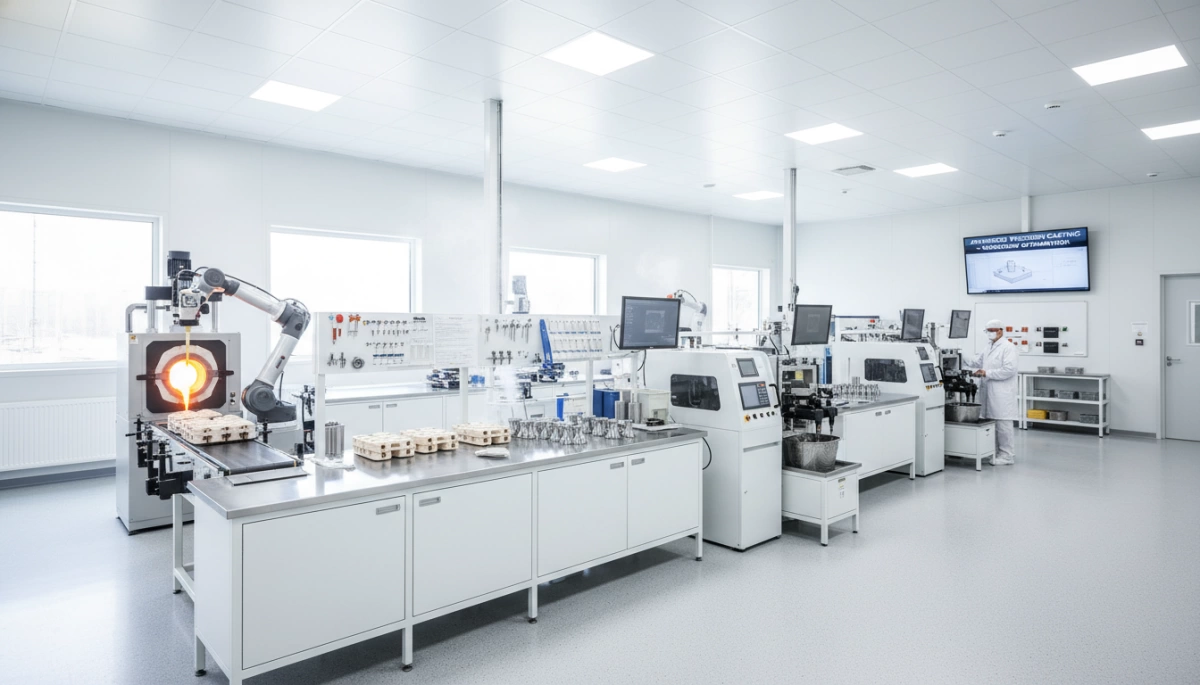
Our casting system operates on a rigorous 14-stage investment casting process. We engineered this workflow to eliminate guesswork, ensuring every component we produce meets strict international tolerance standards. By breaking the process down into four distinct phases, we maintain complete control over dimensional accuracy and metallurgical integrity.
Phase 1: Pre-Production & Tooling
Before any metal is poured, we secure the exact geometry of your component.
- Wax Injection: We inject high-quality wax into precision dies to create flawless replicas of the final part.
- Rapid Prototyping (SLA): For highly complex geometries or urgent testing, we utilize SLA 3D printing to create patterns without the lead time of traditional tooling.
Phase 2: Shell Formation
A reliable casting system requires a flawless ceramic mold.
- Shell Building Sequence: We repeatedly dip the wax pattern assembly into a ceramic slurry, coating it with refractory sand to build a thick, thermally stable shell.
- Dewaxing Operations: We place the hardened shells into a high-pressure dewaxing kettle. This safely melts and removes the wax blueprint without cracking the delicate ceramic structure.
Phase 3: Thermal Processing
This is the core of our precision casting system. We pre-heat the ceramic molds to extreme temperatures to prevent thermal shock and promote optimal molten metal flow. We pour a diverse range of alloys, including titanium, aluminum, and high-strength steels. If your supply chain requires sourcing carbon steel precision castings, our controlled pouring techniques actively minimize solidification shrinkage and porosity.
Phase 4: Post-Cast Finishing
Once the metal solidifies, we transition to the finishing stages to deliver a near-net-shape product.
- Shell Removing: We use mechanical vibration to safely break away the ceramic shell from the metal casting.
- Shot Blasting: This step removes residual scale and achieves a superior surface finish quality.
- Grinding off Inlet: We precisely cut away the gating system and grind the inlets down, ensuring the final component perfectly matches your dimensional requirements.
The 14-Stage Casting System Breakdown
| Production Phase | Specific Stages Included | Primary Objective |
|---|---|---|
| 1. Pre-Production | Pattern Assembly, Wax Injection | Establish exact part geometry |
| 2. Shell Formation | Shell Building, Dewax Operation, Dewaxing Kettle | Create a durable ceramic mold |
| 3. Thermal Processing | Casting | Ensure smooth molten metal flow |
| 4. Post-Cast Finishing | Shell Removing, Shot Blasting, Grinding off Inlet | Achieve near-net-shape accuracy |
Engineering the Casting System: The Power of CAE Simulation
In our facility, we’ve moved past the era of trial and error. A modern casting system relies heavily on Computer-Aided Engineering (CAE) to ensure every pour is successful. By creating a digital twin of the mold, we can visualize the entire investment casting process before any physical tooling is even touched. This predictive power is what separates a world-class foundry from a standard shop.
Predicting Defects with Digital Twin Technology
We use advanced simulations to analyze how the molten metal flow behaves within the ceramic shell. This allows us to optimize the gating system design to prevent turbulence and air entrapment. By identifying potential issues early, we achieve:
- Reduced Porosity: Pinpointing gas traps and shrinkage zones before they happen.
- Thermal Control: Managing cooling rates to prevent internal stresses.
- Accuracy: Mitigating solidification shrinkage to maintain tight tolerances.
Why a Systematic Approach Wins
For high-stakes industries like Aerospace and Medical, “good enough” doesn’t cut it. We treat every project as a precision engineering challenge. Whether we are working on complex geometries or specialized alloy steel casting, the use of CAE simulation ensures that the final component meets every metallurgical requirement.
By integrating digital validation into our casting system, we deliver consistent, high-integrity parts that perform under pressure. This systematic methodology eliminates the guesswork, shortening lead times and guaranteeing that the first pour is the right pour.
Material Versatility in the Precisionvast Casting System
In our casting system, we don’t shy away from difficult materials. We’ve engineered our workflow to handle everything from standard carbon steels to high-temperature superalloys and duplex stainless steel. These materials are notorious for being challenging to pour, but our process ensures consistent metallurgical integrity and grain structure in every batch.
We specialize in “problem parts”—those complex geometries that typically result in high scrap rates. By utilizing a refined investment casting process, we achieve near-net-shape manufacturing even for intricate, thin-wall structures. This allows us to significantly reduce component weight without sacrificing the structural strength required for high-stress environments.
- High-Temp Superalloys: Essential for extreme environments where thermal stability is non-negotiable.
- Duplex Stainless Steel: Provides a perfect balance of corrosion resistance and high yield strength.
- Thin-Wall Precision: We maintain structural integrity in sections that other systems simply can’t fill.
Understanding the properties of heat-resistant metals is critical when selecting the right alloy for your specific application. Whether your project demands resistance to oxidation or extreme thermal cycling, our system is optimized for the top high-temperature alloys to ensure maximum durability and part longevity.
Quality Benchmarks in Our Casting System
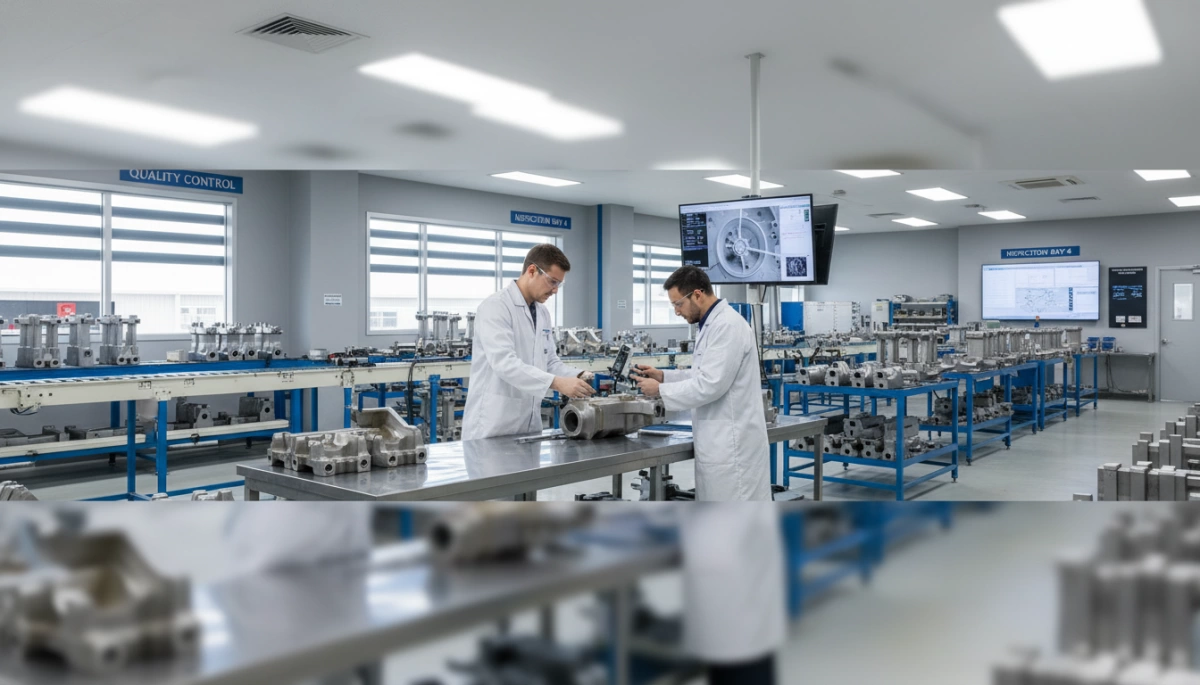
A reliable casting system goes beyond pouring molten metal. For our US partners, proving metallurgical integrity is just as important as the physical part itself. We back up every batch with rigorous quality benchmarks to ensure near-net-shape manufacturing meets your exact specifications.
Non-Destructive Testing (NDT)
We do not guess; we verify. Before any component leaves our facility, it goes through strict material testing protocols. Our NDT capabilities include:
- X-ray Testing: Looking deep inside the part to rule out internal porosity or solidification shrinkage.
- Magnetic Particle Inspection: Catching microscopic surface flaws before they become field failures.
- Hardness Testing: Ensuring the alloy meets the required strength and durability specs.
Dimensional Verification via CMM
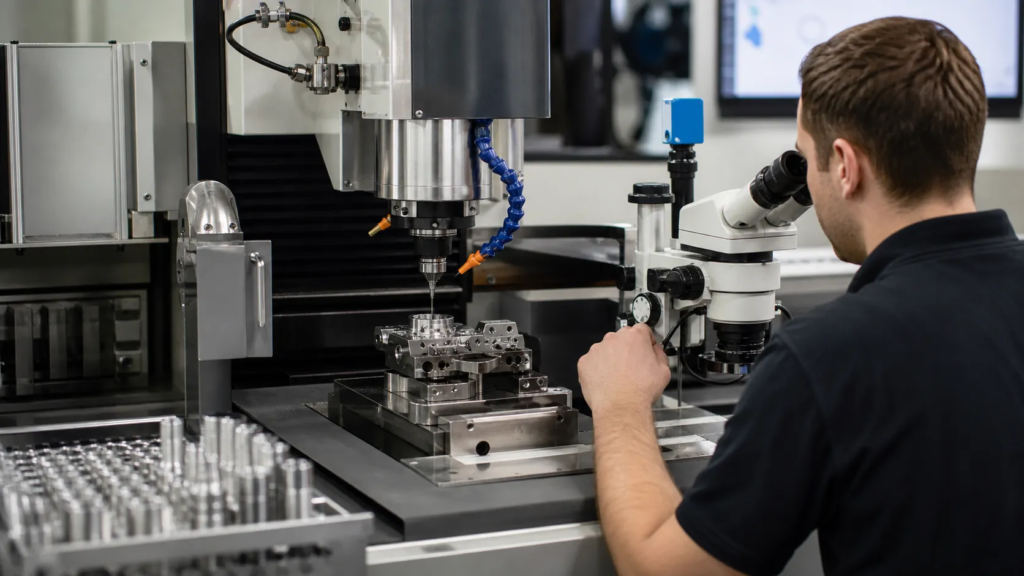
Dimensional accuracy is non-negotiable in a modern investment casting process. We use advanced Coordinate Measuring Machines (CMM) to verify every angle, curve, and thin-wall structure. This guarantees that complex geometries comply with strict international tolerance standards right out of the box.
ISO9001 Certified Reliability
Supply chain reliability is critical. Our operations are fully ISO9001 certified. This means our entire casting system is standardized, documented, and consistently monitored. When you source from us, you get comprehensive testing reports for every batch, ensuring seamless integration into your global manufacturing pipeline.
Industry Applications: Where Our Casting System Delivers
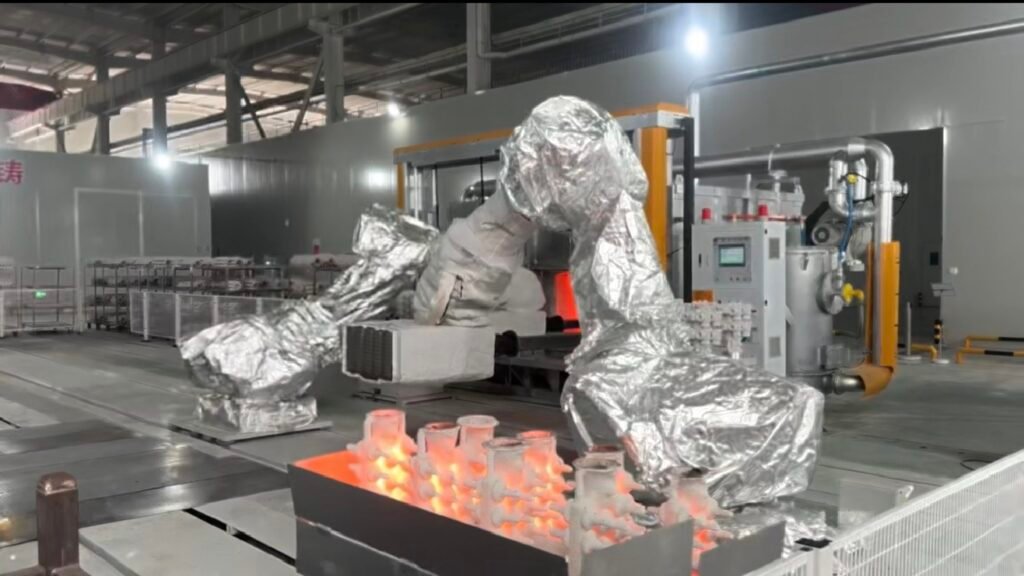
Our precision casting system isn’t just a manufacturing process; it’s the backbone for critical components across more than 50 industries worldwide. We specialize in parts where failure is not an option, providing the reliability that project leaders and procurement managers in the United States and beyond demand.
Flow Control: Pumps, Valves, and Fittings
In the world of fluid dynamics, precision is everything. Our system produces high-integrity components for:
- Industrial Pumps: Impellers and housings with smooth internal channels.
- Valves: Pressure-tight bodies that prevent leaks in hazardous environments.
- Pipe Fittings: Complex geometries that ensure a perfect seal every time.
High-Security Hardware and Marine Components
Durability and aesthetics must go hand-in-hand for hardware applications. We deliver:
- Door Lock Hardware: Intricate internal mechanisms and polished external plates.
- Marine Hardware: Corrosion-resistant fittings designed to withstand harsh saltwater environments.
Critical Infrastructure: Aerospace and Automotive
For high-stakes sectors, our casting system handles the most demanding materials. We produce engine components and structural parts that must perform under extreme stress. Our expertise includes working with the top 6 heat-resistant metals for high-temperature use, ensuring that every aerospace or automotive part meets strict safety and performance benchmarks.
- Aerospace: Turbine blades and fuel system components.
- Automotive: Turbocharger housings and high-strength engine brackets.
- Food Machinery: Stainless steel components that meet strict hygiene and durability standards.
FAQs About Casting Systems
Sand Casting vs. Precision Casting System
The primary difference comes down to the mold material and the final precision. Sand casting relies on expendable sand molds, making it suitable for rough, heavy components. In contrast, our precision casting system utilizes the lost-wax method to build a highly detailed ceramic mold. This allows for near-net-shape manufacturing, superior surface finish quality, and the production of complex geometries that traditional sand casting cannot achieve.
Gating System Design and Metallurgical Integrity
A precise gating system design is the backbone of a successful pour. It dictates the molten metal flow, preventing turbulence and actively reducing solidification shrinkage. Poor gating leads to internal porosity and weak parts. We eliminate this guesswork using CAE simulation to optimize the flow digitally. To verify the final metallurgical integrity of the physical part, we rely on strict non-destructive testing, including X-ray testing for investment casting, ensuring zero hidden defects.
Achievable Tolerances
Our modern investment casting process is built to meet strict international tolerance standards. By controlling every variable within our ISO9001-certified casting system, we deliver exceptional dimensional accuracy. Every batch is measured and verified using advanced Coordinate Measuring Machine (CMM) inspections to guarantee your exact specifications are met.
Shell Building Sequence Timeline
The shell building sequence requires precision and time. We repeatedly dip the wax assemblies into a ceramic slurry and coat them with fine refractory sand. Each layer must cure completely in a climate-controlled environment to ensure the mold can withstand extreme thermal shock. Depending on the overall size and complexity of your parts, this critical phase of the casting system typically takes a few days to complete.

 German
  English