

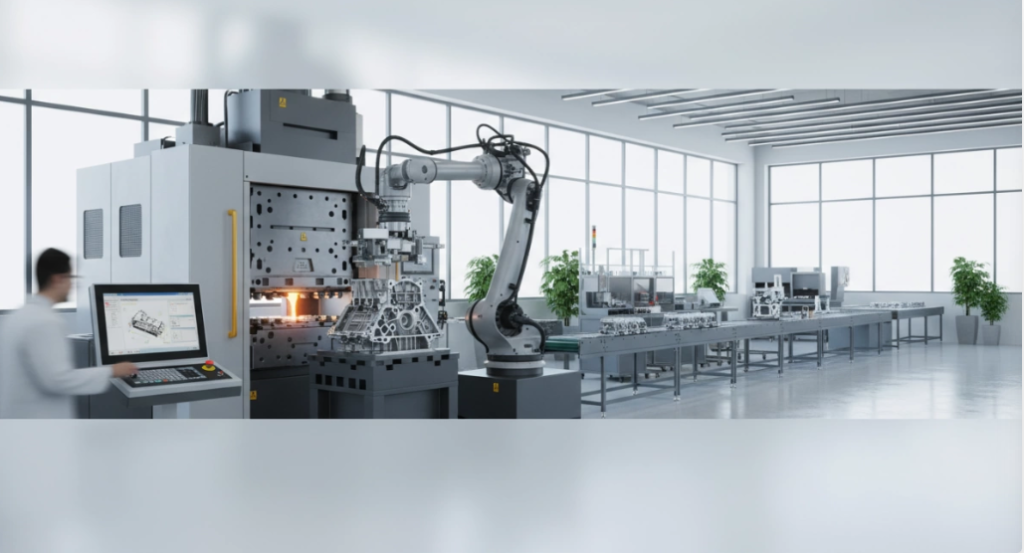
Discover modern casting technologies with Precisionvast from investment casting to Casting 4.0 CAE simulation rapid prototyping and CNC machining
You might already know that modern casting technologies have evolved far beyond traditional foundry methods.
But how do you choose the exact process that guarantees both flawless precision and cost-efficiency for your components?
Well, you’re in for a treat because I’ve put together a complete guide to navigating today’s high-precision engineering landscape.
As a manufacturing expert at precisionvast, I know firsthand that selecting the right investment casting foundry can make or break your product’s lifecycle. We’ve used these exact methods to deliver aerospace-grade components and solve complex manufacturing bottlenecks for our partners.
In this post, you’re going to learn exactly how to leverage “Casting 4.0” innovations—from CAE simulation to advanced metallurgical integrity—to get your parts right on the first pour.
Whether you’re looking to tighten your dimensional tolerances or need a reliable prototype-to-production partner, this guide is for you.
Let’s dive right in.
Core Casting Technologies: Finding the Right Fit
Choosing the wrong manufacturing method leads to high defect rates, blown budgets, and delayed production. As engineers and procurement managers, you need to match the geometry, volume, and material to the right foundry capabilities. Let’s break down the core casting technologies to help you make an informed decision for your next project.
Investment Casting: The Lost-Wax Process
At precisionvast, we specialize in precision investment casting. Widely known as the lost-wax process, this is the absolute gold standard for transforming complex engineering blueprints into high-performance realities. We rely on this method because it delivers where others fail. It is the optimal choice when your project demands:
- Intricate Geometries: Easily produces highly complex, near-net shapes with thin walls and internal cavities.
- Superior Surface Finishes: Achieves excellent surface roughness (Ra) right out of the mold, drastically reducing the need for secondary operations.
- Tight Dimensional Tolerances: Consistently meets strict international industry standards for high accuracy.
- Material Versatility: Ideal for pouring a wide range of metals, including stainless steel, titanium alloys, and high-temperature superalloys.
Sand Casting vs. High-Pressure Die Casting
When evaluating other common methods, the decision usually comes down to a trade-off between volume, tooling cost, and precision:
- Sand Casting: This is a cost-effective route for low-volume runs and exceptionally large parts. However, it generally yields poor surface finishes and lower metallurgical integrity, requiring heavy post-processing and machining to meet final specs.
- High-Pressure Die Casting: Excellent for massive-volume production of non-ferrous metals. The downside? Tooling costs are astronomical, and the process often struggles with the intricate internal complexities that investment casting handles with ease.
Centrifugal & Continuous Casting
These are highly specialized casting technologies built for very specific use cases. Continuous casting is primarily used for raw material production, such as continuous lengths of billets and slabs. Centrifugal casting is reserved for perfectly cylindrical parts like pipes, tubes, and rings. If you are dealing with asymmetrical “problem parts” or require complex multi-featured components, these methods are not viable.
For components requiring ultimate precision, complex detailing, and uncompromising structural integrity, investment casting remains the unmatched solution.
The “Casting 4.0” Revolution: Advanced Innovations in Casting Technologies
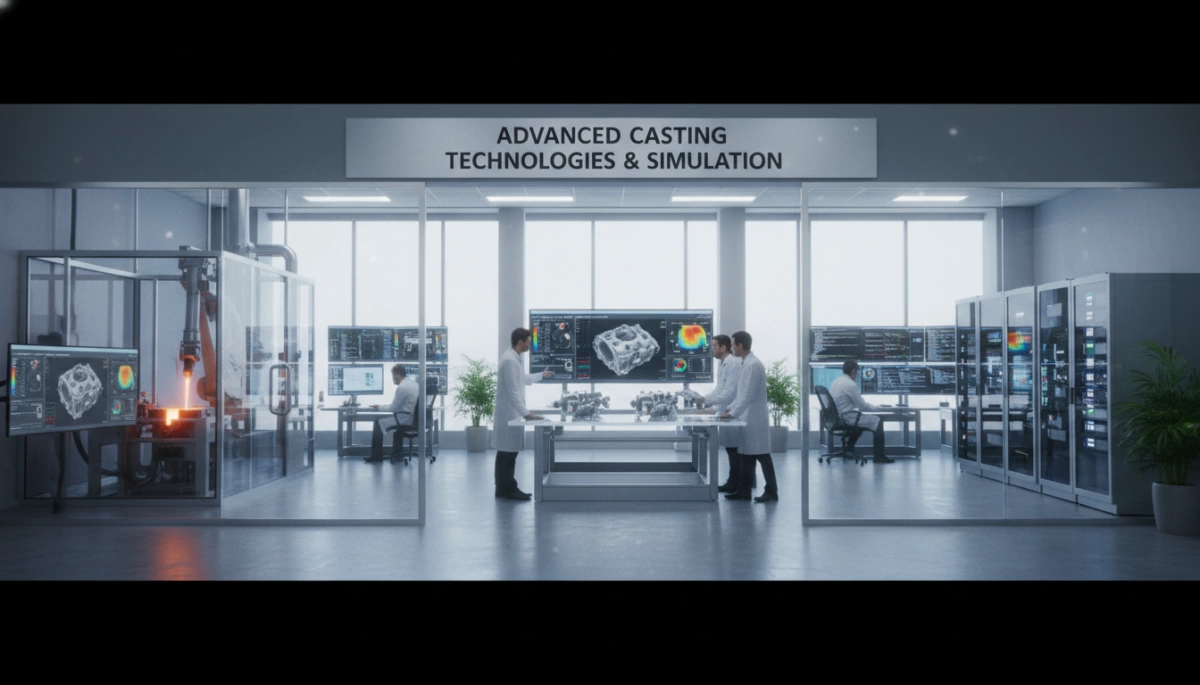
We are moving beyond traditional methods by integrating “Casting 4.0” into our daily operations. This digital shift isn’t just about new gadgets; it’s about using data and automation to eliminate the guesswork that has historically plagued the foundry industry. By merging software with physical production, we ensure that every part meets the highest standards of precision and reliability.
CAE Simulation and Solidification Analysis
The biggest game-changer in our workflow is CAE (Computer-Aided Engineering) simulation. Before we ever pour molten metal, we run a digital twin of the process. This software predicts exactly how the metal will flow and cool, allowing us to identify potential issues like porosity or gas entrapment. By performing a deep-dive solidification analysis to manage aluminum shrinkage, we can adjust the mold design upfront, saving our clients time and reducing material waste.
3D Sand Printing and Rapid Prototyping
In the past, creating patterns and tooling could take months. With 3D sand printing and rapid prototyping, we’ve slashed those lead times from months to just a few days.
- No Tooling Required: We can print complex sand molds directly from CAD files.
- Design Flexibility: Easily test multiple iterations of a part without expensive mold changes.
- Speed to Market: Ideal for aerospace and automotive sectors where getting a prototype in hand quickly is a competitive necessity.
Automation and Robotics in the Foundry
Consistency is the enemy of manual labor, which is why we’ve invested heavily in automation and robotics. Our robotic arms handle the delicate process of shell building and slurry coating with a level of precision that a human simply can’t match.
- Uniform Shells: Robots ensure every layer of the ceramic shell is applied with the exact same thickness.
- Controlled Pouring: Automated pouring systems maintain a steady flow rate, which is critical for maintaining the metallurgical integrity of cast steel and other high-performance alloys.
- Safety and Efficiency: Removing workers from the immediate vicinity of molten metal improves safety while significantly boosting our 700-ton annual output capacity.
Material Science in Modern Casting
Modern casting technologies rely heavily on advanced material science to meet the strict demands of today’s industries. Getting the design right is only half the battle; selecting and processing the right metal is what guarantees long-term performance.
High-Performance Alloys
We work with materials that push the limits of engineering. Our investment casting foundry routinely processes a wide range of demanding metals tailored for extreme environments:
- Titanium: Lightweight and incredibly strong, making it the go-to choice for aerospace and medical equipment.
- Superalloys: We regularly cast high-temperature alloys for maximum durability that maintain their structural integrity under severe heat and mechanical stress.
- Duplex Stainless Steel: Delivers superior corrosion resistance and high yield strength, ideal for marine hardware and industrial pumps.
Ensuring Material Integrity
Metallurgical integrity is non-negotiable. Modern casting technologies allow us to maintain absolute purity throughout the melting and pouring phases. By strictly controlling the casting environment and utilizing advanced testing, we prevent contamination and ensure every single batch meets your exact chemical specifications. This strict oversight guarantees parts with consistent mechanical properties and zero hidden defects.
The precisionvast Expertise
We specialize in what other manufacturers turn away. When you are dealing with “problem parts” that feature highly complex geometries or unusual alloy requirements, we step in to deliver seamless one-stop manufacturing solutions.
- Custom Alloy Requirements: We handle non-standard metal compositions to match your specific performance needs.
- Solving Defect Issues: We engineer out porosity and shrinkage in difficult designs before the first pour.
- Blueprint to Reality: We successfully transform challenging engineering blueprints into reliable, high-performance realities.
The 14-Step Precision Journey: Our Casting Technologies in Action
We don’t leave quality to chance. Our 14-step manufacturing workflow is a disciplined approach designed to turn raw alloys into high-performance components. It begins with wax injection, where we create exact replicas of your parts. These patterns are then meticulously assembled into a “tree” before we start the shell building process, applying multiple layers of ceramic slurry to create a high-strength mold.
From Dewaxing to the Final Pour
The transition from a wax pattern to a metal part requires precision equipment and a controlled environment.
- The Dewaxing Kettle: We use high-pressure steam to remove wax from the shells, ensuring no residue is left behind to cause defects.
- Controlled Casting Environments: We manage temperature and atmosphere during the pour to maintain metallurgical integrity and prevent porosity.
- Solidification: We monitor the cooling process to ensure the metal achieves the desired grain structure.
Understanding the secrets of stainless steel investment casting explained helps in appreciating why these controlled steps are vital for durability and corrosion resistance.
Post-Processing and Surface Refinement
Once the metal has cooled, the “rough” casting undergoes a series of finishing steps to meet your specifications. We utilize advanced casting technologies to ensure the final product is ready for immediate use or further machining.
- Shot Blasting: This removes any remaining ceramic shell material, providing a uniform surface texture.
- Grinding: We precision-grind the gates and risers to match the part’s original geometry.
- Pickling: This chemical treatment removes scale and impurities, which is essential for parts operating in harsh environments where surface purity is non-negotiable.
By managing every step from the initial pattern to the final pickling bath, we maintain total control over the dimensional tolerances and quality of every part that leaves our floor.
Beyond the Pour: Value-Added Secondary Operations
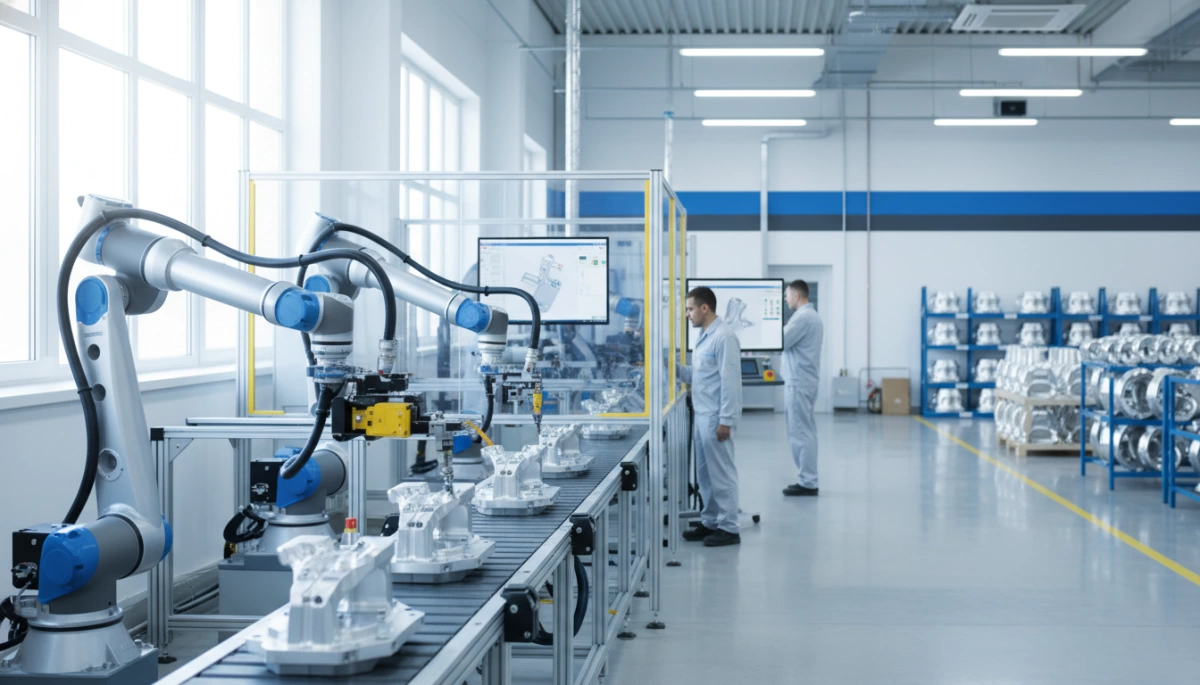
While our casting technologies deliver exceptional near-net shapes, high-performance engineering often requires additional refinement. We provide a seamless one-stop solution by integrating secondary operations that transform raw castings into finished, assembly-ready components.
Precision CNC Machining
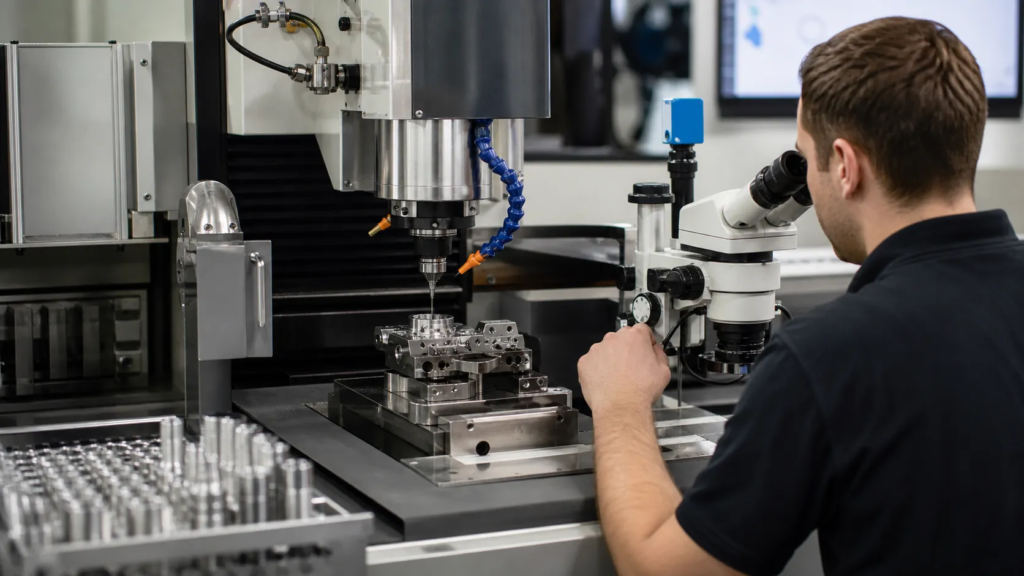
Even the most advanced investment casting has limits regarding ultra-tight dimensional tolerances. Our in-house machine shop utilizes high-precision CNC machining to achieve the exact specifications required for critical interfaces. This ensures that complex geometries in aerospace or medical equipment meet strict international standards that casting alone cannot reach.
Heat Treatment
To maximize the longevity and reliability of your parts, we offer specialized heat treatment services. This process is essential for optimizing mechanical properties such as:
- Hardness: Increasing wear resistance for heavy-duty industrial use.
- Tensile Strength: Ensuring structural integrity under high-stress loads.
- Ductility: Improving the material’s ability to deform without fracturing.
These treatments are particularly vital when working with best heat resistant metals for high temperature applications, where metallurgical stability is non-negotiable.
Surface Finishing
The final step in our manufacturing journey focuses on both aesthetics and functional protection. Our facility is equipped to handle a variety of surface requirements:
- Shot Blasting & Grinding: Removing imperfections and smoothing the exterior.
- Pickling & Passivation: Enhancing corrosion resistance for stainless steel and alloys.
- Professional Polishing: Achieving specific surface roughness (Ra) levels for food machinery or marine hardware.
By managing these operations under one roof, we maintain total quality control and guarantee that every part leaving our factory is optimized for its specific high-performance reality.
Quality Assurance in Casting Technologies
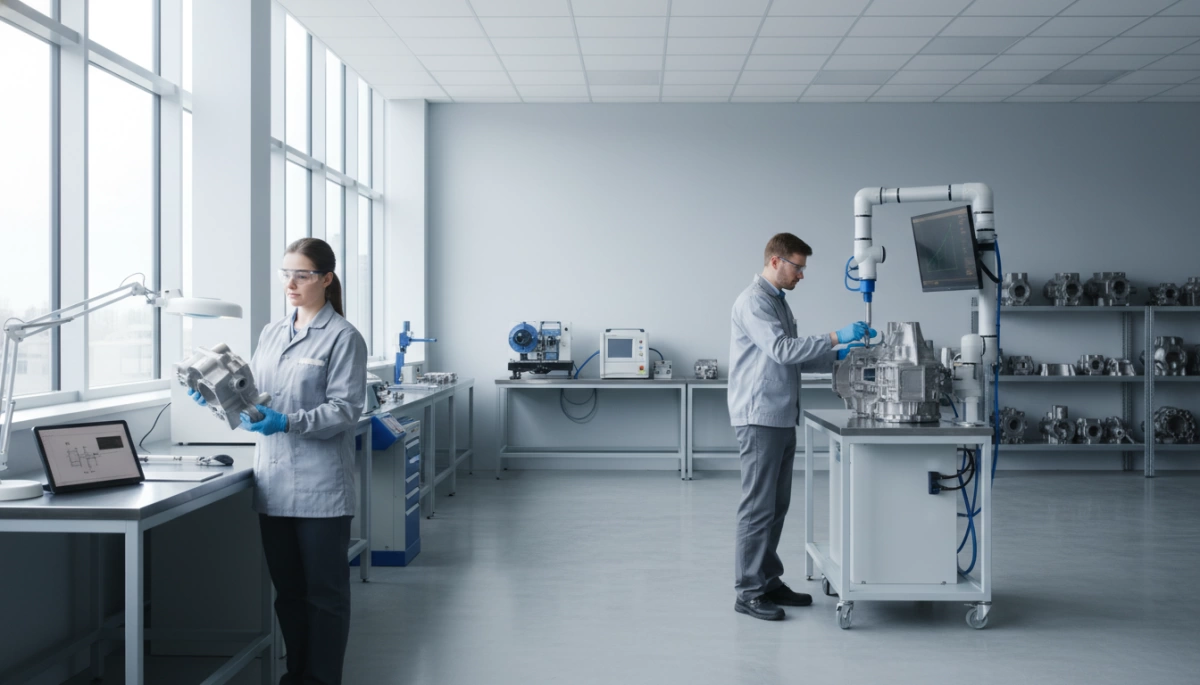
When it comes to advanced casting technologies, verifying metallurgical integrity is just as critical as the pour itself. We implement a strict quality control framework to ensure every part performs flawlessly in the field.
Non-Destructive Testing (NDT)
We utilize comprehensive NDT methods to detect any internal or surface anomalies without compromising the final component:
- X-Ray Testing: Scans for hidden internal voids, shrinkage, or porosity before parts leave the facility.
- Magnetic Particle Inspection: Identifies minute surface and near-surface discontinuities in ferromagnetic materials.
- Liquid Penetrant Inspection: Exposes microscopic surface cracks on non-porous metals.
Dimensional Accuracy
Hitting tight dimensional tolerances is non-negotiable for high-performance components. We rely on advanced Coordinate Measuring Machines (CMM) to validate that every complex geometry perfectly matches your original engineering blueprints.
ISO 9001 Compliance & Material Certification
As an ISO 9001 certified investment casting foundry, we deliver complete peace of mind with every order. Every batch comes with comprehensive testing reports and full material certification. We conduct rigorous material evaluations, including precise hardness testing, to guarantee your parts meet the exact mechanical properties required for demanding applications.
Choosing a Manufacturing Partner: Why precisionvast?
When you choose precisionvast, you are partnering directly with the source. Our direct-factory supply model ensures that we maintain total control over every stage of production, from initial mold design to final CMM inspection. By eliminating middlemen, we provide transparent communication and cost-effective casting technologies that meet the rigorous demands of the global market.
Scalable Capacity and Rapid Response
We operate with a 700-ton annual production capacity supported by over 200 skilled professionals. This scale allows us to handle both high-volume runs and specialized “problem parts” with ease. For businesses looking for reliable carbon steel investment casting manufacturers to streamline their supply chain, we offer a dedicated 8-hour response commitment for all technical inquiries and quotes.
Proven Success Across Industries
Our expertise in advanced casting technologies is backed by a track record of success in high-stakes sectors:
- Aerospace: Delivering high-performance superalloys and titanium components with zero-defect tolerance.
- Medical: Precision-engineered hardware for surgical tools and diagnostic equipment.
- Automotive: High-strength parts for engines, transmissions, and structural assemblies.
- Marine & Food Machinery: Corrosion-resistant stainless steel and duplex alloys for harsh environments.
We transform your engineering blueprints into high-performance realities, ensuring every batch is ISO 9001 certified and delivered with comprehensive testing reports.
FAQs About Casting Technologies
What is the most accurate casting method for intricate geometries?
The lost-wax process (precision investment casting) is the gold standard. It delivers exceptionally tight dimensional tolerances and excellent surface finishes, making it the top choice for complex, problem parts that require high accuracy without compromise.
How does Casting 4.0 and CAE simulation reduce manufacturing defects?
We use advanced CAE simulation to run metal solidification analysis before a single drop of metal is poured. By predicting exactly how the metal cools, we eliminate defects like porosity and shrinkage early on, guaranteeing complete metallurgical integrity for every batch.
What are the best high-performance alloys for precision casting?
We regularly cast Titanium, Duplex Stainless Steel, and superalloys built for extreme environments. If your project involves extreme heat or stress, understanding the top properties of high-temperature alloys helps ensure you select the right aerospace grade alloys for your specific application.
How do secondary operations like CNC machining improve casted parts?
While our foundry capabilities are highly accurate, CNC machining services push parts to exact specifications. Machining refines critical dimensions and threads that casting alone cannot reach, giving you a seamless prototype-to-production solution directly from our ISO 9001 certified facility.

 German
  English