

precisionvast bead blast services for CNC parts with precise Ra control material compatibility and superior satin matte industrial finishes.
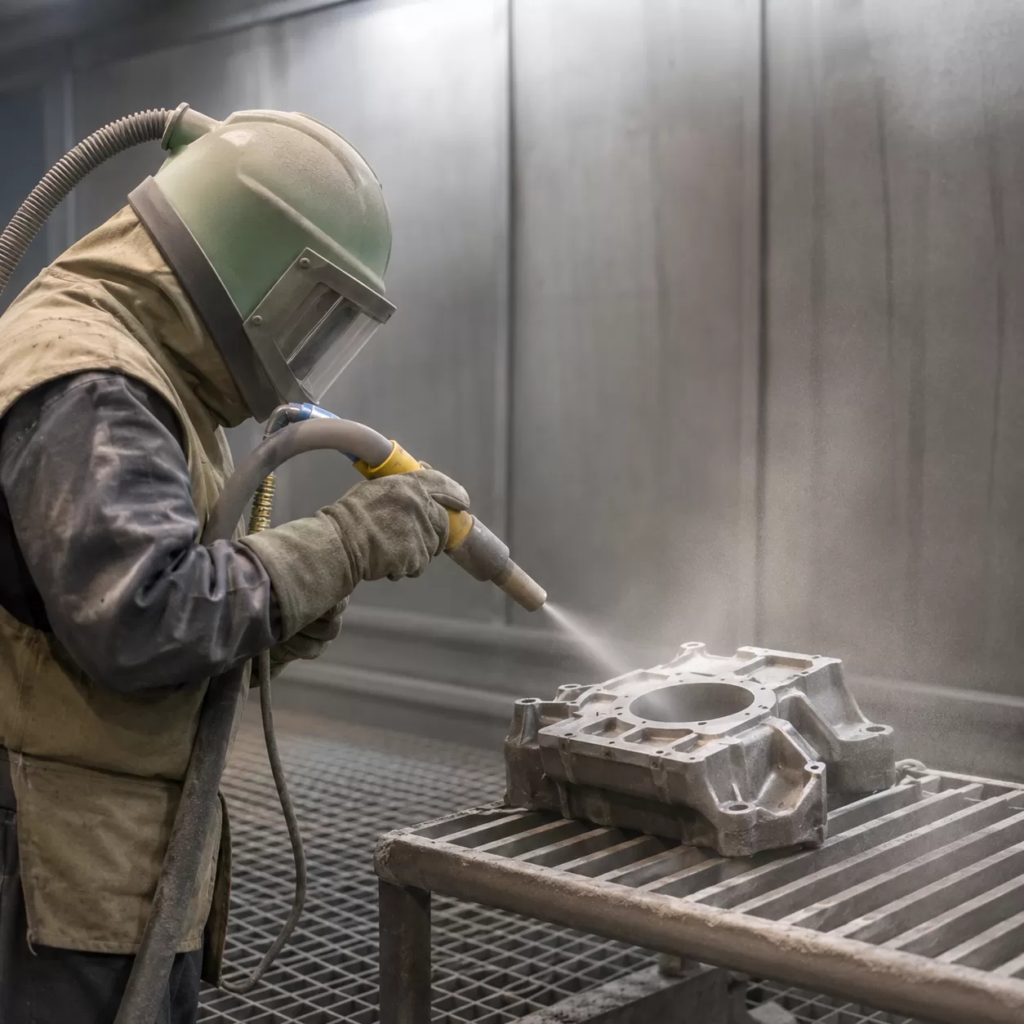
What is Bead Blasting?
When you need a flawless, uniform look for your machined parts, standard cutting methods often leave behind unwanted tool marks and directional lines. At PrecisionVast, we use bead blasting to transform raw surfaces into a premium, eye-catching finish.
Unlike aggressive sandblasting that cuts into your material, bead blasting utilizes spherical media to gently reshape the surface topography. Instead of gouging the metal, millions of microscopic glass or ceramic beads strike the surface, creating tiny, overlapping micro-dimples.
This process delivers a beautifully uniform, non-directional surface finish with a sleek satin-matte finish that eliminates glare and hides fingerprints.
Micro-Dimpling vs. Angular Cutting
The core difference between a harsh abrasive blast and our refined cosmetic process lies in the geometry of the media:
| Feature | Bead Blasting (Spherical Media) | Sandblasting (Angular Media) |
|---|---|---|
| Media Shape | Round, smooth spheres (Glass/Ceramic) | Jagged, sharp particles (Grit/Alumina) |
| Surface Action | Micro-dimpling and peening | Cutting, gouging, and scraping |
| Material Removal | Zero-material-removal (< 5 µm) | Heavy, aggressive material removal |
| Texture | Smooth, elegant satin-matte finish | Rough, coarse, high-friction texture |
| Primary Use | Cosmetic refinement & pre-anodizing | Rust removal & heavy paint stripping |
Zero-Material-Removal Cosmetic Refinement
We know how critical your dimensional tolerances are. A major worry with any post-processing treatment is losing the tight fits achieved during CNC machining.
That is why our process focuses strictly on zero-material-removal cosmetic refinement. Because the round media deforms the surface rather than cutting it away, we protect the structural integrity of your parts. You get a modern, high-end matte aesthetic without altering critical dimensions or compromising tight engineering tolerances.
The Mechanics: How precisionvast Executes Bead Blasting
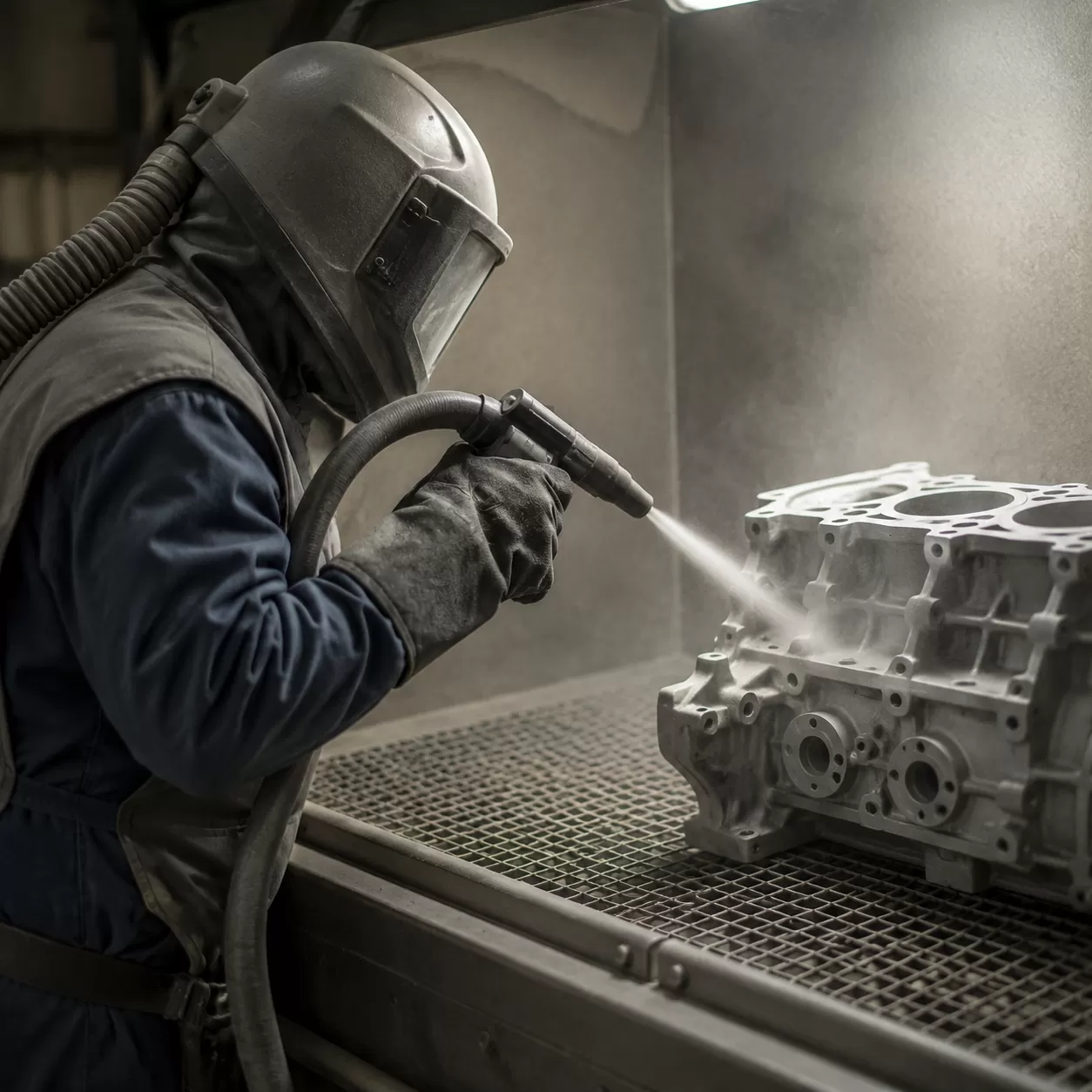
We execute our bead blast process inside sealed, industrial abrasive blast cabinet systems using controlled pneumatic acceleration. By precisely regulating the air pressure and media flow, we propel thousands of microscopic spheres at the target surface. This clean, enclosed environment ensures absolute consistency and prevents external contamination during the process.
The Shot Peening Effect and Fatigue Resistance
When the spherical media impacts the component, it creates micro-dimpled textures across the surface. This process introduces beneficial surface compressive stress, acting as a mild shot peening effect.
- Fatigue Life: Improves component fatigue resistance by 10% to 20%.
- Micro-cracks: Effectively seals microscopic surface defects.
- Durability: Enhances the overall lifespan of high-stress mechanical parts.
For high-performance applications, such as integrating a titanium alloy in medical device innovation, this added stress relief ensures the component can withstand rigorous operational demands.
Dry vs. Wet (Vapor) Blasting Techniques
We tailor our blasting methods based on your specific cosmetic and functional requirements:
| Blasting Method | Media Delivery | Primary Benefit | Best Used For |
|---|---|---|---|
| Dry Blasting | High-pressure compressed air stream | Highly efficient, uniform matte look | Standard metal finishing, rapid processing |
| Wet (Vapor) Blasting | Slurry of water and spherical media | Ultra-smooth finish, cushions impact | Fine texturing, delicate dimensions, no heat warping |
This dual-capability allows us to deliver a completely non-directional surface finish that meets your precise aesthetic and mechanical benchmarks.
Technical Specifications and Process Tolerances for Bead Blasting
At precisionvast, we back up cosmetic refinement with strict, measurable controls. We treat your design specifications as absolute laws. Our team carefully calibrates every blast cycle to ensure your parts look flawless while maintaining strict dimensional integrity.
The standard technical boundaries we maintain include:
| Parameter | Operational Range | Target Application |
|---|---|---|
| Surface Roughness ($R_a$) | 0.8 µm to 3.2 µm (32 µin to 125 µin) | Smooth satin-matte to textured bonding preps |
| Media Sizes (Fine) | 50 µm to 100 µm (Fine glass beads) | Ultra-fine satin textures, thin-walled components |
| Media Sizes (Coarse) | 200 µm to 400 µm (Large ceramic beads) | Heavy-duty micro-dimpled texture, robust deburring |
| Material Removal | Under 5 µm (<0.0002 inches) per side | Precision CNC tolerance preservation |
Media Types and Mesh Size Variations
We select your blasting media based on your specific cosmetic and functional goals.
- Fine glass bead blasting creates a smooth, glare-free, non-directional surface finish that works beautifully as a pre-anodizing treatment.
- Ceramic bead media delivers higher durability and a slightly deeper micro-dimpled texture without fracturing or contaminating the metal surface.
Absolute Dimensional Integrity
We understand the time and effort you put into machining tight tolerances. For parts like aluminum castings for strong and durable structures, keeping material removal under 5 µm is non-negotiable. Our dialed-in process guarantees that critical press-fits, threaded holes, and mating surfaces remain completely within your original print specifications.
Material Compatibility: Substrates We Treat With Bead Blast Finishes
At precisionvast, we adapt our bead blast process to match the unique properties of your chosen material. Whether you need a flawless visual surface or enhanced mechanical performance, we deliver consistent results across a wide range of substrates.
Aluminum Alloys (6061, 7075)
Aluminum is a staple in modern manufacturing, but raw machining often leaves visible tool marks. Our glass bead blasting serves as the ultimate pre-anodizing treatment. By blending away minor imperfections, we create a uniform, glare-free matte modern finish that accepts anodizing dyes perfectly.
Stainless Steel (304, 316)
For industrial and medical applications, we use a specialized bead blast technique to eliminate weld discoloration and blemishes. This process leaves stainless steel with a clean, hygienic, and clean-room-ready surface. If your project involves alternative production methods, we also optimize raw surfaces like how is sand casting aluminum used in manufacturing to ensure the same high standard of structural uniformity before final coating.
Titanium & Copper
High-performance aerospace and electronics components demand exceptional durability. We apply a controlled shot peening effect to titanium and copper parts. This relieves residual tensile stresses, increases fatigue resistance, and prepares the metal surface preparation for demanding environments.
Engineering Plastics (PEEK, Polycarbonate)
Bead blasting isn’t just for metals. We regularly texture additive manufactured (3D printed) and machined engineering plastics like PEEK and Polycarbonate. This step removes layer lines, smooths out rough edges, and leaves a clean, non-directional surface finish.
| Substrate | Typical Mesh Size | Primary Benefit | Common Application |
|---|---|---|---|
| Aluminum | Fine (50–100 µm) | Pre-anodizing uniformity, glare reduction | Consumer Electronics |
| Stainless Steel | Medium (100–200 µm) | Weld cleanup, hygienic satin-matte finish | Medical Devices |
| Titanium | Medium to Large | Stress relief, increased fatigue life | Aerospace Components |
| Plastics (PEEK) | Ultra-Fine | Layer line removal, micro-dimpled texture | 3D Printed Parts |
Bead Blasting vs. Sandblasting: Choosing the Right Finish
When choosing a surface treatment, understanding the structural differences between media types is critical. The choice comes down to round media versus angular media. Sandblasting relies on sharp, angular grit that cuts into the material. This aggressive cutting action strips heavy rust, thick scales, and deep imperfections, but it leaves behind a rough, coarse texture.
By contrast, the bead blast process utilizes perfectly spherical glass or ceramic beads. Instead of cutting the metal, these spheres micro-dimple the surface. This creates a uniform, non-directional surface finish without removing any structural material.
+——————-+—————————–+——————————-+
| Feature | Bead Blasting | Sandblasting |
+——————-+—————————–+——————————-+
| Media Shape | Spherical (Round) | Angular (Sharp edges) |
| — | — | — |
| Surface Action | Peening & smoothing | Cutting & material removal |
| Typical Finish | Sleek, satin-matte finish | Rough, highly textured grit |
| Material Loss | Near zero (< 5 µm) | Noticeable erosion |
+——————-+—————————–+——————————-+
For high-end cosmetic parts, glass bead finishes are the industry standard over rough sand or grit alternatives. Angular sandblasting creates a jagged profile that traps fingerprints, collects oils, and reflects light unevenly. Our specialized glass bead blasting delivers a smooth, glare-free, matte modern finish that feels premium to the touch. This makes it the ideal choice for visible consumer electronics, medical instruments, and high-precision components.
To ensure your parts look flawless before final surface treatments, explore our expert insights on maintaining part quality in the precisionvast blog.
Industrial Applications for precisionvast Bead Blasted Parts
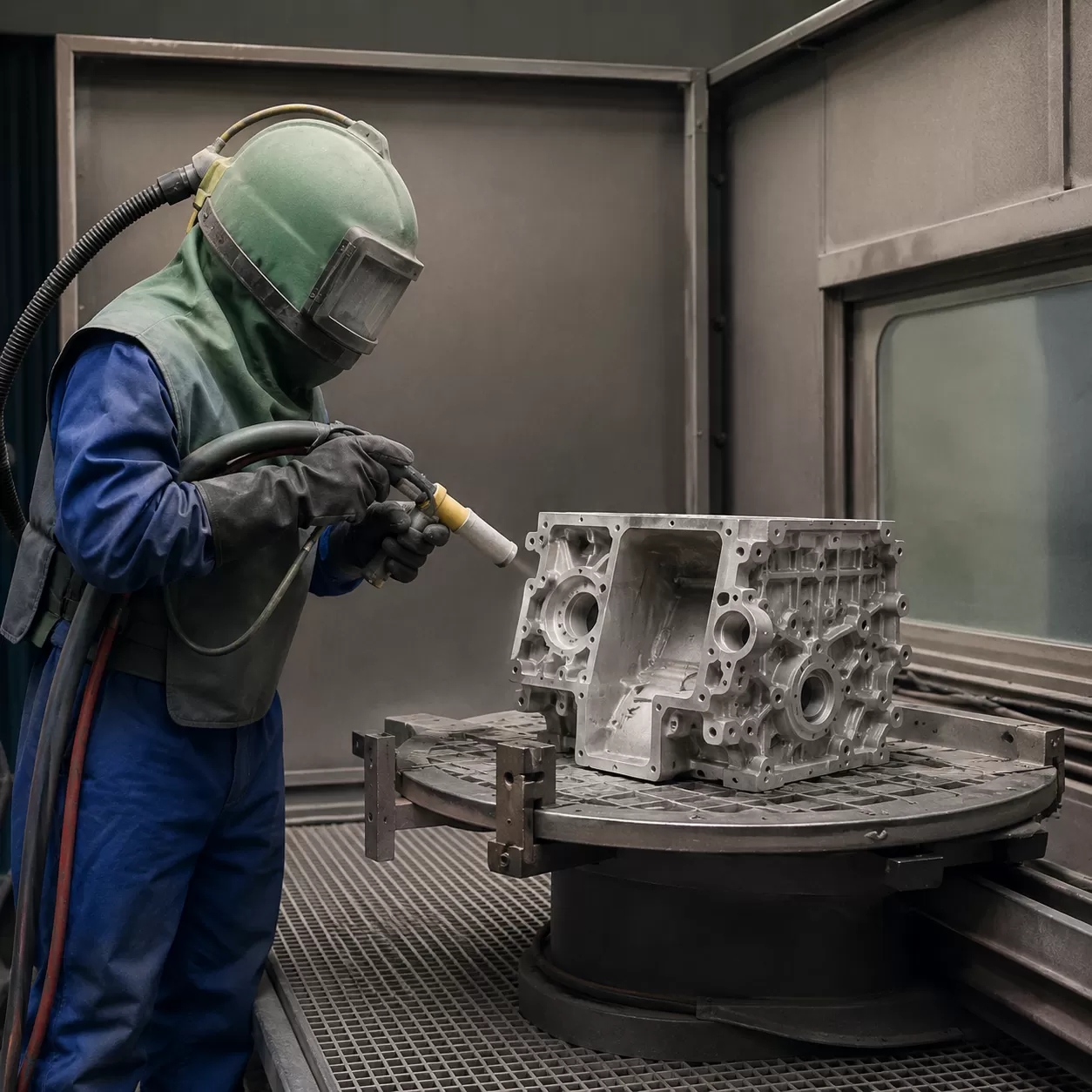
At precisionvast, we utilize the bead blast process to deliver exceptional surface finishes across a wide range of demanding industries. By tailoring our blasting parameters, we ensure that every component meets strict performance and aesthetic benchmarks.
Consumer Electronics
Modern devices require a premium look and feel. Our bead blasting service creates a sleek, fingerprint-resistant device enclosure with a uniform, satin-matte finish. This clean look minimizes smudges and light reflections, elevating the overall perceived value of consumer tech products.
Medical Instruments
In surgical and clinical settings, glare can be a dangerous distraction. We apply a precise glass bead blasting technique to medical instruments, creating a non-reflective, glare-reduced surface. This specialized treatment ensures surgical apparatus can withstand repeated sterilization cycles without losing its surface integrity.
Aerospace & Automotive
Performance components require superior durability. We use high-quality ceramic bead media to induce a shot peening effect on critical aerospace and automotive parts. This process relieves surface stresses, significantly improving component lifespan and fatigue resistance. Additionally, it maximizes surface energy, enhancing the mechanical bonding required for durable powder coatings and premium finishes. When working with robust metal finishes, we ensure our processing aligns perfectly with downstream operations, much like the rigorous standards applied during our high-performance carbon steel casting manufacturing.
Quality Assurance & Boundary Sampling for Your Bead Blast Finish
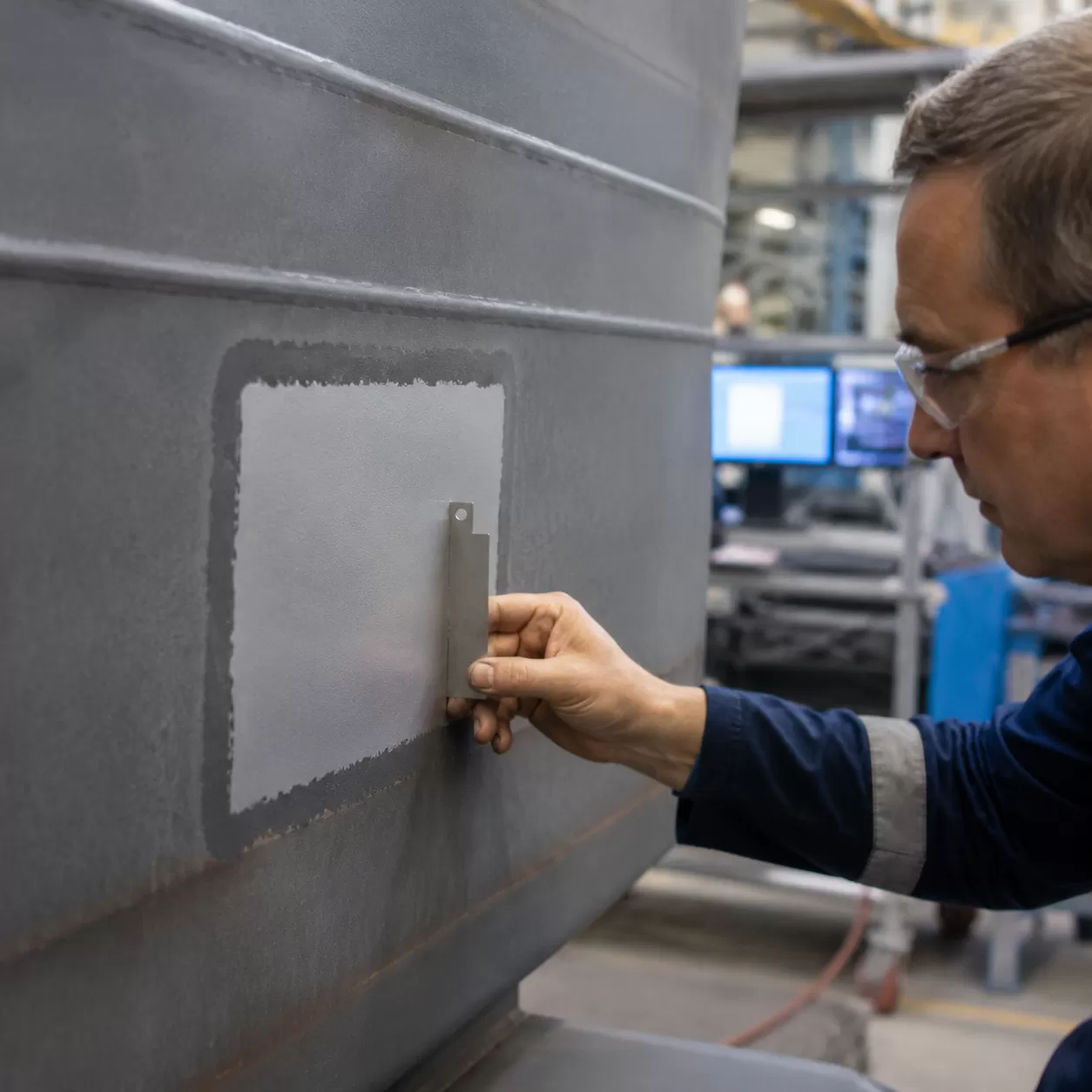
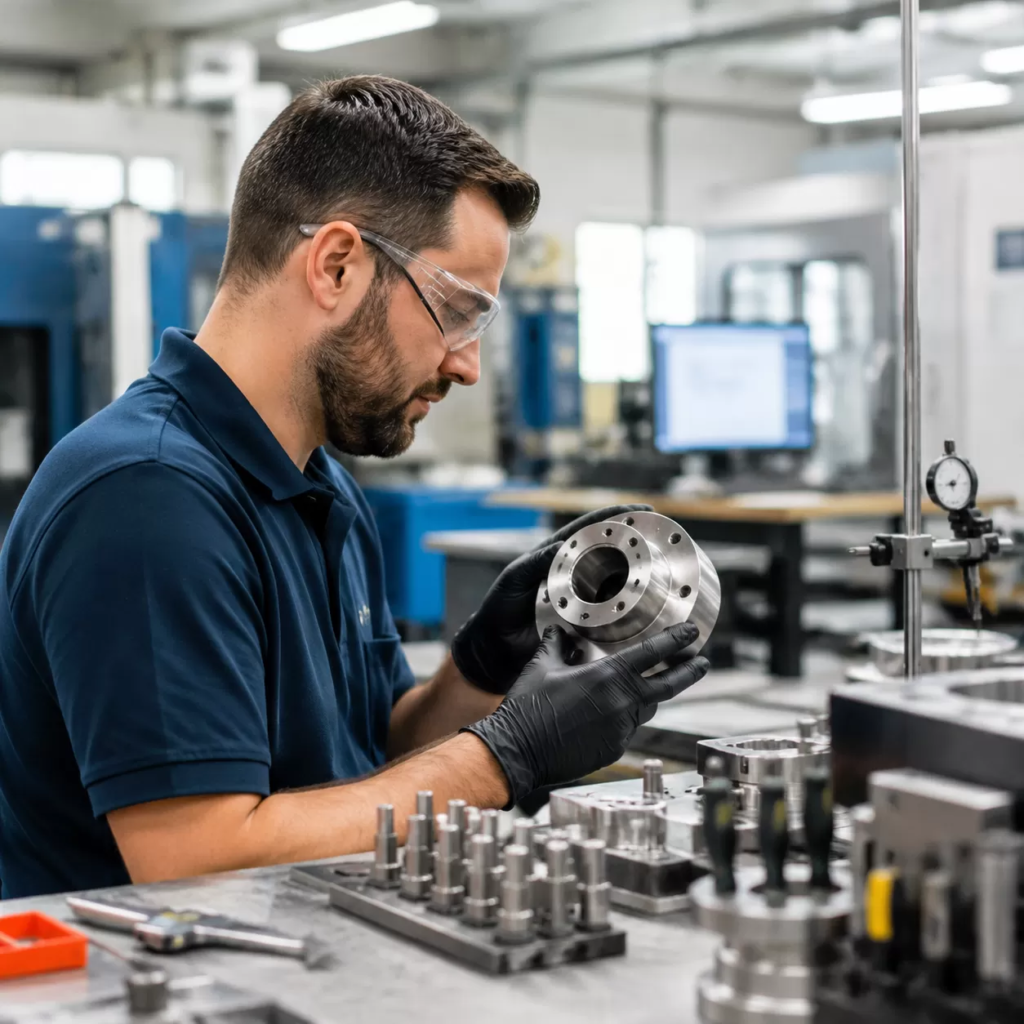
At precisionvast, we do not leave cosmetic perfection to chance. Achieving a flawless, non-directional surface finish requires strict quality control, especially when matching a specific look across multiple production lots. We eliminate the guesswork by using physical boundary samples. These master samples establish the exact upper and lower limits of acceptable cosmetic variation, ensuring your parts perfectly match your visual and tactile expectations every single time.
Precision Component Masking Protocol
A premium bead blast treatment is only as good as the masking that protects your part’s critical features. Our team follows rigorous protocols to safeguard your designs before they enter the blast cabinet:
- Critical Threads: We seal internal and external threads using custom silicone plugs and high-temperature masking tapes to prevent media impingement and cross-threading.
- Mating Faces: Precision-machined mating surfaces are strictly protected to preserve flat, low-Ra tolerances and ensure tight, leak-proof mechanical seals.
- Delicate Substrates: For multi-material assemblies, including lightweight aluminum investment casting components, we isolate the targeted blast zones to maintain structural and dimensional integrity.
| Feature Protected | Masking Method | QA Inspection Metric |
|---|---|---|
| Internal/External Threads | Custom silicone plugs & caps | Go/No-Go thread gauge compliance |
| Mating Interfaces | Heavy-duty polyimide masking tape | Zero dimensional change ($<5text{ }mutext{m}$) |
| Low-Ra Surfaces | Form-fitting vinyl stencils | Surface roughness gauge verification |
Seamless Post-Processing Integration After a Bead Blast
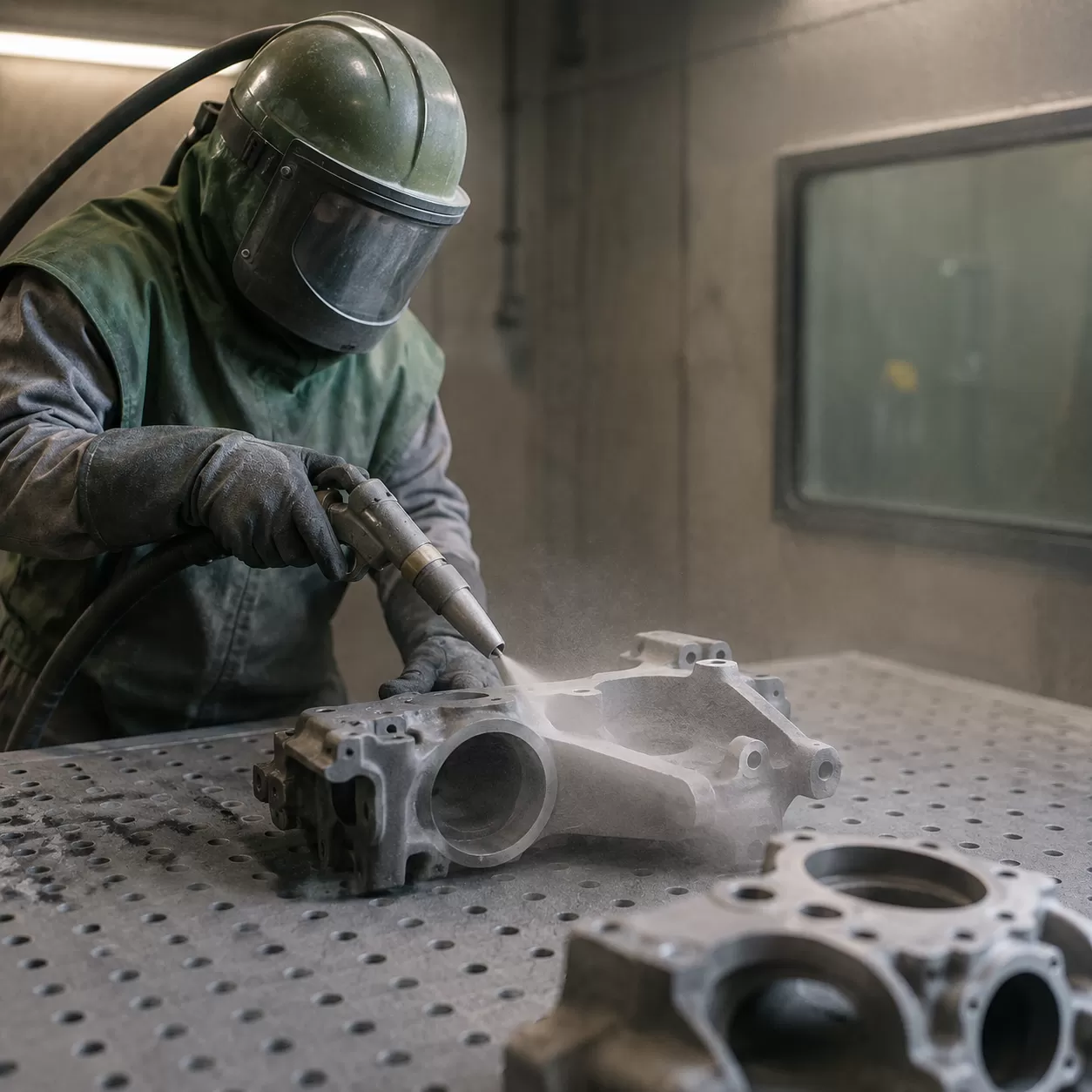
A premium bead blast finish does more than just look good; it primes your parts for secondary manufacturing steps. By clearing away surface contaminants and creating a uniform, micro-dimpled texture, we drastically increase the surface energy of your components. This ultra-clean, high-traction surface acts as the ultimate foundation for downstream treatments.
Whether your project requires advanced coating or chemical protection across different industries and applications, our conditioning process ensures flawless adhesion and performance.
Enhanced Downstream Finish Performance
- Anodizing & Plating: Eliminates micro-scratches and machining lines, preventing visual defects from telegraphing through thin chemical layers.
- Industrial Painting & Powder Coating: Maximizes mechanical interlocking, ensuring the paint grips the substrate firmly to prevent chipping or peeling under stress.
- Chemical Passivation: Provides a perfectly uniform, raw metal surface free of embedded oils, allowing passivation fluids to create a superior, corrosion-resistant oxide layer.
Frequently Asked Questions About Bead Blasting
How does a bead blast finish affect critical part tolerances?
Because we focus on zero-material-removal cosmetic refinement, the impact on your dimensions is negligible. The process relies on spherical media micro-dimpling rather than angular cutting. This keeps material removal under 5 µm ($0.0002$ inches) per side, allowing us to safeguard tight CNC machining tolerances.
Can you bead blast thin-walled sheet metal parts without warping?
Yes, but it requires strict pressure control. High-pressure dry blasting can induce excessive surface compressive stress, causing thin-walled components to bow. For delicate designs or complex geometries, we utilize wet vapor blasting service techniques to minimize thermal and mechanical stress, keeping your parts perfectly flat.
What is the difference between wet bead blasting and dry bead blasting?
- Dry Blasting: Uses controlled pneumatic acceleration inside sealed industrial blast cabinets. It delivers a highly uniform, non-directional surface finish and a classic matte modern finish.
- Wet (Vapor) Blasting: Mixes water with the ceramic bead media or glass beads. The water acts as a cushion, reducing the shot peening effect, eliminating static electricity, and producing an incredibly smooth, satin-matte finish.
Does bead blasting remove rust or heavy welding scale?
While a bead blast can clean minor surface discoloration, it is not designed for heavy material removal. For parts like heat-resistant metal components that feature thick weld scale or deep rust, we recommend a preliminary aggressive abrasive blast before applying the final cosmetic glass bead blasting finish.
How do you protect threaded holes and mating surfaces during the blast process?
We enforce a strict component masking protocol before any parts enter the abrasive blast cabinet.
- Custom silicone plugs seal threaded holes.
- Heavy-duty vinyl masking tapes protect critical mating faces and low-Ra surfaces.
- Custom-engineered fixtures isolate specific zones to guarantee zero media intrusion on precision-fit areas.
 German
  English