

High precision injection molded ceramic cores for aerospace and turbine casting with tight tolerances and superior leachability
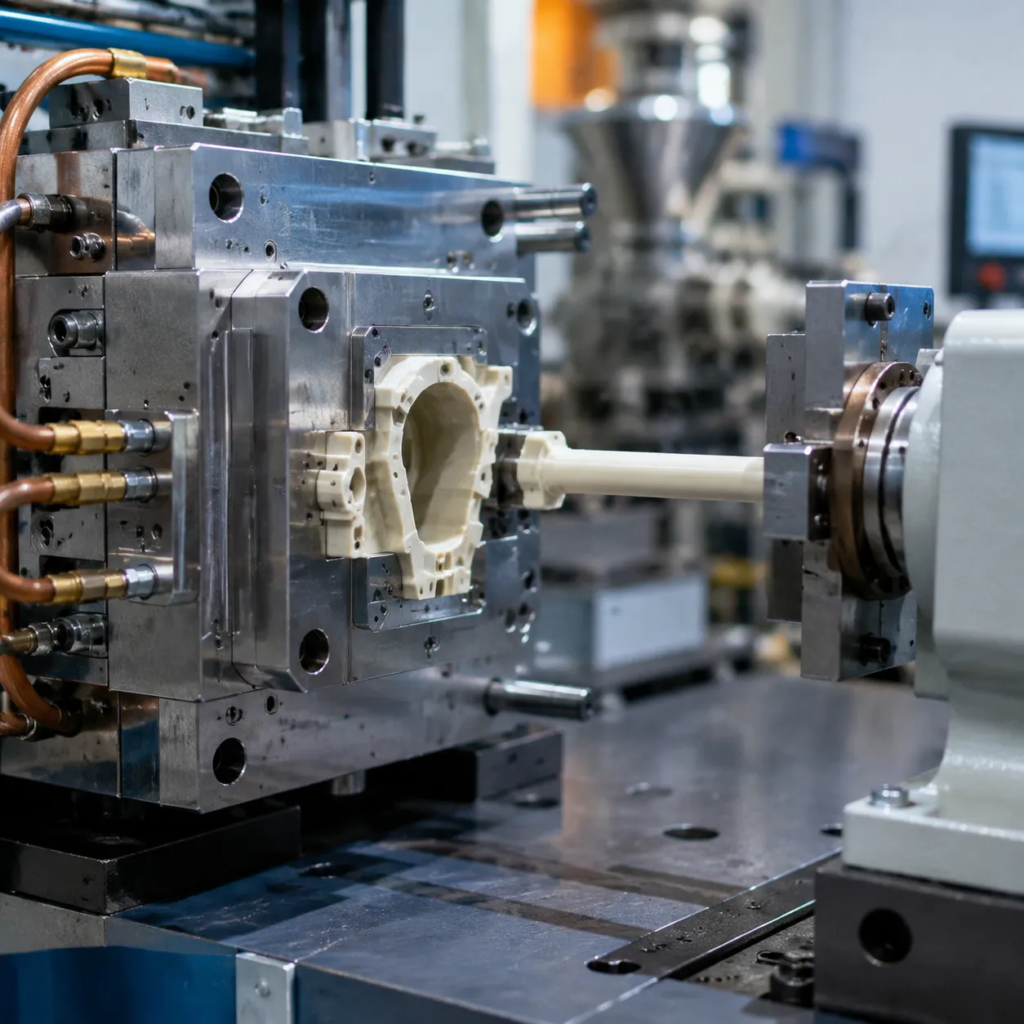
What Are Injection Molded Ceramic Cores?
When manufacturing high-performance components with complex internal geometries, standard molding techniques fall short. That is where injection molded ceramic cores come in. In modern manufacturing, these cores serve a critical function: they occupy the exact space where a hollow cavity or intricate internal channel needs to be inside a metal casting. By placing a precise ceramic shape inside a mold before pouring molten metal, we can create incredibly sophisticated internal pathways that would be impossible to drill or machine afterward.
Why Ceramic Materials Work for Internal Cavities
We utilize specialized ceramic materials because they possess a unique combination of high-temperature stability and structural integrity. During the investment casting process, the core is subjected to extreme thermal shock and immense pressure from molten alloys. Ceramic materials can withstand these harsh conditions without deforming or melting. Furthermore, because these porous ceramic cores maintain their exact shape during solidification, they allow us to cast ultra-thin walls and intricate cooling passages with perfect repeatability.
Applying Ceramic Injection Molding (CIM) to Manufacturing
The production of these cores relies on ceramic injection molding (CIM), a process that adapts traditional plastic molding technology for advanced material synthesis.
- The Blend: We combine fine ceramic powders (such as silica or alumina) with a thermoplastic binder system to create a moldable feedstock.
- The Injection: This heated mix is injected under precise pressure into a steel die, capturing every minute detail of the design.
- The Sintering: Once cooled, the green part is removed from the die, undergoes a binder removal phase, and is fired at extreme temperatures during sintering to create a dense, rigid ceramic structure.
This hybrid approach allows us to deliver mass-produced, high-precision internal cavities for the most demanding casting applications on the market today.
Key Benefits of Injection Molded Ceramic Cores
When manufacturing complex components with intricate internal cavities, our Injection Molded Ceramic Cores deliver the structural integrity and precision that standard molding methods simply cannot match. We design these cores to withstand the harshest casting environments while maintaining perfect geometric fidelity.
Here is a breakdown of the core advantages we bring to your investment casting process:
| Benefit | Practical Advantage | Manufacturing Impact |
|---|---|---|
| High Dimensional Accuracy | Holds exceptionally tight dimensional tolerances. | Eliminates costly post-cast machining. |
| Excellent Thermal Stability | Resists extreme heat and thermal shock without warping. | Essential for directional solidification and single-crystal casting. |
| Superior Surface Finish | Creates smooth, complex internal geometries. | Improves fluid flow and aerodynamic efficiency in final parts. |
| Chemical Leachability | Dissolves easily during the post-cast core leaching process. | Ensures clean internal channels without damaging the metal alloy. |
Unmatched Thermal Stability and Heat Resistance
During high-temperature pours, material degradation is not an option. Our ceramic injection molding (CIM) formulations offer the high-temperature stability required to resist erosion from molten metal. This ensures that the internal cooling passages of components like turbine blades remain exact, repeatable, and completely free of defects.
Seamless Core Leaching Process
Achieving complex internal geometries is only half the battle; removing the core safely is the other. Our porous ceramic cores are engineered for optimal chemical reactivity during the cleaning stage. This allows for fast, efficient removal during the chemical leaching process, leaving behind pristine, ultra-smooth internal pathways.
Target Industries for Injection Molded Ceramic Cores
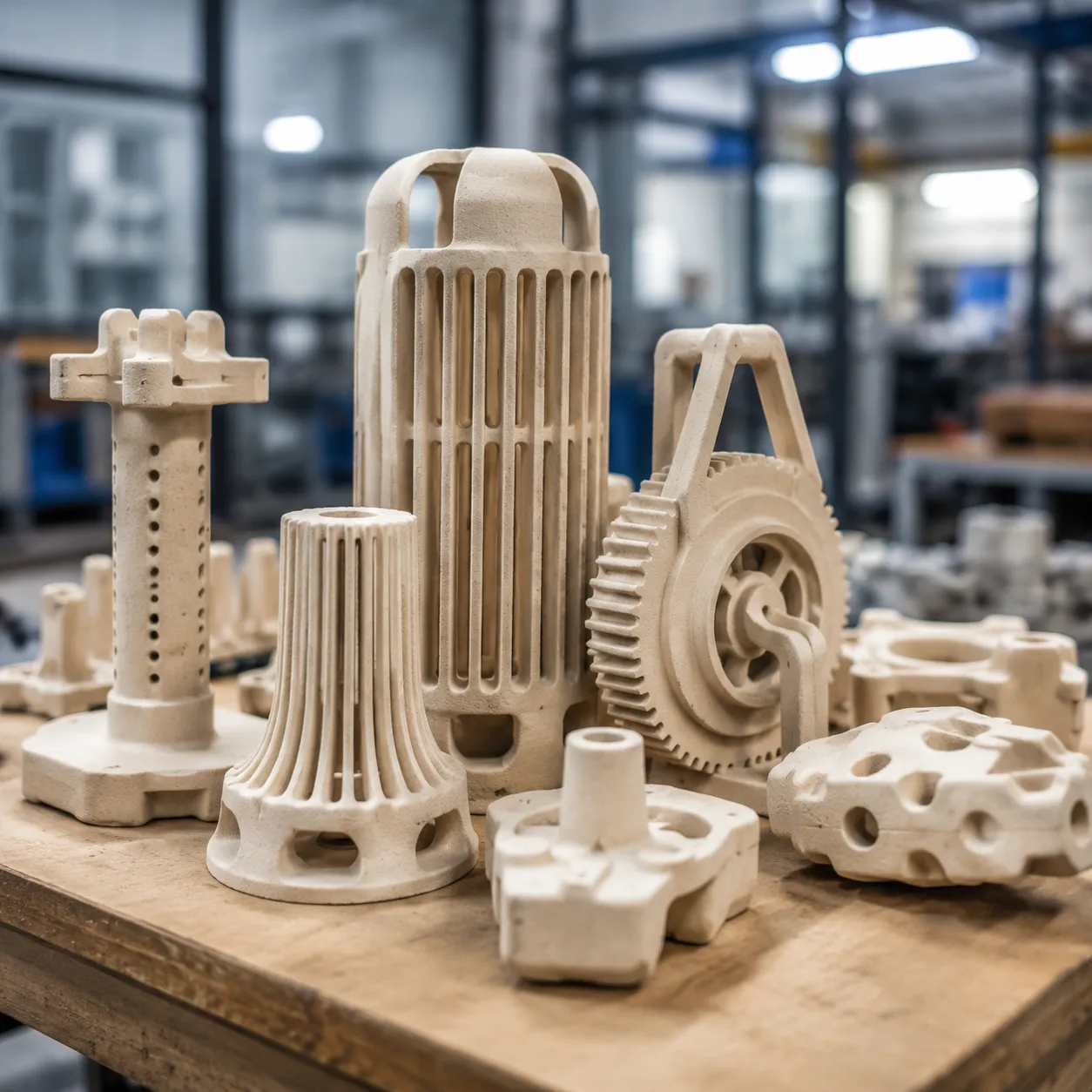
We design our injection molded ceramic cores to survive the harshest manufacturing environments. If your process requires casting complex internal cavities, these cores provide the structural integrity needed for specialized high-performance parts.
Here is where our ceramic cores are driving production across major US industries:
Aerospace Investment Casting
In aviation, efficiency relies on internal cooling channels within engine components. We supply high-precision cores for turbine blade casting and vanes, allowing aerospace manufacturers to push the limits of operating temperatures and fuel efficiency during the investment casting process.
Industrial Gas Turbines (IGT)
Similar to aerospace, land-based power turbines require massive, highly durable components with intricate internal pathways. Our porous ceramic cores resist thermal deformation, ensuring clean internal cavities casting for heavy-duty power generation equipment.
Automotive Turbochargers
High-performance automotive engineering demands tight dimensional tolerances. We produce ceramic cores for turbocharger impellers and complex exhaust manifolds, helping manufacturers achieve optimal gas flow and reduced turbo lag.
Medical Devices and Specialized Engineering
From orthopedic implants to advanced surgical tools, the medical field relies on extreme precision. Our ceramic injection molding solutions deliver the smooth surface finishes and exact geometries required for biocompatible cast instruments.
The Ceramic Injection Molding (CIM) Process
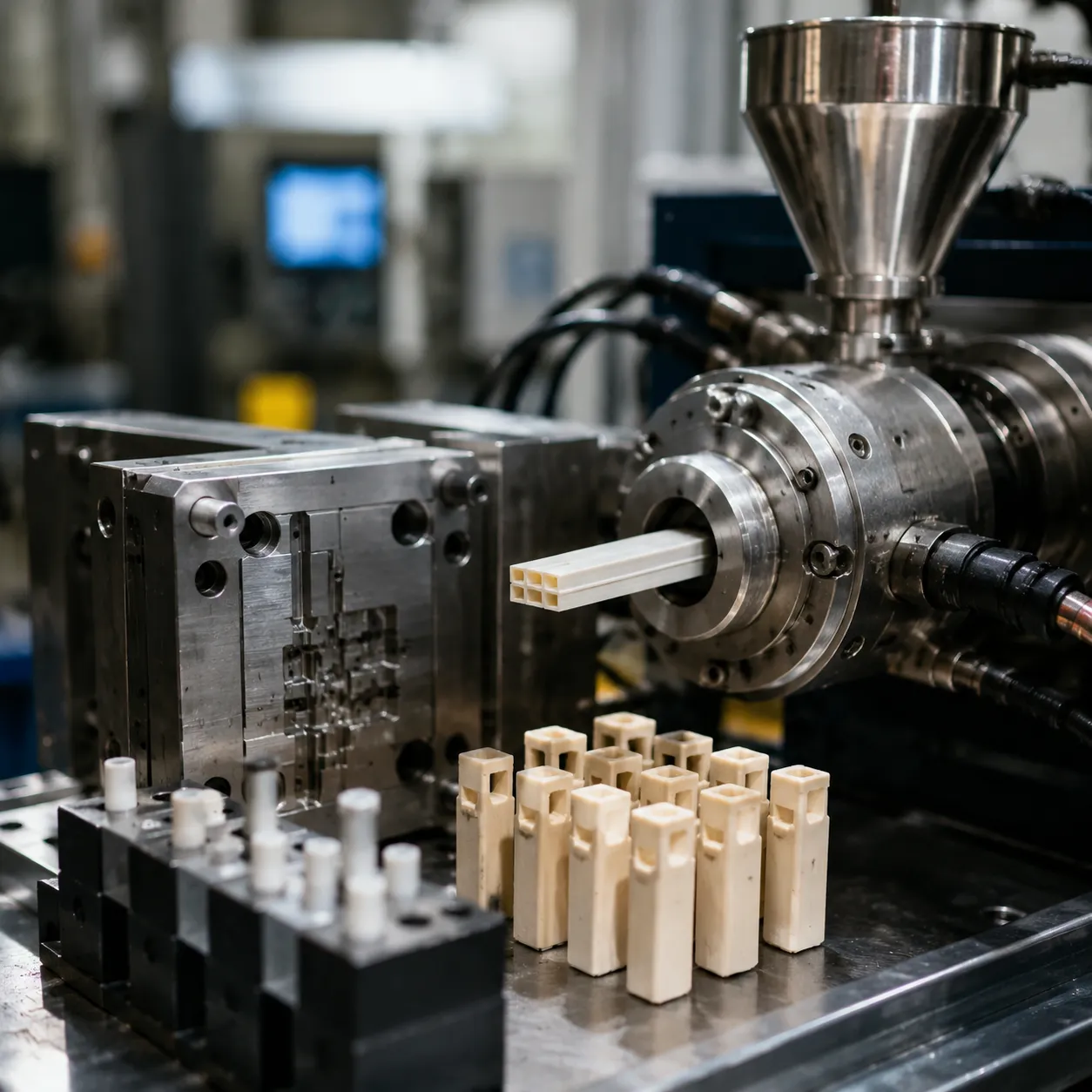
We control every step of our manufacturing process to ensure our injection molded ceramic cores meet strict aerospace and industrial standards. Here is how we take raw powder and turn it into a high-precision core.
Powder Blending and Binder Formulation
The process begins with material selection. We blend high-purity ceramic powders—such as silica or alumina—with a specialized thermoplastic or wax binder system. This mixing phase ensures a completely homogeneous feedstock, which is critical for preventing defects in the final part.
Injection Molding: Low-Pressure vs. High-Pressure
Once the feedstock is ready, we use ceramic injection molding (CIM) to form the green state core. Depending on the geometry, we utilize two distinct methods:
- Low-Pressure Injection Molding: Ideal for highly intricate, fragile geometries because it reduces tool wear and stress on the core.
- High-Pressure Injection Molding: Best for high-volume production runs that require maximum density and ultra-tight dimensional tolerances.
Binder Removal and Sintering
The molded core must undergo a multi-stage thermal treatment to achieve its final material properties:
- Debinding: We carefully extract the polymer binder using solvent or thermal processes without disturbing the ceramic structure.
- High-Temperature Sintering: During this final binder removal sintering stage, we fire the cores in high-temperature kilns. The ceramic particles fuse together, giving the core its final strength, precise dimensions, and the high-temperature stability required to withstand the investment casting process.
Choosing the Right Ceramic Core Material
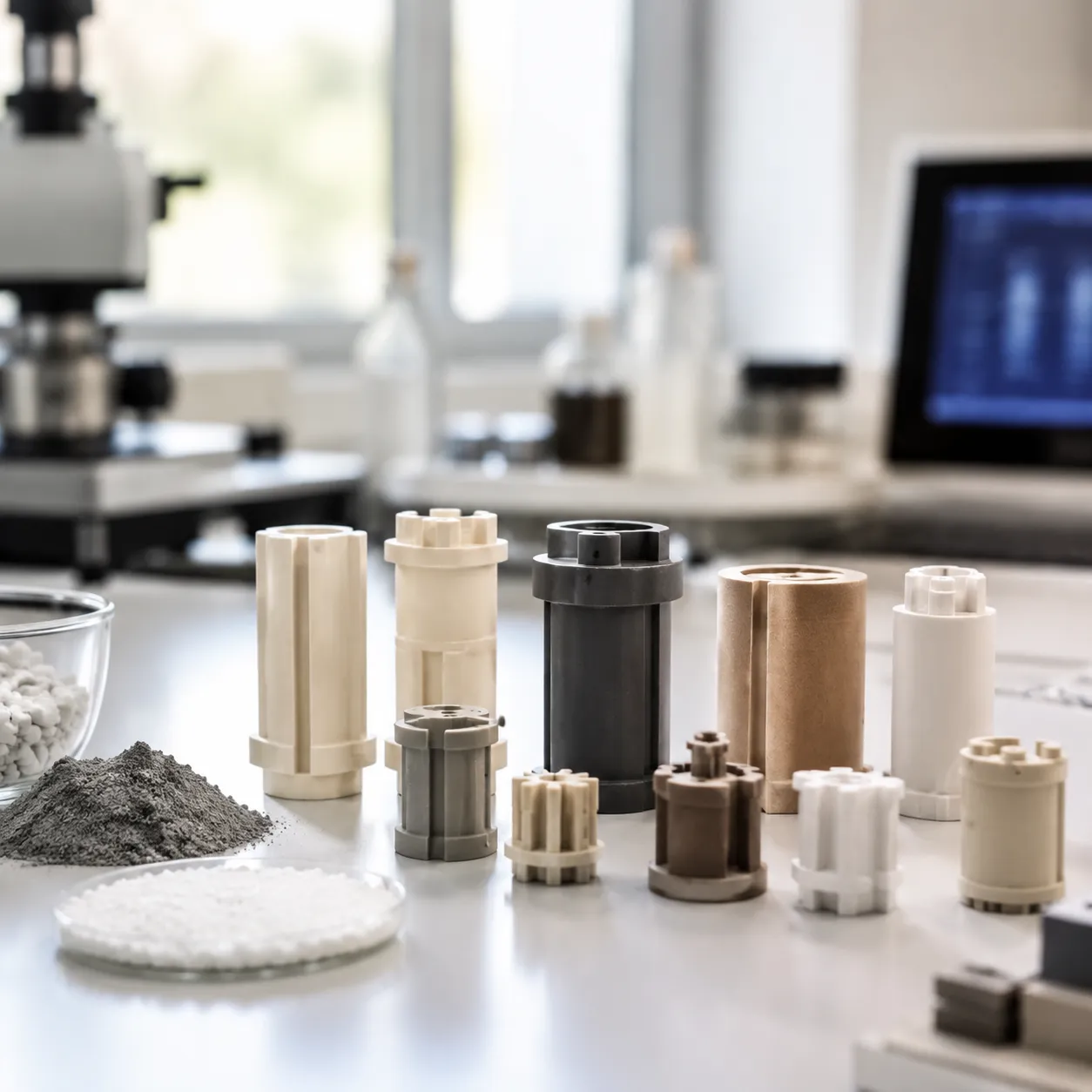
Selecting the ideal material for injection molded ceramic cores directly impacts the success of your investment casting process. We formulate our cores to match the thermal demands and chemical profiles of your specific casting alloys.
| Material Type | Max Temperature Resistance | Best Used For | Key Benefit |
|---|---|---|---|
| Silica Ceramic Cores | Medium-High | Aluminum, dross-free steels, standard alloys | Easiest core leaching process |
| Alumina Cores | Ultra-High | DS / SX turbine blade casting, superalloys | Exceptional high-temperature stability |
| Zirconia & Mixed Oxides | Extreme | Titanium, highly reactive specialized alloys | Minimal metal-core chemical reaction |
Silica Ceramic Cores for Standard Applications
For the majority of standard investment casting runs, silica ceramic cores are our go-to recommendation. They offer excellent dimensional tolerances and sufficient thermal stability for common ferrous and non-ferrous metals. The standout advantage here is post-cast removal: silica dissolves easily in standard chemical baths, making the core leaching process fast and efficient without damaging the internal cavities of your cast part.
Alumina Cores for Ultra-High Temperature Resistance
When your operation pushes into superalloys and complex directional solidification (DS) or single-crystal (SX) casting, standard materials won’t hold up. We utilize alumina cores to withstand these extreme thermal environments. Alumina provides the necessary mechanical strength and resistance to sag under intense heat, ensuring that intricate turbine blade casting geometries remain perfectly intact throughout the cooling cycle.
Zirconia and Mixed Oxide Formulations for Specialized Alloys
Reactive alloys require customized material science to prevent surface defects. Our zirconia and mixed oxide formulations are engineered specifically for specialized alloys that chemically attack standard silica or alumina. By balancing the thermal expansion matching and reducing chemical reactivity, these advanced investment casting ceramic cores deliver pristine internal surfaces on the most demanding aerospace and automotive components.
Design Considerations for Ceramic Cores
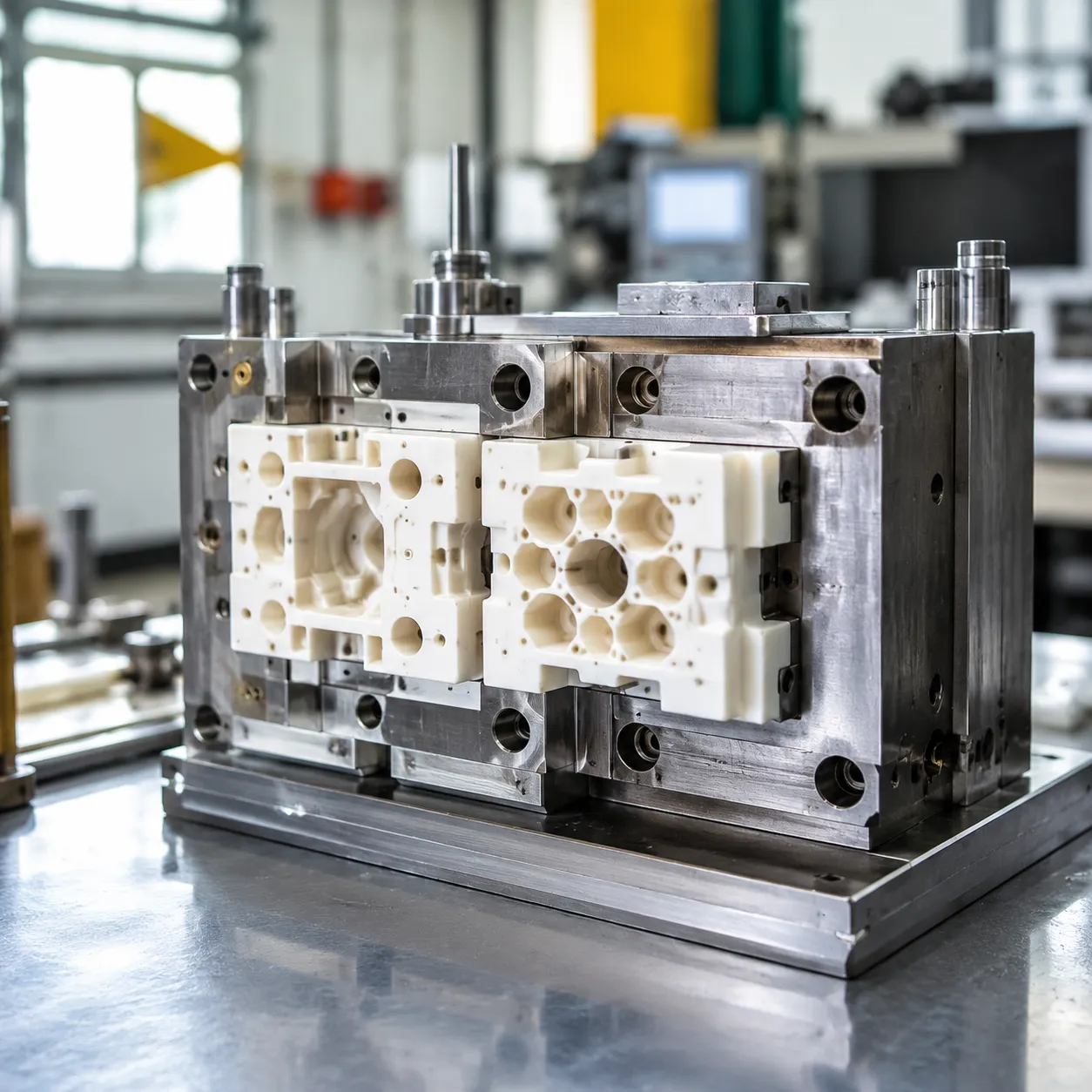
When we design injection molded ceramic cores for complex investment casting, precision is everything. If the core fails under pressure, the entire cast component is scrap. We focus on three critical engineering pillars to ensure our ceramic injection molding (CIM) designs deliver perfect internal cavities casting every time.
Wall Thickness and Structural Integrity
The core must withstand intense metal pressures during the lost wax casting process without shifting or breaking. Minimum Thickness: We maintain strict cross-sectional limits to prevent fragile spots. Pressure Resistance: Geometric ribbing is integrated into hollow zones to boost strength. Fillets and Radii: Generous blending radii eliminate stress concentrations where cracks typically start.
Managing Shrinkage and Thermal Expansion
Ceramics and metals shrink at completely different rates. Matching these thermal profiles is mandatory to avoid dimensional errors.
| Factor | Challenge | Our Solution |
|---|---|---|
| Sintering Shrinkage | Ceramic shrinks during binder removal sintering. | We scale our injection tooling using precise predictive software. |
| Thermal Expansion (CTE) | Metal contracts faster than ceramic during cooling. | We tune the high-temperature stability of our silica ceramic cores to compress safely without cracking the metal. |
Core Support and Print Positioning
A perfect core is useless if it shifts inside the mold. Secure placement ensures tight dimensional tolerances in the final part. Core Prints: We design extended anchor points (prints) that lock the core firmly into the wax pattern and outer shell. Interlocking Features: Custom keys and slots prevent rotation during the pour. Chaping and Pins: Where needed, mechanical supports hold long, thin sections stable during turbine blade casting.
Frequently Asked Questions
How do you remove ceramic cores from a cast part?
We use a chemical core leaching process to dissolve the core after the metal solidifies. The cast part is submerged in a hot, pressurized caustic solution (like sodium hydroxide or potassium hydroxide). This chemical bath eats away the porous ceramic cores without damaging the surrounding metal, leaving clean internal cavities.
What is the typical tolerance achieved with injection molded ceramic cores?
Our ceramic injection molding (CIM) process delivers exceptional dimensional tolerances, typically holding within ±0.003 to ±0.005 inches per inch. This high precision is critical for the complex internal geometries required in modern investment casting.
Can ceramic cores handle directional solidification and single-crystal casting?
Yes. We engineer specialized alumina cores and silica blends specifically to withstand the extreme thermal gradients of directional solidification and single-crystal turbine blade casting. Their exceptional high-temperature stability ensures they do not deform or creep during these prolonged, high-heat casting cycles.
What causes ceramic core cracking and how do you prevent it?
Ceramic core cracking is usually caused by uneven thermal expansion, improper binder removal sintering cycles, or mechanical stress during the lost wax casting process. We prevent cracking by doing the following:
- Optimizing the ceramic powder and binder mix for uniform shrinkage.
- Controlling the firing ramp-up speeds to eliminate internal stress.
- Designing precise core supports to handle the mechanical pressure of the molten metal.
 German
  English