

Custom die cast aluminum parts with high strength lightweight alloys fast lead times and expert design support
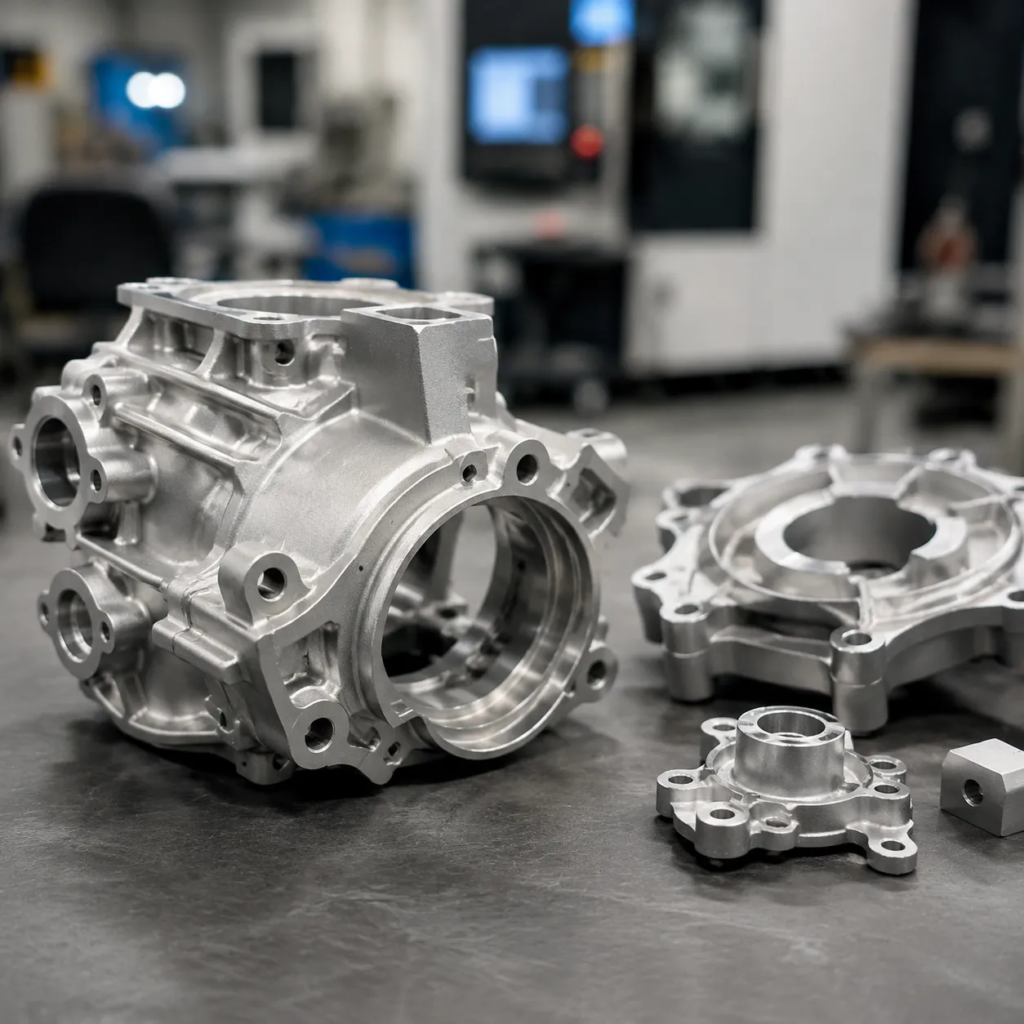
What is Die Cast Aluminum?
When we need to manufacture lightweight, incredibly strong metal parts at scale, die cast aluminum is our go-to solution. It is a high-efficiency manufacturing process where molten aluminum alloy is injected into a reusable steel mold—called a die—under immense pressure.
[Image of high pressure die casting process]
Once the liquid metal fills the mold, it cools and solidifies almost instantly, creating a near-net-shape part with exceptional precision. We utilize high pressure die casting because it forces the metal into complex geometries that other casting methods simply cannot achieve.
Why It Matters for Modern Product Manufacturing
In today’s fast-paced market, businesses face a constant challenge: reducing product weight while increasing structural durability and keeping production costs low. Aluminum parts manufacturing solves this dilemma.
Here is why this material and process are critical for modern production: Massive Scalability: We can produce thousands of identical, complex parts with minimal dimensional variation, drastically reducing per-unit costs. Weight Reduction: Aluminum provides the strength of steel at a fraction of the weight, which is essential for modern energy efficiency standards. Minimal Post-Processing: Parts come out of the mold with excellent surface finishes and tight tolerances, meaning fewer steps in the machine shop and faster time-to-market.
Key Benefits of Die Cast Aluminum
When manufacturing parts for demanding industries, choosing the right material determines the success of your product. Die cast aluminum stands out because it delivers high-strength performance without adding unnecessary weight. From structural integrity to thermal management, it solves the most common engineering challenges we face today.
Here is a quick breakdown of why we rely on high-pressure metal casting for top-tier components:
| Key Benefit | Impact on Component Manufacturing |
|---|---|
| Strength-to-Weight Ratio | Creates lightweight yet highly durable parts that withstand heavy structural stress. |
| Thermal & Electrical Conductivity | Dissipates heat rapidly, making it the ideal choice for electronics and heat sinks. |
| Dimensional Stability | Maintains tight tolerances and handles complex, thin-walled shapes perfectly. |
| Corrosion Resistance | Resists environment-driven rust naturally and accepts a wide variety of surface finishes. |
High Performance, Low Weight
Our custom aluminum die casting services leverage these natural material properties to produce components that hold up under immense stress. Because aluminum forms a natural protective oxide layer, these parts resist corrosion right out of the mold.
Furthermore, the exceptional dimensional stability means we can cast intricate designs with net-near shapes, significantly reducing the need for secondary CNC machining. This efficiency speeds up production times and keeps your total manufacturing costs down.
Common Aluminum Casting Alloy Options
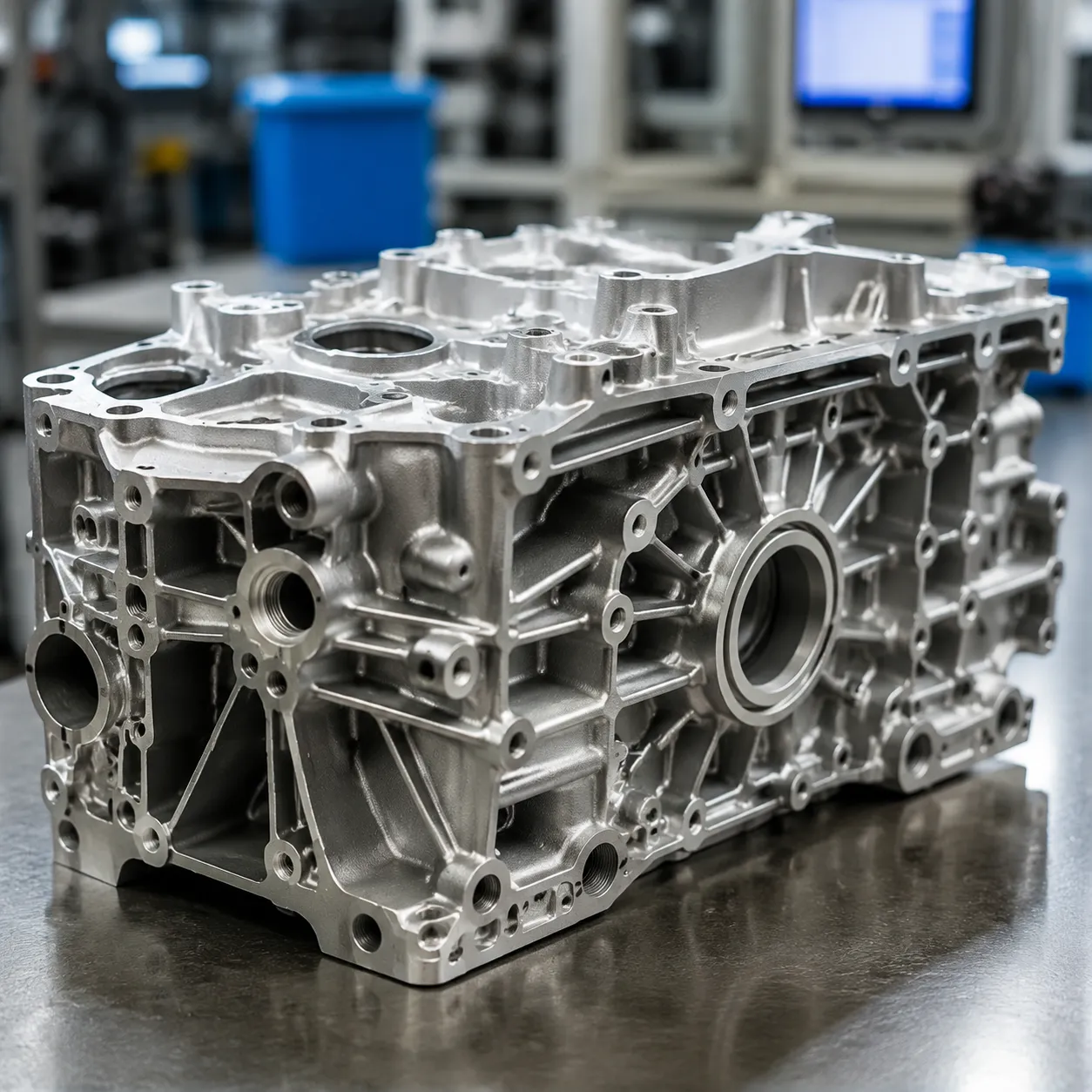
When we manufacture custom aluminum die casting components, choosing the right material is everything. Different projects demand different material properties. We rely on three primary aluminum casting alloy options to hit your exact specs.
A380 Aluminum Properties
A380 is our go-to, all-rounder alloy for high pressure die casting. It offers the best balance of physical properties, mechanical properties, and ease of production.
- Key Benefit: Exceptional fluidity and high resistance to hot cracking.
- Best Used For: Electronic enclosures, engine brackets, and heavy-duty brackets.
- Why We Use It: It fills complex molds perfectly and keeps production costs down.
A360 Aluminum Properties
When your application requires high corrosion resistance and better ductility, we upgrade the spec to A360.
- Key Benefit: Superior performance in harsh environments compared to A380.
- Best Used For: Marine hardware, outdoor lighting fixtures, and irrigation components.
- Why We Use It: It handles flexing forces better and resists environmental wear over time.
A413 Aluminum Properties
For ultra-thin wall aluminum casting and components that must hold pressure without leaking, A413 is the top choice.
- Key Benefit: Highest silicon content, resulting in excellent pressure tightness and fluidity.
- Best Used For: Hydraulic cylinders, intake manifolds, and intricate dental equipment housings.
- Why We Use It: It completely eliminates structural porosity in highly detailed, complex mold designs.
Quick Alloy Comparison
| Alloy Grade | Corrosion Resistance | Fluidity & Castability | Strength-to-Weight | Primary Feature |
|---|---|---|---|---|
| A380 | Moderate | Excellent | High | Best overall utility |
| A360 | High | Good | High | Ductility & rust resistance |
| A413 | Moderate | Superior | Moderate | Pressure tightness & thin walls |
Primary Applications of Die Cast Aluminum Components
We see die cast aluminum everywhere because it strikes the perfect balance between weight savings and rugged durability. When your product needs to survive harsh daily use without adding unnecessary bulk, this is the go-to manufacturing method. Here is where our custom aluminum die casting components work the hardest across US industries:
Automotive Parts and Engine Components
Vehicle manufacturing demands high strength and weight reduction to boost fuel and battery efficiency. We produce critical aluminum parts manufacturing solutions for the automotive sector, including: Engine blocks and cylinder heads Transmission cases and gear housings Electric vehicle (EV) battery enclosures and structural brackets
Aerospace and Drone Structural Elements
In the aerospace and commercial drone markets, every ounce matters. We utilize thin wall aluminum casting techniques to deliver lightweight, flight-ready components that handle extreme stress: Drone frames and motor mounts In-cabin structural brackets Avionics chassis and sensor housings
Consumer Electronics Enclosures and Heat Sinks
Modern electronics need to stay cool while looking sleek. Our high pressure die casting process delivers crisp, clean enclosures that protect delicate circuitry while managing thermal loads: Handheld device chassis and laptop frames LED lighting housings High-efficiency heat sinks for power supplies
Industrial Machinery and Power Tool Housings
Industrial gear takes a beating. We manufacture heavy-duty parts that protect internal mechanics from impacts, dust, and moisture: Power tool gearboxes and main housings Pumps, valves, and pneumatic component bodies Electric motor housings and end bells
Die Cast Aluminum vs. Other Manufacturing Methods
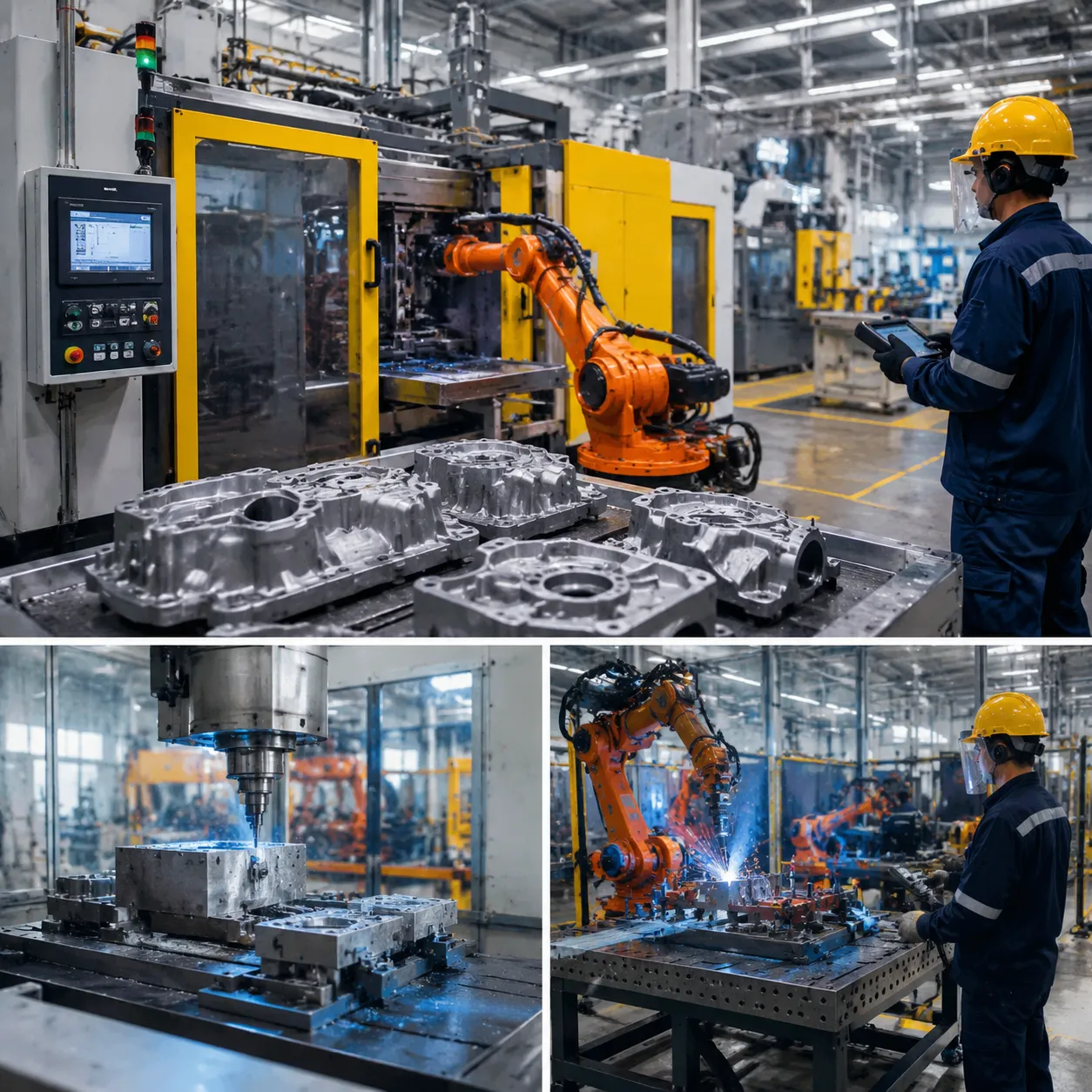
We frequently get asked how aluminum die casting holds up against alternative production techniques. Choosing the right approach directly impacts your piece-part cost, production speed, and structural performance. Here is how our custom aluminum die casting process compares to the alternatives.
Aluminum Die Casting vs. Sand Casting
- Production Volume: We utilize high pressure die casting for large-scale production runs because it delivers parts in seconds. Sand casting is slower and better suited for low-volume runs or massive, heavy components.
- Surface Finish and Tolerance: Die cast aluminum components come out of the mold with a smooth, near-net-shape finish and tight tolerances. Sand casting leaves a rough texture that requires extensive secondary machining.
- Wall Thickness: Our process excels at intricate, thin wall aluminum casting, whereas sand casting requires much thicker walls to prevent defects.
Aluminum Die Casting vs. CNC Machining
- Cost Efficiency: For high-volume aluminum parts manufacturing, die casting drops the cost per part drastically compared to CNC machining, which becomes too expensive at scale.
- Material Waste: CNC machining carves parts out of a solid block, creating significant raw material scrap. Die casting melts and injects precisely what is needed, minimizing waste.
- Production Speed: Once the die cast mold design is finalized, we can produce thousands of identical parts rapidly, while CNC machining requires hours of cycle time per part.
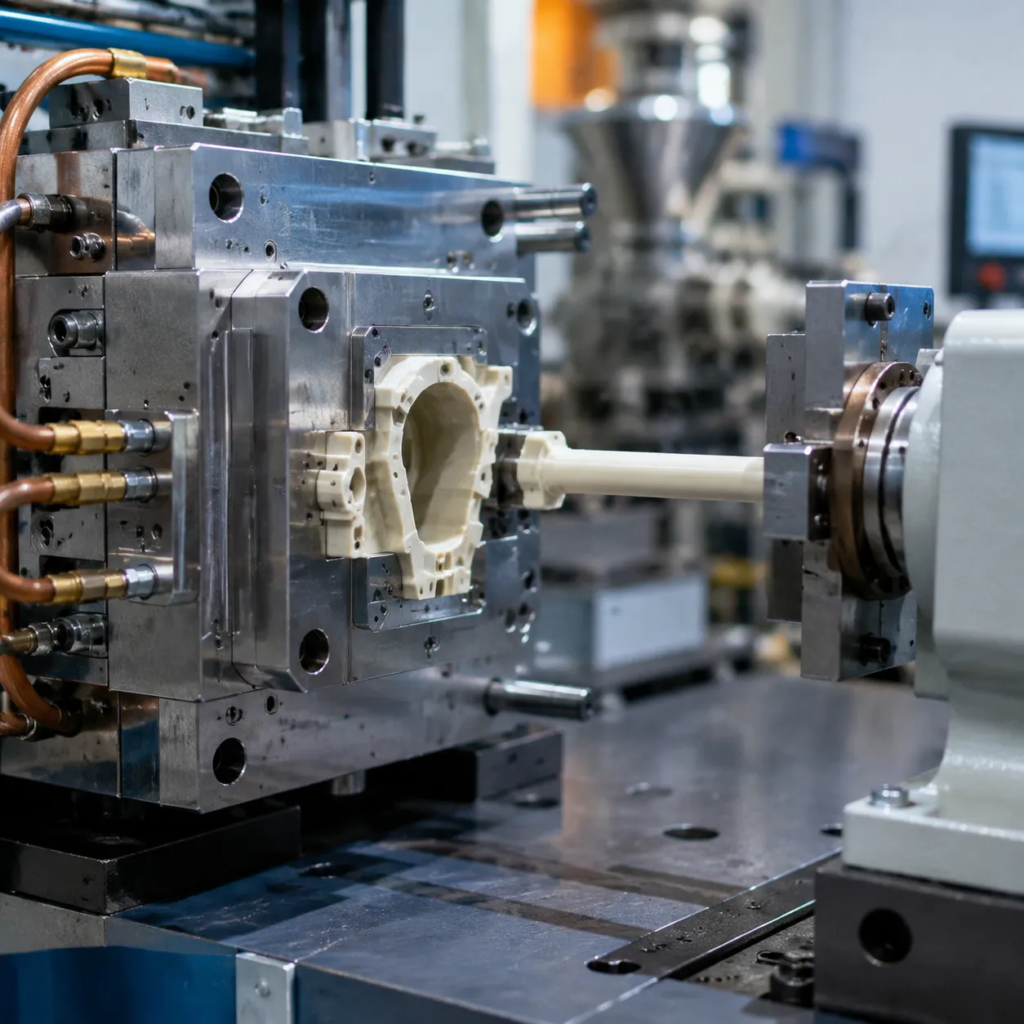
Aluminum Die Casting vs. Plastic Injection Molding
| Feature | Aluminum Die Casting | Plastic Injection Molding |
|---|---|---|
| Material Strength | High structural integrity; handles heavy loads | Low to moderate strength; prone to flexing |
| Thermal Management | Excellent natural heat dissipation | Acts as a thermal insulator (retains heat) |
| Durability | High impact resistance and UV stability | Can degrade under heat, UV exposure, or stress |
While plastic injection molding is ideal for lightweight, low-stress consumer goods, it cannot match the structural integrity, harsh-environment durability, and thermal conductivity of a high-grade aluminum die casting alloy.
Inside Our High Pressure Die Casting Process
We don’t cut corners in our metal casting foundry. Getting a flawless die cast aluminum component requires strict control over every second of the manufacturing cycle.
[Image of the high pressure aluminum die casting process]
Here is exactly how we transform molten metal into precision parts:
- 1. Mold Preparation and Clamping We start by cleaning the steel die cavities and spraying them with a specialized lubricant. This regulates the tool temperature and ensures the finished part releases smoothly. Once prepped, we clamp the two halves of the die together under immense hydraulic pressure to prevent any metal leakage.
- 2. High Pressure Liquid Injection Next, we transfer the molten alloy into the shot chamber. A hydraulic piston forces the liquid metal into the die cavity at extreme speed and pressure. This rapid aluminum casting process forces the metal into every intricate detail of the mold before it begins to cool.
- 3. Cooling and Solidification The aluminum cools and solidifies rapidly inside our water-cooled steel dies. We maintain constant pressure during this phase to prevent structural shrinkage and eliminate internal air pockets.
- 4. Ejection and Trimming Once the part solidifies, the mold opens and automated ejector pins push the piece out. ly, we trim away the excess metal—known as flash—along with the gating system, leaving a clean, highly accurate custom aluminum die casting ready for finishing.
Surface Finishing Options for Aluminum Die Castings
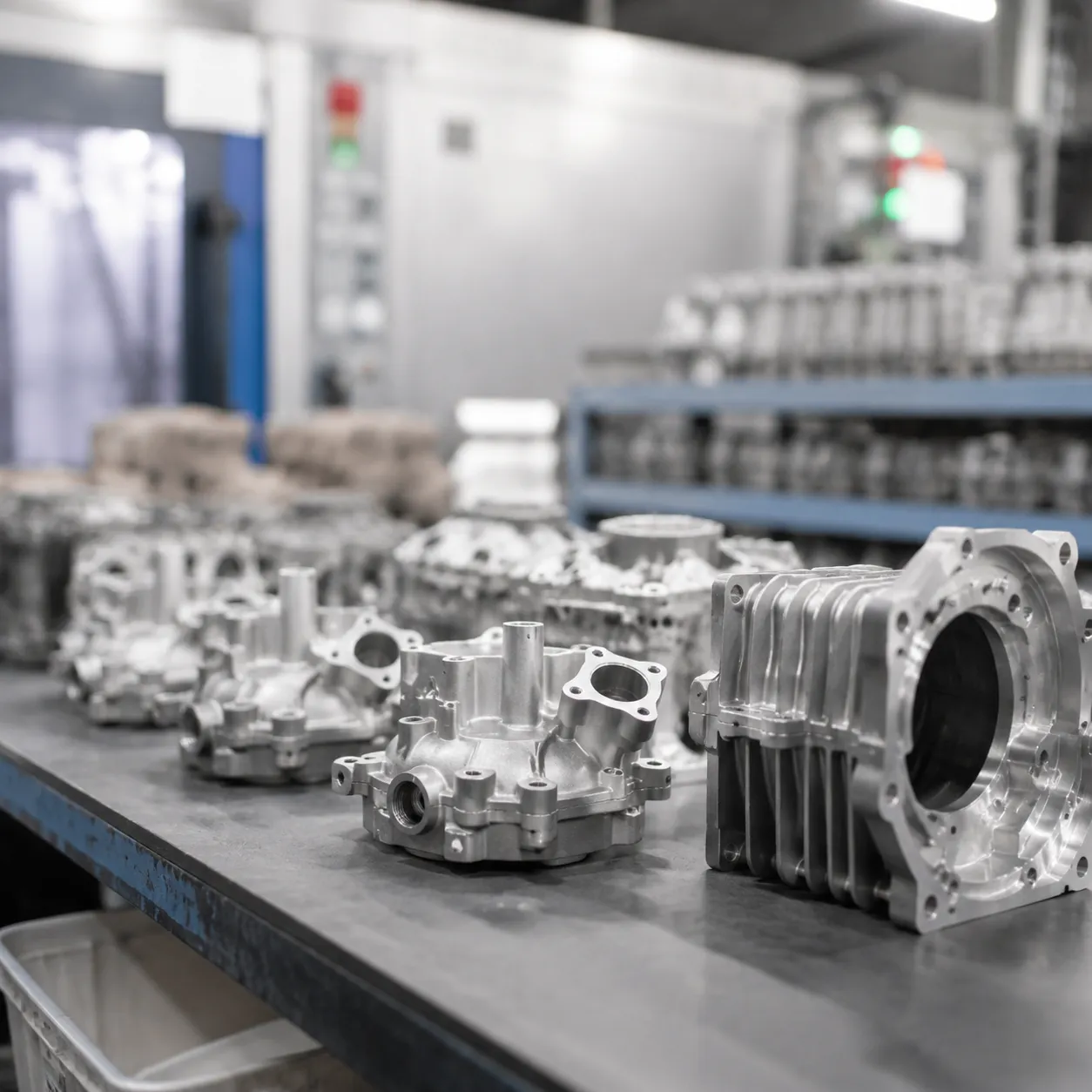
Raw aluminum die castings are highly functional, but applying the right surface finish takes their durability and appearance to the next level. We offer several industry-standard finishing methods to meet your specific project requirements, whether you need maximum corrosion resistance, cosmetic appeal, or improved wear protection.
Powder Coating and Painting
For a premium cosmetic look and a layer of environmental protection, powder coating and liquid painting are our go-to solutions. Powder coating delivers a thick, durable, and uniform exterior layer that resists chipping and scratching, making it perfect for consumer electronics and industrial housings.
Anodizing for Wear and Corrosion Protection
Anodizing converts the aluminum surface into a hard, non-conductive oxide layer. This electrochemical process significantly increases wear resistance and protects the part against harsh environments. It is an excellent choice for aerospace components and marine applications where long-term durability is non-negotiable.
Shot Blasting and E-Coating
- Shot Blasting: This mechanical process fires small abrasive media at the custom aluminum die casting to remove flash, smooth out rough edges, and create a uniform matte texture.
- E-Coating (Electrophoretic Deposition): An electrical current deposits liquid paint onto the part, ensuring 100% coverage even in deep recesses and complex geometries. It serves as an exceptional anti-corrosion primer.
Comparison of Aluminum Casting Finishes
| Finish Type | Primary Benefit | Best For | Aesthetic Options |
|---|---|---|---|
| Powder Coating | High durability & scratch resistance | Consumer electronics, tools | Wide range of colors & textures |
| Anodizing | Extreme corrosion & wear protection | Aerospace, marine parts | Matte or glossy metallic tones |
| Shot Blasting | Removes defects & unifies surface | Industrial machinery parts | Uniform, textured matte finish |
| E-Coating | Complete coverage primer | Automotive, hidden structural parts | Typically black, uniform matte |
Die Cast Mold Design Considerations
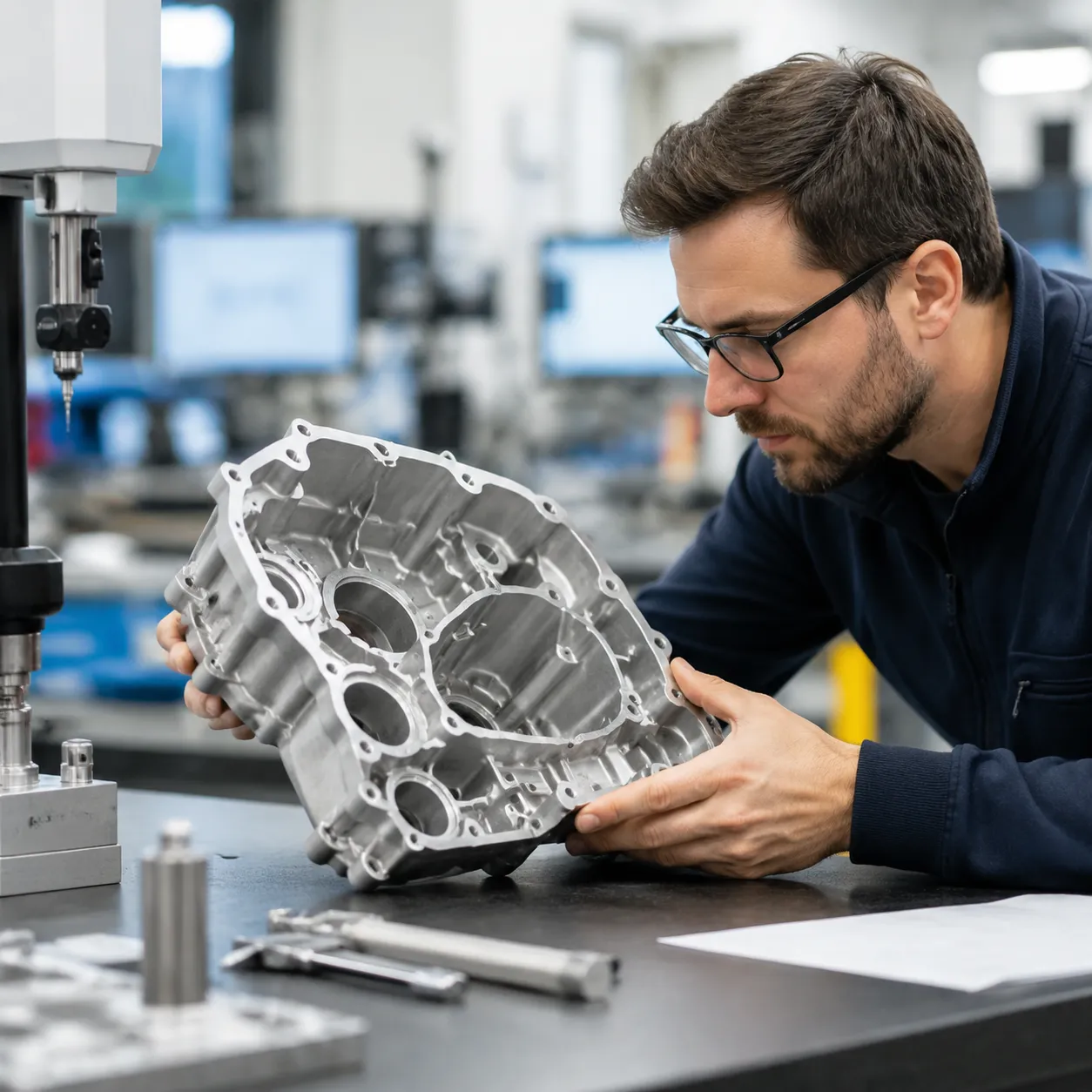
When we engineer a custom aluminum die casting, getting the geometry right on the front end prevents costly defects later. We focus on three critical design rules to ensure every part comes out flawless.
Wall Thickness Optimization
We maintain uniform wall thickness throughout the part to prevent shrinkage, porosity, and warping. Ideal Range: Keep walls between 1.5mm and 4.0mm for optimal high pressure die casting. Transitions: We use gradual blends if thickness must change, ensuring smooth metal flow during injection. Thin Wall Benefits: Utilizing thin wall aluminum casting reduces cycle times and saves material costs without sacrificing part strength.
Draft Angles for Clean Ejection
Without the right draft angle, the aluminum casting process stalls because parts stick to the tool steel. Inner Walls: We apply a minimum draft angle of 1° to 2° to handle shrinkage as the alloy cools. Outer Walls: A 0.5° to 1° draft is standard for effortless part ejection. Finish Quality: Proper draft angles eliminate drag marks, keeping the surface smooth for post-processing.
Bosses and Ribs Placement
We use structural features to boost part strength instead of just thickening the walls. Ribs: Adding ribs provides maximum rigidity and eliminates heavy sections that cause sink marks. Bosses: We design bosses as mounting points or standoffs, keeping their walls at 80% of the main wall thickness to avoid hot spots. Fillets: We incorporate generous radiuses at the base of every rib and boss to distribute stress evenly.
FAQ: Die Cast Aluminum
We get a lot of questions about how die cast aluminum holds up in production. Here are the quick, straight answers to the most common things we hear from product teams.
Is die cast aluminum prone to rusting?
No, aluminum does not rust because it contains virtually no iron. Instead, it naturally forms a protective aluminum oxide layer when exposed to air. For extreme environments, we typically add an anodized finish or powder coating to prevent cosmetic oxidation and pitting.
What is the life expectancy of an aluminum die casting mold?
For standard high pressure die casting, a high-quality steel mold generally lasts between 50,000 to 100,000 shots before the die cast mold design needs significant maintenance or replacement. Thermal fatigue from the molten metal is the main factor that limits tool life.
Can die cast aluminum parts be welded?
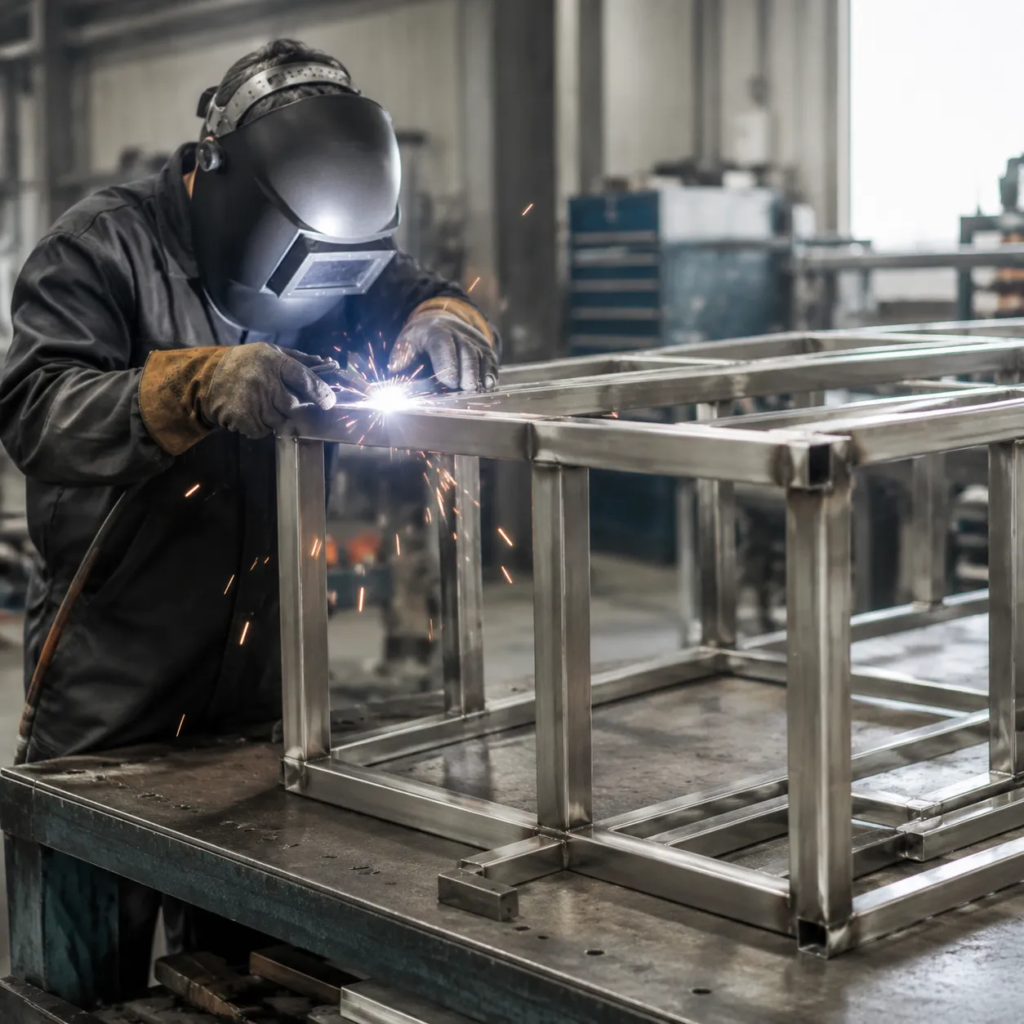
It is highly difficult and generally not recommended. The high pressure die casting process can trap small gas pockets inside the metal. When you apply welding heat, these gases expand, causing severe porosity, popping, and weak joints. Mechanical fasteners or specialized structural adhesives are better options for assembly.
How do you prevent porosity in aluminum die casting?
We control porosity through precise manufacturing adjustments and smart part design:
- Optimized venting: Proper vacuum venting lets air escape the mold before the metal injects.
- Wall thickness consistency: Keeping walls uniform prevents uneven cooling shrinking.
- Shot speed control: Managing injection speed and pressure reduces turbulent metal flow.
 German
  English