

Shop carbide burr bits for die grinders in all shapes cuts and shank sizes for fast precise metal removal
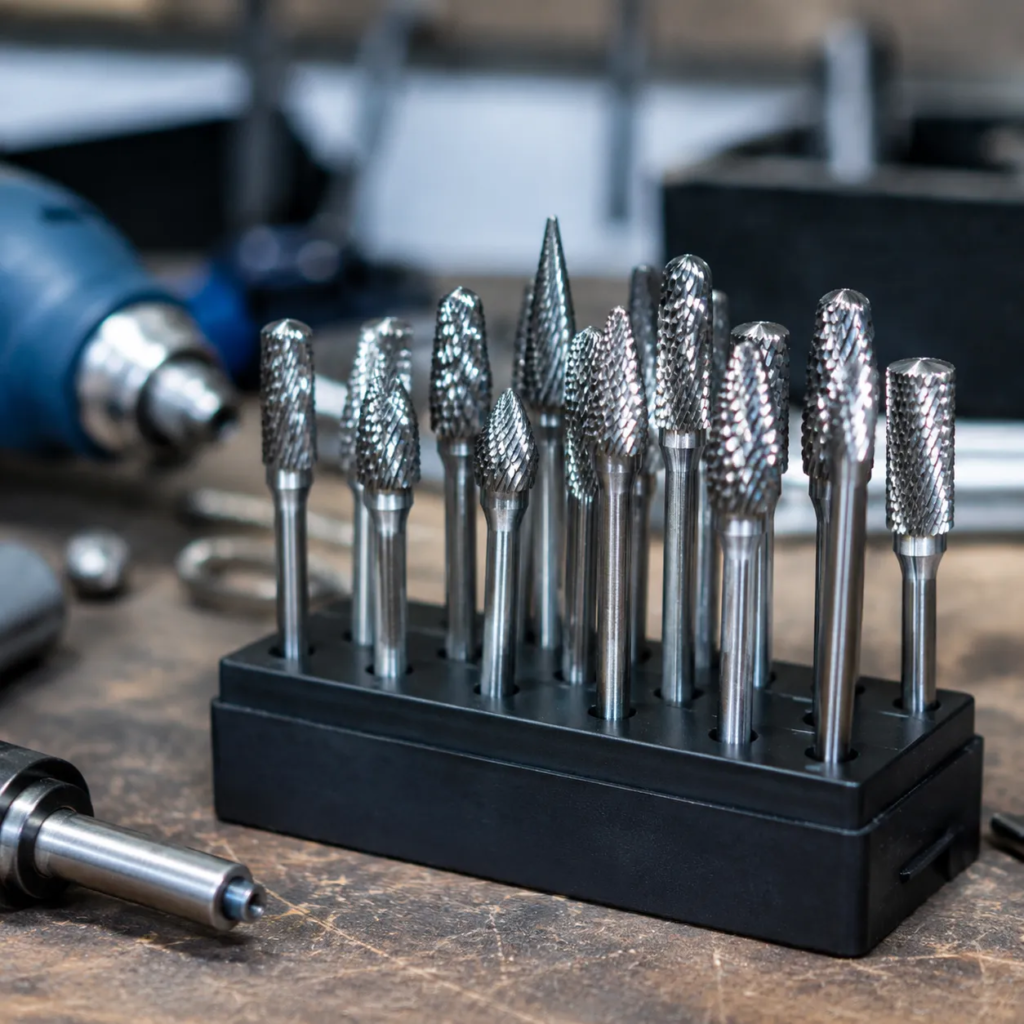
High-Performance Tungsten Carbide Burrs: Factory-Direct Precision Engineering
Are you tired of rotary bits that dull after a few heavy-duty passes, or chatter so badly they ruin your finish? When you are prepping welds, deburring tough steel, or shaping castings, you need tools that cut clean and last. We engineer our tungsten carbide rotary files factory-direct to eliminate the middleman and deliver industrial-grade performance straight to your shop floor.
Our carbide burr line provides the ultimate combination of hardness and heat resistance, keeping its razor-sharp edge long after standard high-speed steel fails.
Premium Industrial Rotary Files for Demanding Applications
We build these die grinder bits for metal to handle the most brutal production environments. Whether you run an aerospace fabrication line or a high-volume automotive shop, our burrs deliver consistent results.
- Maximum Stock Removal: High-density tungsten carbide material rips through hardened steel, stainless steel, and cast iron.
- Reduced Operator Fatigue: Precision-balanced construction eliminates vibration and chatter, even at high-RPM ranges.
- Extended Service Life: Advanced metallurgical bonding prevents head separation under extreme thermal stress.
Core Technical Specifications Matrix
We maintain strict manufacturing tolerances across our entire catalog. Here is a breakdown of our standard technical specifications for our heavy-duty solid carbide deburring tools:
| Parameter | Specification Details | Industrial Advantage |
|---|---|---|
| Material Composition | Premium Virgin Tungsten Carbide ($WC-Co$) | Exceptional hardness, wear resistance, and impact strength. |
| Shank Diameter Options | Standard 1/4 inch shank carbide burr & 1/8 inch options | Universal fit for commercial pneumatic and electric die grinders. |
| Hardness Rating | Up to 91 HRA | Easily cuts through metals hardened up to 60 HRC. |
| Maximum Operating Speed | Up to 30,000 RPM (Depending on head diameter) | Optimized for high-RPM rotary cutting bits to maximize efficiency. |
| Runout Tolerance | Less than 0.005 mm | Prevents skipping, ensures smooth finishes, and protects grinder bearings. |
Advanced Flute Geometries & Material Optimization
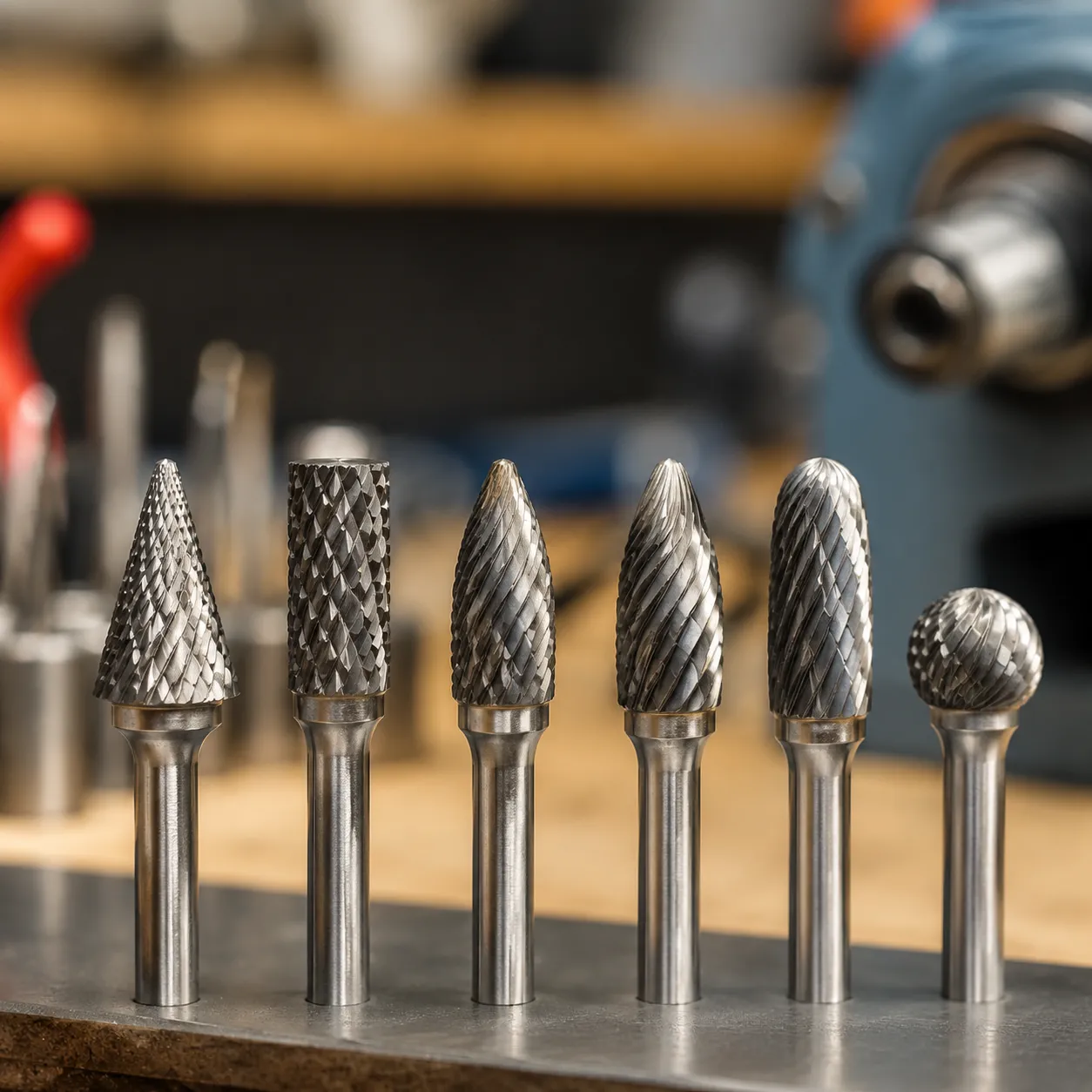
We design our premium carbide burr lineups with task-specific flute geometries to maximize stock removal and ensure flawless surface finishes. Matching the right cut to your material prevents clogging, reduces operator fatigue, and extends tool life.
Double Cut (Cross-Cut) Carbide Burrs
- Best For: Alloy steel, stainless steel, cast iron, and high-strength fasteners.
- Performance: The cross-cut design creates smaller chips, offering rapid stock removal and enhanced operator control.
- Application: Ideal for heavy-duty weld grinding burrs and precision deburring in tight spaces.
Single Cut (Standard Cut) Carbide Burrs
- Best For: Hardened steel, copper, ferrous metals, and general-purpose machining.
- Performance: Features a single directional spiral flute that produces long, continuous chips.
- Application: Engineered for aggressive material removal, deep carving, and creating smooth surface finishes on tough metals.
Aluma-Cut (Non-Ferrous) Flute Configurations
- Best For: Aluminum, magnesium, plastics, and soft non-ferrous materials.
- Performance: Designed with wide, deep flutes to prevent chip loading and material build-up at high RPMs.
- Sourcing: We manufacture these specialized aluminum cutting burrs to handle rapid stock removal without clogging. Discover our complete inventory of high-performance cutting tools at https://www.precisionvast.https://www.precisionvast.com/”>PrecisionVast.
| Flute Type | Primary Materials | Key Advantage | Chip Style |
|---|---|---|---|
| Double Cut | Stainless Steel, Cast Iron | Better operator control | Small, granular chips |
| Single Cut | Ferrous Metals, Hardened Steel | Heavy stock removal | Long, continuous chips |
| Aluma-Cut | Aluminum, Soft Plastics | Anti-clogging performance | Large, open flakes |
Choosing the Right Carbide Burr Shapes and Trade Numbers
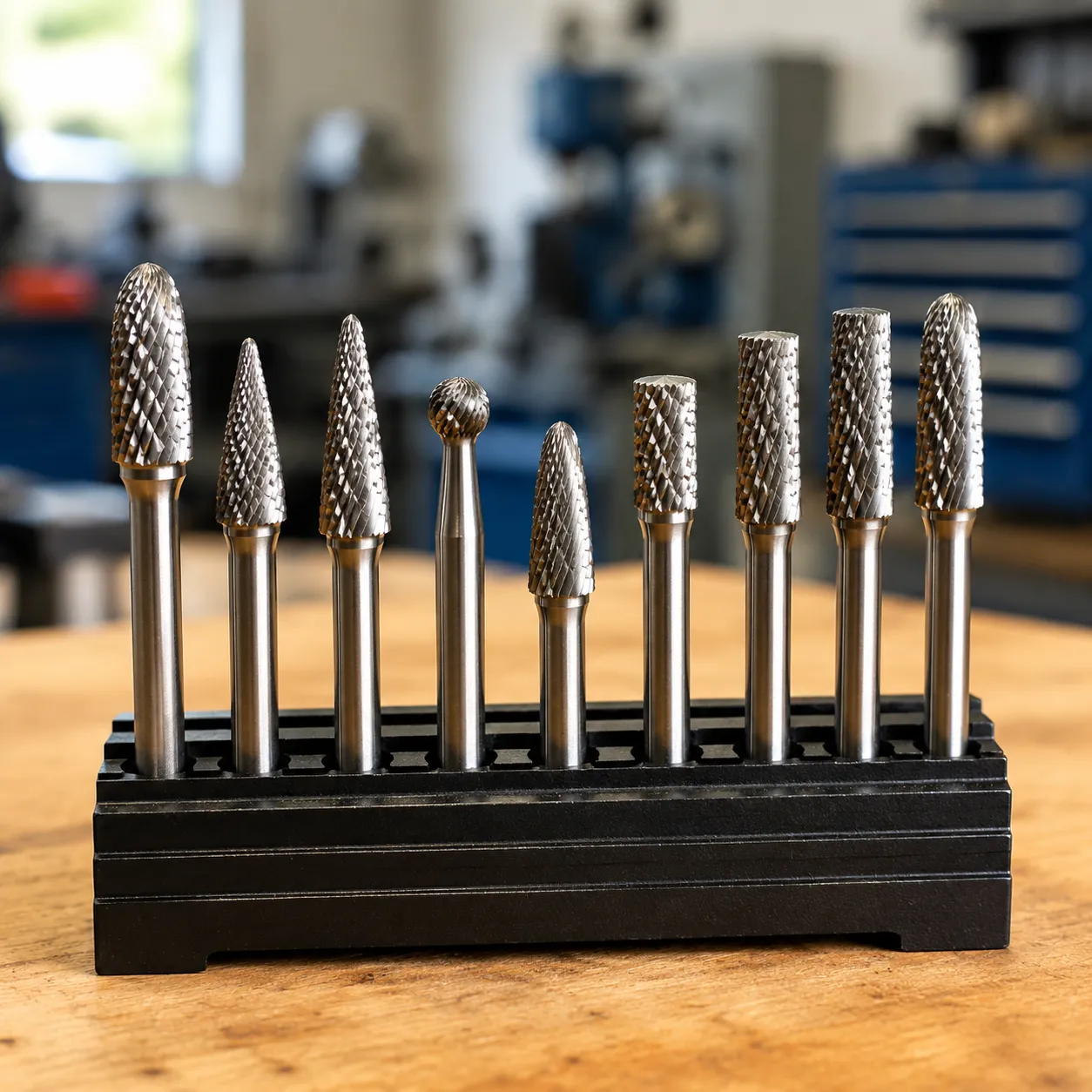
Picking the wrong tool shape wastes time and ruins your workpiece. We design our tungsten carbide rotary files to match standard industrial nomenclature, making it easy to swap in the exact tool you need for precise material removal.
Here is how we break down our primary geometries to help you find the right match for your project.
Cylindrical & Cylindrical Ball Nose (Shapes SA & SC)
These are our most popular die grinder bits for metal, built for flat surface machining and right-angle contours. Shape SA (Cylinder without End Cut): Best for peripheral milling and contouring flat edges. Shape SC (Cylinder with Ball Nose): Features a radiused end, making it perfect for blending inner corners and cutting round-bottom slots.
Ball & Oval Geometries (Shapes SD & SE)
When you need to clear out tight pockets or smooth out intricate curves, these rounded geometries get the job done efficiently. Shape SD (Ball Geometry): The go-to solid carbide deburring tools for pocketing, hole-enlarging, and clearing out tight radii. Shape SE (Oval Geometry): Ideal for clearing out rounded contours, smooth blending, and contouring complex dies.
Tree Pointed, Tree Radius, & Flame Profiles (Shapes SF, SG, & SH)
We engineered these shapes for difficult angles, deep crevices, and specialized metal fabrication layouts. Shape SF (Tree with Radius End): Excellent for contouring deep, narrow channels and smoothing out heavy weld grinding burrs. Shape SG (Tree with Pointed End): Reaches deep into narrow acute angles and tight joints. Shape SH (Flame Profile): Perfectly matches smooth radius contours; a favorite in automotive porting and casting repair.
Conical, Countersink, & Inverted Cone Geometries (Shapes SK, SL, SM, & N)
These specialized profiles handle chamfering, deburring inner edges, and rear-side surface machining.
| Shape Designation | Common Nomenclature | Primary Application |
|---|---|---|
| Shape SK | 90° / 60° Countersink | Quick chamfering, beveling, and countersunk hole preparation |
| Shape SL | Taper with Radius End | Accessing narrow cone-shaped areas and smoothing surface profiles |
| Shape SM | Taper with Pointed End | Detailed deburring in tight, pointed corners and narrow slots |
| Shape N | Inverted Cone | Under-cutting, rear-side edge deburring, and creating V-grooves |
Our standardized carbide burr trade numbers ensure you get a reliable, repeatable fit every single time you reorder for your shop.
The PrecisionVast 14-Step Quality & Production Advantage
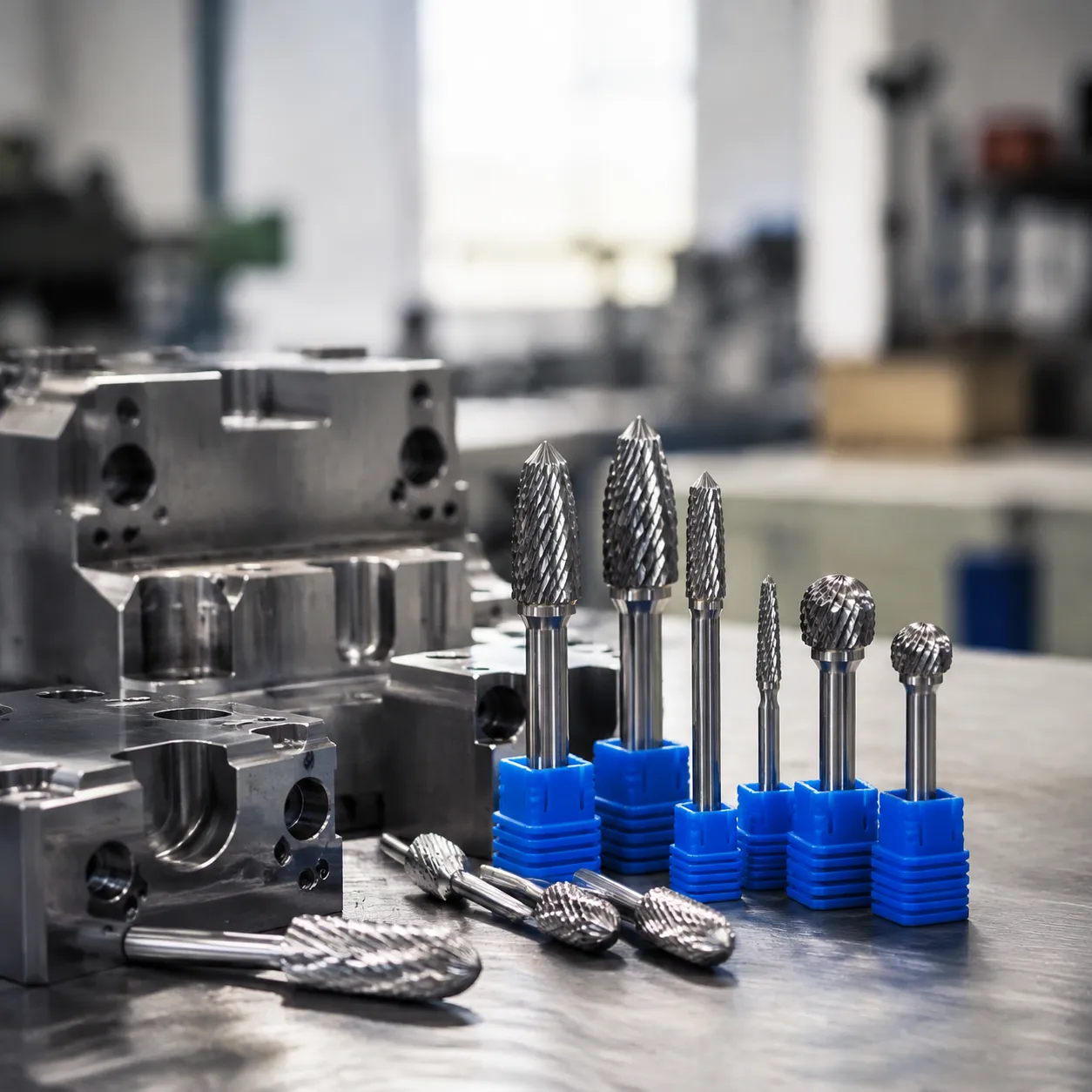
We don’t believe in shortcuts. To build a carbide burr that survives real-world industrial abuse, we developed our proprietary 14-step manufacturing process. Every single tungsten carbide rotary file we ship goes through this strict sequence to ensure perfect balance, zero vibration, and maximum stock removal.
Advanced Mold Design & Simulation-Driven Production
Before we even grind a piece of metal, our engineers simulate the entire tool lifecycle using advanced software. We eliminate weak points where traditional die grinder bits for metal usually snap.
- CNC Precision Engineering: Every solid carbide deburring tool is shaped on automated, multi-axis CNC machines for absolute consistency.
- Perfect Shank Alignment: We guarantee concentricity across every 1/4 inch shank carbide burr, preventing tool chatter and protecting your expensive grinders.
- Optimized Flute Geometry: Computer modeling ensures the cutting edges clear chips fast, preventing loading when grinding tough materials.
Rigorous Metallurgical Testing & Inspection
A carbide burr is only as good as the raw material inside it. We inspect every batch of raw tungsten carbide to verify it meets heavy-duty industrial standards before it ever hits the production line.
| Inspection Phase | What We Test | Why It Matters To You |
|---|---|---|
| Material Intake | Micro-grain density & hardness | Prevents premature chipping and edge wear |
| In-Line Quality | Laser-scanning dimensional check | Guarantees exact shape profile and symmetry |
| Stress Test | High-RPM spin and impact testing | Ensures structural integrity under heavy loads |
We put our name on these tools because we control the quality from start to finish. You get a reliable, long-lasting cutter that works as hard as you do, every single time.
Heavy-Duty Carbide Burr Applications
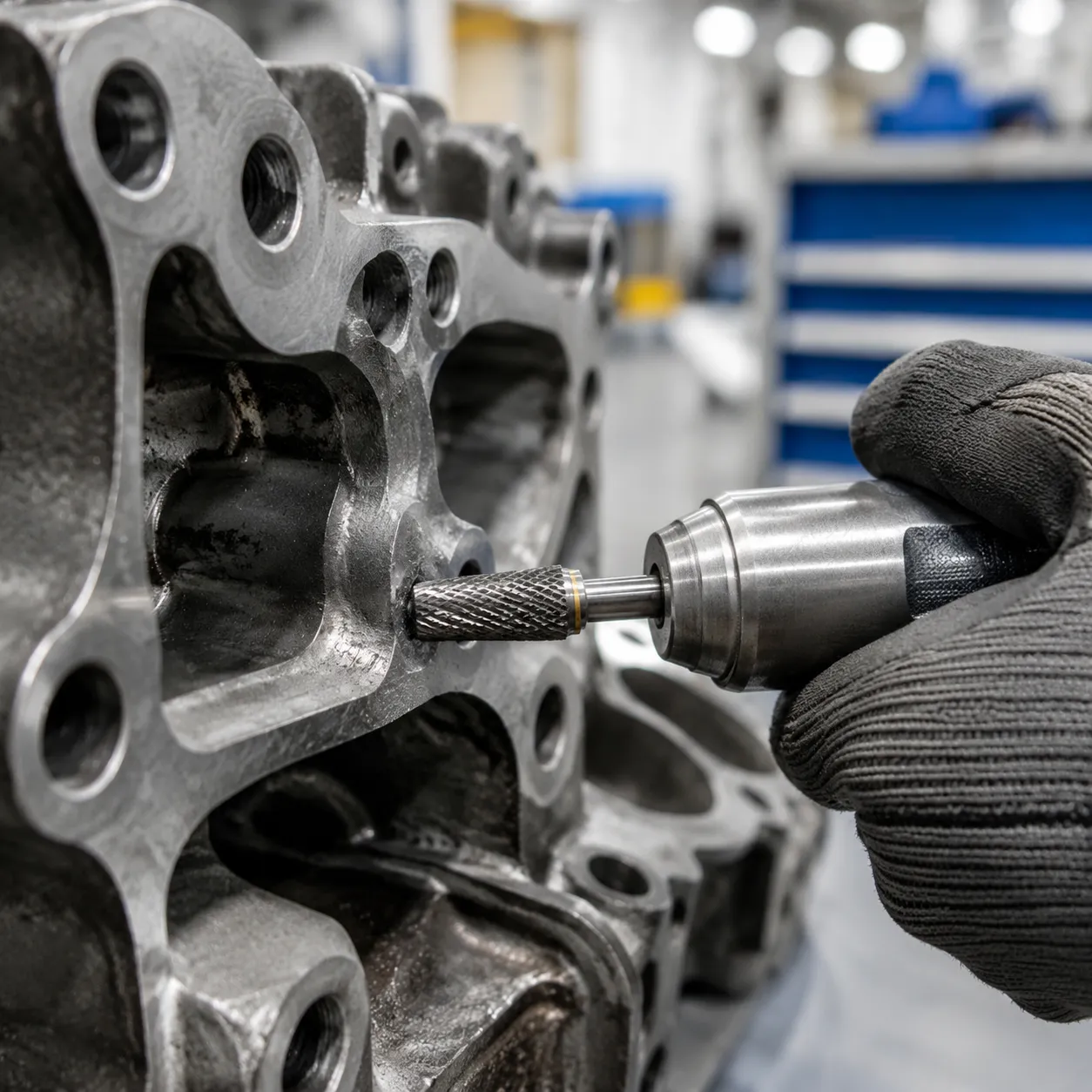
We build our carbide burr line to handle the absolute toughest environments. If you are running high-production shops across the US, you need tools that won’t quit when the pressure is on. Here is exactly where our high-performance rotary files get the job done.
Aerospace & Aviation
- Precision Blending: Perfect for smoothing out machined surfaces on aircraft engine components.
- Superalloy Processing: Easily cuts through titanium, Inconel, and high-strength stainless steel.
- Critical Deburring: Removes razor-sharp edges from delicate turbine parts without altering strict tolerances.
Automotive & Marine Manufacturing
Our die grinder bits for metal are staples in engine building and heavy machinery maintenance.
| Application | Material Involved | Ideal Burr Configuration |
|---|---|---|
| Cylinder Head Porting | Cast Iron / Aluminum | Double Cut / Aluma-Cut |
| Weld Grinding & Smoothing | Carbon Steel | Heavy-Duty Double Cut |
| Shipbuilding & Hull Prep | Thick Structural Steel | Long Reach Carbide Burrs |
Casting & Mold Making
- Flash Removal: Quickly cleans up parting lines and excess material on heavy die casting setups.
- Investment Casting Finishing: Reaches deep into complex geometries to smooth gates and risers.
- Tool & Die Refurbishment: Modifies hardened steel molds and restores sharp profiles efficiently.
Operating Best Practices, Safe Usage, & B2B Inquiries
We know you need tools that last through tough shifts without snapping or dulling. Getting the most out of your carbide burr inventory comes down to correct operation and choosing the right supply partner.
Maximizing Tool Life & Efficiency
Using die grinder bits for metal incorrectly costs time and money. We recommend following these operational rules to protect your investment:
- Don’t apply too much pressure: Let the speed do the work. Pressing too hard causes the cutting edges of your tungsten carbide rotary files to chip and overheat.
- Keep the burr moving: Avoid staying in one spot for too long. Constant movement prevents digging, clogging, and uneven wear.
- Match your RPMs: Running a 1/4 inch shank carbide burr too slowly causes chatter and tooth chipping. Check the material guidelines to ensure you are hitting the sweet spot for high-RPM rotary cutting bits.
- Secure your workpiece: Always clamp your material down firmly to eliminate vibrations that can shatter solid carbide deburring tools.
Factory-Direct B2B Wholesaling & Customization
We handle high-volume demands for US machine shops, foundries, and fabrication plants. Because we manufacture these tools directly, we offer custom shank lengths, specialized flute designs, and bulk carbide burr sets for steel tailored to your production line.
| Service Feature | B2B Benefit |
|---|---|
| Bulk Wholesaling | Tiered volume pricing with consistent, factory-direct margins. |
| Custom Manufacturing | Modifiable shank lengths, non-standard diameters, and specialized coatings. |
| Inventory Reliability | Consistent supply chains for high-use shapes like the cylinder ball nose burr. |
Frequently Asked Questions (FAQs)
What is the main difference between a single cut and a double cut rotary burr? A double cut rotary burr features cross-cut flutes that break material into tiny chips, offering better operator control and a smoother finish on steel and iron. Single cut burrs feature a single spiral flute designed for rapid stock removal on heavy ferrous materials.
Can I use standard carbide burrs on aluminum? Standard burrs will clog quickly when cutting soft materials. For aluminum, magnesium, and plastics, you need specific aluminum cutting burrs or non-ferrous rotary bits with wide, deep flutes that reject chip buildup.
What causes a carbide burr to chip or break? The most common causes are running the grinder at too low an RPM, applying excessive manual pressure, or letting the tool bind inside a tight weld grinding slot. Keep your speed high and your touch light.

 German
  English