

Discover common products that are injection molded across industries and learn how this process benefits design cost and high volume production
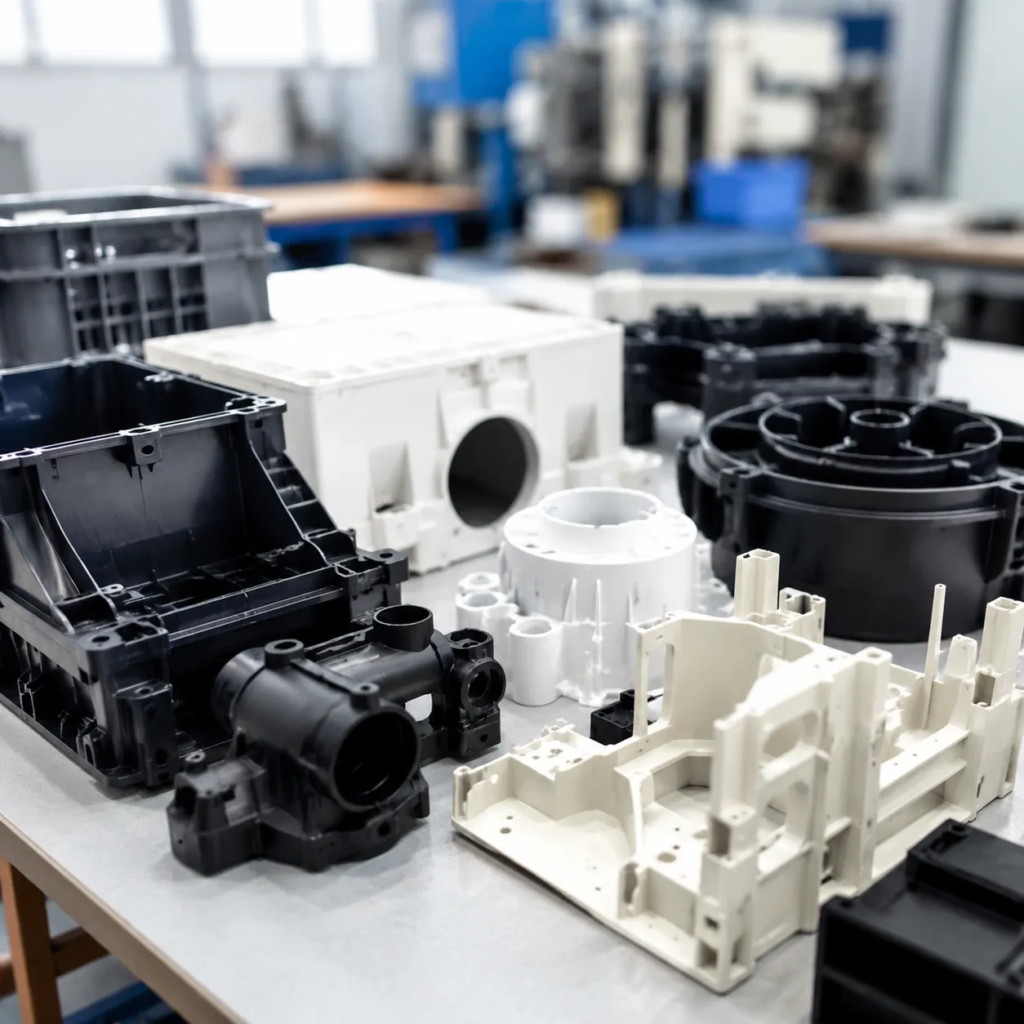
Core Capabilities in Custom Injection Molding
We deliver mission-critical plastic injection molded parts engineered to exact mechanical specifications. Our facility bridges the gap between complex engineering schematics and flawless, high-volume production. By leveraging advanced automation and decoupled molding methodologies, we eliminate process variance to manufacture products that are injection molded to the highest industry standards.
High-Volume Plastic Injection Molding
Our infrastructure is optimized for high-volume plastic manufacturing, ensuring consistent cycle times and zero-defect yields across millions of cycles.
- Scalability: Automated cell configurations handle multi-cavity tool runs continuously.
- Process Control: Real-time cavity pressure monitoring guarantees part-to-part uniformity.
- Efficiency: Optimized cooling geometries minimize cycle times and lower piece-part costs.
Multi-Material Overmolding & Insert Molding
We specialize in combining disparate materials into single, robust, net-shape plastic parts to improve structural integrity and sealing capabilities.
| Process Type | Core Application | Material Combination |
|---|---|---|
| Insert Molded Components | Threaded fasteners, busbars, structural metal reinforcement | Metal substrates encapsulated by engineering grade resins |
| Overmolded Plastic Parts | Ergonomic grips, environmental seals, dampening pads | Rigid thermoplastic bases bonded with elastomeric TPE/TPU |
Micro-Molding & Ultra-Precision Components
For complex, micro-scale geometries, our specialized ultra-precision molding cells achieve micron-level accuracy.
- Tolerances: Tight tolerances held down to ±0.001 inches (±0.025 mm).
- Micro Features: Capable of shot sizes under 0.1 grams with thin-wall sections down to 0.15 mm.
- Applications: Ideal for intricate injection molded housings, surgical device tips, and micro-optics.
Industrial Applications: What Products Are Injection Molded?
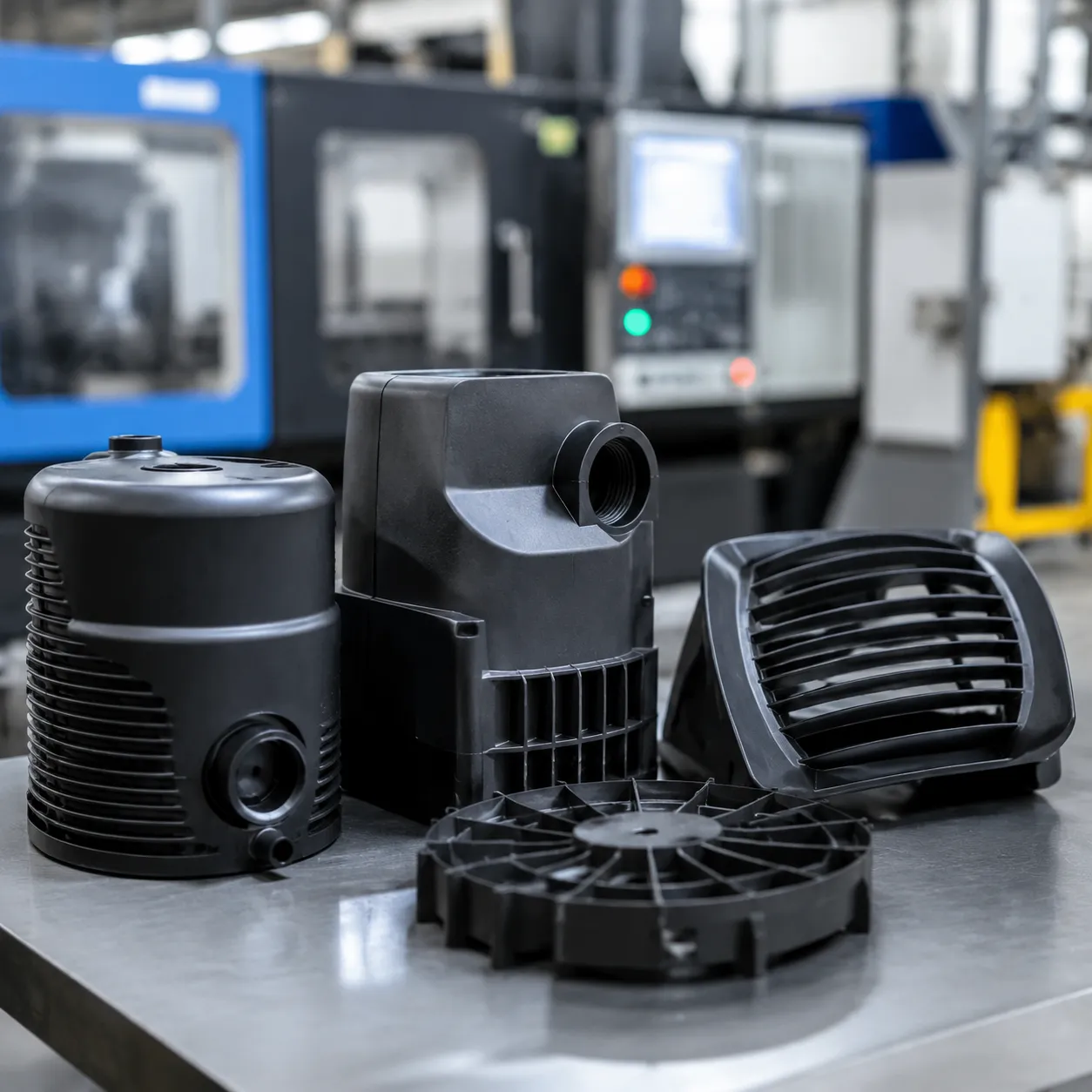
From high-precision surgical tools to rugged automotive parts, the array of products that are injection molded spans across every major industrial sector. Modern manufacturing demands absolute repeatability and strict compliance. At PrecisionVast, we engineer high-performance, net-shape plastic parts that replace heavy metals, reduce unit costs, and survive the harshest operating environments.
Medical & Healthcare Devices
Medical device manufacturing requires zero-defect production and bio-compatible materials. We produce custom injection molding services for critical medical applications, including: Surgical instrument handles and structural housings Syringe components and fluid delivery diagnostic cartridges Micro-fluidic devices and thin-wall laboratory disposables
Aerospace & Defense Components
Weight reduction directly dictates fuel efficiency and payload capacity in aerospace. We replace traditional machined aluminum parts with lightweight, high-strength thermoplastic molding products that meet strict FAA flame, smoke, and toxicity (FST) standards. Common components include interior cabin brackets, ducting systems, and ruggedized communication gear enclosures.
Automotive & Transportation Systems
The automotive market relies heavily on high-volume plastic manufacturing to achieve lightweighting goals. We engineer robust, structural plastic injection molded parts designed for extreme temperatures and mechanical stress: Under-the-Hood: Fluid reservoirs, intake manifolds, and sensor brackets. Interior/Exterior: Dashboard sub-assemblies, trim clips, and overmolded door handle mechanisms.
Electronics & Telecommunications Housings
Sensitive electronic assemblies need durable protection against impact, moisture, and EMI shielding issues. We manufacture custom molded plastic enclosures and complex injection molded housings for enterprise servers, handheld scanners, and outdoor telecom infrastructure.
Consumer Goods & Industrial Hardware
For commercial and consumer markets, balancing aesthetics with durability is crucial. Our production floor outputs high-utility insert molded components and overmolded plastic parts for heavy-duty power tools, industrial valve components, and high-wear gears.
| Industry | Primary Component Type | Key Material Requirement |
|---|---|---|
| Medical | Diagnostic Cartridges, Surgical Tools | Bio-compatibility, Sterilization Tolerance |
| Aerospace | Cabin Brackets, Conduit Systems | FST Compliance, High Strength-to-Weight |
| Automotive | Under-Hood Sensors, Structural Trim | Chemical Resistance, Thermal Stability |
| Electronics | Heavy-Duty Device Enclosures | Flame Retardancy, Tight Dimensional Control |
Engineering Resins & High-Performance Material Selection
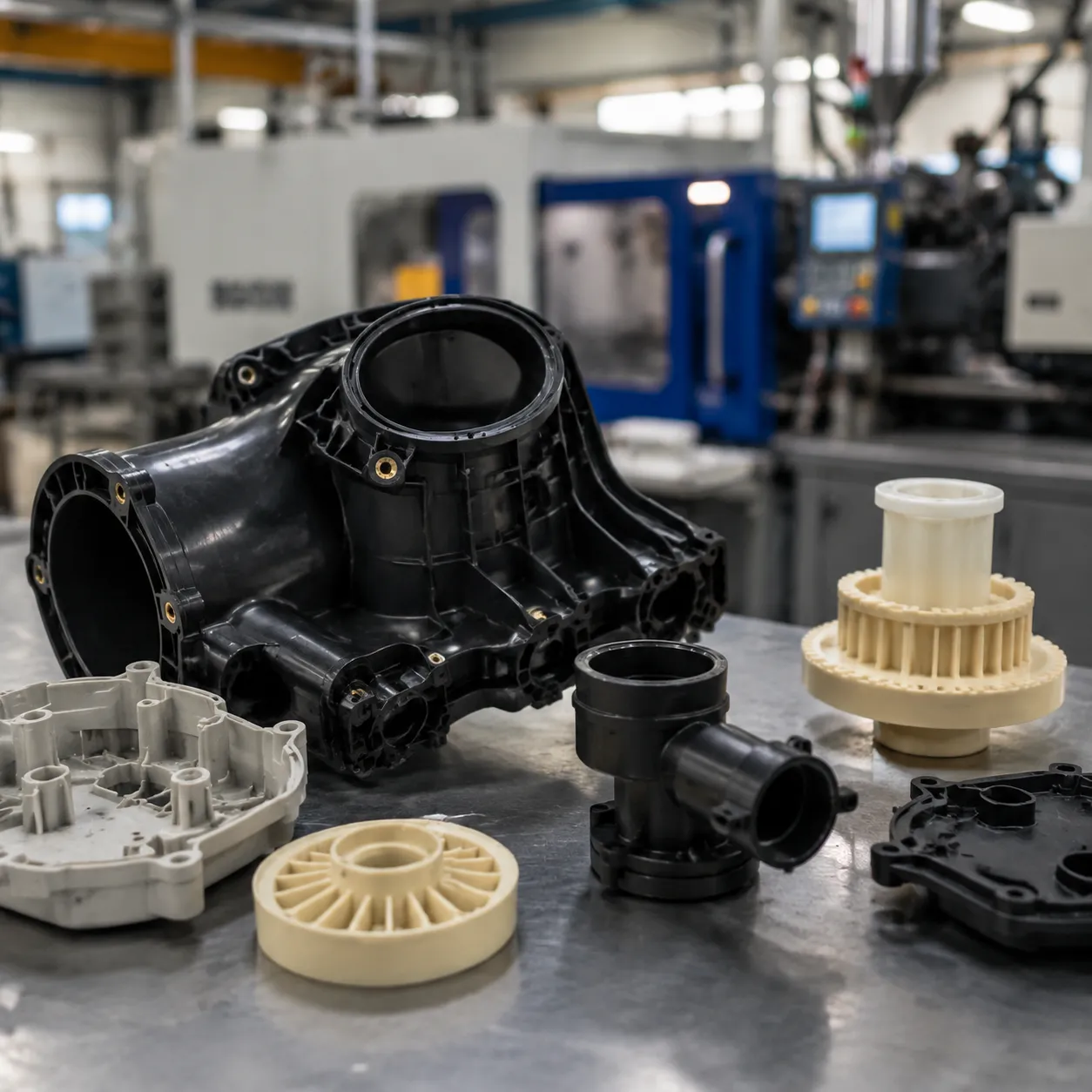
We don’t believe in a one-size-fits-all approach to plastic injection molded parts. Selecting the right resin dictates how your product performs under stress, heat, and chemical exposure. We match your specific mechanical requirements with the ideal thermoplastic molding products to ensure absolute structural integrity.
Standard Commodity Plastics
For high-volume plastic manufacturing where cost efficiency and cosmetics are the primary drivers, we utilize standard commodity resins. These materials are perfect for high-quality, net-shape plastic parts that require reliable dimensional stability without extreme thermal resistance.
- Polypropylene (PP): Excellent chemical resistance and fatigue life; ideal for living hinges and packaging.
- Polyethylene (HDPE/LDPE): High impact strength and flexibility, frequently used for consumer goods and durable containers.
- Polystyrene (PS): Rigid and cost-effective, perfect for clear structural components and housings.
Engineering-Grade Thermoplastics
When your applications demand superior mechanical properties, we shift to engineering-grade thermoplastics. These materials deliver enhanced tensile strength, impact resistance, and wear durability for critical custom injection molding services.
| Material | Key Properties | Common Applications |
|---|---|---|
| ABS | High impact resistance, excellent surface finish | Molded plastic enclosures, electronic housings |
| Polycarbonate (PC) | Optical clarity, extreme toughness, heat resistance | Medical devices, protective shields, automotive lenses |
| Nylon (PA6/PA66) | High mechanical strength, low friction, wear resistance | Bearings, gears, structural overmolded plastic parts |
High-Performance Polymers & Elastomerics
For the most demanding environments—including aerospace, defense, and medical applications—we process extreme-grade high-performance polymers and elastomerics. These engineering grade resins replace machined metals, drastically reducing weight while maintaining strict mechanical performance.
- PEEK & PEI (Ultem): Extreme thermal stability, flame retardancy, and chemical resistance for aerospace and medical insert molded components.
- TPU & TPE: Flexible, rubber-like elastomeric compounds engineered for soft-touch overmolding, seals, and gaskets.
- Glass-Reinforced Polymers: Filled resins that drastically increase structural rigidity and tensile modulus for heavy-duty industrial applications.
PrecisionVast Technical Specifications & Tooling Capabilities
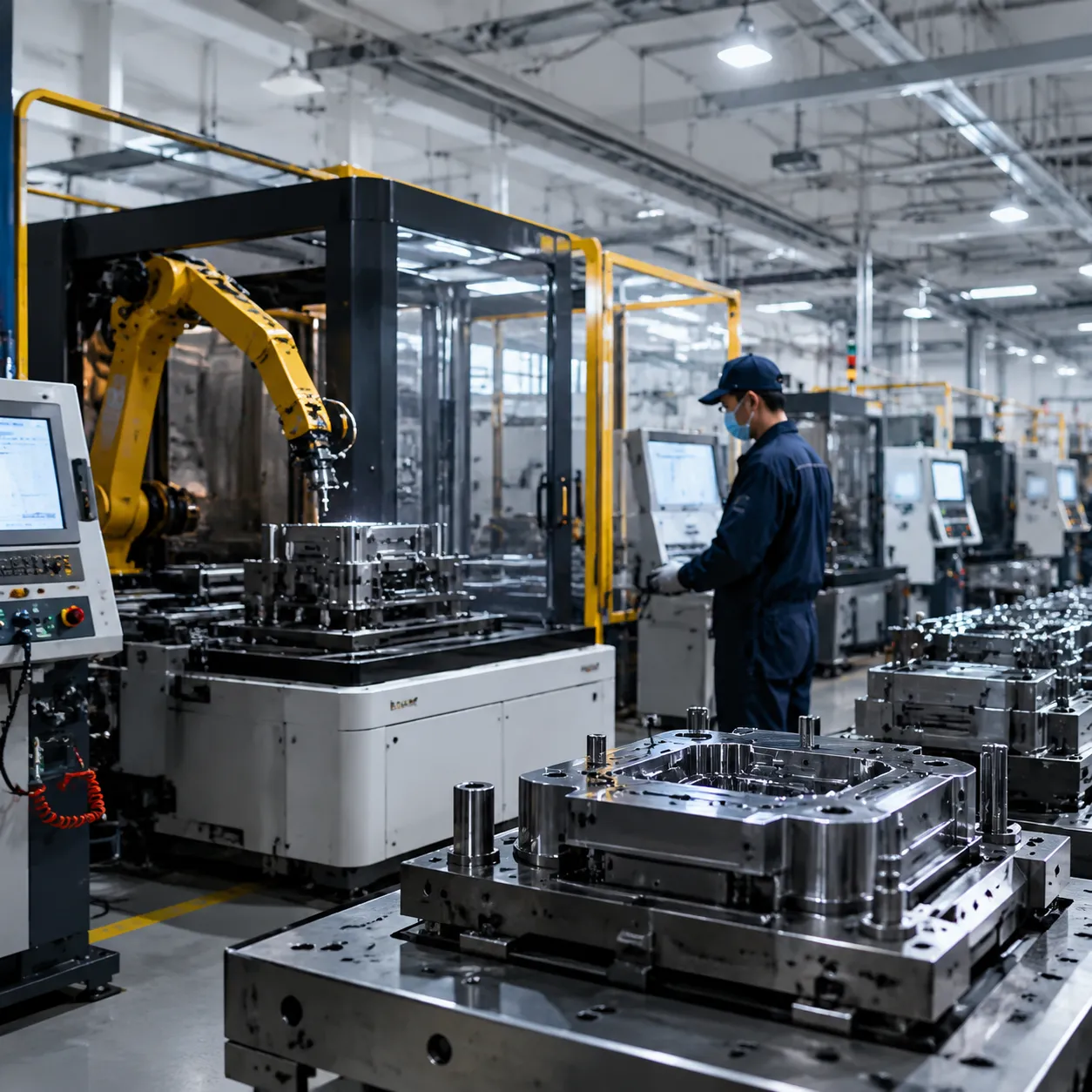
We engineer precision tooling and molding setups designed to handle your toughest production runs. Our in-house manufacturing infrastructure converts complex CAD models into high-performing products that are injection molded to your exact industrial specifications.
Advanced Tool & Mold Making
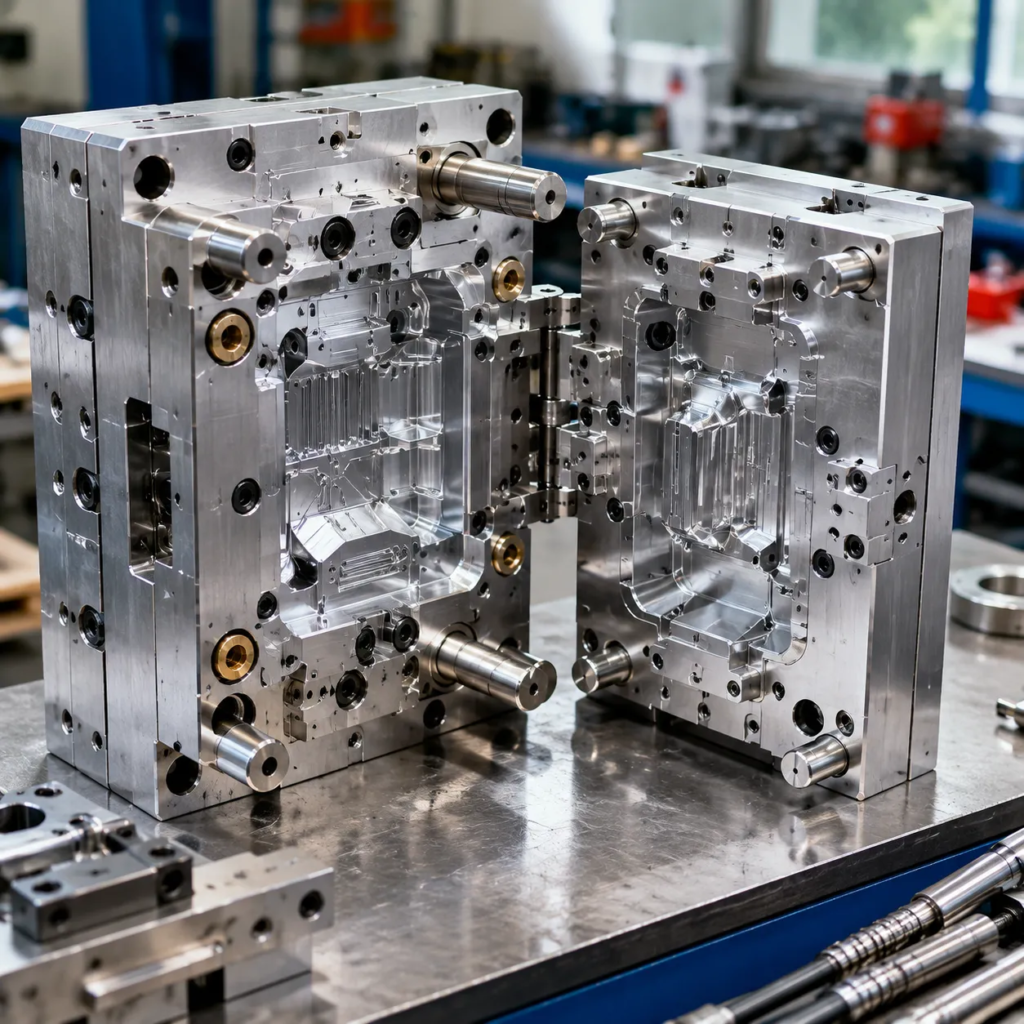
Our facility builds rugged, high-performance tooling capable of maintaining extreme accuracy over millions of cycles. We design and machine class 101 molds using premium tool steels to guarantee longevity and surface finish perfection.
- Tooling Materials: H13, S7, P20 steel, and QC-10 aircraft-grade aluminum.
- Design Optimization: Integrated conformal cooling channels to reduce cycle times by up to 30%.
- Cavitation Options: Single-cavity prototype tools up to high-cavity hot runner production molds.
Press Tonnage & Scale
Our production floor features a diverse matrix of high-efficiency injection molding presses. This allows us to scale production seamlessly from tiny micro-components to massive molded structural components.
| Machine Parameter | Operating Range / Capability |
|---|---|
| Press Tonnage Range | 25 Tons to 1,200 Tons |
| Shot Capacity | 0.1 grams to 4,500 grams |
| Automation | 3-axis and 5-axis servo robotics for automated parts extraction |
| System Controls | Closed-loop real-time pressure and temperature monitoring |
Tight Tolerances by Design
We achieve exceptional repeatable accuracy on every production run. By pairing advanced tool geometry with scientific molding principles, we deliver complex plastic injection molded parts that match your exact design tolerances without warp or variance.
- Linear Tolerances: ±0.002 inches hold consistently across standard dimensions.
- Precision Tolerances: Down to ±0.0005 inches on critical features using stabilized engineering grade resins.
- Quality Guarantee: 100% automated vision inspection systems for zero-defect dimensional verification.
Quality Management & Zero-Defect Metrology
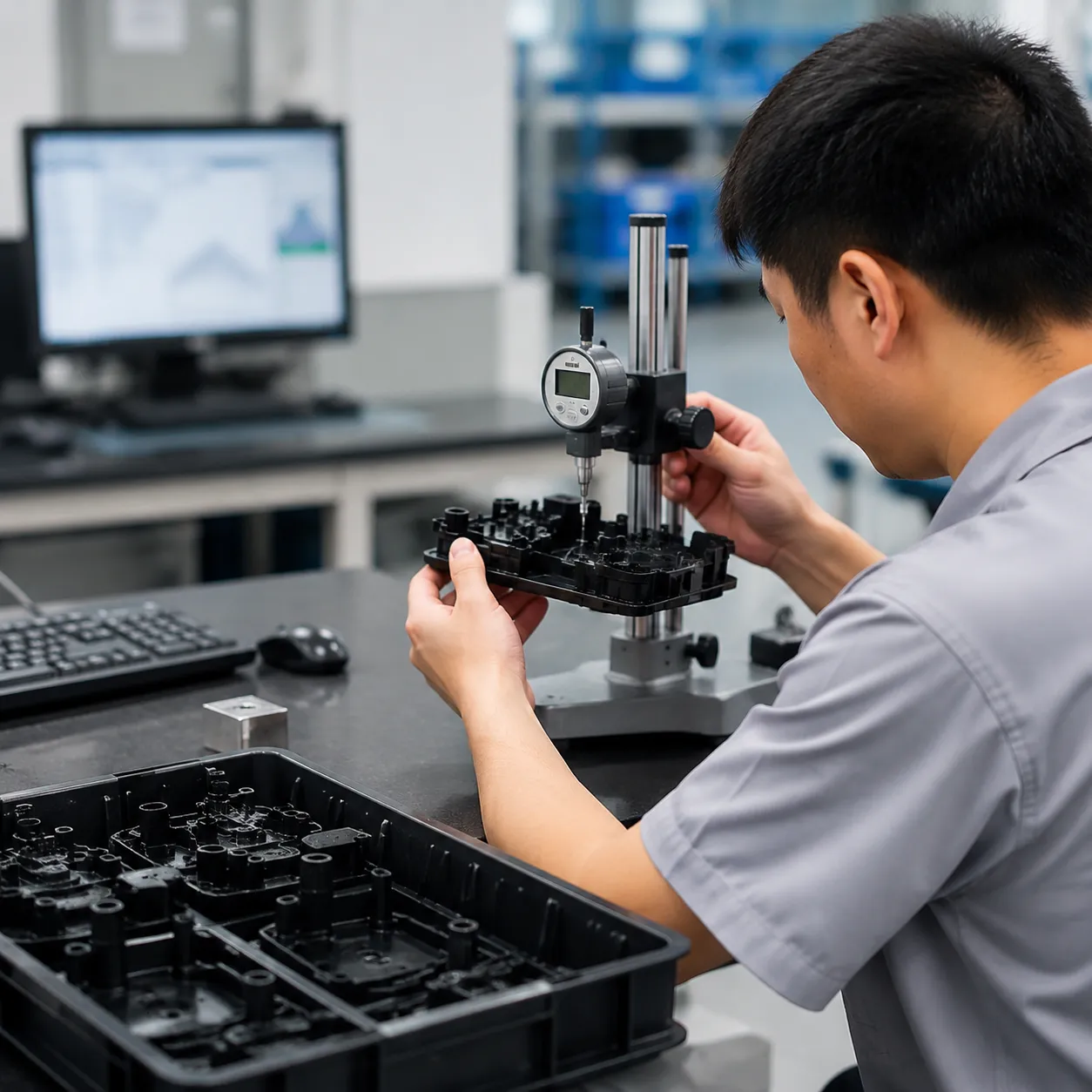
We don’t leave product quality to chance. Our facility treats quality management as an exact science, ensuring that every batch of products that are injection molded under our roof meets rigorous global standards. By combining automated inspection with real-time data tracking, we eliminate defects before they ever reach your supply chain.
Regulatory Compliance
We maintain strict compliance and certifications to support high-stakes contract plastic manufacturing for regulated industries:
- ISO 9001:2015 – Core quality management systems.
- ISO 13485 – Medical device manufacturing standards.
- IATF 16949 – Automotive industry quality requirements.
Scientific Molding & Real-Time SPC
We use data-driven scientific molding process principles to lock in a repeatable manufacturing window. Instead of just checking parts after they are made, our machinery monitors critical injection variables in real time.
| Process Variable | Control Mechanism | Benefit to Component Quality |
|---|---|---|
| Cavity Pressure | In-mold sensors | Ensures consistent pack and hold for net-shape plastic parts |
| Melt Temperature | Closed-loop barrels | Prevents material degradation in engineering grade resins |
| Fill Time | Decoupled molding | Eliminates part-to-part weight variations |
Through real-time Statistical Process Control (SPC), our system flags the slightest deviation, automatically isolating any outliers to guarantee zero-defect production runs.
3D CT Scan & Coordinate Metrology
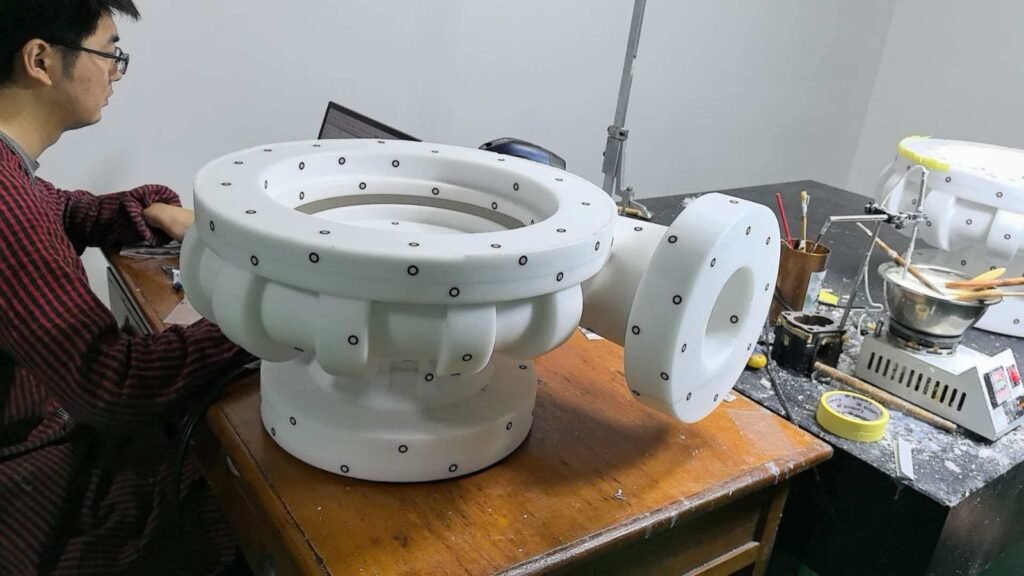
To verify the internal integrity and external dimensions of complex injection molded plastic components, we deploy advanced metrology equipment:
- 3D CT Scanning (Computed Tomography): Non-destructively inspects internal voids, fiber orientation, and wall thickness uniformity in molded structural components.
- Coordinate Measuring Machines (CMM): Multi-axis tactile and optical probes verify micron-level tolerances on complex overmolded plastic parts and molded plastic enclosures.
This multi-layered inspection strategy ensures that your high-volume runs match your exact digital twins, deliver flawless mechanical performance, and arrive ready for assembly.
Streamlined Production Pipeline: From CAD to Scale
We have engineered a rigorous, three-step B2B production pipeline to take your projects from initial CAD files to high-volume manufacturing without delays or costly geometric errors.
Step 1: DFM (Design for Manufacturability) Review
Before cutting steel, our engineering team optimizes your 3D models. We analyze gate placement, wall thickness uniformity, and draft angles to prevent defects like sink marks or warping. This upfront phase ensures that the final products that are injection molded meet exact performance metrics while maximizing material yield.
Step 2: Prototyping & First Article Inspection (FAI)
We bridge the gap between design and full-scale rollouts with precision tooling and molding verification. Bridge Tooling: Rapid aluminum or pre-hardened steel molds validate part functionality and material performance under real-world conditions. First Article Inspection (FAI): We use automated coordinate measuring machines (CMM) to verify every critical dimension against your print specifications. Sign-off: Production only moves forward once you approve the physical, net-shape plastic parts.
Step 3: Mass Production & Secondary Operations
Once approved, we scale production seamlessly. Our automated injection molding presses run continuous cycles to deliver highly repeatable products that are injection molded under strict scientific molding protocols.
| Production Phase | Key Deliverables & Operations |
|---|---|
| Mass Production | High-volume continuous runs, real-time SPC monitoring, automated part extraction |
| Secondary Operations | Ultrasonic welding, pad printing, laser engraving, insert molded components |
| Assembly | Hardware insertion, custom kitting, retail-ready packaging |
We handle everything from the initial digital file to fully assembled, retail-ready injection molded plastic components.
FAQs About Products That Are Injection Molded
What makes a product ideal for the injection molding process?
An ideal candidate for injection molding requires repeatable tight tolerances, geometric consistency, and scalable production volumes. We analyze part geometry to ensure the design matches the physics of the process: Uniform Wall Thickness: Maintains even cooling to prevent warping and sink marks. Proper Draft Angles: A minimum of 0.5 to 2 degrees allows clean part ejection from the tool cavity. Production Volume: High-volume runs efficiently amortize initial precision tooling costs, driving down the price per unit.
How does PrecisionVast minimize unit costs during production?
We optimize your per-part cost through data-driven custom injection molding services and automated production floor management: Multi-Cavity Tooling: Machining multi-cavity molds allows us to produce multiple plastic injection molded parts per single press cycle, multiplying output. Scientific Molding Automation: Real-time SPC tracking cuts down cycle times and eliminates material waste. Regrind Optimization: Where permitted by regulatory standards, we recycle sprues and runners back into the production loop to reduce raw material expenditure.
Can metal components be replaced by high-performance injection-molded plastics?
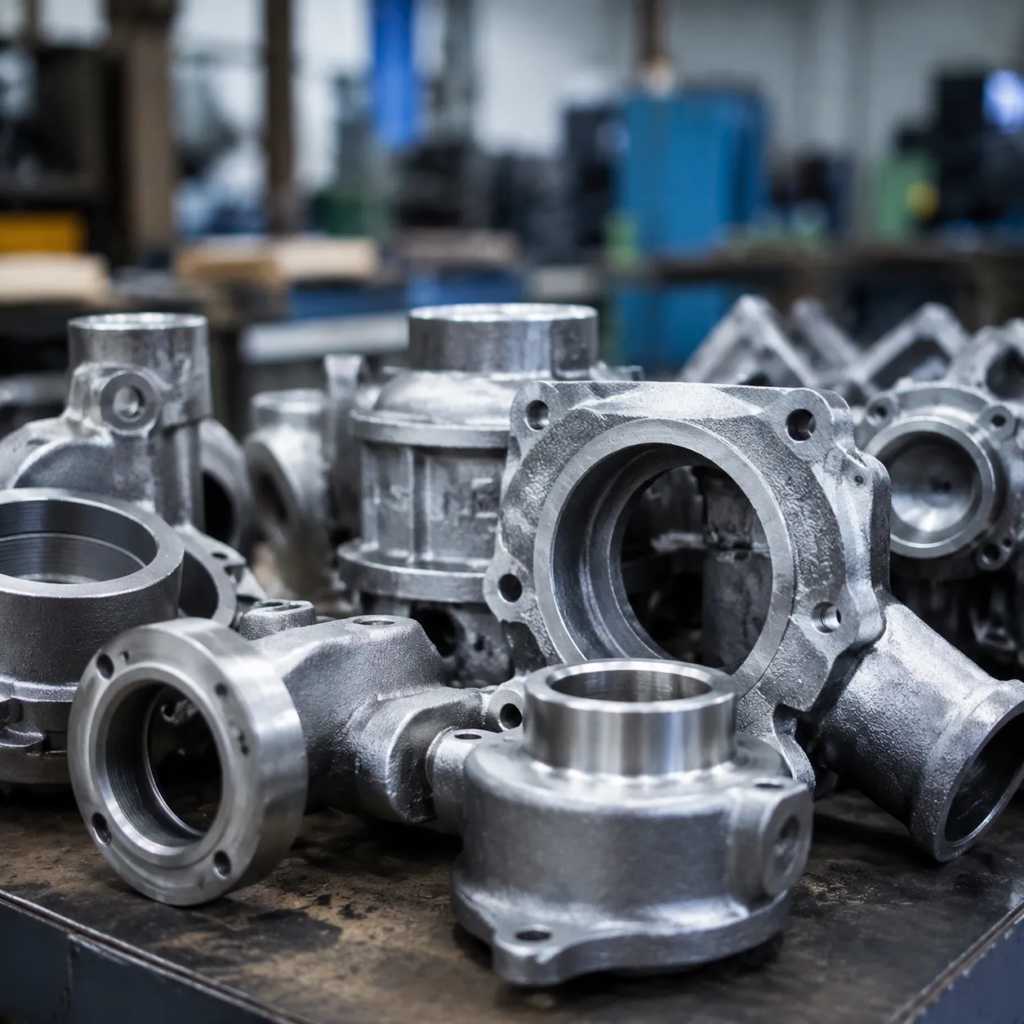
Yes. By utilizing engineering grade resins and carbon-fiber-filled polymers, we regularly convert heavy die-cast metal components into durable, light-weight molded structural components.
| Performance Metric | Die-Cast Aluminum | High-Performance Polymers (PEEK/PEI) |
|---|---|---|
| Weight Profile | Heavy baseline | 50% weight reduction average |
| Corrosion Resistance | Requires secondary coating | Inherently resistant to chemicals/moisture |
| Part Consolidation | Requires multi-part assembly | Single net-shape plastic parts |
This metal-to-plastic conversion eliminates secondary machining steps, cuts assembly labor, and drops your final bill of materials cost.
 German
  English