

Carbon steel vs cast iron compare weight heat retention and care to choose the best cookware for your cooking style
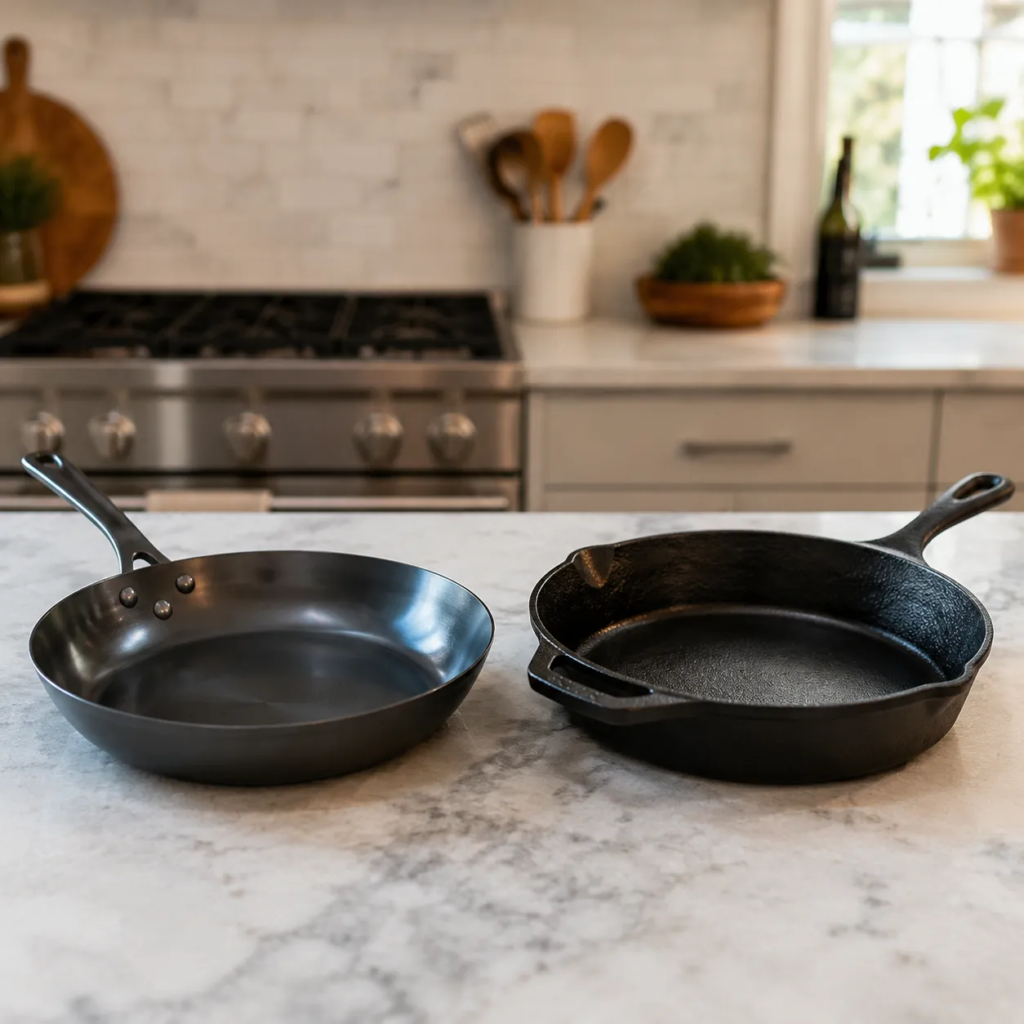
Carbon Steel vs Cast Iron
If you are torn between a carbon steel pan and a classic cast iron skillet, the choice comes down to how you move in the kitchen. Both are seasoned, heavy-duty cookware workhorses that can transition from stovetop to oven, but they handle completely differently. Carbon steel is thinner, lighter, and heats up fast, making it perfect for agile cooking like stir-frys, omelets, and quick searing. Cast iron is a thick, heavy powerhouse that takes longer to heat up but holds massive amounts of thermal energy, making it the ultimate tool for deep frying, baking, and getting a thick crust on a steak.
Quick Decision Summary
| Feature | Carbon Steel Pan | Cast Iron Skillet |
|---|---|---|
| Weight | Lightweight skillet style (relatively easier to lift) | Heavy duty cookware (thick and dense) |
| Heat Retention | Moderate (cools down faster) | Exceptional (holds heat for a long time) |
| Heat Responsiveness | Quick heating pan (reacts fast to flame changes) | Slow to heat, slow to cool down |
| Durability | Virtually indestructible; will not crack | Can crack if dropped; virtually lasts forever |
| Seasoning | Builds a smooth nonstick seasoning quickly | Builds a rugged, durable nonstick seasoning layer |
| Maintenance | Hand wash, dry immediately, oil lightly | Hand wash, dry immediately, oil lightly |
| Price | Mid to high tier value | Budget-friendly to high tier heirloom |
| Best Use Case | Eggs, fish, stir-frying, tossing ingredients | Searing steak, baking cornbread, deep frying |
Choose Carbon Steel If…
- You want a quick heating pan that reacts instantly when you turn the burner down.
- You like to toss veggies, slide eggs easily, and prefer a lightweight skillet with a sloped handle.
- You cook a lot of delicate foods like fish fillets or French omelets.
Choose Cast Iron If…
- You want maximum heat retention cookware that stays screaming hot when you drop in a massive steak.
- You do a lot of high-heat searing, shallow frying, baking, or campfire cooking.
- You want a rugged, budget-friendly kitchen icon that you can pass down through generations.
What Is Carbon Steel?
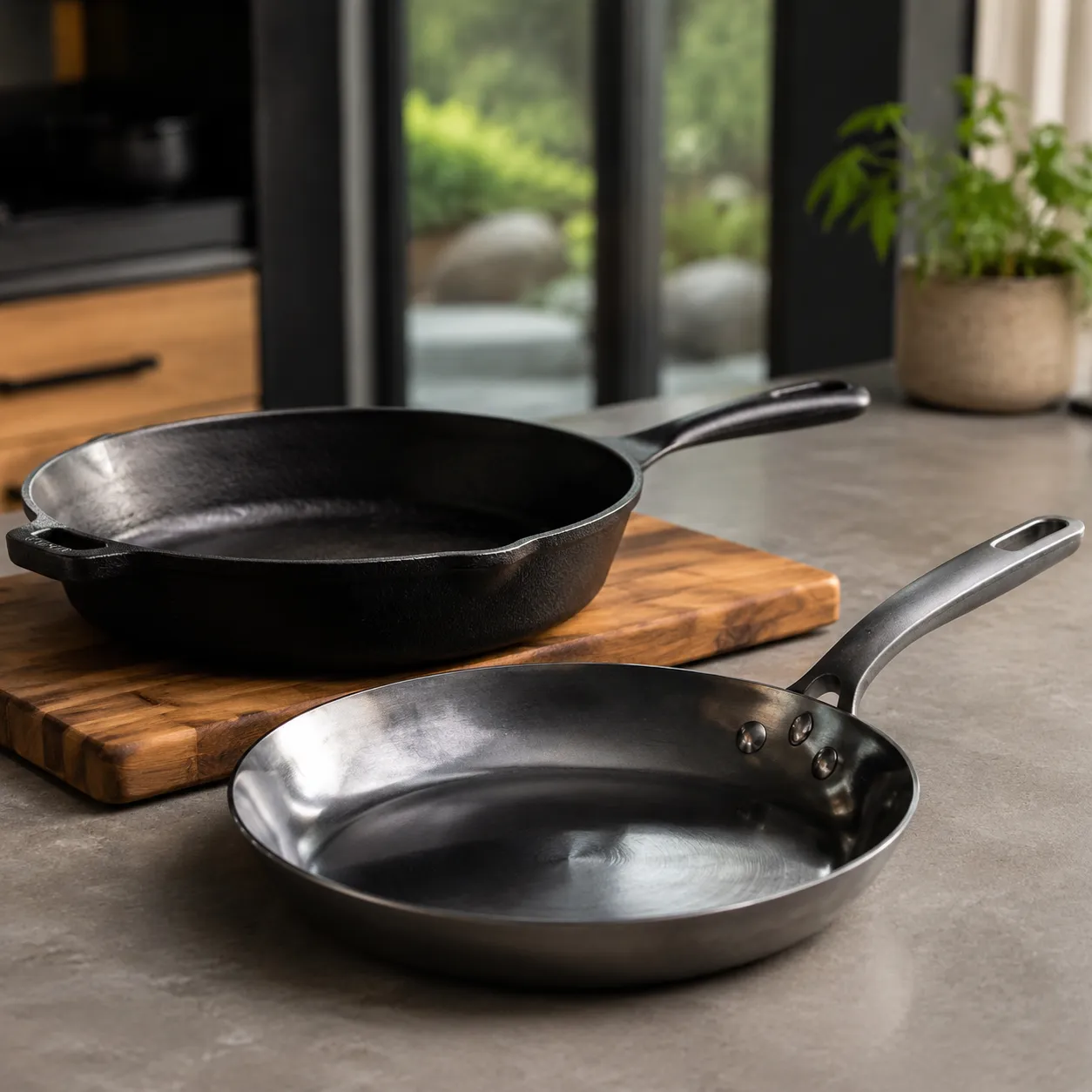
Carbon steel is a powerhouse alloy made of roughly 99% iron and 1% carbon. Unlike cast iron, which is poured into molds, a carbon steel pan is stamped or forged from sheet metal into its final shape. This production method gives it a smooth, uniform surface characteristic right out of the gate.
Most home cooks and professional chefs choose a carbon steel skillet or wok because it bridges the gap between stainless steel agility and cast iron heat mastery. It is incredibly tough, responsive, and quickly develops a slick, nonstick seasoning with regular use.
Core Strengths and Limitations
| Strengths | Limitations |
|---|---|
| Lightweight agility: Much easier to lift, toss, and maneuver than heavy cast iron. | Lower heat retention: Cools down faster when cold food hits the pan. |
| Rapid heat responsiveness: Heats up and cools down quickly when you adjust the dial. | Prone to rust: Requires immediate drying and oiling after washing. |
| Smooth surface texture: Releases food easily once seasoned properly. | Acid sensitivity: High-acid foods like tomatoes can strip the seasoned layer. |
We build our high-precision cooking tools to withstand intense kitchen environments. If you want to optimize your production workspace beyond the kitchen, our heavy-duty industrial solutions at Precision Vast deliver the same rugged reliability.
What Is Cast Iron?
When we look at traditional heavy-duty cookware, cast iron is the undisputed heavyweight champ. At its core, cast iron is an iron alloy containing more than 2% carbon. To make a classic cast iron skillet, molten metal is poured directly into sand molds. This single-piece construction results in thick walls and a dense, heavy base, which is exactly why a cast iron pan feels so substantial in your hand compared to a carbon steel pan.
We typically see this material in the form of deep skillets, Dutch ovens, and griddles. It is the ultimate tool for high-heat searing, baking, and slow cooking because it holds onto heat like nothing else.
Strengths of Cast Iron
- Unmatched Heat Retention: Once a cast iron pan gets hot, it stays hot, making it perfect for thick steaks.
- Indestructible Build: It will not warp, twist, or crack under intense heat.
- Excellent Oven Performance: Seamlessly transitions from the stovetop to the oven or a campfire.
- Improves with Age: The nonstick seasoning builds up over decades of use.
Limitations of Cast Iron
- Extremely Heavy: Harder to maneuver, shake, or toss ingredients.
- Slow to Heat Up: Requires a thorough preheating period to avoid cold spots.
- Slugish Responsiveness: If the pan gets too hot, it takes a long time to cool down.
Carbon Steel vs Cast Iron: Side-by-Side Comparison
When you are choosing between a carbon steel pan and a cast iron skillet, understanding their physical and performance differences is key. Both are exceptional pieces of seasoned cookware, but they handle completely differently on the stovetop and in the oven.
Here is how these two heavy-duty cookware options stack up across every critical category.
| Performance Feature | Carbon Steel Pan | Cast Iron Skillet |
|---|---|---|
| Weight & Handling | Lighter, easy to toss and maneuver | Heavy, requires two hands to lift |
| Heat-Up Speed | Fast; ready to cook quickly | Slow; requires a thorough preheat |
| Heat Retention | Moderate; cools down faster | Maximum; holds steady heat exceptionally well |
| Responsiveness | High; reacts instantly to flame adjustments | Low; retains heat long after turning down the burner |
| Surface Texture | Smooth, stamped, or spun metal | Rough, pebbled cast texture |
| Seasoning Ease | Takes seasoning fast but can chip easier | Builds a thick, deeply embedded nonstick layer |
| Durability | High; virtually indestructible but can warp if shocked | Extreme; will not warp but can crack if dropped |
| Price & Value | Budget-friendly to premium; lifetime value | Highly affordable; multi-generational lifespan |
Weight and Handling
A carbon steel skillet is significantly lighter than a cast iron pan of the same size. Because it is pressed or spun from sheet metal rather than poured into a mold, the walls can be thinner while maintaining immense strength. This makes carbon steel much easier to lift, swirl, and flip ingredients with one hand. Cast iron is thick and bulky, usually requiring a helper handle and two hands to move safely.
Heat-Up Speed and Responsiveness
If you want a quick heating pan, carbon steel wins. It reacts rapidly to temperature changes, allowing you to turn down the flame to prevent burning or crank it up for a quick sear. Cast iron takes a long time to reach cooking temperature. Because it acts like a heat sponge, it is slow to heat up and equally slow to cool down, meaning it won’t react quickly if your burner is too hot.
Heat Retention
For trapping and holding heat, cast iron is the undisputed champion. Once a heavy-duty cast iron skillet gets hot, it stays hot. When you drop a cold steak into it, the surface temperature barely dips, which guarantees an incredible crust. A carbon steel pan loses heat faster when loaded with food, requiring a bit more burner management to maintain high heat.
Surface Texture and Design
Carbon steel starts with a smooth, slick surface right out of the box, which quickly develops into a slick nonstick seasoning layer. It also features sloped sides, making it perfect for sautéing, stir-frying, and tossing food. Cast iron has a rougher, pebbled texture that holds onto oil well to build a durable nonstick seasoning over time. Its straight, high vertical walls are built to contain splatters, shallow fry, and bake.
Maintenance and Durability
Both materials require identical care: hand washing, immediate drying, and a light coat of oil. However, cast iron is more forgiving of minor maintenance slips because its thick seasoning layer is deeply embedded in the metal. While both offer lifetime durability, carbon steel can warp if exposed to sudden thermal shock (like cold water on a piping hot pan). Cast iron will never warp, though it can crack if dropped on a hard tile floor.
Performance by Cooking Style: Carbon Steel vs Cast Iron
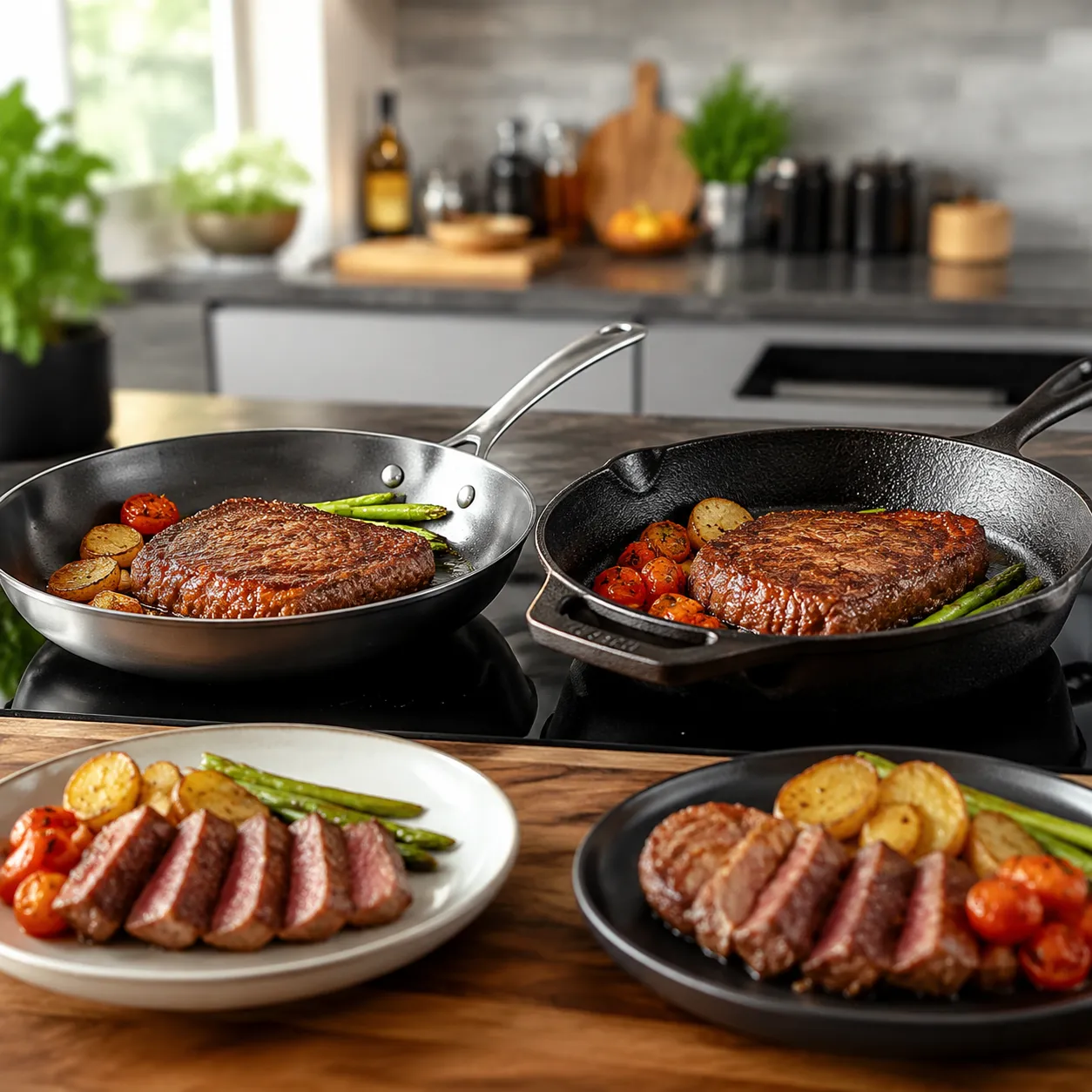
Different meals demand different tools. When choosing between a carbon steel pan and a cast iron skillet, matching the metal to your cooking style ensures the best results in the kitchen.
Eggs, Omelets, and Delicate Foods
A carbon steel skillet wins here easily. Its slick nonstick seasoning and smooth surface release delicate foods without tearing. Because it handles like a lightweight skillet, you can flip eggs and slide omelets onto a plate effortlessly. A heavy cast iron pan works, but its rougher texture can trap delicate proteins.
Steaks, Burgers, and High-Heat Searing
For a thick ribeye, nothing beats a classic cast iron skillet. It reigns supreme as a searing pan due to its incredible heat retention. Once cast iron cookware gets hot, the temperature stays hot—even when you drop in a cold piece of meat—giving you that perfect, restaurant-quality crust.
Stir-Frying and Tossing Ingredients
Go with a carbon steel pan for fast-paced stir-frys. It functions as a quick heating pan that responds instantly to temperature adjustments on the burner. The sloped sides and lighter weight allow you to toss veggies and proteins like a pro without straining your wrist.
Frying, Braising, and Slow Cooking
Shallow frying and braising require stable oil temperatures. A cast iron pan excels here because its massive wall thickness prevents temperature drops when adding food. It holds steady, even heat for hours, making it ideal for slow-cooked comfort foods.
Baking, Oven Use, and Campfire Cooking
Both function as excellent stovetop to oven cookware, but cast iron takes the crown for baking cornbread, deep-dish pizza, and handling open campfires. It is indestructible, heavy duty cookware that survives rough outdoor environments better than thinner steel.
Daily Home Cooking vs. Heavy-Duty Cooking
- Choose Carbon Steel for daily, fast-paced meals. It heats up quickly, cools down fast, and maneuvers with ease.
- Choose Cast Iron for weekend projects, slow roasts, and intense searing where maximum heat retention is required.
Pros and Cons of Carbon Steel
I always tell home cooks that choosing a carbon steel pan comes down to speed and control. While a carbon steel skillet shares many properties with a traditional cast iron pan, its unique composition gives it a completely different feel on the stovetop. It bridges the gap between stainless steel maneuverability and the nonstick seasoning of cast iron.
The Good and the Bad
| Pros (Advantages) | Cons (Drawbacks) |
|---|---|
| Lighter weight for easy tossing and flipping | Less heat retention than a heavy cast iron skillet |
| Quick heating pan that reacts instantly to dial changes | Seasoning layer is thinner and easier to strip |
| Sloped sides offer better spatula access | Can warp if exposed to sudden thermal shock |
| Offers excellent stovetop to oven cookware versatility | Not ideal for boiling liquids or simmering acidic foods |
Who Should Choose Carbon Steel?
You should choose a carbon steel pan if you want a durable frying pan that won’t give you a wrist workout. It is the perfect choice for:
- Stir-fry enthusiasts: The lighter weight allows you to lift, shake, and toss ingredients effortlessly.
- Precision cooks: If you make delicate foods like eggs, omelets, or fish, the quick heating pan properties give you total control over the temperature.
- Daily home cooks: If you love the idea of seasoned cookware but hate the bulk and slow heat-up times of traditional cast iron, this is your daily driver.
Pros and Cons of Cast Iron
When we look at heavy-duty cookware, the cast iron skillet stands out as an absolute legend in American kitchens. It is virtually indestructible and delivers unparalleled cooking performance if you know how to leverage its strengths. However, its unique build means it isn’t the perfect match for every single cooking style.
The Upsides and Downsides
Here is a quick breakdown of what makes a cast iron pan incredible, along with the trade-offs you need to consider before buying.
| Advantages (Pros) | Drawbacks (Cons) |
|---|---|
| Unmatched Heat Retention: Holds massive amounts of thermal energy; won’t drop in temperature when you drop in a cold steak. | Heavy Weight: Noticeably heavy and difficult to toss ingredients or maneuver with one hand. |
| Ultimate Searing Power: Creates that perfect, deeply caramelized crust on meats and burgers. | Slow Thermal Response: Takes a long time to heat up and is slow to cool down when you adjust the stove. |
| Lifetime Durability: Practically indestructible; can handle metal utensils, campfires, and generations of use. | Rougher Surface: Naturally has a textured finish that takes more time to develop into a slick, nonstick seasoning. |
Who Should Choose Cast Iron?
We highly recommend choosing a cast iron pan if you specialize in high-heat searing, regular baking, or outdoor cooking. It is the ultimate tool for anyone who wants a dependable piece of heavy duty cookware that can transition seamlessly from the stovetop to oven, holds heat like a champion, and lasts forever.
Seasoning and Maintenance Guide
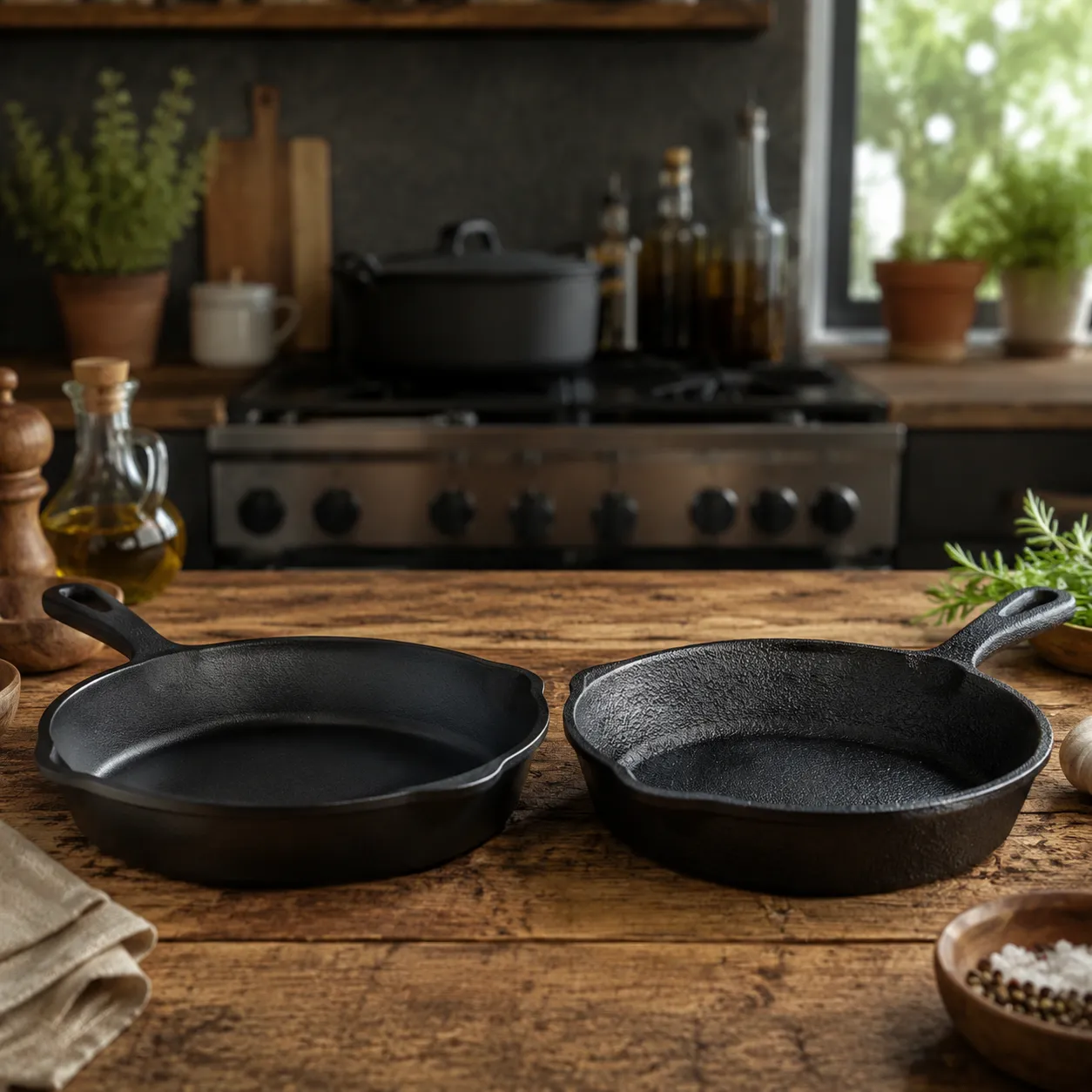
Seasoning is what makes a carbon steel pan or a cast iron skillet truly shine. It is not just about wiping them down with oil; it is a chemical process where fat polymerizes under heat to form a hard, slick, natural nonstick coating. While both materials build this layer over time, they bond slightly differently. Carbon steel has a smoother surface, meaning it takes on seasoning quickly but can lose it just as fast if abused. Cast iron is rougher, grabbing onto the oil tightly to form a thick, rugged coating that handles a beating.
First-Use Preparation
Before cooking your first meal, proper preparation prevents food from sticking.
- Scrub the factory wax: Manufacturers coat new cookware in a protective wax or oil. Wash it off completely using hot water, soap, and a stiff brush.
- Dry completely: Place the cookware on a stovetop burner over low heat for a few minutes to evaporate all moisture.
- Apply the base coat: Rub a very thin layer of high-smoke-point oil (like grapeseed or canola oil) over the entire surface. Wipe off the excess until it looks dry.
- Bake it in: Place the cookware upside down in a preheated oven at 450°F for one hour, then let it cool inside the oven. Repeat this process two to three times for a rock-solid foundation.
Safe Cleaning Methods
Protecting the seasoned layer during daily cleanup keeps your cookware performing like new.
- Clean immediately: Wash the pan while it is still warm to make food release effortless.
- Use hot water and a brush: A nylon brush or a chainmail scrubber works perfectly for stuck-on bits without stripping the seasoning.
- Dry thoroughly on the stove: Never air-dry. Always heat the pan on the stove for a minute to remove trapped moisture, then rub a drop of oil onto the cooking surface before storing.
What to Avoid
When dealing with carbon steel vs cast iron, the rules of destruction are exactly the same. Avoid these common mistakes to keep your pans from rusting or losing their nonstick properties:
Never do this to your seasoned cookware: Soaking in the sink: Leaving a pan in water guarantees rust. Harsh dishwashers: The intense heat and abrasive detergents will strip the seasoning completely. Steel wool pads: These gouge out the protective seasoning layer you worked hard to build. Acidic food storage: Cooking or storing tomato sauces, wine, or citrus for extended periods eats away the nonstick barrier.
Quick Re-Seasoning Tips
If your seasoning looks dull or food starts sticking, a quick touch-up restores the surface. Clean the pan thoroughly, apply a microscopic layer of oil, and heat it on the stovetop until it smokes. Wipe out the excess oil, let it cool, and your nonstick layer is back in action.
Common Problems with Carbon Steel vs Cast Iron (And How to Avoid Them)
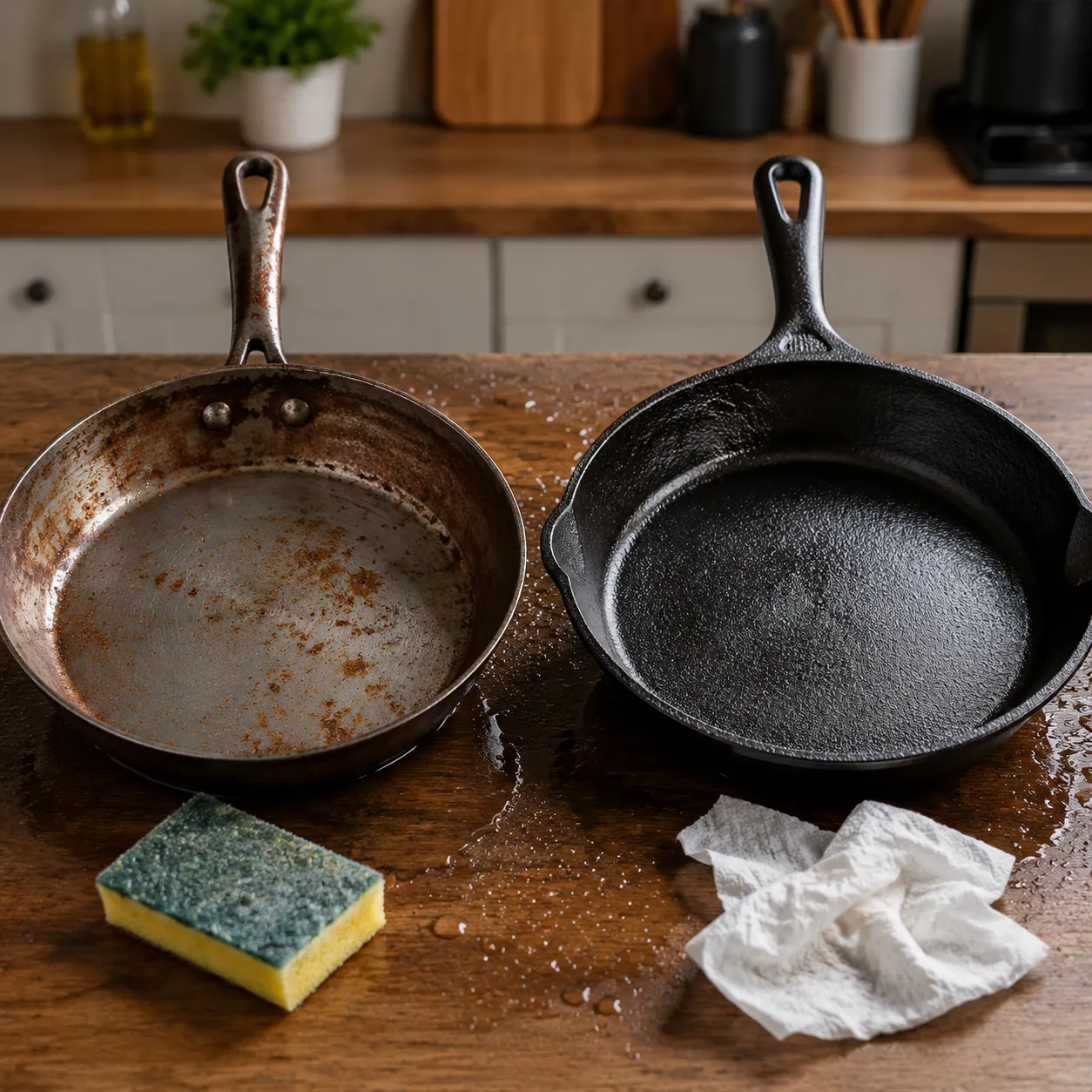
We love working with a carbon steel pan and a cast iron skillet, but both demand respect. If you skip the basic rules, you will run into performance issues. Here is how to troubleshoot the most common headaches and protect your investment.
Food Sticking
When food sticks to your carbon steel skillet or cast iron pan, it usually comes down to two culprits: poor seasoning or rushing the heat. The Fix: Always preheat your pan on low to medium heat before adding fat. Let the oil shimmer, then add your food. Pro Tip: If you are searing meat, let it build a crust. It will naturally release from the seasoned cookware when it is ready. If you force it early, it will tear and stick.
Rust Prevention
Rust is the ultimate enemy of raw metal. It happens when you leave a pan wet or store it in a damp cabinet. The Fix: Never let these pans air dry, and never soak them in the sink. The Routine: Wash the pan, wipe it down immediately with a towel, and place it over a warm burner for a minute to evaporate any hidden moisture. Rub a microscopic layer of oil over the surface before putting it away.
Warping Risks
A warped carbon steel pan will wobble on your stovetop and heat unevenly. This happens from thermal shock—exposing a hot pan to rapid temperature drops. The Fix: Never blast a cold pan with high heat on a small burner, and never drop a screaming hot pan into a sink full of cold water. Let the cookware cool down naturally before cleaning it.
Cracking and Impact Damage
While a cast iron skillet feels indestructible, it is actually brittle. Dropping it on a hard tile floor can crack it right in half. Carbon steel won’t crack, but it can bend under extreme force. The Fix: Handle your heavy duty cookware with care. Avoid banging pans against the grates of your stove or dropping them into heavy ceramic sinks.
Uneven Heating and Preheating Mistakes
Neither material conducts heat perfectly evenly right away. If you throw a steak into a pan that was just placed on a high flame, you will get hot and cold spots. The Fix: Give your pan a solid 5 to 10 minutes to preheat on low-medium. This allows the heat to spread out across the entire cooking surface, ensuring a perfect sear from edge to edge.
Mistakes That Shorten Cookware Lifespan
- Cooking too many acidic foods: Regular use of tomatoes, vinegar, or wine will strip away your nonstick seasoning layer.
- Using the dishwasher: This is a death sentence for the seasoning on both carbon steel vs cast iron. It strips the oil and causes instant rust.
- Using too much soap: A little mild dish soap won’t hurt a tough, well-seasoned pan, but harsh industrial detergents and abrasive steel wool will scratch away your hard-earned nonstick surface.
How to Choose the Right One: Carbon Steel vs Cast Iron
Choosing between a carbon steel pan and a cast iron skillet comes down to your personal cooking style, physical comfort, and what you love to cook. Both of these heavyweight contenders deserve a spot in your kitchen, but they serve different strengths on the stovetop.
Quick Selection Guide
- Choose carbon steel if you want lighter cookware, faster heat control, and the ability to easily toss ingredients like a pro. It is the ultimate choice for nimble, everyday cooking, quick stir-fries, and delicate foods.
- Choose cast iron if you want maximum heat retention, intense high-heat searing, and a virtually indestructible piece of heavy duty cookware. It is the king of thick steaks, slow baking, and rustic campfire cooking.
Carbon Steel vs Cast Iron Decision Matrix
| Cooking Factor | Choose Carbon Steel Skillet | Choose Cast Iron Pan |
|---|---|---|
| Stovetop Type | Excellent for gas and induction; heats up fast. | Great for all, but requires patient preheating on glass tops. |
| Cooking Frequency | Perfect for daily, fast-paced breakfast and dinner prep. | Ideal for weekend bakes, heavy searing, and slow-braising. |
| Preferred Recipes | Eggs, fish, stir-fries, omelets, and sautéed veggies. | Thick steaks, burgers, cornbread, and deep-dish pizza. |
| Physical Comfort | Lighter weight with long, ergonomic handles for easy lifting. | Heavy weight; requires two hands and a strong grip to maneuver. |
| Storage & Space | Fits easily in standard cabinets or hangs on pot racks. | Needs sturdy shelving or a permanent spot on the stovetop. |
| Maintenance Habits | Fast drying and quick touch-up seasoning on the fly. | Requires thorough drying and a dedicated oil wipe-down to prevent rust. |
Your choice ultimately hinges on your daily routine. If you value quick responsiveness and maneuverability, grab a carbon steel skillet. If you prefer a pan that holds a massive amount of heat and thrives under brutal temperatures, stick with a classic cast iron pan.
Carbon Steel vs Cast Iron FAQ
Is carbon steel better than cast iron?
Neither is universally better; it depends entirely on your cooking style. I prefer a carbon steel pan when I want fast heat response and a lighter weight for tossing stir-fries. I reach for my cast iron skillet when I need massive heat retention for high-heat searing or baking.
Which is more nonstick?
Both develop an excellent nonstick seasoning over time with proper oil rotation. However, a carbon steel skillet features a smoother surface right out of the box, which often makes it feel slicker initially compared to the rougher texture of a traditional cast iron pan.
Which lasts longer?
Both qualify as incredibly heavy duty cookware that can easily last for generations. Cast iron is more brittle and can crack if dropped on a hard tile floor, while carbon steel is slightly more prone to warping if you subject it to sudden thermal shock.
Can both go in the oven?
Yes. Both materials excel as stovetop to oven cookware. Just make sure your carbon steel pan does not have a silicone or wooden handle wrapper before sliding it into a high-temperature oven.
Which is better for beginners?
A pre-seasoned skillet made of cast iron is usually friendlier for beginners. The thick metal is highly forgiving with heat management, and the seasoned layer tends to stay put even if you make a minor cleaning mistake.
Which is easier to clean?
It is a tie. Both require the exact same daily care to protect their surfaces: Wash with hot water and a gentle brush. Dry completely immediately after washing to prevent rust. Rub on a light coat of oil before storing. Never put either type in the dishwasher.
Can I use metal utensils on both?
Absolutely. Metal spatulas are actually excellent for both seasoned cookware types. Regular use of a metal spatula helps scrape down high spots and naturally smooths out the cooking surface over time.
 German
  English