

Our Comprehensive Casting Development Process
Our casting development lifecycle is engineered to eliminate risk and maximize manufacturing efficiency. We transform complex engineering blueprints into high-performance components through a data-driven, one-stop manufacturing approach that prioritizes structural integrity.
Precision Engineering from Blueprint to Production
- Design Review & Consultation (DFM): We perform a rigorous analysis of your CAD files to ensure Design for Manufacturability (DFM). By identifying potential issues early, we optimize part geometry for the investment casting process, reducing waste and cost.
- CAE Casting Simulation: Using advanced Computer-Aided Engineering (CAE) software, we simulate the pouring and solidification phases. This allows our engineers to predict and mitigate porosity, thermal stress, and flow issues before any physical mold creation begins.
- Rapid Prototyping: To accelerate your development timeline, we utilize SLA and 3D printing for quick-turn wax patterns. This allows for the validation of complex geometries and functional fit without the immediate investment in expensive permanent tooling.
- Tooling & Mold Fabrication: We execute precision engineering of high-durability molds designed for long-term production. Our in-house mold design ensures that every tool meets strict dimensional tolerances and maintains consistency over thousands of cycles.
By integrating CAE simulation and rapid prototyping into the early stages of casting development, we provide a low-risk path to mass production for the most intricate “problem parts” in the industry.
Advanced CAE Simulation: Eliminating Defects Before the First Pour
In precision investment casting, thermal contraction and flow turbulence are the enemies of quality. Our Computer-Aided Engineering (CAE) suite goes beyond simple flow analysis:
- Solidification Modeling: We identify “hot spots” and potential shrinkage cavities, optimizing riser placement to ensure directional solidification.
- Thermal Balance Analysis: By simulating the interface between the molten metal and the ceramic shell, we predict grain structure and mechanical properties.
- Turbulence & Inclusion Control: We optimize gating systems to ensure a laminar flow, reducing air entrapment and slag inclusions in complex thin-walled geometries.
Strategic Weldment-to-Casting Conversion
Many of our clients achieve significant cost reductions by converting multi-part weldments into monolithic investment castings.
- Enhanced Structural Integrity: By eliminating Heat Affected Zones (HAZ) common in welding, we improve the fatigue life of the component.
- Weight Optimization: Utilizing topology optimization, we place material only where stress requirements demand it, often reducing part weight by 20% to 40%.
- Supply Chain Consolidation: Transforming a 10-part assembly into a single cast component reduces inventory overhead, inspection costs, and assembly labor.
Advanced Material Science and Alloy Development

Our casting development services are rooted in deep metallurgical expertise. We specialize in high-performance materials and “problem alloys” that require precise thermal management and chemical control. Whether your project demands the extreme corrosion resistance of Duplex Stainless Steel or the heat tolerance of superalloys, we ensure the material integrity matches your exact engineering specs.
We provide expert guidance on the metals commonly used in investment casting to ensure your part survives its intended environment:
- Stainless Steel: Including 300/400 series and Duplex for high-strength, anti-corrosive applications.
- Titanium Alloys: Perfect for aerospace and medical sectors needing lightweight, high-strength components.
- Superalloys: Engineered for high-temperature performance in turbochargers and industrial machinery.
- Aluminum & Carbon Steel: Cost-effective, reliable options for automotive and general industrial hardware.
- Alloy Steel: Custom-blended to meet specific mechanical properties and hardness requirements.
By focusing on alloy development early in the process, we eliminate guesswork and ensure every pour results in a high-integrity component that meets international material standards.
Precision Material Science & Metallurgy
We don’t just follow recipes; we engineer alloys. Our metallurgical laboratory provides chemical composition fine-tuning to meet specific environmental challenges:
| Alloy Category | Key Grades | Specialized Applications |
| Duplex Stainless Steel | 2205, 2507, Zeron 100 | Superior chloride corrosion resistance for marine and desalination. |
| Precipitation Hardening | 17-4 PH, 15-5 PH | High-strength, hardness-critical components for aerospace hydraulics. |
| Nickel Superalloys | Inconel 625, 718 | Creep resistance and oxidation stability at temperatures exceeding 800°C. |
| Cobalt-Based Alloys | Stellite 6, 21 | Exceptional wear and galling resistance for medical and valve trim. |
Engineering Solutions for Complex Geometries in Casting Development
We take on the “problem parts” that other foundries turn away. Our casting development process is specifically designed to handle complex geometries, thin-walled sections, and components requiring absolute pressure tightness. We don’t just cast metal; we solve engineering puzzles that demand high dimensional accuracy and structural integrity.
Solving the Toughest Manufacturing Challenges
When a design features intricate internal passages or requires a high strength-to-weight ratio, standard methods often fall short. We utilize advanced techniques to ensure every detail is captured perfectly. Our expertise extends across various materials, including a complete guide to stainless steel castings for parts that need to withstand harsh environments without sacrificing complexity.
- Thin-Walled Components: We maintain consistent metal flow in sections to reduce weight without compromising strength.
- Pressure-Tight Integrity: Critical for pumps and valves, our process eliminates internal porosity to prevent leaks under high-pressure conditions.
- Intricate Internal Cores: We develop complex internal geometries that are impossible to achieve through traditional machining.
- Near-Net Shape Manufacturing: Our goal is to get as close to the final dimensions as possible, reducing the need for expensive secondary operations.
Whether you are working with high-performance alloys or wondering if carbon steel can be used in casting for your specific geometry, we provide the metallurgical and engineering support to make your most difficult designs a reality. We focus on delivering parts that meet strict international standards, ensuring your complex components perform reliably in the field.
Quality Assurance in Casting Development
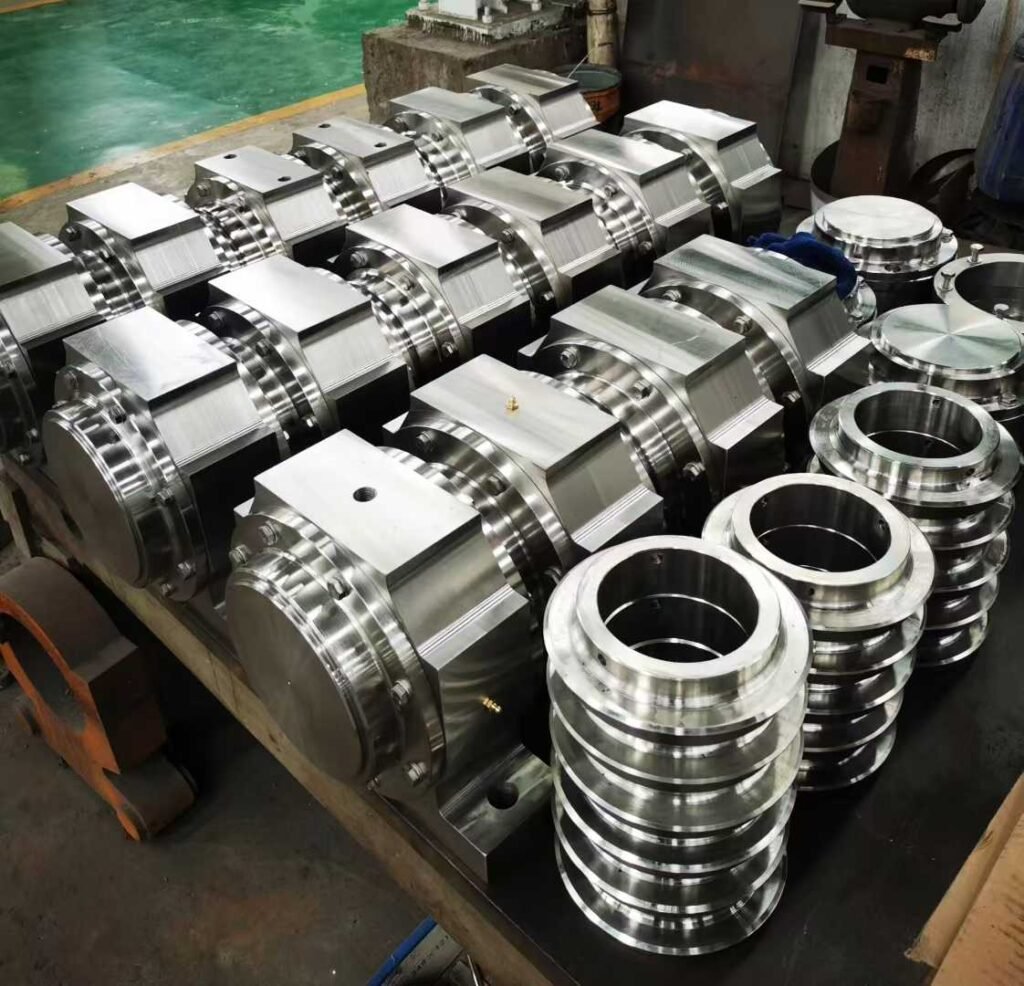
We don’t just pour metal; we verify every micron. A critical stage of our casting development process is a rigorous validation protocol designed to ensure your components meet the exact specifications required for high-stakes industrial applications.
Dimensional Inspection & CMM
Precision is non-negotiable. We utilize advanced Coordinate Measuring Machines (CMM) to perform tight tolerance verification. This ensures that every finished part aligns perfectly with your original CAD data, eliminating the risk of fitment issues during final assembly.
Non-Destructive Testing (NDT)
To guarantee the internal integrity of your parts without compromising the structure, we employ several NDT methods:
- X-Ray Inspection: Detecting internal porosity, shrinkage, or inclusions.
- Magnetic Particle Inspection (MPI): Identifying surface and near-surface discontinuities in ferromagnetic materials.
- Liquid Penetrant Testing: Ensuring a flawless, crack-free surface finish on all geometries.
Metallurgical Analysis & Material Validation
We verify the “DNA” of every pour. Our in-house lab uses spectrometer testing to confirm exact chemical compositions and alloy grades. We also conduct comprehensive mechanical property validation, including Hardness and Tensile testing, to ensure the material performs under real-world stress.
Understanding how to evaluate factors affecting heat-resistant alloy properties is a cornerstone of our metallurgical consulting, ensuring that even the most complex “problem alloys” meet your durability requirements. This data-driven approach to casting development provides the documentation and confidence needed for mission-critical projects.
Industries Empowered by Our Casting Development Services
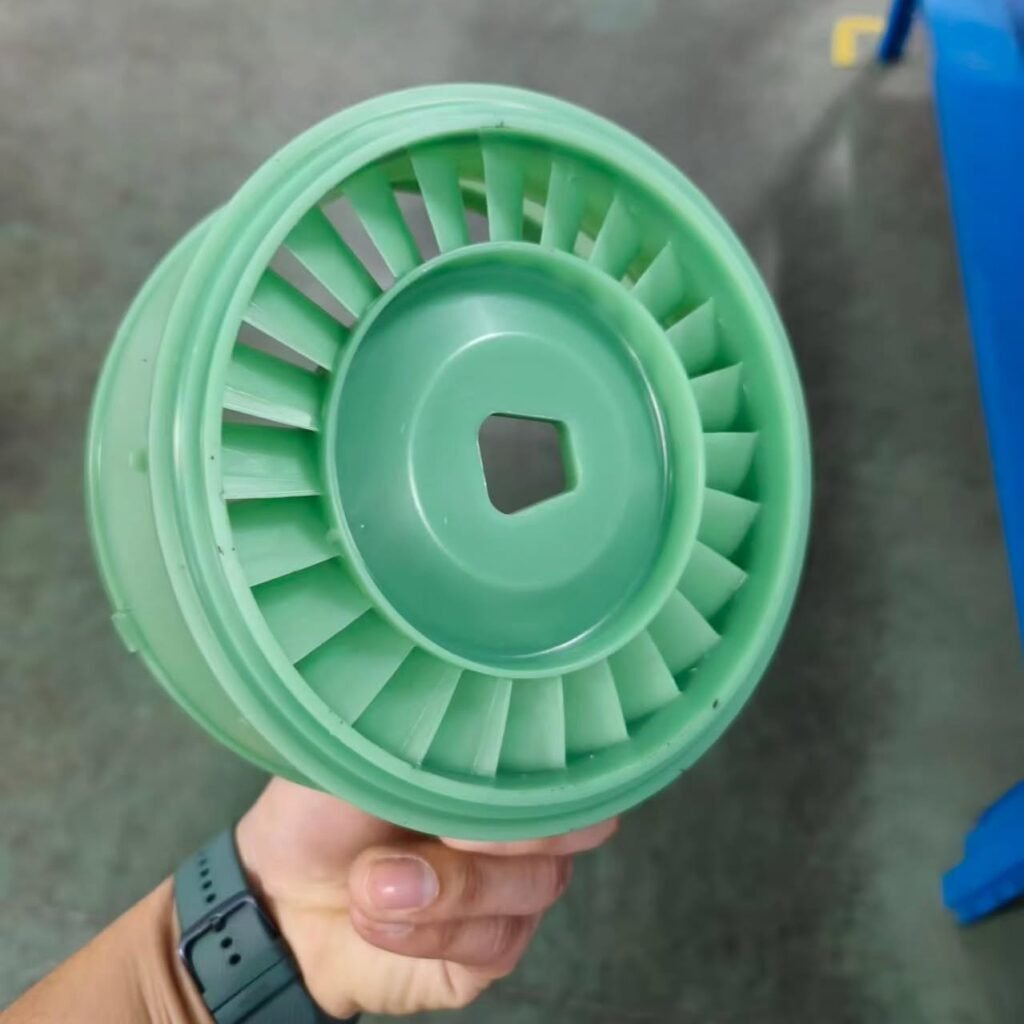
Our casting development expertise supports critical sectors where failure is not an option. We specialize in transforming complex designs into high-performance components across several specialized industries and applications. By focusing on metallurgical integrity and precision engineering, we provide the following sectors with a competitive edge:
- Aerospace & Defense: We deliver components with exceptional strength-to-weight ratios. Using titanium and aluminum alloys, our development process ensures structural reliability for parts that must perform under extreme atmospheric pressure and G-forces.
- Medical Instrumentation: Precision is non-negotiable in healthcare. We develop intricate parts using biocompatible materials, ensuring the tight tolerances and superior surface finishes required for surgical tools and medical equipment hardware.
- Automotive & Turbochargers: Modern high-performance engines require materials that can survive intense thermal stress. We utilize heat-resistant metals to manufacture turbocharger housings and exhaust components that maintain their shape and strength at high temperatures.
- Industrial Pumps & Valves: For fluid control systems, we prioritize corrosion resistance and pressure integrity. Our casting development for stainless steel and duplex alloys ensures leak-proof performance in the most demanding chemical, food processing, and marine environments.
We take your engineering blueprints and apply advanced simulation and material science to ensure every part is optimized for its specific industrial environment.
Rigorous Quality Validation: Beyond ISO 9001
Our commitment to “zero-defect” manufacturing is backed by a data-driven validation protocol:
- Optical Emission Spectrometry (OES): We verify the “chemical DNA” of every heat before and after pouring to ensure compliance with ASTM, EN, and JIS standards.
- Metrology & GD&T: Using CMM and 3D Laser Scanning, we verify complex Geometric Dimensioning and Tolerancing (GD&T) requirements, ensuring seamless fit-up in your final assembly.
- Surface Integrity (Ra): Our lost wax process consistently achieves surface finishes of Ra 3.2μm to 6.3μm, drastically reducing or eliminating the need for secondary CNC machining.
- PPAP Documentation: We support automotive and high-reliability industrial sectors with full Production Part Approval Process (PPAP) documentation, including PFMEA and Control Plans.
Why Partner with Precisionvast for Casting Development?
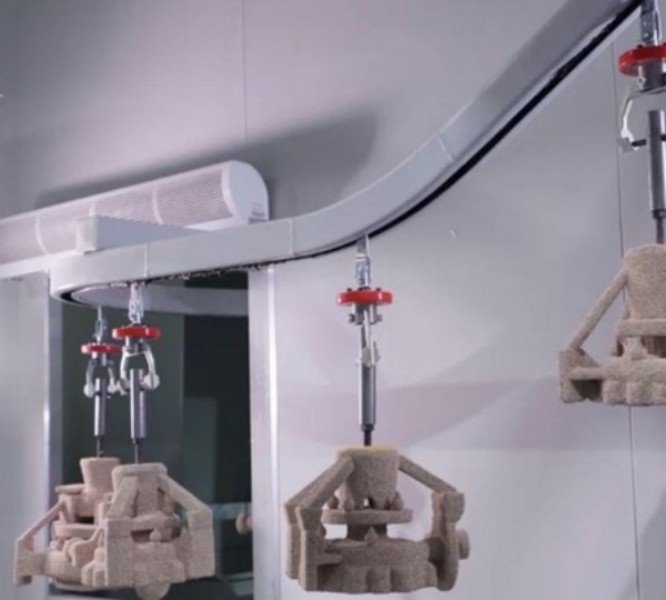
We make casting development straightforward and efficient for US manufacturers. When you work with us, you are dealing directly with the factory. There are no middlemen complicating the communication or inflating your costs. Our goal is to turn your engineering concepts into reliable, production-ready components without the usual supply chain headaches.
Here is what you can expect when partnering with our foundry engineering services:
- Factory-Direct Communication: You get direct access to our engineering team. This means your project requirements, castability analysis, and DFM feedback are handled straight from the source.
- 8-Hour Rapid Response: We know production schedules are tight. We guarantee detailed technical feedback and quotes within 8 hours of your inquiry.
- Proven Capacity & Quality: Our 18,000+ square meter facility manages an annual capacity of 700 tons. Every step of our lost wax process development is backed by strict ISO9001 certification to ensure consistent reliability.
- Smart Engineering & Cost Optimization: We optimize your designs to reduce waste and improve structural integrity. Whether we are refining complex geometries or helping you select proven high-temperature alloys for tough applications, our metallurgical consulting ensures you get maximum performance at the most efficient price point.
Why Leading US Manufacturers Choose Our Engineering Services
- Near-Net Shape Expertise: We specialize in geometries that are “impossible to machine,” delivering parts that require minimal finishing.
- Rapid Prototyping Bridge: Move from a 3D-printed wax pattern to a functional metal prototype in as little as 7–10 days.
- Direct Factory Access: Eliminate the “Broker Markup.” You speak directly with the foundry engineers who are designing your molds.
- 8-Hour DFM Feedback: Upload your STEP, IGES, or SolidWorks files, and receive a comprehensive Design for Manufacturability (DFM) report and quote within one business day.
Frequently Asked Questions About Casting Development
How long does the typical development cycle take?
For standard projects, the casting development cycle—from initial design review to first-article samples—typically takes 4 to 6 weeks. This timeline includes mold design, tooling fabrication, and initial casting runs. If you are on a tight deadline, we utilize rapid prototyping via SLA 3D printing to provide wax patterns for geometry validation in as little as one week, bypassing the need for immediate hard tooling.
Can you assist in converting a weldment to a single casting?
Yes, converting complex weldments into single-piece castings is one of our core strengths. This transition often results in a stronger, lighter, and more cost-effective component. By eliminating multiple welds, we improve structural integrity and reduce the risk of failure in demanding environments. Our engineering team can guide you through how high-temperature alloy casting works to ensure your converted part maintains peak performance under extreme thermal stress.
What file formats do you accept for initial review?
To provide a fast and accurate quote within our 8-hour window, we prefer the following formats:
- 3D Models: STEP (.stp), IGES (.igs), or SolidWorks (.sldprt) files are best for performing a detailed castability analysis (DFM).
- 2D Drawings: PDF or DWG files are necessary to verify specific tolerances, surface finishes, and material grades.
Why is CAE simulation important in casting development?
We use CAE simulation software to identify potential issues like porosity, shrinkage, or flow turbulence before we ever cut steel for a mold. This proactive approach to casting development ensures that “problem parts” are optimized for manufacturability, saving you time and reducing the cost of physical iterations. This is especially critical when working with complex materials, such as when you need to verify the quality of carbon steel castings to meet strict international standards.
What are the primary benefits of investment casting vs. sand casting?
Investment casting offers superior dimensional accuracy (Linear tolerance of ±0.1mm/20mm) and a much finer surface finish. It allows for thinner walls and more intricate internal cooling channels that sand casting cannot achieve.
How do you ensure pressure tightness in valve and pump castings?
We utilize vacuum-assisted pouring and 100% Hydrostatic testing or X-ray inspection to ensure there is no interconnected porosity, ensuring the part remains leak-proof under high-pressure applications.
Can you work with custom-specified alloy chemistries?
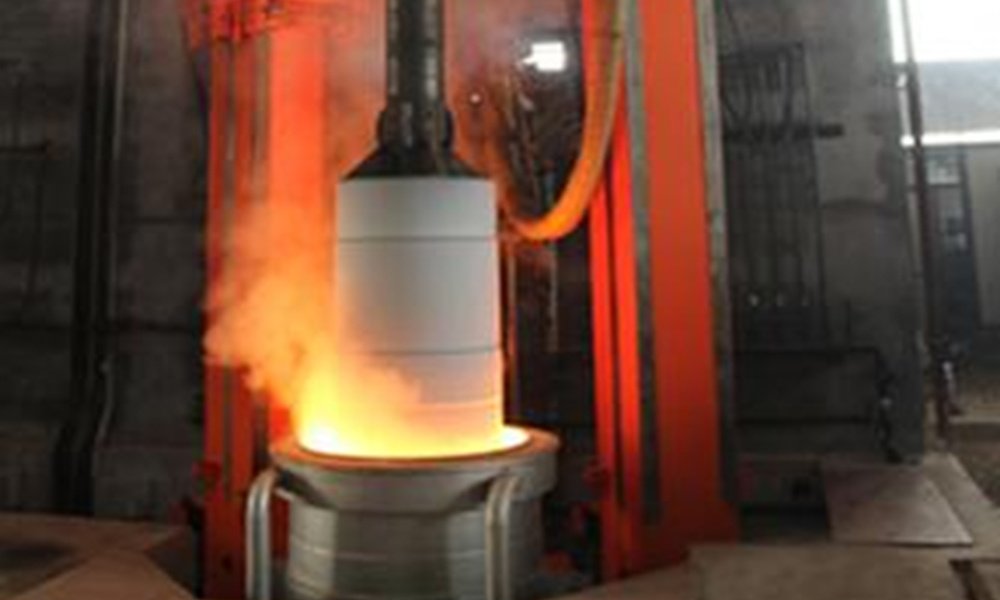
Yes. Our in-house induction melting furnaces allow us to create custom “master heats” tailored to your specific mechanical or magnetic property requirements.
 German
  English