

Authoritative guide for sourcing cnc precision machining manufacturers with tight tolerance 5 axis milling ISO 9001 and integrated casting.
Defining “True” Precision in Modern Manufacturing
Are your parts actually fitting together on the assembly line, or are you constantly fighting variance between batches? Finding reliable cnc precision machining manufacturers isn’t just about who has the lowest quote; it’s about who understands the math behind the metal. True precision isn’t a buzzword we throw around—it is the guarantee that the thousandth part we ship is identical to the first one.
In this industry, “close enough” is a disaster waiting to happen. We define precision through rigorous repeatability and statistical process control. If a shop cannot prove their capability with data, they are just guessing.
Understanding Tolerance Standards (ISO 2768 & DIN)
To ensure tight tolerance machining, we rely on established international standards. You can’t just eyeball a caliper. We adhere to frameworks like ISO 2768 and DIN standards to dictate the acceptable variance for linear and angular dimensions.
- ISO 2768-f (Fine): Used for high-precision fits where deviations must be microscopic.
- ISO 2768-m (Medium): The standard for most general engineering applications.
- DIN Standards: often utilized for specific European market requirements or specialized mechanical components.
These standards protect you. They provide a clear, objective pass/fail criteria for every single component that comes off our machines.
Why 5-Axis CNC Milling Services Are Essential for Complexity
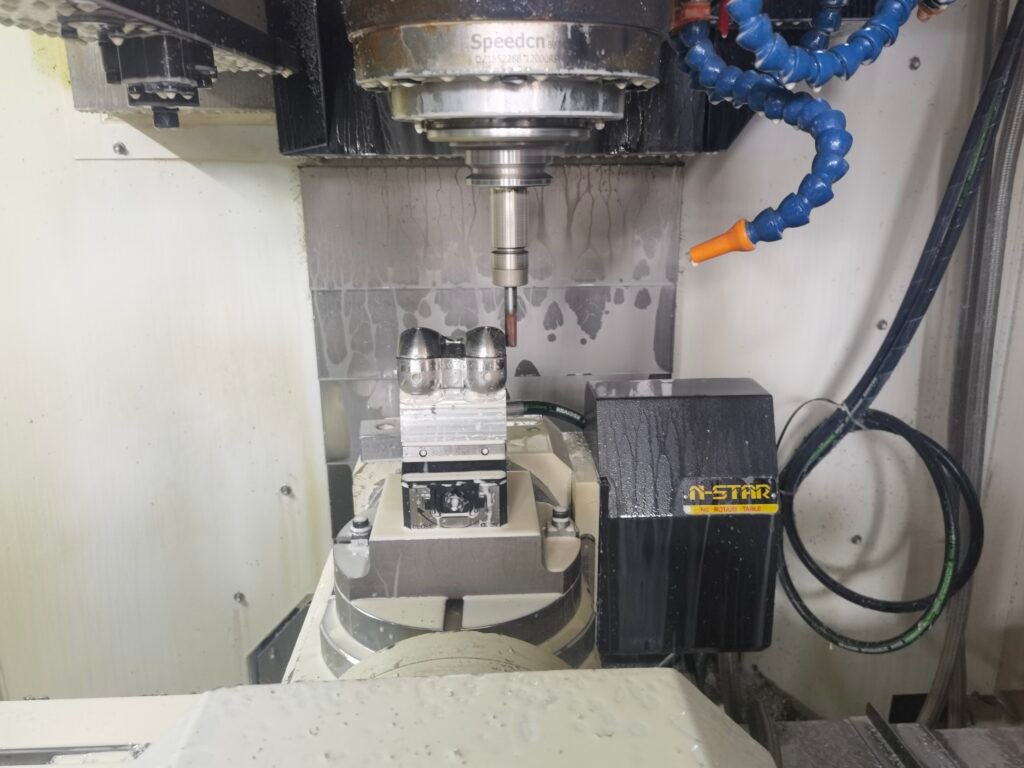
When dealing with complex geometry components, standard 3-axis machining often hits a wall. That is where 5-axis CNC milling services become non-negotiable. By moving the cutting tool across five different axes simultaneously, we can approach the workpiece from virtually any angle.
The benefits of 5-axis machining include:
- Single Setup: We can machine complex shapes in one go, eliminating the errors that come from manually flipping and re-fixturing parts.
- Shorter Tools: We can use shorter, more rigid cutters, which reduces vibration and improves surface finish.
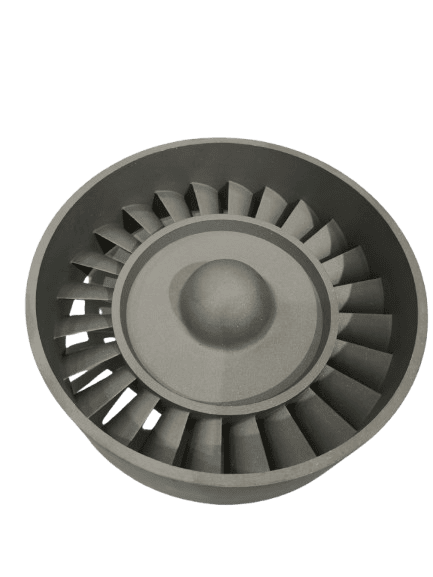
- Complex Contours: Essential for impellers, turbines, and organic shapes found in medical and aerospace parts.
Material Versatility: Machining Titanium, Inconel, and Stainless Steel
A lot of shops can cut aluminum all day long. The real test of a manufacturer’s skill is how they handle the “superalloys.” Stainless steel CNC machining requires specific tooling strategies to prevent work hardening, while materials like Titanium and Inconel present even greater challenges due to heat generation and tool wear.
We specialize in aerospace grade machining materials that demand high rigidity and advanced cooling techniques:
- Titanium (Ti-6Al-4V): High strength-to-weight ratio but gummy; requires sharp tools and high-pressure coolant.
- Inconel: Extreme heat resistance; requires rigid setups to prevent chatter.
- Stainless Steel (304/316): Demands precise speed control to maintain corrosion resistance properties.
If a manufacturer hesitates when you mention these materials, they likely lack the equipment or expertise to deliver consistent quality.
Key Criteria for Vetting CNC Precision Machining Manufacturers
Finding the right partner is about more than just comparing quotes. As a business operating in a high-stakes industry, I know that the difference between a successful product launch and a supply chain nightmare often comes down to the capabilities of your supplier. Here is what you need to look for when evaluating cnc precision machining manufacturers.
Analyzing the Equipment Portfolio: Turning, Milling, and Multi-Axis
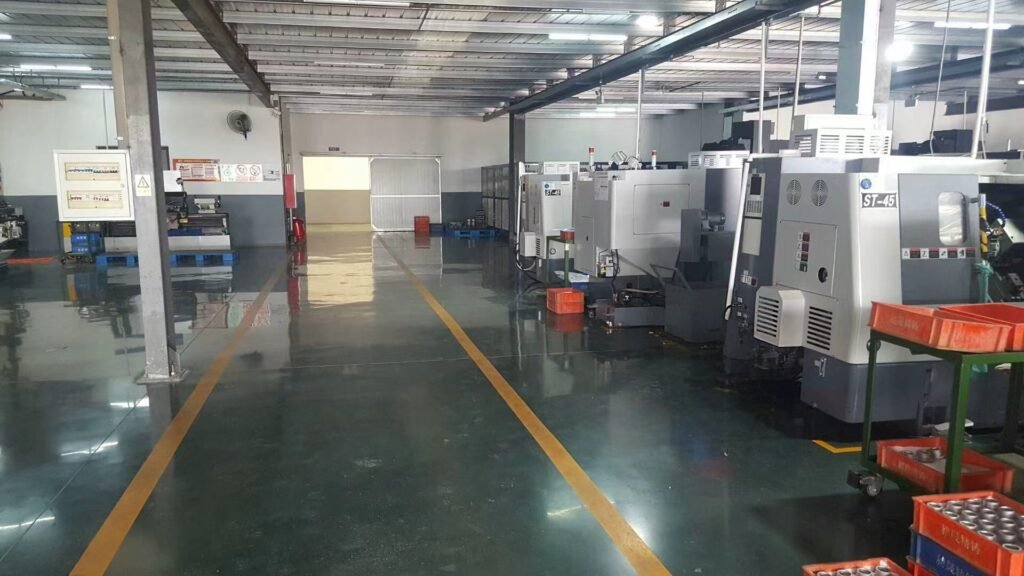
A robust equipment list is the backbone of any serious machine shop. You need a partner that isn’t limited to basic 3-axis work. We utilize a combination of advanced CNC turning and milling centers to handle intricate designs efficiently. Having a diverse range of machinery allows us to select the most efficient process for your specific part, whether it requires simple facing or complex multi-axis contouring.
Core Equipment Checklist:
- CNC Milling Centers: For complex geometries and prismatic parts.
- CNC Lathes: For cylindrical precision components.
- SLA Printers: For rapid prototyping and design validation.
- Mold Making Tools: Essential for transitioning from design to mass production.
The “One-Stop” Advantage: Integrated Investment Casting and Machining
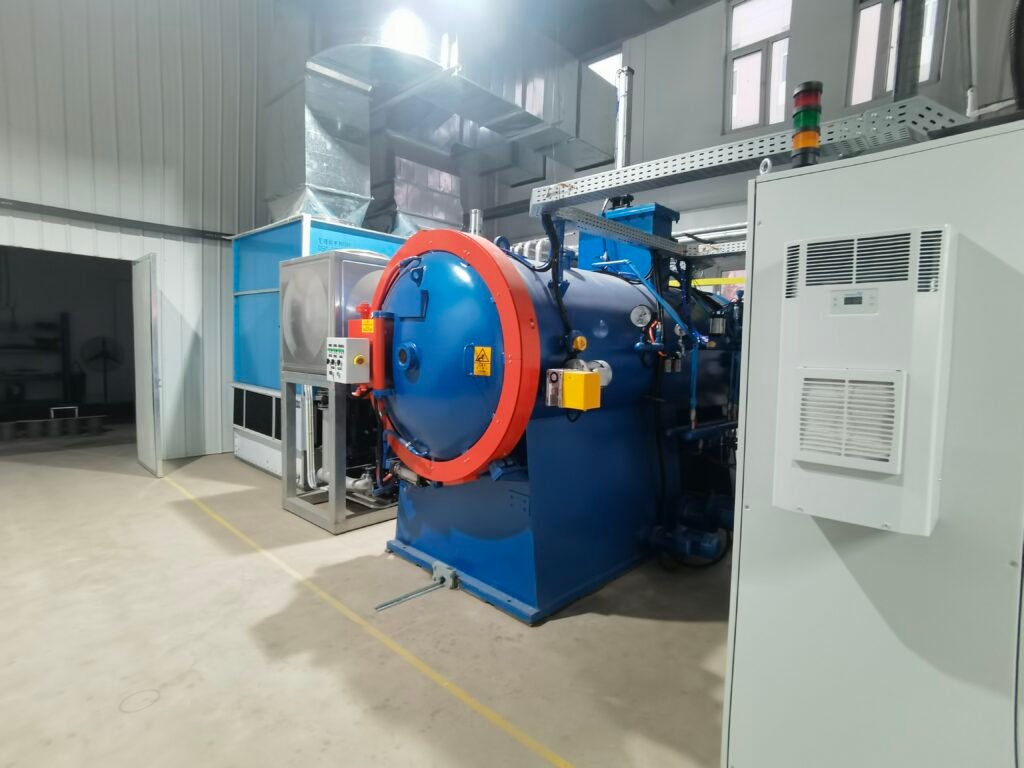
The biggest bottleneck in manufacturing often occurs when moving parts between a foundry and a machine shop. We eliminate this by offering a true one-stop solution. By integrating investment casting and machining, we control the entire lifecycle of the part. We can cast the near-net shape and then immediately transfer it to our in-house machine shop for precision finishing. This integration significantly reduces lead times and ensures accountability. It also allows us to offer effective low-volume casting prototyping solutions to validate designs before committing to full-scale production.
Quality Assurance: The Importance of CMM Inspection Reports
Precision is meaningless without verification. Any manufacturer can claim tight tolerances, but few can prove it with data. We rely on Coordinate Measuring Machine (CMM) inspection to verify that every dimension matches your technical drawings. Beyond dimensional checks, we employ a rigorous testing suite including X-ray detection, magnetic particle inspection, and hardness testing. If a supplier cannot provide a comprehensive inspection report with your shipment, you are taking an unnecessary risk.
Certifications Matter: ISO 9001 Certified Machine Shop Requirements
Consistency is the hallmark of professional manufacturing. Working with an ISO 9001 certified machine shop ensures that the quality management system is standardized and effective. We adhere to these international standards to guarantee that our internal processes—from material sourcing to final packaging—are documented and repeatable. This certification is your assurance that we maintain strict process control to deliver defect-free parts, batch after batch.
Navigating from Rapid Prototyping to Mass Production
Utilizing SLA and Soft Tooling for Quick Validation
Getting a product to market starts with speed and risk management. We never recommend rushing straight into cutting expensive steel for a design that hasn’t been physically tested. Instead, we utilize rapid prototyping to production workflows, starting with SLA (Stereolithography) or soft tooling. This allows us to put a physical part in your hands within days.
This phase is about failing fast and cheap. We validate the fit, form, and function immediately. It is a low-risk way to check complex geometries and catch design errors early. If a design flaw exists, finding it here costs pennies compared to modifying hardened production molds later.
Managing the Transition to Low Volume Manufacturing
Once the prototype is approved, we enter the bridge phase. Low volume manufacturing is essential for producing pilot runs—typically 50 to 500 units—to test the market or the assembly line. This stage proves the manufacturing process without the massive upfront investment of hard tooling. We optimize CNC tool paths to balance cycle time with surface finish requirements.
During this transition, we also evaluate the most cost-effective production method for the long term. For instance, for certain geometries, understanding the top benefits of custom aluminum sand casting can help us decide if creating a near-net shape blank is more efficient than machining from a solid block.
Ensuring Consistency in High-Volume Production Runs
Scaling up requires a shift in mindset from flexibility to absolute repeatability. Reliable CNC precision machining manufacturers must guarantee that part #1 and part #10,000 are identical. We achieve this by locking down the process with dedicated custom fixtures and automated loading systems.
At this scale, material consistency becomes critical. Whether we are working with standard stainless steel or navigating the key challenges in the properties of high-temperature alloys, process stability is non-negotiable. We implement strict Statistical Process Control (SPC) to monitor tolerances in real-time, ensuring zero defects reach your assembly line.
Industry-Specific Requirements for Precision Parts
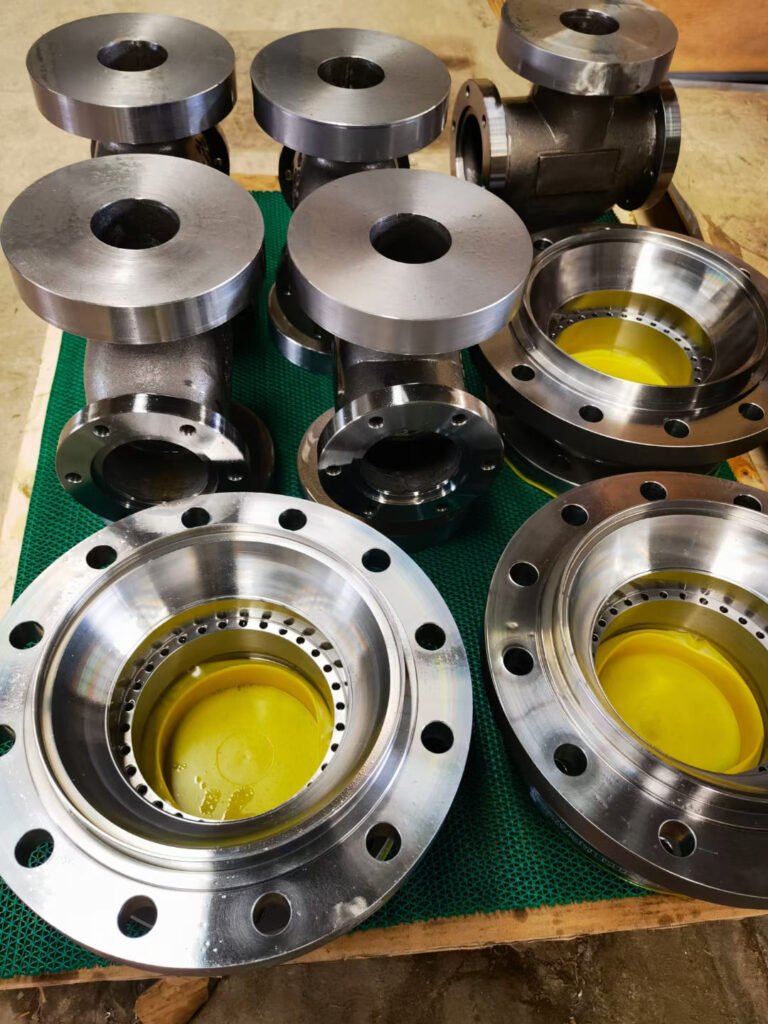
As experienced cnc precision machining manufacturers, we understand that a “good part” means something completely different depending on where it ends up. A valve in a marine engine faces different threats than a surgical instrument. We tailor our manufacturing flow—from material selection to final CMM inspection—to meet the strict demands of these diverse sectors.
Medical & Food Machinery: Surface Finishing Services and Purity
In the medical and food processing industries, surface integrity isn’t just cosmetic; it’s a safety requirement. Parts used in food machinery or medical devices must be free of burrs and crevices where bacteria can hide. We utilize advanced investment casting surface treatments like electropolishing and pickling to ensure sanitary, smooth finishes on stainless steel components.
- Key Focus: Hygiene, corrosion resistance, and biocompatibility.
- Common Parts: Surgical tools, food processing valves, and pump fittings.
- Our Standard: Strict adherence to material purity and surface roughness specifications.
Automotive & Marine: Durability, Heat Treatment, and Corrosion Resistance
Automotive and marine components take a beating. Whether it’s the high heat of an engine block or the salt spray hitting marine hardware, these parts must survive harsh environments. We process robust materials like Duplex Stainless Steel and Alloy Steel, often applying specific heat treatments to enhance mechanical properties.
Selecting top heat-resistant metals for high-temperature durability is critical for preventing failure in engine components. We combine this material expertise with rigorous testing—including hardness testing and magnetic particle inspection—to guarantee durability.
Sector Requirements at a Glance:
| Industry | Primary Threat | Manufacturing Solution |
|---|---|---|
| Automotive | Vibration & Heat | Heat treatment & Alloy Steel casting |
| Marine | Saltwater Corrosion | Duplex Stainless Steel & Passivation |
| General Machinery | Wear & Tear | Carbon Steel & Hardness Testing |
Aerospace & Defense: Traceability and Complex Geometry Components
While the stakes are high in every industry, high-tech sectors require absolute precision regarding complex geometry components. We leverage 5-axis CNC capabilities and rapid prototyping via SLA to validate intricate designs before mass production.
Traceability is non-negotiable here. From the initial raw material test to the final X-Ray and CMM inspection reports, we maintain a documented trail for every batch. Working with high-performance materials like Titanium and High-Temperature Alloys allows us to meet the weight-to-strength ratios these industries demand.
Red Flags: When to Walk Away from a Manufacturer
Sourcing from cnc precision machining manufacturers isn’t just about finding a facility with machines; it’s about vetting a partner who won’t compromise your supply chain. I have seen too many projects fail because buyers ignored early warning signs during the selection process. Recognizing these red flags early saves you from costly rework and delays down the line.
Warning Signs: Lack of Transparency in Material Certs
If a supplier hesitates to provide material test reports or certifications, that is an immediate deal-breaker. You need absolute proof that the metal used matches your engineering specifications, especially for high-stress components like pumps, valves, and fittings where material integrity prevents catastrophic failure. A credible manufacturer provides full traceability—including X-ray testing and hardness reports—without you having to beg for it. If they can’t prove what is in the metal, walk away.
The Danger of Unrealistic Quotes and “Too Good to Be True” Pricing
We all aim for cost-efficiency, but quotes that are significantly lower than the market average usually signal cut corners. These shops often skip essential steps like proper heat treatment, surface finishing, or final CMM inspection to lower their overhead. High-quality OEM precision parts require investment in skilled labor and maintenance. If the price looks impossibly low, you are likely paying for it with poor tolerances or inconsistent quality later.
Communication Breakdowns: Why Response Time Matters
Responsiveness during the quoting phase sets the tone for the entire relationship. If a manufacturer takes days just to acknowledge an inquiry, imagine the delays when you hit a snag in production. Contract manufacturing partners must be agile. This is exactly why we guarantee a response to inquiries within 8 hours—speed reflects reliability.
Quick Checklist: When to Drop a Supplier
- Slow Communication: No reply within 24 hours of a request.
- Vague Answers: Inability to explain their quality control process or ISO standards.
- No Documentation: Refusal to supply material certifications or inspection reports.
- Hidden Costs: Quotes that lack detail on tooling, shipping, or post-processing fees.
FAQ: Sourcing from CNC Manufacturing Partners
What is the difference between a job shop and a contract manufacturer?
When vetting cnc precision machining manufacturers, it is crucial to understand the scale of operation. A job shop typically handles one-off projects, quick repairs, or overflow work with a transactional focus. In contrast, contract manufacturing partners like us function as an extension of your business. We handle the entire product lifecycle—from rapid prototyping to mass production—offering long-term stability and capacity planning. We don’t just cut parts; we manage the supply chain, ensuring consistency across thousands of units.
How do I ensure my parts meet tight tolerance machining specs?
Precision isn’t about hoping for the best; it’s about verification. To guarantee your components meet tight tolerance machining requirements, you need a manufacturer with a robust Quality Assurance (QA) protocol. We rely on advanced CMM (Coordinate Measuring Machine) inspection and X-Ray testing to validate dimensions against your technical drawings. Always ask for a comprehensive inspection report before shipment. If a shop cannot provide data-backed proof of their accuracy, they aren’t ready for high-precision work.
Why is a “One-Stop” shop better for supply chain management?
Fragmenting your production across multiple vendors—one for casting, one for machining, and another for finishing—introduces risk and delays. A “One-Stop” solution centralizes accountability. By integrating processes like investment casting, CNC machining, and even secondary operations like TIG and MIG welding applications under one roof, we eliminate logistical bottlenecks. This integrated approach reduces lead times, lowers shipping costs, and ensures that a single team is responsible for the quality of your final part from start to finish.
 German
  English