

Custom machined parts with fast turnaround, instant quotes, tight tolerances, and scalable CNC production for prototypes and high volume
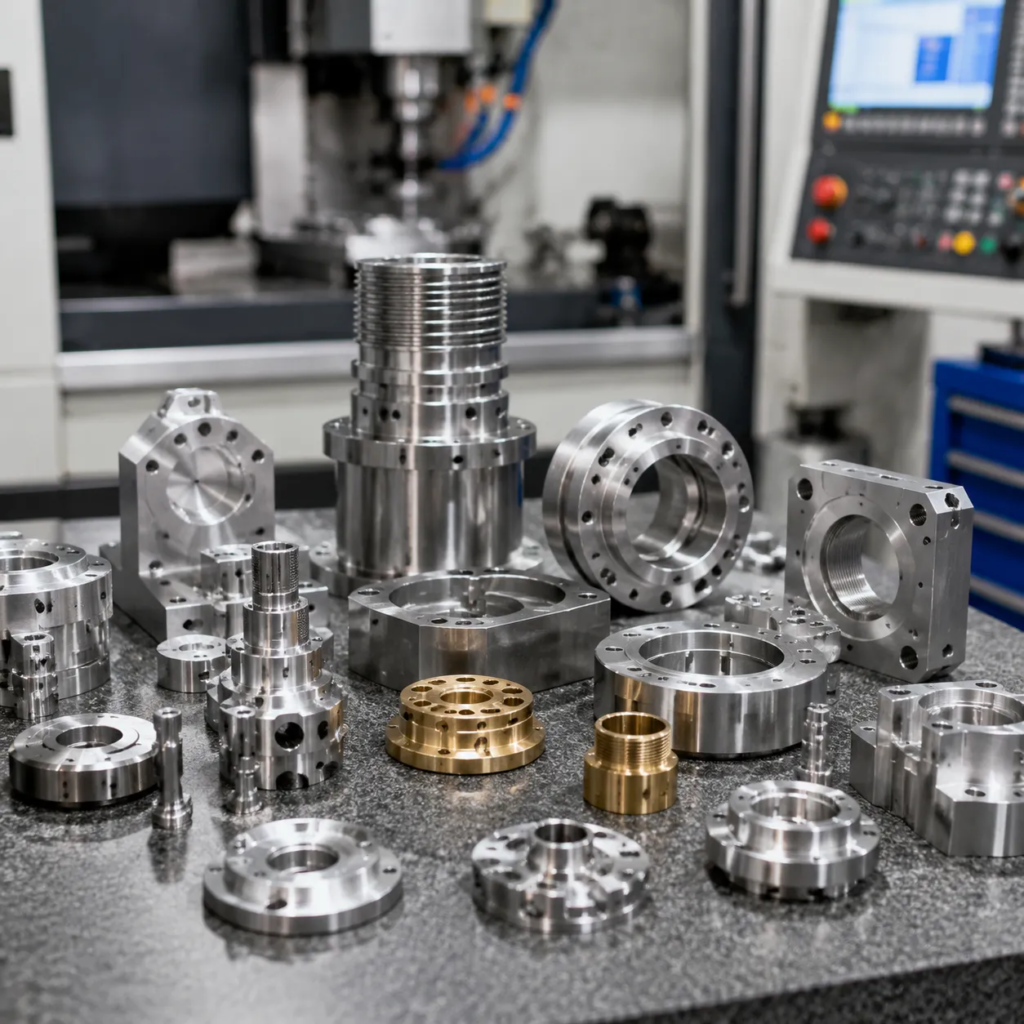
What Are Custom Machined Parts?
When standard hardware falls short, custom machined parts provide the exact fit, material composition, and performance required for specialized applications. Unlike mass-produced components, these parts are tailored to unique engineering specifications.
Precision Custom Machining Defined
Precision custom machining is a subtractive manufacturing process where raw material is selectively removed using advanced, computer-controlled equipment to create highly accurate components. By utilizing digital blueprints (CAD/CAM files), we transform raw metal or plastic stock into finished products that meet exact dimensional requirements.
Custom Parts vs. Off-the-Shelf Components
Standard, off-the-shelf components are manufactured in bulk to generic specifications. While cost-effective for basic applications, they often lack the performance characteristics required for specialized systems.
| Feature | Standard Off-the-Shelf Parts | Custom Machined Parts |
|---|---|---|
| Design Flexibility | Fixed dimensions and shapes | Unlimited geometric complexity |
| Material Choice | Limited to high-demand materials | Optimized for exact application needs |
| Tolerances | Standard commercial variances | Tight tolerance machining to exact microns |
| Availability | Immediate, but prone to obsolescence | Scalable production on demand |
Why Industries Rely on Custom-Tailored Components
Modern industrial applications push the limits of speed, temperature, and stress. Generic hardware simply cannot handle these environments. Modern manufacturing relies on precision machined components for three critical reasons:
- Eliminating Design Compromises: Instead of altering a new product design to fit existing hardware, we manufacture the component to fit the ideal system design.
- Material Optimization: Applications requiring specific weight reduction, corrosion resistance, or electrical conductivity get the exact alloy or polymer needed.
- Legacy System Support: Replacing worn-out components for older machinery where factory parts are no longer manufactured or supported.
Common Materials for Custom Machined Parts
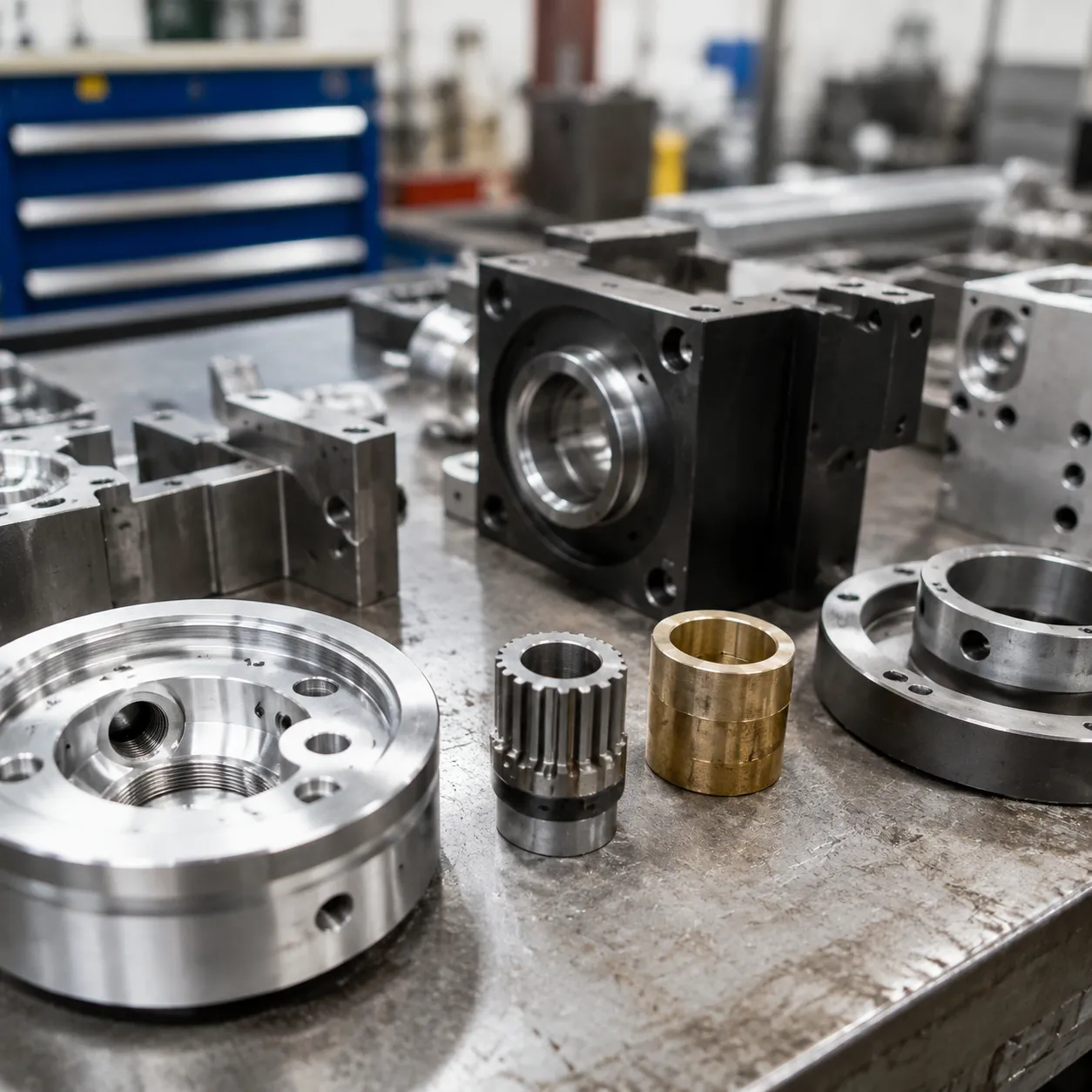
Choosing the right material dictates your part’s strength, durability, and production cost. We work with a wide range of certified metals and plastics to match your exact application requirements.
Metals for Heavy-Duty Performance
- Aluminum (6061, 7075): Lightweight, highly machinable, and the go-to choice for aerospace and automotive parts.
- Steel & Stainless Steel (303, 304, 316): Offers superior tensile strength, wear resistance, and excellent corrosion protection.
- Brass: Ideal for low-friction components, electrical connectors, and fluid regulations.
- Titanium: Exceptional strength-to-weight ratio and biocompatibility, perfect for medical and high-spec applications.
Plastics for Custom Fabrication
- POM (Delrin) & Nylon: High mechanical strength, excellent dimensional stability, and great for gears or high-wear parts.
- PEEK: Exceptional thermal and chemical resistance for extreme environments.
- Acrylic: Superior optical clarity and impact resistance for visual or structural components.
Choosing the Right Material
To select the best material for your custom machined parts, we evaluate key factors like operating temperature, environmental exposure, load capacity, and budget. Matching these variables guarantees your custom metal parts and plastic components perform flawlessly under real-world conditions.
Key Manufacturing Processes for Custom Machinery Parts
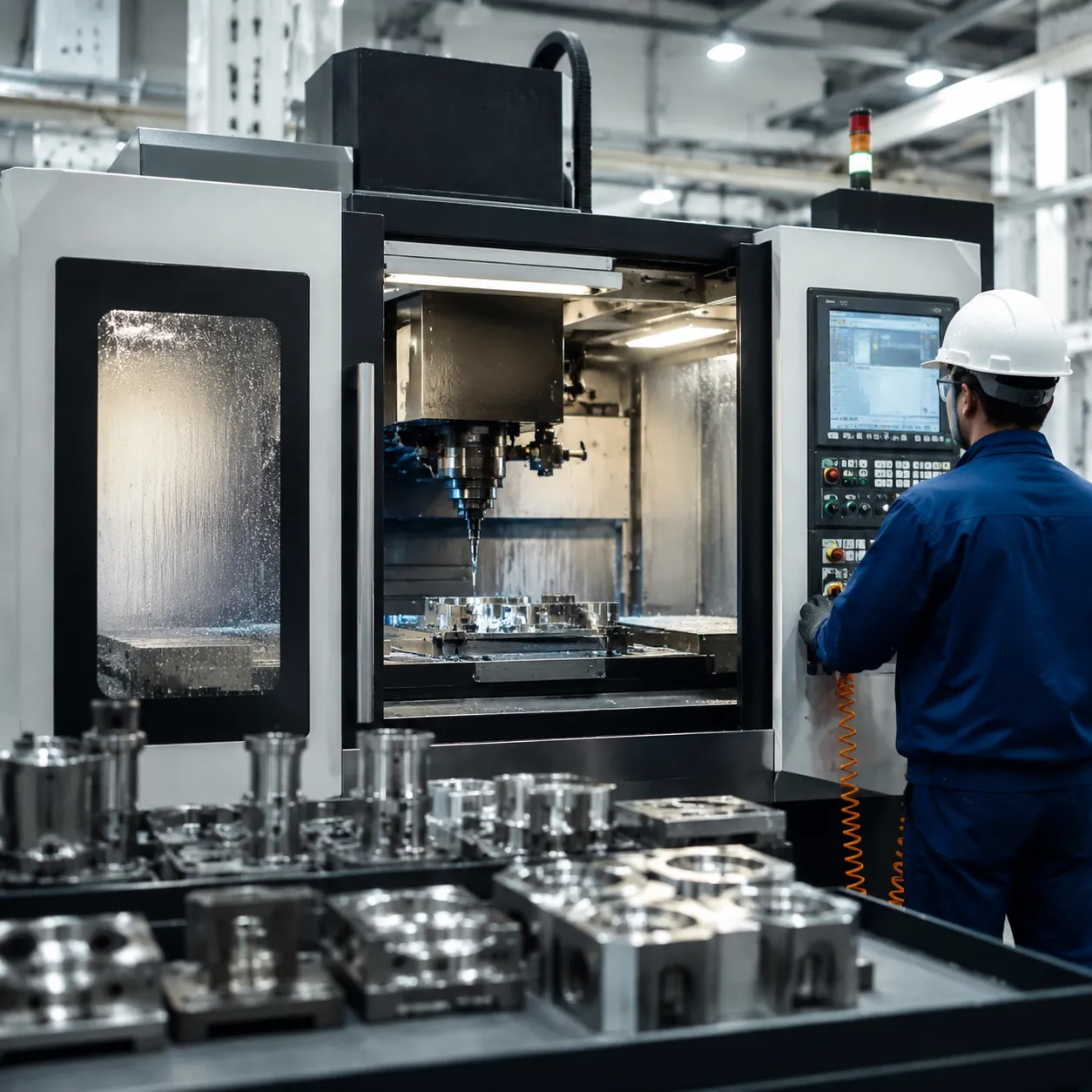
We use a variety of advanced fabrication techniques to turn raw stock into high-precision custom machined parts. Depending on your design geometry and material choices, we select the optimal process to balance efficiency, cost, and exact blueprint specs.
CNC Milling vs. CNC Turning
These two processes form the backbone of modern CNC milling and turning services, each handling different geometries.
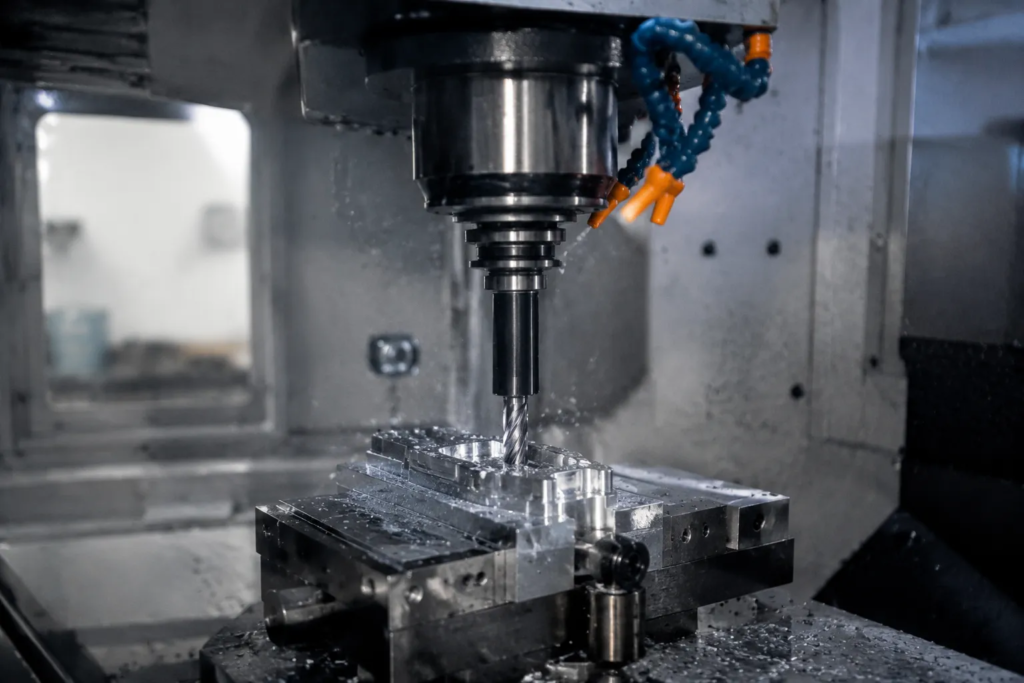
- CNC Milling: The raw material remains stationary while multi-axis rotating cutting tools remove material. This is our go-to process for complex, square, or asymmetrical shapes with pockets, slots, and unique contours.
- CNC Turning: The material rotates at high speeds on a lathe while a stationary cutting tool shapes the part. We use this process for cylindrical or round precision machined components, ensuring perfect concentricity.
| Feature | CNC Milling | CNC Turning |
|---|---|---|
| Material State | Stationary / Fixed | Rotating |
| Best For | Square, flat, complex geometries | Cylindrical, round, tubular parts |
| Tool Motion | Rotating multi-point cutters | Single-point stationary tool |
EDM for Intricate Designs
For shapes that conventional cutting tools cannot reach, we utilize Electrical Discharge Machining (EDM).
- Wire EDM: Uses a thin, electrically charged wire to slice through hardened metals with extreme precision.
- Sinker EDM: Uses a custom-shaped electrode to burn complex cavities directly into the workpiece.
- Application: Ideal for tight tolerance machining in hardened tool steels, sharp internal corners, and delicate, deep-cavity molds.
Surface Grinding and Precision Finishing
The machining process doesn’t end when the part leaves the mill or lathe. To meet strict industrial standards, we apply advanced finishing techniques:
- Surface Grinding: Uses an abrasive wheel to achieve ultra-flat surfaces and mirror-like finishes on custom metal parts.
- Anodizing & Plating: Protects aluminum and steel parts from corrosion while improving wear resistance.
- Bead Blasting: Removes tool marks to deliver a clean, uniform, matte aesthetic.
Benefits of Custom Machined Components
High Precision and Tight Tolerances
When off-the-shelf parts cannot meet your exact specifications, our custom machined parts deliver the precise fit your project demands. We manufacture components to tight tolerances, eliminating performance gaps and reducing the risk of mechanical failure in critical, high-stakes applications.
Enhanced Durability and Material Optimization
We help you select and machine the ideal material to maximize the lifespan of your components. By matching the exact workload requirements to the right metal or polymer, our process reduces material waste while significantly increasing the wear resistance of the finished piece.
Seamless System Compatibility
| Business Advantage | Impact on Your Operations |
|---|---|
| Flawless Integration | Fits perfectly into your existing proprietary machinery without costly modifications. |
| Reduced Downtime | Drop-in replacements mean faster assembly and shorter maintenance windows. |
| Long-Term Savings | Eliminates the need for secondary adjustments or premature part replacements. |
Industries Relying on Custom Parts Fabrication
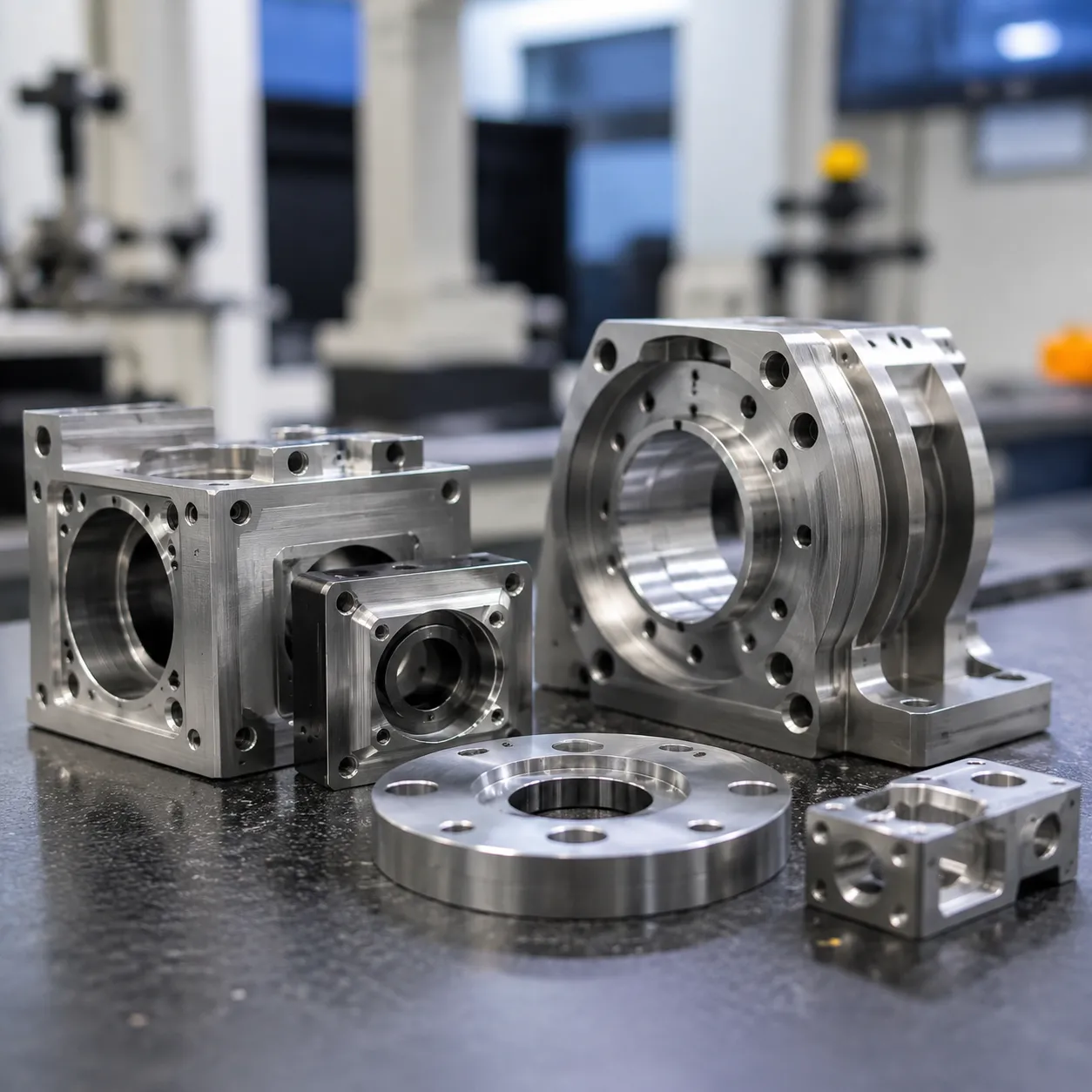
We manufacture high-precision custom machined parts for sectors where standard components simply fail to meet strict performance and safety standards. When off-the-shelf options fall short, our US-based manufacturing facilities step in to deliver exact-spec precision machined components.
Aerospace and Aviation
Weight reduction, extreme temperature resistance, and absolute reliability are critical in aerospace. We produce flight-ready machined part fabrication solutions that meet uncompromising safety regulations. Common parts: Turbine blades, landing gear components, housing brackets, and fuel system manifolds. Materials: Titanium, high-strength aluminum alloys, and specialized superalloys.
Medical Device Manufacturing
Medical applications demand biocompatibility, flawless surface finishes, and ultra-tight tolerance machining. We deliver custom components for life-saving hardware and diagnostic equipment. Common parts: Surgical instruments, orthopedic implants, ventilator valves, and MRI machine components. Materials: Surgical-grade stainless steel, titanium, and PEEK plastics.
Automotive Prototyping and Aftermarket
From rapid design verification to high-performance racing components, we provide rapid prototyping parts and custom metal parts tailored for the automotive sector. Common parts: Custom pistons, suspension arms, brake calipers, and specialized engine brackets. Materials: Billet aluminum, forged steel, and advanced polymers.
Robotics and Industrial Automation
Modern automation requires lightweight, durable, and highly repetitive components to keep production lines moving without failure. Common parts: Robotic arms, end effectors, custom gears, and automated conveyor components. Materials: Anodized aluminum, hardened steel, and industrial-grade nylon.
Industry Requirements At a Glance
| Industry | Primary Focus | Key Machining Service |
|---|---|---|
| Aerospace | High strength-to-weight ratio | Advanced CNC milling and turning |
| Medical | Biocompatibility & sterilization | Ultra-precision custom plastic machining & metalwork |
| Automotive | Speed-to-market & durability | Metal fabrication services & prototyping |
| Robotics | High wear-resistance | OEM machined parts and custom assemblies |
Choosing Your Custom Machining Supplier
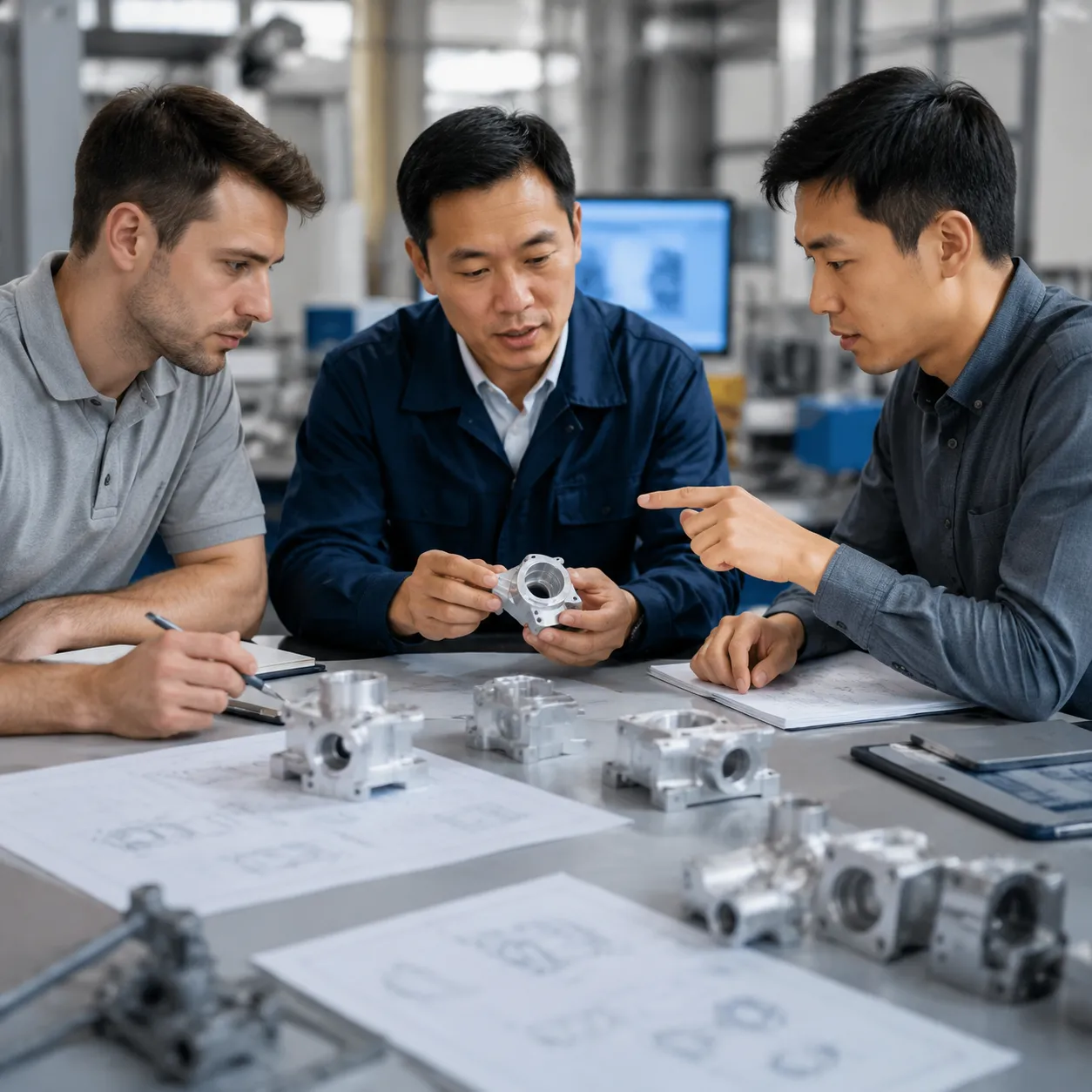
Finding the right partner for custom machined parts directly impacts your product’s success and your bottom line. We handle everything from initial prototyping to full-scale production runs, ensuring your designs are executed flawlessly.
Key Factors to Evaluate
When selecting a machining supplier, look for these critical capabilities:
- Technical Capabilities: Ensure the shop runs advanced multi-axis CNC milling and turning centers to handle your complex geometries.
- Design for Manufacturability (DFM): Our engineering team reviews your files upfront to simplify production, reduce material waste, and lower your overall costs.
- Production Flexibility: Choose a partner that offers both rapid prototyping parts and scalable high-volume production.
Quality and Logistics Breakdown
We align our operations with strict US manufacturing standards to deliver reliable, precision machined components on time.
| Evaluation Criteria | What We Deliver | Why It Matters for Your Business |
|---|---|---|
| Quality Certifications | ISO 9001 & AS9100 compliant | Guarantees consistent tight tolerance machining for critical industries like aerospace and medical. |
| Lead Times & Capacity | Standard 2-3 week delivery with expedited options | Keeps your supply chain moving without costly project delays. |
| Prototyping Options | Low-volume metal fabrication services and plastic runs | Allows you to test form, fit, and function before investing in mass production. |
We communicate clearly and directly throughout the entire production cycle, ensuring your proprietary systems get the exact OEM machined parts they require.
FAQs About Custom Machined Parts
What file formats do I need to submit for a custom parts quote?
We prefer 3D CAD models in STEP (.stp/.step) or IGES (.igs) formats for direct programming. For 2D engineering drawings with specific tolerances, please submit a PDF.
What is the typical lead time for custom CNC machining?
Standard turnaround for rapid prototyping parts is 3 to 7 business days. Full production runs generally take 2 to 4 weeks, depending on part complexity, material availability, and finishing requirements.
Can I get a prototype before committing to full-scale production?
Yes. We specialize in machined part fabrication for low-volume testing. We can manufacture a single functional prototype so you can verify fit, form, and function before scaling up to mass production.
How do tolerances affect the overall cost of custom machined parts?
Tighter tolerances increase production costs. Achieving tight tolerance machining requires specialized tooling, slower feed rates, and more rigorous quality inspection, which drives up machine time and labor.
| Tolerance Level | Cost Impact | Common Application |
|---|---|---|
| Standard (±0.005″) | Baseline | General commercial components |
| Precision (±0.001″) | Moderate Increase | Automotive and robotics |
| Ultra-Precision (±0.0002″) | High Increase | Aerospace and medical devices |

 German
  English