

What is Precision Machining & Manufacturing?
At Precision Vast, we define precision machining & manufacturing as a comprehensive engineering discipline, not just a single production step. It is the art and science of transforming raw concepts into high-performance reality through a seamless, “one-stop” solution. For us, this means integrating precision investment casting (the lost-wax process) with advanced CNC machining to deliver components that meet the strictest international standards.
The Full Lifecycle: From Blueprint to Polish
True manufacturing capability covers the entire product lifecycle. We don’t just cut metal; we engineer solutions from the ground up. Our end-to-end workflow ensures that we control quality at every stage:
- Engineering & Prototyping: We start with expert mold design and rapid prototyping (SLA printing) to validate concepts before mass production.
- Casting: Our rigorous 14-step process moves from wax injection and shell building to the dewaxing kettle and final pouring.
- Machining & Finishing: After the metal cools, we utilize precision CNC machinery for mechanical processing, followed by surface treatments and final polishing.
Why Precision Matters for Performance
In industries like aerospace, medical equipment, and marine hardware, “close enough” is a failure. Precision is critical because it dictates how well a part fits during assembly and how it performs under stress.
By utilizing CAE (Computer-Aided Engineering) simulation, we optimize structural integrity before we even pour the metal. This focus on tight tolerance machining and defect minimization ensures that complex, intricate shapes are produced with excellent surface finishes and verified quality. Whether it’s a door lock or a turbine component, precision is the difference between a working part and a reliable solution.
The Core Processes: A Hybrid Approach
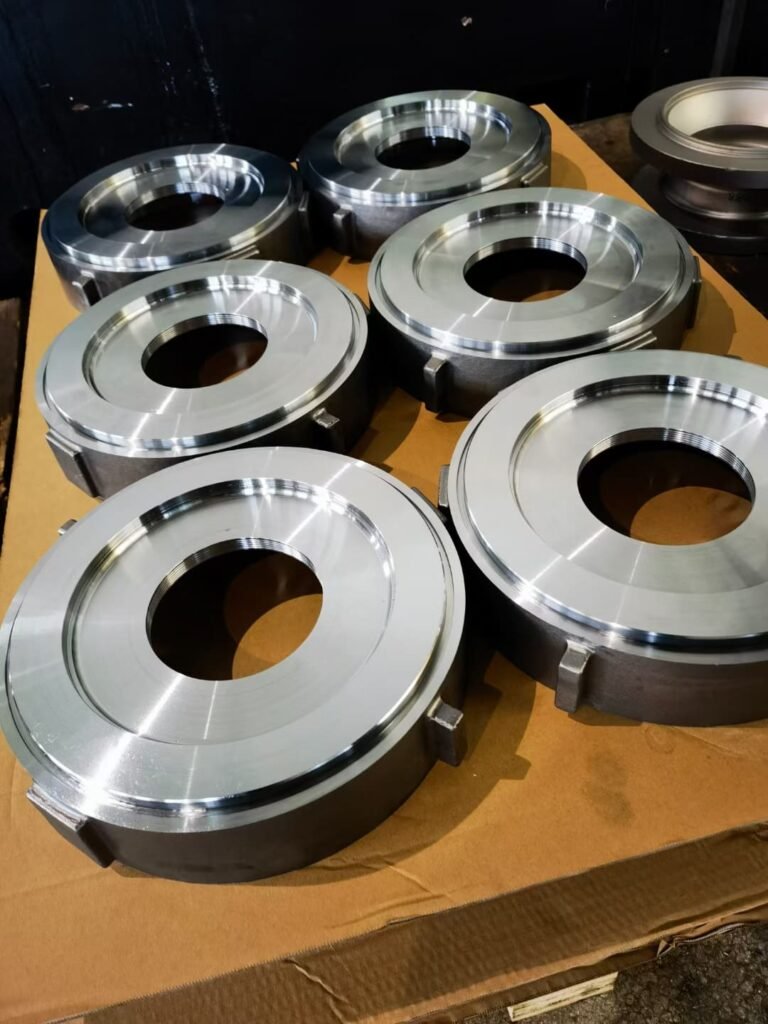
We don’t believe in a “one-size-fits-all” method. Instead, we utilize a hybrid workflow that combines the geometric freedom of casting with the rigorous accuracy of precision machining & manufacturing. This dual approach allows us to deliver complex parts that are both structurally sound and dimensionally perfect.
Investment Casting as the Foundation
Our process often starts with investment casting (also known as the lost-wax process). This technique allows us to create near-net shape parts with intricate internal geometries that would be incredibly difficult—or downright impossible—to machine from a solid block.
By starting with a high-quality cast, we establish the core structure of the component efficiently. Whether the project requires standard carbon steel or complex superalloys, understanding the key benefits of alloy vs. steel castings helps us select the right material baseline before any cutting tools touch the metal.
CNC Precision Machining for Final Refinement
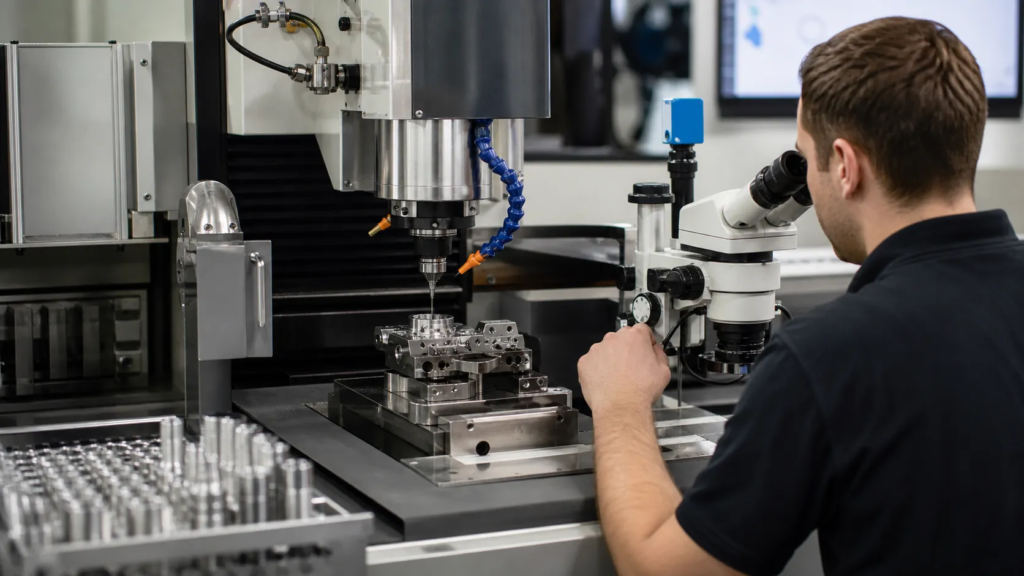
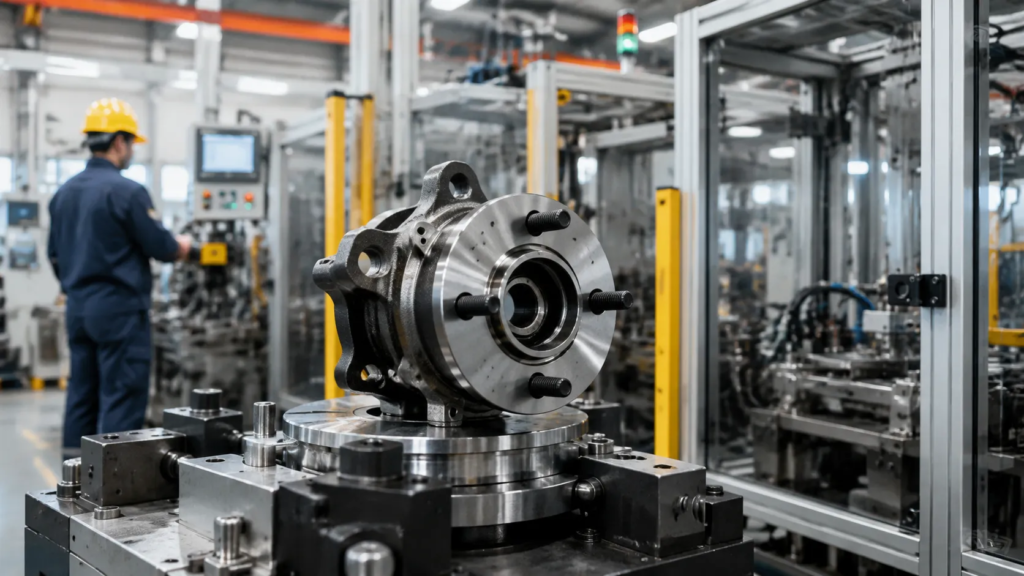
Once the casting phase is complete, the raw part moves to our machine shop for the finishing touches. This is where CNC milling and turning come into play. While casting gets us close to the final shape, precision machining & manufacturing is what ensures the part fits perfectly into your assembly.
We use advanced CNC equipment to:
- Achieve tight tolerance machining on critical dimensions.
- Create perfectly flat sealing surfaces.
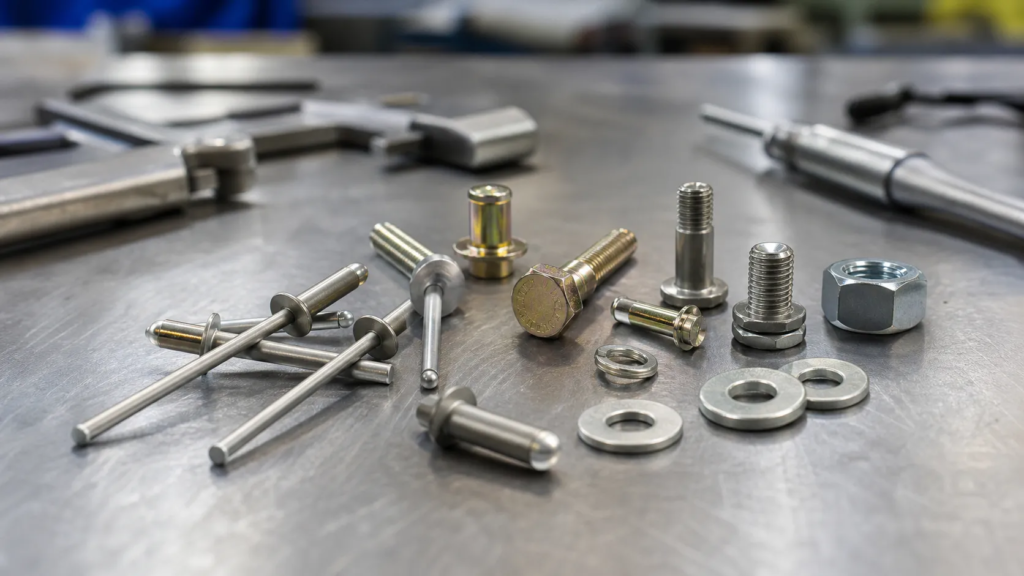
- Drill and tap precise threaded holes.
- Refine surface finishes to meet strict roughness average (Ra) requirements.
The Synergy of Casting and Machining
Why do we combine these two? It comes down to cost and speed. Machining a part from a solid block of metal (billet) generates a massive amount of waste material and takes significantly longer.
By utilizing a near-net shape casting first, we only need to machine the specific areas that require high precision. This hybrid approach offers distinct advantages for our US clients:
- Reduced Material Waste: You aren’t paying for metal that ends up as scrap chips on the floor.
- Lower Cycle Times: Less material to remove means faster production runs.
- Design Flexibility: You get the complex curves of a casting with the precision of a machined part.
Sustainable Manufacturing: Minimizing Environmental Impact
In today’s industrial landscape, efficiency must also mean sustainability. Our hybrid approach to precision machining & manufacturing is inherently greener than traditional subtractive manufacturing (machining from a solid billet). By relying on near-net shape investment casting, we drastically reduce raw material consumption and energy use.
- Scrap Reduction: Because we only machine the critical faces and tolerances, metal waste is minimized.
- Energy Efficiency: Less time on the CNC spindle translates directly to lower electrical consumption per part.
- Material Recycling: The wax used in our molding process and the metal gating from our castings are systematically collected and recycled for future use.
Material Capabilities: Machining the Unmachinable
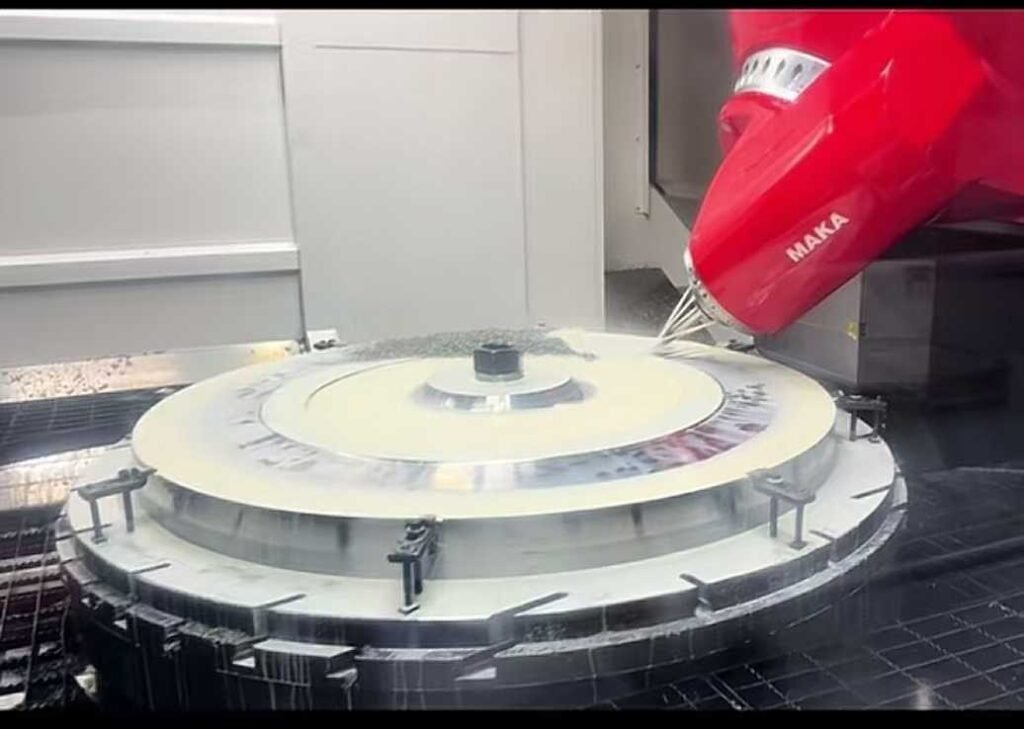
In the world of precision machining & manufacturing, material versatility is non-negotiable. We don’t just work with soft metals; we engineer solutions for materials that are notoriously difficult to shape. Our facility is equipped to handle a massive spectrum of metallurgical requirements, ensuring that whether you are building a simple bracket or a critical aerospace component, the material properties remain intact.
Standard Metals: Aluminum and Stainless Steel
For many industries, the backbone of production relies on standard, reliable metals. We process high volumes of carbon steel, alloy steel, and stainless steel with consistent repeatability. These materials are ideal for general industrial applications where durability meets cost-efficiency. Additionally, we are experts in producing lightweight cast aluminum components that offer excellent strength-to-weight ratios without sacrificing surface finish quality.
High-Performance Alloys: Titanium and Superalloys
When projects demand resistance to extreme heat or corrosion, standard machining often fails. This is where our expertise in investment casting combined with CNC precision shines. We specialize in working with “unmachinable” materials that would destroy standard tooling if cut from a solid block.
Our capabilities include:
- Titanium Alloys: Critical for aerospace and medical implants due to their biocompatibility and strength.
- Duplex Stainless Steel: Essential for marine hardware requiring superior corrosion resistance.
- Superalloys: We utilize advanced high-temperature alloy casting techniques to create parts that maintain structural integrity in the hottest environments, such as turbine engines.
Handling Diverse Materials Efficiently
Our production lines are designed for flexibility. We can switch from running a batch of door lock hardware in stainless steel to manufacturing complex pump valves in heat-resistant alloys without massive downtime. By understanding the unique thermal and mechanical properties of each material—from soft aluminum to hard superalloys—we adjust our casting temperatures and machining speeds to eliminate defects and ensure every part meets strict international standards.
Quality Assurance in Precision Machining & Manufacturing
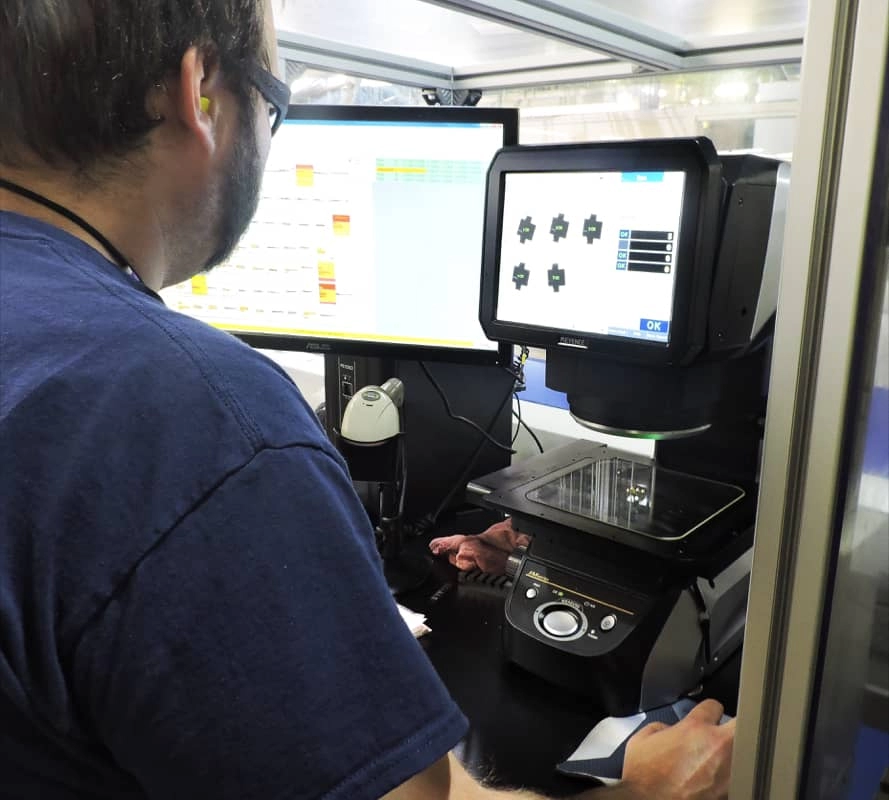
You can’t claim “precision” without the data to back it up. In our facility, quality assurance isn’t an afterthought; it is the backbone of our precision machining & manufacturing process. We don’t rely on guesswork. We rely on advanced metrology and rigorous testing protocols to ensure every part meets the print specifications.
Advanced Inspection Equipment
To guarantee zero defects, we utilize a suite of high-tech tools that verify both the exterior dimensions and internal structure of our parts. Our lab is equipped to handle the most demanding specifications:
- CMM (Coordinate Measuring Machine): This is non-negotiable for verifying complex geometries and tight tolerances, ensuring the physical part matches the digital CAD model perfectly.
- X-Ray & Magnetic Particle Inspection: We look inside the metal to detect hidden defects like porosity or cracks that could compromise safety.
- Spectrometers: We verify the chemical composition of the alloy before pouring to ensure material purity and grade compliance.
- Hardness Testing: We confirm the mechanical properties after heat treatment to ensure durability.
From First Article to Final Batch
Our workflow is designed to catch issues before they become expensive problems. We start with a First Article Inspection (FAI) to validate the initial setup and tooling. Once approved, we move to mass production, but the checking doesn’t stop. We provide comprehensive testing reports for every batch, ensuring that high-quality aluminum castings for structural use and complex steel components perform exactly as intended.
ISO 9001 Certified Reliability
We operate under strict ISO 9001 certification. This isn’t just a badge; it’s a commitment to consistent, documented quality management. Whether it’s a small custom order or a large-scale run, our standardized processes ensure that the part you receive matches the blueprint every single time.
Industries Served & Real-World Applications
When we talk about precision machining & manufacturing, we aren’t just discussing abstract tolerances; we are talking about the critical components that keep planes in the sky and medical devices functioning safely. Our shop floor sees a huge variety of parts, but they all share one requirement: absolute reliability.
Aerospace Components
The aerospace sector is unforgiving. There is no room for error when you are manufacturing parts that will be subjected to extreme pressures and temperatures at 30,000 feet. We specialize in producing complex geometries like turbine blades and structural brackets. By utilizing investment casting for the initial near-net shape and following up with 5-axis machining, we can achieve the tight tolerances required for flight-critical hardware while keeping material waste low.
Medical Instruments and Implants
In the medical field, precision is personal. We manufacture surgical instruments and orthopedic implants where surface finish and biocompatibility are paramount. Whether it’s a stainless steel surgical tool or a titanium bone screw, the manufacturing lifecycle must ensure sterility and structural integrity. The combination of casting for complex ergonomic shapes and CNC machining for sharp, precise edges is often the best route for these tools.
Automotive and Marine Parts
From high-performance engine components to corrosion-resistant marine hardware, these industries demand durability. We frequently handle automotive and marine parts that need to withstand harsh environments.
- Engine manifolds: Complex internal channels made possible through lost-wax casting.
- Propeller shafts: High-strength alloys machined to exact specifications to reduce vibration.
- Custom brackets: Rapid prototyping solutions for aftermarket modifications.
Real-World Problem Solving
We don’t just make parts; we solve engineering headaches. For example, a client might come to us with a fully machined part that is too expensive to produce at scale. We often redesign the process to use stainless steel investment casting for the base shape, drastically reducing the amount of machining time required. This hybrid approach maintains the precision machining & manufacturing standards they need but cuts the cost per unit significantly.
How to Choose a Precision Manufacturing Partner
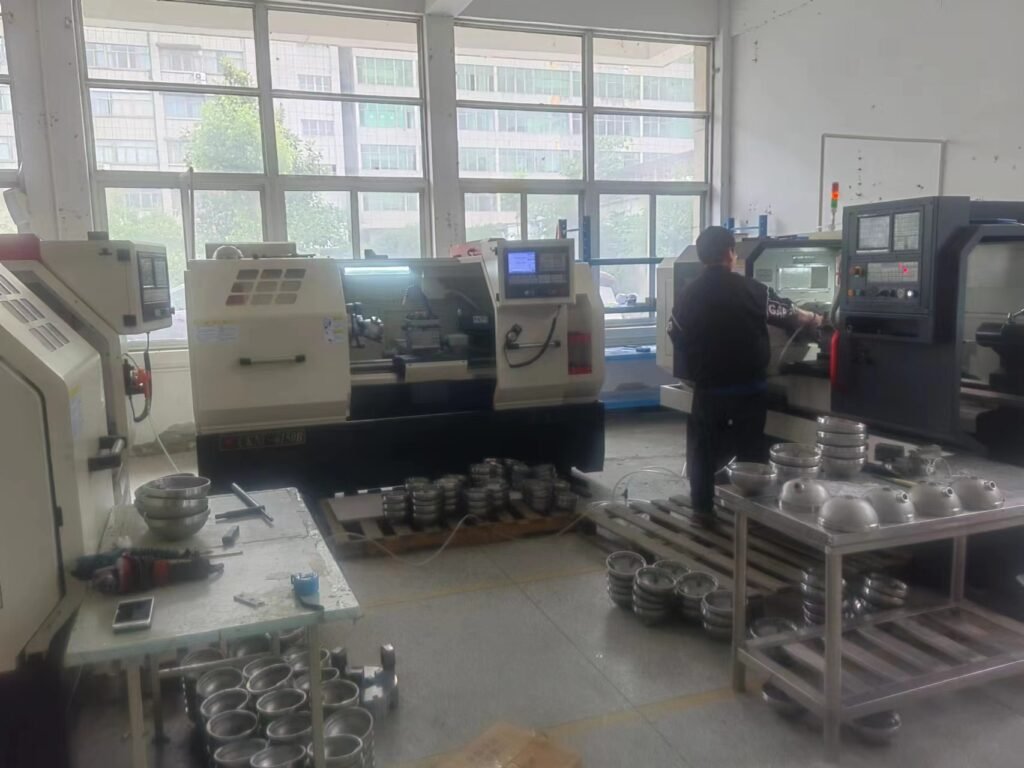
Finding a vendor is easy, but finding a true partner for precision machining & manufacturing is where the real work happens. You need a supplier who doesn’t just read a blueprint but understands the metallurgical science behind it. When evaluating potential partners for your supply chain, look for a team that bridges the gap between raw casting and final finishing.
Evaluating Capabilities: The “One-Stop” Advantage
A fragmented supply chain is a risky one. If your foundry is in one location and your machine shop is in another, you are inviting delays and finger-pointing when defects arise. We operate as a comprehensive, end-to-end solution provider. This means we handle everything from the initial investment casting process (lost-wax) to the final CNC precision machining.
By consolidating these processes, we ensure that the near-net shape cast is optimized for the machining stage, reducing material waste and cycle time. Whether you need complex stainless steel investment casting or intricate aluminum components, having a single point of accountability guarantees better quality control.
Speed of Response and Production Scale
In the US market, time is often the most expensive commodity. A partner’s ability to react quickly to RFQs and engineering changes is critical. We pride ourselves on a responsive support system that guarantees a detailed quote within 8 hours.
Flexibility in production volume is just as important as speed. You shouldn’t be penalized for needing a small batch for a pilot run, nor should you worry about capacity constraints during full-scale production.
What to Look For in a Partner:
| Feature | Standard Job Shop | Our Precision Standard |
|---|---|---|
| Quote Turnaround | 3-5 Business Days | Within 8 Hours |
| Capacity | Limited / Single Process | 700-Ton Annual Output (Casting + Machining) |
| Scalability | High Minimum Order Quantities (MOQ) | Flexible (Prototypes to Mass Production) |
| Quality Check | Basic Dimensional Check | Full Suite (X-Ray, CMM, Spectrometer) |
Engineering Support and Design Optimization
A true manufacturing partner does more than just push “start” on a machine. We utilize CAE (Computer-Aided Engineering) simulation to analyze structural integrity before we even create the mold. This allows us to predict potential defects and optimize the design for manufacturability.
If your current supplier isn’t offering feedback on how to improve your part’s geometry for better casting flow or easier machining, you are missing out on cost savings. We work directly with your engineering team to refine blueprints, ensuring that complex geometries are not just possible, but economical to produce.
Glossary of Precision Manufacturing Terms
To help our partners navigate the technical landscape, here is a quick guide to some of the terminology we use daily on our shop floor:
- 5-Axis CNC Machining: A mechanical processing method where the cutting tool moves across five different axes simultaneously. This allows for the creation of incredibly complex geometries without repositioning the part.
- Near-Net Shape: A casting or forged part that is remarkably close to its final dimensions, requiring only minimal finishing or tight tolerance machining.
- Surface Roughness (Ra): A measurement of the microscopic peaks and valleys on a machined surface. Lower Ra values indicate a smoother, more highly polished finish, critical for medical and sealing applications.
- Investment Casting (Lost-Wax Process): A manufacturing technique where a wax pattern is coated in a ceramic material. The wax is melted away (lost), and molten metal is poured into the resulting cavity to create precise components.
- CMM (Coordinate Measuring Machine): Advanced metrology equipment that uses a physical probe or laser to measure the exact geometric dimensions of a finished part against its digital CAD file.
FAQ on Precision Machining & Manufacturing
What is the difference between standard machining and precision machining?
Standard machining handles basic shaping and general fabrication. In contrast, precision machining & manufacturing focuses on extreme accuracy and repeatability. We utilize advanced equipment for complex geometry manufacturing and tight tolerance machining to meet the exact specifications required by critical industries like aerospace, medical, and automotive.
Why combine investment casting with CNC machining?
Combining the investment casting process with CNC milling and turning gives you the best of both worlds. Lost-wax casting creates a near-net shape, which drastically reduces material waste and initial production time. We then use precision CNC equipment to finish the critical dimensions. This hybrid approach lowers overall costs, especially when working with specialized materials. If your project involves high-temperature environments, understanding heat-resistant metals can help clarify why this combined method is so effective for tough alloys.
What are the standard tolerances for precision parts?
Tolerances depend entirely on the specific part, material, and application, but we routinely manufacture components that comply with strict international tolerance standards. To guarantee these exact dimensions, every batch is verified using advanced CMM inspection services and rigorous structural integrity testing before it leaves our facility.
Can you handle low-volume custom orders?
Absolutely. We are fully equipped to manage the balance between low volume vs. high volume production. Whether you need rapid prototyping solutions to test a new custom tooling design or a massive production run of thousands of parts, our manufacturing floor scales to meet your exact timeline and budget.

 German
  English