

Discover how Precision Vast optimizes investment casting wax to reduce defects improve tolerances and enhance near net shape metal parts.
You might think a casting defect is a metal problem.
But 90% of the time? It’s actually an investment casting wax failure.
As a casting specialist, I’ve seen countless projects derailed by poor pattern management—resulting in shrinkage, pitting, and missed tolerances.
The truth is simple: A metal part can only be as precise as the wax that forms it.
In this guide, you’re going to learn exactly how Precision Vast leverages advanced wax injection protocols and material selection to secure ±0.01mm accuracy for your components.
Let’s get to the root of precision.
The Physics of Wax: Selecting the Right Material
At Precision Vast, we understand that the dimensional accuracy of a final metal component is determined long before we pour any molten alloy. It starts with the investment casting wax. The wax pattern is not merely a placeholder; it is the precise biological parent of the final casting. If the wax shrinks unpredictably or deforms under its own weight, the steel or titanium part will fail tolerance checks. We treat wax selection as an engineering discipline, balancing rheological properties like viscosity, melting point, and thermal expansion to match the specific geometry of your blueprint.
Pattern Wax (The Primary): Filled vs. Unfilled Waxes
The choice between filled and unfilled wax dictates the dimensional stability of the pattern. We don’t use a “one-size-fits-all” approach.
- Filled Waxes: These contain fillers (often organic or polymeric) that reduce the coefficient of thermal expansion. This results in lower shrinkage and higher stability, making them ideal for heavy sections or parts requiring tight tolerances. They cool faster and resist sinking.
- Unfilled Waxes: These are purer formulations with excellent flow characteristics. We utilize unfilled waxes for intricate, thin-walled designs where filling the die completely is the priority. They offer a superior surface finish but require careful thermal management to control cavitation.
Understanding Ash Content and its Critical Role
In the lost-wax process, the “loss” must be total. Ash content refers to the non-combustible residue left inside the ceramic shell after the dewaxing and burnout phase.
For high-performance applications like aerospace superalloys or medical implants, even microscopic ash residue is unacceptable. It creates inclusions that compromise the metallurgical integrity of the casting. We exclusively utilize virgin pattern waxes with extremely low ash content (typically below 0.03%) to ensure the ceramic mold cavity is perfectly clean, preventing surface pitting and material contamination.
Soluble Wax (The Problem Solver) for Internal Geometries
When your design features complex internal channels, undercuts, or hollow cavities that cannot be molded with a traditional retractable metal core, we deploy soluble wax.
This specialized wax is solid during the pattern injection phase but dissolves completely when immersed in a specific solvent (usually water or a mild acid bath). By using soluble wax cores, we can engineer intricate internal passages for hydraulic valves or cooling systems, essentially allowing us to cast geometries that would be impossible to machine.
Runner and Sticky Wax: Building the Assembly Tree
The assembly phase requires a different set of physical properties. Here, we use runner wax and sticky wax to attach individual patterns to the central sprue, creating the “tree.”
- Runner Wax: Must have a lower melting point than the pattern wax to ensure it melts out first during dewaxing, preventing pressure buildup that could crack the ceramic shell.
- Sticky Wax: Acts as the adhesive. It must possess high tackiness to hold the patterns firmly in place during the dipping and stuccoing of the shell building process, ensuring the assembly withstands the mechanical stress of the robotic arms without shifting.
The Precision Vast Process: Controlling the Variables
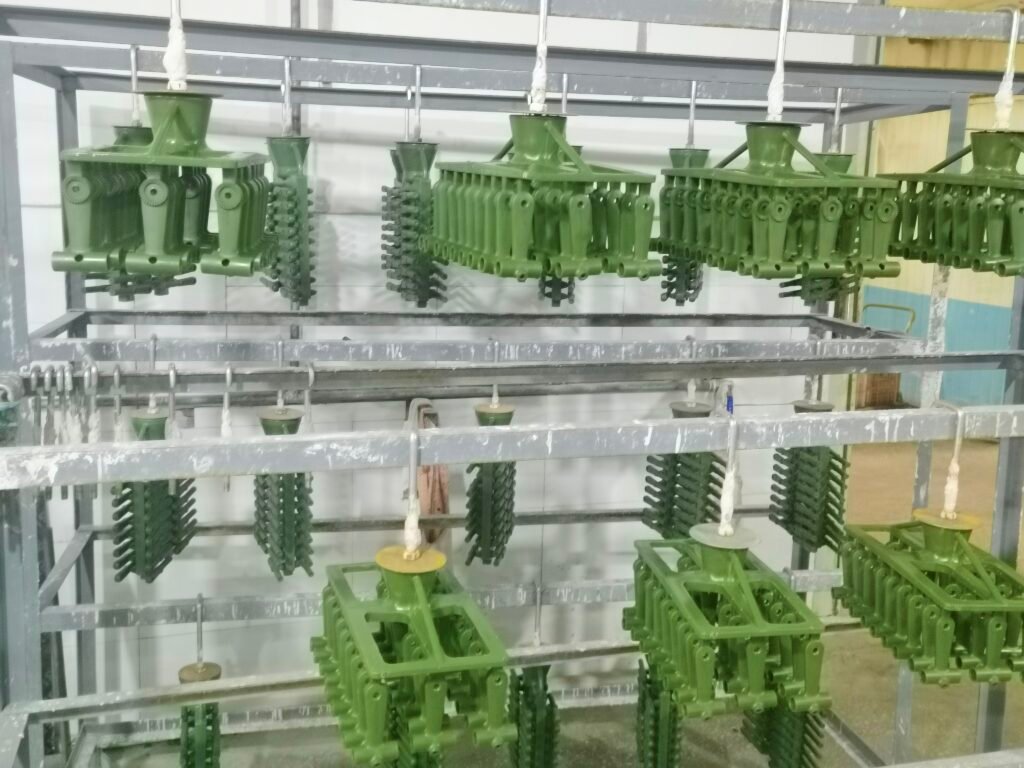
At Precision Vast, we treat investment casting wax as a precision engineering material, not just a consumable. The quality of the final metal component is determined the moment the wax enters the die. If the pattern is flawed, the casting will be too. We have refined our workflow to strictly control every variable, from temperature to injection pressure, ensuring that what we ship matches your blueprints exactly.
Step 1: Wax Conditioning and Viscosity Control
Before we even think about injection, the wax must be conditioned. We don’t simply melt it; we bring it to a precise semi-solid state. If the wax injection temperature is too high, the wax becomes too fluid, leading to excessive shrinkage and dimensional instability as it cools. If it’s too cool, it won’t fill the complex details of the mold.
We monitor the rheological properties of the wax paste to ensure it flows like toothpaste rather than water. This viscosity control is critical for maintaining tight tolerances and ensuring that the final stainless steel or alloy parts retain the exact geometry intended by the design engineers.
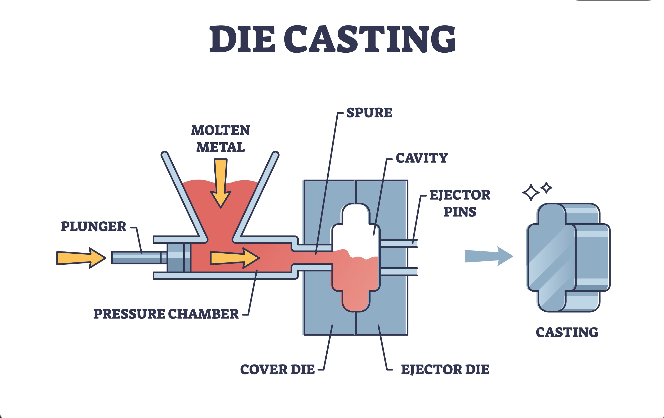
Step 2: Advanced Injection with No-Cylinder Technology
Once the material is conditioned, we move to the injection phase. We utilize advanced presses that prioritize consistent flow over brute force.
- Eliminating Air Pockets for Higher Density Patterns: Standard injection can sometimes trap air, creating internal voids that weaken the pattern. Our process focuses on a smooth, laminar flow that fills the die cavity from the bottom up.
- Uniform Density: By eliminating air pockets, we achieve a higher density wax pattern. This structural integrity is vital because the pattern must withstand the weight of the ceramic shell during the dipping and coating process without deforming.
Step 3: The Human Touch (Pattern Dressing and Inspection)
Automation handles the heavy lifting, but the human eye ensures perfection. After the investment casting wax pattern is ejected and cooled, it undergoes a rigorous visual inspection by our skilled technicians.
This stage, known as “dressing,” involves:
- Flash Removal: Carefully trimming any excess wax from the parting lines.
- Surface Smoothing: Fixing minor surface imperfections to ensure a flawless finish.
- 100% Inspection: Verifying that no flow lines, sink marks, or distortions are present.
Since the ceramic shell will replicate the wax pattern down to the micron, any defect left here becomes a permanent metal defect later. We catch these issues now so you don’t have to deal with rejected parts later.
Dewaxing: The Critical Transition Phase
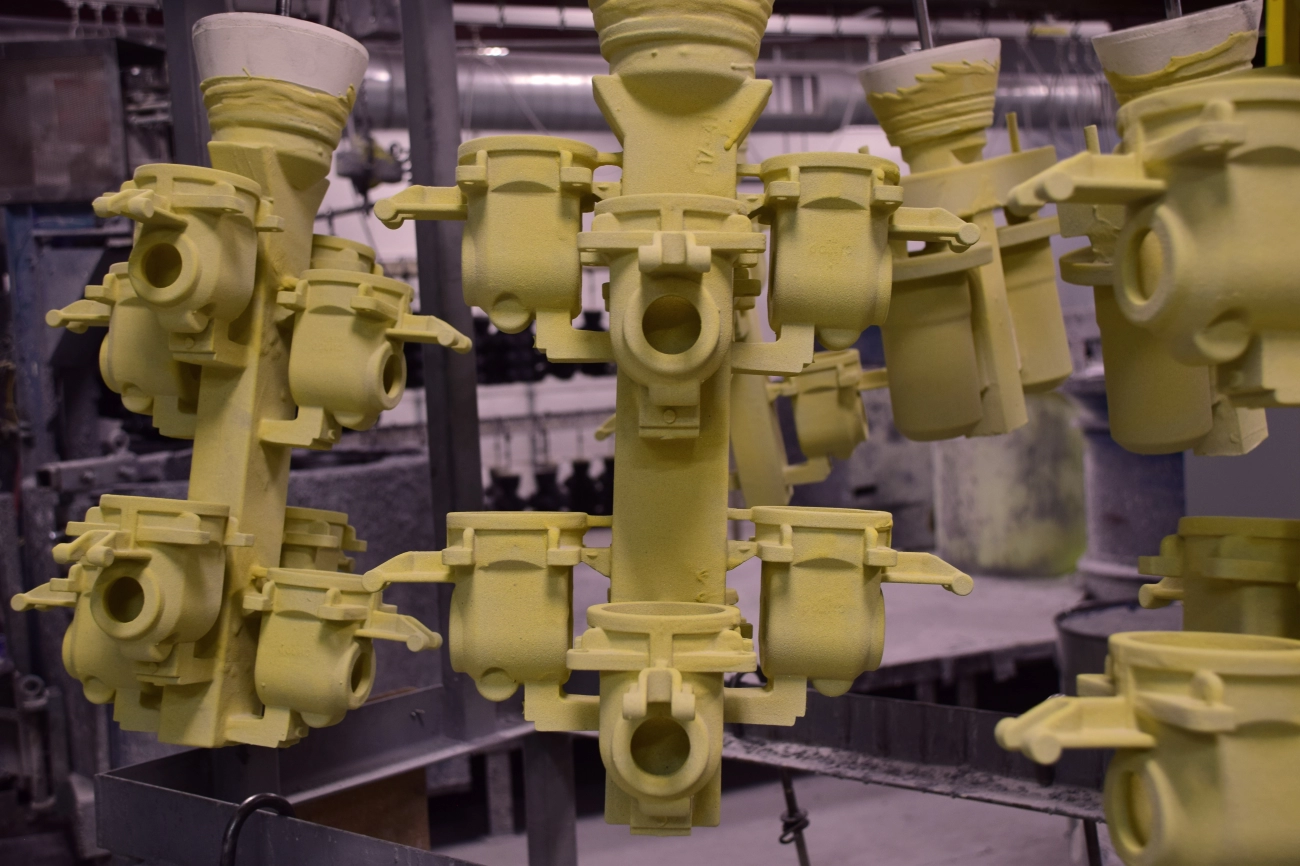
Dewaxing is where the rubber meets the road—or rather, where the wax meets the steam. This phase is all about removing the investment casting wax from the mold without ruining the ceramic shell we worked so hard to build. It is a high-stakes transition that determines the final quality of the metal part.
The Challenge: Preventing Shell Cracking
The biggest headache in this stage is the thermal expansion coefficient. Simply put, wax expands much faster than the ceramic shell when heated. If the wax inside heats up slowly, it expands and pushes against the walls, causing ceramic shell cracking and resulting in costly scrap. We focus on melting the outer layer of the wax pattern instantly to create a “slip plane” that relieves this internal pressure before the bulk of the wax expands.
The Solution: The Steam Autoclave Process
We utilize the dewaxing autoclave process to solve the expansion dilemma. By hitting the mold with high-pressure saturated steam (typically reaching 80-100 psi) in a matter of seconds, the surface of the wax melts and begins to flow out before the core of the pattern even gets warm. This rapid heat transfer is the industry gold standard for maintaining the integrity of complex geometries and ensuring the mold is ready for steel casting basics and pouring.
Sustainability & Recycling: Wax Reclamation Systems
We don’t just toss the used material after it leaves the autoclave. A modern wax reclamation system allows us to be sustainable while keeping production costs in check.
- Filtering: Centrifuges and filters remove ceramic bits and investment impurities.
- De-watering: Specialized tanks eliminate moisture absorbed during the steam process.
- Reconditioning: Reclaimed wax is often blended and reused for the runner assembly, ensuring that high-quality virgin wax is reserved for the primary patterns.
This cycle of recovery ensures that we maintain high dimensional stability across large production runs without unnecessary waste.
Modern Innovations: 3D Printed Wax Patterns
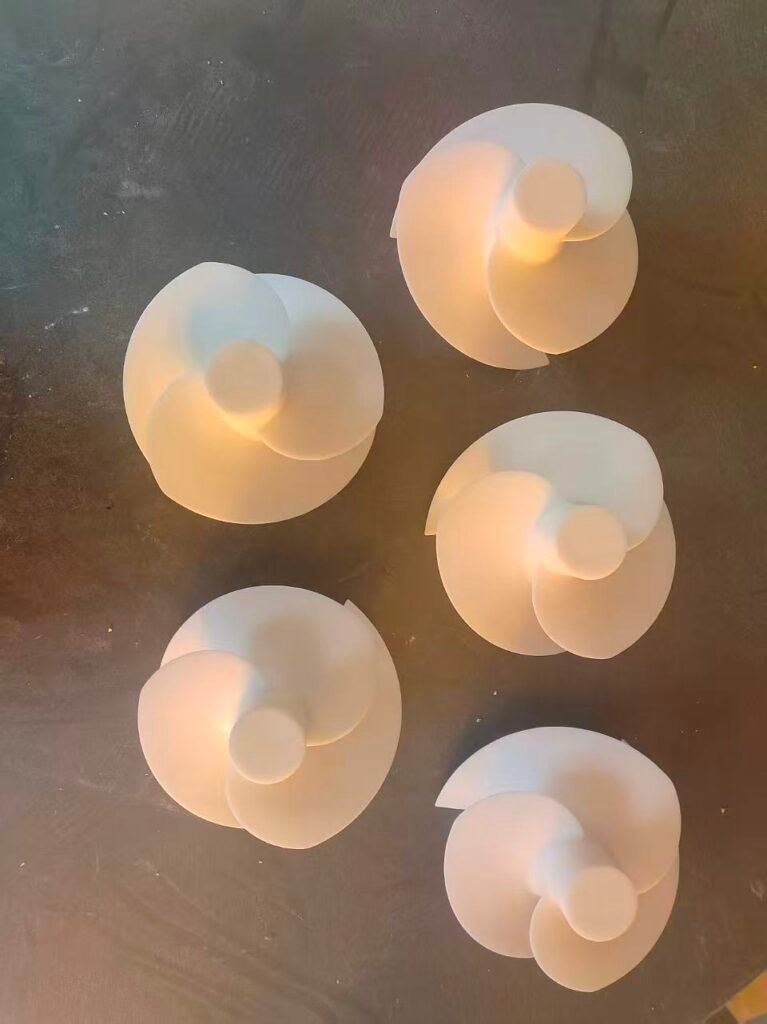
Bridging the Gap: The “Tool-less” Trend
In the traditional foundry world, the biggest hurdle has always been the initial cost and time required to machine metal molds. We have bridged this gap by adopting “tool-less” manufacturing strategies. By using 3D printed investment casting wax patterns, we eliminate the need for expensive aluminum dies during the development phase. This approach allows engineers to move from a digital CAD file to a physical metal part in a fraction of the time it takes to cut a mold, significantly accelerating the R&D cycle for complex components.
Application: Rapid Prototyping with SLA/DLP Printing
We utilize advanced SLA (Stereolithography) printing technology to produce high-precision wax patterns. Unlike standard plastic 3D printing, these patterns are printed using a specialized castable resin or wax-like material that burns out cleanly during the dewaxing and firing process.
This method is crucial for validating designs before mass production. It allows us to cast functional metal prototypes that possess the exact metallurgical properties of the final product. This is particularly valuable when testing mechanical performance in steel casting applications, where verifying structural integrity is non-negotiable before investing in hard tooling.
Comparison: Printed Wax vs. Injected Wax
While 3D printing offers speed, traditional injection remains the king of volume. Here is how we determine which method fits your project needs:
| Feature | 3D Printed Wax (SLA/DLP) | Traditional Injected Wax |
|---|---|---|
| Tooling Cost | Zero (Direct from CAD) | High (Requires machined metal die) |
| Lead Time | Very Fast (Days) | Slower (Weeks for tooling creation) |
| Surface Finish | Good (May show slight layer lines) | Excellent (Smooth, polished finish) |
| Volume Suitability | Low (1-50 parts / Prototyping) | High (Thousands of parts) |
| Design Freedom | Unlimited (Can print undercuts) | Limited by mold release requirements |
For clients seeking reliable OEM carbon steel casting manufacturers who can handle both rapid prototyping and full-scale production, understanding this distinction is key to managing budget and timeline effectively. We often start with printed wax for approval and switch to injected wax for the production run.
Troubleshooting: What Your Wax is Telling You
In my experience, the wax pattern is the “DNA” of your final part. If the wax isn’t perfect, the metal won’t be either. Understanding the visual cues on a freshly injected pattern helps us stop investment casting defects before they reach the shell room.
Diagnosing Sink Marks and Injection Pressure
Sink marks are usually a direct result of pattern wax shrinkage. When the outer skin of the wax solidifies but the core remains molten and shrinks, it pulls the surface inward.
- The Cause: Often, the injection pressure is too low or the “dwell time” (holding pressure) is too short.
- The Fix: We increase the dwell time to ensure the investment casting wax remains under pressure until the gate solidifies.
- Pro Tip: If sinks persist, check your wax injection temperature. Cooling the wax slightly can reduce the total volume of thermal contraction.
Identifying Flow Lines from Cold Wax
If you see wavy lines or “cold shuts” on the surface of your pattern, your wax is essentially telling you it’s too cold to move. These lines occur when the wax stream begins to solidify before it has completely filled the die cavity.
- Rheological Properties: For a smooth finish, the wax must flow as a cohesive liquid. If the temperature drops too low, the viscosity spikes.
- Die Temperature: Sometimes the wax is fine, but the die itself is freezing the wax on contact. Warming the tool can help the wax reach the furthest corners of complex geometries.
Solving Rough Surfaces and Mold Release Problems
A rough or “orange peel” texture on your pattern is a red flag. While we want a near-net-shape casting, a poor wax surface makes that impossible. This is often caused by an improper interface between the wax and the metal tool.
- Mold Release: Over-spraying release agents can cause “puddling” and surface irregularities.
- Surface Consistency: We aim for a mirror-like finish because any imperfection here will be magnified during the metal pour.
Maintaining high standards during the wax stage is critical because even the most precise normalizing or tempering cycles cannot fix a part that was cast from a distorted or rough wax pattern. Consistent dimensional stability starts and ends with how you handle your wax troubleshooting.
FAQs: Common Questions About Investment Casting Wax
When we talk to clients about precision manufacturing, the conversation often starts with the metal but inevitably circles back to where it all begins: the wax. Here are the answers to the most frequent questions we get about how investment casting wax impacts the final product.
Why is low ash content crucial for casting quality?
Low ash content is non-negotiable for high-integrity parts. In the investment casting process, the wax pattern must be completely removed from the ceramic shell before molten metal is poured. If the wax leaves behind residue (ash) after the dewaxing and burnout phase, that residue becomes an inclusion in your final metal casting.
- The Result: Surface pitting, internal defects, or compromised structural integrity.
- Our Standard: We utilize high-grade pattern waxes with negligible ash content to ensure the ceramic mold cavity is perfectly clean, which is essential when understanding the challenges of welding cast aluminum or other complex alloys later in the process.
What is the difference between filled and unfilled pattern wax?
The choice depends on the geometry of the part.
- Filled Waxes: These contain fillers (like organic acids or polymeric materials) to reduce shrinkage and increase stability. They are ideal for heavy, thick-walled parts where maintaining dimensional accuracy is the priority.
- Unfilled Waxes: These are purer and flow better into intricate details. We typically use unfilled waxes for complex, thin-walled components where capturing fine detail is more critical than bulk stability.
How does wax temperature affect dimensional stability?
Temperature control is the single biggest variable in the injection room. Wax expands when hot and shrinks when it cools.
- Injection Temperature: If the wax is injected too hot, it shrinks excessively as it solidifies, leading to “sink marks” or undersized parts.
- Tooling Temperature: The metal die itself must be temperature-controlled. If the die is too cold, the wax chills prematurely, causing flow lines or non-fill defects.
- Storage: Even after injection, patterns need to be stored in a climate-controlled environment to prevent warping before the shell-building phase.
Can investment casting wax be recycled effectively?
Yes, but with strict caveats. At Precision Vast, we use reclamation systems to recover wax from the dewaxing autoclave.
- Runner Systems: Wax from the sprue and runner system (which doesn’t touch the critical part surface) is often recycled and reused for future runner systems.
- Pattern Wax: For the actual part pattern, we prioritize virgin wax to guarantee surface finish and consistency. Recycling is great for sustainability and cost reduction, but we never compromise the pattern quality for it.
 German
  English