

Learn the investment moulding process with precision casting steps materials tolerances and custom foundry services for complex metal parts.
What is the Investment Moulding Process?
Struggling with exorbitant secondary machining costs for complex metal parts? The investment moulding process, universally recognized as lost-wax casting, is your definitive solution.
At its core, this precision casting process is engineered to produce highly accurate, intricate metal components with exceptional surface finishes. We use this method every day on our foundry floor to eliminate waste and drive down your production costs.
Here is exactly how the core concept works:
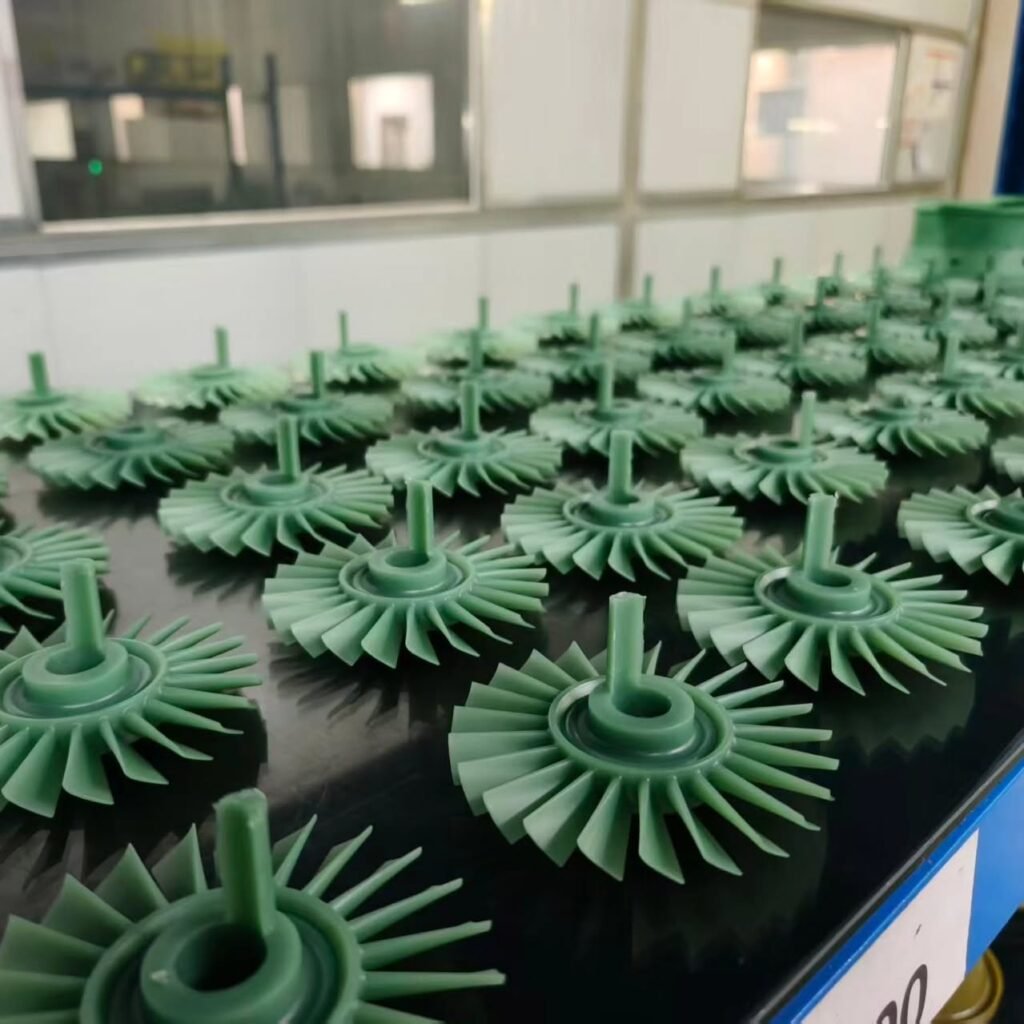
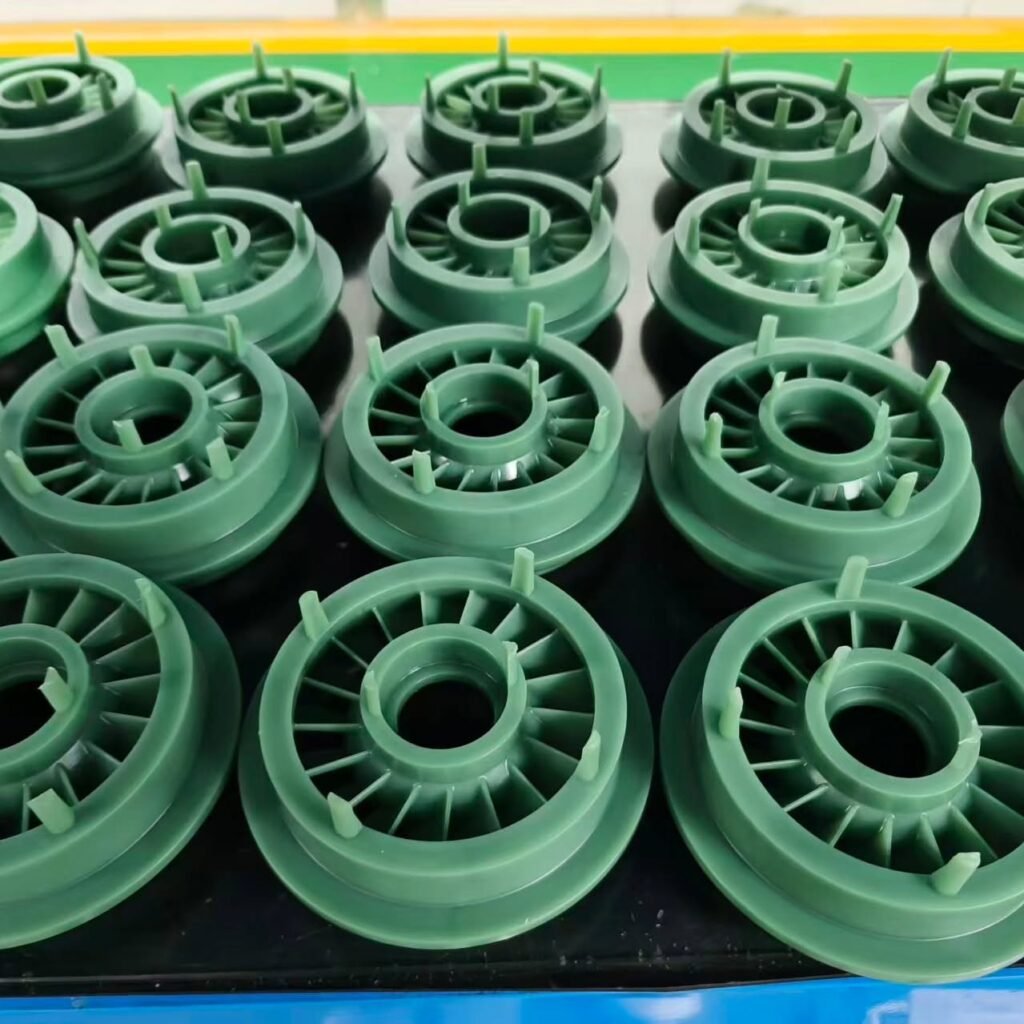
- Sacrificial Pattern: We create a precise replica of your component using specialized wax or SLA plastic.
- Ceramic Shell Mold: We encase this pattern in a robust, multi-layered ceramic shell.
- Dewaxing: We melt and extract the wax pattern under high heat, leaving a perfect, hollow cavity.
- Casting: We pour molten metal directly into this pre-heated shell to form your exact part.
The Advantage of Near-Net-Shape Manufacturing
Why do mechanical engineers specify this method? Because it delivers a near-net-shape component right out of the mold. By achieving tight metal casting tolerances from the initial pour, we drastically reduce—and often completely eliminate—the need for extensive CNC machining post-processing. It is the superior choice for custom metal components that demand strict precision without the ballooning costs of secondary operations.
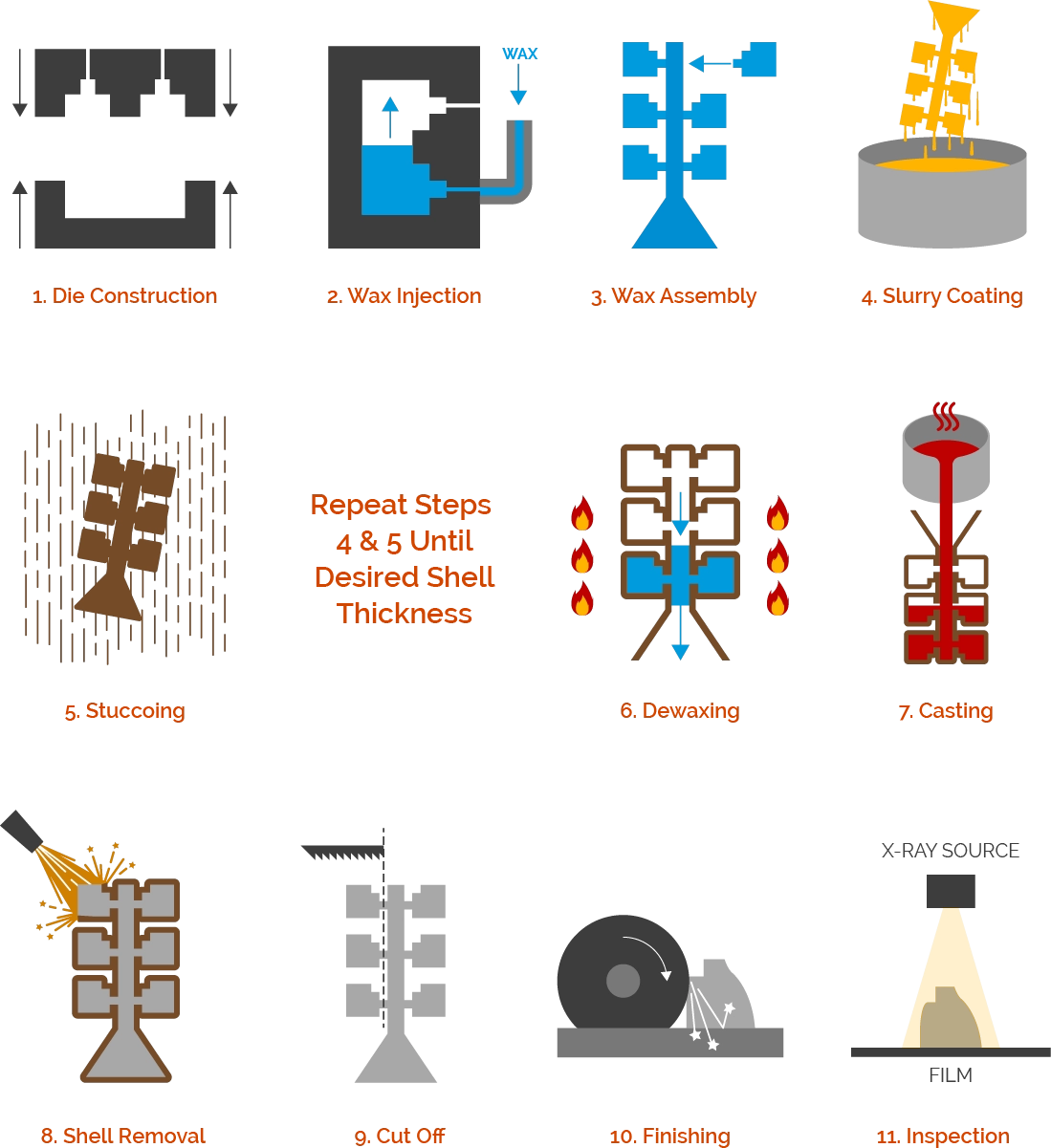
The 14-Step Investment Moulding Process at precisionvast
At precisionvast, we have engineered our investment moulding process into a highly controlled, predictable factory workflow. When you need complex, near-net-shape parts without the burden of heavy secondary machining, this is exactly how we execute our precision casting process from start to finish.
- Steps 1-2: Wax Injection & Pattern Assembly We inject molten wax into custom aluminum dies to ensure high-fidelity replication of your designs. Next, we securely mount these wax models onto a central sprue to create the full wax pattern assembly.
- Step 3: Shell Building We repeatedly dip the assembly into a ceramic slurry and coat it with stucco. This builds a highly durable ceramic shell mold that can withstand extreme heat.
- Steps 4-5: Dewaxing Operations & Kettle This is the core of lost-wax casting. We melt out the wax inside an autoclave under high pressure and temperature to clear the cavity and completely prevent the ceramic shell from cracking.
- Step 6: Metal Casting We pour the molten metal into the pre-heated shell using gravity or vacuum-assisted techniques. This includes handling standard steels or specialized metals built for demanding high-temperature applications.
- Steps 7-9: Post-Casting Breakdown Once the metal cools and solidifies, we break and remove the shell, thoroughly clean the components using shot blasting, and grind off the inlet gates.
- Steps 10-12: Surface Finishing We run a rigorous initial inspection, apply pickling treatments (especially necessary for stainless steels), and polish the custom metal components to meet your specific surface requirements.
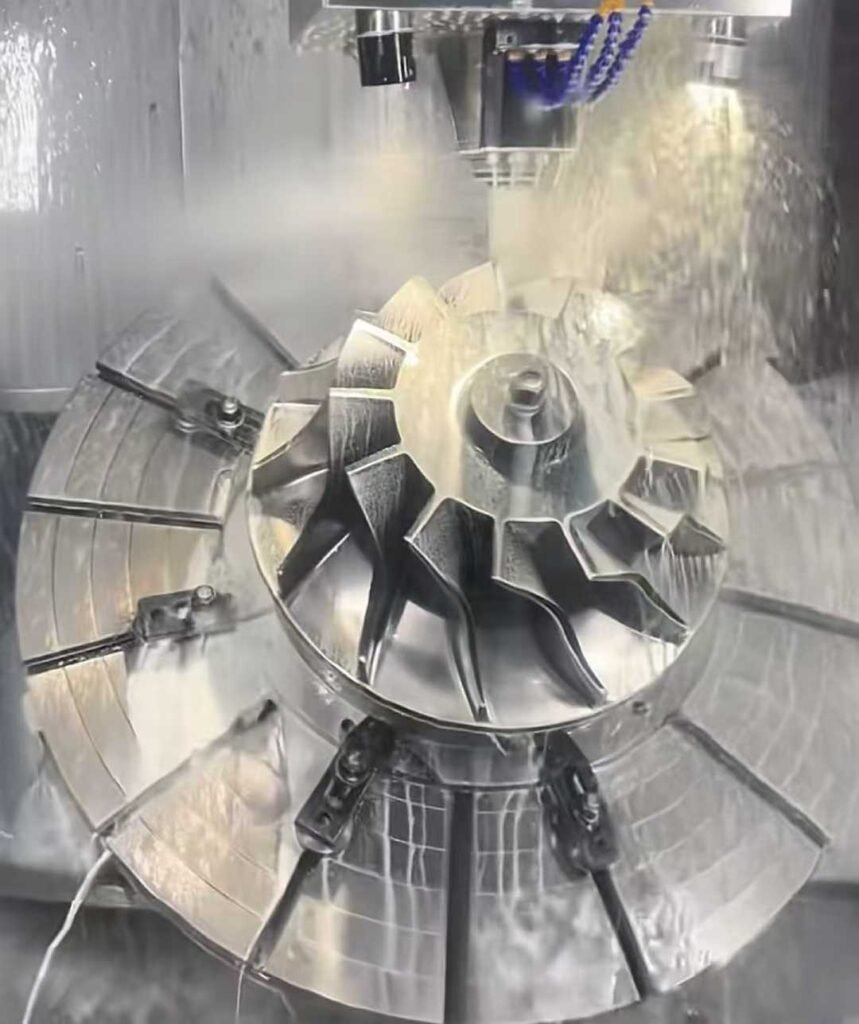
- Steps 13-14: Precision Machining & Quality Control We rely on CNC machining post-processing to nail down strict micro-tolerances. ly, every batch goes through advanced Coordinate Measuring Machine (CMM) inspection and non-destructive testing (NDT) to guarantee zero defects before shipping.
Investment Moulding Process vs. Sand & Die Casting
When evaluating the right manufacturing method for your custom metal components, picking between the investment moulding process, sand casting, and die casting comes down to your project’s specific requirements. Engineers often look at lost-wax casting as a premium sand casting alternative because of the tighter tolerances and smoother finishes it delivers right out of the mold.
To help you justify your chosen method and make an informed decision, we put together a straightforward die casting comparison below. If you want to see how these methods fit into the broader manufacturing landscape, you can review our complete overview of the casting process.
Manufacturing Method Comparison
| Variable | Investment Moulding | Sand Casting | Die Casting |
|---|---|---|---|
| Surface Finish (Ra) | Excellent (63–125 RMS) | Rough (250–500 RMS) | Good (32–63 RMS) |
| Dimensional Tolerances | Tight (±0.005″ per inch) | Loose (±0.030″ per inch) | Very Tight (±0.002″ per inch) |
| Tooling Costs | Moderate | Low | High |
| Volume Suitability | Low to High Volumes | Low Volumes | High Volumes Only |
| Design Complexity | Very High (Complex internal cavities) | Low to Moderate | Moderate |
Key Takeaways:
- Investment Casting: The go-to precision casting process for intricate parts. It enables near-net-shape manufacturing, which heavily reduces the need for expensive CNC machining post-processing.
- Sand Casting: Wins on initial tooling costs and size capabilities but sacrifices precision and surface finish.
- Die Casting: Offers great speed for massive production runs but requires a hefty upfront investment in tooling and is generally restricted to non-ferrous metals.
High-Performance Materials for Investment Moulding
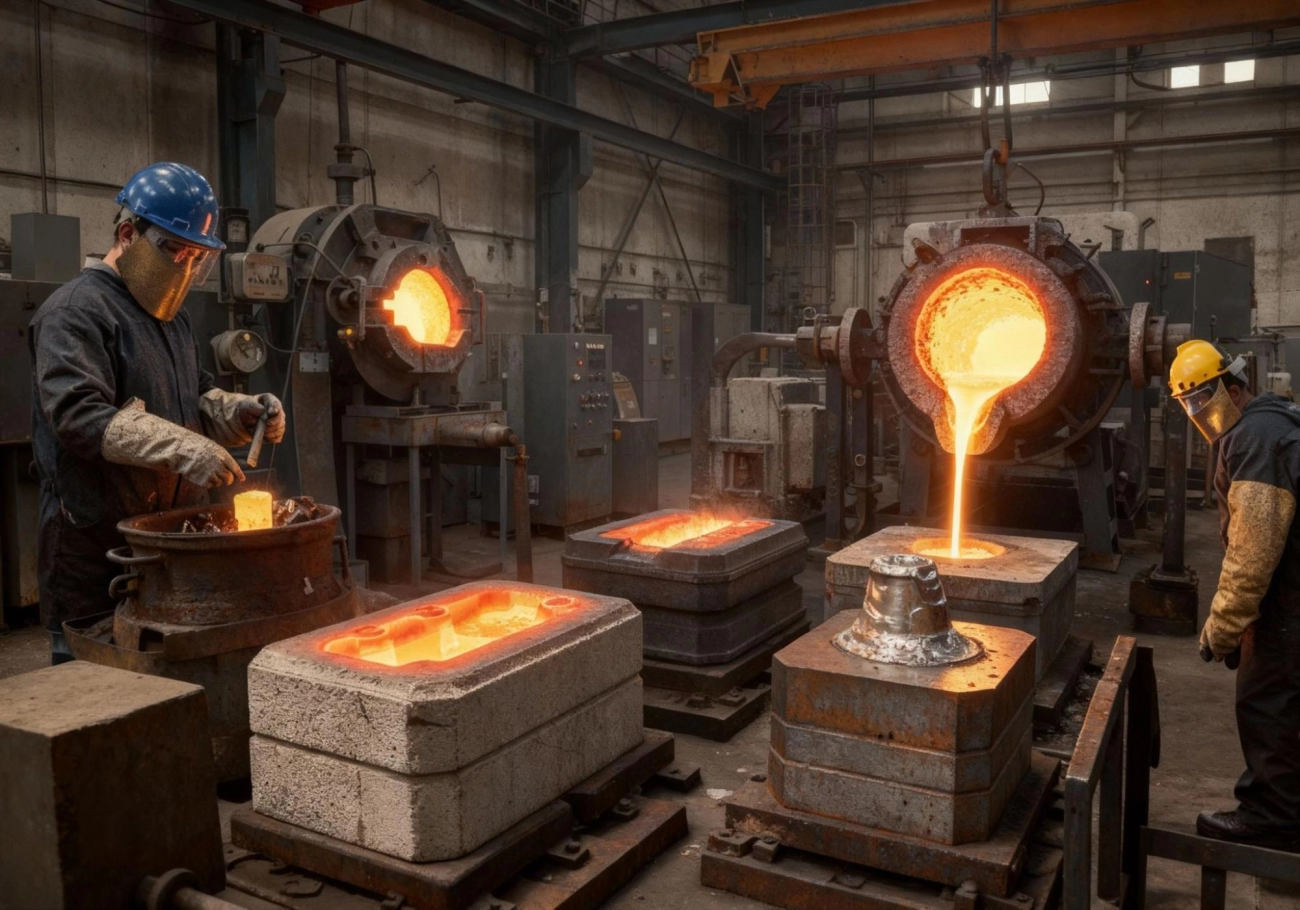
At precisionvast, our investment moulding process is built for maximum versatility. We know that American manufacturing demands reliable, custom metal components that can survive harsh environments. That is why our investment casting foundry pours a massive range of metals to hit your exact specs. If you want an inside look at how we maintain tight tolerances across different metals, exploring the basic steps in the steel casting process highlights the rigid quality controls we apply to every pour.
Here are the core high-performance materials we cast every day:
- Carbon & Alloy Steels: The backbone for heavy-duty industrial wear and exceptional structural strength.
- Stainless Steel (Standard & Duplex): Your best defense for extreme corrosion resistance in marine, medical, or chemical processing environments.
- Aluminum Alloys: The standard choice when you need to shed weight without sacrificing durability.
- Titanium & High-Temperature Superalloys: Built specifically to handle extreme heat and intense physical stress in aerospace and energy applications.
Industry Applications for Precision Components
When your project requires near-net-shape manufacturing for critical parts, the investment moulding process delivers exactly what you need. We supply high-performance, custom metal components to industries across the United States that demand exact tolerances and have zero room for error. Because our investment casting process is built for ultimate precision, it naturally aligns with the rigorous demands of these core sectors:
- Aerospace: We cast lightweight structural components and durable turbine blades. This sector relies on our precision casting process to hit tight specs using high-temperature superalloys.
- Medical Equipment: From intricate surgical tools to complex implants, the medical field requires the flawless surface finish and strict material integrity that lost-wax casting provides.
- Marine & Automotive: We manufacture heavy-duty engine components and corrosion-resistant hardware built to survive harsh saltwater environments and intense daily wear.
- Industrial Flow Control: We consistently produce the complex internal cavities required for heavy-duty pumps, industrial valves, and high-pressure fittings, guaranteeing leak-free performance on the line.
Why Choose precisionvast for Your Custom Manufacturing?
When executing the investment moulding process, you need an ISO9001 certified foundry that delivers tight tolerances on time, every time. At precisionvast, we build our manufacturing operations around solving your toughest engineering challenges. We understand that United States manufacturers require a reliable supply chain and flawless custom metal components to stay competitive.
Here is exactly what we bring to the table to ensure your project succeeds:
Advanced Engineering & Simulation
We do not leave casting to chance. Before any physical production begins, our engineering team utilizes advanced CAE (Computer-Aided Engineering) simulation. This technology allows us to digitally analyze the metal flow and solidification, eliminating shrinkage, porosity, and other hidden casting defects. The result is a highly reliable precision casting process that gets your parts right on the first run.
Unmatched Scale & Flexibility
Our massive 19,000+ square meter facility is engineered for total adaptability. Whether you need a short run of specialized prototypes to validate a design or need to transition into large-scale, high-volume production, we have the floor space and the machinery to scale seamlessly with your demand.
True End-to-End Solutions
We provide a complete, one-stop manufacturing experience so you do not have to manage multiple vendors. Our internal workflow covers everything from initial rapid prototyping casting using SLA patterns to final heat treatment, CNC machining, and surface finishing. For procurement teams navigating vendor selection, understanding how to choose the right carbon steel casting exporter is critical, and our comprehensive in-house capabilities ensure strict quality control from raw material to the final ready-to-install part.
precisionvast Core Advantages
| Manufacturing Capability | How We Do It | Direct Benefit to You |
|---|---|---|
| Defect Prevention | Advanced CAE flow and solidification simulation | Eliminates guesswork and costly production delays. |
| Production Scale | 19,000+ sqm modern manufacturing facility | Complete flexibility for both low-volume and high-volume orders. |
| Comprehensive Workflow | Turnkey investment moulding process | Streamlined supply chain with a single, accountable vendor. |
| Post-Processing | In-house heat treatment, CNC, and finishing | Parts arrive at your dock fully finished and ready for assembly. |
FAQs About the Investment Moulding Process
What are the standard metal casting tolerances for your investment moulding process?
We typically hold linear tolerances of ±0.005 inches per inch. Because our investment moulding process is a near-net-shape manufacturing method, you get exceptional accuracy right out of the gate. This high level of precision drastically reduces the need for extensive CNC machining post-processing, saving you both time and money on the factory floor.
Can precisionvast handle complex “problem parts” with internal cavities?
Absolutely. The lost-wax casting method excels at geometries that alternative methods simply cannot touch. By utilizing specialized soluble wax cores and high-grade ceramic shell molds, we routinely cast parts featuring intricate internal channels, thin walls, and severe undercuts. We solve the tough engineering challenges, which is why we are trusted to cast complex titanium alloys for critical aerospace applications and high-temperature superalloys.
What is the typical lead time for first-article inspection (FAI)?
For our standard precision casting process, you can expect FAI lead times to range from 4 to 6 weeks, depending on the complexity of the part and the hard tooling required. If your project has a tighter deadline, we offer rapid prototyping casting capabilities. By using 3D-printed SLA patterns instead of traditional aluminum dies, we can bypass tooling entirely and get first articles into your hands in a fraction of the time.

 German
  English