Beschreibung
An investment cast part is a high-precision component manufactured using the lost wax process. We specialize in this technique to produce near-net-shape components with intricate geometries that traditional manufacturing methods cannot replicate. By utilizing a disposable wax pattern and a ceramic shell, we ensure every detail of your design is captured with exceptional accuracy and repeatability.
The Lost Wax Casting Process Explained
Our production cycle focuses on precision and material integrity. The process follows these critical steps:
- Wax Pattern Injection: We create a precise wax replica of the final component.
- Tree Assembly: Multiple patterns are attached to a central runner system.
- Ceramic Shell Building: The assembly is repeatedly dipped into a refractory slurry—utilizing either silica sol casting for high precision or water glass casting for cost-effectiveness—to form a hard mold.
- Dewaxing: The wax is melted out, leaving a detailed hollow cavity.
- Metal Pouring: Molten metal is poured into the pre-heated ceramic shell.
- Shell Removal: Once cooled, the ceramic is broken away to reveal the precision casting.
Investment Casting vs. Sand Casting and Die Casting
Choosing the right casting method is essential for balancing cost, material, and precision. We provide a clear distinction between these industrial processes:
| Feature | Investment Casting | Sand Casting | Die Casting |
|---|---|---|---|
| Dimensional Accuracy | Very High (ISO 8062 CT4-CT6) | Low to Medium | High |
| Surface Finish | Excellent (Ra 3.2–6.3 μm) | Rough | Smooth |
| Material Range | Ferrous & Non-Ferrous | Nearly all metals | Primarily Non-Ferrous |
| Complexity | Extremely High | Low to Medium | High |
| Weight Range | 0.01 kg to 50 kg | Up to 1000 kg | Typically small to medium |
While sand casting is ideal for massive, less complex components, our investment cast parts offer the superior tolerances and surface finishes required for demanding applications in the automotive, medical, and fluid handling industries. Unlike die casting, our process allows for the use of high-melting-point materials like stainless steel and alloy steel, providing greater versatility for your custom metal parts.
Key Benefits of the Investment Cast Part
Choosing an investment cast part provides a level of precision and design flexibility that other manufacturing methods simply cannot match. We focus on delivering near net shape parts that minimize material waste and drastically reduce the need for expensive secondary operations. By utilizing the lost wax process, we can produce intricate components that are ready for assembly with minimal intervention.
Design Freedom and Complexity
The lost wax casting method allows for incredible design freedom. We can produce complex geometry casting results, including internal cooling passages, undercuts, and thin walls that would be impossible to achieve through traditional machining or sand casting. This capability allows you to consolidate multiple components into a single, high-strength part.
High Precision and Superior Finish
Our precision metal parts are known for their tight dimensional tolerances and excellent surface integrity. Because the ceramic mold is created from a high-quality wax pattern, the final investment cast part maintains consistent accuracy across large production runs. Understanding alloy steel casting key facts can further help you optimize these parts for high-stress environments.
Core Advantages at a Glance:
| Feature | Investment Casting Benefit |
|---|---|
| Dimensional Tolerance | High precision (ISO 8062 CT4-CT6) |
| Surface Roughness | Superior as-cast finish (Ra 3.2 – 6.3 μm) |
| Geometry | Supports complex internal shapes and thin walls |
| Material Waste | Minimal scrap due to near-net-shape production |
| Secondary Machining | Significant reduction in labor and tool costs |
Material Efficiency and Cost Savings
One of the biggest wins for our customers is the reduction in total cost of ownership. While the initial tooling for a wax pattern casting might be higher than sand casting, the long-term savings are found in:
- Reduced Machining: High-tolerance castings mean fewer hours on the CNC mill.
- Material Conservation: Since we cast close to the final dimensions, you aren’t paying for raw material that ends up as floor scrap.
- Weight Reduction: The ability to cast thin-walled sections helps in creating lighter, more efficient components for automotive and aerospace applications.
We ensure that every precision casting meets strict quality benchmarks, providing a reliable solution for industries where failure is not an option. By integrating advanced silica sol casting techniques, we provide parts that offer better corrosion resistance and a smoother aesthetic than traditional methods.
Choosing the Right Material for Your Investment Cast Part
Selecting the proper alloy is the most critical step in ensuring your investment cast part performs under pressure. We provide a broad spectrum of ferrous and non-ferrous metals, matching the specific chemical and mechanical requirements of your application.
Stainless Steel for Corrosion Resistance
For components exposed to harsh chemicals or moisture, stainless steel is our most requested material. We cast various grades that balance durability with cost-effectiveness. Understanding the 304 vs 316 stainless steel difference is essential for projects in the food machinery or marine hardware sectors, where pitting resistance is a priority.
- 304/316/316L: Excellent for sanitary and corrosive environments.
- 17-4PH: Provides a unique combination of high strength and hardness.
Carbon and Alloy Steel for High Strength
When your project demands structural integrity and impact resistance, carbon and alloy steels are the go-to options. These materials are widely used in heavy-duty sectors, such as carbon steel investment casting for truck parts, where the metal must withstand significant stress and wear.
- Low Carbon Steel (1020/1045): Offers great weldability and toughness.
- Alloy Steel (4140/8620): Ideal for high-wear applications like gears and industrial tools.
Specialty Alloys for Demanding Environments
We also process a variety of non-ferrous and specialty metals to meet unique industrial challenges:
- Aluminum Alloys: Perfect for lightweight, high-precision components in the automotive and aerospace industries.
- Copper Alloys: Including brass and bronze for superior electrical conductivity and decorative architectural hardware.
- Cast Iron: Gray and ductile iron options for parts requiring high vibration damping and compressive strength.
Whether you need a high-precision lost wax casting in stainless steel or a rugged alloy steel casting, we ensure the material chemistry is verified through spectrometer testing for 100% traceability.
Technical Specs for Investment Cast Parts
We focus on delivering near net shape parts that meet the tightest industrial requirements. Every investment cast part we produce is engineered to hit specific dimensional goals, ensuring your components are ready for assembly or final precision machining with minimal material waste.
Precision Casting Capabilities
Our facility specializes in high-tolerance castings using both Silica Sol and Water Glass methods. This allows us to balance the need for extreme detail with cost-effective production for larger components.
| Feature | Technical Specification |
|---|---|
| Dimensional Tolerance | ISO 8062-3 Grade CT5 to CT7 |
| Weight Range | 0.01 kg (10g) up to 50 kg |
| Surface Roughness | Ra 3.2 to 6.3 μm (standard as-cast) |
| Minimum Wall Thickness | Generally 1.5mm (geometry dependent) |
Material Versatility and Finish Standards
We work with a broad spectrum of metal castings, including stainless steel, carbon steel, and non-ferrous alloys. Getting the specs right from the start is a critical step in choosing the right metal supplier for your business needs and ensuring long-term part performance.
- Precision metal parts: We achieve tight tolerances that often eliminate the need for secondary grinding or milling on non-critical surfaces.
- Complex geometry casting: Our process supports thin walls and intricate internal cooling channels that are impossible with traditional sand casting.
- Surface Consistency: By controlling the ceramic shell temperature and metal pouring speed, we ensure a uniform surface finish across every batch.
Our technical team reviews your specific drawings to ensure the chosen casting method matches your required ISO grade. Whether you need a 10g medical component or a 50kg industrial valve body, we maintain strict adherence to your specified dimensional and material envelopes.
Our Step-by-Step Investment Casting Process
We follow a meticulous lost wax casting workflow to ensure every investment cast part we produce meets your exact design specifications. By controlling every stage of the wax pattern casting and molding process, we maintain the tight tolerances and material integrity required for high-performance industrial components.
The Lost Wax Process Breakdown
- Wax Pattern Injection: We inject specialized wax into a metal die to create a precise replica of the final part.
- Tree Assembly: Individual wax patterns are attached to a central sprue, creating a “casting tree” that allows us to pour multiple parts simultaneously for better efficiency.
- Ceramic Shell Building: The tree is dipped into a high-grade ceramic slurry and coated with sand. This process is repeated until a thick, durable ceramic shell molding is formed.
- Dewaxing: We place the shells in a steam autoclave to melt out the wax, leaving a clean, hollow cavity ready for the molten metal.
- Metal Pouring: The shells are preheated and filled with molten alloy. During this stage, understanding the different grades of carbon steel castings is essential for matching the right pouring temperature to the material’s properties.
- Shell Removal & Finishing: Once the metal cools and solidifies, the ceramic shell is broken away (knock-out), and the parts are cut from the tree for final cleaning and inspection.
Silica Sol vs. Water Glass Methods
We offer two distinct precision casting methods to balance your requirements for surface finish and budget:
| Feature | Silica Sol Casting | Water Glass Casting |
|---|---|---|
| Surface Finish | Superior (Ra 3.2 – 6.3 μm) | Standard (Ra 12.5 μm) |
| Dimensional Accuracy | High (ISO 8062 CT4-CT6) | Moderate (ISO 8062 CT7-CT9) |
| Best For | Small, complex, high-precision metal parts | Larger, heavier industrial components |
| Cost | Higher due to premium materials | More cost-effective for bulk production |
Our silica sol casting is the preferred choice for customers needing a near-net-shape investment cast part that requires minimal secondary machining. For larger, heavy-duty parts where cost is a primary factor, our water glass process provides a reliable, high-strength solution.
Complete Finishing and Secondary Operations
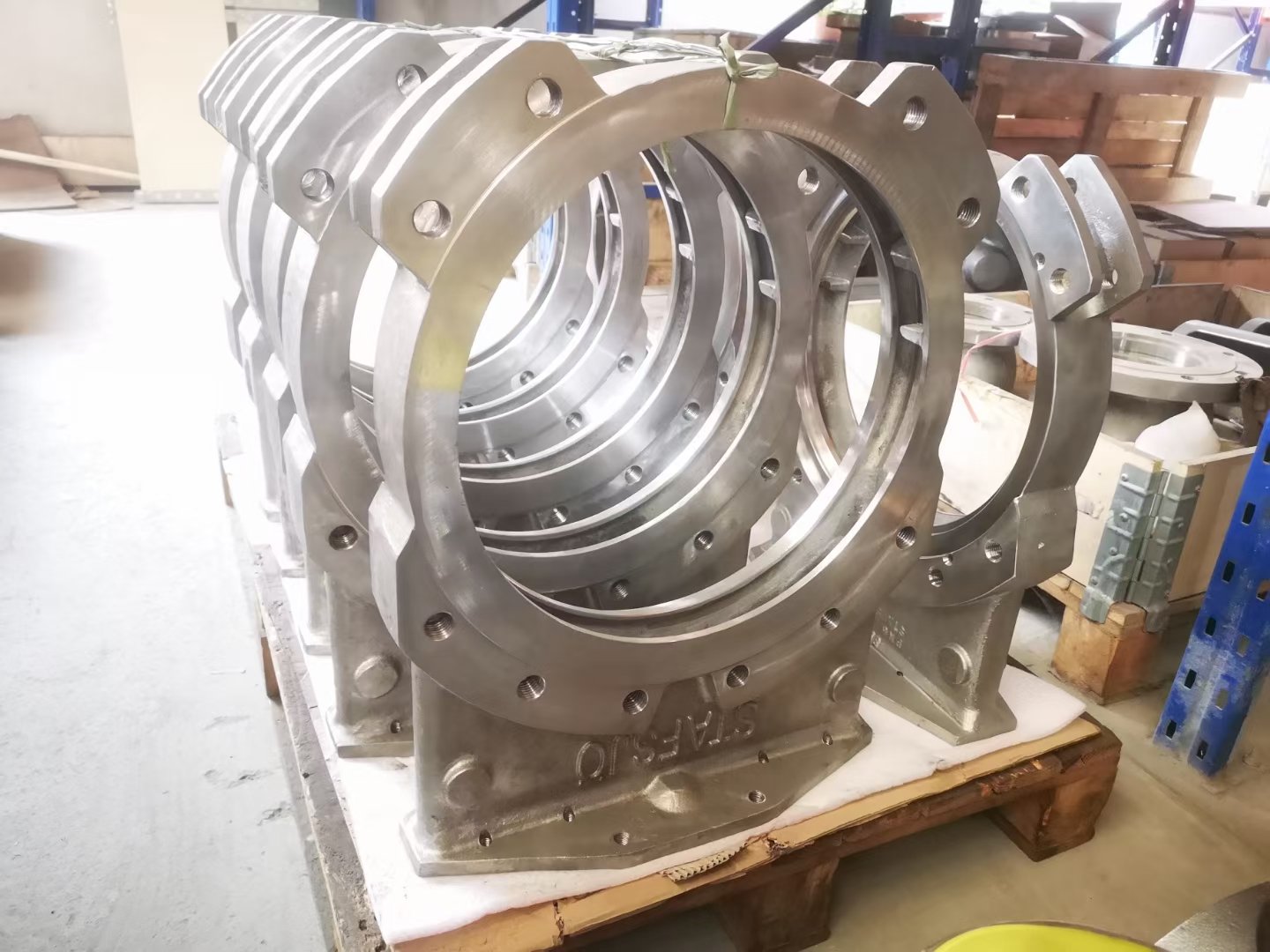
We provide more than just raw castings. To ensure every investment cast part arrives ready for immediate assembly, we offer a full suite of secondary services. Our one-stop manufacturing approach eliminates the logistical headache of managing multiple vendors, as we handle everything from the initial pour to the final surface treatment.
Precision CNC Machining
While precision casting delivers near-net shapes, certain applications require extreme accuracy. We utilize advanced CNC centers for:
- Turning and Milling: Achieving ultra-tight tolerances that standard casting cannot reach.
- Drilling and Tapping: Creating precise threaded holes and internal geometries.
- Grinding: Ensuring perfectly flat surfaces and critical mating faces for precision metal parts.
Specialized Heat Treatment
We manipulate the internal structure of our metal castings to meet your specific mechanical requirements. Depending on the material and end-use, we perform:
- Annealing: To improve ductility and reduce internal stress.
- Quenching and Tempering: To achieve the perfect balance of hardness and toughness.
- Stress Relieving: Vital for ensuring long-term dimensional stability, especially after identifying where the weak points in alloy casting processes might occur.
Surface Finishing and Protection
A high-quality investment cast part needs a finish that matches its performance. Our facility is equipped to provide:
- Mechanical Finishing: Sandblasting, bead blasting, and professional polishing for various Ra roughness requirements.
- Protective Coatings: Zinc plating, chrome plating, and powder coating for superior corrosion resistance.
- Painting and Passivation: Specialized chemical treatments to enhance the longevity of stainless steel and alloy components.
Quality Control for Every Investment Cast Part
We take quality seriously because we know your projects depend on it. Our facility is ISO 9001:2015 certified, ensuring that every investment cast part we produce follows a strict, repeatable quality management system. We don’t just meet standards; we aim to exceed them by integrating inspection at every stage of the manufacturing process.
Advanced In-House Testing and Inspection
Precision requires the right tools. We utilize a range of advanced testing equipment to ensure your precision metal parts are exactly what you ordered:
- Spectrometer Analysis: We verify the chemical composition of every heat to ensure the alloy mix is perfect.
- CMM (Coordinate Measuring Machine): Our team uses CMM to confirm that even the most complex geometry casting meets your tight dimensional tolerances.
- Mechanical Testing: We perform tensile and hardness testing to guarantee the structural integrity of the part.
- Non-Destructive Testing (NDT): Optional magnetic particle or liquid penetrant inspection to find any hidden surface defects.
Full Traceability and Material Certification
We provide total transparency for every order. Each shipment comes with full material certification and traceability, allowing you to track the manufacturing history of your components. Our commitment to high-performance materials is as rigorous as the standards used for the strongest steel used in cars, ensuring that every component is reliable and ready for assembly. By maintaining these strict protocols, we eliminate the risks of material failure and dimensional inaccuracies.
Industrial Applications for the Investment Cast Part
Our precision casting solutions serve a massive variety of industries across the United States. Because the lost wax casting process allows for near-net-shape components, we help our partners reduce assembly time and material waste in almost every sector imaginable.
Automotive and Marine Hardware
In the automotive world, every investment cast part must meet strict safety and performance standards. We produce high-strength components like engine brackets, fuel system parts, and turbocharger components. For the marine industry, we focus on stainless steel investment casting to create hardware that survives harsh saltwater environments, including:
- Propellers and rudders
- Deck cleats and hinges
- Custom marine manifolds
Medical Devices and Food Machinery
Precision and cleanliness are non-negotiable in these fields. We manufacture precision metal parts for surgical instruments and implants, often utilizing advanced materials such as titanium alloys in medical devices to ensure biocompatibility and strength.
- Medical: Orthopedic tools, diagnostic equipment components, and surgical handles.
- Food Machinery: Stainless steel mixers, blades, and filling nozzles that require a high-quality surface finish for easy sterilization.
Valve, Pump, and Industrial Fittings
Fluid handling relies on the pressure-tight integrity of custom cast components. We specialize in complex geometry casting for internal passages that are difficult to machine. Our expertise in high-temperature alloys ensures that parts used in power plants and chemical processing can withstand extreme conditions.
- Pump Components: Impellers, casings, and wear rings.
- Valve Hardware: Gate valves, ball valve bodies, and actuator components.
- Architectural Hardware: Glass clamps, brackets, and high-end decorative fittings for modern construction.
Designing Your Investment Cast Part for Success
Smart design is the foundation of a high-quality investment cast part. By optimizing your 3D models for the lost wax process, you ensure better metal flow, structural integrity, and a cleaner surface finish. Focusing on these details early on results in near net shape parts that require minimal secondary finishing.
Wall Thickness and Radii Optimization
Consistent wall thickness is vital to prevent defects like shrinkage or internal stress. While silica sol casting allows for impressive thin-walled sections, keeping transitions smooth is essential for a reliable pour.
- Minimum Wall Thickness: We typically recommend a minimum of 1.5mm to 3mm, depending on the specific alloy and part size.
- Generous Radii: Use fillets at all corners to reduce stress concentrations. This also helps the ceramic shell mold stay intact during the wax pattern casting stage.
- Uniformity: Avoid sudden jumps from thick to thin sections. Uniform cooling ensures the high tolerance castings our customers expect.
Common Design Pitfalls to Avoid
Many designers treat an investment cast part like a standard machined component, which can lead to unnecessary production hurdles. Avoiding these common mistakes keeps your project on track and under budget:
- Isolated Heavy Sections: Large, thick masses surrounded by thin walls cool slower, often leading to “hot spots” or internal voids.
- Overly Complex Internal Cores: While precision casting handles complexity well, extremely intricate internal passages can be difficult to clean, increasing the labor cost for each metal casting.
- Ignoring Material Properties: Different metals behave differently during cooling. For instance, understanding the flow characteristics of carbon steel casting compared to stainless steel can help you decide where to place gates and risers.
- Sharp Angles: These can cause the ceramic shell to crack. Always opt for rounded edges to ensure a smooth, precision metal part every time.
By sticking to these guidelines, we can maximize the efficiency of the lost wax casting method, delivering parts that are ready for assembly with little to no extra work.
Investment Casting FAQs
Navigating the specifics of a project can be complex. We have compiled the most common questions regarding lead times, costs, and production requirements to help you plan your next investment cast part project effectively.
What are the typical lead times?
Lead times are split into two phases: tooling and production.
- Tooling/Sampling: Usually takes 3 to 5 weeks to design and manufacture the wax injection mold and produce initial samples.
- Mass Production: Once samples are approved, standard production runs typically take 4 to 6 weeks, depending on order volume and the complexity of the secondary machining required.
How do tooling costs work?
Tooling is a one-time investment. The cost depends on the size and complexity of the part. Because the lost wax process uses high-quality steel molds for wax injection, the initial cost is higher than sand casting but results in much higher precision and lower per-part costs over time.
What is the Minimum Order Quantity (MOQ)?
We are built to be flexible. While the lost wax casting process is most cost-effective for medium to high-volume runs, we support small batch production for specialized industrial applications. We provide custom quotes based on your specific drawings and annual volume requirements to ensure you get the best value.
Do you provide prototyping services?
Yes. Before moving to full-scale production, we offer prototyping to verify your design. We can use 3D-printed wax patterns to create a functional investment cast part without the need for hard tooling. This is the best way to test different types of investment casting materials and geometries before committing to permanent molds.
Can you handle secondary operations?
We are a one-stop shop. Every precision cast component we manufacture can be delivered ready for assembly. Our in-house services include:
- High-precision CNC machining (turning, milling, and drilling).
- Heat treatments to meet specific hardness or strength requirements.
- Surface finishing such as sandblasting, polishing, and plating.
How do I get a quote?
Submit your 2D or 3D technical drawings (STEP, IGES, or PDF) along with your material specifications and estimated quantities. Our team reviews the geometry to provide a technical quote that balances precision with manufacturing efficiency.
 German
  English
Rezensionen
Es gibt noch keine Rezensionen.