
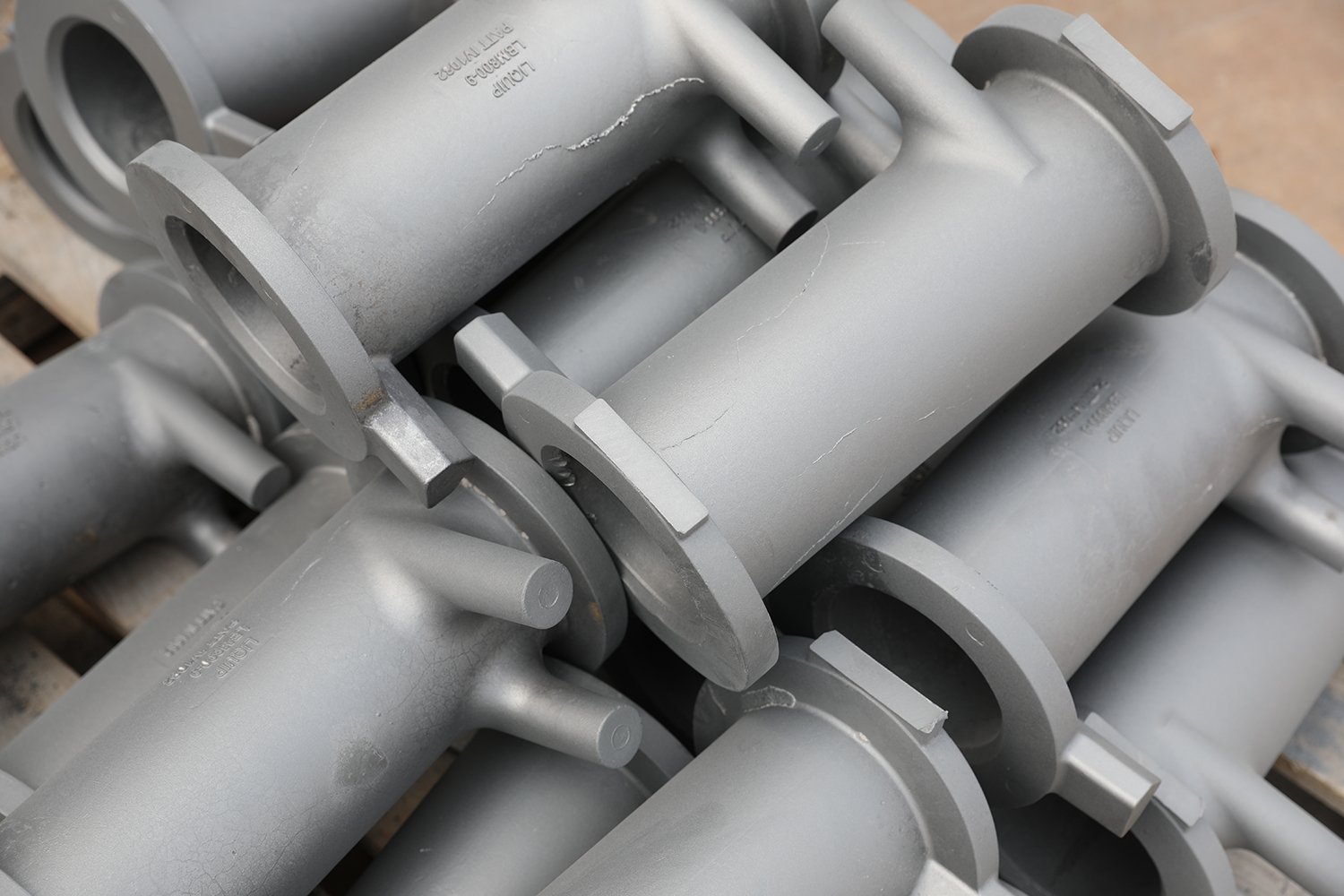
Beschreibung
Understanding the Investment Casting Process
When I talk to engineers about investment casting, I’m usually discussing the “lost-wax” method—a process I favor for its incredible design flexibility. Unlike other methods, this technique allows us to create complex, near-net-shape components that would be nearly impossible to machine.
The Lost-Wax Method Step-by-Step
The beauty of this process lies in its precision. Here is how we move from a digital design to a finished metal part:
- Wax Pattern Creation: We inject wax into a metal die to create an exact replica of the part.
- Tree Assembly: These wax patterns are attached to a central wax sprue, forming a “casting tree.”
- Shell Building: The tree is dipped into a ceramic slurry and coated with fine sand. We repeat this until a high-strength ceramic shell is formed.
- Dewaxing: We place the shell in an autoclave to melt the wax out, leaving a hollow ceramic mold.
- Metal Pouring: Molten metal is poured into the preheated shell.
- Knockout: Once cooled, the ceramic shell is vibrated or blasted away to reveal the final casting.
Silica Sol vs. Water Glass Techniques
In my experience, choosing the right binder for the ceramic shell is the biggest factor in balancing precision casting comparison and cost.
| Feature | Silica Sol Casting | Water Glass Casting |
|---|---|---|
| Surface Finish | Excellent (Ra 3.2 or better) | Average (Ra 6.3 – 12.5) |
| Dimensional Accuracy | Very High | Moderate |
| Primary Advantage | Best for thin walls & detail | Faster and more affordable |
| Best Use Case | Aerospace, Medical, Food Tech | Construction, Mining, Heavy Industry |
Best Metals for Investment Casting
One reason I lean toward investment casting over die casting is the material compatibility. While die casting is restricted to non-ferrous alloys, investment casting excels with high-melting-point metals.
Stainless steel casting is a staple in my shop, particularly for 304 and 316 grades that require high corrosion resistance. We also frequently work with carbon steel and various alloy steels for structural components that need superior toughness and heat treatability. This process is the gold standard when your project demands the strength of ferrous metals combined with intricate internal geometries.
Understanding the Die Casting Process
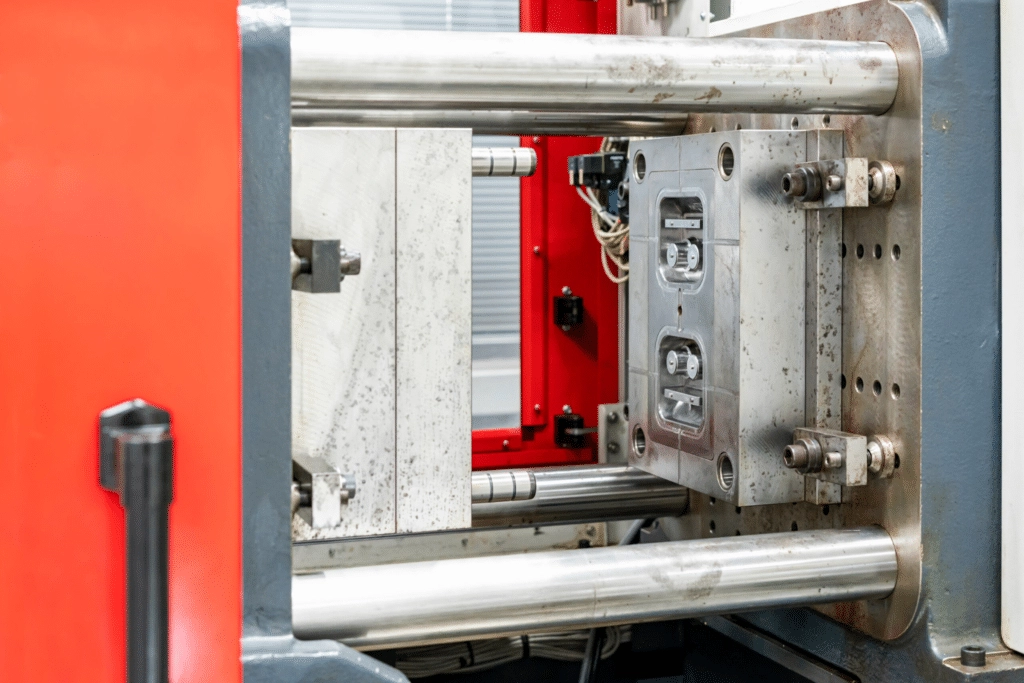
When it comes to high-volume metal parts production, die casting is the undisputed king of speed. I rely on this process because it uses high-pressure injection to force molten metal into a permanent steel die. This ensures every single part is a near-identical copy of the last, which is why it dominates the automotive and electronics sectors in the United States.
Hot-Chamber vs. Cold-Chamber Machines
The choice between machines usually comes down to the melting point of the alloy. While we often look at the aluminum die casting vs investment debate, the machine setup is what actually dictates the production flow.
| Feature | Hot-Chamber Die Casting | Cold-Chamber Die Casting |
|---|---|---|
| Typical Metals | Zinc, Lead, Magnesium | Aluminum, Copper, Brass |
| Melting Point | Low | High |
| Setup | Injection system is submerged | Metal is ladled into the chamber |
| Cycle Speed | Extremely Fast | Fast |
Why Die Casting Dominates High-Volume Runs
In any precision casting comparison, die casting wins on pure throughput. Once the initial steel tooling is ready, the cycle times are incredibly short—often just seconds per part. For those focusing on lightweight, durable components, our specialized aluminum die casting solutions offer the best balance of strength and speed for massive orders.
- High Pressure: Forces metal into thin walls and tight corners that other methods might miss.
- Reusability: Steel dies are built for the long haul, lasting for tens of thousands of cycles.
- Efficiency: Minimal scrap and high-speed output make it the most cost-effective choice for scaling your product.
This process is built for the “set it and forget it” mindset of mass manufacturing, where consistency is just as important as the bottom line.
Technical Comparison: Investment Casting vs Die Casting Precision Limits
When evaluating investment casting vs die casting for your parts, the technical specifications—especially precision and surface finish—are critical. Here is a side-by-side comparison of how these two common precision casting comparison methods stack up:
| Feature | Investment Casting (Lost-Wax Casting) | Die Casting (High-Pressure) |
|---|---|---|
| Dimensional Tolerance | Excellent: $pm 0.005$ in/in or better (less metal removal needed) | Very Good: $pm 0.015$ in/in (tighter tolerances are possible with higher costs) |
| Surface Finish (Roughness, Ra) | Superior: 63-125 Ra $mu$-in (often requires minimal post-processing) | Good: 125-250 Ra $mu$-in (better with polished dies, but can require more finishing) |
| Minimum Wall Thickness | Greater Flexibility: As low as 0.030 to 0.090 in (depending on part size/material) | Thinnest Possible: As low as 0.020 to 0.060 in (especially for Aluminum/Zinc) |
| Design Freedom | High: Excellent for complex geometries, undercuts, and intricate internal features. | Limited: Restricted by the need to eject the solid part from the steel die. |
Investment casting, or lost wax casting vs die casting, generally offers tighter dimensional tolerances and a superior surface finish, which minimizes the need for expensive secondary finishing like CNC machining. This is key for components with very specific size or fit requirements. While die casting can achieve slightly thinner walls, its complexity is limited by the steel die, making complex geometry casting where internal details are needed a clear advantage for the investment process.
Material Compatibility: Ferrous vs Non-Ferrous Alloys
In the technical debate of investment casting vs die casting, your material choice often dictates the process. We see many projects where the melting point of the metal immediately narrows down the options.
Why Ferrous Alloys Favor Investment Casting
Investment casting is the premier choice for high-melting-point metals. Because the ceramic shells can withstand extreme heat, we utilize this method for:
- Stainless Steel: The best option for parts requiring high corrosion resistance and hygiene.
- Carbon and Alloy Steel: Essential for high-strength industrial parts. Finding a reliable carbon steel precision casting factory is key to ensuring these materials meet structural specs.
- Superalloys: Investment casting handles cobalt and nickel-based metals that other processes simply can’t touch.
Die Casting Limitations: Non-Ferrous Only
Die casting is restricted to non-ferrous alloys because the steel dies would wear out too quickly if exposed to the high temperatures needed for steel. This process dominates when working with:
- Aluminum: Perfect for lightweight, heat-dissipating components.
- Zinc: Ideal for high-speed production of small, intricate parts with thin walls.
- Magnesium: Chosen for the best strength-to-weight ratio in automotive and tech.
Choosing for Corrosion and Heat Requirements
When comparing aluminum die casting vs investment casting, you have to look at the environment. If your parts face extreme thermal stress or caustic chemicals, you need to know how advanced high-temperature alloys optimize your projects.
Ferrous vs non-ferrous casting decisions usually boil down to this: if you need the rugged durability of steel or the heat resistance of a specialty alloy, investment casting is your only path. If you need lightweight, high-volume parts in aluminum or zinc, die casting wins.
| Feature | Investment Casting | Die Casting |
|---|---|---|
| Material Types | Ferrous & Non-Ferrous | Non-Ferrous only |
| Common Metals | Stainless Steel, Carbon Steel, Tool Steel | Aluminum, Zinc, Magnesium |
| Melting Points | High (Up to 3,000°F+) | Low to Moderate |
| Corrosion Resistance | Excellent (with Stainless/Alloys) | Moderate (requires coatings) |
Cost Analysis: Tooling, Unit Price, and Volume
When we weigh the financial side of investment casting vs die casting, it usually comes down to how many parts you need and how much you can spend upfront. The initial tooling costs for investment vs die casting are worlds apart. We typically use aluminum or low-cost steel molds for wax patterns in investment casting, making the entry price much lower for startups or custom projects.
In contrast, die casting requires heavy-duty, hardened steel dies capable of withstanding extreme pressure. This makes the startup cost significantly higher, often reaching tens of thousands of dollars before the first part is even made.
Finding the Volume Breakpoint
The “winning” process shifts based on your production run. While die casting has high startup costs, it excels in high volume metal parts production. Once the mold is paid for, the cost per unit drops to a fraction of what investment casting costs because the cycle times are so fast.
| Cost Factor | Investment Casting | Die Casting |
|---|---|---|
| Initial Tooling Cost | Low to Moderate | Very High |
| Unit Price (Low Volume) | More Economical | Expensive |
| Unit Price (High Volume) | High | Very Economical |
| Secondary Finishing | Minimal | Often Required |
Total Cost of Ownership (TCO)
We look beyond just the price of the mold. The total cost includes material waste and secondary labor. Because die casting can sometimes leave more flash or require extra gate removal, we help our clients learn how to reduce shrinkage in metal die casting to minimize scrap rates.
If your project involves low volume casting options or complex alloys that are hard to machine, investment casting often wins the TCO battle by delivering a near-net-shape part that requires almost zero post-processing. However, for massive automotive or electronics runs, the sheer speed and repeatability of die casting eventually make it the cheaper option per part.
Production Speed and Scalability
When comparing investment casting vs die casting for your project timeline, the winner depends entirely on your total volume. If you need high volume metal parts production, die casting is the undisputed leader in speed.
Cycle Times and Throughput
- Die Casting: Features rapid-fire cycle times. Molten metal is injected, cools almost instantly, and the part is ejected. This allows for thousands of units per day with minimal labor.
- Investment Casting: This is a multi-step journey involving wax injection, ceramic coating, and lengthy drying times. It is naturally slower, making it better suited for low volume casting options where detail is more important than pure speed.
Lead Times for Prototyping
Getting your first part in hand—the lead time—is a different story. Setting up a die casting run involves complex steel tooling that can take months to build. In contrast, a complete overview of the casting process shows that investment casting often reaches the prototyping stage faster because wax molds are simpler and quicker to produce than hardened steel dies.
Throughput for Market-Ready Parts
| Metric | Die Casting | Investment Casting |
|---|---|---|
| Daily Output | Very High (Fastest) | Moderate |
| Initial Tooling Lead Time | 8-12+ Weeks | 4-6 Weeks |
| Process Automation | High | Low to Moderate |
If you are racing to meet a massive automotive or consumer electronics launch, the high throughput of die casting is your best bet. However, for specialized industrial equipment or medical components where quality is paramount and volumes are lower, investment casting offers the scalability you need without the massive wait for permanent steel dies.
When to Choose Investment Casting
If your project involves intricate designs that a steel die simply can’t release, investment casting is the clear winner. We recommend this process for complex geometry casting where internal passages, undercuts, or fine details are non-negotiable. While the investment casting vs die casting debate often centers on speed, investment casting wins on material integrity and design freedom.
Ideal Scenarios for the Lost Wax Method
- Complex Internal Features: Perfect for parts with “uncastable” internal cores that die casting tools cannot accommodate.
- High-Strength Alloys: The go-to for stainless steel casting methods and superalloys that have melting points too high for standard die casting molds.
- Low-Volume Flexibility: This is one of the premier low volume casting options because it avoids the massive upfront cost of hard steel tooling.
- Critical Performance: We utilize this method for aerospace and medical components that require the advantages of lost wax casting for carbon steel products to ensure maximum structural density.
Quick Selection Guide
| Requirement | Choose Investment Casting If… |
|---|---|
| Part Geometry | You have complex, thin-walled, or hollow internal shapes. |
| Material Type | You need ferrous metals like stainless, tool steel, or carbon steel. |
| Production Run | You are running 100 to 5,000 units and need to keep tooling costs low. |
| Structural Integrity | The part must meet strict X-ray or high-pressure safety standards. |
When comparing lost wax casting vs die casting, choose the former if material strength and design precision outweigh the need for ultra-fast cycle times. We focus on delivering parts that require minimal secondary machining, ensuring your high-performance components are market-ready with superior mechanical properties.
When to Choose Die Casting for Your Project
In the debate of investment casting vs die casting, we recommend die casting when your priority shifts from complex ferrous alloys to high volume metal parts production using non-ferrous metals. While investment casting offers incredible detail, die casting is the powerhouse of the manufacturing world for speed, repeatability, and consistency.
High-Volume Efficiency and Speed
If you need to move fast, die casting is the winner. The process uses high-pressure injection into permanent steel dies, allowing us to produce parts in seconds rather than hours. When comparing aluminum die casting vs investment, the cycle time for die casting is significantly shorter, making it the only logical choice for mass-market consumer goods or large-scale automotive runs.
Achieving Tight Flatness and Thin Walls
Die casting excels at producing parts that are both lightweight and structurally sound. We often steer customers toward this method for electronics housings or automotive brackets where tight flatness and thin-wall stability are non-negotiable.
- Mass Production: Best for orders typically exceeding 5,000 pieces.
- Lightweight Components: Perfect for leveraging zinc die casting advantages or aluminum’s high strength-to-weight ratio.
- Dimensional Stability: Superior for parts requiring consistent flatness across large, thin surface areas.
- Standardized Geometry: Excellent for parts that don’t change design frequently.
Quick Selection Guide for Die Casting
| Project Requirement | Why Die Casting is the Solution |
|---|---|
| Annual Volume | High (Thousands to millions of units) |
| Primary Materials | Aluminum, Zinc, or Magnesium alloys |
| Cycle Time | Extremely fast (Fully automated production) |
| Part Feature | Thin walls and high-speed repeatability |
| Post-Processing | Minimal; parts are often “net shape” directly from the die |
When your design calls for standardized, high-strength parts where speed is the top priority, die casting provides the lowest unit cost and the fastest path to market. It remains the industry standard for the automotive and electronics sectors due to its unmatched throughput and structural reliability.
Real-World Applications: Investment Casting vs Die Casting
In our experience, the choice between investment casting vs die casting usually comes down to the specific demands of your industry. We see these two processes serving very different roles across the U.S. manufacturing landscape, from high-altitude aerospace tech to the handheld electronics we use every day.
Aerospace, Defense, and Medical Precision
For sectors where failure isn’t an option, investment casting is the standard. We utilize stainless steel casting methods to create parts that can withstand extreme environments.
- Aerospace & Defense: We produce turbine blades, fuel systems, and structural components. These often require complex geometry casting and superalloys that must resist the heat in high-temperature applications.
- Medical Devices: Surgical tools and orthopedic implants rely on the lost wax method for its incredible precision and compatibility with specialty alloys.
Automotive and Consumer Volume
When it comes to aluminum die casting vs investment, the automotive world almost always leans toward die casting for high-volume efficiency.
- Automotive: We see die casting dominate for engine blocks, transmission cases, and brackets where weight reduction and speed are the top priorities.
- Consumer Goods: Your laptop housing or smartphone frame is likely a product of high-pressure zinc or aluminum die casting, providing a sleek finish at a low unit cost.
Industrial Pumps, Valves, and Equipment
Industrial fluid handling requires a mix of durability and intricate internal channels. We often use investment casting for impeller and pump technology because it handles the aggressive chemicals and high pressures better than most die-cast non-ferrous metals.
| Industry | Primary Process | Typical Components |
|---|---|---|
| Energy/Oil & Gas | Investment Casting | Pump impellers, valve bodies, drilling tools |
| Electronics | Die Casting | Heat sinks, EMI shielding, connectors |
| Food Processing | Investment Casting | Stainless steel housings, mounting hardware |
| Power Tools | Die Casting | Gear housings, handles, motor frames |
High Standards: Quality Control and Testing
We don’t leave anything to chance. In the investment casting vs die casting debate, the one thing that never changes is our commitment to quality. Our facility operates under ISO 9001:2015 certification, ensuring every step of the process is documented and every metal batch has full material traceability.
Rigorous Testing for Every Part
To guarantee structural integrity and maintain a high-level precision casting comparison, we utilize a suite of non-destructive testing (NDT) methods:
- X-ray Inspection: We look inside the metal to identify internal voids or porosity.
- Dye Penetrant Inspection: This catches even the smallest surface cracks that the naked eye might miss.
- Mechanical Property Verification: We verify hardness, tensile strength, and elongation to ensure your parts handle real-world stress.
Whether you are comparing aluminum die casting vs investment for a specific project—like utilizing 356 alloy for its specific structural benefits—or need high-strength steel, we make sure the mechanical properties meet your exact project specifications. For more technical deep-dives and industry updates, you can check out our latest manufacturing blog posts.
Why Precision Vast for Your Casting Needs
Choosing between investment casting vs die casting shouldn’t be a guessing game. At Precision Vast, we operate as your dedicated manufacturing partner, providing a “one-stop shop” experience that bridges the gap between complex engineering and final delivery. We don’t just pour metal; we provide a complete casting process selection guide tailored to your specific project goals, whether you’re looking for low volume casting options or high volume metal parts production.
Our Full-Service Manufacturing Edge
We simplify your supply chain by handling every stage of the lifecycle in-house. This streamlined approach ensures that the metal casting tolerances comparison we discuss during design is exactly what you see in the finished part.
- Design and Prototyping: We help you refine complex geometry casting designs to ensure they are manufacturable and cost-effective.
- Process Neutrality: Because we specialize in both lost wax casting vs die casting, we give you objective advice. If your part requires the heat resistance of stainless steel casting methods, we’ll point you toward silica sol investment casting. If you need to churn out thousands of lightweight parts, we’ll guide you through what is die casting and how it fits your budget.
- Precision CNC Machining: Most castings need a final touch. Our secondary machining services ensure your parts meet the tightest specs before they ship.
- Global Logistics: We have a proven track record of managing international shipping and logistics, ensuring your components arrive at your US facility on time and ready for assembly.
Transparent Strategy for Your Budget
We focus on the tooling costs investment vs die upfront so there are no surprises. Our team evaluates your volume breakpoints to determine when switching to high pressure die casting makes the most financial sense. By balancing surface finish casting processes with your functional requirements, we help you avoid over-engineering, saving you money on every unit.
| Feature | Our Approach |
|---|---|
| Material Choice | Expert handling of both ferrous vs non-ferrous casting alloys. |
| Scalability | Smooth transition from prototypes to mass production. |
| Quality Control | Rigorous testing to ensure structural integrity and dimensional accuracy. |
| Cost Efficiency | Objective analysis of zinc die casting advantages vs. investment alternatives. |
We take the technical burden off your shoulders, allowing you to focus on your product while we handle the grit of the foundry. With Precision Vast, you get more than a vendor—you get a reliable extension of your own production line.
FAQ: Investment Casting vs Die Casting
- Can you die cast stainless steel or carbon steel?
Technically, no. The melting points of ferrous metals are too high for the steel dies used in the die casting process. For these materials, you must use stainless steel casting methods like the investment casting process, which utilizes ceramic shells that can withstand extreme temperatures. - What are the minimum order quantities (MOQs) for each?
Die casting is optimized for high volume metal parts production, usually requiring thousands of parts to offset the expensive tooling costs. If you need low volume casting options, investment casting is the better choice because the wax molds are significantly cheaper to produce. - How do casting tolerances compare to CNC machining?
While CNC machining is the gold standard for precision, a metal casting tolerances comparison shows that investment casting provides “near-net” shapes that are incredibly close to final dimensions. This often eliminates the need for heavy machining, saving you both time and money on the back end. - Which method produces the strongest structural parts?
Investment casting is generally superior for high-strength applications. Because it isn’t limited to non-ferrous metals, we can use alloy steels and stainless steels that offer much higher tensile strength and durability than the aluminum or zinc used in die casting. - Is there a specific casting process selection guide I should follow?
The choice usually comes down to material and volume. If you need complex geometries in steel, go with investment casting. If you need a million lightweight aluminum housings quickly, die casting is the winner. We provide objective advice to ensure your investment casting vs die casting decision aligns with your mechanical requirements and budget.
 German
  English
Rezensionen
Es gibt noch keine Rezensionen.