
Beschreibung
Why Choose Stainless Steel Investment Casting?
When you need components that combine extreme durability with complex detail, stainless investment casting is the superior manufacturing choice. At Precisionvast, we utilize the advanced silica sol process to deliver parts that meet the rigorous demands of the marine, automotive, and medical industries.
Superior Corrosion Resistance and Strength
Our casting process ensures that the inherent properties of stainless steel—such as high tensile strength and exceptional corrosion resistance—are fully maintained. Whether you require standard austenitic grades like 304 and 316 or high-strength Duplex stainless steel, our castings are built to perform in harsh environments without degrading. This makes them ideal for maritime hardware and fluid control systems where rust prevention is critical.
Precision Surface Finish and Tight Tolerances
One of the biggest advantages of the lost wax casting stainless steel method is the surface quality. Unlike sand casting, which leaves a rough texture, our silica sol technique achieves a smooth surface finish typically ranging from Ra 3.2 to 6.3 µm.
We adhere to ISO 8062 (GB/T6414) standards, consistently delivering tight linear tolerances (CT5–CT6). This level of precision ensures that your parts fit perfectly into assemblies with minimal adjustments.
Near Net Shape Production for Complex Geometries
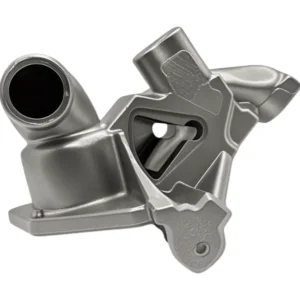
We specialize in “problem parts”—intricate designs that are difficult or impossible to produce through forging or machining alone. Precision investment casting allows us to create complex internal structures, thin walls, and undercuts as a single piece. By achieving a near net shape, we significantly reduce the need for secondary processing.
Cost-Effective Manufacturing
Choosing investment casting saves time and material. By casting parts close to their final dimensions, we minimize waste and drastically cut down on machining hours. This makes our process highly cost-effective for both low and medium-volume production runs.
Key Benefits at a Glance:
| Feature | Benefit |
|---|---|
| Material Efficiency | Reduced scrap metal and lower material costs. |
| Design Freedom | Ability to cast complex, thin-walled geometries. |
| Surface Quality | Smooth finish (Ra 3.2–6.3 µm) requiring less polishing. |
| Reduced Machining | Near net shape reduces post-casting labor. |
Our Investment Casting Process
At Precisionvast, we rely on the Silica Sol process for our stainless investment casting. Unlike the rougher water glass method, Silica Sol allows us to achieve superior surface finishes and tighter dimensional tolerances (typically CT5–CT6) right out of the mold. This lost wax casting stainless steel technique is ideal for complex geometries where precision is non-negotiable.
Here is a breakdown of how we transform raw metal into high-precision components:
Wax Pattern Creation and Assembly
The process begins with creating a precise wax replica of the final part. We inject molten wax into an aluminum mold to form the pattern. Once cooled, these wax patterns are assembled onto a central wax sprue, creating a “tree.” This assembly setup allows us to cast multiple precision investment casting parts in a single pour, improving efficiency for medium-to-high volume orders.
Silica Sol Shell Building
To create the ceramic mold, we dip the wax tree into a high-grade silica sol slurry and coat it with fine sand. We repeat this dipping and drying process multiple times to build a robust ceramic shell. This specific silica sol investment casting method is what gives our stainless parts their exceptionally smooth surface finish, reducing the need for heavy machining later.
Dewaxing and Sintering
Once the shell is fully cured, we place it in an autoclave where steam melts the wax out—hence the name “lost wax.” The hollow ceramic shell is then fired (sintered) at high temperatures. This strengthens the mold and ensures it can withstand the thermal shock of molten metal without cracking.
Melting and Pouring
We melt the specific stainless steel grade—whether it’s 304, 316, or a duplex alloy—in an induction furnace. The molten metal is poured into the pre-heated ceramic shells. Because the mold is hot, the metal flows into thin walls and intricate details easily, ensuring the casting matches the original design perfectly.
Shell Removal and Heat Treatment
After the metal solidifies, we break away the ceramic shell using vibration or water jets. The individual parts are cut from the sprue and the gate areas are ground smooth. To optimize the mechanical properties of the metal, we perform specific heat treatment processes like solution annealing or quenching depending on the alloy’s requirements.
Finishing and Inspection
The final stage involves surface finishing, such as shot blasting, sandblasting, or electropolishing, to achieve the desired aesthetic and texture. Every batch undergoes rigorous inspection, including dimensional checks and non-destructive testing, to ensure every stainless investment casting meets ISO 9001 standards before shipping.
Material Grades We Specialize In
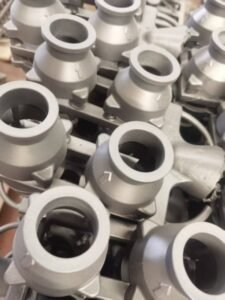
At Precisionvast, we leverage the Silica Sol process to cast a wide variety of alloys, ensuring we meet the exact mechanical and chemical requirements of your project. Our facility is equipped to handle everything from standard custom stainless steel castings to exotic high-performance alloys. We verify every melt with advanced material analysis to ensure compliance with international standards.
Austenitic Stainless Steel (300 Series)
This is the most common category for stainless investment casting due to its excellent corrosion resistance and mechanical properties.
- 304/304L: The standard “18/8” stainless. It offers good corrosion resistance and is widely used in food grade stainless casting and general industrial hardware.
- 316/316L (CF8M): Contains molybdenum for superior resistance to chlorides and acids. This is our go-to for marine stainless steel castings and pharmaceutical applications.
Precipitation Hardening (17-4 PH)
When your parts require high strength without sacrificing corrosion resistance, 17-4 PH investment casting is the ideal choice. This grade can be heat-treated to achieve varying levels of hardness and ductility, making it perfect for aerospace components and high-stress industrial parts.
Duplex Stainless Steel
Duplex stainless steel casting bridges the gap between ferritic and austenitic grades. These alloys offer approximately twice the yield strength of standard austenitic stainless steel and provide exceptional resistance to stress corrosion cracking. They are frequently used in harsh environments like oil and gas processing or desalination plants. For critical applications like stainless steel housings for flow measurement, the superior durability of these grades ensures long-term reliability.
Mechanical Properties Comparison
We help you select the right grade to balance performance and cost. Below is a quick guide to the materials we process most frequently:
| Grade Family | Common Alloys | Key Characteristics | Typical Applications |
|---|---|---|---|
| Austenitic | 304, 316, CF8M | Excellent corrosion resistance, non-magnetic, good toughness. | Marine hardware, food machinery, valve bodies. |
| Precipitation Hardening | 17-4 PH | High strength, good corrosion resistance, heat treatable. | Pump shafts, aerospace fittings, structural gears. |
| Duplex | 2205, 2507 | High yield strength, superior pitting resistance. | Chemical processing, heat exchangers, offshore platforms. |
| Martensitic | 410, 420 | High hardness, wear resistance, magnetic. | Surgical instruments, turbine blades, cutlery. |
Capabilities and Technical Specifications
At Precisionvast, we combine advanced manufacturing technology with decades of expertise to deliver high-quality stainless investment casting solutions. Our facility is equipped to handle the rigorous demands of the US market, ensuring consistency from the first prototype to the final shipment.
Production Capacity and Size
We operate a 4,000 m² facility with an annual production capacity exceeding 700 tons. Whether you need a single complex prototype or a high-volume production run, our precision investment casting process scales to meet your needs.
- Weight Range: We cast components ranging from a few grams up to 75 kg.
- Complex Geometries: Our process excels at creating thin-walled parts and intricate internal structures that are difficult to achieve with other methods.
- Volume: Flexible handling of low-to-medium volume orders and mass production.
Tolerances and Surface Finish
We utilize the Silica Sol investment casting process to achieve superior surface finishes and tight dimensional accuracy. This allows us to produce near net shape stainless parts, significantly reducing the need for secondary processing. However, for features requiring extreme precision, we integrate our internal CNC machining services to meet strict specifications.
Standard Linear Casting Tolerances (ISO 8062 / GB/T6414):
| Dimension (mm) | Tolerance CT5 (mm) | Tolerance CT6 (mm) |
|---|---|---|
| ≤ 10 | ± 0.13 | ± 0.18 |
| 10 – 16 | ± 0.14 | ± 0.20 |
| 16 – 25 | ± 0.15 | ± 0.22 |
| 25 – 40 | ± 0.17 | ± 0.24 |
| 40 – 63 | ± 0.20 | ± 0.28 |
- Casting Grade: Typically CT5 to CT6.
- Surface Finish: Smooth finishes suitable for electropolishing or mirror polishing.
Engineering and Rapid Prototyping
We minimize risk and accelerate time-to-market using advanced engineering tools.
- CAE Simulation: We use Computer-Aided Engineering (CAE) to simulate the casting process before pouring metal. This helps us predict and prevent defects like shrinkage or porosity.
- SLA Rapid Prototyping: For design verification, we offer Stereolithography (SLA) 3D printing. This allows us to deliver physical samples for fit and function testing in as little as 10–15 days.
Value-Added Services for Stainless Investment Casting
We understand that raw castings are often just the starting point. To streamline your supply chain and reduce lead times, Precisionvast operates as a true one-stop shop, delivering fully finished components ready for assembly. By integrating secondary operations directly into our workflow, we eliminate the hassle of managing multiple vendors.
CNC Machining and Assembly Solutions
While our silica sol process achieves tight tolerances (CT5–CT6), some functional areas require the extreme precision that only machining can provide. We offer comprehensive CNC machined investment castings, handling everything from turning and milling to drilling and tapping. Whether you need a simple facing operation or complex geometric dimensioning, our in-house machining ensures the final part fits perfectly.
Surface Finishing and Heat Treatment
Stainless steel is chosen for its aesthetic and functional properties, and our finishing services maximize both. We provide a range of treatments to enhance corrosion resistance and visual appeal:
- Surface Finishing: Options include shot blasting, sand blasting, electropolishing, and mirror polishing for high-end marine or food-grade applications.
- Heat Treatment: We perform solution annealing, precipitation hardening, and tempering to meet specific mechanical property requirements.
Non-Destructive Testing (NDT) and Quality Control
We back every shipment with rigorous inspection protocols to ensure zero defects. Our testing capabilities guarantee that the internal structure and dimensional accuracy meet ISO standards:
- Dimensional Inspection: Verified using advanced CMM (Coordinate Measuring Machine) technology.
- Defect Detection: We utilize X-Ray testing and Magnetic Particle Inspection (MPI) to identify internal porosity or surface cracks without damaging the part.
- Traceability: We provide full material certifications and traceability for every batch, ensuring you know exactly what goes into your products.
Industries and Applications
Our stainless investment casting solutions drive performance across sectors where failure isn’t an option. From sanitary requirements to harsh saltwater environments, we deliver precision components tailored to specific industry standards using our advanced silica sol process.
Fluid Control and Industrial Machinery
We manufacture complex pump and valve components, including impellers, casings, and valve bodies. The superior surface finish of our castings ensures smooth internal passages for efficient fluid flow. While stainless steel is the standard for corrosion resistance in these systems, we also support heavy-duty applications requiring high tensile strength through our alloy steel casting capabilities.
Food and Dairy Processing
Hygiene is critical in food production. We produce food-grade stainless casting parts like mixing blades, connectors, and architectural fittings using 304 and 316 grades. These components feature smooth, polished surfaces to prevent bacterial growth and withstand frequent chemical washdowns.
Marine Hardware
Saltwater demands superior protection. Our marine stainless castings—including cleats, chocks, propellers, and thru-hulls—utilize 316 stainless or Duplex grades. We provide mirror polishing services to ensure maximum corrosion resistance and aesthetic appeal for deck hardware.
Medical and Healthcare
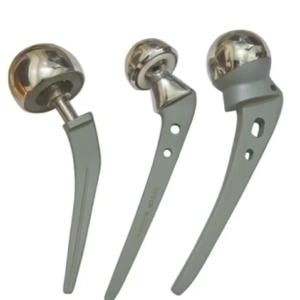
Precision is paramount for medical devices. We cast surgical instruments and biocompatible components, adhering to strict CT5-CT6 tolerances. Our process allows for intricate geometries that minimize the need for secondary machining, essential for cost-effective medical manufacturing.
Automotive and Aerospace
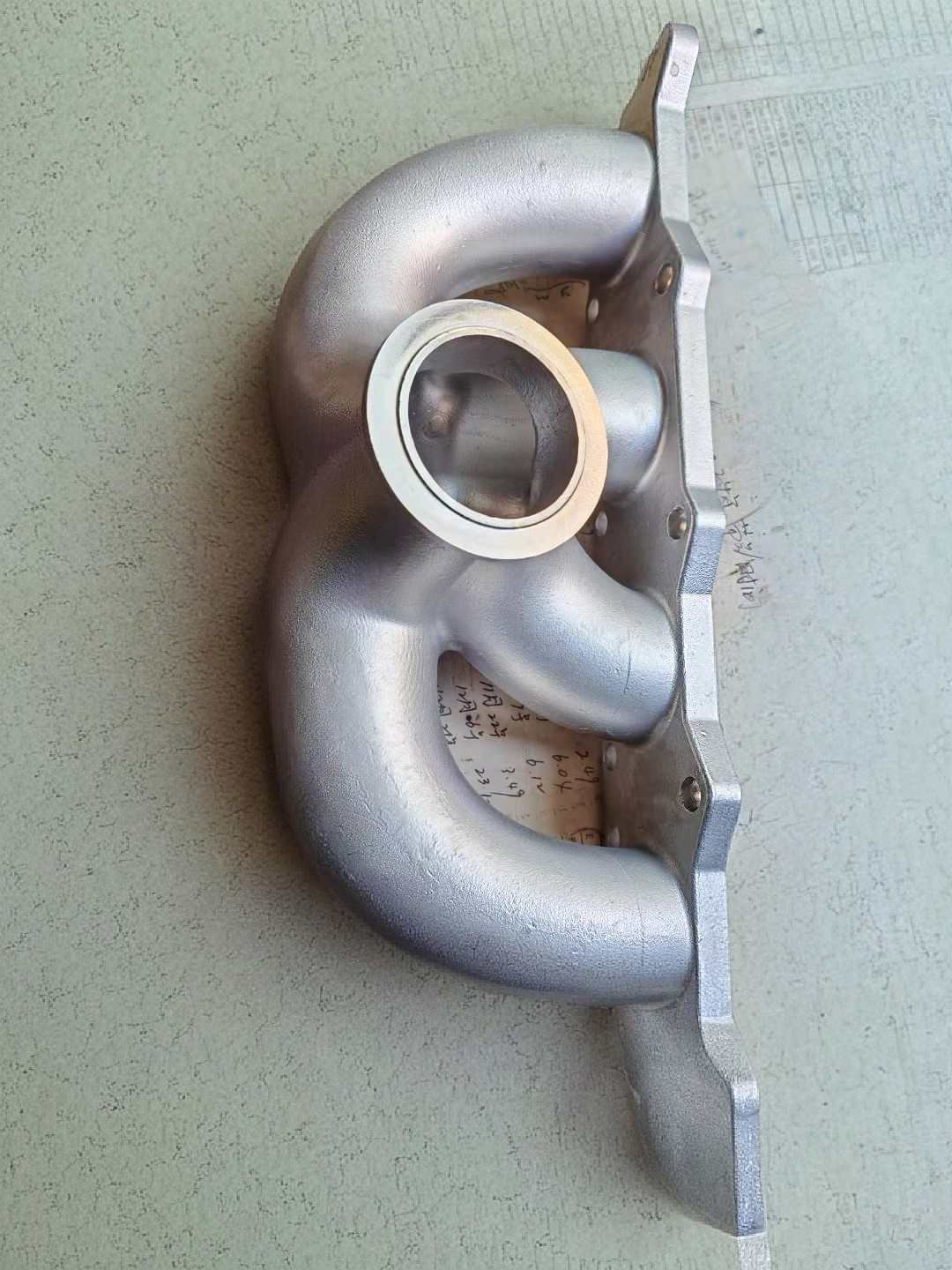
We supply robust structural components, exhaust manifolds, and gear parts. These industries rely on our ability to produce lightweight, near-net-shape parts that maintain structural integrity under high heat and mechanical stress.
Quality Assurance and Certifications
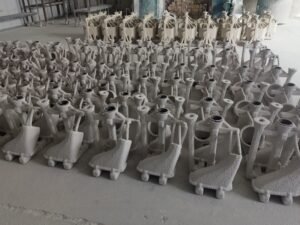
At Precisionvast, we understand that consistent quality is the backbone of your supply chain. Our stainless investment casting production operates under strict ISO 9001 compliance, ensuring that every component meets the rigorous standards expected by the US market. Whether we are pouring 304L or complex Duplex grades, we follow standardized protocols to guarantee repeatability and reliability.
We don’t leave anything to chance. Our facility is equipped with a comprehensive in-house testing lab to verify material properties and dimensional accuracy before any part leaves the factory. We utilize advanced non-destructive testing (NDT) methods, including magnetic particle inspection, to detect surface discontinuities that are invisible to the naked eye, ensuring the structural integrity of safety-critical parts.
Our Quality Commitment Includes:
- Zero Defect Philosophy: We aim for perfection in every precision investment casting run, utilizing CMM (Coordinate Measuring Machines) to verify tight tolerances and geometric accuracy.
- In-House Validation: From spectrometer chemical analysis to mechanical tensile testing, we validate raw materials and finished goods internally.
- On-Time Delivery: We respect your deadlines. Our production management system ensures your custom stainless steel castings arrive exactly when you need them to keep your assembly lines moving.
- Rapid Communication: We guarantee an 8-hour inquiry response time. Our engineering team is always available to discuss technical specifications or project status without delay.
Why Partner With Precisionvast
When you source stainless investment casting from us, you are dealing directly with the manufacturer, not a middleman. Since 2003, Dongying Vast has operated as a dedicated precision investment casting facility in Shandong, eliminating the markups and communication lags often found with trading companies. We provide direct factory pricing and reliable global shipping, ensuring your components arrive on schedule whether you are based in the US or anywhere else in the world.
Expertise in Complex “Problem Parts”
We thrive on the projects that other foundries turn away. Our team specializes in custom stainless steel castings with intricate geometries, thin walls, and complex internal structures. By utilizing the silica sol process, we achieve superior surface finishes and tight tolerances that water glass casting simply cannot match. If you have a difficult design that requires high precision and minimal secondary machining, we have the technical capability to execute it.
Comprehensive Engineering Support
Our goal is to be an extension of your production line. From the moment you submit a drawing, we offer dedicated support to optimize your part for manufacturability.
- Rapid Response: We guarantee a response to inquiries within 8 hours.
- Design Validation: We use CAE casting simulation to predict and prevent defects before pouring metal.
- Cost Efficiency: Our near-net-shape approach maximizes material usage and reduces waste, lowering your total cost per unit.
- One-Stop Solution: From rapid prototyping to final heat treatment and CNC machining, we manage the entire lifecycle of your part.
Frequently Asked Questions
What are the typical lead times for stainless investment casting?
Timeframes depend on the complexity of the design and volume requirements. For initial design validation, our rapid prototyping services using SLA 3D printing can deliver samples in as little as 10–15 days. For full-scale production runs using the silica sol investment casting process, the timeline includes mold creation, casting, and finishing. We pride ourselves on efficiency and provide a detailed schedule with every quote, starting with our promise to respond to inquiries within 8 hours.
What are the minimum order quantities (MOQ)?
We don’t rely on rigid, one-size-fits-all minimums. As a direct manufacturer, we aim to be flexible, supporting both low-to-medium volume orders and large-scale production. Whether you need a small batch of custom stainless steel castings for a specialized machine or thousands of units for automotive assembly, we tailor our production plan to meet your specific supply chain needs.
How does investment casting compare to sand casting or machining?
Precision investment casting offers significant advantages over other methods. Unlike sand casting, which often results in rougher surfaces, our silica sol process achieves a superior surface finish (Ra 3.2–6.3 µm) and tighter tolerances (CT5–CT6). Compared to machining parts from solid blocks, lost wax casting stainless steel creates near-net-shape components, drastically reducing material waste and secondary machining costs. This makes it the smarter choice for complex geometries that would be too expensive or difficult to machine directly.
How do I select the right stainless steel grade for my project?
Choosing the right alloy depends on the operating environment of your part. For general corrosion resistance in food or marine environments, 304 or 316 stainless steel casting is the industry standard. If your application requires high strength and wear resistance, precipitation hardening grades like 17-4 PH investment casting are ideal. For extreme conditions requiring both high strength and superior corrosion resistance, we recommend Duplex stainless steel. If you are weighing different material properties, our guide on stainless steel vs. aluminum for investment casting can help clarify which metal best suits your performance goals.

 German
  English
Rezensionen
Es gibt noch keine Rezensionen.