

The Ultimate Vacuum Casting Metal Guide for High-Precision Alloys
Are you struggling with oxidation, shrinkage, or porosity when casting complex engineering geometries?
You probably already know that when it comes to reactive materials like titanium or high-temperature superalloys, standard open-air pouring simply isn’t an option. But how do you guarantee true metallurgical purity and consistent mechanical properties?
You are in the right place. There is a lot of noise online confusing true metallurgical casting with simple polyurethane resin prototypes. Today, we are clearing that up.
In this comprehensive engineer-focused guide, you will learn the exact science behind vacuum casting metal. We will show you exactly how leveraging hard vacuum environments and inert atmospheres eliminates defects and unlocks the ability to cast advanced superalloys flawlessly.
If you are an engineer, metallurgist, or procurement lead looking to build better parts without internal voids, this guide is for you. Let’s dive right in.
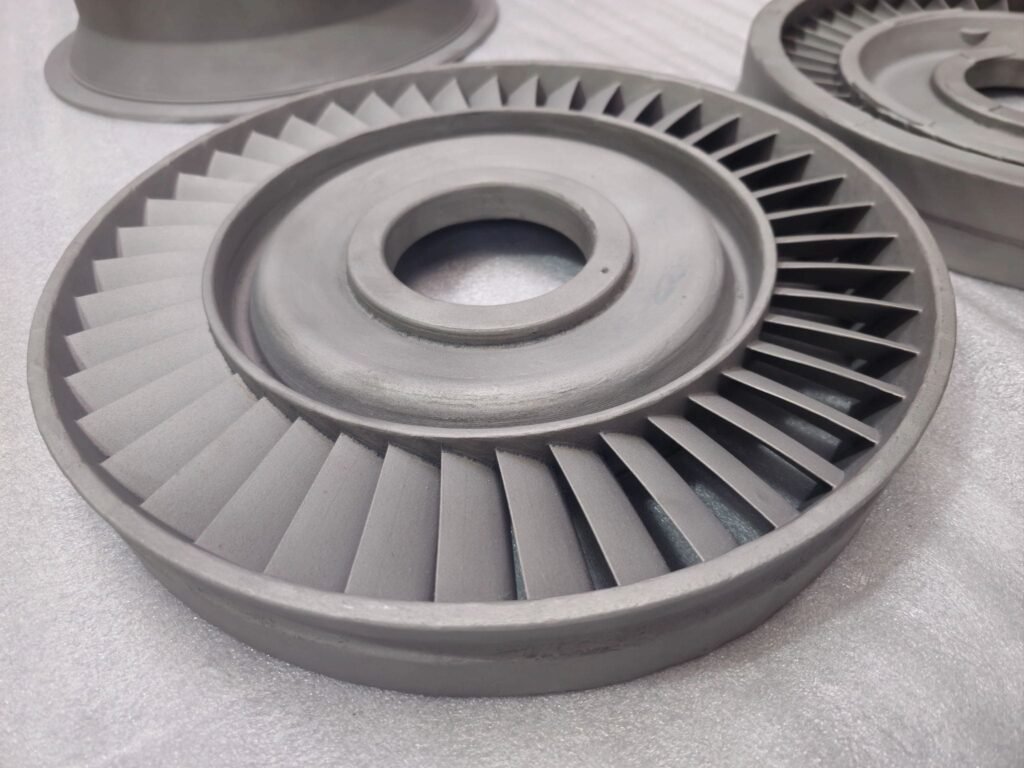
How Vacuum Casting Metal Works: The Physics of Purity
Have you ever dealt with a batch of critical cast parts failing under stress because of internal voids? If you manufacture high-performance components, hidden porosity and structural weaknesses are your worst enemies. In advanced manufacturing, metallurgical integrity is not optional. Let’s look at the physics behind vacuum casting metal and exactly how it solves these common engineering nightmares.
The Core Problem: Atmospheric Contamination
In traditional open-air metal casting, the molten alloy is continuously exposed to the surrounding atmosphere. This standard approach creates two massive risks for high-stakes applications:
- Oxidation & Slag Formation: Highly reactive liquid metals eagerly absorb ambient oxygen and nitrogen. This forms slag and non-metallic inclusions that severely weaken the part’s tensile strength.
- Trapped Gases (Porosity): As the molten metal cools and solidifies in the mold, absorbed gases attempt to escape. When they cannot penetrate the cooling surface, they get trapped inside the material, causing microscopic voids.
This dynamic leads directly to structural defects, uncontrolled shrinkage, and severe porosity, completely compromising the fatigue life and mechanical properties of your final component.
The Vacuum Induction Melting (VIM) Solution
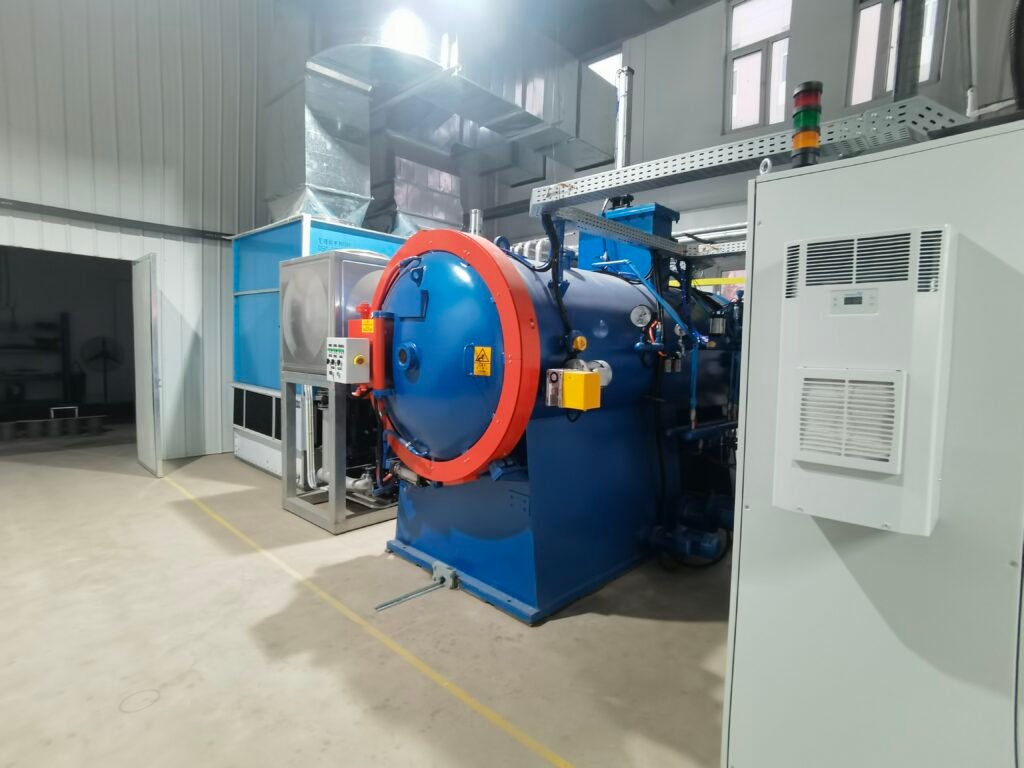
To guarantee absolute metallurgical purity and ensure complete casting porosity prevention, we remove the atmosphere entirely from the equation. Inside a sealed, high-performance vacuum chamber, we utilize Vacuum Induction Melting (VIM).
By melting and pouring the metal in a hard vacuum or under a controlled inert gas metal pouring environment (utilizing an Argon vacuum casting setup), we completely eliminate exposure to atmospheric oxygen, nitrogen, and moisture.
The physics are straightforward but highly effective: without ambient gases to absorb, the metal pours clean. The result is a highly dense, dimensionally stable component with vastly superior fatigue life, yield strength, and surface finish.
Precisionvast’s 14-Step Lost-Wax Vacuum Process
At Precisionvast, we don’t just pour metal; we engineer the entire manufacturing workflow to eliminate failure points. We seamlessly integrate vacuum pouring directly into our precision lost-wax vacuum process (investment casting) to ensure every tight tolerance and strict material specification is met.
Here is the complete breakdown of how our rigorous 14-step methodology guarantees perfection:
- Tooling Design & Machining: Precision aluminum dies are cut based on your CAD data.
- Wax Injection: High-grade wax is injected into the dies to create perfect replica patterns.
- Pattern Assembly (Treeing): Wax patterns are attached to a central sprue to create a casting tree.
- Shell Building: The assembly is repeatedly dipped in advanced ceramic slurries.
- Stuccoing: Fine refractory sand is applied to build a robust, heat-resistant shell mold.
- Dewaxing: The shell is heated in an autoclave to safely melt out the wax.
- Shell Firing: The hollow ceramic mold is baked at high temperatures to cure and strengthen it.
- Pre-heating: The shell is pre-heated to prevent thermal shock during the pour.
- Vacuum Induction Melting (VIM): The raw alloy is melted via electromagnetic induction inside a sealed vacuum chamber.
- Vacuum Pouring: The molten metal is poured into the shell entirely within the vacuum or inert argon environment.
- Cooling & Knockout: After controlled cooling, the ceramic shell is broken away from the metal.
- Cut-off & Grinding: Individual parts are cut from the sprue and gating marks are ground smooth.
- Heat Treatment: Parts undergo specialized thermal cycles to optimize their mechanical properties.
- Post-Processing & CMM Inspection: Finally, we utilize strict Non-Destructive Testing (NDT)—such as X-Ray and penetrant testing—alongside Coordinate Measuring Machines (CMM) to verify absolute geometric and structural perfection.
Ideal High-Performance Materials for Vacuum Metal Casting
Not every project requires a specialized atmosphere, but for certain high-performance metals, it is the only way to get the job done right. We rely on the vacuum casting metal process to handle materials that are highly sensitive to contamination.
- Titanium Alloys (e.g., Ti-6Al-4V): At melting temperatures, titanium is highly reactive and absorbs oxygen like a sponge. If poured in open air, it suffers from “alpha case” embrittlement. For reliable titanium alloy casting, a vacuum environment is absolutely mandatory.
- High-Temperature Superalloys (Inconel, Hastelloy): Components designed for extreme environments—like aerospace engines or industrial turbines—cannot afford a single microscopic flaw. We utilize our high-temperature alloy foundry setup to remove airborne impurities, guaranteeing strict metallurgical purity.
- Stainless & Duplex Stainless Steel: Vacuum pouring isn’t just for exotic aerospace metals. Using a vacuum-assist process for standard stainless steels dramatically improves the mechanical properties and helps us consistently hit tighter investment casting tolerances with a flawless surface finish.
Vacuum Casting Metal vs. Traditional Open-Air Methods
When planning your next manufacturing run, choosing between vacuum casting and traditional open-air casting is a critical decision. It almost always comes down to the required performance of the part versus your project budget.
| Feature | Vacuum Casting Metal (VIM) | Traditional Open-Air Casting |
| Atmosphere | Sealed Vacuum or Inert Gas (Argon) | Ambient Open Air |
| Porosity Risk | Extremely Low (Virtually void-free) | Moderate (Higher risk of trapped gas) |
| Ideal Materials | Titanium, Superalloys, High-Grade Steel | Carbon Steels, Aluminum, Standard Alloys |
| Mechanical Integrity | Superior density, fatigue, and yield strength | Standard industrial durability |
| Equipment Cost | Higher (Requires specialized chambers) | Lower (More cost-effective for standard parts) |
| Primary Use Cases | Aerospace, Medical Implants, Turbines | Automotive, Commercial, Heavy Machinery |
Core Industrial Applications
When standard foundry methods cannot meet strict safety and performance specs, Precisionvast steps in. Our vacuum casting metal process is the go-to manufacturing solution for high-stakes industries across the United States.
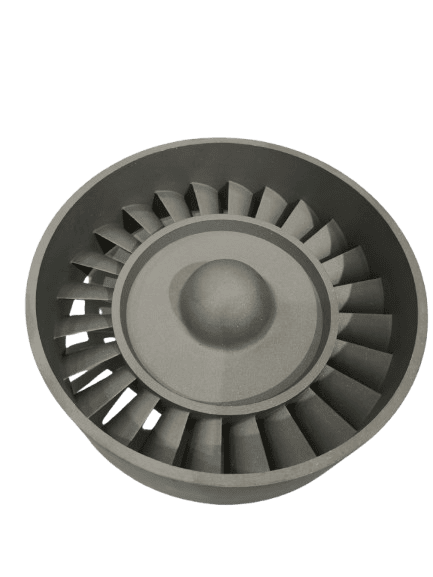
- Aerospace Metal Casting: Flight-critical applications demand flawless internal structures and zero porosity. We manufacture turbine blades, impellers, and structural brackets that deliver the extreme strength-to-weight ratios required for modern aviation.
- Medical Equipment & Implants: The medical sector requires absolute compromises on metallurgical purity. We cast biocompatible joint implants and highly precise surgical tools that easily pass strict FDA and healthcare industry standards.
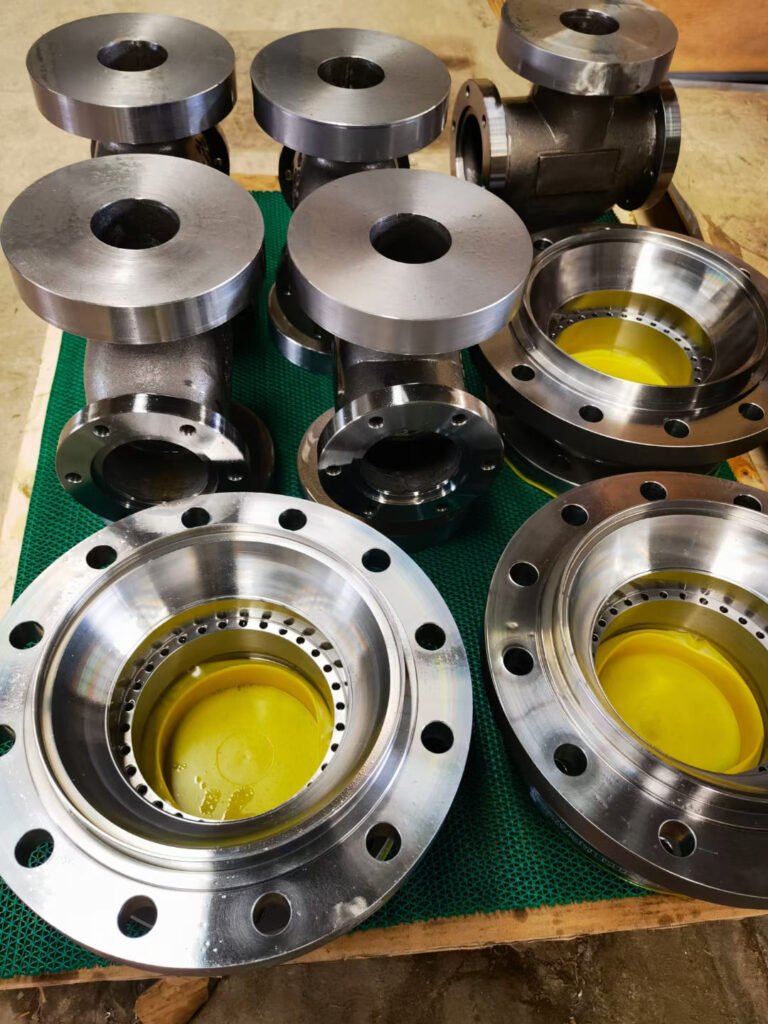
- Marine & Energy: High-performance pump impellers, turbine components, and corrosion-resistant marine hardware take a constant beating. Our vacuum processes handle the specialized superalloys needed for the most punishing high-heat and high-stress environments.
The Role of CAE Simulation in Defect-Free Casting
Before a single drop of alloy is poured, we rely on Computer-Aided Engineering (CAE) to get it right the first time. At Precisionvast, we know that a high-end vacuum casting metal project demands exact science, not trial and error.
By running the entire metallurgical vacuum process through advanced simulation software (like Magmasoft or ProCAST), we predict exactly how the molten metal will flow, solidify, and cool.
- Eliminates Defects: We pinpoint and resolve potential shrinkage, air pockets, and thermal tearing on-screen before physical production starts.
- Optimizes Gating Systems: Simulation lets us design the perfect runner and gating channels, ensuring a smooth, turbulence-free fill in a controlled vacuum environment.
- Rescues “Problem Parts”: For components with complex wall thicknesses or extreme precision requirements, we adjust the digital parameters until the virtual cast is completely flawless.
Why Partner with Precisionvast for Vacuum Casting Metal?
Finding the right partner means balancing engineering precision with reliable production power. At Precisionvast, our custom metal foundry services are built to meet the strict demands of the global market.
- Factory-Direct Scale: Our Dongying foundry operates with a 700-ton annual capacity. We handle everything from initial metal rapid prototyping to high-volume manufacturing.
- Uncompromising Quality Assurance: We back our work with hard data. Our facility is ISO9001 certified, and we inspect critical runs using X-Ray, Magnetic Particle inspection, and advanced CMM verification.
- Rapid B2B Response: Sourcing should not hold up your engineering timeline. We guarantee a fast, 8-hour turnaround on all custom B2B quotes.
Vacuum Casting Metal FAQs
Does Precisionvast use vacuum casting for high-temperature alloys?
Yes. We rely on Vacuum Induction Melting (VIM) specifically to handle high-temperature superalloys (like Inconel) and highly reactive metals like titanium. By stripping oxygen out of the melting environment, we lock in the exact metallurgical purity needed for extreme industrial applications.
What is the difference between vacuum casting metal and vacuum polyurethane casting?
They share a similar name, but the end goals are entirely different. Vacuum casting metal melts industrial-grade alloys inside a specialized vacuum furnace to manufacture permanent, high-strength structural parts. Vacuum casting polyurethane is strictly a rapid prototyping technique that uses silicone molds and liquid plastics to simulate the look of injection-molded parts. If your project demands serious mechanical integrity, metal is the only way to go.
How does vacuum melting prevent casting porosity?
In a traditional open-air pour, ambient air gets trapped in the molten metal, forming microscopic bubbles (porosity) as the part cools. By running the melting and pouring phase inside a vacuum—often protected by an inert gas like Argon—we extract those gases before the metal enters the mold. This is the industry standard for casting porosity prevention, guaranteeing a completely dense, void-free internal structure.
Is vacuum casting metal more expensive than traditional casting?
Because it requires specialized vacuum chambers, high-tech induction furnaces, and longer setup times, vacuum casting has a higher initial cost than open-air casting. However, for high-stakes applications, the cost is offset by the elimination of part failure, reduced scrap rates, and the ability to use advanced lightweight alloys that open-air foundries cannot process.
 German
  English