

What is Green Sand Made Of?
At PrecisionVast, we recognize that choosing the right manufacturing path requires a deep understanding of foundry materials. While our facility focuses on high-precision investment casting (lost-wax), understanding the composition of sand casting green sand is essential for engineers comparing molding methods. Unlike the ceramic shells we utilize for intricate superalloy and stainless steel parts, green sand is an aggregate mixture defined by its moisture content rather than its color.
Key Takeaways: What You Need to Know About Green Sand
- Composition: Green sand is primarily made of silica sand (75-85%), bentonite clay (binder), and water (moisture).
- The “Green” Meaning: The name refers to the moisture content in the sand mixture, not its color.
- Best For: High-volume, heavy, and simpler parts (like engine blocks) where surface finish and tight tolerances are not critical.
- The Precision Alternative: For complex geometries, thin walls, and a smooth surface finish right out of the mold, investment casting (lost-wax) is the superior, cost-effective choice.
The Role of Silica Sand
The primary component of the green sand mixture is silica sand (SiO2), typically making up 75% to 85% of the total volume. In the broader casting industry, silica serves as the refractory base that must withstand the intense thermal shock of molten metal without fusing or degrading. While our investment casting process uses specialized ceramic slurries to achieve tight tolerances, silica sand provides the necessary porous structure in green sand molds, allowing gases to escape during the pour.
Bentonite Clay as a Binder
To transform loose grains into a moldable shape, bentonite clay is introduced as the bonding agent. Acting as the “glue” of the system, bentonite coats the sand grains and provides the cohesive strength required to hold the mold cavity’s shape once the pattern is removed. This differs significantly from our lost-wax process, where a hard ceramic shell is built around a wax pattern to ensure superior dimensional stability.
Water and Moisture Control
The term “green” refers to the moisture present in the mold, not the hue. Water is the activator that allows the bentonite clay to become plastic and adhesive. Precise moisture control is critical; too much water can cause porosity defects like blowholes (due to steam), while too little results in a weak mold that may collapse. This delicate balance contrasts with our dry, fired ceramic molds, which are designed to eliminate moisture-related defects entirely.
Additives for Surface Finish
To improve the surface finish of a green sand casting, foundries often introduce carbonaceous additives like sea coal (powdered coal) or cornstarch. These additives create a reducing atmosphere in the mold cavity, preventing the metal from penetrating the sand grains. However, even with these additives, the surface finish of green sand components generally remains rougher compared to the near-net-shape surface quality we achieve through investment casting and subsequent treatments like shot blasting and polishing.
Step-by-Step Green Sand Casting Process
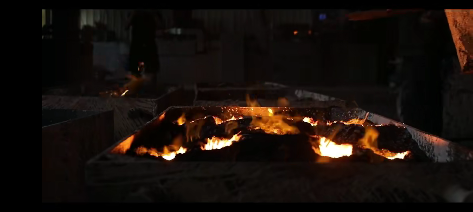
Understanding the workflow of sand casting green sand helps in evaluating whether this traditional method suits your project or if a higher-precision alternative is necessary. While our facility focuses on advanced investment casting, the green sand process remains a staple in the foundry industry for simpler, high-volume parts.
Pattern Making Basics
Every casting starts with a master model. In green sand casting, we use a reusable pattern—typically made from wood, plastic, or metal—to create the impression in the sand. This differs significantly from the sacrificial wax models used in investment casting tooling techniques, where the pattern is destroyed during the process. The pattern must be slightly larger than the final part to account for metal shrinkage during cooling.
Preparing the Cope and Drag
The molding process involves a two-part box system called a flask:
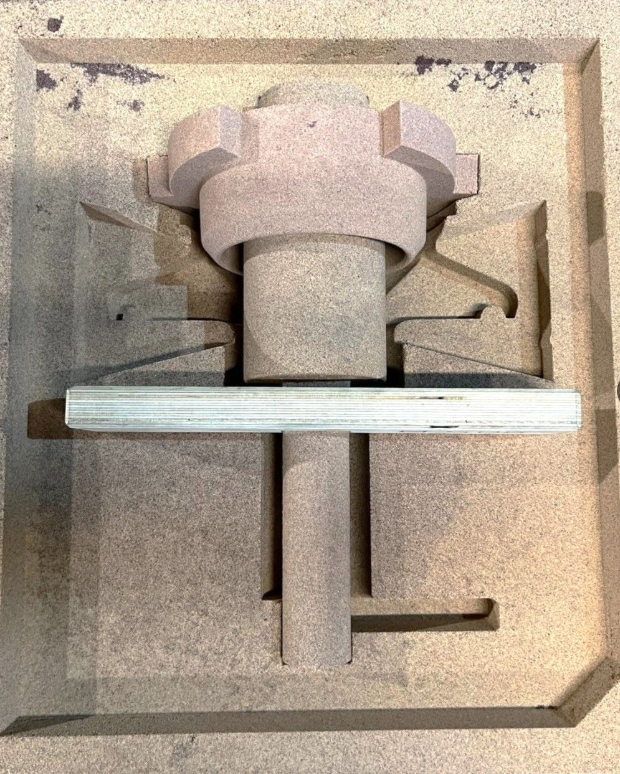
- The Drag: The bottom half of the flask is placed over the pattern board, filled with the green sand mixture, and mechanically rammed to ensure the sand is tight and compact.
- The Cope: The top half is prepared similarly. Once both halves are packed, the pattern is carefully removed, leaving a hollow cavity that matches the desired part geometry.
Cutting the Gating System
Before the mold is closed, a network of channels—known as the gating system—must be established. This includes the sprue (where metal enters), runners, and gates that guide the flow into the mold cavity. Proper gating is critical to prevent turbulence and sand wash, ensuring the molten metal fills the void smoothly without trapping air.
Pouring, Cooling, and Shakeout
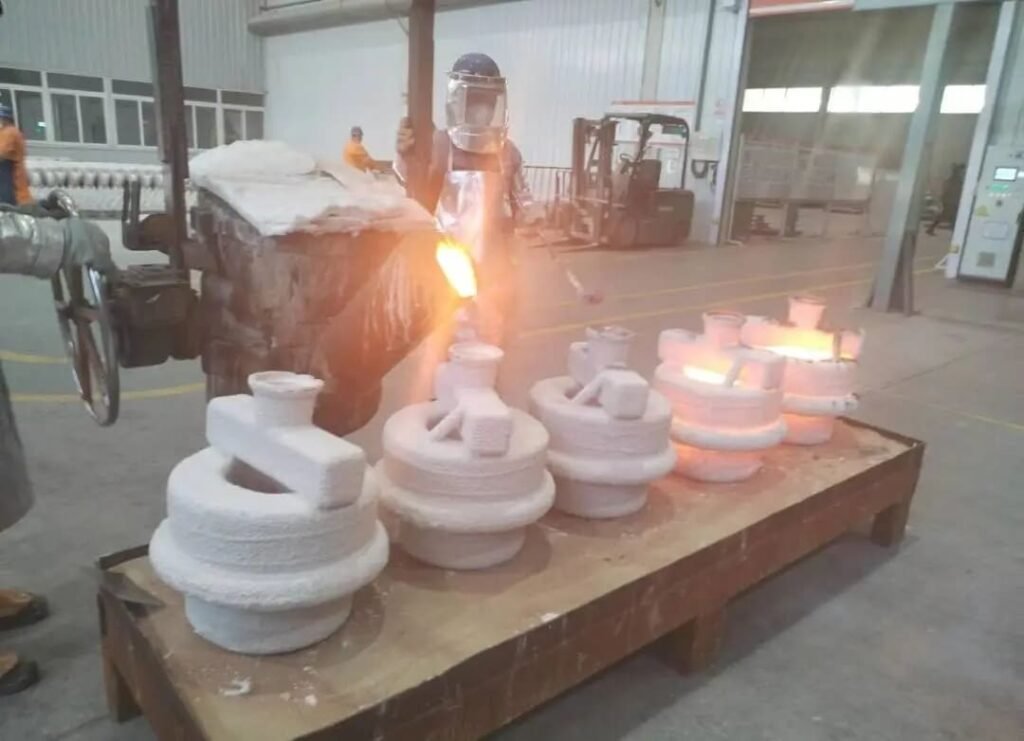
Once the cope and drag are clamped together, the molten alloy is poured into the mold. After the metal solidifies and cools, the casting enters the shakeout phase. Here, the sand mold is broken apart to reveal the rough metal part. The used sand is then sent through a sand reclamation cycle, where it is screened, cooled, and reconditioned with fresh binders and water to be used again in future molds.
Green Sand vs. Investment Casting and No-Bake
When evaluating manufacturing options, understanding the trade-offs between sand casting green sand, no-bake methods, and our specialty—precision investment casting—is critical for your bottom line. While green sand is the workhorse of the foundry world for heavy, simple parts, it often falls short when complex geometries and tight tolerances are required.
Quick Comparison: Green Sand Casting vs. Precision Investment Casting
| Feature | Green Sand Casting | Precision Investment Casting (PrecisionVast) |
| Primary Material | Silica sand, bentonite clay, water | Wax patterns, high-grade ceramic slurry |
| Surface Finish | Rough / Grainy (250-500 RMS) | Smooth / Near-Net Shape (63-125 RMS) |
| Dimensional Tolerance | Loose (requires machining allowances) | Extremely Tight (reduces secondary machining) |
| Design Complexity | Limited (difficult with thin walls) | High (perfect for intricate internal passages) |
| Initial Tooling Cost | Lower (wood/metal patterns) | Higher upfront (durable aluminum dies), high ROI |
| Ideal Applications | Manhole covers, pump housings, heavy iron | Aerospace, medical devices, precision valves |
Cost and Surface Finish Comparison
The primary draw of sand casting green sand is the lower initial material cost. The mixture of silica sand, clay, and water is inexpensive and reusable. However, this method typically results in a rougher surface finish, often described as having a “sandpaper” texture. This usually necessitates extensive secondary machining to get the part to spec.
In contrast, our investment casting process delivers a superior, smooth finish right out of the mold. While the per-unit casting cost might be higher than green sand, the dramatic reduction in machining time often makes it cheaper overall for complex components. If you are looking for parts that require minimal post-processing, why stainless steel investment casting is beneficial becomes clear when you see the difference in surface quality.
- Green Sand: Rough finish (250-500 RMS), lower casting cost, higher machining cost.
- No-Bake: Better finish than green sand, higher material cost (resins are expensive).
- Investment Casting: Excellent finish (63-125 RMS), reduces or eliminates machining.
High Volume vs. High Precision
Green sand casting is optimized for speed and high volume. The sand mold can be created quickly using automated equipment, making it ideal for simple parts like manhole covers or brake rotors where dimensional accuracy is not the primary concern.
However, when you need high precision, investment casting is the superior choice. We utilize advanced engineering and CAE simulation to minimize defects and optimize structural integrity, achieving tolerances that sand casting green sand simply cannot hold. For industries like aerospace or medical equipment, where a fraction of a millimeter matters, relying on the coarser nature of a green sand mold cavity is a risk. We leverage advanced technologies revolutionizing metal casting to ensure every batch meets strict ISO9001 standards.
Tooling Cost Differences
Tooling is a major factor in your ROI calculation:
- Green Sand: Patterns are typically made of wood, plastic, or metal. They are generally cheaper to produce but wear out over time due to the abrasive nature of the sand ramming process.
- Investment Casting: We use aluminum dies to inject wax patterns. While the upfront tooling cost can be higher than a simple sand pattern, these molds are incredibly durable and maintain precision over thousands of cycles.
If your project involves complex internal passageways or thin walls, green sand often requires expensive cores and draft angles that complicate the design. Investment casting allows for intricate designs without the limitations of a split pattern or the draft angles required to remove a pattern from packed sand.
Pros and Cons of Green Sand Casting
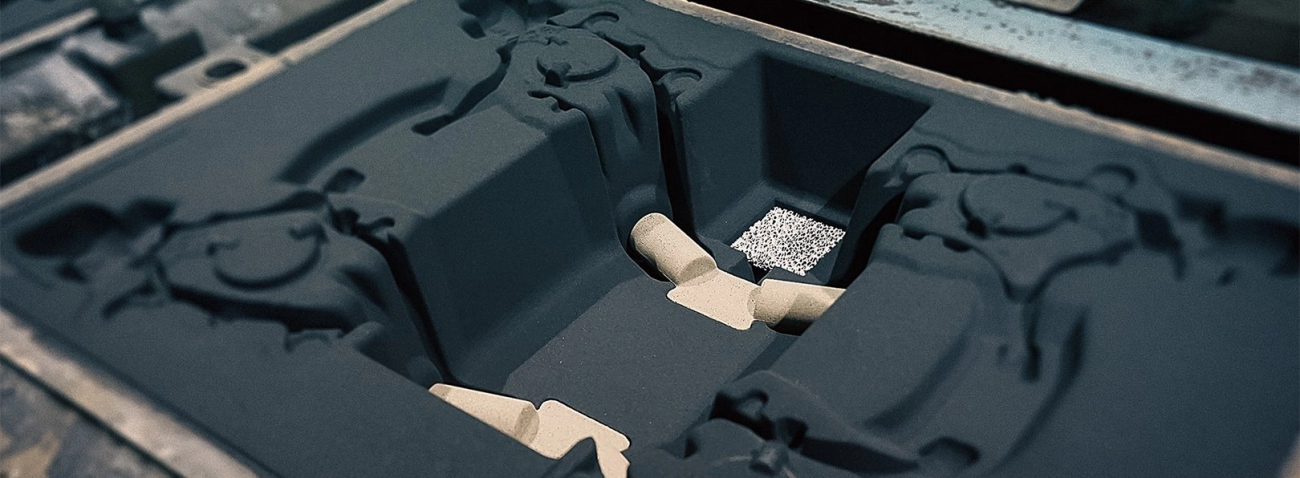
When evaluating manufacturing options, sand casting green sand remains a popular choice for specific types of projects, primarily due to its economic benefits. However, it is crucial to balance these cost savings against the physical limitations of the process, especially when compared to the precision investment casting we specialize in.
What Metals Are Commonly Cast in Green Sand?
Green sand molds are highly versatile when it comes to material compatibility. They are most frequently used to cast ferrous metals like cast iron and carbon steel, as well as some non-ferrous metals like aluminum and bronze. The high heat capacity of the silica and clay mixture handles the molten metal well.
However, when working with high-performance alloys—such as stainless steel, titanium, or specialized superalloys—the green sand process often introduces unwanted impurities or porosity. At PrecisionVast, our investment casting process utilizes stable, inert ceramic shells. This makes it the ideal method for pouring highly reactive or high-temperature alloys, ensuring metallurgical purity and superior mechanical properties.
Cost-Efficiency and Speed
The biggest advantage here is the price tag. The “green” in the name refers to the moisture in the sand, not the color, and this mixture is highly reusable. Because the sand can be reclaimed and recycled essentially forever, material costs stay low.
- Low Tooling Costs: Patterns are generally cheaper to make than the metal dies used in die casting or the complex wax injection molds we use for high-precision work.
- Fast Lead Times: For simple geometries, getting from a pattern to a finished mold is a quick process, allowing for rapid production of rough prototypes.
Versatility with Ferrous Metals
Green sand molds are robust. They can withstand the high pouring temperatures required for ferrous metals like iron and steel without breaking down prematurely. This makes the method a standard for heavy, non-critical components like engine blocks, manhole covers, and pump housings. While we focus on top heat-resistant metals for high-temperature durability using investment casting for superior structural integrity, green sand is often sufficient for bulkier parts where internal porosity is less of a concern.
Surface Finish Limitations
This is where the trade-off becomes obvious. The surface finish of a green sand casting is rough and grainy.
- Texture: The texture of the sand grains is transferred directly to the metal, resulting in a surface that feels like sandpaper.
- Cleanup: To get a smooth surface, significant mechanical finishing (grinding or machining) is almost always required. In contrast, our investment casting process produces a near-net shape with a smooth finish right out of the shell, reducing the need for aggressive post-processing.
Tolerance Issues
If your blueprint demands tight tolerances, sand casting green sand will struggle to deliver. As the molten metal is poured, the moisture in the sand turns to steam, and the sand itself can shift or expand. This movement leads to dimensional variations.
- Machining Allowance: You must design parts with thick walls and extra material (machining allowance) to account for these inaccuracies.
- Wall Thickness: Thin walls are difficult to cast because the sand draws heat away too quickly, potentially causing the metal to freeze before filling the mold.
For projects requiring complex geometries, thin walls, or strict ISO-certified quality control, the unpredictability of green sand is often a dealbreaker, which is why engineers turn to precision investment casting for critical components.
Troubleshooting Common Defects in Sand Casting Green Sand
Even with a well-prepared sand casting green sand setup, foundry defects can still ruin a production run. Because the mold relies on moisture and clay, controlling the environment is everything. Here is how we address the most frequent issues on the foundry floor.
Preventing Blowholes
Blowholes are frustrating porosity defects caused by trapped gas or steam. When the moisture in the green sand vaporizes during the pour, that gas needs an immediate exit.
- The Fix: Ensure the sand mixture is not overly wet and improve the physical venting channels within the mold cavity.
Fixing Sand Wash
Sand wash happens when fast-moving molten metal physically erodes the sand walls, leaving ugly, excess material on the final part.
- The Fix: We strengthen the mold by optimizing the bentonite clay binder ratio and redesigning the gating system to slow down the turbulent metal flow.
Avoiding Scabs and Rat Tails
These surface defects occur when the silica sand expands under extreme heat, causing the mold surface to crack, flake, or buckle inward.
- The Fix: Introducing combustible additives like coal dust into the mix helps absorb this thermal expansion, keeping the surface finish intact.
The Importance of Permeability
Permeability is simply the sand’s ability to let gases escape. If the sand is packed too tightly in the flask, permeability drops, gas gets trapped, and defects multiply. Balancing high compressive strength with adequate permeability is the most critical balancing act in this process.
For projects where these recurring moisture and gas defects cause too much scrap, we often re-evaluate the manufacturing method. Understanding these inherent limitations makes it clear how precision casting improves the quality of carbon steel parts by utilizing a completely moisture-free ceramic shell to eliminate gas defects entirely.
Choosing the Right Casting Method
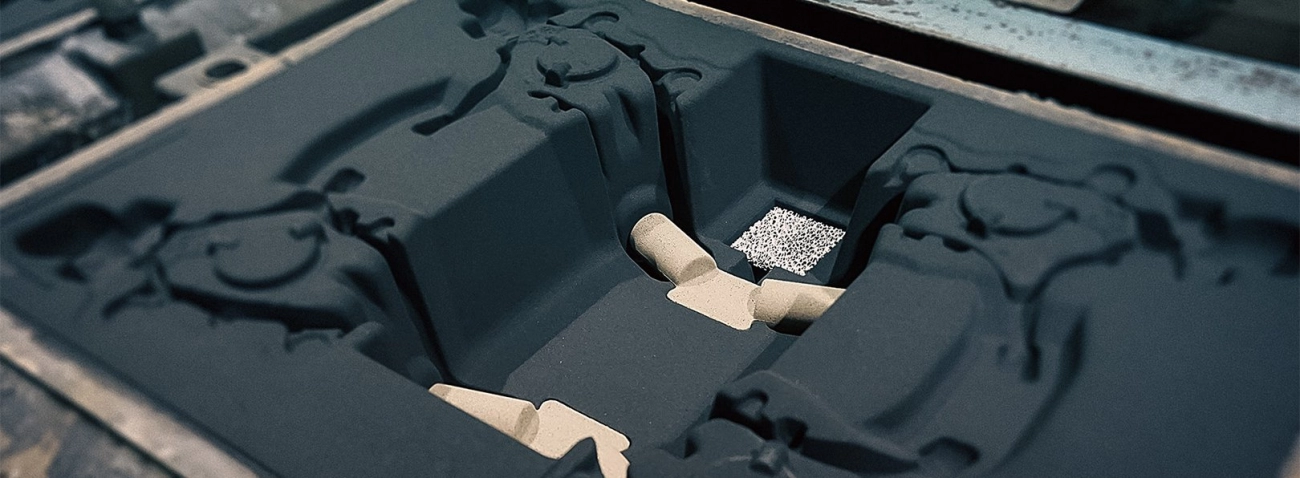
Deciding between sand casting green sand processes and precision investment casting often comes down to the specific demands of your blueprint. While we specialize in high-precision investment casting, we understand that every project has different requirements regarding surface finish, tolerance, and volume.
Best Use Cases for Green Sand
Green sand casting remains a staple in the industry for specific types of components. It is generally the go-to method when:
- Size Matters: You are producing massive parts like engine blocks, heavy machinery bases, or large pipe fittings that exceed the size limitations of investment casting shells.
- Finish is Secondary: The surface texture is allowed to be rough, and cosmetic appearance is not a priority.
- Lower Precision: The application does not require tight dimensional tolerances, or you plan to machine every surface extensively afterward.
When to Upgrade to Precision Casting
Many of our clients come to us when they hit the limitations of sand casting. You should consider upgrading to our investment casting process if:
- Complex Geometries: Your design includes thin walls, undercuts, or intricate internal passages that sand molds simply cannot form accurately.
- Reduced Machining: You want a “near-net shape” part. Our process delivers tight tolerances that often eliminate the need for secondary machining, saving time and money.
- Superior Surface Finish: You need a smooth, professional finish right out of the mold, which is critical for medical equipment, food machinery, and door hardware.
- Advanced Materials: You are working with specialized alloys. Investment casting is particularly effective when you need to select the best properties of heat-resistant metals or superalloys that require the stability of a ceramic shell rather than a sand mold.
Frequently Asked Questions
Why is the sand called green?
The term “green” in sand casting green sand refers to the moisture content (water) present in the mold mixture, not the actual color of the sand. The presence of moisture allows the sand to hold its shape during the pouring process. In contrast, our precision investment casting process utilizes a dry ceramic shell method. By eliminating moisture from the mold material, we significantly reduce the risk of gas defects and porosity, ensuring a denser and more reliable metal component.
What is the surface finish like?
Green sand casting typically produces a rough, granular surface texture due to the sand grains leaving an impression on the metal. This often requires additional machining to smooth out. If your project demands a superior, smooth finish right out of the mold, investment casting is the better alternative. We achieve tight tolerances and high-quality surfaces that are ideal for complex alloy steel casting applications, minimizing the need for extensive post-casting surface treatments.
Is green sand casting expensive?
Generally, green sand casting has lower initial tooling costs, making it an economical choice for simple, low-precision parts. However, the “hidden” costs often come from the secondary machining and finishing required to bring the part up to spec. While our investment casting process might have higher initial tooling precision, it often proves more cost-effective for complex parts because we deliver near-net-shape components. Our “one-stop solution” approach—from engineering blueprints to the final product—reduces the total manufacturing cycle and eliminates the heavy machining costs associated with rougher casting methods.
Ready to Elevate Your Manufacturing Quality? Choosing between sand casting green sand and precision investment casting ultimately dictates the quality, cost, and lead time of your final product. If you are struggling with poor surface finishes, inconsistent tolerances, or high machining costs from your current sand cast parts, it’s time to explore a more precise solution.
At PrecisionVast, we specialize in transforming complex designs into reality through our state-of-the-art investment casting facility.
👉 [email protected] to request a quote or discuss how our lost-wax process can improve your components and lower your overall production costs.
 German
  English