
Investment Casting Tooling
Precision Investment Casting Tooling & Die Manufacturing
At Precisionvast, we specialize in the engineering and fabrication of high-performance investment casting tools (wax injection dies). Our tooling is the foundation of casting excellence, designed to capture intricate geometries with micron-level accuracy. By integrating advanced CAD/CAM technology and premium materials, we ensure that every wax pattern is a perfect replica of your design.
Advanced Tooling Solutions for Complex Geometries
Our toolmaking process is engineered to handle the most demanding part designs, including internal undercuts, thin walls, and complex curves:
High-Precision Injection Dies: CNC-machined from high-grade aluminum or tool steel to ensure thermal stability and long-term dimensional repeatability.
Complex Core Technology: Expert design of soluble cores and collapsible inserts for parts with intricate internal channels.
Rapid Tooling Options: Utilizing 3D-printed patterns or quick-change inserts for low-volume prototypes and shortened lead times.
Why Our Toolmaking Defines Casting Quality
The quality of the final metal part starts with the precision of the mold. Our advanced techniques provide:
Superior Dimensional Stability: Our tools are designed with calculated shrinkage rates to meet ISO 8062 standards.
Enhanced Production Efficiency: Multi-cavity tool designs and optimized cooling channels reduce cycle times and lower per-part costs.
Extended Tool Life: High-wear resistant surfaces ensure thousands of consistent injections, providing excellent ROI for high-volume production.
What is Investment casting tooling?
Precision Investment Casting Tooling: The Foundation of High-Quality Castings
Investment casting tooling—often referred to as wax pattern dies—is the most critical element in the lost wax process. At Precisionvast, we engineer high-performance tooling that serves as the blueprint for precision. Our advanced tool-making process ensures that even the most complex geometries are captured with micron-level accuracy, providing the repeatable quality required for aerospace, medical, and industrial applications.
Why Precision Tooling is Essential
In investment casting, the quality of the final metal part is determined by the integrity of the initial wax pattern. Our engineering-first approach to tooling includes:
Complex Geometry Support: Utilizing multi-part dies and soluble cores to create intricate internal passages and undercuts that other processes cannot achieve.
Dimensional Accuracy: Every tool is CNC-machined to exacting tolerances, accounting for specific alloy shrinkage rates to ensure a near-net-shape final product.
Surface Integrity: High-polish mold cavities result in wax patterns with superior surface finishes (Ra 3.2 or better), reducing the need for secondary finishing.
Our Tooling Engineering & Manufacturing Process
We combine artisan expertise with digital precision to minimize lead times and maximize tool life:
CAD/CAM Optimization: We perform Design for Manufacturability (DFM) reviews on every project to optimize gating and cooling channels.
Material Selection: Offering tooling in high-grade Aluminum (7075) for rapid prototyping and Tool Steel for high-volume, long-cycle production runs.
Integrated Testing: Every die undergoes rigorous “Sample Wax” validation to verify dimensions before moving to full-scale ceramic shell production.
In the design phase of tooling for investment casting, precision is paramount. Every tool is crafted to replicate the final product’s exact specifications, taking into account dimensions, tolerances, and surface finish. The design must also consider the peculiarities of the casting process, including the flow of molten metal and the need for vents and risers to ensure quality casting
The Challenge of Abrasive Design
Engineering Solutions for Complex Investment Casting Tooling
Mastering investment casting requires overcoming critical design challenges at the tooling stage. At Precisionvast, our engineering team utilizes advanced simulation and precision design to mitigate variables like thermal contraction and mold release, ensuring every casting is “Right First Time.”
1. Precision Shrinkage Compensation
One of the most complex variables in investment casting is the dimensional change that occurs during metal solidification and cooling.
Predictive Modeling: We use sophisticated software to predict shrinkage rates across different alloys (e.g., Stainless Steel vs. Aluminum), which can vary significantly.
Oversized Tooling Design: Our designers engineer wax injection dies with precise “shrink factors” built into the geometry, ensuring the final, cooled metal part matches your CAD model perfectly.
Metallurgical Accuracy: We account for both wax shrinkage and metal contraction to maintain strict ISO 8062 tolerances.
2. Optimized Parting Lines & Draft Angles
To ensure the integrity of the wax pattern and the final cast, the tooling must allow for seamless ejection without surface damage.
Parting Line Strategy: We carefully plan the placement of parting lines to minimize “flash” and ensure aesthetic quality on visible surfaces.
Draft Angle Engineering: For deep cavities or vertical walls, we apply optimized draft angles to facilitate easy removal. In “Zero-Draft” scenarios, we utilize specialized collapsible cores or sliding inserts.
Surface Protection: Proper tool design prevents “drag marks” or distortion during the ejection of the wax pattern, preserving the Ra 3.2 surface finish.
3. Advanced Mold Flow & Ejection
Beyond shrinkage and release, we address the fluid dynamics of the wax injection:
Air Venting: Strategic vent placement to prevent “short shots” or air entrapment in the wax pattern.
Thermal Balance: Designing cooling channels within the tool to ensure uniform wax solidification, which prevents internal voids.
Investment Casting Tooling: Material Selection & Engineering
The longevity and precision of a casting project depend entirely on the material integrity of the wax injection die. At Precisionvast, we select tooling materials based on a rigorous analysis of production volume, part complexity, and required dimensional stability.
Choosing the right substrate ensures the tool can withstand the thermal cycles and clamping pressures of the injection process without deforming.
1. High-Grade Aluminum Tooling (Best for Prototyping & Mid-Volume)
Aluminum is the industry standard for investment casting dies due to its excellent thermal conductivity and machinability.
Preferred Grade: We typically utilize 7075-T6 Aluminum, offering high strength and superior wear resistance compared to standard alloys.
Benefits: Faster lead times, lower initial cost, and rapid heat dissipation, which shortens the wax injection cycle.
Ideal For: Bridge production and orders ranging from 100 to 10,000 units.
2. Hardened Tool Steel (Best for High-Volume & Abrasive Environments)
For long-term production runs, we engineer dies from premium tool steels to ensure maximum tool life.
Preferred Grades: P20, H13, or S7 tool steels, often heat-treated for additional surface hardness.
Benefits: Minimal wear over hundreds of thousands of cycles and superior resistance to the abrasive nature of certain specialty waxes.
Ideal For: High-volume mass production and parts with tight tolerances (±0.05mm) that must remain consistent over years of use.
3. Strategic Material Selection Criteria
Our engineering team evaluates three core factors to determine the optimal tooling substrate:
Production Life Cycle: Will the tool produce 500 parts or 500,000? We match the material to your Projected Annual Volume (EAV).
Design Complexity: Intricate parts with sliding cores or delicate pins require the structural rigidity of steel to prevent component fatigue.
Casting Alloy Requirements: High-shrinkage alloys require more robust tooling to withstand the specific calibration needed during wax injection.
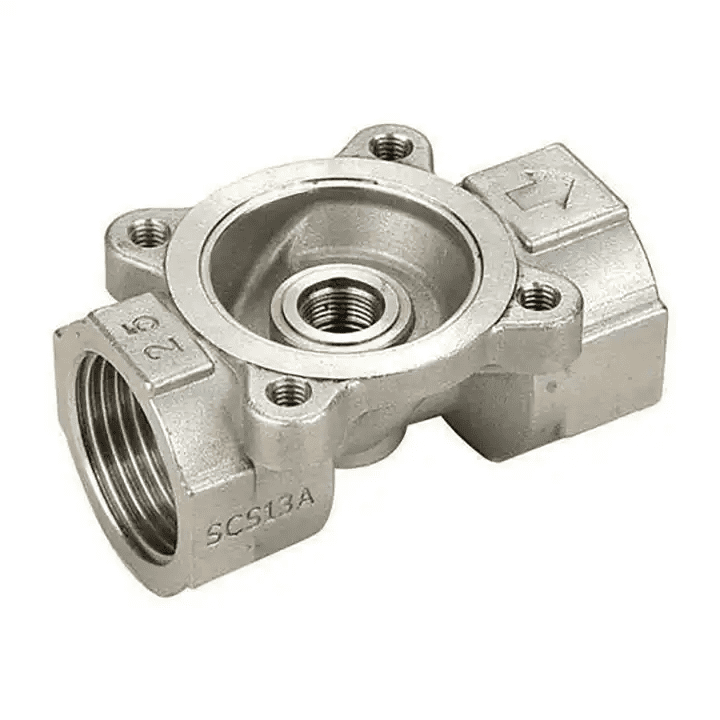
Aluminum Material
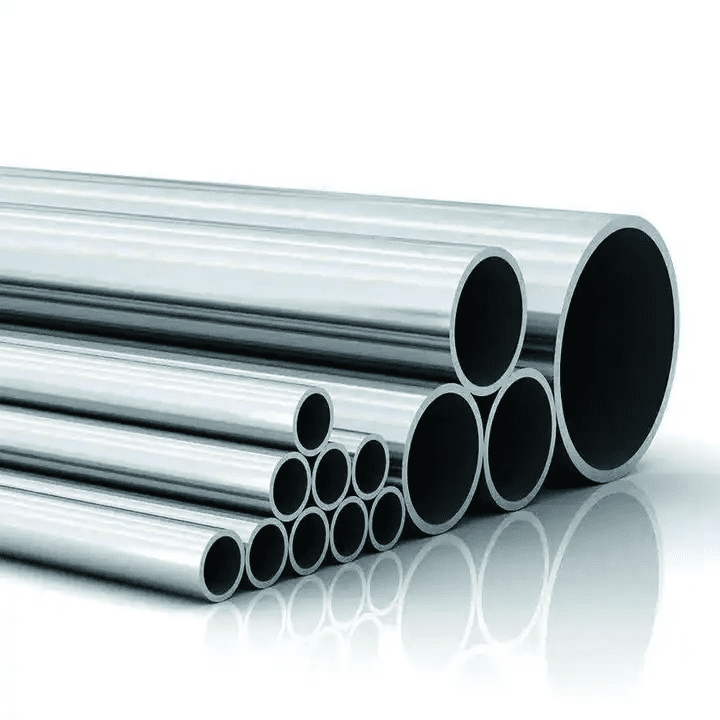
Steel Material
About Investment Casting Tooling Cost
Investment Casting Tooling: Costs, Ownership, and Procurement Guide
When requesting a quote for a new project at Precisionvast, your proposal will typically consist of two primary components: the Unit Piece Price and the Tooling Investment (Non-Recurring Engineering/NRE). Understanding how these costs are structured is essential for long-term project budgeting.
1. Understanding Tooling Quotations
Tooling is usually itemized as a one-time upfront expense. To ensure you are receiving the most efficient solution for your production volume, we provide clarity on the tooling configuration:
Manual vs. Automatic Dies: Manual tooling is cost-effective for low volumes, while automatic dies are engineered for high-speed, high-volume wax injection.
Single vs. Multi-Cavity: Multi-cavity tools (2-cavity, 4-cavity, etc.) have a higher initial cost but significantly reduce the unit piece price by increasing throughput.
Complex Insert Tooling: For parts with intricate internal geometries, we may quote specialized sliding or soluble cores.
2. Tooling Investment Costs
For standard precision castings, tooling costs generally range between $800 and $2,000, though this varies based on:
Part Complexity: Intricate designs require more labor-intensive CNC machining.
Size: Larger components require more raw material (Aluminum or Tool Steel) for the die.
Design Revisions: Please note that post-production modifications to the tool for design improvements will incur additional engineering and machining charges.
3. Ownership and Maintenance Protocols
At Precisionvast, we believe in transparent asset management.
Customer Ownership: Once the tooling invoice is settled in full, the tool becomes the legal property of the customer.
Complimentary Storage: We provide secure, climate-controlled storage for your dies at our facility at no additional cost.
Foundry Maintenance: As your manufacturing partner, we are responsible for the routine preventative maintenance and cleaning of the tools to ensure they remain production-ready for the duration of the project lifecycle.
4. Key Questions for Your Foundry Partner
Before approving a quote, we encourage customers to verify:
Is the tool made of 7075 Aluminum or Hardened Tool Steel?
What is the guaranteed tool life (number of shots)?
How are Engineering Change Orders (ECO) handled for existing tools?
Precision Vast's Tools and Casting Capabilities
Precisionvast: 20+ Years of Expertise in Custom Investment Casting & Tooling
With over two decades of industry leadership, Precisionvast has successfully delivered more than 5,000 custom casting projects globally. Our expertise spans the entire production lifecycle—from rapid prototyping to high-volume industrial manufacturing—ensuring that every component meets the highest standards of metallurgical and dimensional integrity.
In-House Tooling Workshop & Advanced Engineering
Our specialized in-house tooling facility is the engine behind our precision. By maintaining total control over mold design and fabrication, we offer our clients superior quality, reduced lead times, and highly competitive pricing.
VMC-Equipped Facility: Our workshop features high-precision Vertical Machining Centers (VMC) and advanced CNC equipment dedicated to crafting high-performance wax injection dies.
Digital Engineering (CAD/CAM): Our engineers work with a wide array of digital formats (STEP, IGES, DWG, Parasolid) to ensure a seamless transition from your 3D model to a finished tool.
Design for Manufacturability (DFM): We evaluate every drawing to optimize gating systems and cooling channels, ensuring the highest casting yield and consistency.
Vertically Integrated “One-Stop” Manufacturing
Precisionvast eliminates the complexity of managing multiple vendors. We provide a comprehensive, turnkey investment casting solution that includes:
Precision Machining: In-house CNC finishing to achieve critical tolerances.
Controlled Heat Treatment: Custom thermal processing (Annealing, Quenching, Tempering) to meet your mechanical property requirements.
Surface Finishing & Coating: A full suite of treatments including passivation, powder coating, and electropolishing.
Data-Driven RFQ & Quoting Process
We provide transparent, accurate, and rapid quotations based on your technical documentation. Our quoting process factors in:
Linear & Geometric Tolerances: Ensuring the casting method matches your precision needs (ISO 8062 / ICI standards).
Alloy-Specific Shrinkage: Precise calculations for Stainless Steel, Titanium, Aluminum, and High-Temp Alloys.
Volume Optimization: Strategic recommendations for manual or multi-cavity tooling based on your EAV (Estimated Annual Volume).
Partner with Precisionvast: Your Strategic Investment Casting & Tooling Partner
At Precisionvast, we don’t just supply parts; we provide high-performance engineering solutions. Our 20+ years of expertise and state-of-the-art investment casting facilities are dedicated to transforming your complex designs into precision-engineered reality with industry-leading efficiency.
Consultative Engineering & Global Sourcing Support
Our team of metallurgical and tooling experts is ready to assist you in optimizing your product’s performance and manufacturability:
Custom Casting Solutions: Tailored production for Aerospace, Medical, Marine, and Automotive sectors.
DFM (Design for Manufacturability): Collaborative reviews of your 3D CAD files to reduce costs and improve casting yields.
Rapid Response RFQ: Submit your 2D/3D drawings for a comprehensive technical assessment and accurate cost estimation.
Ready to Start Your Project?
Whether you are in the initial prototyping phase or moving toward high-volume mass production, Precisionvast provides the technical support to ensure your success.
Precision Tooling: In-house die manufacturing for total quality control.
Advanced Metallurgy: Expertise in Stainless Steel, Titanium, and Superalloys.
Turnkey Delivery: Integrated machining, heat treatment, and surface finishing.
How to Contact Our Engineering Team
We are here to help you solve your most challenging manufacturing problems. Contact us today to discuss your custom casting requirements or to request a detailed technical consultation.
 English
  German