
Description
High Precision Casting Overview
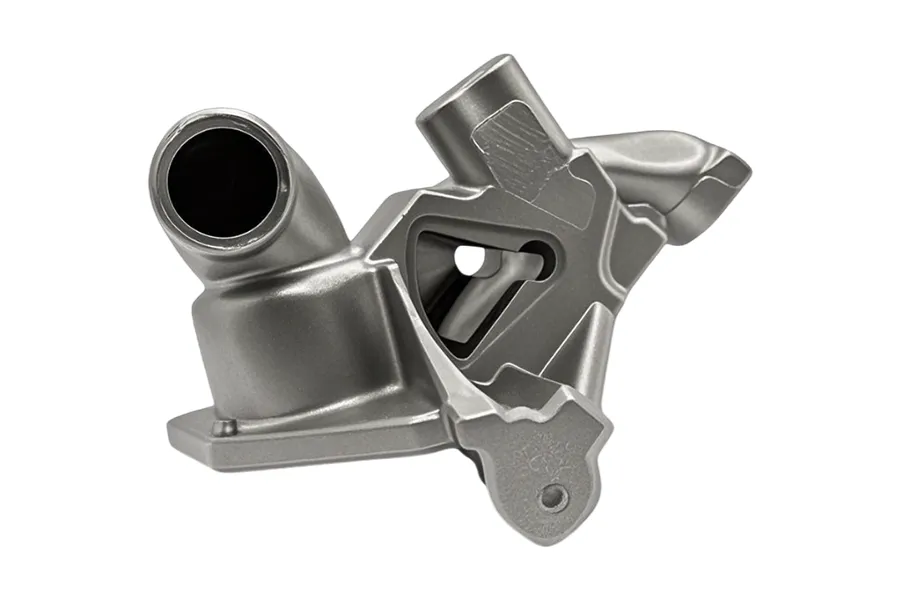
When you need tight tolerance casting and repeatable quality, high precision casting gives you the control standard processes can’t. I use precision investment casting (lost wax casting) to deliver near net shape metal components with complex geometry and minimal machining.
What Is High Precision Casting?
High precision casting (also called precision investment casting or lost wax investment casting) is a ceramic shell casting process designed for:
- High dimensional accuracy
- Excellent surface finish
- Complex internal and external features
- Consistent repeatability across batches
Instead of molding sand around a pattern, we build a ceramic shell around a detailed wax pattern, then replace the wax with molten metal.
How Lost Wax Casting Achieves High Accuracy
I achieve high accuracy metal casting through tight control at every step of the investment casting process:
- Wax patterns: Injection tooling defines exact geometry and dimensions.
- Ceramic shell: Thin, uniform ceramic shell casting layers preserve detail.
- Thermal control: Controlled dewaxing, firing, and pouring temperature reduces distortion and shrink variation.
- Near net shape: Shrink factors are engineered into the tooling for tight tolerances.
Typical dimensional capability (process-only, before machining):
| Feature | Typical Capability |
|---|---|
| Linear tolerances (≤ 4 in) | ±0.003–0.005 in |
| CT tolerance grade | CT5–CT6 (per ISO 8062) |
| Surface finish (as-cast) | 63–125 µin Ra |
Final capability depends on alloy, size, and geometry.
High Precision vs Conventional Casting
Compared to sand casting or other conventional methods, high precision casting offers:
| Aspect | High Precision Casting | Conventional Casting |
|---|---|---|
| Dimensional accuracy | High, tight tolerance casting | Medium to low |
| Surface finish | Fine, reduced machining | Rough, heavy machining required |
| Geometry complexity | Complex geometry castings, thin walls | Limited detail, draft-driven |
| Tooling cost | Higher upfront | Lower upfront (for simple parts) |
| Piece price | Lower for complex, machined parts | Higher once machining is added |
When High Precision Casting Is the Right Choice
I recommend high precision investment casting when your parts:
- Require tight tolerances on multiple features
- Have complex 3D geometry, internal passages, or undercuts
- Need thin walls and weight reduction
- Demand a better surface finish to cut machining and polishing time
- Use stainless steel, superalloys, titanium, or specialty alloys
- Run in small batch precision casting or series production where repeatability matters
If you’re currently machining from bar, fabricating weldments, or over‑engineering sand castings to hit tolerance, custom precision castings will usually cut total cost, lead time, and risk while improving quality.
High precision investment casting process
Step‑by‑step lost wax casting workflow
For high precision casting, we run a tightly controlled lost wax (investment casting) process:
- Create wax patterns – Inject wax into a precision steel mold to form an exact replica of your part.
- Assemble the tree – Weld multiple wax patterns onto a central sprue to build a casting “tree.”
- Build the ceramic shell – Dip the wax tree in ceramic slurry, then coat with fine sand. Repeat to build shell thickness.
- Dewax and fire – Autoclave or flash‑fire the shell to remove wax, then fire the empty shell to full strength.
- Metal pouring – Preheat the shell, melt the alloy, and pour under controlled temperature and turbulence.
- Cool and solidify – Control cooling rate to minimize distortion, porosity, and internal stress.
- Knockout and cut‑off – Break away the ceramic shell and cut parts from the gating system.
- Finish and inspect – Grind, shot‑blast, heat treat, machine critical features, and perform dimensional and NDT inspection.
This workflow gives you near net shape, tight tolerance casting with repeatable results.
Wax pattern design and tooling for precision
Accuracy starts with tooling. We design and build high precision steel molds to control:
- Shrink factors for each alloy
- Parting lines and gates to avoid distortion
- Critical datums and reference faces for CMM inspection
With the right wax injection parameters (pressure, temperature, dwell time), we can hold extremely tight pattern tolerances that carry through to the final precision cast metal components.
Ceramic shell building and shell thickness control
The ceramic shell is what gives investment casting its dimensional control. We manage:
- Number of dips to tune shell thickness for your part size and weight
- Grain size in prime and backup coats for surface finish vs. strength
- Drying time and humidity so shell cures uniformly and doesn’t crack
Thin, uniform shells help maintain accuracy while still handling high‑density alloys like stainless steel and superalloys.
Dewaxing, firing, and temperature control
Dewax and firing are critical to dimensional stability:
- Autoclave dewaxing reduces shell cracking and preserves cavity detail
- Controlled firing cycles stabilize the ceramic and burn out residues
- Shell preheat before pouring keeps metal flow consistent and reduces misruns
Tight temperature control at each step is what turns lost wax casting into true high accuracy metal casting.
Metal pouring, cooling, and solidification
Pouring parameters directly affect tight tolerance casting:
- Exact melt temperature for each alloy (stainless, aluminum, superalloy, titanium, etc.)
- Controlled pour rate and head height to reduce turbulence and gas entrapment
- Directed solidification using chills and risers to avoid shrink defects
We tune cooling profiles by section thickness, which is especially important for thin‑wall, lightweight aluminum castings (see our practical guide to aluminum casting options and ideas).
Shell removal, gating removal, and finishing
Once metal is solid:
- Knockout – Vibrate or blast the ceramic away without damaging surfaces
- Cut‑off – Remove gates and runners using saws or cut‑off wheels
- Grinding and blending – Clean gate areas and blend surfaces
- Shot blasting / tumble finishing – Achieve consistent surface finish
- Optional machining – Tighten critical features that need CNC tolerances
The goal is near net shape casting so you only machine where it truly adds value.
Process control, repeatability, and precision
High precision investment casting lives or dies on process control. We standardize and record:
- Wax injection settings
- Slurry viscosity, shell thickness, and cure times
- Furnace programs for dewax, firing, and preheat
- Melt chemistry, metal temperature, and pour logs
- Cooling curves and heat treatment cycles
Backed with CMM dimensional inspection and NDT, this level of control lets us deliver consistent, repeatable custom precision castings from prototypes to full production.
High Precision Casting Capabilities
When you’re choosing high precision casting for your parts, the real question is: what can we actually make, and how accurate can we make it?
Part size and weight ranges
With precision investment casting (lost wax casting), we cover a wide range:
- Typical weight: from a few grams up to about 80–100 lb per casting
- Typical size envelope: up to roughly 24–30 in (600–750 mm) in the longest dimension
- Miniature parts: micro and small components are very doable as long as the design suits the process
If you’re looking at larger high‑temperature alloy castings, our capabilities align with what you’ll see in specialized high‑temperature alloys casting foundries.
Tight dimensional tolerances (CT grades)
High precision casting is built for tight tolerance casting and consistent quality:
- General tolerances: around ±0.004–0.006 in per inch (0.1–0.15 mm per 25 mm)
- Fine features: locally tighter with proper design and process control
- CT grades: typically CT4–CT6, depending on size, geometry, and alloy
- Best tolerances are achieved on small to medium parts with stable geometry
Surface finish and post-processing
Investment casting naturally delivers a smooth surface finish compared to sand casting:
- Typical Ra: 125–250 µin (3.2–6.3 µm) as-cast
- With fine shells and optimized wax, Ra can be even better
- Optional post-processing:
- Shot blasting / bead blasting
- Vibratory finishing
- Polishing (mechanical or electropolish)
- Machining of critical surfaces
For stainless steel parts, this pairs well with the performance benefits described in our guide to stainless steel investment casting.
Minimum wall thickness and detail capability
High precision investment casting is ideal for near net shape casting with thin walls and complex geometry:
- Typical minimum wall thickness: 0.04–0.08 in (1–2 mm)
- Local thin sections: sometimes down to 0.02 in (~0.5 mm) with the right alloy and gating
- Fine details like logos, small bosses, slots, and fillets are very feasible if they’re well supported in the design
Production volumes: prototypes to full series
We support the full lifecycle, from first shots to steady production:
- Rapid prototyping investment casting using quick tooling or printed patterns
- Small batch precision casting: ideal for validation, pilot builds, and service parts
- Mid-volume and high-volume runs: with hard tooling to lock in repeatability and cost efficiency
- Flexible MOQs depending on part size, alloy, and tooling type
If you need near net shape metal components with consistent quality, this is where high precision casting shines—especially when you want to limit machining and keep total cost under control.
Materials for High Precision Casting
Choosing the right alloy is the first big decision in any high precision casting project. It drives cost, tolerances, surface finish, and long-term performance. Here’s how I usually steer customers in the U.S. market.
Stainless steel high precision casting alloys
For parts that see corrosion, heat, and repeated cleaning (food, medical, marine), stainless steel investment casting is usually the go-to.
Common choices:
- 304 / 304L – General-purpose, good corrosion resistance, cost-effective.
- 316 / 316L – Better corrosion resistance (chlorides, chemicals), common in marine and pharma.
- 17-4PH – High strength + good corrosion resistance, widely used in aerospace, defense, and industrial.
Stainless steels cast very well with tight tolerance casting and deliver a clean surface that often needs only light machining or polishing.
Carbon and low alloy steel precision casting
When customers want strength and toughness at a lower cost than stainless, we recommend carbon and low alloy steel precision castings.
Typical use:
- Structural brackets, housings, arms, and chassis parts
- High-strength levers, links, and safety-critical parts
- Heat-treated components (quench and temper) for strength and wear
These steels machine well and can hit strong mechanical properties after heat treatment, making them ideal for near net shape castings that still need some CNC finishing.
Aluminum investment casting for lightweight parts
If weight and corrosion resistance matter, aluminum investment casting is one of the best ways to get lightweight, near net shape metal components. For a deeper dive into aluminum options, I often point customers to this breakdown of aluminum casting processes for structural use (https://precisionvast.com/high-quality-aluminum-castings-for-structural-use/).
Why aluminum:
- Great strength-to-weight ratio
- Naturally corrosion-resistant
- Excellent for housings, brackets, enclosures, and structural parts in automotive, EV, and electronics
Aluminum delivers a smooth surface and supports fine features, though it generally has slightly looser tolerances than steel due to higher shrinkage.
Superalloy casting (Inconel, Hastelloy, nickel-based)
For high heat, high stress, and aggressive environments, we use nickel-based superalloy casting:
- Inconel – Excellent strength and oxidation resistance at high temperature
- Hastelloy – Top-tier corrosion resistance in chemical and process industries
- Other nickel-based alloys – Custom picks for turbine, energy, and aerospace applications
These alloys are tougher to cast and machine, but they shine where ordinary steels and stainless steels fail.
Titanium precision casting for aerospace and medical
Titanium investment casting is ideal when you need:
- High strength, very low weight
- Excellent biocompatibility (implants, surgical tools)
- Top corrosion resistance in aerospace and marine environments
Titanium castings can achieve impressive complex geometry while significantly cutting weight. Tolerances are tight, but process control is critical due to titanium’s reactivity at high temperature.
Cobalt-based and specialty alloy casting
For extreme wear, fatigue, and heat, we use cobalt-based alloys and custom specialty alloys. They’re common in:
- Valve components and seats
- Cutting and wear parts
- High-temperature, high-cycling hardware
These alloys are harder to machine, so using high accuracy metal casting to get near net shape pays off in a big way on total cost.
How material choice affects tolerances and surface finish
Each alloy family behaves differently during the investment casting process:
- Dimensional tolerances
- Steels and stainless steels usually achieve the tightest tolerances.
- Aluminum and titanium can have slightly higher distortion and shrinkage, so we compensate in tooling.
- Superalloys and cobalt alloys may require more process control to hold tolerance.
- Surface finish
- Aluminum and stainless often give the smoothest as-cast surface.
- Carbon steels and low alloy steels are still very good but may need light machining or blasting on cosmetic surfaces.
- Superalloys and cobalt alloys can be slightly rougher as-cast but respond well to grinding, machining, and polishing.
When we quote custom precision castings, we look at your material choice, tolerance requirements, and surface expectations together. The right alloy plus the right casting process usually beats heavier machining or fabrication on both cost and performance.
Design for High Precision Casting
Getting the design right upfront is the fastest way to make high precision casting pay off. When we engineer a part for precision investment casting instead of “just casting it and fixing it in machining later,” we cut cost, lead time, and risk.
Design Guidelines for Investment Casting Parts
When we review a part for precision investment casting, we look for:
- Consistent wall thickness wherever possible
- Smooth transitions instead of sudden section changes
- Built-in features (bosses, logos, ribs, holes) that we can cast near net shape
- Clear separation between critical and non‑critical dimensions
Sending us a clean 3D model and a clear drawing with priorities called out lets us tune the process for tight tolerance casting instead of guessing.
Draft, Fillets, and Radii
Even though lost wax casting doesn’t need as much draft as die casting, a little goes a long way:
- Draft angle:
- External surfaces: 0.5°–1° recommended
- Internal surfaces: 1°–2° when possible
- Fillets and radii:
- Avoid sharp internal corners – use 0.03″–0.06″ (0.8–1.5 mm) radii
- Blend thick-to-thin areas with generous fillets to reduce stress and porosity
These details help wax removal, shell strength, and metal flow, all of which improve dimensional accuracy and surface finish.
Minimum Holes, Slots, and Feature Spacing
High precision investment casting can produce very fine details, but we stay within realistic limits for consistency:
- As-cast minimum hole size (through):
- Typically 0.06″–0.08″ (1.5–2.0 mm)
- As-cast slot width:
- Typically ≥ 0.06″ (1.5 mm)
- Minimum feature spacing (ribs, bosses, fins):
- Aim for ≥ 0.04″–0.06″ (1.0–1.5 mm) between features
- Very small or critical holes are often cast as solid and then drilled or reamed for accuracy
If we’re targeting miniature or micro precision cast parts, we’ll confirm realistic limits for your specific alloy and geometry during DFM.
Tolerancing Strategy: Critical vs Non-Critical Features
To keep cost and yield under control, we build the tolerance stack smartly:
- Critical features (fits, sealing surfaces, safety-related):
- Tight tolerances, often backed by CMM dimensional inspection
- Positioned to allow minimal post-machining if needed
- Non-critical features:
- Looser tolerances aligned with standard investment casting capability
- Used to absorb variation from the process, not fight it
On your drawing, clearly mark “Key Characteristics” and list any required NDT or special inspection. That lets us lock the process around what actually matters.
Optimizing Geometry to Reduce Machining and Cost
We design high precision casting parts to be as close to final shape as possible:
- Cast-in features: logos, numbers, chamfers, bosses, and many threads can be cast, not machined
- Machine stock only where needed: add small machining allowances on critical surfaces, not everywhere
- Use ribs instead of thick blocks to hit strength and stiffness without heavy machining
- Integrate welded or fabricated assemblies into a single near net shape casting
Done right, this can cut machining time by 30–70% and significantly reduce material waste for U.S. customers working with stainless steel investment casting, superalloy casting, or titanium investment casting.
Common Design Mistakes in Precision Casting
A few design issues drive most problems and cost overruns:
- Very thick sections next to very thin ones → shrink issues and distortion
- Unnecessary tight tolerances on non-critical dimensions → higher price and longer lead time
- Sharp internal corners and knife-edges → shell cracking, poor filling, and high scrap
- Trying to cast “everything”: tiny undercuts, ultra-fine threads, or deep blind holes that are better machined
- No discussion with the foundry up front → rework, tooling changes, and schedule slips
We strongly recommend getting our engineering team involved early for engineering support for casting design and cost reduction. For example, our aerospace and medical customers often start with a DFM review similar to what we provide for our medical investment casting projects to lock in geometry, tolerances, and inspection before tooling is cut.
High Precision Casting vs Other Processes
High Precision Casting vs Sand Casting
Sand casting is great for very large, low-cost parts, but it can’t touch high precision casting when you need accuracy and finish.
- High precision casting (lost wax / precision investment casting)
- Tight tolerance casting, finer surface finish, near net shape parts
- Ideal for complex geometry castings and smaller to medium-sized components
- Sand casting
- Coarser tolerances, rougher surfaces, more machining required
- Better for big, low-detail parts where cost beats precision
When you’re tired of machining sand castings just to hit spec, high precision casting usually saves money overall.
High Precision Casting vs Die Casting
Die casting is strong in high-volume aluminum and zinc production, but it’s not always the best fit for demanding alloys or complex internal details.
- High precision investment casting
- Handles stainless steel, carbon steel, superalloy casting, titanium, and more
- Lower tooling cost than die casting, better for mid-volume or mixed part numbers
- Die casting
- Very fast cycle times at high volume, but limited mainly to non-ferrous alloys
- Tooling is expensive and changes are costly
If you need stainless steel investment casting or nickel-based alloys with tight tolerances and complex features, investment casting is the better bet.
High Precision Casting vs CNC Machining
CNC machining delivers top-tier precision, but material waste and cycle time add up fast, especially on complex 3D shapes.
- High precision casting
- Near net shape casting: you only machine what really matters (critical surfaces, threads, sealing areas)
- Cuts material waste, labor time, and spindle hours
- CNC machining from solid
- Best for ultra-tight tolerances, very low quantity prototypes, or blocky geometry
- Gets expensive with deep pockets, organic shapes, or heavy stock removal
A common move for U.S. customers: use CNC for prototypes, then switch to precision cast metal components once the design is stable.
High Precision Casting vs Metal 3D Printing
Metal 3D printing (DMLS/SLM) is powerful for extreme complexity, but part cost and build size are big constraints.
- High precision casting
- Lower part cost for small to medium production runs
- Larger part sizes and a wider range of alloys
- Metal 3D printing
- Best for ultra-complex internal channels or very low volume, high-value parts
- Higher cost per part and slower throughput
A smart route is printing wax patterns or tools for rapid prototyping investment casting when you want speed plus foundry-grade properties.
Cost, Lead Time, and Quality Comparison
Cost (per part, general trend):
- Lowest: sand casting (rough, high machining), then die casting (at very high volume)
- Mid: high precision casting (strong balance of complexity, material, and volume)
- Highest: CNC machining (complex parts) and metal 3D printing
Lead time:
- Tooling: die casting ≈ investment casting (both need molds), sand casting can be quicker for simple parts
- Production: die casting is fastest at high volume; investment casting is flexible for small batch precision casting and mid-volume
Quality:
- Surface finish & detail: metal 3D printing and high precision casting lead
- Dimensional accuracy: CNC machining > high precision casting > die casting > sand casting
If you’re working with demanding alloys for high-temperature service, pairing precision casting with the right advanced high-temperature alloys can boost performance and life cycle; details like this matter a lot in U.S. aerospace, defense, and energy projects, where optimized high-temperature alloy choices are critical.
When to Switch to High Precision Casting
You should seriously consider moving from machining, fabrication, or sand casting to precision investment casting when:
- Machining time and scrap are driving your costs
- Welded or fabricated assemblies are hard to keep consistent
- You need tighter tolerances than sand casting can support
- You want to consolidate multiple parts into one near net shape metal component
- You’re planning repeat orders, not just a handful of prototypes
For a lot of U.S. manufacturers, that switch point comes when annual demand, tight tolerance casting needs, and material cost all start to squeeze margins—high precision casting usually unlocks better cost per part without compromising quality.
Industries Using High Precision Casting
High precision casting is the go-to when you need complex geometry, tight tolerances, and reliable performance right out of the mold. In our U.S. customer base, we see the same trend across multiple industries: if the part is safety-critical, spinning fast, or hard to machine, it usually ends up as a precision investment casting.
Aerospace Precision Casting Applications
In aerospace, precision investment casting is all about strength-to-weight and repeatability.
Typical aerospace precision castings:
- Turbine blades and vanes
- Engine brackets and housings
- Fuel system and hydraulic components
Key requirements:
- Tight tolerance casting for perfect fit in assemblies
- High-temperature alloys (nickel-based superalloy casting)
- Full traceability and strict certification (AS / ISO standards)
Automotive and Motorsports Precision Components
For automotive and racing, high precision casting helps cut weight and cost while holding performance specs.
Common parts:
- Suspension and steering knuckles
- Turbocharger wheels and housings
- Transmission and drivetrain components
What matters most:
- Near net shape casting to reduce machining
- High fatigue strength and dimensional stability
- Consistent results across high-volume production
Medical Device and Orthopedic Implant Casting
Medical and orthopedic parts demand clean surfaces, biocompatible alloys, and zero surprises.
Typical medical precision castings:
- Hip and knee implant components
- Dental hardware and surgical instruments
- Small housings and brackets for medical devices
Performance requirements:
- Tight tolerances for mating implant surfaces
- Smooth surface finish to cut polishing and cleanup
- Certified stainless steel and titanium investment casting with full quality documentation
Defense and Firearms Precision Cast Parts
Defense and firearms customers use high precision casting to handle complex shapes and heavy loads without massive machining time.
Typical parts:
- Firearm receivers, triggers, and mounts
- Optic and sight housings
- Weapon system brackets and structural hardware
Key needs:
- High accuracy metal casting for reliability and repeatable function
- Strong, tough steels with strict mechanical testing
- Controlled processes and documentation for defense compliance
Energy, Oil & Gas, and Power Generation Castings
In energy and oil & gas, downtime is expensive, so precision cast components need to last.
Typical parts:
- Turbine and compressor components
- Downhole tool parts and safety-critical housings
- High-pressure, high-temperature flow components
Performance focus:
- Corrosion- and heat-resistant superalloy casting
- Tight tolerance casting for sealing and alignment
- Rigorous non destructive testing for castings (X-ray, dye penetrant, CT)
For more detail on alloy selection and performance, I break down options like A356 and other aluminum grades in this overview of aluminum casting benefits and applications.
Pumps, Valves, and Flow Control Components
Flow control is all about sealing and efficiency, which is where high precision casting shines.
Typical castings:
- Pump impellers and diffusers
- Valve bodies, covers, and internals
- Precision flow meters and control housings
What customers look for:
- Complex geometry castings with smooth passageways
- Excellent surface finish in flow paths
- Dimensional consistency for tight seals and long service life
Typical Parts and Performance by Industry
Across all these industries, custom precision castings usually have similar targets:
- Tight tolerances on critical interfaces and sealing surfaces
- Near net shape geometry to slash machining time and scrap
- Material control (stainless, superalloy, titanium, carbon steel) matched to temperature, load, and corrosion needs
- Proven quality systems with CMM dimensional inspection and NDT on demand
If you’re weighing whether a part is a good fit for high precision casting, look at complexity, volume, and how much machining you’d like to eliminate. That’s where this process delivers the most value for U.S. manufacturers.
Benefits of High Precision Casting
Tight tolerance casting & dimensional stability
With high precision casting, we hold tight tolerances and keep parts stable over time. That means:
- Less distortion and warpage
- Reliable fits with mating components
- Fewer setups and corrections during assembly
| Benefit | What You Get in Practice |
|---|---|
| Tight tolerances | Parts that fit right the first time |
| Dimensional stability | No surprises after heat treat or machining |
Near net shape casting to reduce machining
We use near net shape casting to get your part as close as possible to final size.
- Minimal stock for CNC machining
- Shorter cycle times
- Lower tool wear and labor cost
Complex geometry in a single piece
High precision investment casting handles complex geometry castings that would be a nightmare to machine or weld.
- Internal passages and undercuts
- Thin ribs, logos, and fine details
- Fewer assemblies and welds, higher reliability
Improved surface finish
Lost wax casting produces a smooth, clean surface right out of the shell.
- Less grinding and polishing
- Better coating and plating adhesion
- Cleaner cosmetic appearance for exposed parts
Material utilization & cost efficiency
Because we pour near net shape metal components, material waste drops sharply.
- Lower raw material usage
- Less scrap compared to machining from bar or plate
- More competitive total part cost
Consistency for high-volume runs
Once tooling is dialed in, our process is highly repeatable for large orders.
- Stable quality from lot to lot
- Easier PPAP and ongoing audits
- Predictable production cost and delivery
If you want to combine tight tolerance casting with follow-up machining, our in-house CNC machining services let us take parts from wax to finished assembly-ready components under one roof.
Quality control in high precision casting
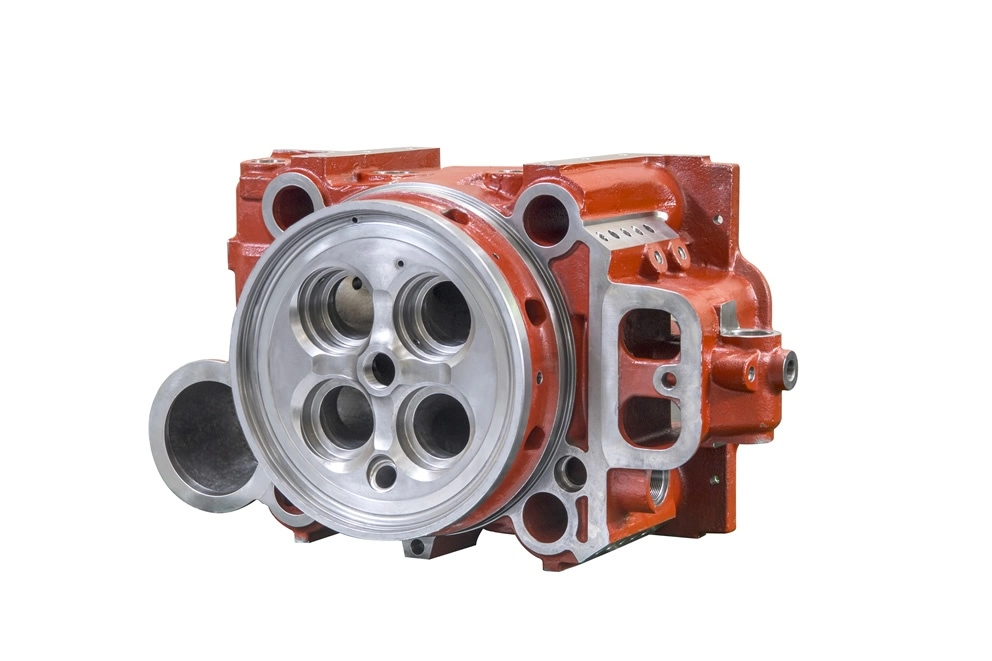
When we talk about high precision casting, quality control isn’t a department—it’s the backbone of the whole operation. If you’re buying precision investment castings in the U.S. for aerospace, medical, defense, or energy, this is where the real risk is managed and controlled.
Dimensional inspection and CMM measurement
For tight tolerance casting, we validate every critical dimension, not just a few checkpoints. Our typical approach:
- Full dimensional layouts on first-article and PPAP-level parts
- CMM inspection for complex geometry castings and GD&T features (true position, flatness, runout, etc.)
- Statistical sampling on production runs to monitor process drift
If you need near net shape metal components with minimal machining stock, this level of dimensional control is what keeps your parts in spec lot after lot.
Non-destructive testing for castings
For safety-critical and high-load parts, we rely heavily on non-destructive testing (NDT) to validate internal soundness:
- X-ray / digital radiography – detects internal porosity, shrinkage, and inclusions
- CT scanning – 3D view for complex internal features and wall thickness verification
- Dye penetrant testing (PT) – surface cracks and defects on stainless steel investment casting and superalloy casting
- Magnetic particle testing (MT) – for ferrous precision cast metal components
For demanding fluid-handling parts like impellers and pump components, we apply the same inspection discipline used in advanced impeller and pump casting technology.
Mechanical testing and material certification
High precision casting is only as good as its metallurgy. We confirm performance with:
- Tensile, yield, and elongation tests by heat/lot
- Hardness checks at defined locations
- Impact testing (Charpy) where required (oil & gas, power gen, defense)
- Certified material reports (CMTRs) with full chemistry and mechanical properties
Every heat of stainless steel, titanium investment casting, or superalloy casting is traceable back to its test data.
Process control, traceability, and documentation
To keep repeatability tight, we lock down the investment casting process with:
- Controlled wax injection, shell building, firing, and pouring parameters
- Recorded furnace and metal temperatures for every batch
- Heat/lot, shell batch, and molding traceability tied to each work order
- Documented process control plans, inspection plans, and SPC where needed
If your program demands robust documentation—especially for aerospace precision casting or medical applications—this is what regulators and auditors expect to see.
Meeting ISO, AS, and industry standards
As an ISO certified precision foundry, we build our workflows to align with U.S. and global requirements, including:
- ISO 9001 for quality management
- AS9100 for aerospace precision casting programs (when applicable)
- Customer-specific specs for automotive, energy, and defense
- Full lot traceability, inspection reports, and PPAP/FAI documentation on request
That combination of tight process control, dimensional inspection, and NDT is what allows us to deliver high accuracy metal casting consistently—from rapid prototyping investment casting all the way to full production.
Lead times and production workflow for high precision casting
Typical lead times for tooling and first articles
For high precision casting, timing depends on part complexity and material, but this is what most U.S. customers can expect:
- Tooling design & build: ~2–4 weeks for standard steel tooling
- Ceramic shell / process setup: 1–2 weeks
- First article (FAI) samples: usually 4–8 weeks total from PO, including CMM dimensional reports and basic material certs
If you’re comparing to other processes, this is generally longer than machining, but much faster than full production die casting tooling. For a deeper look at how casting compares to other methods, I break this down in our overview of high-pressure aluminum die casting pros and cons.
Rapid prototyping and sample options
If you need parts fast to validate a design, we can shorten the investment casting process by:
- Using 3D printed wax patterns or printed resin patterns instead of hard tooling
- Limiting the sample quantity (5–25 pcs) and focusing only on critical inspections
- Running expedited shell building and firing where the alloy and geometry allow
With this approach, rapid prototyping investment casting samples are often possible in 2–4 weeks, depending on alloy and size.
Production ramp-up and scheduling
Once the first article is approved, we lock in a repeatable workflow:
- Pre-planned shell building cycles to match your monthly/quarterly demand
- Batch scheduling by alloy and size to control cost and lead time
- Release orders / blanket PO setups so we can pour and ship on a rolling schedule
Most steady programs run on 4–6 week production lead times after FAI, with safety stock for critical parts.
What affects delivery time and cost
Lead time and price for custom precision castings are driven by a few key factors:
- Part complexity: thin walls, tight tolerances, and complex cores add shell and inspection time
- Alloy choice: superalloy casting and titanium investment casting need more process control and furnace time
- Order quantity: larger batches reduce cost per piece but may extend cycle time
- Inspection level: full CMM dimensional inspection, CT scanning, or extensive NDT adds time
- Engineering changes: late design changes mean new tooling or process adjustments
If you’re planning a new project, send us your 3D model and basic requirements early. That lets us quote realistic lead times for high precision casting and help you balance delivery, cost, and quality before you commit. For broader background on precision processes and timing, you can also check the investment casting resources in our manufacturing blog library.
Choosing a High Precision Casting Supplier
When you’re sourcing high precision casting in the U.S., the foundry you choose matters more than the quote on paper. I look at four things first: capability, experience, in-house services, and engineering support.
Key capabilities to evaluate
Make sure the precision foundry can actually hit the specs you need:
- Tight tolerance casting capability (ask for real examples and CMM reports)
- Proven precision investment casting process (lost wax / ceramic shell)
- In-house CMM dimensional inspection and non destructive testing for castings like magnetic particle inspection
- Certified systems (ISO, aerospace, medical, defense as needed)
- Ability to run small batch precision casting and scale to higher volumes
Experience with your industry and materials
You want a team that already lives in your world:
- Direct experience in your sector: aerospace precision casting, automotive, medical, energy, firearms, pumps/valves, etc.
- Deep knowledge of your alloys: stainless steel investment casting, superalloy casting, titanium investment casting, aluminum, carbon/low alloy steel
- Proof they can achieve your required tolerances, surface finish, and testing standards with those materials
Tooling, in-house machining, and secondary operations
The more the foundry can do under one roof, the smoother your project:
- In-house tooling design and build for wax patterns
- Near net shape casting plus CNC machining for critical surfaces
- Heat treatment, surface finishing, coating, and basic assembly
- Ability to deliver ready-to-install precision cast metal components, not just raw castings
Engineering support for DFM and cost reduction
A strong supplier helps you design smarter castings, not just make them:
- Front-end engineering support for casting design (Design for Manufacturability)
- Feedback on wall thickness, draft, fillets, and tolerance strategy
- Suggestions to replace weldments or machined blocks with near net shape metal components
- Clear guidance on where you can loosen tolerances to save real money
Questions to ask before placing an order
Before you commit, pin down the details:
- What dimensional tolerances and CT grades can you guarantee for this part?
- How will you inspect and certify the castings (CMM, X-ray, MPI, mechanical tests)?
- What are typical lead times for tooling, samples, and production?
- What are your minimum order quantities and pricing tiers by volume?
- How do you handle design changes, nonconformances, and ongoing cost-down efforts?
If a high precision casting supplier can answer these clearly—with data, sample reports, and real parts—you’re more likely to get consistent, high-accuracy metal casting that actually fits your program’s cost, timing, and quality targets.
High precision casting applications and case examples
High precision casting is my go-to process when customers need tight tolerance casting, complex geometry, and consistent quality without blowing up machining time or cost.
Thin-wall and lightweight structural components
We use high precision casting to produce thin-wall, lightweight structural parts that still hold strength and stiffness, like:
- Brackets, housings, and frames for aerospace and robotics
- Lightweight suspension and chassis components for motorsports
- Structural covers and enclosures with integrated ribs and bosses
With near net shape casting, we keep wall thickness low while holding dimensional accuracy, so you’re not paying to machine away material.
Impellers, turbine blades, and flow components
For pumps, turbochargers, and turbine hardware, precision investment casting is ideal for:
- Impellers with complex vane geometry
- Turbine blades and buckets with controlled airfoil profiles
- Flow bodies, diffusers, and valve components
Ceramic shell casting lets us hit smooth internal passages and tight feature control, which translates into better flow efficiency and performance. For more background on steel casting fundamentals that support these kinds of components, I recommend this overview of steel casting and what you need to know.
Safety-critical and high-load parts
When failure is not an option, high precision casting supports:
- Firearms and defense components (triggers, hammers, bolt parts)
- Load-bearing brackets and joints in aerospace and heavy equipment
- Safety-critical couplings, latching systems, and mounting hardware
We combine high accuracy metal casting with CMM dimensional inspection and NDT (X-ray, dye penetrant, magnetic particle) to keep risk low and traceability high.
Miniature and micro precision casting parts
For small, detailed, high-density parts, lost wax investment casting really shines:
- Miniature gears, levers, and linkages
- Small medical components and orthopedic hardware
- Fine-detail jewelry-style and decorative metal parts
We can cast tiny holes, thin ribs, and sharp detail that would be expensive or impossible with conventional casting.
How high precision casting solved customer challenges
In real projects, high precision casting has helped customers:
- Replace machined-from-solid parts with near net shape metal components, cutting cycle time and material waste.
- Consolidate assemblies from multiple welded or bolted pieces into a single complex geometry casting, improving strength and reliability.
- Tighten tolerances and consistency for high-volume runs where CNC machining alone couldn’t hold cost targets.
- Speed up development with rapid prototyping investment casting and small batch precision casting before scaling into series production.
When customers in aerospace, automotive, and energy came to us struggling with cost, weight, or repeatability, high precision casting has often been the cleanest path to a robust, scalable solution.
Ordering Custom High Precision Castings
When you’re ready to order custom high precision castings, the quote is only as good as the information you send. Here’s exactly what we ask our U.S. customers for so we can price accurately and hit your tolerances the first time.
Information You Need to Request a Quote
To quote a custom precision investment casting, we typically need:
- Annual usage + batch size (prototypes, small batch, or full production)
- Target price range (if you have one)
- Required lead time (tooling, samples, and production)
- End-use industry + application (aerospace, medical, firearms, industrial, etc.)
- Any required certs (ISO/AS, material certs, NDT, PPAP, FAI, etc.)
If you’re still deciding between aluminum, steel, or superalloy casting, our team can align material choice with your cost and performance targets. For background on alloys and performance, our breakdown of heat‑resistant metal properties is a good reference point.
Supplying 2D Drawings and 3D CAD Models
For tight tolerance casting and near net shape casting, we rely heavily on your models:
- 3D CAD models: STEP, IGES, or native files (SolidWorks, Inventor, etc.)
- 2D drawings: Fully dimensioned PDF with GD&T, notes, and critical features marked
- Clearly marked machined surfaces vs as-cast surfaces
- Casting configuration: Single part, family tooling, or multi-cavity if you know it
If you don’t have finished drawings, we can work off a 3D model and help you finalize a casting-ready print.
Specifying Material, Tolerances, and Inspection
To hit tight tolerance casting and avoid surprises, lock in:
- Material spec: e.g., 17-4PH stainless steel, 4140, A356 aluminum, Inconel, titanium, cobalt-based alloys
- Tolerances:
- Identify critical dimensions (Cpk/PPK or 100% inspection if needed)
- Standard as-cast tolerances vs special tight areas
- Surface finish requirements: As-cast Ra vs machined Ra, and any coating or surface treatment
- Inspection requirements:
- CMM dimensional inspection
- Non-destructive testing (X-ray, CT, dye penetrant, magnetic particle)
- Mechanical testing and material certification
If your project will need specialized surface treatments, it helps to tell us up front so we can design the ceramic shell and process route accordingly; you can see typical options in our guide to investment casting surface treatments.
Typical MOQs and Reorder Workflows
We support everything from rapid prototyping investment casting to full production:
- Prototypes / small batch precision casting
- As low as 1–10 pcs for development, depending on complexity
- Often done with soft tooling or modified production tooling
- Production MOQs
- Common starting point: 50–100 pcs per release
- Economic order quantity depends on part size, alloy, and gating layout
- Reorders
- Tooling is stored and maintained by us
- You issue a repeat PO referencing part and revision
- Standard lead time typically drops once tooling and process are validated
If you send us a clean set of drawings, CAD files, and clear requirements up front, we can quote quickly and get your high precision casting program into production with fewer iterations and lower total cost.

 English
  German
Reviews
There are no reviews yet.