
Description
Understanding Tensile Strength in Aluminum
When I talk about the tensile strength of aluminum, I am referring to the material’s capacity to resist being pulled apart under tension. For engineers and designers, understanding these tensile properties of aluminum is the difference between a part that performs reliably and one that fails in the field.
What is Ultimate Tensile Strength (UTS)?
Ultimate tensile strength (UTS) is the maximum stress that an aluminum alloy can withstand while being stretched before it actually breaks. It is the peak value on a stress-strain curve. If your application involves high-tension loads, the ultimate tensile strength of aluminum is your primary benchmark for safety and structural integrity.
[Image of stress-strain curve for aluminum]
Yield Strength vs. Tensile Strength
I find it helpful to break down the two most critical metrics used to evaluate aluminum alloy strength:
- Yield Strength: This is the point where the aluminum begins to deform permanently. If the load stays below this number, the part will snap back to its original shape.
- Tensile Strength (UTS): This is the absolute breaking point. Passing this threshold results in a total rupture of the material.
How We Measure Strength for Your Parts
I ensure every production run meets your exact specifications by performing standardized mechanical testing. Using a universal testing machine, we pull precision-cast test bars until they fail. This process provides concrete data on the tensile strength for aluminum in three key areas:
- Tensile Strength (MPa/psi): The maximum load capacity.
- Yield Strength (MPa/psi): The limit of elastic deformation.
- Elongation (%): The measure of the material’s ductility before fracture.
By capturing these aluminum mechanical properties for every batch, I provide the traceability and reliability required for high-stakes US manufacturing projects.
Key Factors Affecting the Tensile Strength of Aluminum
To get the most out of your parts, we analyze several variables that dictate the final tensile strength of aluminum. It isn’t just about the base metal; it’s about how we manipulate its chemistry and internal structure to handle high-stress loads.
Alloying Elements: Silicon and Copper
We add specific elements to the mix to radically enhance aluminum mechanical properties.
- Silicon: This is essential for fluidity during the casting process and provides a significant boost in hardness.
- Copper: We use copper to push the aluminum alloy strength to its limit, though it requires precise control to maintain the material’s legendary corrosion resistance.
The Role of Precision Heat Treatment
Raw castings rarely reach their full potential without a proper thermal cycle. By applying a T6 temper, we can significantly increase the heat treated aluminum strength. This process involves solution heat treating followed by artificial aging, which “locks” the alloying elements into the metal’s crystal lattice for maximum durability.
Why Grain Structure Matters
In investment casting, we carefully control the cooling rate to refine the grain structure. A finer, more uniform grain results in a much higher aluminum tensile strength because there are fewer internal boundaries where cracks can start.
When we compare this to other high-volume methods, such as those outlined in our overview of die casting tolerance standards, the structural integrity of an investment cast part often proves superior. The reduced porosity and higher density ensure that the part performs reliably under the most demanding conditions.
Best High Strength Aluminum Alloys for Your Project
Choosing the right material is the first step in ensuring your parts don’t fail under pressure. When we analyze high strength aluminum alloys, we prioritize chemical composition and how the metal reacts to the casting process. Selecting the wrong grade can lead to premature failure, so we focus on the specific mechanical demands of your application.
A380 and ADC12 Performance
These are the workhorses of the die-casting world. A380 tensile strength is favored across the United States for its perfect balance of cost, thermal conductivity, and ease of production. It handles complex shapes without losing structural integrity. Similarly, ADC12 tensile strength provides excellent fluidity and pressure tightness, making it ideal for intricate engine components and electronic housings.
A356 and A360 for High-Stress Parts
For components that face extreme loads or require post-casting heat treatment, we recommend A356 or A360. These alloys are the gold standard for aluminum alloy strength in critical applications like automotive wheels or airframe brackets.
- A356: Highly heat-treatable; offers superior ductility and excellent corrosion resistance.
- A360: Offers better high-temperature strength and higher ductility than A380.
Understanding the key properties of high-performance materials is essential when your project demands durability under harsh conditions. Whether you need raw aluminum tensile strength for structural frames or high-fluidity alloys for thin-walled parts, choosing the right grade ensures long-term reliability for your project.
Tensile Strength of Aluminum Comparison
I have compiled this reference to help you quickly evaluate the tensile properties of aluminum across the most common grades we use. When designing parts, understanding the balance between aluminum yield strength and ductility is essential for long-term durability. These values represent the benchmarks for high strength aluminum alloys in both as-cast and heat-treated conditions.
Mechanical Properties of Common Aluminum Alloys
| Aluminum Alloy | Temper | Yield Strength (MPa / psi) | Ultimate Tensile Strength (MPa / psi) | Elongation (%) |
|---|---|---|---|---|
| A380 | F (As-cast) | 160 / 23,000 | 310 / 45,000 | 3.5% |
| ADC12 | F (As-cast) | 150 / 22,000 | 310 / 45,000 | 3.5% |
| A356 | T6 (Heat Treated) | 165 / 24,000 | 234 / 34,000 | 3.5% |
| 6061 | T6 (Heat Treated) | 276 / 40,000 | 310 / 45,000 | 12% |
| 7075 | T6 (Heat Treated) | 503 / 73,000 | 572 / 83,000 | 11% |
Key Takeaways for Your Parts:
- As-cast vs. Heat-treated: While alloys like A380 offer great out-of-the-mold performance in structural die casting, secondary heat treatment (T6) is what pushes the tensile strength of aluminum to its maximum potential for high-stress applications.
- Ultimate Tensile Strength (UTS): This value indicates the maximum load the material can withstand before breaking. For most American industrial projects, tensile strength MPa aluminum ratings provide the standard for global compliance.
- Yield Strength: This is the point where the metal starts to permanently deform. If your part needs to maintain its shape under constant pressure, this is the number I recommend focusing on.
- Elongation: Higher percentages mean the metal is more “stretchy” or ductile. If your part needs to resist cracking under impact, look for higher elongation numbers found in wrought alloys or specialized investment castings.
Investment Cast vs. Die Cast Aluminum Tensile Strength
When we evaluate the tensile strength of aluminum for high-performance parts, the casting method makes a massive difference. While die casting works for high volume, investment casting is our go-to for superior structural integrity.
[Image showing the difference in porosity between investment casting and die casting]
Superior Density and Surface Finish
The mechanical performance of a part isn’t just about the chemistry; it’s about how the metal solidifies.
- Reduced Porosity: High-pressure die casting often traps gas, leading to internal voids. Our investment casting process results in better density, which is critical for maintaining high aluminum alloy strength.
- Surface Quality: A smoother surface finish reduces stress concentrations. The improved surface integrity of an investment cast part prevents the micro-cracks that can compromise cast aluminum tensile strength.
- Uniform Cooling: Because we control the cooling rate, the internal grain structure is more consistent, leading to more predictable tensile properties across the entire part.
We focus on these details because even the best alloy will fail if the casting has internal flaws. You can learn more about how these methods compare in our complete guide to aluminum casting processes and benefits. By choosing investment casting, we provide parts that offer more reliable performance under tension than standard die-cast alternatives.
Guaranteeing Reliable Aluminum Tensile Strength
We don’t leave the tensile strength of aluminum to chance. Our quality control process is built to ensure that every part we cast meets your exact mechanical requirements. We treat every order with a rigorous verification system to ensure consistent aluminum alloy strength across the board.
Comprehensive Testing and Traceability
To maintain the highest tensile properties of aluminum, we perform several key checks during production:
- Spectrometer Analysis: We run a chemical analysis on every single batch to confirm the alloy composition is perfect before we ever start the pour.
- Mechanical Testing: Our lab conducts specific tensile testing to measure ultimate tensile strength (UTS) and yield strength, alongside standard hardness testing.
- Full Traceability: We provide complete material certificates for every shipment, giving you a clear paper trail for your aluminum mechanical properties.
Knowing how to analyze physical properties of heat-resistant alloys and high-performance aluminum is the only way to guarantee safety in high-stress applications. We provide the hard data you need to feel confident in your supply chain.
Real-World Applications for High Tensile Strength Aluminum
We put the tensile strength of aluminum to work in industries where failure is not an option. From the road to the sky, our high-performance parts leverage specific aluminum mechanical properties to handle extreme loads and environments.
- Automotive Precision: We produce engine components and mounting brackets that rely on a high ultimate tensile strength of aluminum to endure constant vibration and thermal cycling.
- Maritime Durability: Our aluminum casting expertise allows us to create gearbox housings that combine aluminum alloy strength with superior corrosion resistance for saltwater environments.
- Aerospace & Medical: In these fields, we focus on lightweight precision. High tensile strength for aluminum ensures that critical structural parts remain intact under pressure while keeping the overall weight to a minimum.
FAQ: Tensile Strength of Aluminum
What is the strongest aluminum alloy for casting?
While specialized alloys like A206 offer the highest ultimate tensile strength aluminum can achieve in a cast form, they are difficult to work with. Most of our high-performance projects utilize A356 or A360. When heat-treated to a T6 condition, these high strength aluminum alloys provide the best balance of durability and structural integrity for critical parts.
Does heat treating always increase tensile strength?
In almost every case, yes. Heat treatment processes like T6 aging significantly boost both the aluminum yield strength and the UTS. By reorganizing the internal grain structure, we can maximize the tensile properties of aluminum to meet strict safety standards. However, keep in mind that increasing strength often reduces elongation (ductility), making the part more rigid.
How does aluminum strength compare to steel?
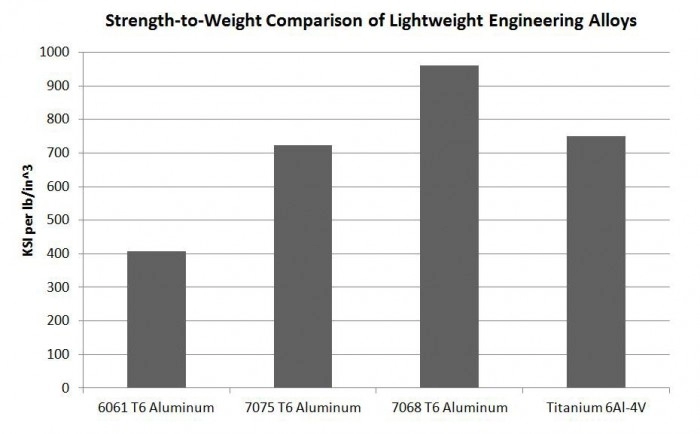
Steel generally has a higher tensile strength MPa aluminum simply cannot match in a 1:1 thickness comparison. However, aluminum is roughly one-third the weight. In the US automotive and aerospace markets, we prioritize aluminum vs steel strength because aluminum provides a superior strength-to-weight ratio, allowing for lighter, faster, and more fuel-efficient designs without sacrificing safety.
Why choose investment casting over sand casting for strength?
Investment casting results in a much denser metal structure with significantly less internal porosity. While understanding how sand casting aluminum is used in manufacturing is important for large-scale industrial components, investment casting is the go-to for parts requiring maximum cast aluminum tensile strength. The precise cooling rates and ceramic molds we use create a refined grain structure that sand molds simply can’t replicate.
- A380 Tensile Strength: ~310 MPa (45 ksi)
- A356-T6 Tensile Strength: ~234 MPa (34 ksi)
- 7075-T6 (Wrought) Strength: ~572 MPa (83 ksi) — used as a benchmark for aluminum alloy strength.

 English
  German
Reviews
There are no reviews yet.