
What Is Cast Stainless Steel?
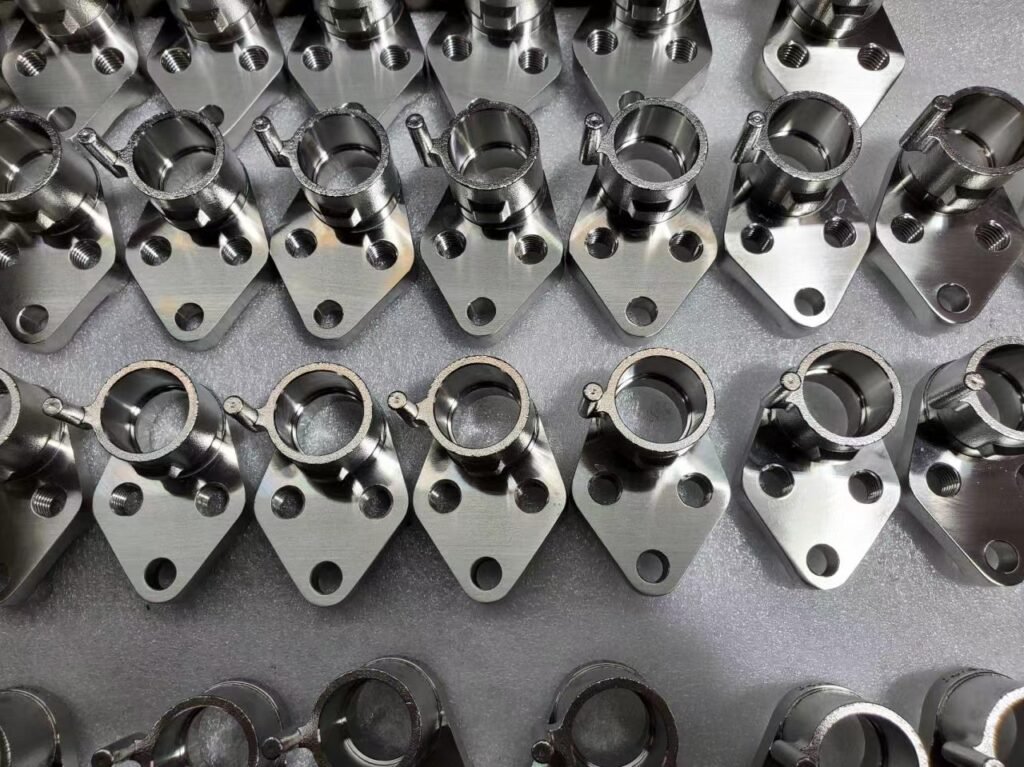
Cast stainless steel refers to components produced by pouring molten stainless alloy into a pre-formed mold, allowing it to solidify into a specific shape. At Precision Vast, we specialize in stainless steel investment casting (also known as lost-wax casting), a process that delivers superior surface finishes and dimensional accuracy compared to traditional sand casting methods.
Understanding the Investment Casting Process
Our process begins with a precise wax pattern that is coated in a ceramic slurry—typically using a silica sol binder system—to create a robust shell. Once the shell is hardened, the wax is melted out (dewaxing), and molten stainless steel is poured into the cavity. This method allows us to produce precision stainless steel castings with intricate details that would be impossible or prohibitively expensive to achieve through machining alone.
Manufacturing Comparison: Cast vs. Wrought vs. Forged
Understanding the difference between manufacturing methods is critical for selecting the right process for your application.
| Feature | Investment Casting | Wrought (Machined) | Forging |
|---|---|---|---|
| Design Freedom | High (Complex geometries, internal cavities) | Low (Limited to stock shapes) | Medium (Limited by die constraints) |
| Material Waste | Low (Near-net shape) | High (Subtractive process) | Low |
| Grain Structure | Isotropic (Uniform properties) | Directional (Aligned with rolling) | Directional (Aligned with flow) |
| Tooling Cost | Moderate | Low (None required) | High |
| Best Application | Complex, intricate parts | Simple shapes, low volume | High-stress structural parts |
Why Choose Casting for Complex Geometries?
The primary advantage of lost wax casting stainless steel is the ability to achieve near-net shapes. This means the cast part emerges from the mold very close to its final dimensions, significantly reducing the need for secondary machining.
- Design Flexibility: We can cast undercuts, thin walls, and complex internal passages in a single piece.
- Cost Efficiency: By minimizing waste and machining time, casting is often more economical for complex custom stainless steel parts.
- Alloy Versatility: We cast a wide range of alloys, including 304, 316, and Duplex Stainless Steel, without the difficulty associated with machining hard materials.
Our Custom Stainless Steel Casting Capabilities

At PrecisionVast, we specialize in precision investment casting (also known as the lost-wax process) to deliver high-quality custom components. We utilize the advanced Silica Sol process, which offers superior surface finishes and dimensional accuracy compared to traditional methods. This approach allows us to manufacture complex cast stainless steel geometries that would be difficult or cost-prohibitive to machine from solid stock.
We support your project from the initial concept to final production. Our capabilities include rapid prototyping via SLA 3D printing, allowing us to validate designs before committing to hard tooling. With an annual production capacity of 700 tons, we are equipped to handle everything from small-batch prototypes to high-volume manufacturing runs for global industries.
Technical Specifications and Standards
We adhere to strict quality standards to ensure every part meets your exact requirements.
- Dimensional Tolerances: Our Silica Sol casting process achieves high precision, typically meeting CT5 – CT6 standards according to ISO8062 (GB/T6414).
- Surface Finish: We deliver parts with smooth surfaces directly from the mold, reducing the need for extensive post-processing.
- Material Versatility: We cast a wide range of alloys, including 304 and 316 stainless steel, Duplex stainless steel, and high-temperature alloys.
Secondary Services: Machining and Finishing
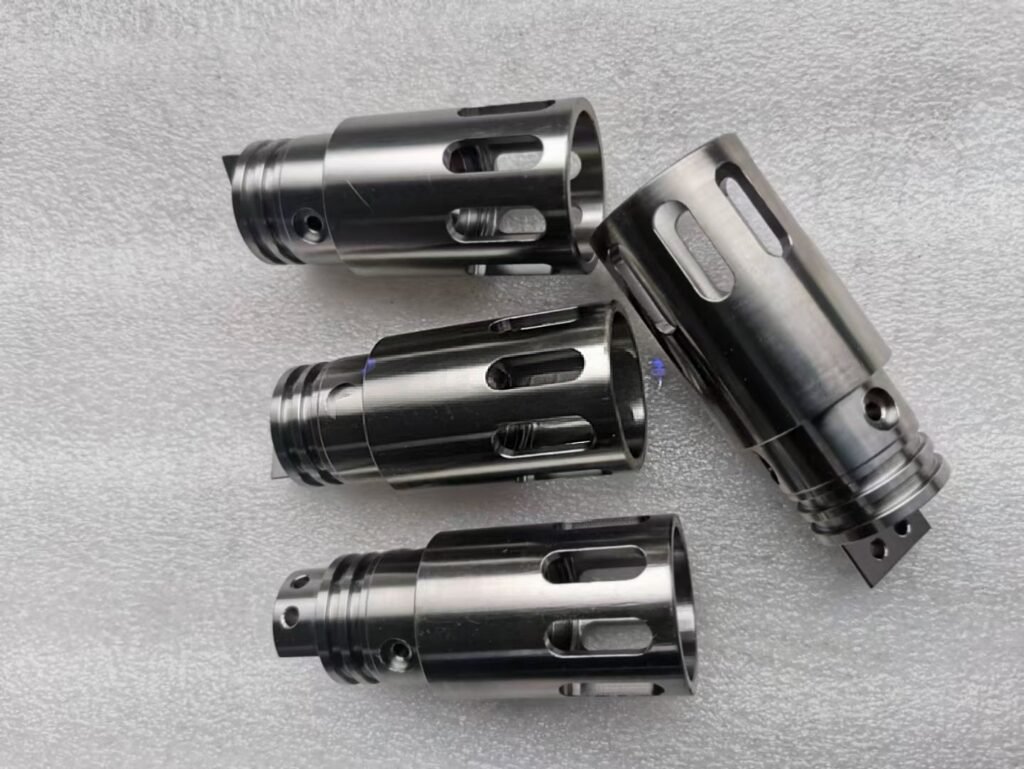
We provide a true one-stop solution by integrating secondary operations directly into our workflow. While our castings are precise, some features require even tighter tolerances. Our in-house CNC machining services ensure that critical dimensions, threads, and mating surfaces are perfected to your specifications.
To enhance the durability and appearance of your custom stainless steel parts, we offer comprehensive post-processing options:
- Heat Treatment: Processes like hardening, solution annealing, and tempering to optimize mechanical properties.
- Surface Treatment: Electropolishing, mirror polishing, shot blasting, and sand blasting for superior aesthetics and corrosion resistance.
Available Stainless Steel Casting Grades
At PrecisionVast, we adapt our casting process to suit the specific mechanical and chemical requirements of your project. Selecting the right alloy is critical for ensuring part longevity and performance. We specialize in a wide range of cast stainless steel materials, from standard austenitic grades to high-strength specialty alloys, ensuring we meet diverse industry standards.
Austenitic Grades: 304 (CF8) and 316 (CF8M)
For the majority of general industrial applications, austenitic stainless steels are the go-to choice due to their excellent ductility and toughness.
- 304 Stainless Steel Castings (CF8): This is the most versatile and widely used grade. It offers good corrosion resistance and excellent formability, making it ideal for food machinery, architectural hardware, and general valve components.
- 316 Stainless Steel Casting (CF8M): By adding molybdenum, this grade significantly improves resistance to chlorides and pitting. We recommend CF8M casting for marine hardware, chemical processing equipment, and environments exposed to salt water.
Duplex and Precipitation-Hardening Alloys
When your application demands higher strength than standard stainless can provide, we turn to advanced alloy solutions. Duplex stainless steel casting combines the properties of ferritic and austenitic steels, resulting in parts that are roughly twice as strong as standard 304 or 316, with superior resistance to stress corrosion cracking.
For components requiring high hardness and wear resistance, we utilize precipitation-hardening alloys like 17-4 PH stainless steel cast grades. These materials are heat-treatable to achieve specific mechanical levels, often used in aerospace and pump shafts. Understanding how to select the best properties of heat-resistant metals helps in choosing the right grade for extreme operating conditions.
Material Property Comparison
Choosing between cast stainless steel grades involves balancing tensile strength, yield strength, and elongation.
- Tensile Strength: Duplex and 17-4 PH grades offer significantly higher tensile strength compared to the standard 515 MPa found in 304/316 grades.
- Yield Strength: Duplex stainless steel provides a high yield point, allowing for thinner, lighter designs without sacrificing structural integrity.
- Elongation: Austenitic grades (304/316) retain high elongation (around 30-40%), ensuring parts can withstand impact without fracturing, whereas harder alloys may have lower ductility.
Advantages of PrecisionVast Cast Stainless Steel Parts
We deliver cast stainless steel components designed to solve specific engineering challenges. With over 20 years of experience and a 700-ton annual production capacity, our foundry focuses on consistency, performance, and delivering a true one-stop solution for our US clients.
- Superior Corrosion Resistance: We utilize high-grade 304, 316, and Duplex alloys to manufacture parts that withstand harsh environments. These corrosion resistant castings are essential for marine hardware, pump bodies, and chemical processing equipment where long-term durability is non-negotiable.
- High Dimensional Accuracy: Our silica sol investment casting process achieves precise CT5–CT6 tolerances according to ISO8062 standards. This near-net-shape capability significantly reduces the need for expensive secondary machining. For components requiring specific mechanical enhancements, we also integrate advanced casting heat treatment to ensure the final parts meet your exact hardness and strength specifications.
- Complex Design Flexibility: Unlike wrought or forged manufacturing, precision stainless steel castings allow for intricate internal passageways, thin walls, and complex undercuts in a single piece. This design freedom lets you consolidate multiple assembled parts into one robust unit, reducing assembly time and potential leak paths.
- Cost-Effective Scalability: Whether you need a rapid prototype via SLA 3D printing or a high-volume production run, our facility is equipped to handle it. We provide custom stainless steel parts with a factory-direct pricing model, ensuring you get premium quality without the middleman markup.
The Investment Casting Process Step-by-Step
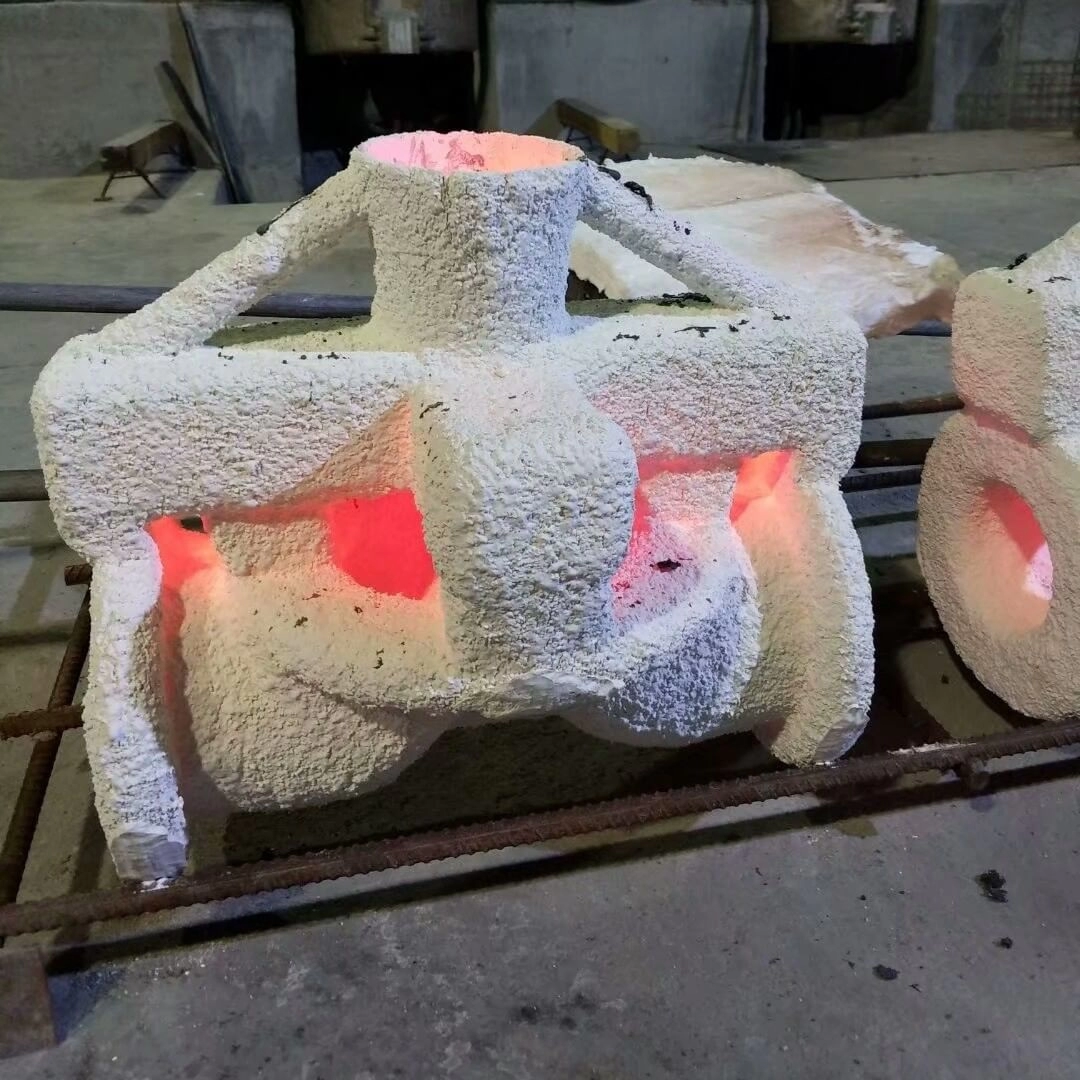
At Precision Vast, we rely on the proven investment casting process—often called lost wax casting stainless steel—to deliver parts with exceptional detail and dimensional accuracy. This method allows us to transform raw alloys into precise, durable components efficiently, minimizing the need for extensive secondary work.
Here is how we turn your design into a finished cast stainless steel part:
- Wax Pattern Injection: We start by injecting molten wax into a metal die to create an exact replica of the final part. These wax patterns are then assembled onto a “tree” to create a cluster for efficient batch pouring.
- Shell Building: The wax tree is dipped into a ceramic slurry and coated with refractory sand. We utilize a silica sol process, which provides superior surface finish and higher dimensional stability compared to standard water glass methods. This creates a hard ceramic shell around the wax.
- Dewaxing & Pouring: The ceramic shell is heated in an autoclave to melt and remove the wax (hence “lost wax”). We then pour molten stainless steel into the hollow shell. When working with specialized grades, understanding the properties of high-temperature alloys ensures the casting withstands the necessary thermal stresses during solidification.
- Shell Removal & Cleaning: Once the metal solidifies, the ceramic shell is broken away using vibration or water jets. The parts are cut from the tree and undergo initial cleaning, such as shot blasting or sand blasting, to remove any residual ceramic.
- Finishing & Inspection: Finally, the parts undergo advanced finishing. This may include heat treatment (hardening, annealing), CNC machining for critical tolerances, or surface treatments like electropolishing and mirror polishing. We verify every batch with rigorous testing, including CMM inspection and X-ray analysis, to ensure total quality compliance.
Industrial Applications for Stainless Steel Castings
We supply cast stainless steel components to industries where durability and corrosion resistance are non-negotiable. Our investment casting process allows us to deliver complex geometries that would be too costly or impossible to machine from solid blocks. Whether you are designing for the open ocean or a sterile operating room, we have the right alloy and finishing capability.
Here is where our custom stainless steel parts make the biggest impact:
- Marine Hardware: Saltwater environments demand the superior corrosion resistance of marine grade stainless casting (typically 316 or Duplex). We manufacture high-polish cleats, hinges, and deck fittings that resist pitting and rust.
- Pumps, Valves, and Fittings: The fluid handling industry relies on stainless steel castings for pump bodies and valve housings. The lost wax process creates smooth internal channels for efficient flow control.
- Food Processing & Medical: Hygiene is critical in these sectors. We produce smooth, electropolished parts for food machinery and medical instruments using 304 and 316 grades that are easy to sanitize.
- Automotive & Architecture: From heavy-duty door lock hardware to architectural glass spiders, our parts provide both strength and aesthetic appeal. While engineers often weigh the benefits of stainless steel casting vs. forging for structural components, casting remains the superior choice for complex automotive shapes requiring minimal secondary machining.
Quality Assurance and Testing Standards
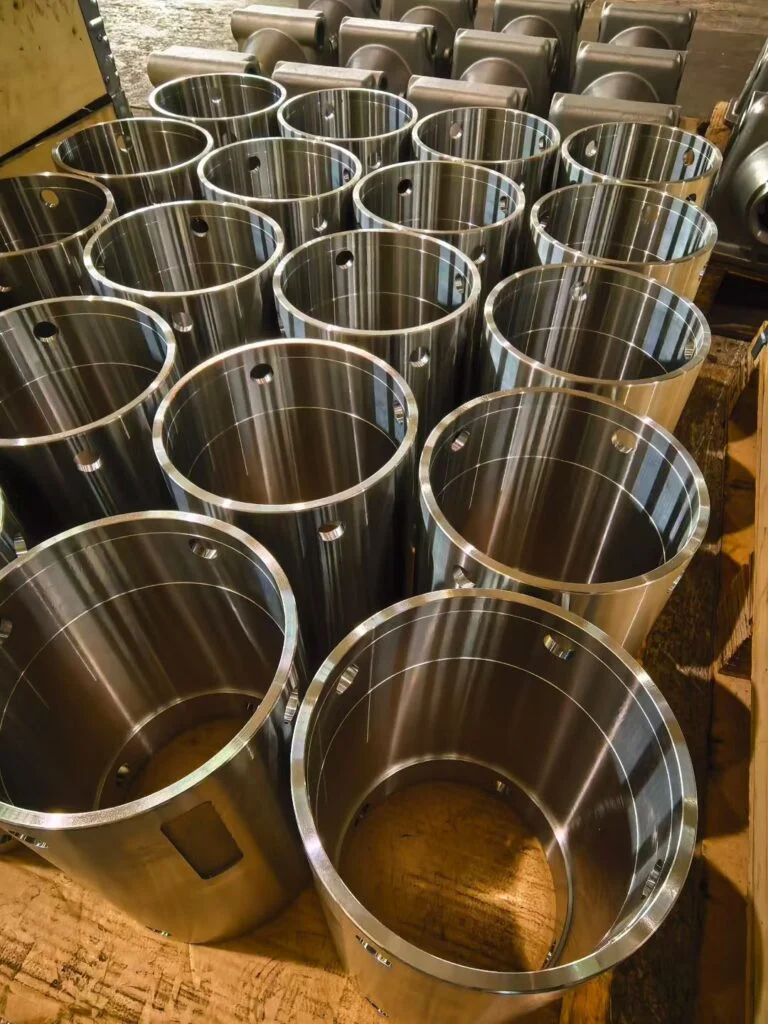
At Precision Vast, we know that reliability is non-negotiable. Our manufacturing facility operates under strict ISO9001 certified protocols to ensure every cast stainless steel component meets your exact specifications. We don’t just cast parts; we verify them to guarantee they perform correctly in the field.
To ensure internal integrity and surface quality, we employ rigorous Non-destructive testing (NDT) methods. This includes X-Ray testing to detect internal porosity or voids that aren’t visible to the naked eye, and Magnetic Particle Inspection (MPI) to identify any surface irregularities that could compromise the part’s strength.
Our comprehensive quality control workflow includes:
- Dimensional Verification: We utilize advanced CMM (Coordinate Measuring Machine) technology to confirm that physical tolerances align perfectly with your original CAD data.
- Material Traceability: Every production batch is backed by detailed chemical analysis reports, ensuring the alloy composition matches standard grades like 304 or 316 without deviation.
- Mechanical Testing: We verify tensile strength, yield strength, and hardness to ensure the material properties meet industrial standards.
Understanding the nuances of material science in component construction is critical to our process, allowing us to deliver certified, high-performance parts for demanding applications in marine, medical, and automotive sectors.
Frequently Asked Questions About Stainless Steel Casting
Investment Casting vs. Sand Casting: Which is Right?
For most cast stainless steel projects requiring detail, investment casting process (lost-wax) is the superior choice. While stainless steel sand casting is cost-effective for large, heavy parts where surface finish isn’t critical, it lacks precision. Our investment casting method delivers a smooth surface finish and intricate detail that sand casting simply cannot match. If your part needs to look professional and fit perfectly without excessive machining, investment casting is the standard.
Typical Lead Times for Prototypes and Production
Time is money, and we are set up for speed. Because we operate factory-direct, we cut out the middlemen that usually slow things down.
- Prototypes: We utilize rapid prototyping technologies like SLA (Stereolithography) to produce wax patterns quickly, allowing for faster sample delivery.
- Production: Timelines vary by volume, but our efficient workflow ensures a steady supply chain.
For more insights on manufacturing timelines and industry trends, you can explore our manufacturing insights blog.
Handling Minimum Order Quantities (MOQs)
We understand that not every project starts with a million units. We are equipped to handle both small batches for market testing and large-scale runs up to 700 tons annually. Whether you need a few dozen custom stainless steel parts or a full container load, our production lines in Dongying are scalable to meet your specific demand.
Can You Achieve Tight Tolerances Without Secondary Machining?
Yes, this is the main advantage of precision stainless steel castings. Using the silica sol process, we achieve strict dimensional tolerances (CT5 – CT6). This “near-net shape” capability means the cast part is extremely close to the final dimensions right out of the mold. For many applications, this eliminates the need for secondary CNC work entirely, significantly reducing your cost per part.