

Precision Casting & CNC Machining Services: The Complete Turnkey Solution
Are you tired of juggling multiple vendors just to get a single part finished? Managing a foundry for the raw shape and a separate machine shop for finishing touches often leads to finger-pointing, shipping delays, and quality inconsistencies. We solve this by bringing casting cnc machining together under one roof. By integrating die casting services with precision secondary operations, we transform raw metal into your final component without it ever leaving our facility.
From Raw Metal to Precision Part—Under One Roof
Our hybrid approach bridges the gap between high-volume molding and high-precision finishing. We utilize near net shape manufacturing to cast parts as close to the final geometry as possible, then immediately transfer them to our CNC floor for critical tight-tolerance work. This seamless transition ensures that post-casting machining is planned right from the mold design phase, significantly reducing the risk of machining into porosity or structural defects.
Eliminate Logistical Bottlenecks
When you partner with us, you eliminate the “middle mile.” There is no waiting for freight between the foundry and the machine shop, and no disputes over who is responsible for scrap. We streamline the entire production chain:
- Single-Source Responsibility: We own the quality from the melt to the final inspection.
- Reduced Lead Times: Integrated scheduling means parts move instantly from cooling to cutting.
- Cost Optimization: We design molds specifically to minimize the amount of material that needs to be removed during secondary machining operations, saving you money on cycle time and waste.
Why Choose a Hybrid Manufacturing Approach?
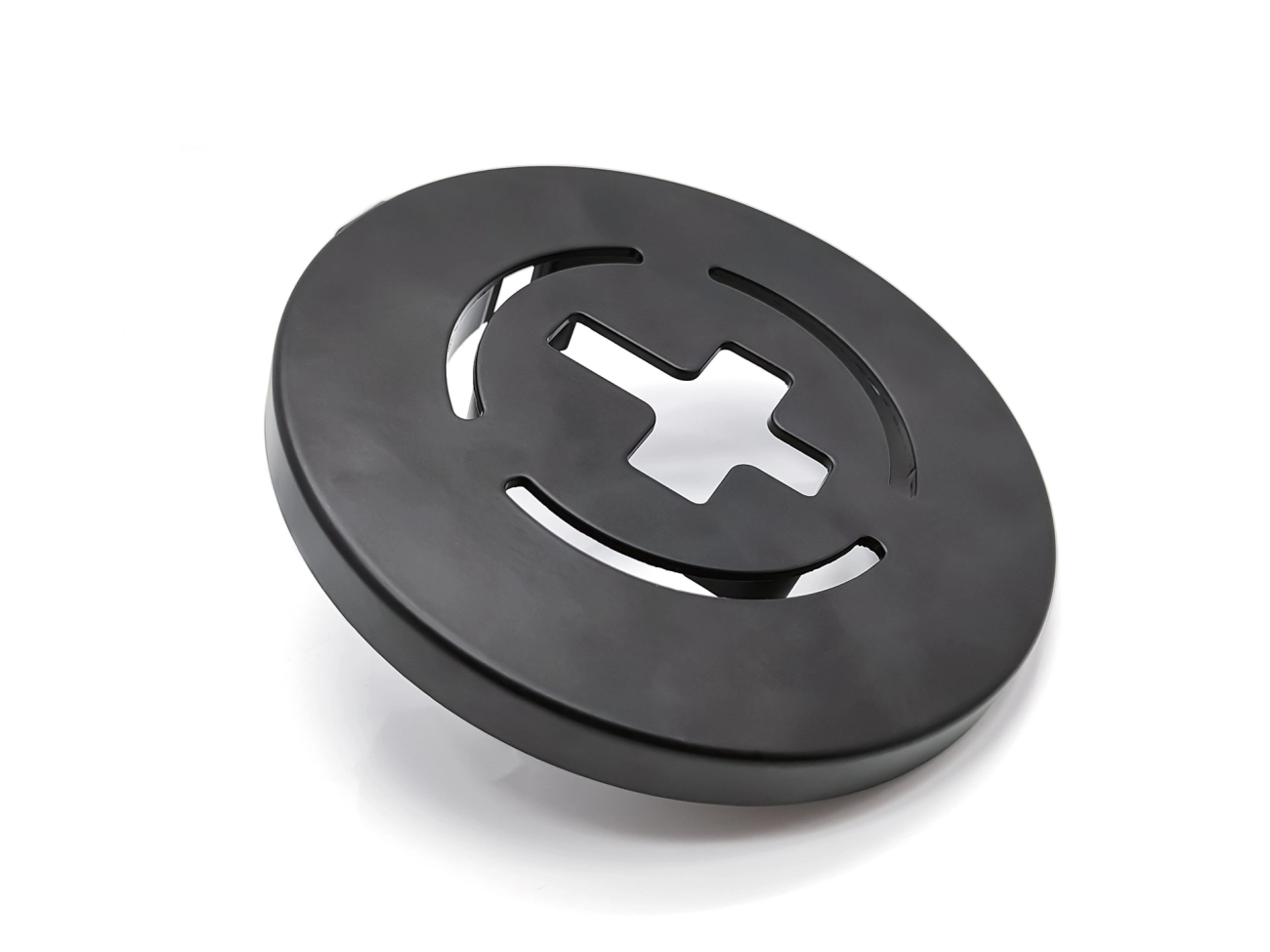
Integrating casting cnc machining offers a strategic advantage for producing complex metal components that require both structural integrity and tight tolerances. Instead of machining a part entirely from a solid block, we utilize near net shape manufacturing to create the initial form. This approach drastically reduces raw material waste and cuts down on the cycle time required for secondary machining operations. Whether you are comparing aluminum vs. other metals for your project or utilizing stainless steel, the hybrid model ensures material is used efficiently.
By managing the transition from the casting floor to the machine shop internally, we eliminate the logistical bottlenecks and quality disputes often seen with multi-vendor sourcing. As your dedicated OEM manufacturing partner, we streamline the workflow to deliver finished parts faster and more reliably.
Benefits of Integrated Production
| Feature | Benefit Description |
|---|---|
| Cost Efficiency | Casting achieves the base geometry first, significantly reducing metal scrap and machining hours compared to cutting from solid stock. |
| Speed to Market | A seamless workflow from raw casting to precision CNC milling removes shipping delays between vendors, accelerating lead times. |
| Accountability | We take full responsibility for the entire quality chain, ensuring no “vendor gaps” between the foundry and the machining team. |
Our Core Capabilities: Casting Meets Precision
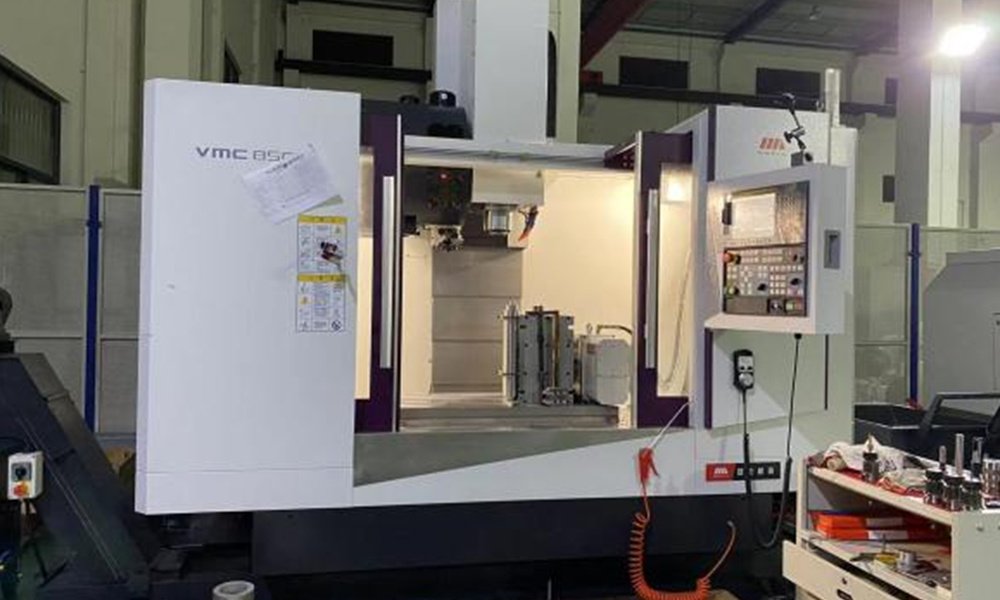
At Precision Vast, we bridge the gap between raw foundry output and final assembly specifications. Our facility integrates primary metal formation with advanced casting cnc machining, ensuring a seamless transition from liquid metal to a finished, high-precision component. This vertical integration allows us to control quality at every stage, eliminating the logistical headaches of managing separate casting and machining vendors.
Casting Processes
We tailor our production methods to match your volume requirements and part complexity. Our foundry capabilities support a wide range of industrial needs:
- High-Pressure Die Casting (HPDC): We utilize high-pressure techniques for high-volume runs that demand consistent dimensional stability and excellent surface finish. For applications requiring high strength-to-weight ratios, our structural die casting capabilities provide robust solutions for complex geometries.
- Gravity & Sand Casting: These methods are deployed for larger, heavier components or lower-volume runs where tooling costs need to be minimized without sacrificing material integrity.
- Investment Casting (Lost Wax): We also specialize in the silica sol process for intricate stainless steel and alloy parts that require near-net shapes right out of the mold.
Secondary CNC Operations
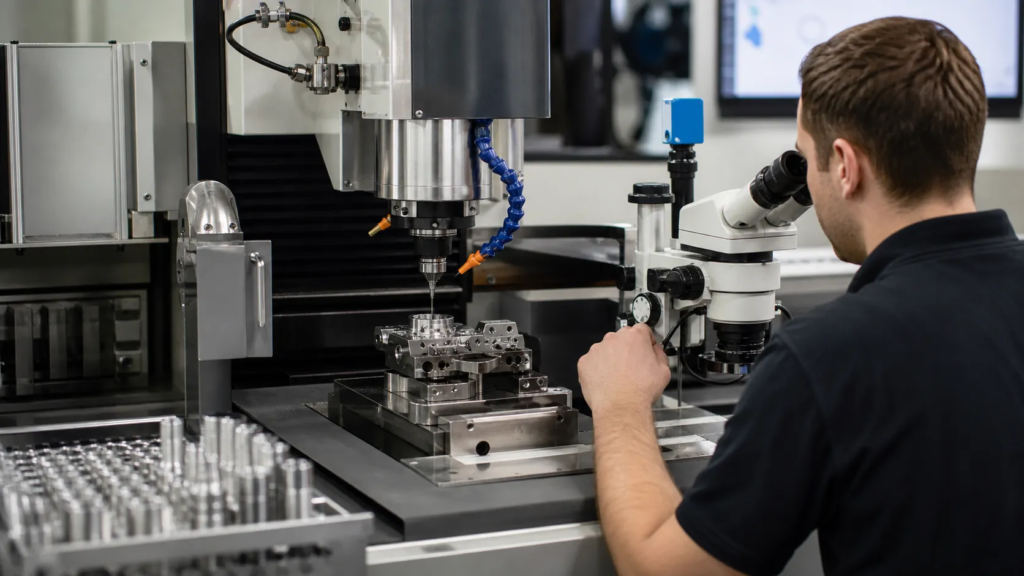
While casting provides the near-net shape, our secondary machining operations deliver the final precision. Our in-house machine shop is equipped to handle the specific challenges of machining cast metals, including:
- 3, 4, & 5-Axis Milling: We machine complex features, undercuts, and mounting surfaces that cannot be achieved through casting alone.
- CNC Turning & Facing: Essential for creating precise cylindrical dimensions and perfectly flat sealing surfaces on valve and pump components.
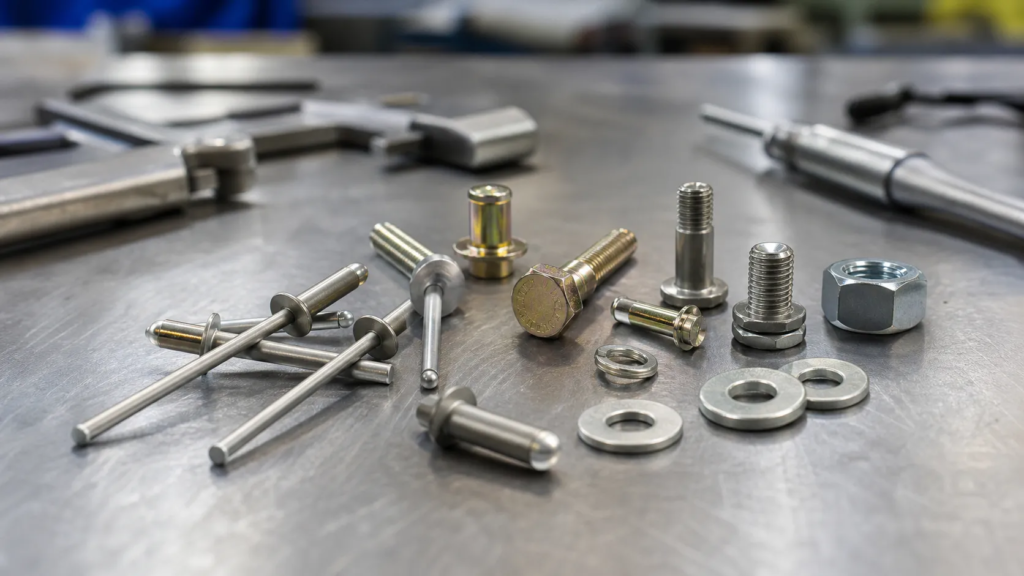
- Drilling, Tapping & Grinding: We perform all necessary finishing steps to ensure threads are clean and surface roughness meets assembly requirements.
Achievable Tolerances
We manage the critical difference between “as-cast” tolerances and precision engineering limits. Our raw castings generally adhere to ISO 8062-3 Degree CT5-CT7 standards. However, for critical mating surfaces, our tight tolerance machining brings dimensions down to the micron level. This hybrid approach ensures you get the cost benefits of casting with the precision of CNC machining where it matters most.
Material Specifications for Cast and Machined Parts
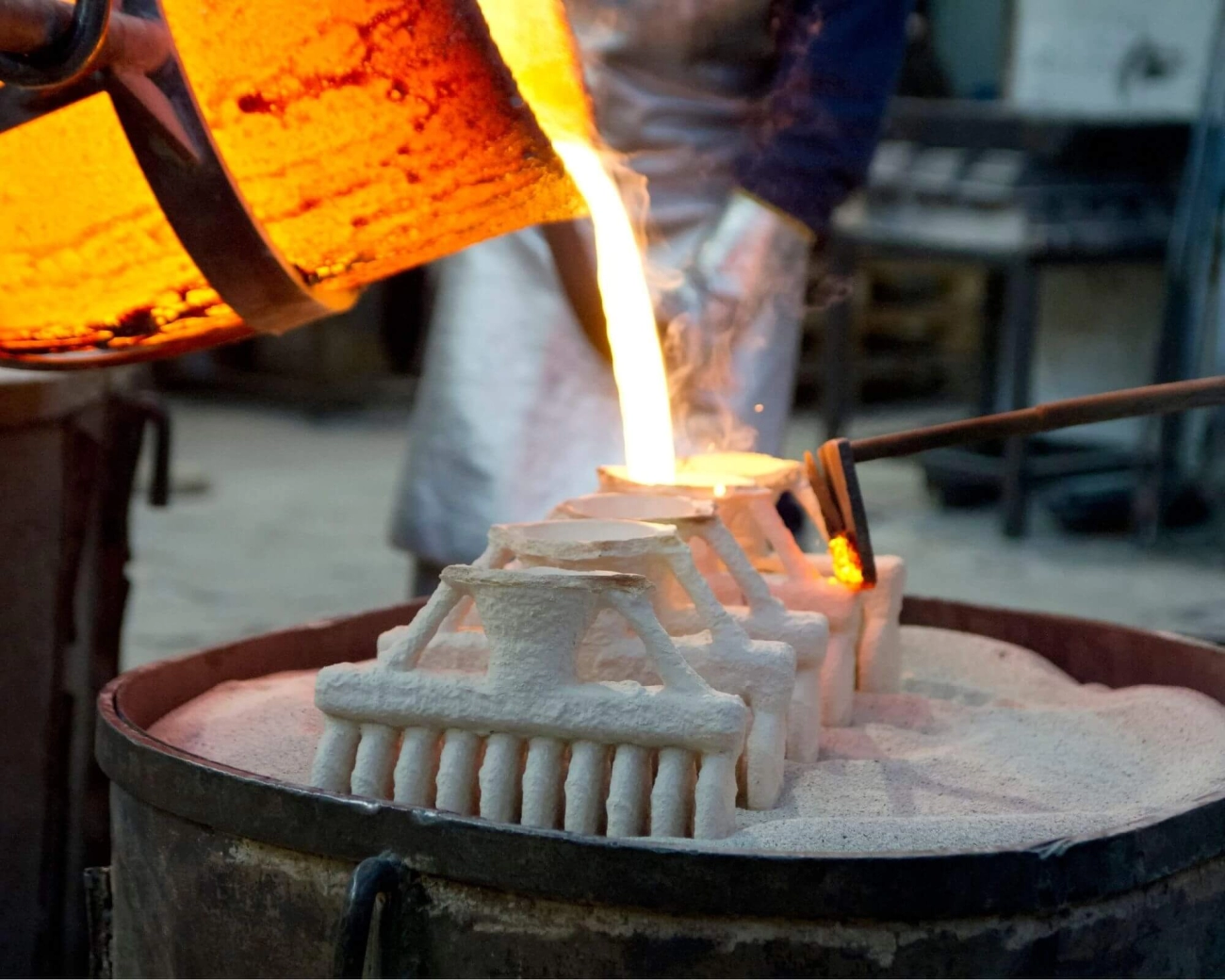
Selecting the right material is critical for optimizing the casting cnc machining workflow. We specialize in high-grade metals that balance castability with machinability, ensuring your components meet strict mechanical requirements without sacrificing production efficiency. Our expertise focuses on materials designed for high-stress and high-precision applications, particularly within the investment casting (lost wax) spectrum.
For projects requiring robust durability, our carbon steel and investment casting services offer a cost-effective route to high-performance parts. We handle the entire process, from the initial pour to secondary machining operations, ensuring material integrity is maintained throughout.
Common Material Grades & Applications
| Material Category | Grades Handled | Key Characteristics |
|---|---|---|
| Stainless Steel | 304, 304L, 316, 316L, 17-4PH | Excellent corrosion resistance and high strength. Ideal for marine hardware, valve components, and food machinery. |
| Carbon Steel | WCB, LCC | Cost-effective with good mechanical properties. Widely used for general industrial machinery and structural components. |
| Alloy Steel | 4140, 8620 | High toughness and wear resistance. Perfect for high-stress automotive and heavy equipment parts requiring heat treatment. |
We also provide specialized custom metal fabrication advice to help you navigate trade-offs between hardness and machinability. By understanding the specific properties of heat-resistant alloys, we can adjust our precision CNC milling parameters to maintain tight tolerances (ISO 8062-3 Degree CT5-CT7) while extending tool life and reducing costs.
The PrecisionVast Production Workflow
At Precision Vast, we control every step of the manufacturing chain to ensure the final product meets your exact specifications. Our integrated process eliminates the risks associated with moving parts between multiple vendors, providing a streamlined path from a digital file to a finished component.
- DFM Analysis: Before we cut any metal, our engineers perform a comprehensive Design for Manufacturing (DFM) review. We optimize your 3D models for mold flow and design specific fixtures for stable holding during casting cnc machining. This proactive step identifies potential issues early, reducing waste and ensuring the transition from design to production is seamless.
- Mold Fabrication & Raw Casting: We design and manufacture our tooling in-house to guarantee precision from the start. Whether the project requires complex investment casting or robust A356 aluminum alloy casting, we produce high-quality raw components that serve as the perfect foundation for secondary operations.
- Trimming & Precision CNC Machining: Once the raw parts are cast, we move to secondary machining operations. Our facility is equipped with advanced CNC milling and turning centers to handle tight tolerance machining. We trim excess material and machine critical features—like threaded holes and mating surfaces—that the casting process alone cannot achieve.
- Surface Finishing: The final step involves enhancing the part’s durability and aesthetics. We offer a full range of surface finishing services, including polishing, passivation, plating, and powder coating, delivering a ready-to-use component right out of the box.
Quality Assurance & Metrology
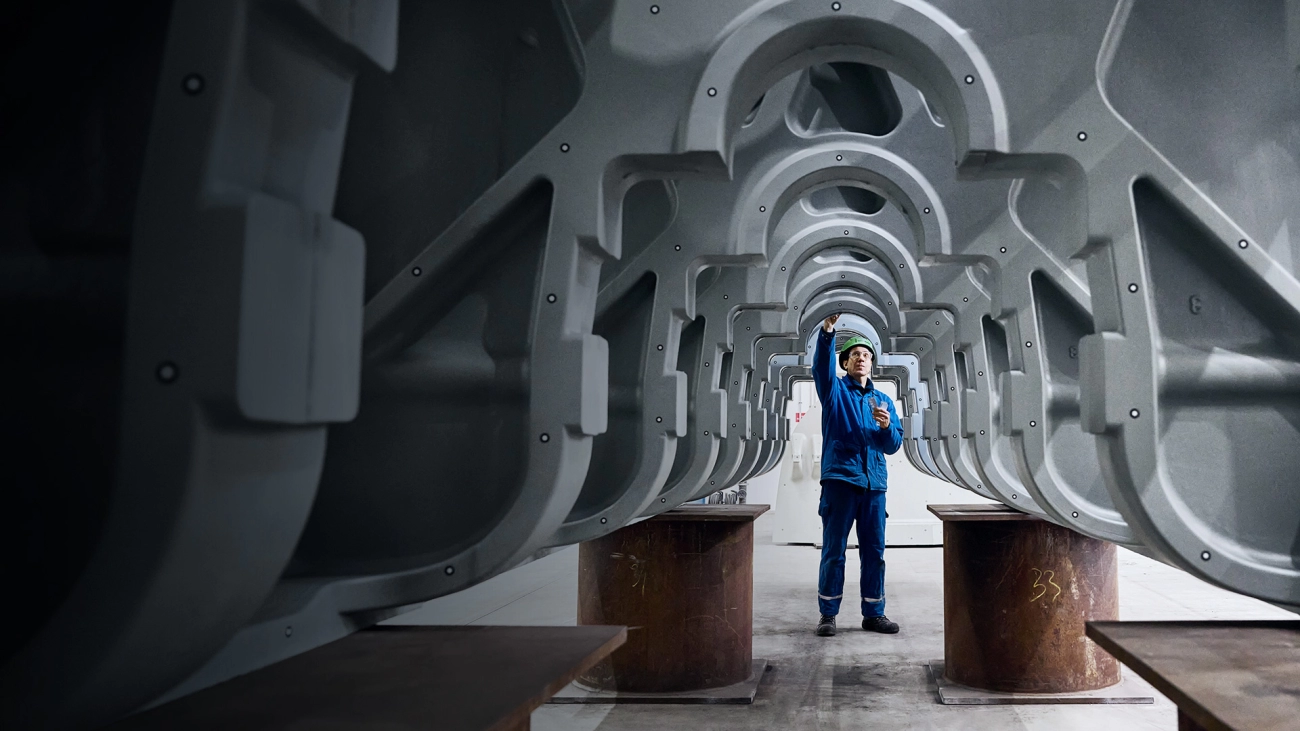
Quality isn’t just a checkbox; it is the backbone of our casting cnc machining operations. As an ISO 9001:2015 certified manufacturer, we maintain strict accountability across the entire production chain, eliminating the blame game that often happens between separate foundries and machine shops. We ensure that the raw integrity established during the role of lost wax casting in precision manufacturing translates flawlessly into the final machined component.
To guarantee compliance with international standards (ASTM, DIN, JIS), we employ a rigorous testing suite:
- In-Process Inspection: We utilize real-time monitoring throughout the casting and molding process. This allows us to identify and correct potential deviations before they affect the final output.
- CMM Verification: For tight tolerance machining, our Coordinate Measuring Machines (CMM) validate complex geometries and critical dimensions, ensuring every part matches your technical drawings down to the micron.
- Material Integrity Testing: We don’t guess with materials. We use Spectrometers to verify the chemical composition of stainless and alloy steels, alongside X-Ray inspection to detect internal porosity or defects before secondary machining begins.
Industry Applications for Hybrid Manufacturing
Our integrated approach to casting cnc machining serves sectors where failure is not an option. By combining the geometric freedom of casting with the dimensional accuracy of CNC machining, we deliver custom metal fabrication solutions tailored to specific industry standards.
Automotive Components
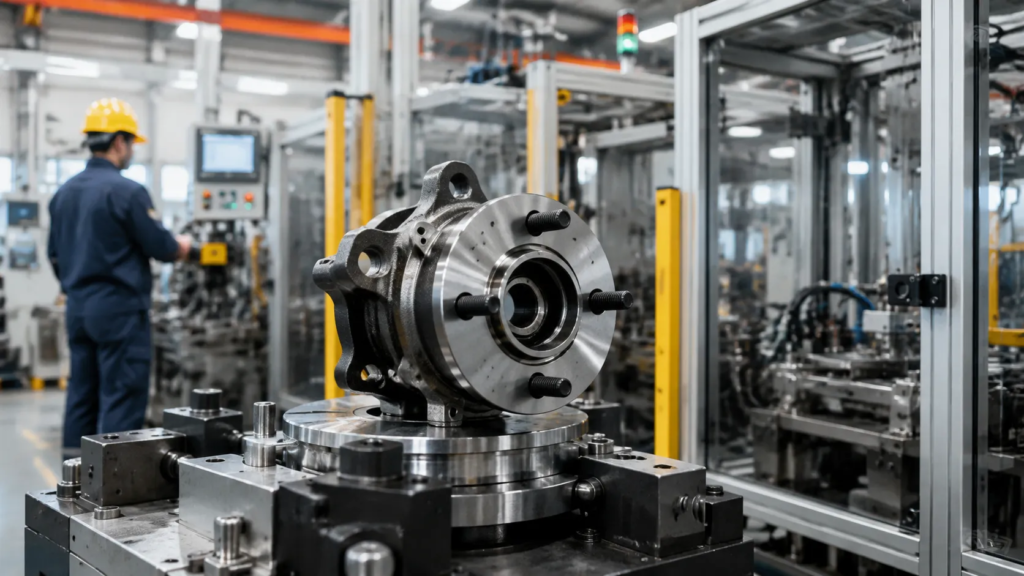
We manufacture critical vehicle parts that demand high strength and thermal conductivity. Our process is essential for producing complex engine housings, transmission cases, and heat sinks. By leveraging the specific benefits of die casting in automotive parts production, we ensure that every component meets rigorous safety and performance benchmarks while maintaining cost-effectiveness for high-volume runs.
Telecommunications Hardware
The rollout of modern networks requires durable, weather-resistant hardware. We supply precision-engineered parts for the telecom industry, including:
- 5G Base Station Enclosures: Lightweight yet rugged casings designed for heat dissipation.
- Antenna Mounts: Structural components capable of withstanding environmental stress.
Medical Devices
In the medical field, material purity and precision are paramount. We utilize high-grade stainless steel and aluminum to manufacture diagnostic equipment chassis and intricate surgical tool components. Our secondary machining operations ensure that surfaces are smooth, sterile, and meet the tightest tolerances required for medical instrumentation.
Industrial Equipment
Our roots are deep in the industrial sector, particularly for fluid control systems. We specialize in:
- Pump Bodies: Robust casings designed to handle high pressure.
- Valve Components: Precision-machined seating and connection points to prevent leaks.
- Pneumatic Fittings: Durable parts manufactured for long-term reliability in automated systems.
Frequently Asked Questions (FAQ)
When should I switch from pure CNC machining to Casting + CNC?
The decision usually comes down to volume and material waste. If you are machining complex parts from a solid block (billet), you are paying for material that just ends up as chips on the floor. Switching to casting cnc machining makes sense when your production quantities justify the initial tooling cost. By utilizing near net shape manufacturing, we cast the part close to its final form and use secondary machining operations only for critical features like sealing surfaces or threaded holes. This hybrid approach significantly lowers the per-unit cost for medium to high-volume runs.
How do you handle porosity in machined areas?
Porosity is a primary concern during post-casting machining, as uncovering a void can scrap a finished part. We tackle this early in the DFM analysis phase by optimizing gate placement and cooling rates to push potential porosity into non-critical areas or overflow tabs. For high-stress applications, we verify internal integrity using X-ray inspection before machining begins. Understanding the material density differences is crucial; for instance, knowing the advantages and disadvantages of high-pressure die casting versus investment casting helps in selecting the right process to minimize porosity risks in your specific application.
What is the lead time for tooling vs. production?
Tooling is the initial hurdle, typically taking a few weeks for design, fabrication, and sampling depending on the complexity of the mold. Once the tooling is approved (T1 sample), production moves much faster. As your OEM manufacturing partner, we handle the entire workflow—from the foundry to tight tolerance machining—under one roof. This vertical integration eliminates the lag time usually caused by shipping parts between a casting house and a machine shop. To see how we manage dimensional accuracy during this transition, you can review our guide on investment casting tolerances for precision parts.

 English
  German