

Precisionvast castings manufacturing delivers near net shape metal components with investment casting CNC machining and ISO 9001 certified quality。
Understanding Core Methods: Why Investment Casting Wins
In the diverse landscape of castings manufacturing, selecting the right production method is the single most critical decision for project success. As a manufacturer with over two decades of experience, we know that while sand and die casting have their place, they often fall short when a project demands intricate details and strict dimensional tolerances. We specialize in the investment casting process (also known as lost-wax casting) because it bridges the gap between design complexity and structural integrity.
To help you determine the best fit for your components, we break down the distinct advantages of the primary casting methods:
- Sand Casting: Best suited for large, heavy parts where surface finish is secondary. While cost-effective for low volumes, it cannot match the surface smoothness or fine detail required for precision engineering.
- Die Casting: Excellent for high-volume production of non-ferrous metals like aluminum and zinc. However, it requires expensive tooling and is generally unsuitable for high-melting-point materials like steel or superalloys.
- Investment Casting (Lost-Wax): The superior choice for precision metal components. This method allows us to cast complex geometries with undercuts and thin walls that would be impossible with other techniques. It delivers a near-net-shape finish, significantly reducing the need for secondary machining.
For industries requiring high-performance parts—from medical equipment to marine hardware—our investment casting process offers the ultimate flexibility. It supports a vast range of alloys, including stainless steel and titanium, ensuring that we never have to compromise on material properties to achieve a complex design.
The 14-Step Manufacturing Workflow: The Technical Heart
At the core of our operation is a disciplined 14-step castings manufacturing workflow. We don’t cut corners; we follow a strict investment casting process—often called lost-wax casting—to ensure every component meets exact specifications. This method allows us to transform complex designs into durable metal parts with tight tolerances.
From the initial wax model to the final inspection, every stage is critical. During the melting and pouring phase, we maintain strict control over temperature and chemistry, which is essential whether we are pouring superalloys or specific grades of carbon steel castings.
Breakdown of Our Production Process
We manage the entire lifecycle in-house to guarantee consistency. Here is how we move from raw material to finished product:
| Stage | Key Steps Involved |
|---|---|
| Mold & Pattern Prep | Wax Injection, Pattern Assembly |
| Shell Creation | Shell Building (dipping in ceramic slurry), Drying |
| Wax Removal | Dewax Operation using a Dewaxing Kettle |
| Casting | Melting, Pouring, and Solidification |
| Post-Processing | Shell Removing, Shot Blasting, Grinding off Inlet |
| Finishing | Pickling, Polishing, CNC Machining (Machine Shop) |
| Quality Control | Inspection, CMM (Coordinate Measuring Machine) verification |
This systematic approach ensures that by the time a part reaches the Shot Blasting or CMM inspection stage, it has already passed through multiple layers of quality assurance. We handle everything from the initial Shell Building to the final polish, giving you a factory-direct solution that prioritizes precision.
Beyond the Pour: Value-Added Services
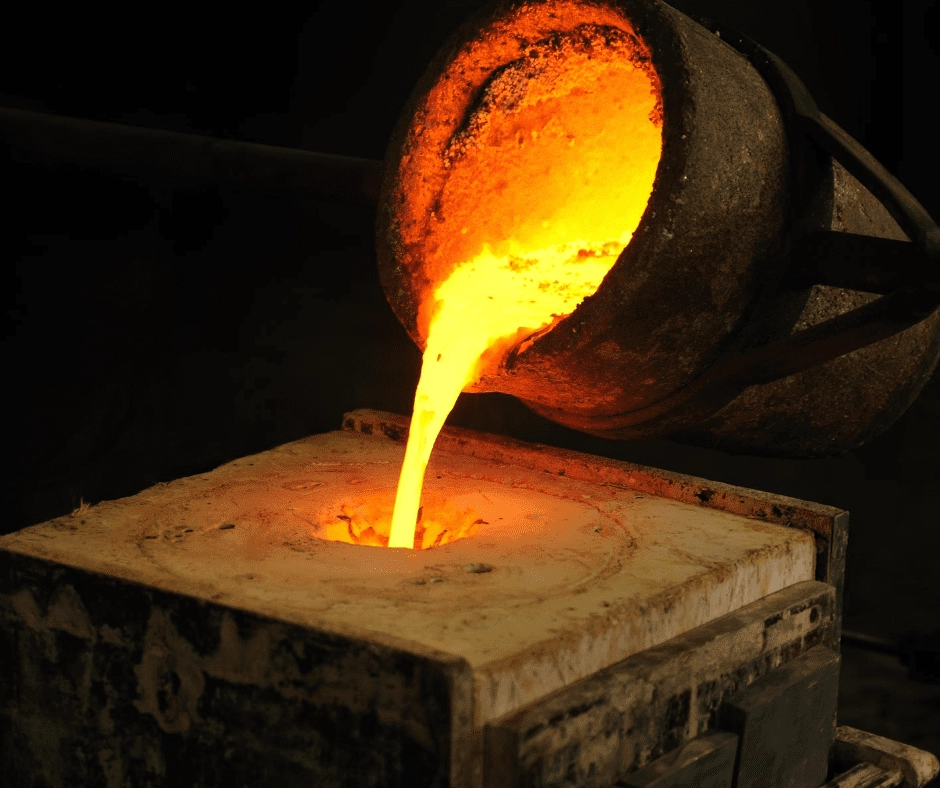
In the world of castings manufacturing, getting molten metal into a mold is often just the beginning. While the investment casting process delivers impressive detail, many industrial applications demand functionality and precision that go beyond the raw “as-cast” state. We view casting as the foundation, but our integrated secondary operations are what turn a rough part into a production-ready component. By handling these steps in-house, we eliminate the logistical headaches of dealing with multiple vendors.
To ensure every part meets strict mechanical and aesthetic standards, we provide a comprehensive suite of post-casting services:
- Rapid Prototyping (SLA): We combine SLA printing technology with precision casting to create prototypes quickly. This allows us to validate designs and test fitment before committing to full-scale mold production.
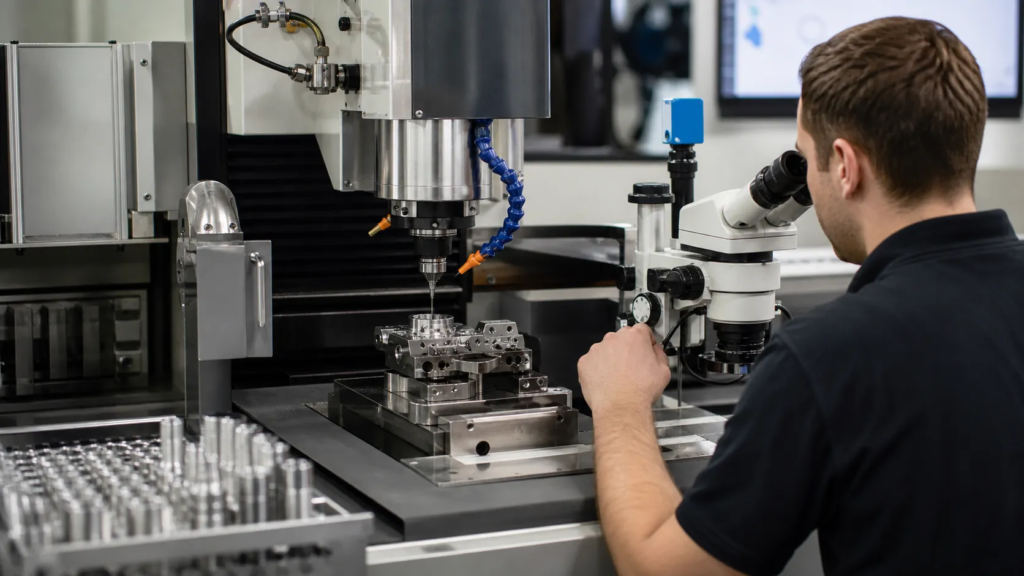
- CNC Machining Services: For areas requiring extremely tight tolerances, our machine shop utilizes advanced CNC equipment. We perform precise grinding, drilling, and milling to ensure perfect mating surfaces and dimensional accuracy.
- Heat Treatment Processes: To enhance physical properties like hardness and ductility, we apply specific heat treatments tailored to the alloy’s requirements.
- Surface Finishing Treatments: From shot blasting and pickling to final polishing, we ensure the surface quality meets both functional and cosmetic needs.
Whether we are processing complex carbon steel components or high-grade stainless steel casting projects, these value-added services ensure that the final product is durable, precise, and ready for immediate assembly.
Material Capabilities: What Can We Cast?
In the world of castings manufacturing, the metal you choose determines the performance of the final part. We don’t limit ourselves to basic iron; our facility handles a massive spectrum of materials to meet specific mechanical properties and environmental resistance requirements. Whether you need standard ferrous and non-ferrous alloys or specialized superalloys, we have the melting capacity and metallurgical expertise to deliver.
Ferrous Metals: Strength and Durability
Steel remains the backbone of industrial components. We specialize in precision pouring for:
- Carbon Steel & Alloy Steel: The go-to options for heavy-duty machinery parts, pumps, and valves where high tensile strength is non-negotiable.
- Stainless Steel: Essential for corrosion resistance. For sectors requiring strict sanitation, such as healthcare, stainless steel is the hygienic choice for medical environments and food processing machinery.
- Duplex Stainless Steel: Offers superior strength and corrosion resistance, making it ideal for marine hardware and harsh chemical settings.
Non-Ferrous and Superalloys
When weight reduction or extreme heat resistance is the priority, we switch gears to lighter or more robust materials:
- Aluminum Alloys: Perfect for lightweight automotive components and complex geometries.
- Titanium Alloys: Delivers a high strength-to-weight ratio for critical performance parts.
- High-Temperature Alloys: Engineered to withstand extreme thermal stress without deforming.
As a dedicated stainless steel foundry and alloy specialist, we strictly adhere to international material standards to ensure every pour meets your exact specifications.
Quality Assurance: The “Digital Passport” of Manufacturing
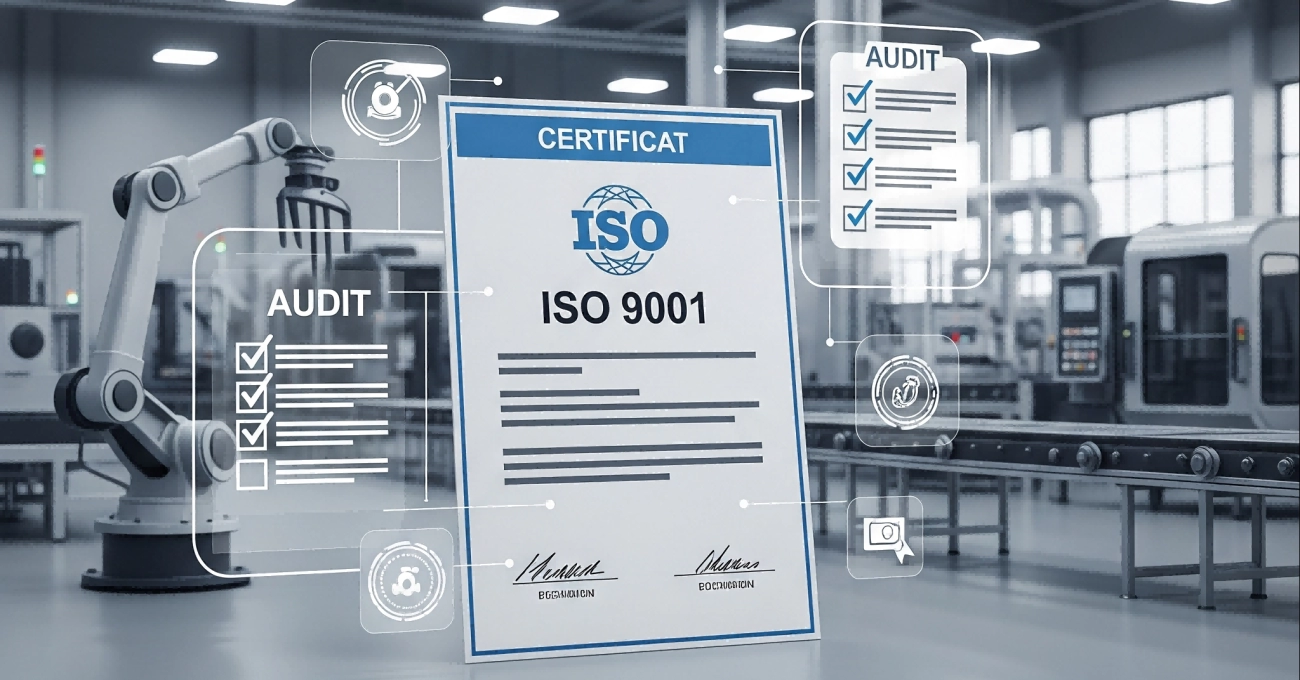
In the world of castings manufacturing, consistency is everything. We don’t just pour metal and hope for the best; we treat quality assurance as the “digital passport” every component must earn before leaving our facility. Operating as an ISO 9001 certified foundry, we adhere to strict international standards to ensure that the parts we ship are the exact parts you designed.
To guarantee structural integrity without damaging the component, we rely heavily on Non-destructive testing (NDT). Our rigorous inspection protocols dig deep below the surface to identify potential issues that the naked eye can’t see.
Our Quality Control Toolkit Includes:
- Coordinate Measuring Machine (CMM): We verify strict dimensional tolerances to ensure every angle and curve matches your CAD files perfectly.
- Internal Structure Analysis: Using X-Ray and magnetic particle inspection to detect hidden porosity or cracks.
- Material Verification: Hardness testing and chemical analysis to confirm the alloy meets specific mechanical properties.
By integrating these advanced testing methods directly into our precision investment casting workflow, we eliminate the risk of “problem parts” reaching your assembly line. Whether it is a small batch or a large-scale production run, our focus remains on delivering reliable, defect-free components every time.
How to Choose the Right Castings Manufacturer
Selecting a partner for castings manufacturing goes beyond just comparing price sheets. You need a supplier that acts as an extension of your production line, capable of navigating complex geometries and strict delivery schedules. As a factory-direct source with over 20 years of experience, we know that the difference between a successful project and a delayed one often comes down to the manufacturer’s technical depth and transparency.
Evaluating Key Supplier Capabilities
When vetting a potential foundry, look for a “one-stop” solution that manages the entire lifecycle of the part. We integrate everything from initial custom mold design and SLA rapid prototyping to final processing. This integration ensures that if a design challenge arises, we can address it immediately without waiting on third-party vendors.
Use this checklist to evaluate potential partners:
- Engineering Support: Does the manufacturer offer design assistance? We utilize CAE casting simulation to predict and prevent defects before pouring metal.
- Quality Certifications: Ensure you are working with an ISO 9001 certified foundry. This guarantees that their processes meet international standards for consistency.
- Testing Infrastructure: Precision requires proof. Verify that the supplier performs rigorous NDT methods, such as magnetic particle inspection for investment casting, to detect surface and near-surface discontinuities.
- Production Scalability: Whether you need a small batch of “problem parts” or large-scale industrial component manufacturing, the facility must have the capacity to scale. Our facility manages an annual production capacity of 700 tons to meet fluctuating demands.
The Buyer’s Decision Matrix
To simplify your decision, we have broken down the critical factors you should demand from your casting partner:
| Evaluation Criteria | What to Look For | Why It Matters |
|---|---|---|
| Pricing Transparency | Detailed quotes separating mold costs from unit costs. | Prevents hidden fees and allows for accurate budget forecasting. |
| Response Time | Guarantees on communication (e.g., our 8-hour response policy). | Fast communication prevents bottlenecks in your supply chain. |
| Material Versatility | Ability to cast diverse alloys (Stainless, Carbon, Duplex). | Allows you to consolidate vendors even if your material needs change. |
| Value-Added Services | In-house CNC machining services and surface treatments. | Delivers a finished product ready for assembly, saving you time and logistics costs. |
Frequently Asked Questions About Castings Manufacturing
When you are sourcing industrial components, you need clear answers, not vague promises. In the world of castings manufacturing, the details matter just as much as the molten metal itself. Here are the most common questions we get from procurement managers and engineers regarding our process, capabilities, and logistics.
What kind of dimensional tolerances can you achieve?
Precision is the main reason buyers choose investment casting over other methods. We adhere strictly to international linear dimension tolerance standards (ISO 8062 / VDG P690).
- General Tolerances: We typically hold tight tolerances suitable for high-precision machinery parts.
- Critical Dimensions: For areas requiring exact fits, we utilize CNC machining services post-casting to ensure the part meets your specific print requirements.
- Verification: We verify every batch using CMM (Coordinate Measuring Machine) technology to guarantee dimensional tolerances are met before shipping.
Do you handle custom alloys and specific material requests?
Absolutely. We cast a wide variety of ferrous and non-ferrous metals depending on the application’s mechanical requirements.
- Aluminum: We are experts in lightweight solutions, specifically understanding 356 alloy properties for parts that need excellent corrosion resistance and strength.
- Titanium & Superalloys: For industries like aerospace or medical, we handle complex titanium applications and high-temperature alloys.
- Steel: Our foundry routinely processes carbon steel, stainless steel, and duplex stainless steel.
What is your Minimum Order Quantity (MOQ)?
We pride ourselves on flexibility. Unlike many foundries that only want massive volume, we support both small and large-scale production runs.
- Prototypes: We can handle low-volume runs for rapid prototyping (SLA) and testing.
- Mass Production: Our facility has an annual capacity of 700 tons, easily accommodating bulk orders.
- Problem Parts: We are willing to take on complex “problem parts” that other manufacturers might turn away due to difficulty or lower volume.
How does the custom mold design process work?
The process starts with your CAD file. If you don’t have a manufacturing-ready design, our engineering team assists with custom mold design to ensure the geometry is castable. We use CAE casting simulation software to predict how the metal will flow and solidify, preventing defects before we even cut the mold. This digital approach saves time and reduces material waste.
 English
  German