

Precisionvast casting with brass delivers custom investment cast parts with tight tolerances superior surface finish and certified copper zinc alloys.
Precision Casting with Brass: Engineering Excellence
At Precisionvast, we leverage over 20 years of foundry experience to deliver superior casting with brass solutions. Our ISO 9001-certified facility integrates advanced lost wax brass casting techniques with modern CAE simulation to produce components that meet rigorous engineering standards. As a one-stop manufacturing partner, we specialize in transforming complex geometries into high-performance parts, ensuring that every component—from industrial valves to marine hardware—adheres to strict metallurgical requirements.
The Brass Advantage: Machinability and Aesthetics
We utilize copper alloy investment casting to maximize the inherent benefits of brass. This material is favored for its excellent corrosion resistance, natural lubricity, and superior surface finish. Our process ensures that the aesthetic appeal of yellow or red brass is preserved while maintaining the structural integrity required for functional applications. Furthermore, brass offers exceptional machinability, allowing our in-house CNC shop to achieve tight tolerances with minimal tool wear, reducing overall production costs for our clients.
Production Capacity: Prototyping to Mass Production
Our manufacturing ecosystem is built for flexibility and scale. Operating a 4,000 sqm facility with over 200 skilled employees, we support projects of every size:
- Rapid Prototyping: We utilize SLA 3D printing technology to validate designs quickly before mold creation.
- Scalable Volume: Whether you need a small batch of custom brass fittings or high-volume runs, our 700-ton annual production capacity ensures consistent supply.
- Integrated Workflow: From mold design and wax injection to final inspection, we manage the entire lifecycle to guarantee speed and quality.
Brass Alloys & Material Specifications
At Precisionvast, we tailor our casting with brass services to meet specific mechanical and aesthetic requirements. Selecting the correct copper alloy is critical for ensuring the longevity and performance of your components. We provide a wide range of standard and custom formulations to match your project needs.
Yellow Brass for Decorative and Plumbing
We frequently utilize Yellow brass C85700 for parts requiring moderate strength and excellent machinability. Its distinct golden hue makes it the standard choice for architectural hardware, decorative fittings, and plumbing fixtures where visual appeal is paramount.
Red Brass (Gunmetal) for Valves and Pumps
For applications demanding superior corrosion resistance and pressure tightness, we recommend Red brass valve components (typically C83600). This “gunmetal” alloy is easily machined and cast, making it the industry standard for pump impellers, valve bodies, and fluid handling systems.
Silicon Brass for High-Strength Needs
When your application requires the strength of steel with the corrosion resistance of copper, Silicon brass casting is the answer. These alloys offer exceptional fluidity during the pour, allowing for thin-walled, complex geometries without sacrificing durability.
Manganese Bronze for Bearings and Gears
For heavy-duty mechanical parts, manganese bronze provides high tensile strength and wear resistance. It is our preferred material for manufacturing heavy-load brackets, gears, and marine components that must withstand significant stress.
Custom Alloy Support and Chemical Composition
We don’t just stick to standard charts; we engineer solutions. Our team uses advanced spectrometry to verify chemical compositions before pouring, ensuring every melt meets ISO and ASTM standards. To guarantee the internal integrity of these diverse alloys, we can apply rigorous X-ray testing for investment casting to detect any subsurface porosity or defects.
Common Brass Alloy Properties:
| Alloy Type | Common Grade | Key Feature | Typical Application |
|---|---|---|---|
| Yellow Brass | C85700 | Good Machinability | Decorative Hardware, Plumbing |
| Red Brass | C83600 | Corrosion Resistance | Valves, Pumps, Fittings |
| Silicon Brass | C87300 | High Strength | Impellers, Brackets |
| Manganese Bronze | C86300 | Wear Resistance | Gears, Heavy-load Bearings |
Our Brass Casting Process (Lost Wax Method)
At Precisionvast, we utilize a rigorous lost wax brass casting technique to deliver components with exceptional surface finishes and tight tolerances. Unlike simpler casting methods, this process allows us to produce intricate copper alloy investment casting parts that require minimal secondary machining, saving you time and money on the assembly line.
Step 1: Wax Pattern Injection with Aluminum Molds
Quality starts with the tooling. We design and manufacture high-precision aluminum molds directly in our facility. We inject liquid wax into these molds to create a near-perfect replica of your final part. This step is critical for maintaining the dimensional accuracy required for complex geometries and ensures that every detail of the design is captured before metal ever enters the equation.
Step 2: Ceramic Shell Building for High Temperatures
Once the wax patterns are assembled onto a tree, we dip them into a high-grade ceramic slurry and coat them with sand. We repeat this process multiple times to build a robust shell capable of withstanding the intense thermal shock of molten metal. This robust shell building technique mirrors the high standards used in steel casting, ensuring the mold maintains strict structural integrity during the pour.
Step 3: Metallurgy Control and Zinc Fume Management
Melting brass requires specific expertise to prevent defects. Since many brass alloys contain significant amounts of zinc, overheating can lead to zinc evaporation and porosity issues. We implement strict zinc fume control and precise temperature monitoring to maintain the exact chemical composition of the melt. Our precision foundry services focus on keeping the alloy stable and pure, ensuring the material properties meet your specifications.
Step 4: Controlled Casting and Solidification
We pour the molten brass into the pre-heated ceramic shells under controlled conditions. By carefully managing the cooling rate, we minimize shrinkage and prevent internal defects like shrinkage porosity. This controlled solidification process ensures that every casting achieves the necessary mechanical strength and meets ISO 9001 standards for reliability.
Technical Specifications & Tolerances
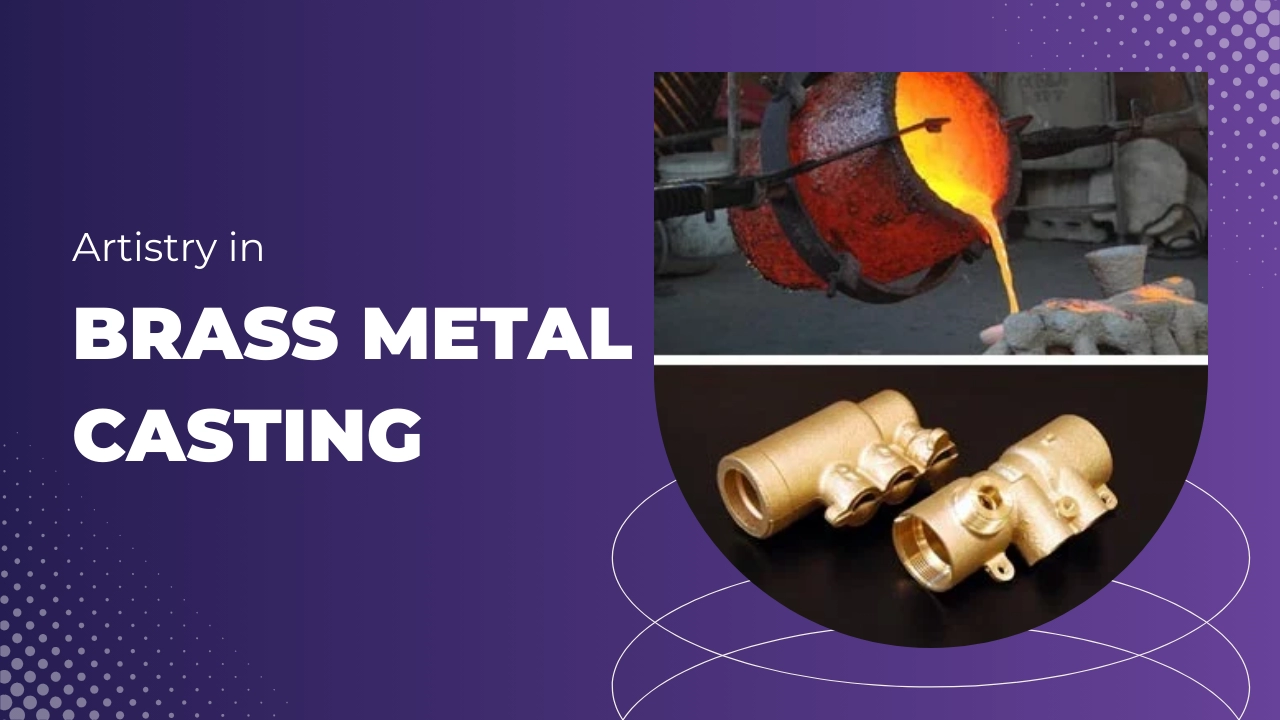
When we handle casting with brass, we don’t rely on guesswork. Our facility adheres to strict international standards to ensure every component fits your assembly perfectly right out of the box. We utilize advanced CMM inspection to verify that every dimension meets your exact requirements.
Dimensional Accuracy and ISO 8062 Standards
Precision is the core of our operation. For our lost wax brass casting process, we strictly follow the ISO 8062 standard for investment casting tolerances. This ensures that even complex geometries maintain high consistency across production runs.
- Standard Tolerance: CT5 – CT7
- Premium Tolerance: CT4 (Available upon technical review)
- Linear Tolerance: Typically ±0.005 inch per inch
Surface Finish and Post-Machining Options
One of the biggest benefits of investment casting is the superior surface finish compared to sand casting. Our raw cast parts come out clean, reducing the need for extensive secondary work.
- As-Cast Finish: Ra 3.2 – 6.3 μm (125 – 250 μin)
- Machined Finish: Ra 0.8 – 1.6 μm (32 – 63 μin) via our in-house CNC shop
- Post-Processing: Polishing, plating, and passivation available
Wall Thickness Capabilities for Thin-Wall Casting
Our ceramic shell building process allows us to pour molten brass into intricate molds with very thin sections. This is ideal for lightweight copper alloy investment casting applications where reducing material usage is critical without sacrificing structural integrity.
| Feature | Specification |
|---|---|
| Minimum Wall Thickness | 0.08 inches (2.0 mm) |
| Complex Geometries | Supported via soluble wax cores |
| Draft Angle | Not typically required for lost wax |
Weight Range Capabilities
Whether you need tiny electrical connectors or substantial marine hardware, our foundry is equipped to handle a wide spectrum of part sizes. We manage the entire production scope, from rapid prototyping small units to mass-producing heavy industrial components.
- Minimum Part Weight: 0.02 lbs (10 grams)
- Maximum Part Weight: Up to 175 lbs (80 kg)
- Production Volume: Flexible runs from prototype to high-volume manufacturing
Surface Treatments & Post-Processing for Brass
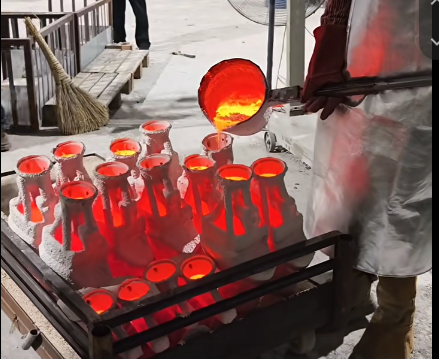
Casting with brass is often just the starting point. To turn a raw casting into a market-ready component, we apply rigorous post-processing techniques right here in our facility. Brass is prized for its golden luster and corrosion resistance, but achieving the perfect look and fit requires specialized attention after the metal solidifies.
Polishing for Decorative Hardware
For industries like marine and architectural hardware, appearance is everything. We utilize advanced polishing methods to bring out the natural beauty of decorative metal casting. Whether you need a high-gloss mirror finish for boat fittings or a satin look for door handles, our team ensures the surface is flawless. This step removes any minor surface irregularities left by the ceramic shell, delivering a premium aesthetic that defines high-quality brass products.
Passivation and Pickling for Oxidation Removal
Fresh out of the mold, brass can have surface oxidation or residues. We include pickling and passivation as standard steps in our 14-step manufacturing process.
- Pickling: Uses an acid solution to remove surface impurities and scale, leaving a clean, matte matte finish.
- Passivation: Enhances the natural corrosion resistance of the copper alloy, ensuring the part withstands harsh environments like saltwater.
Chrome, Nickel, and Gold Plating
While brass looks great on its own, some applications demand extra protection or a specific color match. We offer comprehensive plating services to coat your brass components. Chrome and nickel plating are standard for plumbing fixtures and bathroom accessories to prevent tarnish. For high-end luxury items, we also support gold plating. While we handle many different types of investment casting materials, brass remains the preferred substrate for plating due to its excellent adhesion properties.
In-House CNC Machining Services
Precision is non-negotiable. Even with the high accuracy of the lost wax process, certain features like internal threads, bearing surfaces, or extremely tight tolerances require mechanical processing. Our facility is equipped with advanced CNC centers to produce CNC machined brass parts tailored to your exact prints. By keeping machining in-house, we maintain strict quality control from the initial pour to the final cut, ensuring your parts fit perfectly into your assembly line every time.
Common Applications & Industries
At Precisionvast, we leverage over 20 years of experience to supply casting with brass solutions to more than 50 industries globally. Our facility handles both large and small-scale production runs, ensuring that whether you need rugged industrial parts or fine decorative elements, we deliver components that meet strict ISO 9001 standards.
Marine Hardware and Saltwater Fittings
The ocean is a harsh environment, and standard metals often fail quickly. We specialize in brass marine hardware manufacturing, producing robust cleats, chocks, and thru-hull fittings. The natural corrosion resistance of brass alloys ensures these components withstand saltwater exposure without degrading, making them a staple for boat builders and marine engineers.
Plumbing, Valve Bodies, and Fluid Control
Reliability is non-negotiable in fluid management. We manufacture custom brass fittings, valve bodies, and pump housings designed for leak-proof performance.
- Potable Water: We cast lead-free brass alloys safe for drinking water systems.
- Industrial Pumps: Our red brass castings handle high pressure and resist dezincification.
Electrical Components and Connectors
Brass offers an excellent balance of conductivity and mechanical strength. We produce precision electrical connectors, grounding clamps, and switchgear components. Unlike softer copper, our brass castings provide the structural integrity needed for heavy-duty electrical infrastructure while maintaining efficient current flow.
Architectural and Decorative Furniture Accents
For applications where aesthetics are paramount, our decorative metal casting capabilities shine. We produce intricate door hardware, furniture accents, and lighting fixtures with superior surface finishes. Our lost wax process captures every detail of the design, allowing for stunning polished, plated, or patinated results that elevate the final product.
Why Choose precisionvast for Brass Casting?
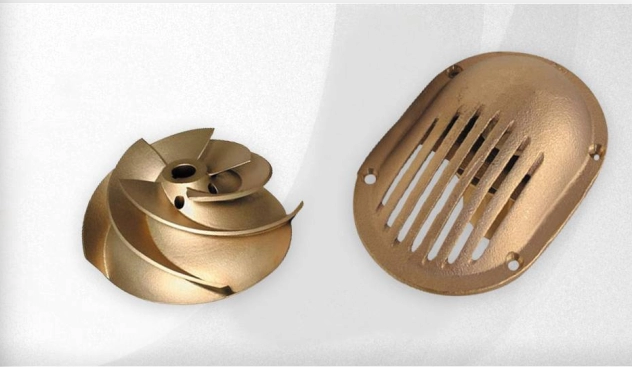
When you partner with us, you are working directly with a manufacturer that has over 20 years of experience in precision foundry services. We don’t just pour metal; we engineer solutions. Our facility operates under strict ISO 9001 brass foundry standards, ensuring that every component leaving our floor meets the rigorous demands of the US market, from marine hardware to industrial valves.
Advanced Gating Systems for Porosity Control
One of the biggest challenges in casting with brass—specifically with alloys containing zinc—is managing gas porosity and shrinkage. We tackle this before the metal is even melted. By utilizing advanced CAE casting simulation software, we digitally model the flow of molten brass and the solidification process.
This allows us to design optimized gating systems that effectively vent gases and feed the casting during cooling. The result is a dense, leak-proof component with superior structural integrity. This technology is crucial for delivering brass porosity solutions for pressure-retaining parts like pump bodies and valve fittings.
Material Certification and Spectrometer Testing
We guarantee the chemical composition of every melt. Whether you require standard Yellow Brass or a specialized Silicon Bronze, our on-site laboratory verifies the alloy using advanced spectrometry. We provide detailed material certifications with every shipment, ensuring your parts meet exact ASTM or DIN specifications.
Our commitment to metallurgical accuracy is absolute. Just as we rigorously define the properties when comparing nickel alloy vs stainless steel, we apply that same level of scrutiny to our copper-based alloys to prevent material failure in the field.
One-Stop Solution from Design to Packaging
We streamline your supply chain by handling the entire production lifecycle in-house. Instead of managing multiple vendors for casting, machining, and finishing, we provide a comprehensive copper alloy investment casting solution.
Our Integrated Production Workflow:
| Stage | Capabilities |
|---|---|
| Design & Prototyping | 3D modeling, SLA rapid prototyping, and mold design. |
| Casting | Precision lost wax process for complex geometries. |
| Machining | In-house CNC turning and milling for tight tolerances. |
| Finishing | Polishing, plating, and passivation for aesthetics and corrosion resistance. |
| Testing | X-Ray, CMM dimensional inspection, and pressure testing. |
This integrated approach reduces lead times and ensures accountability at every stage, delivering ready-to-use parts directly to your dock.
Frequently Asked Questions (FAQ)
What is the difference between brass and bronze casting?
While both fall under copper alloy investment casting, the distinction lies in their chemical composition and performance characteristics. Brass is primarily an alloy of copper and zinc, known for its excellent machinability, lower friction, and gold-like aesthetic, making it perfect for fittings and decorative hardware. Bronze typically combines copper with tin, offering superior hardness and corrosion resistance for marine applications. We help you navigate these material properties to ensure the correct metal selection for your project’s specific mechanical loads.
Can you cast lead-free brass for potable water applications?
Yes, our facility is fully equipped to cast lead-free brass alloys specifically for the plumbing and fluid control industries. We understand the strict regulations regarding potable water components. By utilizing alternatives like silicon brass or bismuth brass, we deliver parts that meet safety standards without sacrificing strength or pressure tightness. Every batch undergoes rigorous spectrometer analysis in our lab to verify chemical composition compliance.
How do you handle brass shrinkage during cooling?
Shrinkage is a natural occurrence in casting with brass, but we control it through precise engineering. We utilize advanced CAE casting simulation software to predict solidification patterns and optimize our gating systems during the mold design phase. This proactive approach acts as one of our primary brass porosity solutions, allowing us to feed molten metal effectively into critical areas to prevent voids and ensure the final part meets tight dimensional tolerances.

 English
  German