

Front-End Casting Equipment: Precision Pattern Creation
The success of any investment casting project is determined at the front-end. High-performance casting equipment ensures that the initial patterns are mathematically precise, as any error at this stage compounds throughout the production cycle. We utilize a combination of traditional hard tooling and modern additive manufacturing to provide the versatility required for the US industrial market.
Precision Tooling & Dies
The foundation of lost-wax process equipment lies in the quality of the dies. Our facility utilizes high-grade aluminum and steel alloys to create precision foundry tooling capable of maintaining tight dimensional tolerances.
- CNC-Machined Dies: Ensures repeatable accuracy for high-volume production.
- Interchangeable Inserts: Allows for design flexibility and cost-effective modifications.
- Long Lifecycle: Engineered to withstand thousands of injection cycles without degradation.
Automatic Wax Injection Machines
Consistency is the primary driver of ROI in pattern creation. Our automatic wax injection machines eliminate the variables associated with manual operation.
- Temperature Control: Precise PID controllers maintain wax at the optimal flow point to prevent shrinkage or air entrapment.
- Clamping Force: High-pressure hydraulic systems ensure flash-free patterns, reducing the need for secondary trimming.
- Cycle Efficiency: Automated ejection systems significantly increase hourly output compared to semi-automatic alternatives.
The integrity of the final metal component is a direct reflection of the initial wax pattern. We invest in automated pattern-making technology to ensure that “math-to-metal” accuracy is maintained from the very first step.
- High-Pressure Automatic Wax Injection: Unlike manual presses, our hydraulic injection units feature Real-Time Closed-Loop Control. This regulates flow velocity and pressure profiles to eliminate “sink marks” and ensure the sharpest definition on fine serrations and threads.
- Multi-Cavity Steel Tooling: We utilize H13 Tool Steel for our dies, CNC-machined to tolerances of ±0.01mm. This ensures that even after 50,000 cycles, the dimensional stability of your parts remains unchanged.
- Additive Manufacturing (SLA/DLP): Our high-resolution 3D printers use low-ash casting resins. This is critical for “Bridge-to-Production” phases, allowing for functional metal testing without the 4-week lead time of traditional mold fabrication
Rapid Prototyping (SLA Printing)
For low-volume runs or complex R&D projects, we integrate rapid prototyping (SLA) into our workflow. This allows for the creation of high-resolution patterns without the upfront cost of hard tooling.
- Complex Geometries: Produce internal lattices and thin-walled structures that are impossible to mold.
- Speed to Market: Reduce lead times from weeks to days by bypassing the tool-and-die phase.
- Direct Investment Casting: SLA resins are specifically formulated for a clean burnout, ensuring zero ash residue during the shell firing process.
The Shell Building and Dewaxing Phase
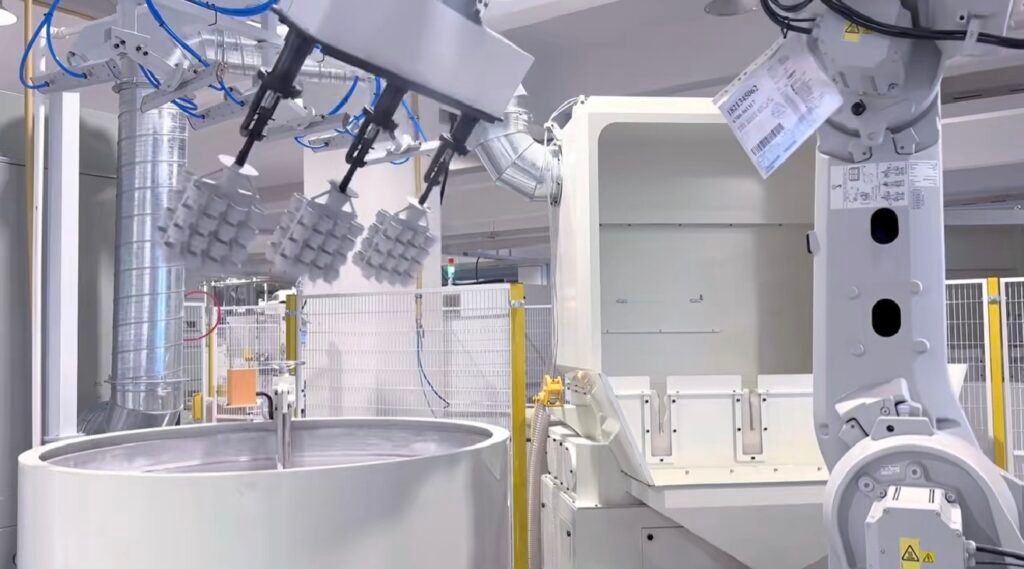
The transition from a wax pattern to a robust ceramic mold is a critical stage in our investment casting process. We utilize specialized casting equipment designed to build high-strength shells that can withstand the intense pressures of molten metal. Our focus is on consistency and shell integrity, ensuring every part meets exact dimensional standards.
Automated Shell Building: Consistency in Ceramic Engineering
The ceramic shell must be strong enough to hold molten steel yet porous enough to allow gases to escape. Our Robotic Shell Room removes the human variable:
- 6-Axis Robotic Dipping Arms: These robots ensure a consistent “dwell time” in the slurry and a uniform “rainfall sanding” application. This prevents shell lifting and scabbing defects caused by uneven coating thickness.
- Environmental Control Systems (ECS): Our drying rooms utilize Desiccant Dehumidification. By maintaining a constant 22°C and 40% humidity, we ensure the primary and backup coats bond perfectly, preventing catastrophic shell blowouts during the pour.
- Flash-Fire Dewaxing: Our autoclaves reach operating pressure in under 10 seconds. This Rapid Pressurization is the secret to cracking-prevention; it melts the outer layer of wax before the core can expand, protecting the delicate ceramic geometry.
Automated Slurry and Sanding Systems
To achieve a flawless surface finish, we employ automated shell building systems. These machines handle the repetitive dipping and sanding cycles with robotic precision. By automating the slurry application, we ensure a uniform ceramic coating across the entire pattern, which is essential for preventing thin spots or shell failures during the pour. This level of automation is what allows us to maintain a 700-ton annual production capacity without sacrificing detail.
Climate-Controlled Drying Rooms
The drying process is where many foundries fail, but our facility uses climate-controlled drying rooms to manage the environment perfectly. We strictly regulate temperature and humidity to ensure the ceramic layers bond correctly. This controlled environment is particularly important when we are preparing aluminum casting molds or complex alloy shells, as it prevents the cracking and warping that often occurs with natural air drying.
High-Pressure Dewaxing Kettles (Autoclaves)
The “lost-wax” process concludes with our high-pressure dewaxing kettles, or autoclaves. This specific investment casting machinery uses rapid steam pressurization to melt the wax patterns out of the ceramic shells in seconds.
Why our dewaxing equipment stands out:
- Shell Protection: The rapid pressure rise prevents the wax from expanding and cracking the ceramic shell.
- Efficiency: Our high-capacity dewaxing autoclaves allow for quick cycle times, keeping our production line moving.
- Precision: By completely removing all wax residue, we ensure the internal cavities of the mold are clean and ready for the metal.
Our investment in these advanced systems ensures that the “problem parts” other shops struggle with are handled with ease and repeatability.
Melting and Pouring: The Heart of the Foundry
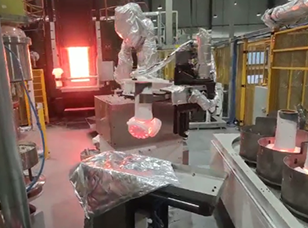
The melting stage is where the metallurgical integrity of every component is decided. We utilize high-performance casting equipment to transform raw alloys into liquid metal with exact thermal precision. By controlling every variable in the melt, we ensure that the final parts meet the rigorous mechanical standards required by our aerospace and medical clients.
Advanced Melting & Metallurgical Control
The heart of our foundry is defined by Induction Melting Technology, which provides superior cleanliness compared to traditional gas-fired furnaces.
- Induction Stirring Effect: The electromagnetic field naturally stirs the melt, ensuring that alloying elements (like Chromium, Nickel, and Moly) are perfectly homogenized. This eliminates “segregation” and ensures uniform hardness throughout the part.
- Degassing & Slag Management: We utilize Argon Bottom-Bubbling and synthetic fluxes to remove dissolved hydrogen and oxides. This is a non-negotiable step for pressure-tight castings used in oil and gas applications.
- Real-Time OES Spectrometry: Before pouring, a “chill sample” is sparked on our Optical Emission Spectrometer. We verify 20+ elements to ensure the chemistry is “dead-on” to your ASTM or EN specification.
Medium-Frequency Induction Furnaces
Our facility relies on medium-frequency induction furnaces to achieve rapid and uniform heating. This technology allows us to maintain tight control over the melt temperature, which is essential for consistency across our 700-ton annual production capacity. Whether we are working with carbon steel or complex superalloys, these furnaces provide the efficiency and stability needed for high-volume runs.
Atmosphere-Controlled Melting
For sensitive materials, preventing oxidation is non-negotiable. We employ atmosphere-controlled melting techniques to protect the purity of the metal. This is particularly vital when comparing high-performance materials, such as in the choice between titanium vs stainless steel, where environmental exposure can compromise the alloy’s properties. Our setup ensures that even the most reactive metals retain their intended characteristics.
Spectrometer Analysis
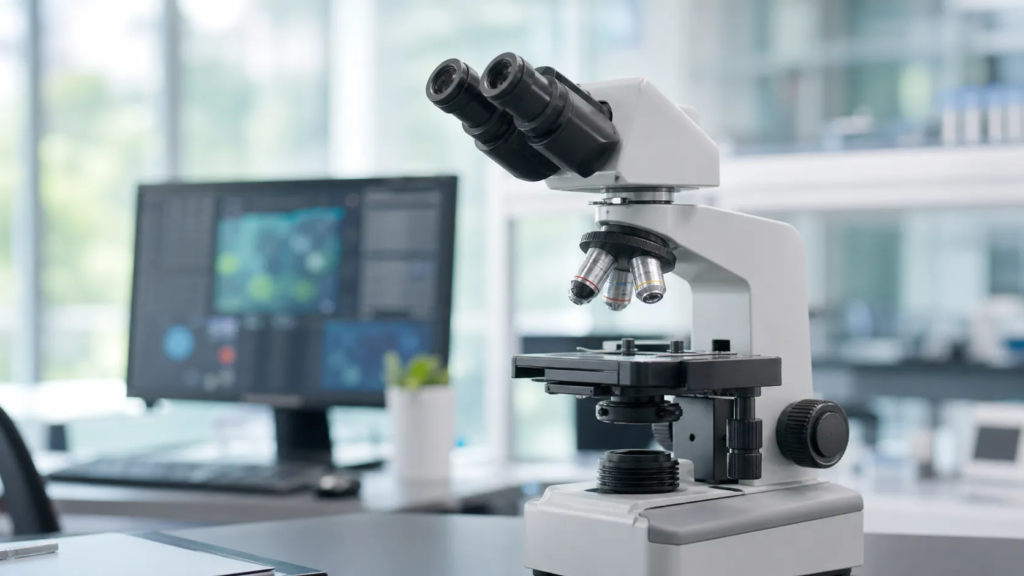
We don’t leave material composition to chance. Before a single drop of metal is poured into the shells, we conduct real-time spectrometer material analysis.
- Chemical Verification: Every heat is tested to ensure it matches the customer’s exact alloy specifications.
- Traceability: We provide comprehensive material testing reports for every batch.
- Quality Assurance: This step eliminates the risk of “off-spec” parts before they are even cast.
By integrating advanced casting equipment with strict laboratory-grade testing, we guarantee that every pour results in a high-performance component that stands up to the toughest industrial applications.
Post-Casting & Surface Finishing Equipment
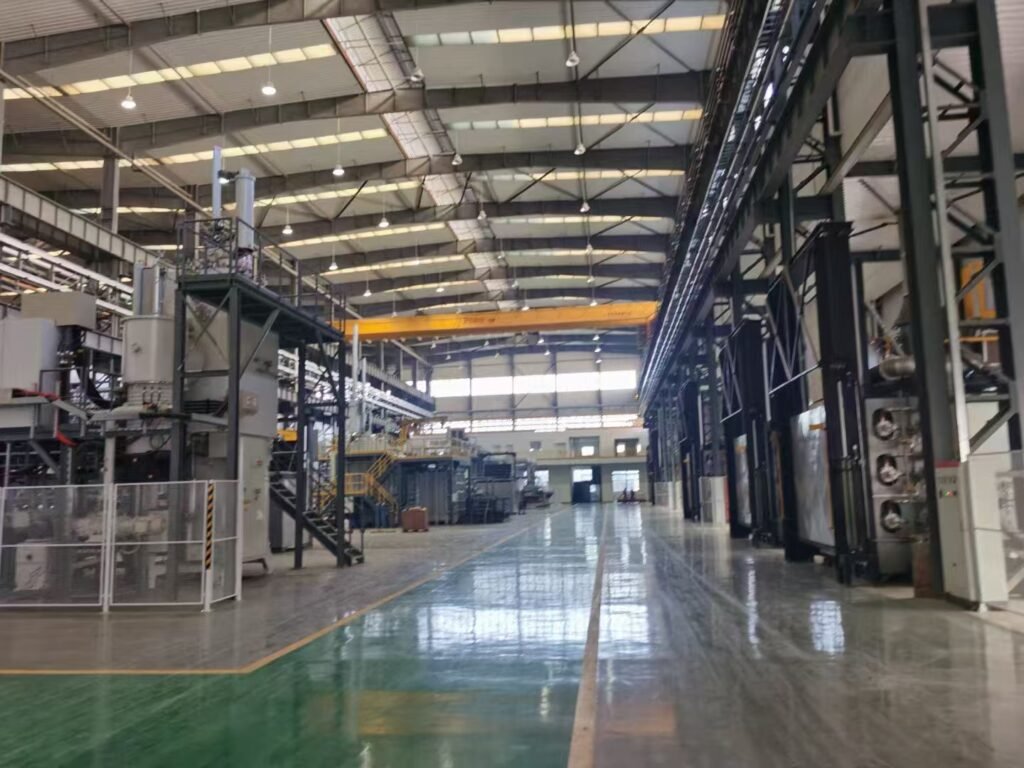
Once the metal solidifies, the focus shifts to extracting the part and achieving the specified surface quality. Our facility utilizes heavy-duty casting equipment designed to handle the rigorous transition from a raw shell to a finished component. We prioritize efficiency and surface integrity to ensure every part meets the aesthetic and functional requirements of industries like aerospace and medical hardware.
Vibratory Shell Knockout Machines
The first step in post-casting is the removal of the ceramic shell. We use high-frequency vibratory shell knockout machines to break away the investment material quickly without damaging the underlying metal. This mechanical separation is critical for maintaining the structural integrity of complex geometries before the parts move to the cleaning stage.
Shot Blasting and Sand Blasting Units
To achieve a clean, uniform finish, we employ industrial shot blasting machines and sandblasting units. This equipment removes any remaining ceramic scale and prepares the surface for further treatment.
- Media Variety: We use various abrasives depending on the alloy, from stainless steel shot to fine sand.
- Surface Preparation: Essential for ensuring proper adhesion for secondary coatings or pickling.
- Consistency: Automated blasting cycles ensure every batch has a matching texture.
Precision Grinding and Cutting Tools
After shell removal, the “inlet” or gating system must be removed. We use high-speed precision grinding and cutting tools to detach the parts from the assembly tree and smooth out the connection points. Our technicians utilize specialized abrasive wheels and belt grinders to ensure the gate vestige is removed according to strict dimensional tolerances. For projects requiring initial iterations, our top low-volume casting prototyping solutions ensure that even small runs receive the same level of finishing detail as mass-produced orders. This stage is vital for prepping the part for final inspection or secondary CNC machining.
Secondary Processing: CNC Machining and Heat Treatment
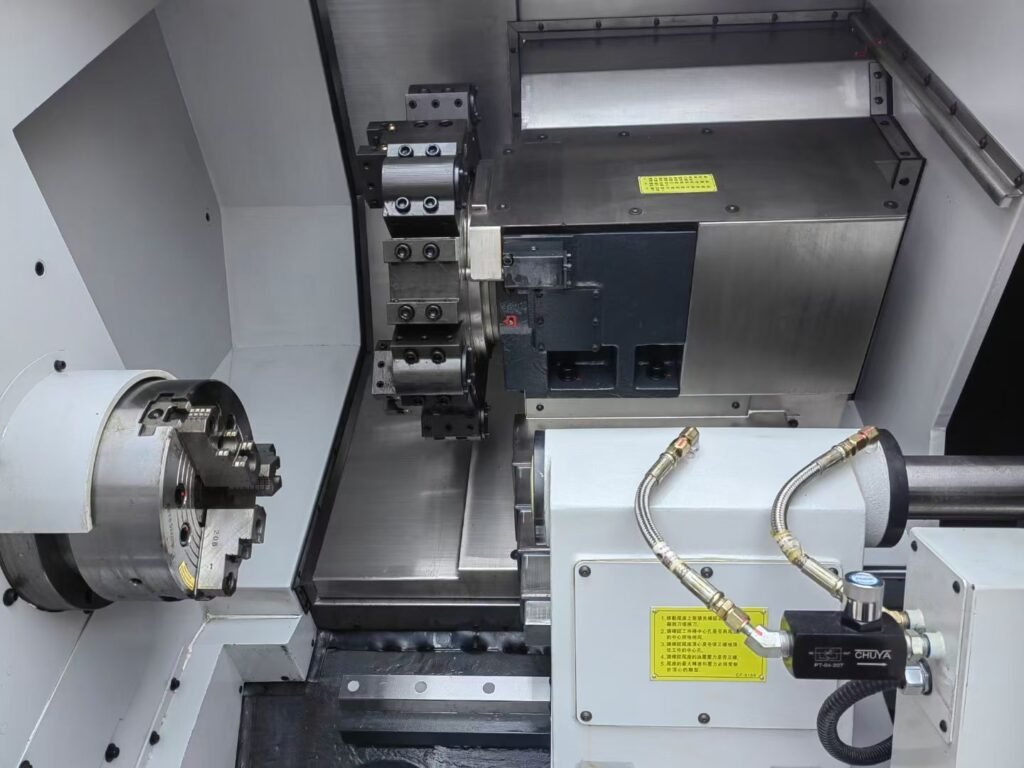
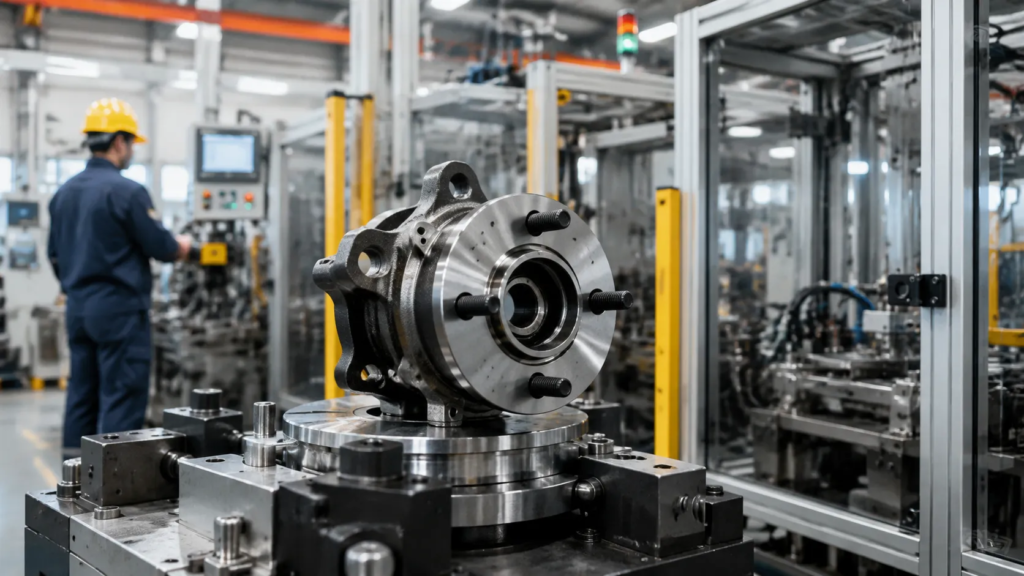
We don’t just stop at the raw pour. To get parts ready for immediate assembly, our casting equipment lineup includes a full suite of secondary processing tools. This stage is where we transform a “near-net shape” into a high-precision finished component.
Multi-Axis CNC Machining Centers
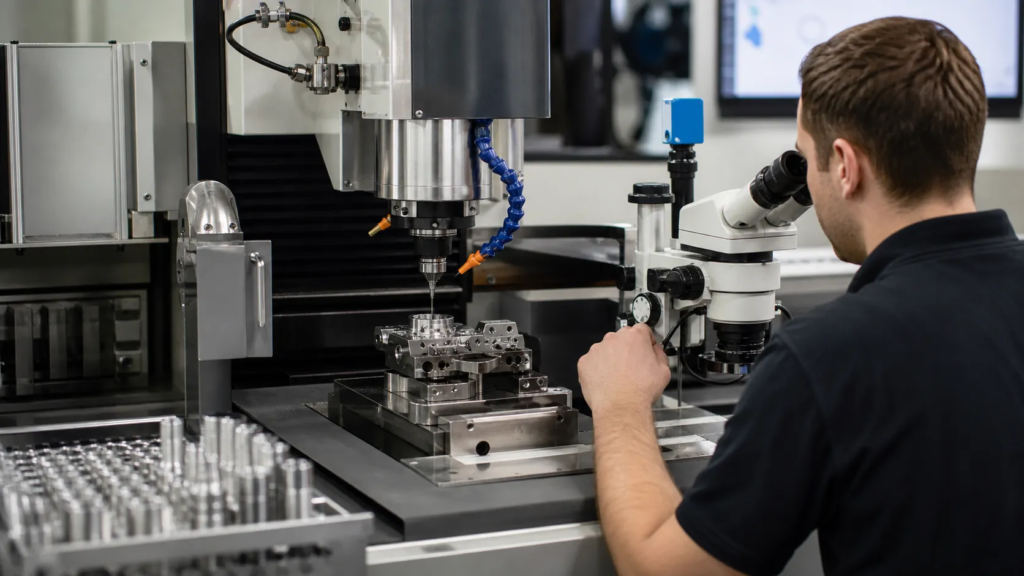
For parts requiring extreme precision, we utilize multi-axis CNC machining centers. These machines handle complex geometries and tight dimensional tolerances that go beyond standard foundry capabilities. Whether we are finishing complex geometries or refining a titanium alloy casting for aerospace use, our CNC department ensures every thread, bore, and face meets your exact blueprints.
- High-Speed Spindles: For clean finishes on tough alloys.
- Automated Tool Changers: To speed up production cycles.
- Rigid Fixturing: Ensuring repeatability across thousands of units.
Post-Casting & Precision Surface Finishing
A casting is only as good as its finish. Our post-processing suite is designed to deliver “Assembly-Ready” components.
- Cryogenic & Vibratory Deflashing: For delicate geometries, we use specialized media to remove ceramic residue without rounding off sharp functional edges.
- High-Energy Tumble Blasting: Using S-110 stainless steel shot, we achieve a consistent satin finish that improves the aesthetic value and corrosion resistance of the part.
- Passivation & Chemical Cleaning: Our in-house pickling lines ensure that stainless steel parts are free of free-iron contamination, meeting ASTM A967 standards for maximum longevity in harsh environments.
Secondary CNC Machining & Vacuum Heat Treatment
To bridge the gap between “Near-Net Shape” and “Final Precision,” we offer integrated secondary operations:
- 5-Axis CNC Milling Centers: We handle the “tough-to-machine” features, such as deep-hole drilling, reaming, and complex profiling, using rigid workholding to maintain Cpk > 1.33 on critical dimensions.
- Vacuum Heat Treating: By quenching in a vacuum or inert nitrogen atmosphere, we prevent decarburization. This ensures that the surface hardness of your carbon steel or tool steel parts is consistent from the skin to the core.
Vacuum Heat Treatment Furnaces
To lock in the necessary mechanical properties, we rely on advanced vacuum heat treatment furnaces. This specialized casting equipment is essential for optimizing the performance of the metal. By processing parts in a vacuum, we eliminate the risk of oxidation and surface contamination.
Our heat treatment capabilities focus on:
- Hardening and Tempering: Achieving the specific Rockwell hardness your application demands.
- Stress Relieving: Removing internal tensions created during the cooling phase.
- Solution Annealing: Improving corrosion resistance and ductility.
By integrating multi-axis CNC machining and controlled heat cycles, we ensure that every part leaves our facility with the exact metallurgical integrity and surface finish required for heavy-duty US industrial applications.
Quality Assurance: The Inspection Suite for Casting Equipment
We don’t leave quality to chance. Our inspection suite is packed with high-end casting equipment designed to catch even the smallest deviation before a part ever leaves the floor. By integrating advanced digital and physical testing, we ensure every component is field-ready.
- Coordinate Measuring Machines (CMM): We use automated CMMs to verify dimensional tolerances against your original CAD files. This ensures that complex geometries are accurate to within microns.
- Non-Destructive Testing (NDT) Equipment: To guarantee metallurgical integrity, we utilize X-ray testing for investment casting to spot internal gas holes or shrinkage without damaging the part. We also employ dye penetrant and magnetic particle inspections to ensure the surface is free of cracks.
- CAE Simulation Software: We stop defects before they happen. Our CAE casting simulation software predicts how molten metal flows into the mold, allowing us to optimize gating systems and eliminate potential porosity in the design phase.
- Spectrometer Material Analysis: We verify the chemical composition of every heat lot to ensure the alloy meets your specific mechanical requirements.
This rigorous approach to quality assurance means you get consistent parts that perform under pressure, reducing your risk of field failures and costly recalls.
Why Equipment Capability Defines Your ROI
The quality of your casting equipment directly impacts your project’s profitability. In the American market, where labor costs are high and quality standards are non-negotiable, high-performance machinery is the only way to stay competitive. We focus on equipment that minimizes waste and maximizes throughput to protect your bottom line.
Consistency at Scale
Manual processes introduce variables that lead to defects. By utilizing advanced casting automation, we ensure that every part meets the same rigorous standards.
- Repeatable Accuracy: Automated systems maintain tight dimensional tolerances across large production runs, ensuring the 1,000th part is identical to the first.
- Reduced Scrap Rates: Precision controls in the shell-building and pouring phases significantly lower the risk of internal porosity and surface defects.
- Enhanced Throughput: Streamlined investment casting production cycles mean your parts move through the foundry faster, reducing lead times for critical projects.
Material Versatility
Our facility is designed to handle a diverse range of metals, providing the flexibility needed for complex engineering requirements. The right casting equipment allows for:
- Precise Thermal Control: Essential for maintaining the metallurgical integrity of specialized alloys and preventing grain structure issues.
- Alloy Diversity: Whether you need the corrosion resistance of stainless steel or the high-strength properties of superalloys, our precision casting solutions are built to adapt.
- Clean Melts: Atmosphere-controlled melting and advanced induction furnaces prevent contamination, ensuring the final product meets your exact chemical specifications.
Investing in top-tier equipment isn’t just an overhead cost—it’s a strategic move to ensure every dollar you spend translates into a high-quality, reliable component that performs in the field.
FAQs About Our Casting Equipment and Processes
What types of casting equipment ensure dimensional accuracy?
We rely on automatic wax injection machines and high-precision steel tooling to start the process right. By maintaining consistent pressure and temperature during wax pattern creation, we ensure the foundation of the mold meets strict dimensional tolerances in casting before the metal is even poured.
How does induction melting improve alloy quality?
Our induction melting furnaces use electromagnetic stirring to ensure a uniform chemical composition throughout the melt. This level of control over the heating process results in superior metallurgical integrity, which is vital for high-performance parts used in the US aerospace and automotive sectors.
What is the role of CNC machining in investment casting?
While our casting equipment produces near-net shapes, multi-axis CNC machining is used for secondary processing. This allows us to hit ultra-tight tolerances and complex geometries that are physically impossible to achieve through casting alone.
How is quality verified post-casting?
We use a comprehensive inspection suite, including:
- Coordinate Measuring Machines (CMM) for precise geometric verification.
- Spectrometer material analysis to confirm chemical heat codes.
- Non-destructive testing equipment like X-ray and ultrasonic testing to catch internal flaws.
Why is automation critical for scaling production?
Casting automation in our shell-building and pouring lines eliminates the “human variable.” Automated systems ensure every layer of the ceramic shell is identical, which drastically boosts casting production efficiency and ensures consistency across thousands of units.
Which alloys require specialized casting equipment?
Superalloys and reactive metals often require atmosphere-controlled melting to prevent oxidation. For those utilizing high manganese steel castings, specialized heat treatment furnaces are necessary to achieve the required toughness and work-hardening properties.
How does CAE simulation reduce defects?
Before we cut any metal for tooling, we run CAE casting simulation software. This allows us to visualize the metal flow and solidification process, helping us with casting defect prevention by identifying potential shrinkage or gas pockets in the digital phase.
What is the turnaround time for equipment setup and quotes?
We typically provide detailed quotes within 24 to 48 hours. Once the design is finalized, the setup for precision tooling and investment casting machinery generally takes between 3 to 5 weeks, depending on the complexity of the part.
How does your equipment handle “Thin-Wall” casting challenges? We combine CAE Fluid Dynamics Simulation with Vacuum-Assisted Pouring. By reducing the counter-pressure inside the mold, we can successfully cast wall thicknesses as thin as 1.0mm – 1.5mm in stainless steel and superalloys.
What measures are taken to prevent internal porosity?
Beyond simulation, we use Ceramic Foam Filters in the gating system to catch non-metallic inclusions. Post-cast, we offer Level II X-Ray (Radiographic Testing) to ensure the internal density meets Grade A or B standards.
Can you provide 100% dimensional traceability?
Yes. Our CMM (Coordinate Measuring Machine) generates automated PDF reports comparing the physical part to your STEP file. We can provide SPC (Statistical Process Control) data for high-volume automotive or medical runs.
What is the benefit of your Medium-Frequency Induction Furnaces for my project?
They offer faster melt cycles and precise temperature hold (+/- 5°C). This prevents “overheating” the metal, which can lead to grain coarsening and reduced tensile strength.
Optimize Your Supply Chain with Data-Driven Casting
Our investment in automated casting equipment and digital inspection reduces your total cost of ownership by eliminating secondary failures and assembly-line rejections.
 English
  German