


Discover di casting vs investment casting advantages materials costs tolerances and why Precision Vast is your ideal metal parts partner.
Are you struggling to choose the right metal casting method for your engineered components?
You might already know that selecting the wrong process can completely derail your production timeline and blow up your budget.
If you’ve been searching for “di casting” (or die casting), you’re likely trying to figure out if it’s the right fit for your specific project.
Well, as an expert in precision metal manufacturing, I can tell you that the best choice isn’t always the most obvious one.
In this guide, I’ve put together a complete, no-nonsense breakdown of the die casting process, its true limitations, and how it actually stacks up against investment casting.
You’re going to learn exactly when to rely on high pressure die casting and when the lost wax casting method is the ultimate secret to achieving tighter tolerances, zero porosity, and superior material strength.
So if you’re looking to source the highest quality custom metal parts without getting burned by exorbitant tooling fees, this guide is for you.
Let’s dive right in.
What is Di Casting? A Technical Overview
Are you struggling to scale metal part production without compromising on precision? We help engineering teams and procurement managers navigate this exact hurdle every day.
At its core, di casting is a highly efficient metal manufacturing method that relies on reusable hardened steel molds, known as dies. During the die casting process, we force molten metal into these precisely machined mold cavities under extreme pressure. This underlying physics of high pressure die casting (HPDC) guarantees rapid cooling, delivering parts with excellent dimensional stability and smooth surface finishes.
Core Variants of the Process
We categorize industrial casting solutions in this space into two primary methods, depending on the melting point of the metal you need to process.
| Process Variant | How It Works | Typical Materials |
|---|---|---|
| Hot-Chamber | The injection mechanism sits directly inside the molten metal bath, allowing for continuous, high-speed injection. | Zinc, Magnesium |
| Cold-Chamber | We ladle the molten metal into an unheated chamber (sleeve) before a hydraulic plunger forces it into the die. | Aluminum |
Whether you need rapid cycle times for zinc or the structural benefits of aluminum die casting, matching the right physics to your specific alloy is the first step in optimizing your production run.
Common Materials for Di Casting
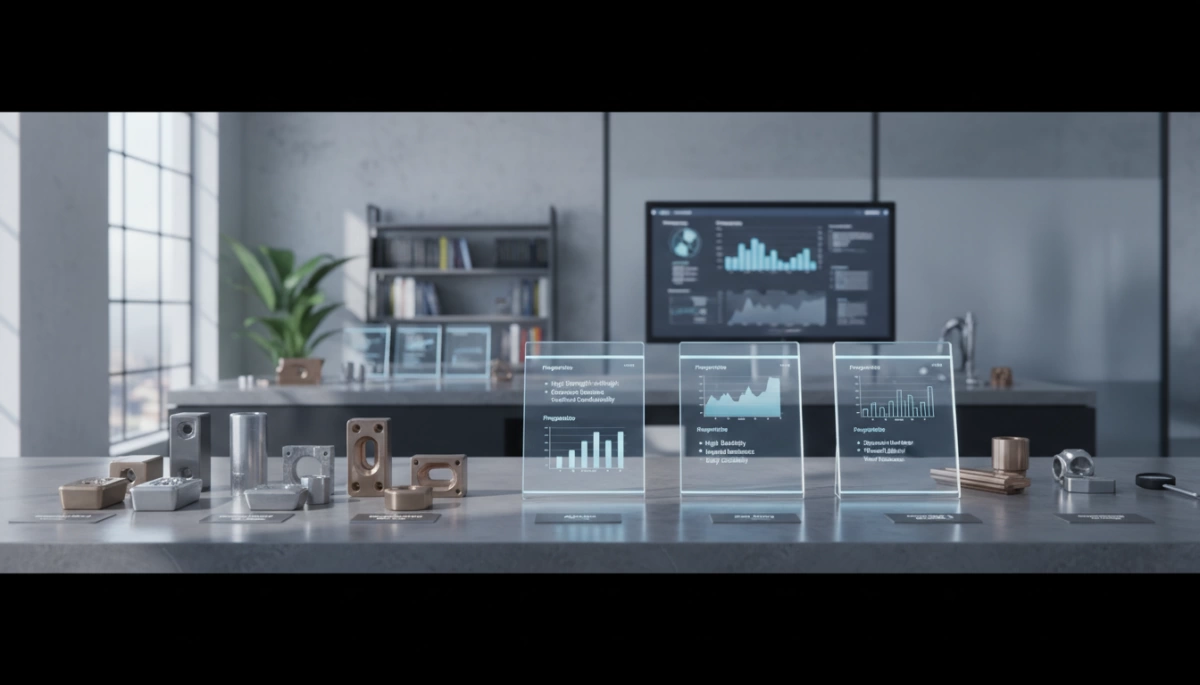
When setting up a di casting project, picking the right alloy dictates your success. We know firsthand that every metal has hard limitations and highly specific use-cases. You can’t just force any alloy into a mold during high pressure die casting (HPDC). For US manufacturers weighing which casting process is the most important commercially, understanding these core materials is the essential first step.
Here are the three standard alloys that dominate the die casting process:
- Aluminum: The undisputed go-to for automotive and tech manufacturing. Aluminum die casting delivers a lightweight footprint alongside excellent dimensional stability. It handles high operating temperatures effortlessly but strictly requires cold-chamber machinery.
- Zinc: Built for high ductility. Zinc is incredibly easy to cast, holds tight metal casting tolerances, and drastically extends your tooling life. It is also easily plated or painted, making it perfect for premium consumer-facing hardware.
- Magnesium: The ultimate choice for an exceptional strength-to-weight ratio. It is significantly lighter than aluminum and machines extremely fast, making it a premium industrial casting solution for specialized, weight-critical applications.
While these alloys are efficient for rapid production, they do come with distinct material limitations if your custom metal parts require extreme corrosion resistance, high-impact strength, or food-grade certification.
The Pros and Cons of Di Casting
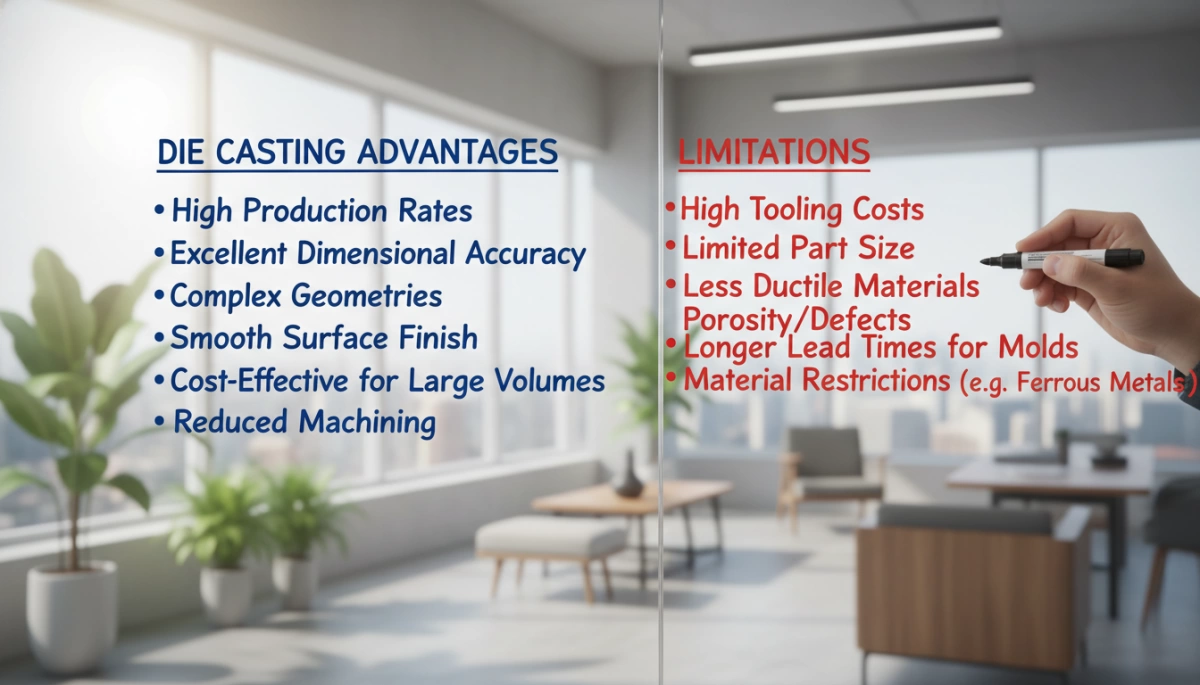
In our experience with precision metal manufacturing, evaluating the high pressure die casting (HPDC) method means weighing significant upfront commitments against long-term payoffs.
Di Casting Advantages
- Rapid Production Speeds: The die casting process is built for speed. Once the mold setup is complete, we can produce thousands of identical parts incredibly fast.
- Excellent Surface Finish: Parts leave the mold with a smooth surface, which drastically reduces the need for secondary CNC machining services.
- Cost-Effective at Scale: For massive, continuous runs—especially when working with cast aluminum components—the per-part price drops dramatically.
The Pain Points
- Exorbitant Tooling Costs: Die casting tooling costs are massive. The high price of custom hardened steel molds means this method rarely makes financial sense for small or medium production runs.
- Internal Porosity Risks: Because molten metal is forced into the mold at high speeds, trapped air often creates microscopic air pockets (porosity) that compromise the part’s overall structural strength.
- Severe Material Limitations: You are heavily restricted to non-ferrous metals with lower melting points. If your project demands heavy-duty steel or specialized high-temperature alloys, this specific casting method simply will not work.
Di Casting vs. Investment Casting: Which Do You Need?
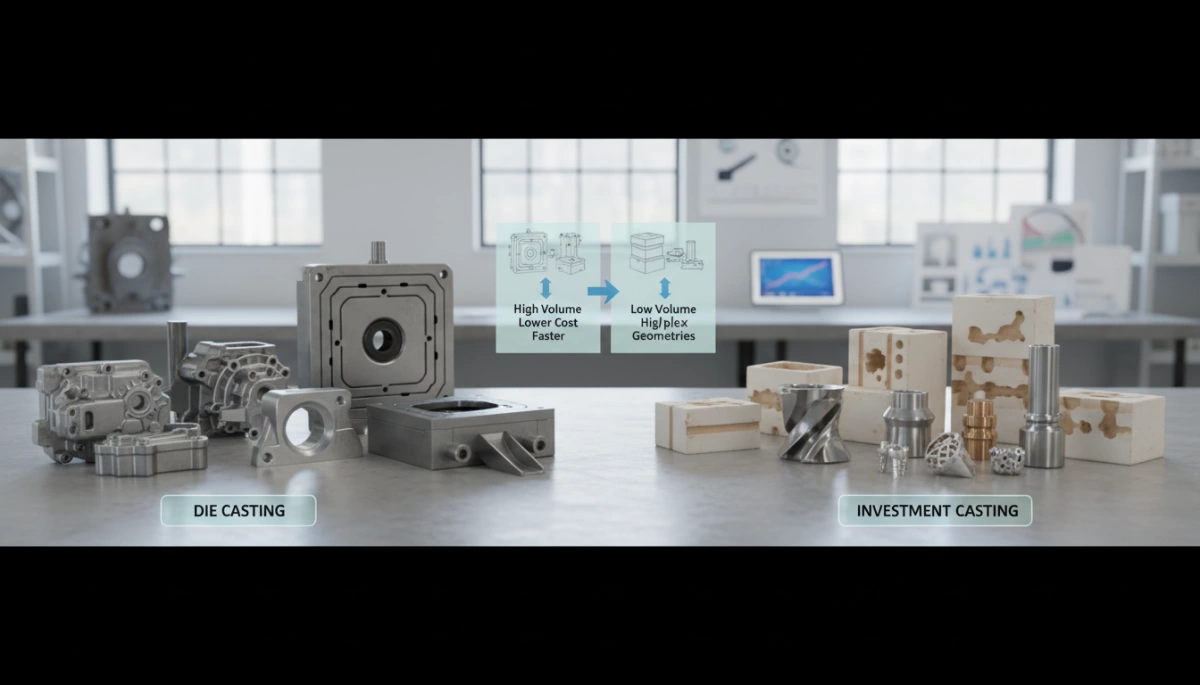
Choosing between di casting and investment casting comes down to your project’s specific demands. If you are manufacturing parts for the US market, making the right choice upfront saves you serious time and money. Here is how the two methods stack up.
Tooling Costs and Production Volume
- Di Casting: Comes with extremely high upfront tooling costs. This process really only makes financial sense if you are running massive production volumes to offset the heavy initial investment.
- Investment Casting: Offers significantly lower tooling costs. It provides the flexibility you need for smaller production runs, rapid prototyping, or frequent design updates.
Material Versatility
- Di Casting: You are heavily restricted to non-ferrous metals like aluminum, zinc, and magnesium.
- Investment Casting: Complete material freedom. We routinely process heavy-duty metals like stainless steel, titanium, and high-temperature superalloys. If your project involves rugged pumps, valves, and fittings, investment casting is the only practical choice.
Complexity and Metal Casting Tolerances
Investment casting effortlessly accommodates complex internal cavities, tricky undercuts, and zero draft angles. In contrast, high pressure die casting (HPDC) often struggles with intricate geometries, forcing you to pay for expensive secondary machining just to hit your required metal casting tolerances.
Structural Integrity
- Di Casting: The rapid, high-pressure injection process creates a known risk for internal porosity and trapped air pockets.
- Investment Casting: Delivers a dense, solid, and completely defect-free structure. This unbeatable structural reliability is exactly why top-tier industries are driving the expanding role of precision cast parts in mission-critical applications today.
Why Top Industries Rely on Precision Casting
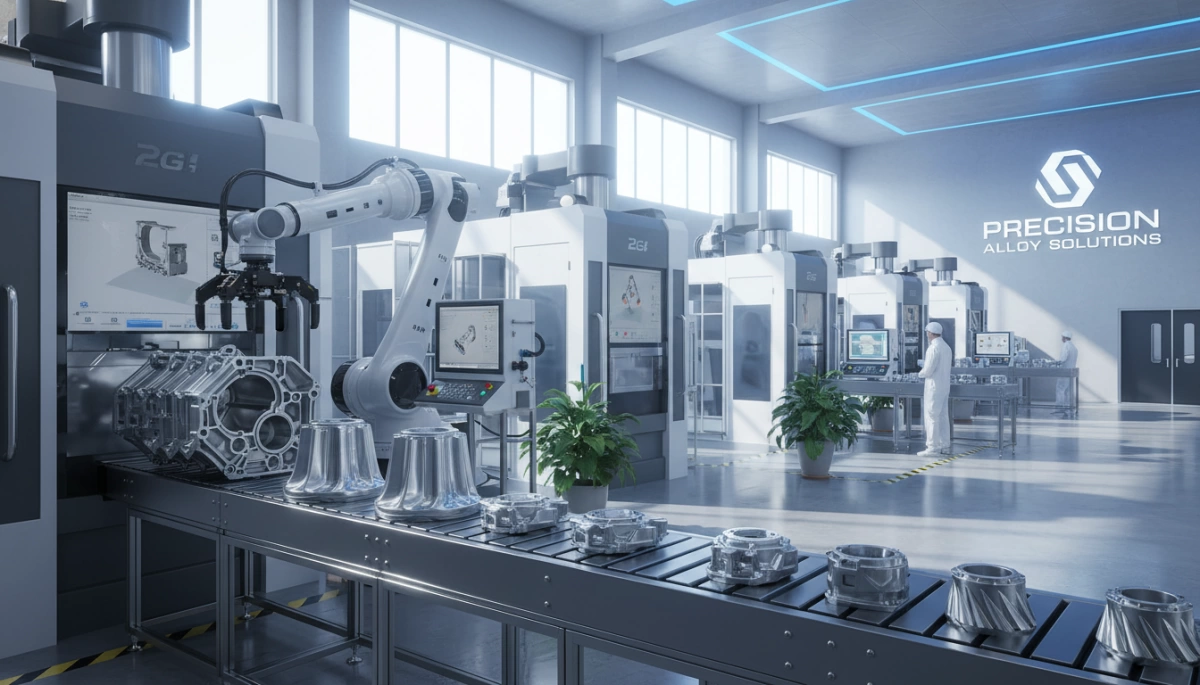
When you are building parts for a jet engine or a surgical room, standard di casting often falls short due to material limitations and the high risk of internal porosity. That is why the most demanding sectors across the United States consistently turn to our precision metal manufacturing solutions. We see firsthand how different fields require specific structural guarantees and complex material profiles that only precision investment casting can reliably provide.
Here is exactly why critical industries bypass basic die casting processes for advanced industrial casting solutions.
Aerospace & Medical: Zero Margin for Error
- High Structural Requirements: These fields operate with a strict zero-defect policy. Components must endure extreme stress, immense pressure, and intense fatigue without compromising structural integrity.
- Titanium & Superalloy Capabilities: Aerospace turbine blades and medical joint implants frequently require titanium and specialized high-temperature superalloys. Traditional die casting systems simply cannot process the extreme melting points of these advanced metals, making precision casting the only viable manufacturing route.
Automotive & Marine Hardware: Built to Survive
- Corrosion Resistance: Marine environments aggressively degrade standard alloys. We routinely produce complex geometries that actively resist saltwater corrosion and harsh weather elements.
- Toughness Under Pressure: High-stress drivetrain and chassis applications demand incredibly tough materials. For heavy-duty projects, understanding how to choose the right carbon steel casting grade ensures your automotive components hold up under real-world torque and friction.
Pumps, Valves, and Food Machinery: Strict Compliance
- Sanitary Standards: The US food and beverage industry strictly regulates equipment surfaces to prevent bacterial growth and chemical contamination.
- Food-Grade Capabilities: Components like impellers, pipe fittings, and valve bodies require high-quality stainless steel investment casting. This ensures the machinery can withstand aggressive daily chemical cleanings while maintaining FDA-compliant sanitation levels.
Industry Material & Capability Match-Up
| Industry | Primary Requirement | Preferred Casting Materials |
|---|---|---|
| Aerospace & Medical | Flawless structural integrity, heat resistance | Titanium, Cobalt-Chrome, Superalloys |
| Automotive & Marine | High mechanical stress tolerance, corrosion resistance | Carbon Steel, Specialized Alloys |
| Pumps & Food Machinery | Strict sanitation, chemical washdown resistance | Food-Grade Stainless Steel |
Whether you are engineering commercial marine vessels or upgrading dairy processing pumps, leaning into the benefits of using carbon steel in investment casting or specialized stainless steel ensures your custom metal parts perform safely and reliably in the field.
The Precision Vast Advantage: Direct-from-Factory Excellence
As a dedicated custom metal parts supplier, we know that US businesses demand reliability, precision, and cost-efficiency. Whether you are transitioning away from standard di casting to more precise methods or simply scaling up your current production, working directly with the manufacturer changes the game. We eliminate the friction and deliver industrial casting solutions that hit the mark every single time.
Here is how our factory-direct approach gives you the competitive edge:
Seamless One-Stop Manufacturing
We handle everything under one roof so you don’t have to chase down multiple vendors. Our meticulous 14-step lost wax casting method—ideal for complex components like those detailed in our stainless steel casting guide—ensures that every single part meets strict specifications from the initial wax pattern to the final surface finish.
Engineering First: Advanced Mold Optimization
Before we pour a single ounce of metal, we optimize. We utilize advanced CAE simulation casting technology to analyze and perfect the mold design upfront. This engineering-first mindset eliminates the guesswork, prevents the internal defects often associated with a rushed die casting process, and ensures structural integrity right out of the gate.
Certified Quality at Scale
Consistent precision is our baseline. As a leading metal casting foundry China catering to the global market, we back our manufacturing with hard data and proven capacity:
- ISO9001 Certification: Guaranteed rigorous quality control at every stage of production.
- In-House Testing: Comprehensive structural and material analysis to verify performance.
- 700-Ton Annual Capacity: We have the robust infrastructure to handle high-volume demands without breaking a sweat.
No Middlemen, No Delays
Adding layers to your supply chain only adds costs and extends lead times. By partnering directly with us, you benefit from transparent factory-direct pricing. We keep tooling costs competitive and strictly adhere to your project timelines, ensuring your parts arrive exactly when you need them to keep your assembly lines moving smoothly.
 English
  German