

Learn how to sand cast with this step by step professional guide plus precisionvast sand casting services.
Understanding the Fundamentals of Sand Casting
If you are researching how to sand cast, you are likely evaluating the best metal foundry process for your upcoming project. Many engineers and procurement leads start here when looking to manufacture metal components. At its core, sand casting is a traditional manufacturing method where molten metal is poured into a disposable sand mold. While we specialize in high-precision investment casting for exact standards, understanding the basics of sand casting helps clarify which method your specific tolerances demand.
Green Sand Mold vs. Resin-Bonded Sand
Choosing the right sand mixture dictates your mold stability and the resulting surface roughness.
- Green Sand: A traditional, cost-effective mixture of silica sand, clay, and water. It is highly reusable but generally yields a rougher surface finish and wider tolerances.
- Resin-Bonded Sand: This method uses chemical binders and heat to create a rigid mold. It provides better dimensional accuracy and a smoother finish compared to green sand, though it carries a higher material cost.
Pattern Making and Design
Before any metal is melted, you must master pattern making. The pattern is a physical replica of your final part—typically machined from wood, plastic, or metal—used to form the exact cavity inside the sand.
To ensure a successful mold, two critical engineering factors must be applied to the pattern:
- Draft Angle Design: Patterns must feature slight tapers on vertical walls. This allows the pattern to be cleanly extracted without breaking the fragile sand cavity.
- Casting Shrinkage Allowance: Metal naturally contracts as it cools from a liquid to a solid state. The pattern must be intentionally scaled up to compensate for this shrinkage, ensuring the final part meets industry-standard dimensional accuracy.
Step-by-Step: How to Sand Cast Like a Professional
Understanding how to sand cast effectively requires breaking down the traditional metal foundry process into precise, manageable stages. Whether you are producing large industrial components or simple prototypes, following a strict operational pipeline ensures structural integrity. Here is exactly how we approach the process from start to finish.
Step 1: Pattern Creation & Tooling
Everything begins with pattern making. We create a physical replica of the final component, typically machined from wood, plastic, or metal. A critical part of this step is calculating the casting shrinkage allowance, ensuring the pattern is slightly larger than the final product so the metal shrinks to the correct dimensions as it cools. We also incorporate draft angles so the pattern can be removed without damaging the sand.
Step 2: Mold Preparation
Next, we pack specialized sand tightly around the pattern inside a two-part box known as a flask.
- Cope and Drag: The top half of the mold is the cope, and the bottom half is the drag.
- Sand Types: Depending on the project, we use a traditional green sand mold (a mixture of sand, clay, and water) or chemically bonded resin sand for higher rigidity.
- Core Making: If the final part requires internal cavities or hollow sections, we insert pre-formed sand cores into the mold cavity before closing it.
Step 3: The Gating System
Molten metal needs a controlled path to enter the mold cavity. We design and cut a gating system into the sand. This network consists of a pouring cup, sprues, runners, and gates. A well-engineered gating system prevents turbulence, regulates flow speed, and minimizes trapped gases, which is vital for preventing casting defects.
Step 4: Melting & Pouring
We melt the raw material—whether it is iron, aluminum, or steel—in an industrial furnace until it reaches its specific pouring temperature. Molten metal pouring is a critical phase. The liquid metal must be poured in a continuous, steady stream to fill the mold cavity completely before any premature solidification occurs.
Step 5: Cooling & Shakeout
Once the pour is complete, the metal must rest and solidify. Cooling times vary drastically depending on the size of the part and the alloy used. After the metal is fully hardened, we initiate the shakeout process. The sand mold is broken apart via vibration to reveal the raw, solid casting inside. In modern foundries, the majority of this sand is reclaimed, filtered, and reused for future molds.
Step 6: Cleaning & Finishing
The newly revealed casting is not quite finished. It still has the gating system and risers attached. We cut off this excess metal, grind down the parting lines, and use shot blasting to clean the surface.
While sand casting is highly effective for large or low-volume parts, it naturally produces a rougher surface finish. When our clients require intricate details, complex geometries, and exact tolerances right out of the mold, we pivot to innovations in lost-wax casting. This precision method bypasses the limitations of sand, delivering near-net-shape components that drastically reduce the need for secondary CNC machining.
Essential Materials and Equipment
When learning how to sand cast, getting your materials right is half the battle. A reliable metal foundry process relies heavily on the quality of the sand, the binders holding the mold together, and the equipment used to melt the metal.
Types of Casting Sand
The sand you choose directly impacts the surface roughness (Ra) and the structural integrity of your final part.
- Silica Sand: The industry standard. It is affordable and withstands high temperatures, though it does expand when heated.
- Olivine Sand: Offers better thermal stability. We often see this used for non-ferrous metals to prevent casting defects.
- Chromite Sand: Highly heat-resistant and ideal for heavy steel applications.
When exploring specific materials like A356 aluminum casting, matching the sand type to the metal’s pouring temperature is critical to ensure a clean, defect-free finish.
Binding Agents
Sand alone will not hold the shape of your cope and drag setup. You need the right binders to lock the mold in place.
- Clay and Water: The foundation of traditional green sand molds. It is cost-effective, easy to mix, and highly reusable.
- Chemical Binders: Used to create resin-bonded sand. This creates a rigid, hard mold that holds its shape better under pressure.
Keep in mind that while resin-bonded sand improves accuracy, sand casting inherently has wider dimensional variations. If your project requires exact specifications, understanding investment casting tolerances for precision parts will show why lost-wax methods are often the better choice for intricate components.
Crucibles and Furnaces
Melting metal requires industrial-grade heat and equipment built to handle extreme thermal shock.
- Crucibles: These containers hold your metal during the melt. They are typically manufactured from graphite or silicon carbide to survive repeated heating and cooling cycles.
- Furnaces: Gas-fired furnaces are standard for aluminum, while heavy-duty induction furnaces are required for steel and iron foundry services. Your furnace must consistently hold the exact melting point of your alloy before the molten metal pouring phase begins.
Common Sand Casting Defects and How to Avoid Them
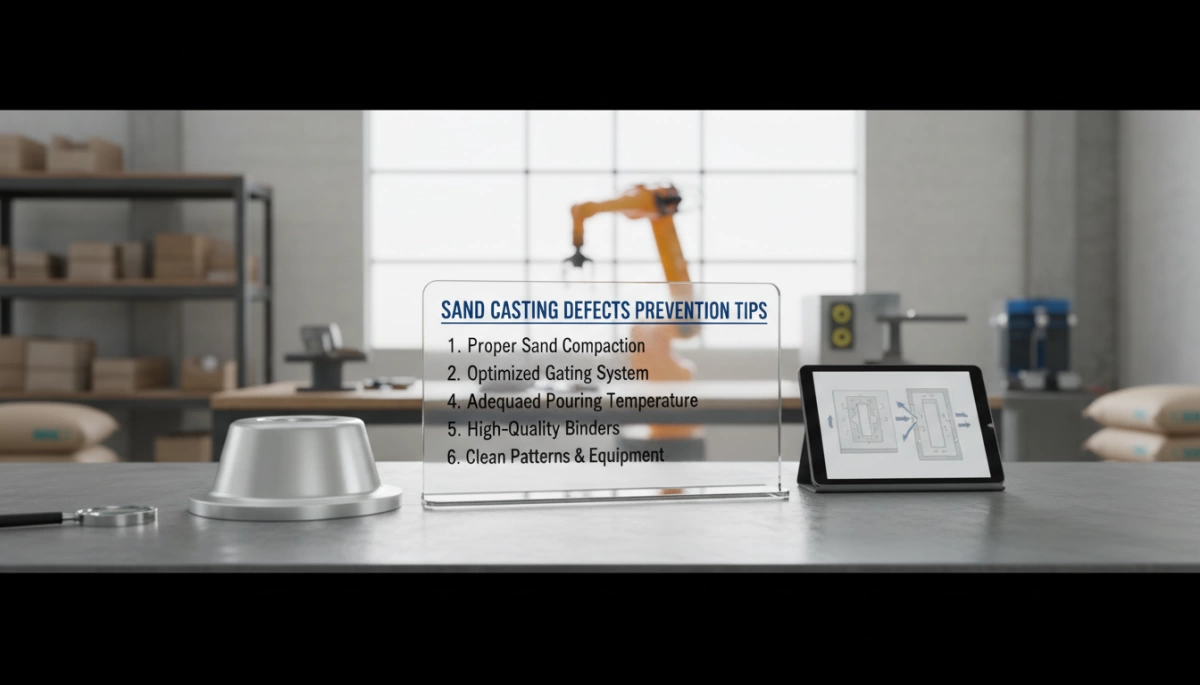
Even when you understand the basics of how to sand cast, managing quality is a constant challenge. Metal foundries often face issues that can compromise the structural integrity of a part. We focus on identifying these early to ensure every pour meets industrial standards.
Dealing with Sand Inclusions and Blowholes
Sand inclusions happen when loose grains from the mold get trapped in the metal during molten metal pouring. To prevent this, we ensure the mold is tightly compacted and the gating system is designed to minimize turbulence. Blowholes are typically caused by gas trapped in the metal. We solve this by using high-permeability sand and adding proper vents to the mold, allowing gases to escape freely.
Preventing Shrinkage Porosity
As metal cools, it naturally contracts. If the cooling is uneven, you get shrinkage porosity—small holes or voids inside the casting. We prevent this by using risers (feeders) that provide extra molten metal to fill those gaps as the part solidifies. Gaining a deeper understanding of a complete overview of the casting process is essential for mastering these thermal dynamics and ensuring a solid internal structure.
Surface Finish Optimization
While sand casting generally results in a higher surface roughness (Ra) than investment casting, we can still optimize the finish through several methods:
- Fine Sand Selection: Using a finer grain size for the facing sand creates a smoother mold surface.
- Mold Washes: Applying refractory coatings helps prevent the metal from penetrating the sand grains.
- Temperature Control: Maintaining the correct pouring temperature prevents “burn-in,” where the metal fuses with the sand.
By addressing these casting defects through rigorous process control, we ensure that even traditional sand casting methods produce reliable, high-quality components for our clients.
Industrial Applications: When to Choose Sand Casting
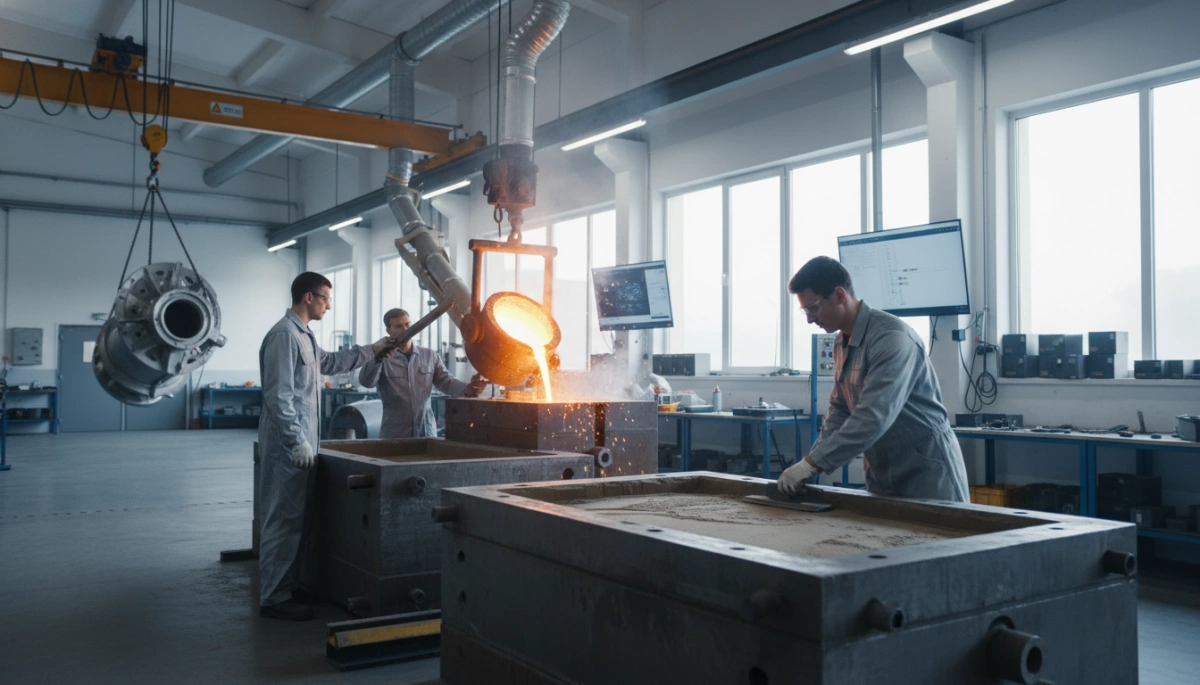
Understanding exactly how to sand cast helps engineers determine when this traditional metal foundry process is the right fit for a project. While our core expertise lies in high-precision investment casting, we recognize that sand casting holds a specific place in heavy manufacturing. It is primarily utilized for oversized parts where surface roughness (Ra) and tight dimensional tolerances are less critical.
Here is a breakdown of where sand casting is typically deployed across major industries:
Large-Scale Components for Oil & Gas
The oil and gas sector demands massive, durable parts. Sand casting is often used to produce oversized pump housings, heavy-duty valves, and large pipe fittings. However, when these components require exact dimensional accuracy and superior pressure resistance, many US project managers shift away from traditional sand molds. Instead, they explore how to source carbon steel precision castings to guarantee structural integrity and eliminate the need for extensive secondary CNC machining.
Complex Engine Blocks and Manifolds
Automotive and heavy machinery industries frequently rely on iron foundry services and aluminum sand casting for engine blocks and manifolds. The process easily accommodates the heavy, bulky nature of these components, making it a standard choice for large-scale automotive manufacturing.
Custom Architectural Hardware
For decorative gates, large structural brackets, and custom architectural elements, sand casting provides a practical way to produce low-volume, heavy metal parts. In these cases, the naturally textured surface finish left by the sand mold is often acceptable or even aesthetically desired.
Application Comparison
| Industry Application | Typical Components | Why Sand Casting is Used | When to Switch to Precision Casting |
|---|---|---|---|
| Oil & Gas | Massive valves, large pump housings | Accommodates extreme part weights | When tight tolerances and zero porosity are required |
| Automotive | Engine blocks, manifolds | Cost-effective for bulky, heavy parts | When intricate internal channels need exact precision |
| Architecture | Structural brackets, decorative gates | Good for low-volume, textured finishes | When a smooth, ready-to-install finish is needed |
Choosing the right casting method ultimately comes down to your project’s specific demands for scale, precision, and surface finish.
Why Outsource to Precision Vast?
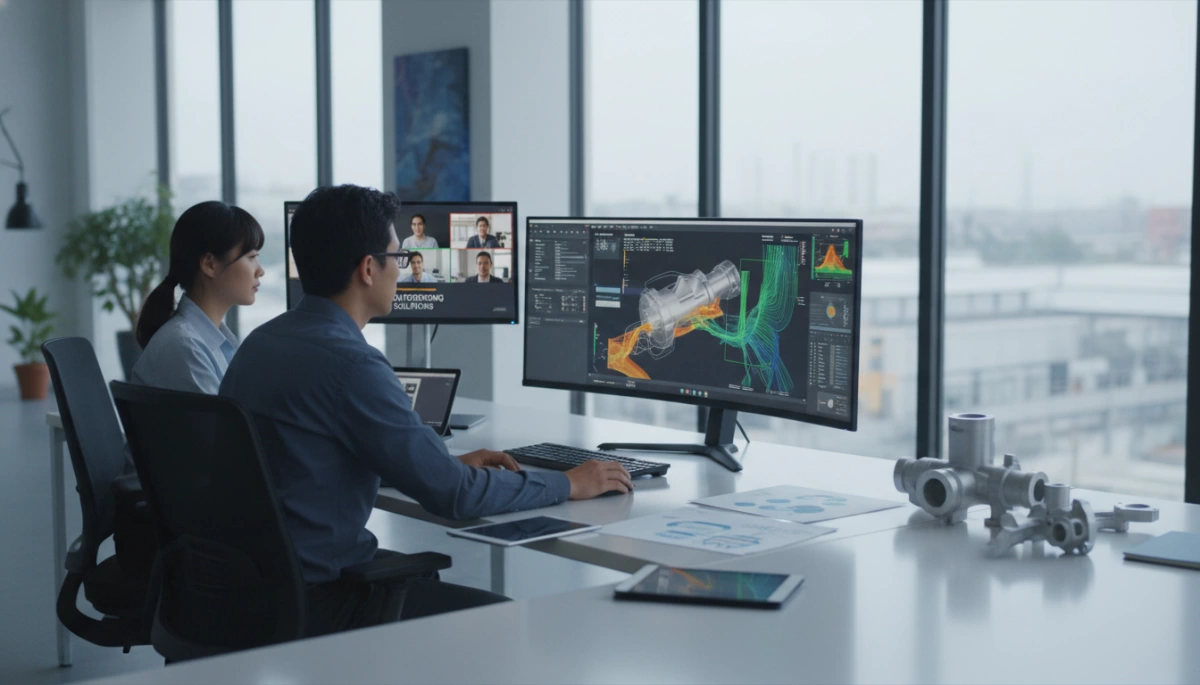
While understanding how to sand cast is important for basic industrial applications, modern manufacturing often demands tighter tolerances, intricate details, and smoother surface finishes. That is exactly where our precision investment casting steps in. We provide a seamless, one-stop manufacturing solution direct from our factory, delivering high-precision components to over 50 industries worldwide. When traditional sand casting cannot meet your exact standards, we have the technology and capacity to deliver uncompromising quality.
Advanced CAE Simulation
We eliminate the guesswork from the metal foundry process. By utilizing advanced Computer-Aided Engineering (CAE) simulation, we predict and prevent common casting defects before a single drop of metal is poured. This proactive approach optimizes structural integrity, minimizes material waste, and ensures your parts perform flawlessly under pressure.
Rapid Prototyping
Speed to market is critical. We offer rapid prototyping using advanced SLA printing to accelerate mold design and manufacturing. This allows us to move your project from a digital concept to a highly accurate physical pattern in a fraction of the time required by traditional pattern making methods.
Global Logistics and Quality Assurance
Quality is not just a marketing term for us; it is a certified standard. Our entire operation is ISO9001 certified, and we back up every production batch with comprehensive testing reports.
- Rigorous Inspection: Every part goes through strict quality control, including X-Ray testing, hardness testing, magnetic particle inspection, and CMM to guarantee exact dimensional accuracy.
- Material Expertise: We pour a massive variety of metals, including carbon steel, titanium, and aluminum. For example, understanding 1.4308 stainless steel and other specialized alloys allows our engineers to match the perfect metallurgical profile to your project’s demands.
- Reliable Global Supply: With over 200 skilled staff and a 700-ton annual output capacity, we easily scale to meet your production needs and ship globally with streamlined logistics.
- Rapid Response: We respect your time. Submit an inquiry, and our team will provide a detailed, custom quote within 8 hours.
Frequently Asked Questions (FAQ)
What is the typical tolerance for sand casting?
Sand casting generally offers broader dimensional tolerances compared to high-precision methods. Typically, you can expect tolerances ranging from ±0.030″ to ±0.060″ for the first inch, with additional variance as the part size increases. While suitable for large industrial components, projects requiring tight “near-net-shape” accuracy often benefit from innovating the future with precision castparts to reduce secondary machining costs.
Can sand casting be used for thin-walled parts?
It is difficult to achieve very thin walls with sand casting due to the grain size of the sand and the cooling rate of the molten metal. Generally, a minimum wall thickness of 0.125″ to 0.200″ is required to prevent misruns or structural defects. For aerospace or medical applications requiring intricate, thin-walled geometries, investment casting is the superior choice.
How does sand casting compare to investment casting in cost?
The cost-effectiveness of each method depends on your production volume and complexity:
- Sand Casting: Lower upfront tooling costs and cheaper raw materials. It is the go-to for large, heavy parts where surface finish is secondary.
- Investment Casting: Higher initial mold costs but significantly lower finishing and machining expenses. It provides a superior Surface Roughness (Ra) and handles complex alloys like titanium vs stainless steel with much higher precision.
Which method is better for high-volume production?
While sand casting is excellent for massive components, investment casting excels in high-volume runs of complex parts. At our Shandong foundry, we utilize CAE simulation and automated wax injection to ensure that every batch meets ISO9001 standards, delivering a 700-ton annual output that keeps your supply chain moving without the defects common in traditional sand molds.

 English
  German