

Swiss CNC machining for precision micro parts with tight tolerances multi axis turning milling and fast quotes for medical aerospace and more.
Understanding the Swiss CNC Machining Advantage
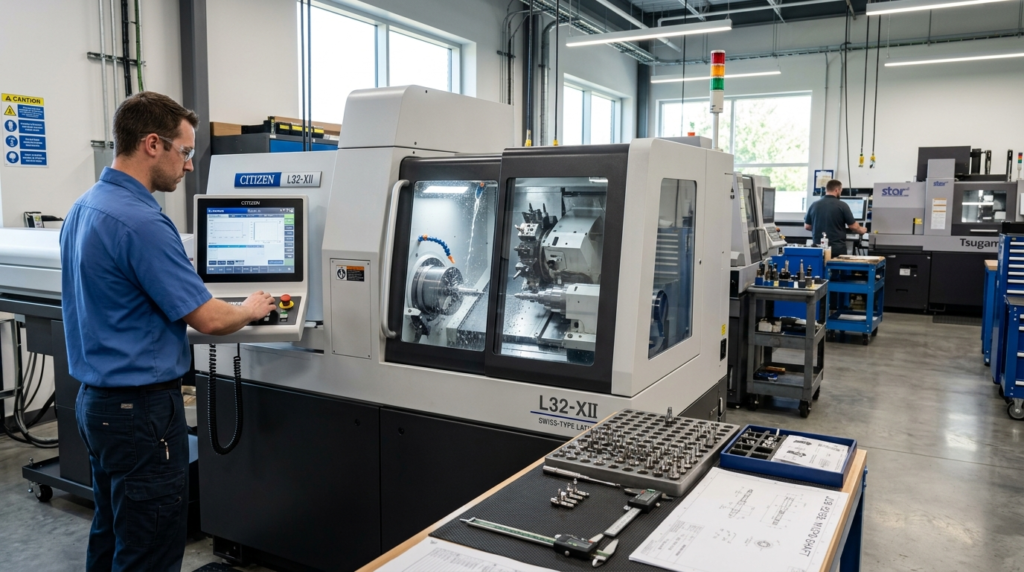
When your project demands micron-level tolerances and complex geometries on small-diameter parts, traditional turning often falls short. I utilize Swiss CNC machining to bridge the gap between “good enough” and absolute precision. The fundamental difference lies in how the workpiece is supported, allowing me to handle long, slender parts that would otherwise vibrate or deflect on a standard lathe.
Traditional Lathe vs. Swiss-Type: The Guide Bushing Difference
In a conventional CNC lathe, the workpiece is held in a collet and extends into the machine. As the tool applies pressure, the part can flex. My Swiss-type automatic lathes utilize a guide bushing. The material is supported right at the point of tool contact, meaning the cutting forces never cause the part to bend.
| Feature | Traditional CNC Lathe | Swiss-Type CNC Machining |
|---|---|---|
| Support Point | Fixed at the spindle | Moves with the material (Guide Bushing) |
| Part Deflection | High on long parts | Virtually eliminated |
| Best For | Short, large diameter parts | Long, slender, micro-components |
| Max L:D Ratio | Usually 3:1 | Exceeds 20:1 |
Sliding Headstock Technology: Eliminating Deflection
I rely on sliding headstock CNC technology to maintain rigid control over the machining process. Instead of the tool moving along a vibrating part, the material itself feeds through the guide bushing toward the stationary tools.
- Zero Vibration: By keeping the machining zone millimeters away from the support, I achieve superior surface finishes.
- Precision Turning: This setup allows me to produce long slender part machining projects without the risk of taper or chatter.
- Consistency: Whether it’s the first part or the ten-thousandth, the sliding headstock ensures the dimensions stay locked in.
Done-in-One Production with Sub-Spindles
To cut lead times and reduce costs, I focus on “Done-in-One” manufacturing. By leveraging multi-axis turning-milling and sub-spindle CNC processing, I eliminate the need for secondary operations.
- Live Tooling: I perform cross-drilling, milling, and tapping while the part is still in the main spindle.
- Sub-Spindle Handoff: The machine automatically grabs the part to finish the back-side work (deburring, slotting, or drilling).
- Efficiency: This removes the “human error” factor of manual transfers and ensures your precision turned components drop off the machine 100% complete.
Technical Specs of Our Swiss CNC Machining
We push the limits of micro-machining services by combining high-speed precision with multi-axis flexibility. Our shop floor features advanced Swiss-type automatic lathes designed to handle everything from simple pins to complex, high-tolerance aerospace components.
Multi-Axis & Precision Limits
Our equipment lineup includes 5-axis, 7-axis, and 9-axis Swiss machining centers. These machines allow us to perform milling, drilling, and cross-tapping simultaneously, ensuring micron-level tolerances on every part.
| Feature | Capability |
|---|---|
| Diameter Range | Φ1 mm to Φ38 mm |
| Axis Options | 5, 7, and 9-axis configurations |
| Surface Finish | Down to Ra 0.4 μm (Mirror finish) |
| Tolerance Control | Within ±0.005 mm |
High-Volume Scalability
To keep lead times short and costs competitive for the United States market, we utilize bar-fed CNC machining for 24/7 “lights-out” production. This automation enables high-volume screw machining with absolute part-to-part consistency. While we specialize in turning, understanding the benefits of different manufacturing methods, like carbon steel in investment casting, helps us guide you to the most efficient production route for your specific geometry.
Surface Finish & Quality
We achieve an Ra 0.4 μm mirror finish straight off the machine, often eliminating the need for expensive secondary polishing. This is a critical advantage for medical device component manufacturing, where surface integrity and cleanliness are non-negotiable.
- Sub-spindle CNC processing for back-end work.
- Live tooling for complex geometries in a single setup.
- High-pressure coolant systems for superior chip control and tool life.
Material Expertise for Swiss CNC Machining
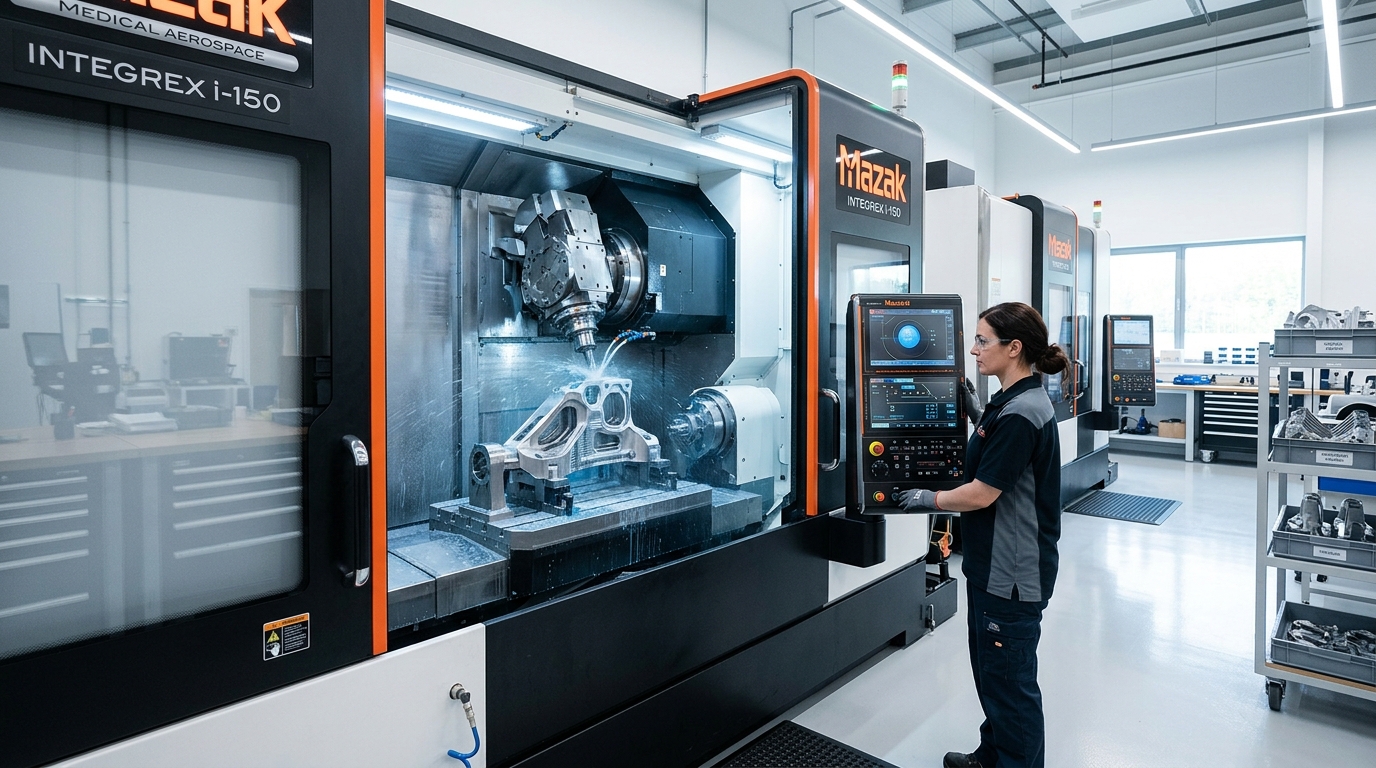
Working with high-performance industries means I have to be precise about material selection. My swiss cnc machining capabilities are optimized for the challenging alloys and plastics required by the U.S. medical, aerospace, and defense sectors. We ensure every bar of stock meets the rigid standards required for your specific application, maintaining stability across high-volume production runs.
Medical and Dental Grade Alloys
For medical device component manufacturing, biocompatibility and extreme corrosion resistance are non-negotiable. I specialize in titanium swiss machining to produce parts that are both lightweight and durable:
- Titanium (Grades 5 & 23): The industry standard for implants and bone screws.
- 316L Stainless Steel: High-strength, surgical-grade material for instruments.
- PEEK: A high-performance polymer used for specialized medical components.
Aerospace and Defense Superalloys
When parts are destined for extreme environments, the material must survive high heat and pressure. Our precision manufacturing standards ensure that even the toughest superalloys are machined with micron-level accuracy:
- Inconel & Kovar: Essential for heat shields and electronic packaging.
- 17-4 PH Stainless Steel: Offers the perfect balance of high strength and corrosion resistance.
General Engineering Materials
For components ranging from fiber optic hardware to automotive sensors, we maintain a consistent flow of high-quality metals:
- Aluminum 6061/7075: Preferred for lightweight structural parts.
- Brass & Alloy Steels: Ideal for high-conductivity electrical connectors and mechanical fasteners.
| Industry | Primary Materials Used | Key Characteristics |
|---|---|---|
| Medical | Titanium, 316L, PEEK | Biocompatible, Non-reactive |
| Aerospace | Inconel, 17-4 PH | Heat Resistant, High Strength |
| Electronics | Brass, Aluminum | Conductivity, Weight Savings |
Industry-Specific Swiss CNC Machining Solutions
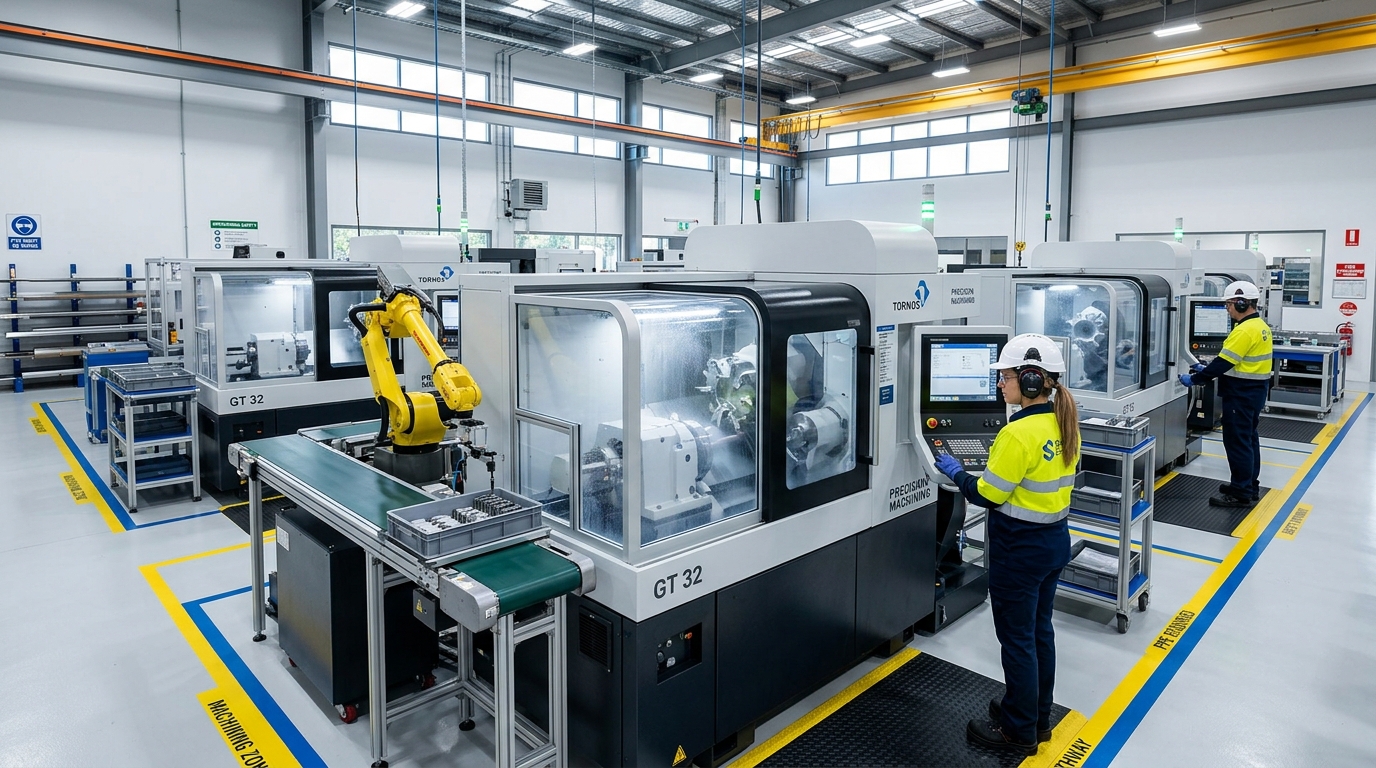
I specialize in high-precision parts where failure isn’t an option. Our Swiss CNC machining capabilities allow us to meet the rigorous demands of the most complex industries in the U.S. market, providing components that are as reliable as they are precise.
Medical Device Component Manufacturing
In the medical field, precision saves lives. I produce bone screws, dental implants, and surgical instruments with extreme accuracy. Using biocompatible materials, our medical device component manufacturing processes ensure every part meets strict regulatory standards for finish and tolerance.
Aerospace and Defense
Weight and durability are critical for flight-critical hardware. I machine miniature connectors, fuel system valves, and complex fasteners. Understanding the properties of high-temperature alloys is essential when working with materials like Inconel or Kovar to ensure components survive extreme thermal and physical stress.
Electronics and Telecommunications
The demand for smaller, faster tech requires specialized micro-machining services. I deliver high-performance parts for the tech sector, including:
- Micro-pins and sockets for high-density connectors.
- Fiber optic hardware requiring sub-micron tolerances.
- Internal components for advanced consumer electronics.
Automotive Innovation
Our Swiss-type automatic lathes are the gold standard for high-volume production of fuel injection components and specialized sensors. I help automotive manufacturers maintain cost-efficiency while hitting the tight tolerances required for modern engine management and safety systems. By leveraging bar-fed CNC machining, I ensure a steady supply of precision turned components for even the most demanding production schedules.
Quality Standards for Swiss CNC Machining
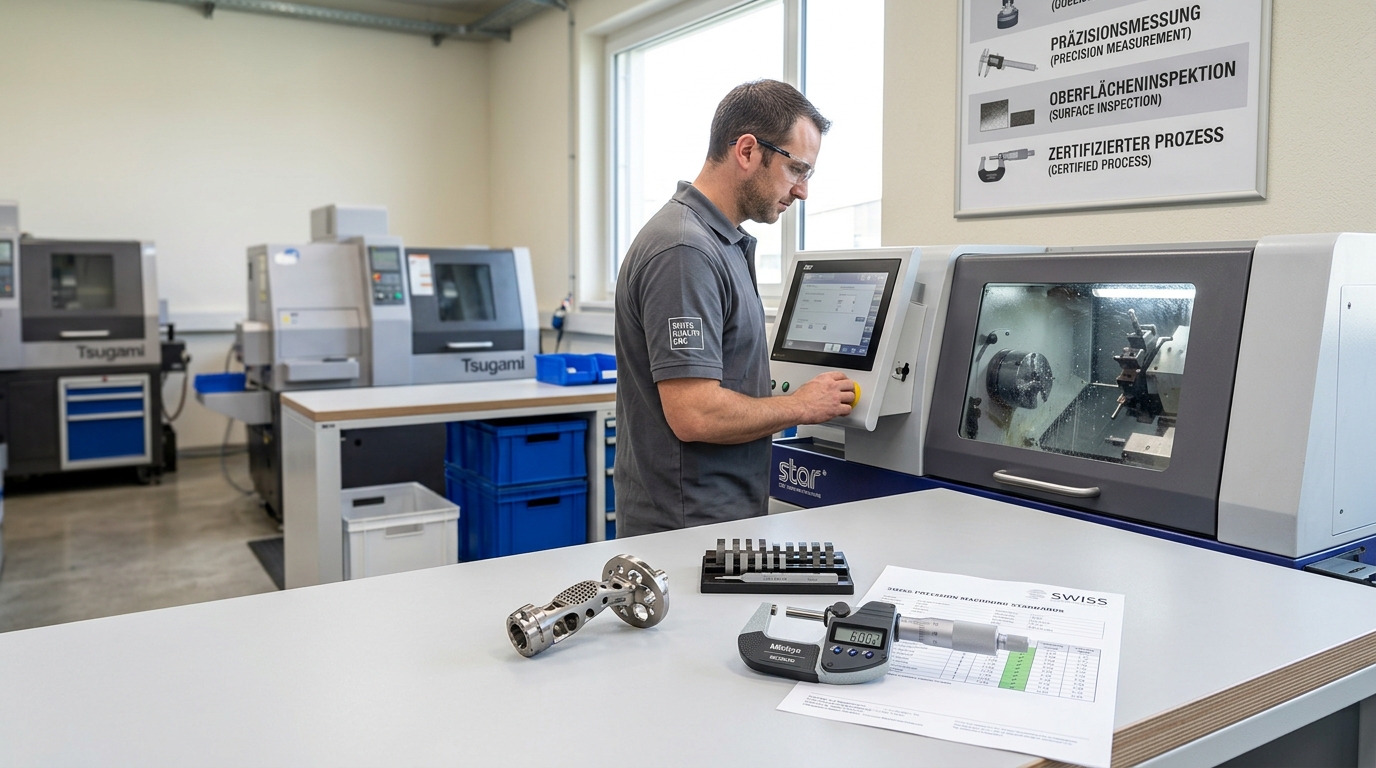
In our facility, Swiss CNC machining is synonymous with absolute precision. When we handle micron-level tolerances, there is no room for guesswork. I ensure that every component undergoes a rigorous micro-inspection process to meet the tightest specs required by the medical and aerospace sectors.
Precision Measurement & Inspection
We utilize advanced metrology equipment to verify the integrity of every small-diameter part:
- CMM (Coordinate Measuring Machines): Automated 3D measurement for complex part geometries.
- Optical Comparators: High-magnification visual inspection for intricate profiles and threads.
- Digital Micrometers & Bore Gauges: Daily calibration to ensure sub-micron accuracy.
Certifications and Inspection Protocols
My team operates under strict ISO 9001:2015 compliance. We don’t just spot-check; we implement 100% inspection protocols for critical dimensions to guarantee that high-volume runs are flawless. This commitment to quality is what makes our bar-fed CNC machining reliable for long-term production contracts.
Metallurgical Testing & Traceability
Quality begins with the raw material. I maintain a strict chain of custody for all metals, providing full material traceability and hardness checks. Whether we are evaluating titanium alloy vs stainless steel for a specific high-stress application or testing specialized medical grades, our metallurgical testing ensures the stock meets your exact mechanical requirements.
| Inspection Type | Equipment/Standard | Purpose |
|---|---|---|
| Dimensional | CMM & Optical Profiler | Ensuring geometric accuracy |
| Surface Finish | Profilometer | Verifying Ra 0.4 μm mirror finishes |
| Hardness | Rockwell/Vickers Tester | Confirming material structural integrity |
| Compliance | ISO 9001:2015 | Maintaining global quality benchmarks |
Why Partner With Us for Swiss CNC Machining?
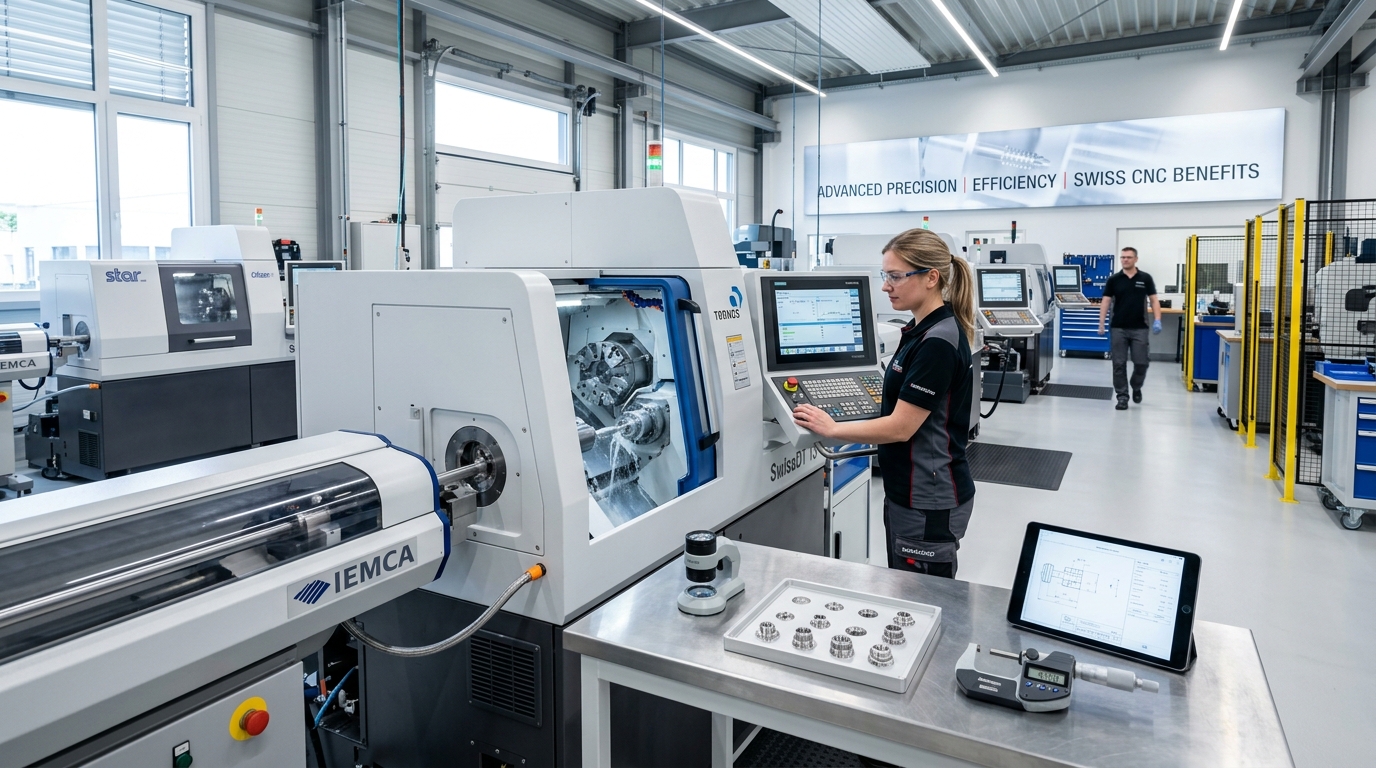
I’ve built my production base to handle the most demanding tolerances without the typical industry lead times. Choosing my Swiss CNC machining services means you are cutting out the middleman and working directly with the source. Whether you are comparing materials like stainless steel for complex assemblies or need a one-off titanium prototype, my shop is optimized for both speed and precision.
| Benefit | Impact on Your Project |
|---|---|
| Direct Factory Pricing | Significant cost-per-part savings by eliminating markups. |
| 8-Hour Rapid Quote | Fast turnaround to get your project off the drawing board. |
| Seamless Transition | Move from rapid prototyping to mass production overnight. |
| Micro-Precision | Reliable micron-level tolerances on every single part. |
Streamlined Production and Expert Support
- Cost-Efficiency: My facility utilizes bar-fed CNC machining to enable 24/7 “lights-out” manufacturing. This keeps my overhead low and your pricing competitive.
- Prototyping to Scale: I specialize in taking a project from its first iteration to full-scale rollout. I ensure your precision turned components are optimized for manufacturability before we hit the high-volume stage.
- Rapid Response: I understand the North American market’s need for speed. My commitment to an 8-hour rapid quote means your timeline stays on track, helping you beat your competitors to market.
I provide a “one-stop-shop” experience where micro-machining services and complex 7-axis Swiss machining meet reliable, factory-direct support. When you work with me, you get high-quality Swiss-type automatic lathe results with the transparency of a local partner.
Swiss CNC Machining FAQ
What is the maximum length-to-diameter ratio?
Unlike traditional turning, Swiss CNC machining supports the workpiece right next to the cutting tool using a guide bushing. This allows me to machine long, thin parts that would otherwise deflect or vibrate.
- Traditional Lathes: Usually max out at a 3:1 or 5:1 ratio.
- Swiss-Type Automatic Lathe: Easily handles 20:1 or even 30:1 ratios while maintaining tight tolerances.
How does Swiss machining reduce the cost per part?
I reduce costs through “done-in-one” manufacturing. By using a sub-spindle CNC processing method, I can machine both ends of a part simultaneously. This eliminates the need for secondary setups or manual labor between machines. Additionally, our bar-fed systems allow for high-speed, lights-out production, which lowers the overhead on high-volume runs.
Can you machine custom medical-grade titanium?
Absolutely. I specialize in Titanium Swiss machining for the most demanding applications. Whether you are choosing the best high-temperature alloys for your applications or need specific biocompatible materials, I have the experience to handle:
- Titanium Grades 5 & 23: Perfect for bone screws and dental implants.
- 316L Stainless Steel: For surgical instruments and micro-pins.
- PEEK: For specialized medical housings and connectors.
 English
  German