

Is rusting a chemical change Learn how oxidation damages cast metals and how precisionvast corrosion resistant castings prevent rust.
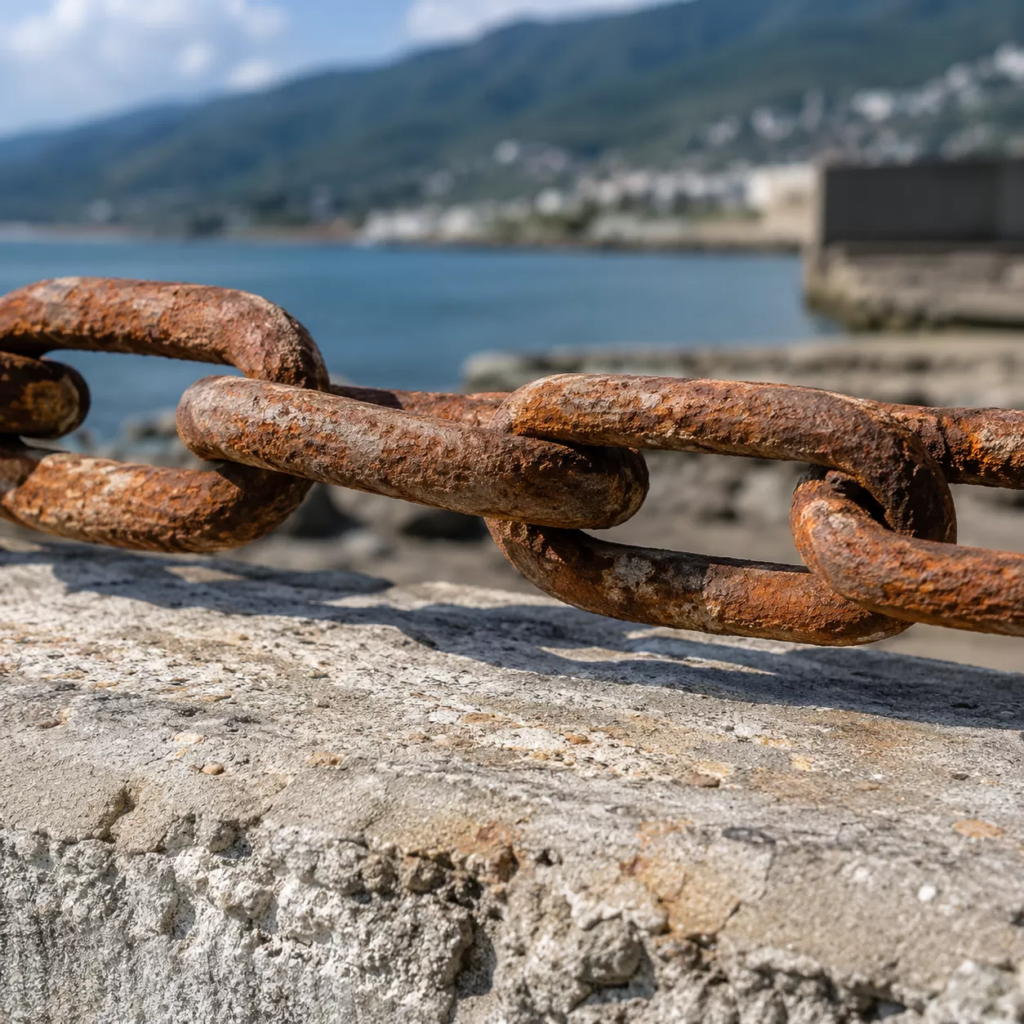
Is Rusting a Chemical Change?
When you spot a reddish-brown flake on a critical metal component, you are not looking at a simple surface stain. You are witnessing a fundamental transformation.
The Science of Iron Oxidation
Rusting is a permanent chemical change, not a temporary physical alteration. When iron is exposed to oxygen and moisture, it undergoes a chemical reaction that completely changes its molecular identity. The original elemental iron atoms bond with oxygen and water to form an entirely new substance: hydrated iron oxide.
The Chemical Equation
This metal oxidation chemical reaction follows a precise chemical formula:
$$4text{Fe} + 3text{O}_2 + 2xtext{H}_2text{O} rightarrow 2text{Fe}_2text{O}_3 cdot xtext{H}_2text{O}$$
In this process, the structural properties of the raw iron are permanently destroyed as it converts into brittle, structurally unsound rust.
Physical Change vs. Chemical Change in Metals
A common misconception in heavy manufacturing is that rust is just a surface issue that can be wiped away. While you can physically scrub away the top layer of hydrated iron oxide formation, you cannot reverse the reaction.
- Irreversible Mass Loss: The iron atoms that converted into rust are permanently gone from the component’s structure.
- Surface Cleaning Fails: Scraping off rust simply exposes a fresh layer of raw iron to the elements, accelerating the iron oxidation process.
- Altered Chemical Properties: Unlike a physical change (like bending or freezing), the chemical properties of steel rust cannot support mechanical loads, leading to immediate structural degradation.
Industrial Consequences of Rusting on Custom Castings
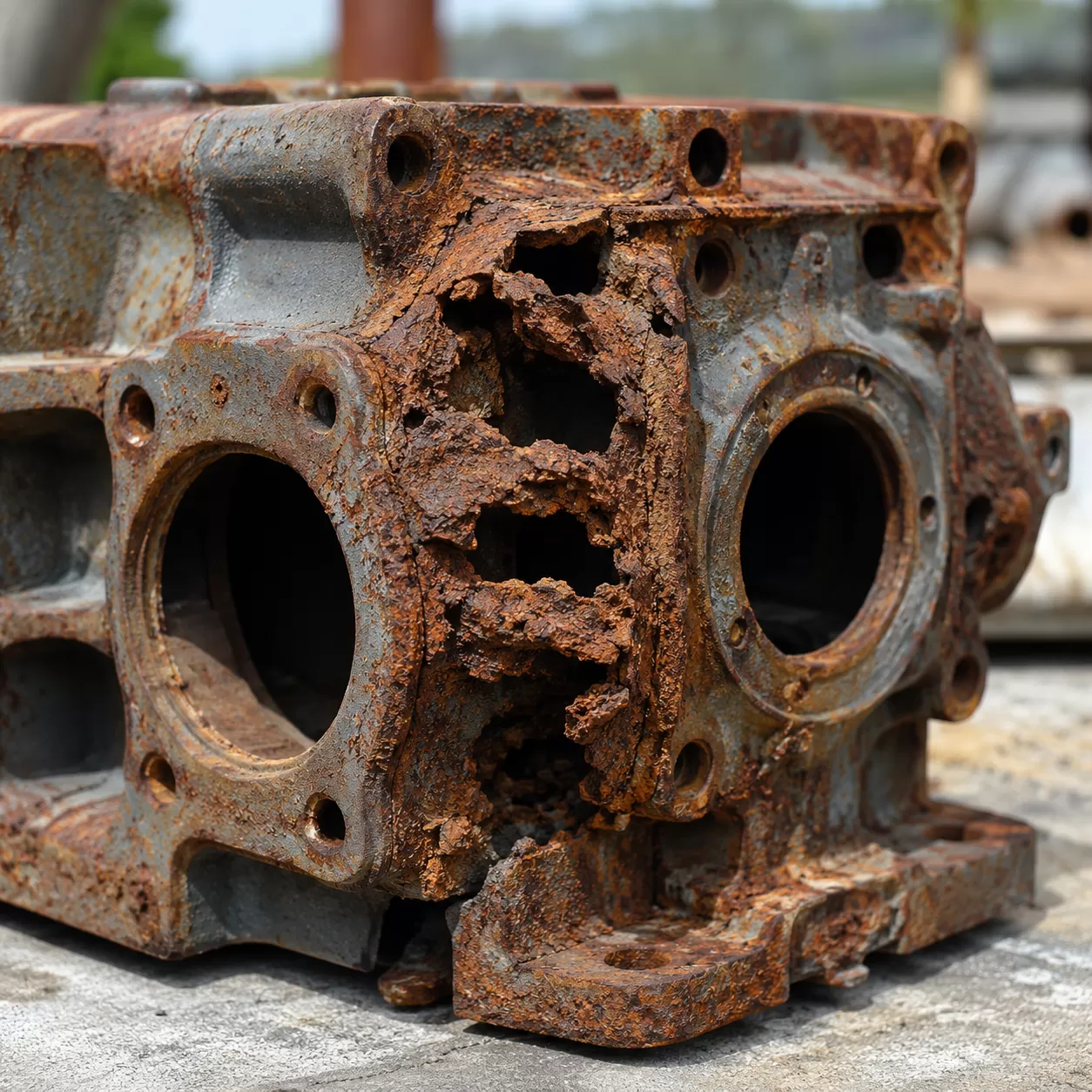
When manufacturing heavy-duty components, understanding why is rusting a chemical change becomes a matter of structural survival. Unlike simple surface dirt, iron oxidation permanently destroys the base metal, leading to catastrophic failures in industrial applications. For North American OEMs relying on precision casting, unchecked corrosion directly compromises the bottom line.
Structural Integrity Degradation
The iron oxidation process creates deep metal pitting along the surface of custom castings. These pits act as local stress concentration points under heavy mechanical loads. Over time, microscopic cracks propagate from these pitted areas, leading to sudden component failure long before the end of its intended lifecycle.
Dimensional Tolerance Loss
For high-tolerance applications, even microscopic surface flaking is unacceptable. As rust forms, it expands and flakes away, permanently altering the critical dimensions of precision-machined investment castings. This dimensional loss ruins the tight seals and exact fits required in aerospace, automotive, and fluid-handling systems, rendering the entire component useless.
The True Economic Impact
The hidden costs of premature component replacement extend far beyond the price of a new part. United States industrial operations face massive financial drains from unscheduled downtime, emergency maintenance labor, and compromised field safety. Investing in superior investment casting corrosion resistance strategies during the design phase is the only reliable way to eliminate these recurring operational losses in severe working environments.
How Precisionvast Engineers Against Chemical Oxidation
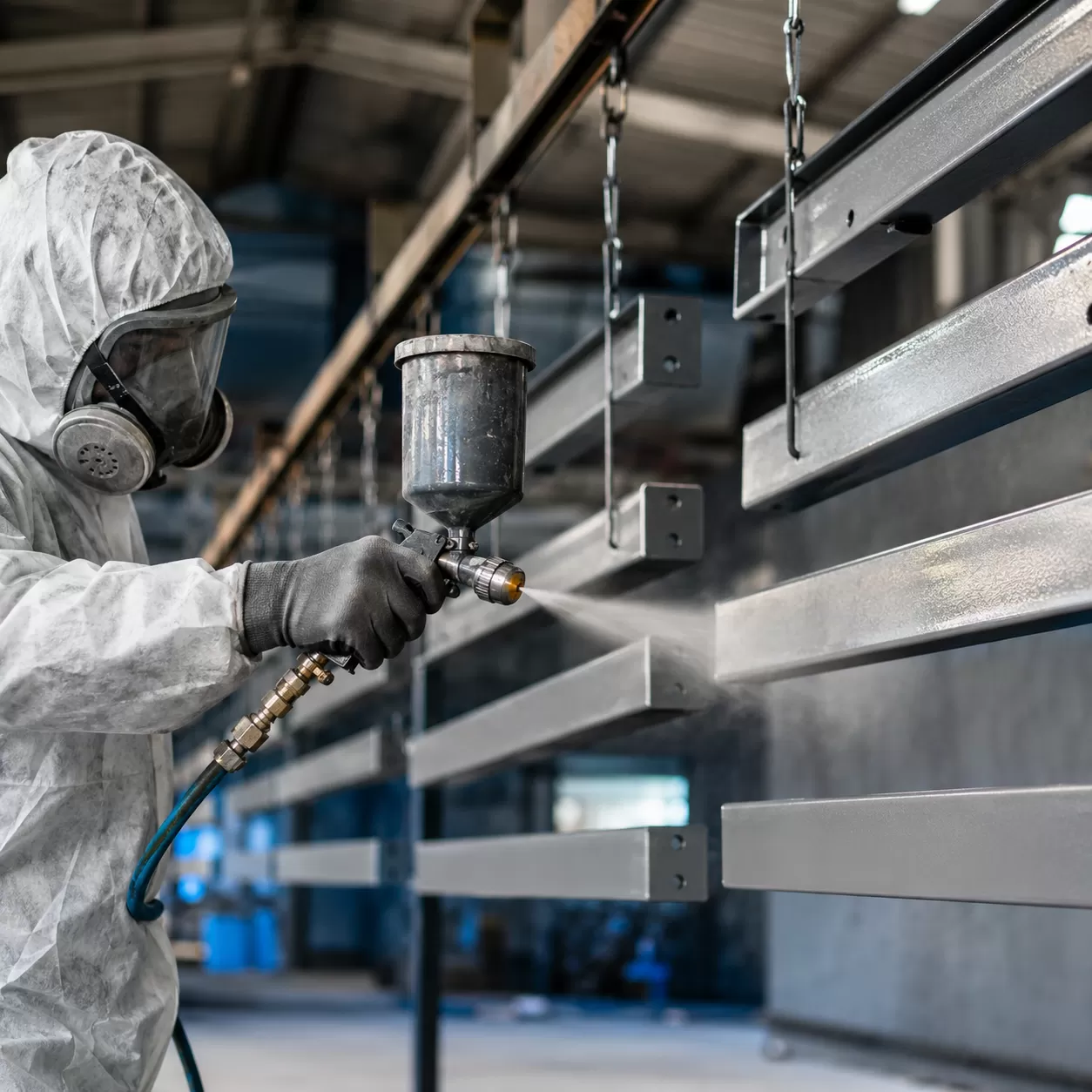
At Precisionvast, we don’t just accept that is rusting a chemical change that destroys metal; we actively engineer our components to stop the iron oxidation process before it can start. For United States manufacturers operating in harsh, high-stress environments, relying on standard metals is a liability. We utilize an aggressive, multi-layered defense strategy within our precision casting workflow to ensure your custom components maintain their structural integrity over years of service.
Advanced Alloy Selection
We mitigate the risk of hydrated iron oxide formation right at the atomic level. Our foundry specializes in pouring corrosion-resistant metal alloys, including high-chromium stainless steel casting grades and specialized nickel alloys. These materials are engineered to form a passive, microscopic, self-healing oxide layer on the component’s surface, effectively blocking ambient oxygen and moisture from reacting with the underlying iron.
The Precision Casting Advantage
Traditional manufacturing methods can leave hidden vulnerabilities. Our specialized vastcasting process is designed to eliminate internal structural voids, gas porosity, and surface contaminants that typically act as local catalysts for rust. By delivering a dense, uniform metallurgical structure, we ensure there are no weak points for localized metal pitting and flaking to take hold. This extreme attention to detail is critical for maintaining strict investment casting tolerances over the lifespan of the part.
Secondary Surface Treatments
To provide maximum protection, every raw metal surface undergoes targeted post-casting enhancements. We implement advanced precision casting surface treatment protocols based on your specific application needs:
- Chemical Passivation: A precise passivation of cast components removes free iron from the surface, maximizing natural corrosion resistance.
- Electro-Polishing: This process strips away surface microscopic peaks, leaving a ultra-smooth mirror finish that prevents moisture retention.
- Protective Coatings: Advanced barrier coatings are applied to fully seal the metal, delivering a final line of defense for reliable metal degradation prevention in the field.
Comparative Material Performance Matrix
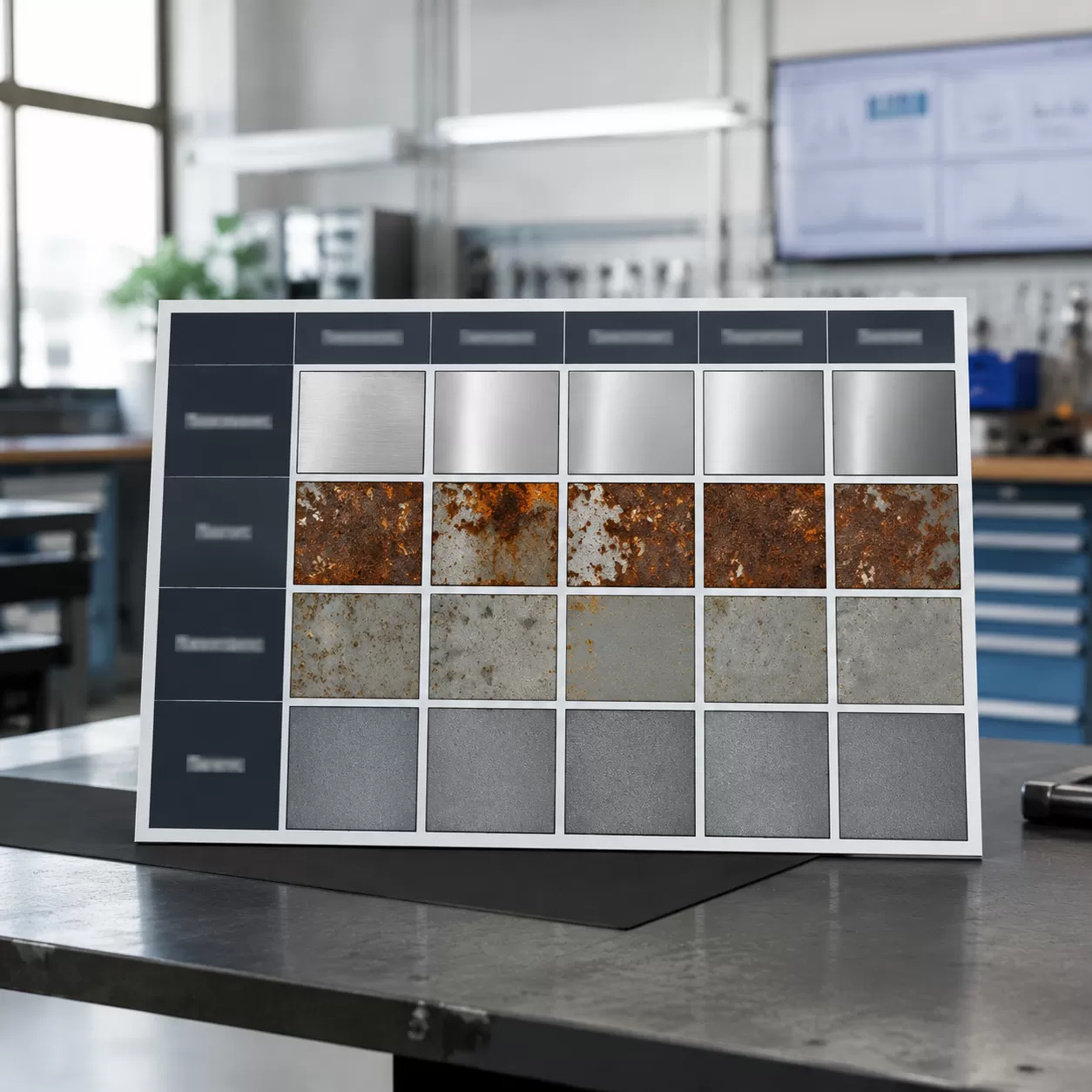
When assessing if rusting is a chemical change, it becomes clear that material selection directly dictates how a component handles iron oxidation. Standard metals succumb quickly to environmental moisture, while engineered alloys resist this irreversible degradation.
We map how different metal grades perform under corrosive stress to help you choose the right material for your custom castings.
| Material Grade | Rust Susceptibility | Tensile Strength Retention | Optimal Environment Suitability |
|---|---|---|---|
| Standard Carbon Steel | High; rapid hydrated iron oxide formation. | Poor; severe pitting causes rapid structural loss. | Dry, indoor applications or strictly controlled environments. |
| Low-Alloy Steel | Moderate to High; requires protective surface treatments. | Moderate; localized corrosion degrades structural integrity over time. | Mild outdoor environments with regular maintenance. |
| Precisionvast Corrosion-Resistant Grades | Exceptionally Low; self-healing passive layer prevents oxidation. | Excellent; maintains full mechanical properties in harsh conditions. | Marine, chemical processing, and severe outdoor industrial environments. |
Choosing the right material eliminates the structural risks associated with the metal oxidation chemical reaction. While carbon steels require aggressive secondary coatings to survive, our specialized corrosion-resistant metal alloys provide long-term durability without the risk of surface flaking or dimensional tolerance loss. For a deeper look at how specialized metallurgical structures handle environmental exposure, you can explore our insights on the effects of titanium oxidation on medical implants to see how advanced passivation protects critical components.
Industry Standards and Quality Validation at precisionvast
We do not just claim that our components resist degradation; we prove it through rigorous, standardized validation. Every custom run undergoes strict testing to ensure it withstands harsh environmental conditions without breaking down.
ASTM B117 Salt Spray Testing
To verify long-term defense against moisture and ambient oxygen, we subject our cast components to accelerated electrochemical stress. Using ASTM B117 salt spray testing, we place the castings in a controlled, highly corrosive saline mist environment. This process allows us to measure real-world endurance in a fraction of the time, ensuring that the final parts maintain their structural integrity and surface quality when exposed to severe field conditions.
Microstructural Analysis and Spectrographic Testing
Preventing localized failures requires absolute control over metal chemistry. We utilize precise spectrographic testing to conduct a complete microstructural analysis on every batch. This process verifies that elements like chromium, nickel, and molybdenum are distributed perfectly within the matrix. By locking in the exact chemical composition, we eliminate the structural impurities that trigger localized pitting, ensuring our corrosion-resistant metal alloys deliver reliable, long-term performance under heavy industrial workloads.
 English
  German