

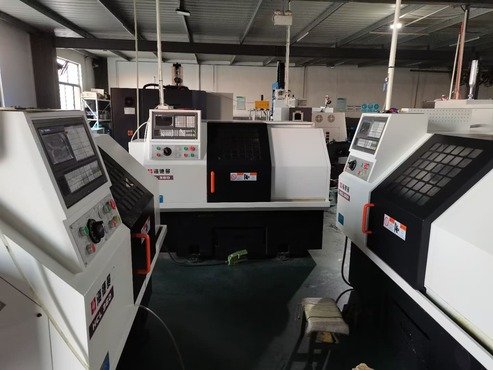
Heavy duty industrial lathe machine with precision cast iron bed high torque spindle bore large swing over bed for toolroom and production.
What is a Lathe Machine Machine?
If you are trying to shape raw metal into precision components, you need a tool that delivers absolute accuracy. A lathe machine machine is the foundational workhorse of modern manufacturing. Often called the “king of machine tools,” this equipment holds and rotates a workpiece on a central axis while a stationary cutting tool shears away excess material.
Whether you are running a high-volume fabrication shop or engineering custom aerospace components, understanding this tool is essential to your production success.
A Quick History of Metal Turning
The concept of turning material is ancient, but the modern precision metal lathe evolved dramatically during the Industrial Revolution.
- Early Designs: Ancient wood-turning lathes required manual foot pedals or hand cranks.
- The Industrial Shift: In the late 18th century, innovators like Henry Maudslay introduced the all-metal lathe with rigid slide rests.
- Modern Evolution: This engineering breakthrough allowed for the mass production of interchangeable parts, standardizing screw threads and laying the groundwork for today’s high-precision heavy-duty production lathe models.
How a Metalworking Lathe Works Across Industries
The core operating principle is simple: the workpiece rotates while the cutting tool remains stationary. The machine secures the metal—usually in a chuck or between centers—and spins it at controlled speeds. As the operator or automated program feeds the cutting tool along the material, it creates perfectly cylindrical shapes, threads, tapered surfaces, and deep bores.
[Power Source] —> [Spindle/Headstock] —> [Rotates Workpiece]
|
(Cuts Material)
|
[Manual/CNC Controls] —> [Carriage/Post] —> [Moves Cutting Tool]
Because of this versatile subtractive manufacturing process, different sectors rely on the machine for specialized tasks:
- Automotive Industry: Turning driveshafts, brake rotors, and custom engine valves.
- Aerospace Sector: Fabricating landing gear parts and landing components with tight tolerances.
- Repair & Maintenance Shops: Boring out worn cylinders, restoring damaged threads, and making one-off replacement pins.
- Oil & Gas Industry: Threading heavy-duty drill pipes and manufacturing specialized high-pressure valves.
Types of Lathe Machine Machines
When outfitting a machine shop or production floor, picking the right lathe machine machine configuration is critical to matching your specific workflow and accuracy requirements. Different applications demand different levels of rigidity, automation, and footprint.
Industrial Engine Lathes
The heavy-duty industrial engine lathe is the workhorse of manufacturing facilities, maintenance departments, and repair shops across the United States. These robust units handle large-diameter workpieces and tough materials, providing the raw power and stability needed for heavy stock removal. Because these machines are built to withstand immense cutting forces, their construction relies heavily on high-tensile components; in fact, understanding the foundational role of heavy-duty industrial castings explains how these massive lathes maintain their structural integrity under constant load.
Toolroom Lathe Machines
When extreme precision takes priority over high-volume production, a toolroom lathe machine is the go-to choice. These machines are engineered to tighter tolerances and offer smoother control for tool-and-die making, prototyping, and high-precision instrument fabrication.
Conventional Manual Lathes
A conventional manual lathe offers unmatched tactile feedback and versatility for one-off parts, quick repairs, and small-batch jobs. Experienced operators rely on manual handwheels and mechanical levers to control the cutting tool, making it an indispensable asset for custom fabrication shops.
CNC Turning Centers
For automated high-volume production, a CNC turning center delivers maximum efficiency, repeatability, and complex profiling capabilities. Controlled by pre-programmed software, these enclosed machines drastically reduce cycle times and labor costs while maintaining tight tolerances across thousands of identical parts.
Benchtop Metal Turning Lathes
For smaller job shops, R&D labs, and serious garage machinists, a benchtop metal turning lathe provides a compact, space-saving solution. While smaller in footprint, a quality benchtop model still delivers impressive precision for turning smaller components without requiring massive industrial floor space.
Lathe Machine Comparison Matrix
| Lathe Type | Ideal Application | Key Strength | Footprint |
|---|---|---|---|
| Industrial Engine Lathe | Heavy repair, large-diameter turning | High torque, rugged durability | Large |
| Toolroom Lathe | Mold-making, aerospace prototyping | Ultra-high precision, tight tolerances | Medium |
| Conventional Manual Lathes | Custom fabrications, quick repairs | Low setup time, tactile control | Medium to Large |
| CNC Turning Center | Mass production, complex geometries | High automation, fast cycle times | Large |
| Benchtop Metal Turning Lathe | Light prototyping, small parts | Compact size, cost-effective | Small (Benchtop) |
Engineering & Structural Architecture of a Heavy-Duty Lathe Machine Machine
When we build a heavy-duty production lathe, everything starts from the ground up. The foundation determines whether you get micro-inch precision or chatter-marked scrap. For a lathe machine machine to maintain accuracy under brutal cutting forces, we construct the frame with a premium cast iron machine bed and induction-hardened guideways.
The Role of a Premium Cast Iron Machine Bed
A heavy-duty production lathe faces massive torsional stress when hogging out large metal components. We use high-tensile meehanite or gray cast iron because it offers structural benefits that welded steel simply cannot match:
- Vibration Dampening: Cast iron has a natural ability to absorb harmonics and cutting vibrations, keeping your finishes flawless.
- Thermal Stability: It resists warping and twisting when the shop floor temperature fluctuates throughout the day.
- Massive Rigidity: The heavy weight anchors the lathe machine machine, preventing deflection when turning off-center workpieces.
Induction-Hardened Ways for Maximum Rigidity
The guideways—or “ways”—are the tracks that the carriage and tailstock slide across. To prevent premature wear and maintain long-term alignment, our production lathes feature induction-hardened ways.
Why Induction Hardening Matters: We heat the surface of the ways using high-frequency electricity and then quench it immediately. This creates a deeply hardened outer layer (typically over 50 HRC) while preserving a ductile, shock-absorbing core underneath.
These hardened surfaces are then precision-ground to tight tolerances. Combined with a robust cast iron machine bed, this setup ensures the cutting tool moves along a perfectly straight line for years, preventing the saddle from sinking or shifting during deep profiling cuts.
Inside the Headstock: Spindle Bore and Speed Control
The headstock is the heart of any lathe machine machine setup. When evaluating a precision metal lathe, the spindle bore diameter is the first spec to check. A larger bore allows thicker bar stock to pass directly through the headstock, accelerating high-volume production without constant material pre-cutting.
Pairing a large bore with variable speed controls gives operators total control over cutting physics. Machining different materials requires distinct surface speeds to prevent tool wear and achieve smooth finishes. Modern systems utilize quick-change gearboxes to adjust feed rates and thread pitches instantly, eliminating the manual hassle of swapping out individual change gears.
Key Performance Specs to Compare
| Feature | Production Impact | Key Benefit |
|---|---|---|
| Large Spindle Bore | Accommodates oversized bar stock | Reduces material prep time |
| Variable Speed Control | Real-time RPM adjustments | Optimizes cutting for different metals |
| Quick-Change Gearbox | Fast feed rate modifications | Speeds up threading operations |
Tailstock Alignment and Steady Rest Support
On the other side of the lathe machine machine, the tailstock and auxiliary supports dictate the accuracy of longer workpieces. Without proper alignment, long metal parts will deflect under cutting pressure, resulting in tapered or out-of-spec components.
- Tailstock Taper: Provides a rigid clamping force for center-drilling and securing long shafts.
- Steady Rest Support: Anchors long, heavy profiles at critical points along the machine bed to eliminate workpiece flex and chatter.
Heavy-duty machining puts extreme stress on these components. The foundational strength relies entirely on how these assemblies interface with the machine base. Much like the robust foundation required for carbon steel castings, a lathe’s work-holding components must absorb intense vibrational energy to maintain tight, repeatable tolerances during deep cuts.
Standard Tooling vs. Advanced Upgrades for Your Lathe Machine Machine
Getting the most out of a lathe machine machine comes down to the accessories holding your work and guiding your cuts. While standard setups get the job done, upgrading your tooling transforms a basic conventional manual lathe into a high-precision powerhouse. Choosing the right combination of chucks, posts, and readouts directly impacts your shop’s efficiency and part accuracy.
Essential Workholding & Tool Post Setups
Every machining project requires a rigid connection between the cutting edge and the workpiece. Upgrading these two foundational components saves hours of setup time:
- 3-Jaw Chucks: The go-to choice for round stock. The jaws move simultaneously, automatically centering your material for quick, repetitive turning.
- 4-Jaw Chucks: Essential for irregular or rectangular parts. Each jaw moves independently, allowing you to dial in perfect concentricity or intentionally turn eccentric parts.
- Quick-Change Tool Posts (QCTP): Ditch the old-fashioned lantern-style holders. A premium QCTP lets you swap out metalworking lathe tools in seconds while maintaining exact center height consistency.
Advanced Upgrades for Maximum Precision
To compete with modern manufacturing tolerances, manual setups need a digital edge. Upgrading your machine hardware reduces human error and scrapped parts.
| Upgrade Feature | Primary Benefit | Best Used For |
|---|---|---|
| 2-Axis Digital Readout (DRO) | Eliminates backlash calculations by tracking true tool position. | High-tolerance aerospace and automotive prototyping. |
| Indexable Carbide Tooling | Eliminates tool grinding; simply rotate the insert for a fresh edge. | High-speed production on a heavy-duty production lathe. |
| Live Centers | Reduces friction and heat buildup at the tailstock during long runs. | Heavy shaft turning and high-RPM operations. |
When fabricating heavy components, structural integrity matters just as much as the tooling. Many industrial upgrades rely on high-strength alloy steel casting components to withstand the intense cutting forces generated by advanced carbide inserts. Combining a crisp 2-axis digital readout (DRO) with rigid workholding ensures your shop floor maintains maximum accuracy across every single shift.
How to Choose Based on Machine Capacity
Choosing the right lathe machine machine comes down to matching the equipment’s physical limits with your specific shop floor needs. To ensure you invest in a precision metal lathe that handles your workload without flexing or stalling, you must evaluate three primary capacity metrics.
Core Machine Specifications to Measure
- Swing Over Bed Capacity: This defines the maximum diameter of the workpiece you can rotate over the cast iron machine bed without hitting the frame. Always buy a machine with a swing capacity at least 20% larger than your biggest planned project.
- Distance Between Centers: This measurement dictates the maximum length of the raw material the lathe can support between the headstock and the tailstock.
- Horsepower (HP): Motor power determines how aggressively you can cut. A small benchtop metal turning lathe might rely on a 1-HP motor for light prototyping, while a heavy-duty production lathe requires 5-HP to 15-HP to hog through tough materials efficiently.
| Lathe Class | Typical Swing Over Bed | Max Distance Between Centers | Recommended Horsepower | Primary Use Case |
|---|---|---|---|---|
| Benchtop / Hobby | 7″ – 10″ | 12″ – 20″ | 0.5 HP – 1 HP | Light prototyping, plastics, small soft metal parts |
| Toolroom / Light Industrial | 12″ – 16″ | 30″ – 40″ | 2 HP – 5 HP | Precision toolmaking, repair shops, job shops |
| Heavy-Duty Production | 18″ and above | 60″ to 120″+ | 7.5 HP – 15+ HP | Continuous industrial manufacturing, large shaft turning |
For US job shops working with demanding materials, matching the right horsepower to your swing capacity ensures the spindle won’t bog down during heavy roughing passes. If your facility frequently handles advanced components, ensuring your lathe has the rigidity and power to match the demands of high-temperature alloys essential for aerospace manufacturing will prevent premature tool wear and machine deflection. Always prioritize a rigid, high-horsepower frame if you plan to scale up your production capabilities.
FAQs About Lathe Machine Machines
What is the difference between an industrial engine lathe and a benchtop metal turning lathe?
An industrial engine lathe is built for continuous, heavy-duty production lathe environments. These massive systems feature a premium cast iron machine bed to absorb heavy vibrations and handle large swing over bed capacity workloads. On the flip side, a benchtop metal turning lathe is compact and tailored for small shops, prototyping, or light gunsmithing. While benchtop models offer excellent precision, they lack the high horsepower and rigid mass required for deep, aggressive cuts on hardened steel.
What kind of maintenance schedule does a precision metal lathe require?
To keep your lathe machine machine running with tight tolerances, a strict maintenance routine is essential:
- Daily: Clean off all metal chips, wipe down the induction-hardened ways, and apply a fresh coat of way lube.
- Weekly: Check the oil levels in the geared headstock and quick-change gearboxes. Inspect the steady rest support for wear.
- Monthly: Check belt tension, inspect the 3-jaw and 4-jaw chuck jaws for debris, and verify that the 2-axis digital readout (DRO) sensors are clean.
- Annually: Flush and replace the headstock gearbox oil. For machines utilizing high-durability components like carbon steel castings, inspect all structural joint alignments to ensure long-term geometric accuracy.
What are the electrical power requirements for a conventional manual lathe vs. a CNC turning center?
Power requirements depend heavily on the size and scope of your machine:
| Lathe Type | Typical Voltage | Phase Requirement | Common Horsepower |
|---|---|---|---|
| Benchtop Lathe | 110V – 220V | Single-Phase | 0.5 HP – 2 HP |
| Industrial Manual Lathe | 220V – 440V | Three-Phase | 3 HP – 15 HP |
| CNC Turning Center | 220V – 480V | Three-Phase (Dedicated) | 15 HP – 40+ HP |
Most residential commercial spaces in the United States require a rotary phase converter to run an industrial-grade toolroom lathe machine if three-phase power isn’t natively supplied by the utility company.
 English
  German