

Alodine chromate conversion coating services for aluminum alloys with MIL DTL 5541 compliance corrosion protection and electrical conductivity.
What is an Alodine Finish (Chem Film)?
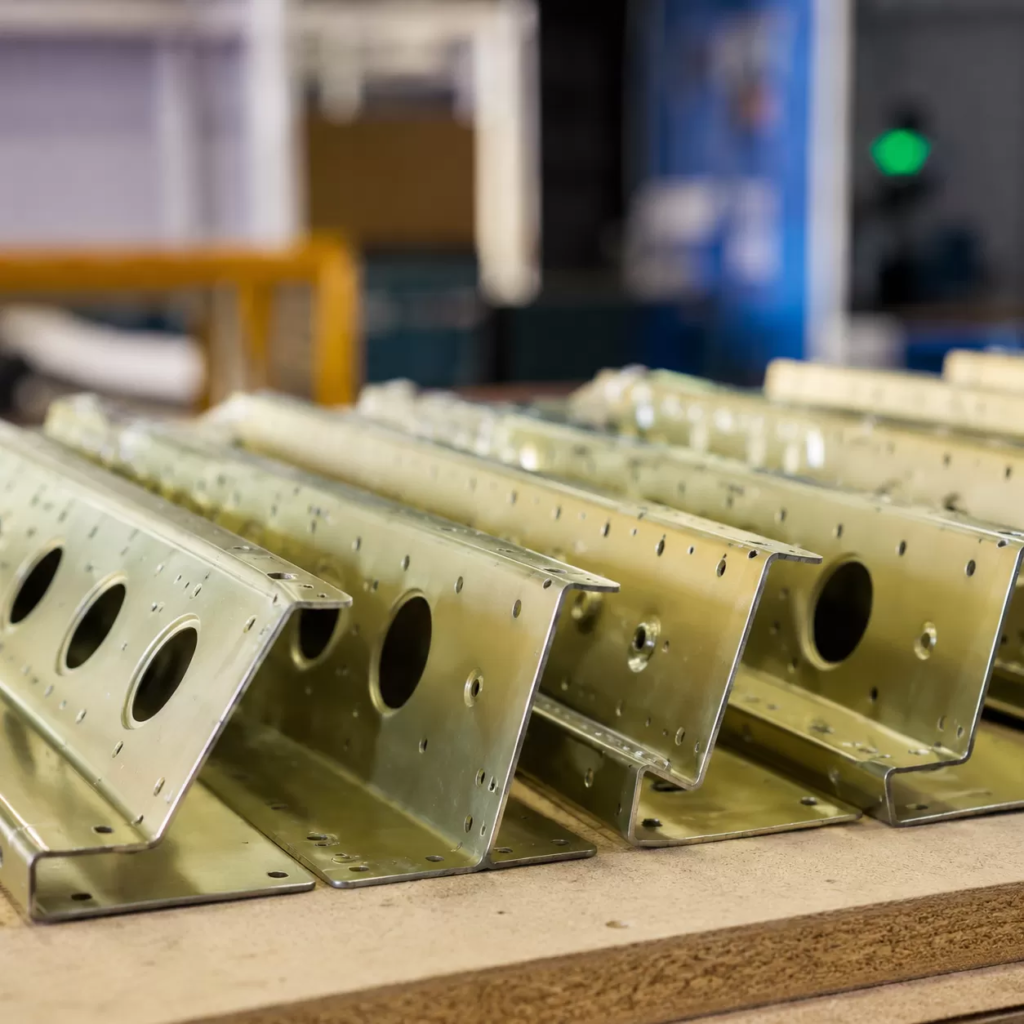
An Alodine finish, frequently referred to as chem film or chromate conversion coating, is a chemical surface treatment specifically designed for aluminum. Unlike plating or painting, Alodine does not add a distinct layer on top of the metal. Instead, it triggers a chemical reaction with the aluminum substrate, converting the raw surface into a protective passivation layer.
We utilize this process to safeguard aluminum components from environmental degradation while preserving their natural characteristics. It serves as an industry standard for raw part protection and a foundational pre-treatment for subsequent coatings.
The Chemistry Behind Chemical Conversion
The science relies on a controlled electrochemical reaction. When we submerge an aluminum part into an Alodine bath, the acidic solution reacts with the microscopic native oxide layer of the metal.
- Microscopic Alteration: The solution dissolves the weak natural oxide and replaces it with a complex, self-healing metal-chromate gel film.
- Trivalent vs. Hexavalent: This reaction utilizes either hexavalent chrome passivation (traditional yellow/gold hue) or newer trivalent chromium conversion coating (clear/clear-blue hue) to bond chemically at the molecular level.
- Hydrophobic Barrier: As the film dries, it hardens into an amorphous, hydrophobic barrier that blocks moisture and oxygen from reaching the raw aluminum underneath.
Alodine vs. Anodizing: Key Engineering Differences
While both treatments protect aluminum, they serve entirely different mechanical and electrical purposes. Choosing the right one depends on your specific part tolerances and conductivity requirements.
| Engineering Property | Alodine Finish (Chem Film) | Anodizing (Type II / Type III) |
|---|---|---|
| Dimensional Change | Negligible (adds zero measurable thickness) | Significant buildup ($0.0002″ text{ to } 0.002″$) |
| Electrical Conductivity | Maintained (Excellent for grounding) | Insulated (Non-conductive dielectric barrier) |
| Corrosion Resistance | Excellent for salt spray (MIL-SPEC compliant) | Superior wear and environmental resistance |
| Coating Type | Chemical conversion film | Electrochemical oxide layer growth |
| Primary Use Case | Precision machined parts, RF chassis, paint prep | Hard wear surfaces, structural components |
Military and Industrial Specifications: MIL-DTL-5541 Standards
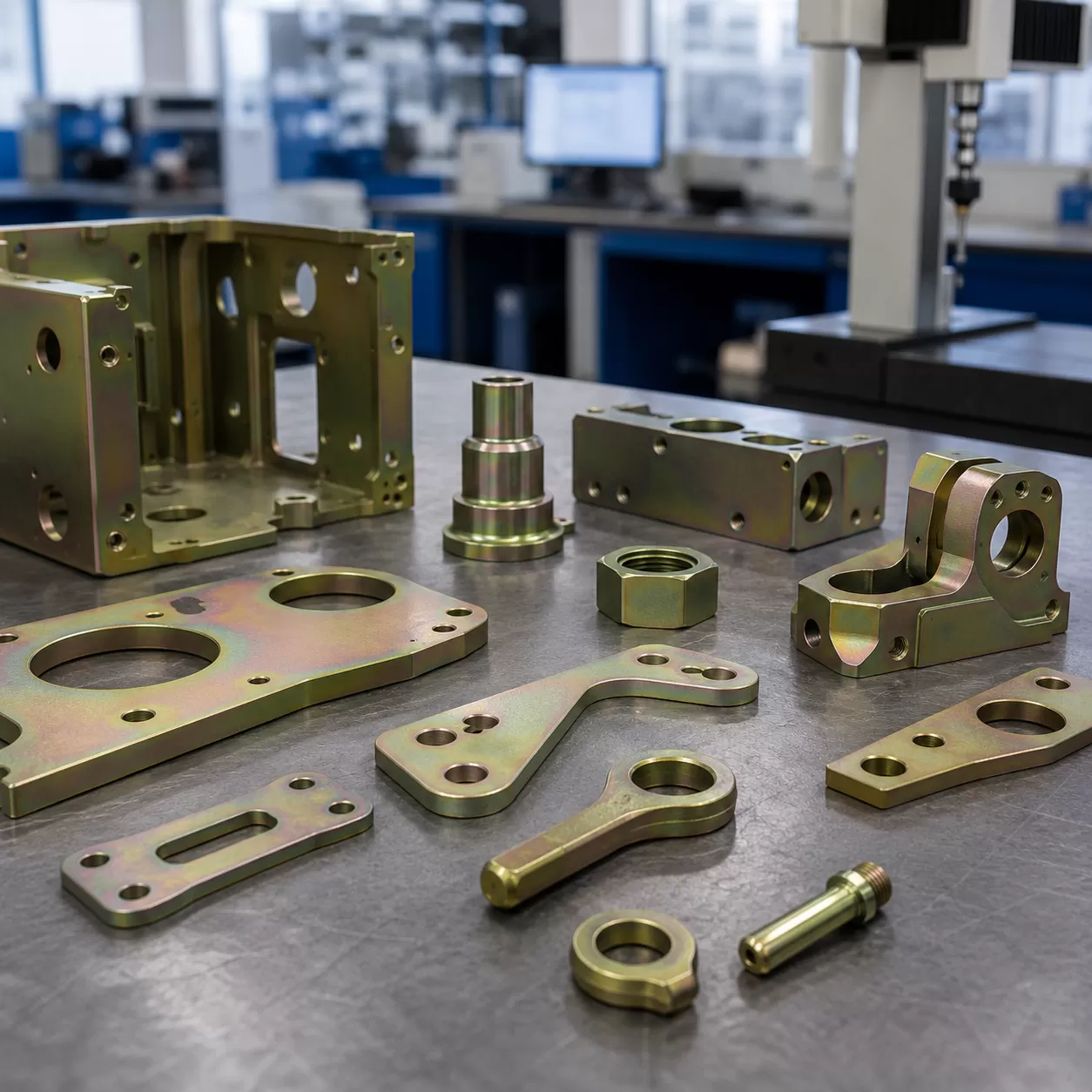
When we apply an Alodine finish—often referred to in manufacturing as a chromate conversion coating or chem film—we strictly adhere to the MIL-DTL-5541 military specification. This standard governs the chemical application process to guarantee that precision machined parts meet rigorous performance benchmarks. If you are developing components for aerospace, defense, or marine systems in the United States, your engineering blueprints will inevitably call out specific classifications under this MIL-SPEC to ensure predictable environmental defense.
To guarantee that our surface treatments consistently achieve these strict military standards, we regularly run finished components through strict quality protocols, utilizing specialized material testing methods to verify both corrosion defense and coat integrity.
Type I vs. Type II: Hexavalent vs. Trivalent Chromium
The “Type” designation within MIL-DTL-5541 dictates the specific chemistry used to form the protective barrier on aluminum. Shifting environmental regulations in the United States have made this a critical choice for modern hardware design.
- Type I (Hexavalent Chromium): This is the traditional process that yields a distinct yellow alodine finish. It relies on hexavalent chrome passivation, providing exceptional self-healing corrosion resistance. However, due to RoHS and REACH environmental mandates, its use is heavily restricted to specific defense and aerospace platforms.
- Type II (Trivalent Chromium): The modern, eco-friendly industry standard. It produces a clear chem film coating using trivalent chromium conversion coating chemistry. It matches the corrosion resistance of Type I without the environmental or safety hazards, making it the default choice for commercial precision components.
Class 1A vs. Class 3 Classifications
The “Class” designation specifies the thickness, primary function, and electrical properties of the chem film aluminum barrier.
| Specification Attribute | Class 1A Classification | Class 3 Classification |
|---|---|---|
| Primary Function | Maximum corrosion passivation & paint adhesion | Electrical conductivity surface treatment |
| Coating Thickness | Thicker barrier layer | Ultra-thin, precision layer |
| Corrosion Resistance | Highest performance (24+ hour salt spray) | Moderate performance |
| Electrical Resistance | High electrical resistance | Low electrical resistance (maintains grounding) |
| Common Use Cases | Structural aerospace aluminum pre-treatment | Electronic enclosures, wave guides, EMI shielding |
Core Engineering Advantages of Alodine Treatment
When we manufacture parts for demanding industries, choosing the right surface finish is critical. An alodine finish stands out because it delivers a unique combination of protection and functionality without altering the base metal’s physical properties. Here is why we rely on this chromate conversion coating for our high-performance components.
Dimensional Stability for Tight Tolerances
Unlike heavy anodizing, an alodine finish adds practically zero thickness to the metal. The coating thickness dimensional tolerance remains completely unaffected, usually measuring less than 0.00001 inches. This makes it the absolute go-to choice for precision machined parts finishing, ensuring that mating surfaces, fine threads, and tight mechanical fits remain exactly as machined.
Corrosion Passivation in Harsh Environments
Raw aluminum degrades quickly when exposed to moisture, salt, and industrial chemicals. The aluminum passivation process involved in alodine treatment creates a robust chemical barrier that stops oxidation in its tracks. Whether you specify a traditional yellow alodine finish or a clear chem film coating, the result is exceptional corrosion resistance. This treatment significantly extends the lifespan of cast aluminum components operating in tough, unforgiving environments.
Optimal Substrate for Paint & Adhesive Bonding
Getting paint or industrial adhesives to stick to bare aluminum is notoriously difficult. Alodine solves this by acting as a microscopic primer. It slightly etches the surface and leaves a chemically active layer that grips topcoats. This makes it an ideal aerospace aluminum pre-treatment, ensuring that military-grade paints, epoxies, and powder coats bond securely without flaking or peeling under mechanical stress.
Retention of Electrical Grounding and Conductivity
One of the biggest drawbacks of traditional anodizing is that it turns the metal surface into an electrical insulator. Alodine does the exact opposite. It serves as a highly effective electrical conductivity surface treatment. Parts treated with alodine maintain excellent electrical grounding capabilities, which is a strict requirement for electronic enclosures, avionics housings, and EMI/RFI shielding applications.
The PrecisionVast Industrial Alodine Process Step-by-Step
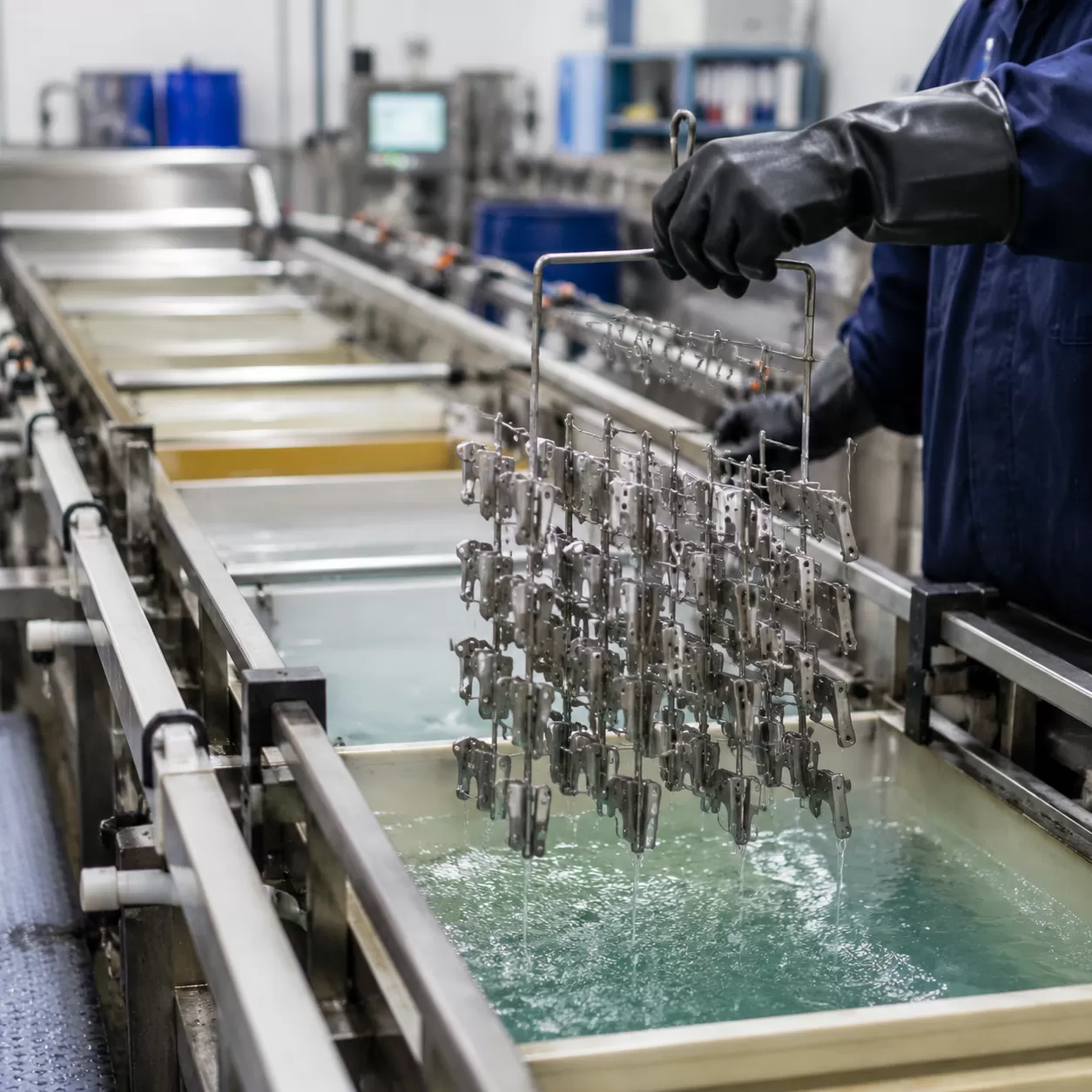
Getting a flawless chem film aluminum coating requires absolute control over the surface chemistry. At PrecisionVast, we follow a strict, multi-phase sequence to ensure the chromate conversion coating bonds perfectly to the substrate, delivering maximum corrosion resistance without altering part dimensions.
Phase 1: Heavy-Duty Degreasing & Alkaline Clean
Before any chemical conversion can happen, the raw aluminum must be completely free of shop oils, greases, and cutting fluids. Parts go into a heavy-duty alkaline bath. This step removes surface contaminants without attacking the underlying metal, preparing the surface for uniform chemical penetration.
Phase 2: Chemical Etching & Rinsing
Next, we perform a controlled chemical etch. This process dissolves a microscopic layer of the aluminum surface, removing stubborn natural oxides and minor surface imperfections. It leaves behind a clean, micro-roughened topography that is ideal for coating adhesion. A thorough clean-water rinse immediately follows to halt the etching reaction.
Phase 3: Deoxidization
Even after etching, smut and alloy residuals can remain on the surface, especially when processing high-strength alloys like A356 aluminum alloy. We submerge the parts in an acid deoxidizer bath to strip away these impurities. This leaves behind a pristine, chemically active aluminum surface ready to receive the conversion film.
Phase 4: Alodine Solution Immersion & Application
This is where the actual aluminum passivation process occurs. Parts are immersed in a precisely balanced bath of Bonderite M-CR (or a similar high-grade formulation). Depending on your project specifications, we utilize two primary methods:
- Yellow Alodine Finish: Utilizes traditional hexavalent chrome passivation for legacy military applications requiring extreme corrosion protection.
- Clear Chem Film Coating: Utilizes a modern trivalent chromium conversion coating to meet strict environmental regulations while maintaining excellent conductivity.
Phase 5: Post-Treatment Rinsing & Low-Temp Drying
Once the chemical reaction achieves the target thickness, the parts are pulled from the bath and put through a final clean-water rinse to remove residual chemicals. We then move the components to a controlled, low-temperature drying oven. Keeping the temperature low is critical; excessive heat can dehydrate and crack a freshly formed MIL-SPEC chemical film, compromising its protective properties.
Alodine Compatibility & Application Areas
Eligible Materials for Chem Film
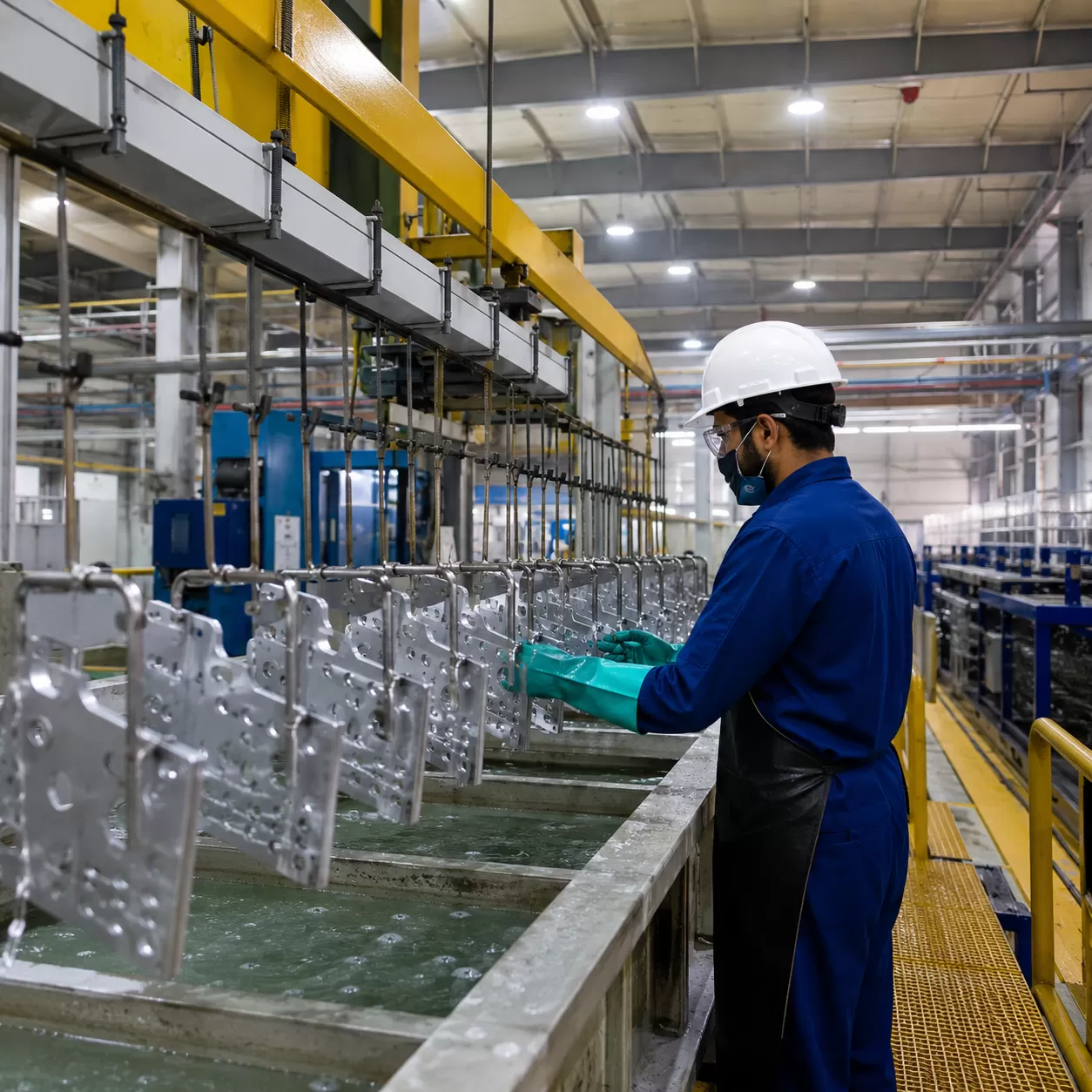
When we apply an alodine finish, aluminum is the undisputed primary substrate. This chromate conversion coating bonds perfectly with popular industrial and aerospace alloys like 6061, 7075, and 2026. Whether we are treating extruded profiles, CNC machined billets, or components manufactured through various aluminum casting methods, the aluminum passivation process delivers highly consistent results. While specialized formulations exist for metals like magnesium, standard chem film aluminum treatments are strictly engineered to protect and prime aluminum substrates.
Primary Industry Adoptions
We see alodine utilized across strict, high-performance sectors throughout the United States. The demand for reliable surface protection that does not alter part dimensions drives its widespread adoption.
- Aerospace & Defense: Aircraft structures, drone chassis, and military hardware require rigorous aerospace aluminum pre-treatment. A verified MIL-SPEC chemical film ensures these critical parts survive extreme altitudes, moisture, and harsh weather conditions.
- Electronics & Telecommunications: Because this process serves as an electrical conductivity surface treatment, it is the go-to choice for EMI/RFI shielding enclosures, circuit board housings, and chassis grounding components.
- Precision Manufacturing: For tight-tolerance engineering, precision machined parts finishing relies heavily on alodine. The coating thickness dimensional tolerance is practically zero, meaning delicate threads and mating surfaces assemble perfectly without the need for post-machining.
- Automotive & Marine: Exposed engine components, brackets, and marine hardware frequently use a yellow alodine finish or a clear chem film coating to block salt spray corrosion and serve as a high-tack base layer for heavy-duty paint applications.
Quality Control, Inspection, and Testing Metrics for Alodine
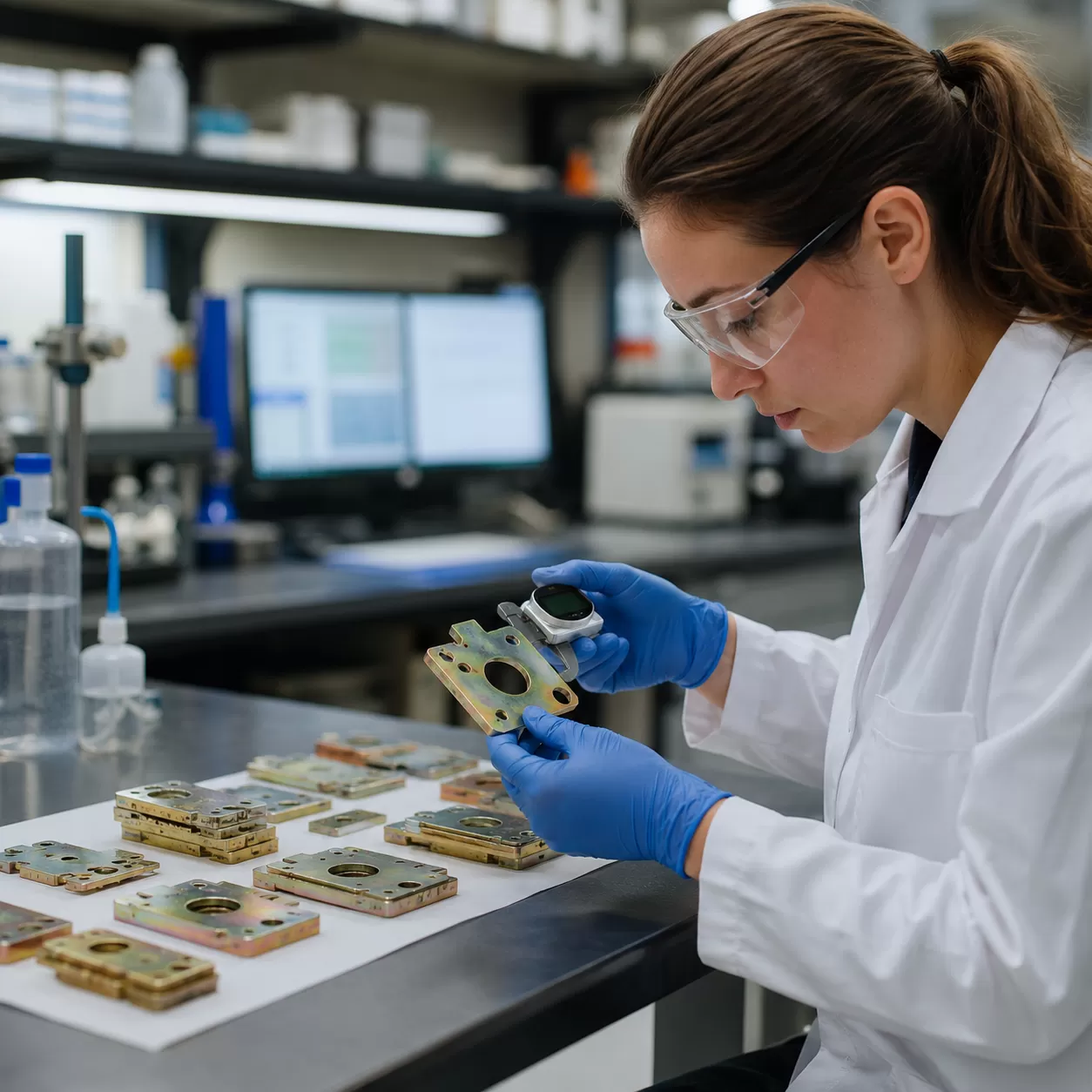
We back our alodine and chromate conversion coating treatments with rigorous validation metrics. Because US defense, aerospace, and electronics manufacturing demand flawless execution, our quality control protocols ensure every batch meets precise performance baselines before leaving our floor.
Salt Spray Testing (ASTM B117 Compliance)
Corrosion passivation is the primary defense mechanism of a chem film aluminum finish. We perform standardized salt spray testing to verify long-term environmental resistance.
- Testing Standard: ASTM B117 compliance.
- Exposure Duration: Up to 336 hours of continuous salt fog exposure for Class 1A coatings without signs of substrate corrosion.
- Application: Crucial for verifying the integrity of our aluminum die casting services utilized in harsh marine or outdoor environments.
Visual Coating Uniformity and Color Consistency Analysis
While alodine is functional rather than decorative, visual inspection serves as an immediate indicator of bath health and application quality.
| Coating Type | Expected Visual Appearance | Acceptable Variations | Rejection Triggers |
|---|---|---|---|
| Type I (Hexavalent) | Iridescent yellow, tan, or gold | Mild color transitions across complex geometries | Powdery residue, scratching, uneven blotches, or bare spots |
| Type II (Trivalent) | Clear, metallic, or light iridescent blue | Subtle silvery sheen over the aluminum substrate | Visually detectable uncoated areas or heavy staining |
Electrical Resistance Measurement (MIL-DTL-81706 Testing Protocols)
For electronics and EMI shielding applications, retaining low electrical contact resistance is vital. We utilize specialized testing hardware to verify compliance with strict MIL-SPEC chemical film requirements.
MIL-DTL-81706 Protocol: Qualification testing requires that the electrical resistance of the electrical conductivity surface treatment does not exceed $5,000 muOmega/text{in}^2$ before salt spray exposure, and $10,000 muOmega/text{in}^2$ after the corrosion testing phase, under a nominal electrode pressure of $200 text{ psi}$.
We strictly monitor these contact resistance limits to ensure your precision components retain reliable ground paths while remaining fully passivated against oxidation.
Frequently Asked Questions (Industrial Finishing FAQ)
Does Alodine change the visual look of the metal?
Yes, it does. The final look depends entirely on whether you use a hexavalent chrome passivation or a trivalent chromium conversion coating.
- Type I (Hexavalent): Leaves a distinct yellow alodine finish that ranges from a light iridescent gold to a deep amber.
- Type II (Trivalent): Results in a clear chem film coating that keeps the natural, metallic look of the aluminum with little to no visible color change.
What is the shelf life and handling rule for a freshly alodined part?
A freshly treated chem film aluminum surface is highly susceptible to damage before it fully cures.
- 24-Hour Cure Window: The coating remains soft right after processing. Avoid heavy handling, stacking, or packing for the first 24 hours until the film completely hardens.
- Temperature Limits: Never expose the parts to temperatures above 140°F (60°C) during drying or storage, as excessive heat bakes out the moisture and destroys the corrosion-resistant barrier.
- Storage Shelf Life: Once cured, unpainted parts stored in a clean, climate-controlled environment can maintain their corrosion resistance properties indefinitely.
Can Alodine be masked for selective anodizing layouts?
Absolutely. This is a standard practice for precision machined parts finishing where you need different surface properties on the same component.
We frequently use high-temperature masking tapes or liquid masks to protect specific zones. For instance, you can anodize the exterior of an aluminum casting for extreme wear resistance, pull off the masking, and apply a MIL-SPEC chemical film to the bare pockets. This selective layout gives you tough environmental protection on the outside while preserving an electrical conductivity surface treatment on the inside for grounding points.



 English
  German