

Carbon steel vs alloy steel guide for engineers Compare composition strength machinability cost and applications for precision manufacturing.
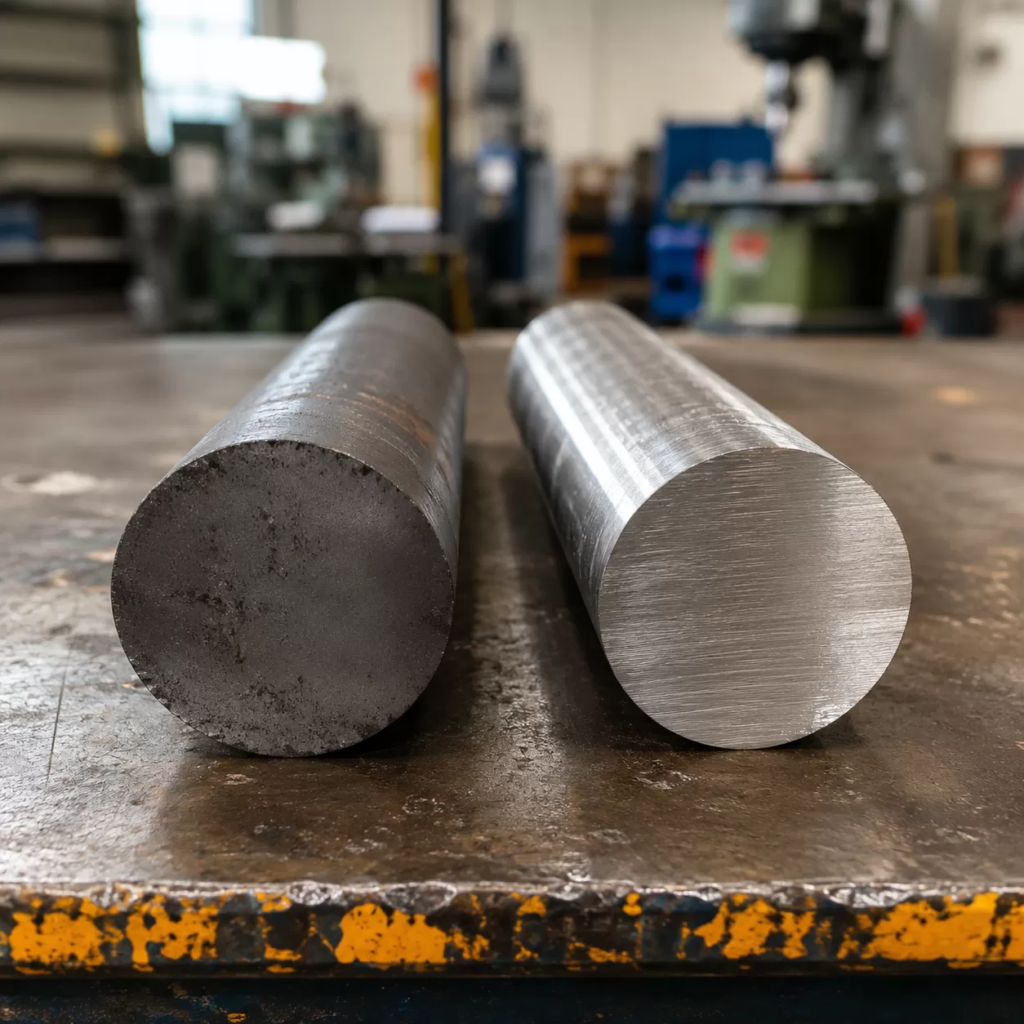
Carbon Steel vs Alloy Steel: Decoding the Industrial Steel Dilemma
Choosing the right material for your project can make or break your product’s success. When comparing carbon steel vs alloy steel, the decision impacts everything from production costs to final part longevity. We see firsthand how choosing the wrong grade leads to premature tool wear, component failure, and ballooning budgets. Navigating this selection process requires a clear understanding of how these materials perform under real-world manufacturing conditions.
Structural Fundamentals: The Core Definition of Industrial Steel Alloys
At the most basic level, all steel starts as a combination of iron and carbon. The primary distinction lies in what else sits within that molecular matrix.
- Carbon Steel: Relies almost entirely on carbon to establish its mechanical properties, with only minor trace elements allowed.
- Alloy Steel: Intentionally blends additional elements like chromium, nickel, molybdenum, and vanadium into the mix to completely transform the performance characteristics of the metal.
[Image of carbon steel vs alloy steel microstructure]
The Precision Manufacturing Imperative: Why Material Selection Dictates Part Longevity
Material selection directly dictates the ultimate lifespan of your components. If a part faces extreme stress, cyclical loading, or corrosive environments, standard structural steel grades will deform or fail. Using high-performance options like chrome-moly steel or high tensile steel ensures that critical parts resist fatigue, hold their dimensional tolerances during CNC machining, and survive harsh operating conditions without cracking.
PrecisionVast Strategic Overview: Balancing Cost-Efficiency with High-Performance Output
At PrecisionVast, we focus on balancing upfront industrial metal stock costs with high-performance manufacturing output. Our strategic approach focuses on three core pillars:
| Strategic Focus | Target Outcome | Manufacturing Benefit |
|---|---|---|
| Material Optimization | Matching specific carbon steel mechanical properties to the exact workload. | Prevents paying a premium for over-engineered alloy surcharges. |
| Machinability Focus | Analyzing the machinability of carbon steel versions against tougher alloys before production. | Reduces machine downtime and extends cutting tool life. |
| Supply Chain Efficiency | Sourcing tailored tolerances and strict sizing specifications. | Minimizes material waste during high-speed CNC turning and milling. |
Chemical Composition: The Metallurgical Blueprint of Carbon Steel vs Alloy Steel
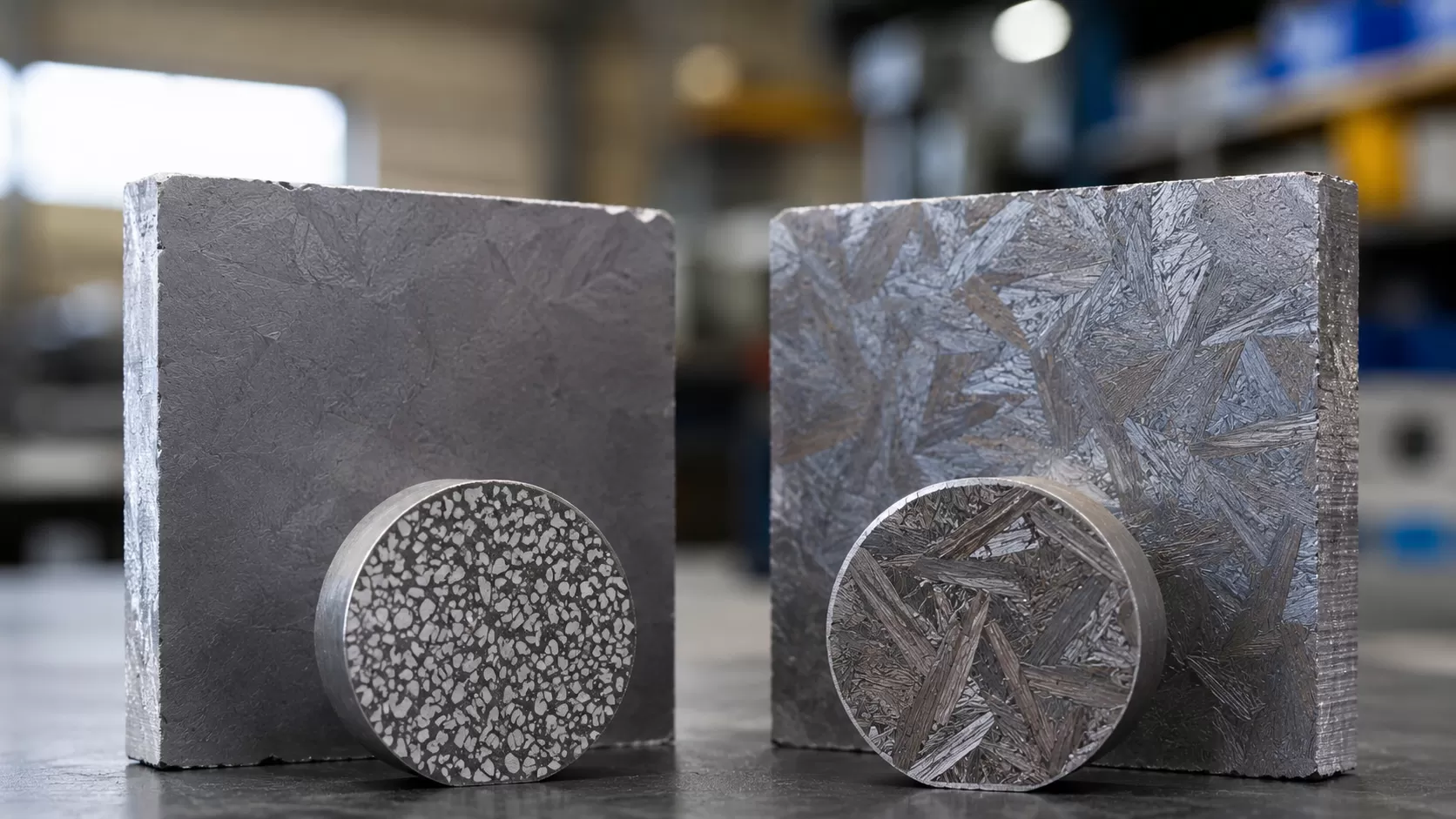
To truly understand how these metals perform in the shop, we have to look at what is happening at the atomic level. The foundational difference between carbon steel vs alloy steel comes down to their chemical recipes. By adjusting the elements mixed into the iron base, manufacturers completely alter how the material behaves under stress, heat, and corrosive environments.
Defining Carbon Steel: The Iron-Carbon Matrix
Carbon steel relies almost entirely on a straightforward iron-carbon matrix. In these standard structural steel grades, carbon is the primary driver of strength and hardness.
- Carbon Limits: Typically ranges from just above 0.05% up to 2.1% by weight.
- Trace Elements: Contains strict, minimal thresholds of residual elements like manganese (usually under 1.65%), silicon, and copper.
- The Matrix: Without extra alloying elements, the molecular structure is clean and predictable, making machinability of carbon steel highly reliable for standard industrial metal stock.
Defining Alloy Steel: Intentional Additives and Structural Roles
Alloy steel takes the basic iron-carbon foundation and introduces intentional elements to unlock superior mechanical properties. We mix in specific quantities of chromium, nickel, molybdenum, vanadium, and manganese to target specific performance vulnerabilities.
- Chromium (Cr): Boosts surface hardness and oxidation resistance.
- Nickel (Ni): Increases toughness, especially in low-temperature environments.
- Molybdenum (Mo): Improves high-temperature strength and resists pitting.
- Vanadium (V): Refines grain structure to enhance fatigue resistance.
A prime example is chrome-moly steel, such as AISI 4140 alloy steel, which blends chromium and molybdenum to deliver a high tensile steel that handles extreme stress without breaking.
The Critical Distinction: How Elemental Architecture Shifts Molecules
The real magic happens during heating and cooling. In plain carbon steel, the molecular phases change uniformly, meaning the metal hardens predictably but has limits.
When you introduce the elemental architecture of a low alloy steel, those extra atoms disrupt the standard iron lattice. This disruption slows down the molecular phase transformation during heat treatment. As a result, alloy steels achieve much deeper hardenability and a more resilient grain structure throughout the entire core of the part, rather than just on the surface.
Comprehensive Material Classification & Grading
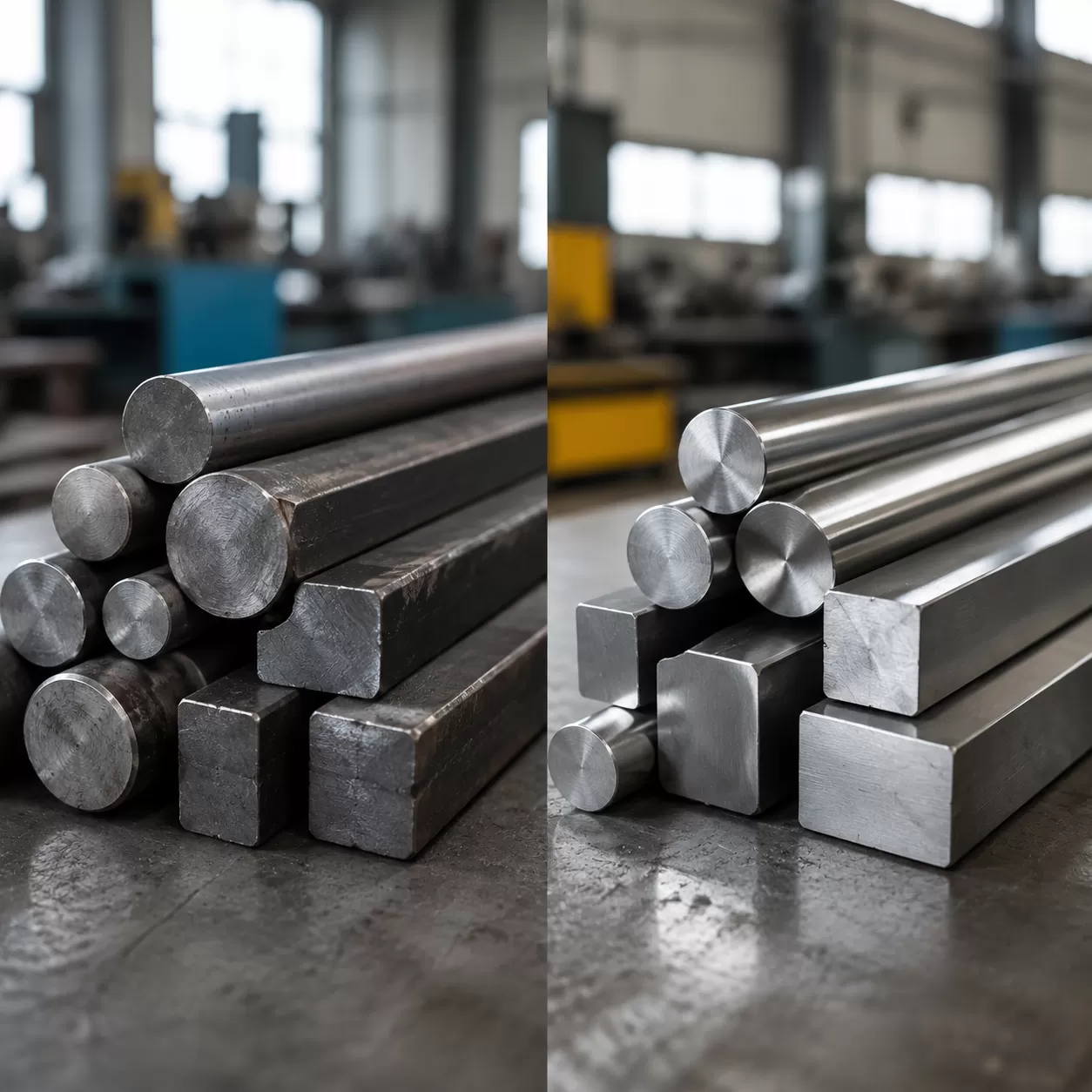
Understanding the exact specifications of your industrial metal stock is what separates a successful production run from a costly failure. Both carbon and alloy steels are cataloged using standardized AISI/SAE four-digit systems, allowing us to select the exact structural steel grades required for precise engineering demands.
Carbon Steel Classifications (AISI/SAE Specifications)
Carbon steel is categorized by the volume of carbon present in the iron matrix. As carbon content climbs, structural strength increases, but ductility drops.
- Low Carbon Steel (Mild Steel): Containing 0.05% to 0.25% carbon, mild steel is the workhorse of formability. It offers exceptional cold-forming capabilities and weldability, making it the go-to for stampings, structural beams, and daily manufacturing components.
- Medium Carbon Steel: Balancing structural strength and tensile workability, this grade carries 0.30% to 0.60% carbon. It responds exceptionally well to heat treatment, which balances tensile strength vs yield strength for heavy-duty applications like gears, axles, and rail tracks.
- High & Ultra-High Carbon Steel: Ranging from 0.60% to over 1.00% carbon, these steels deliver peak hardness and high elastic limits. However, they carry a high brittleness risk and are strictly reserved for spring steel applications and high-wear cutting edges.
Alloy Steel Classifications
When standard carbon grades cannot meet aggressive environmental or mechanical demands, alloy steel bars bring intentional chemical additives to the table.
- Low-Alloy Steel (Total Alloying Elements < 8%): Infused with elements like chromium, nickel, and molybdenum, low alloy steel bars deliver enhanced toughness and superior yield strength. Popular grades like AISI 4140 alloy steel provide the deep hardenability needed for high-stress mechanical parts.
- High-Alloy Steel (Total Alloying Elements > 8%): These metals are engineered for specialized resistance and thermal stability under extreme conditions. For projects demanding massive heat deflection, understanding how these materials behave mirrors the complex choices made when evaluating the properties of high temperature alloys.
- Tool Steels: Formulated with a specific tool steel composition (including high amounts of tungsten, vanadium, and molybdenum), these steels offer deep hardenability and unmatched wear resistance for heavy industrial fabrication, stamping dies, and cutting tools.
Quick Reference: Steel Grade & Property Comparison
| Steel Classification | Common AISI Grades | Primary Mechanical Benefit | Best Manufacturing Use Case |
|---|---|---|---|
| Low Carbon (Mild Steel) | AISI 1018, 1020 | High ductility, easy cold-forming | Stamping, structural frames, brackets |
| Medium Carbon Steel | AISI 1045, 1050 | Strong, heat-treatable balance | Gears, crankshafts, shafts |
| High Carbon Steel | AISI 1095 | Peak surface hardness, spring temper | Cutting blades, high-tensile wires |
| Low-Alloy Steel | AISI 4140, 4340 | High fatigue limits, deep toughness | High-load drivetrain parts, axles |
| Tool Steel | D2, A2, H13 | Extreme abrasion resistance | Blanking dies, industrial molds |
Carbon Steel vs Alloy Steel: Mechanical Properties
When evaluating carbon steel vs alloy steel, understanding their mechanical performance under stress is critical for selecting the right industrial metal stock. The choice between these materials directly dictates how a component handles heavy loads, impacts, and extreme temperatures.
Tensile Strength vs Yield Strength
Tensile and yield strength define a material’s load-bearing thresholds under extreme stress. While standard carbon steel grades offer reliable structural integrity, high tensile steel variants and alloy steels push performance boundaries further.
- Yield Strength: The point where the steel permanently deforms.
- Tensile Strength: The maximum stress the material can withstand before fracturing.
Alloy steels, such as AISI 4140 alloy steel, utilize elements like chromium and molybdenum to achieve significantly higher yield strengths than standard carbon steel, preventing catastrophic failure under high-torque applications.
Surface Hardness vs. Core Toughness
Balancing abrasion resistance with impact absorption is a core engineering challenge.
- Carbon Steel: High-carbon variations deliver exceptional surface hardness but suffer from a higher brittleness risk. They resist wear but can crack under sudden, heavy impacts.
- Alloy Steel: Achieves a superior balance. Through precise chemistry, alloy steels can be formulated as specialized case hardening steel. This creates an incredibly hard outer wear sleeve while maintaining a ductile, shock-absorbing core.
Ductility and Elongation
Ductility and elongation measure structural plasticity and fatigue limits. Mild steel (low carbon) excels in ductility, allowing it to bend and form without breaking. However, for advanced manufacturing, low alloy steel bars provide the necessary elongation properties alongside higher tensile strength. This ensures components flex slightly under cyclical fatigue loads rather than snapping cleanly.
Mechanical Properties Quick Reference
| Property Metric | Carbon Steel (Mild to High) | Alloy Steel (e.g., Chrome-Moly Steel) |
|---|---|---|
| Tensile Strength | Moderate to High | Very High |
| Yield Strength | Standard structural limits | Premium high-load thresholds |
| Impact Toughness | Decreases as carbon increases | High (Excellent energy absorption) |
| Hardening Depth | Shallow (Surface-level) | Deep (Thorough core hardening) |
Thermal Performance
The internal architecture of the metal also dictates performance under high-temperature operations. Carbon steel mechanical properties degrade rapidly when exposed to continuous heat, leading to thermal softening and structural warping.
In contrast, chrome-moly steel and other high-alloy compositions retain their strength at elevated temperatures. The addition of vanadium and molybdenum raises the effective operating limit, ensuring structural stability in high-heat environments like exhaust systems or industrial furnaces. For those managing complex thermal environments, understanding environmental considerations for high-temperature alloys helps prevent premature component failure.
Machinability and Manufacturing Performance: Carbon Steel vs Alloy Steel
Choosing between carbon steel vs alloy steel isn’t just about final part strength; it directly impacts your shop’s daily production efficiency. From tool wear on the shop floor to final surface treatments, these two material classes behave entirely differently under cutting tools and welding torches.
CNC Machining & Swiss Turning Efficiency
When calculating cycle times and tool life, the machinability of carbon steel generally gives it the upper hand in high-volume production.
- Carbon Steel Performance: Low carbon variants like mild steel machine beautifully with clean chip formation and minimal tool degradation. As carbon content rises to medium levels, tool wear increases slightly, but cycle times remain highly predictable.
- Alloy Steel Performance: Tougher grades like AISI 4140 alloy steel feature intentional additives that increase shear resistance. This requires rigid workholding, lower cutting speeds, and premium carbide tooling to manage accelerated tool wear and prevent built-up edge (BUE) during high-speed CNC machining and Swiss turning.
| Steel Category | Machinability Rating (1212 Steel = 100%) | Typical Tool Wear Rate | Primary Machining Challenge |
|---|---|---|---|
| Low Carbon Steel | 65% – 85% | Low | Gummy chips (requires proper chip breakers) |
| Medium Carbon Steel | 55% – 70% | Moderate | Balanced abrasion, predictable cycle times |
| Low Alloy Steel (e.g., 4140) | 40% – 60% | High | High heat generation, rapid flank wear |
Weldability and Joint Integrity
Joining these metals requires distinct thermal strategies to avoid structural failure at the joint interfaces.
Low carbon structural steel grades weld effortlessly without complex pre-heating cycles, making them the standard for complex fabricated frameworks. However, as we introduce alloy elements, the risk of underbead cracking and hydrogen embrittlement rises sharply.
For high tensile steel and low alloy steel bars, precision post-weld heat treatment (PWHT) is mandatory. This thermal stress relieving restores ductility to the heat-affected zone (HAZ) and eliminates localized brittle areas. For critical assemblies, mapping out these fabrication steps mirrors the careful planning used in what are the basic steps in the steel casting process to ensure internal structural integrity.
Heat Treatment Response
Thermodynamic behavior dictates how these metals achieve their final mechanical properties.
[Carbon Steel Quenching] —> Rapid Cooling Required —> High Core Distortion Risk
[Alloy Steel Quenching] —> Slower, Gentle Cooling —> Deep Hardenability & Uniformity
- Quenched and Tempered Steel: Alloy steels possess superior hardenability. Chromium and manganese slow down the critical cooling rate, allowing for a milder oil or air quench that hardens the material uniformly from the surface to the core while minimizing distortion.
- Case Hardening Steel: When a project demands a glass-hard, wear-resistant exterior paired with a shock-absorbing core, low carbon alloys excel. They respond perfectly to carburizing and nitriding, creating a dual-property component that stands up to severe friction.
Surface Finishing Capabilities
The structural composition of the metal determines how well it holds up to secondary cosmetic and protective treatments.
Unprotected carbon steel readily accepts industrial zinc plating, black oxide, and heavy anti-corrosion powder coatings to shield the vulnerable iron matrix from moisture. Alloy steels, thanks to trace elements like chromium, offer a more stable surface chemistry. This improves the adherence and longevity of specialized hard chrome plating and chemical conversion coatings, ensuring the finished part maintains tight dimensional tolerances without sacrificing environmental protection.
Corrosion Resistance and Environmental Durability of Carbon Steel vs Alloy Steel
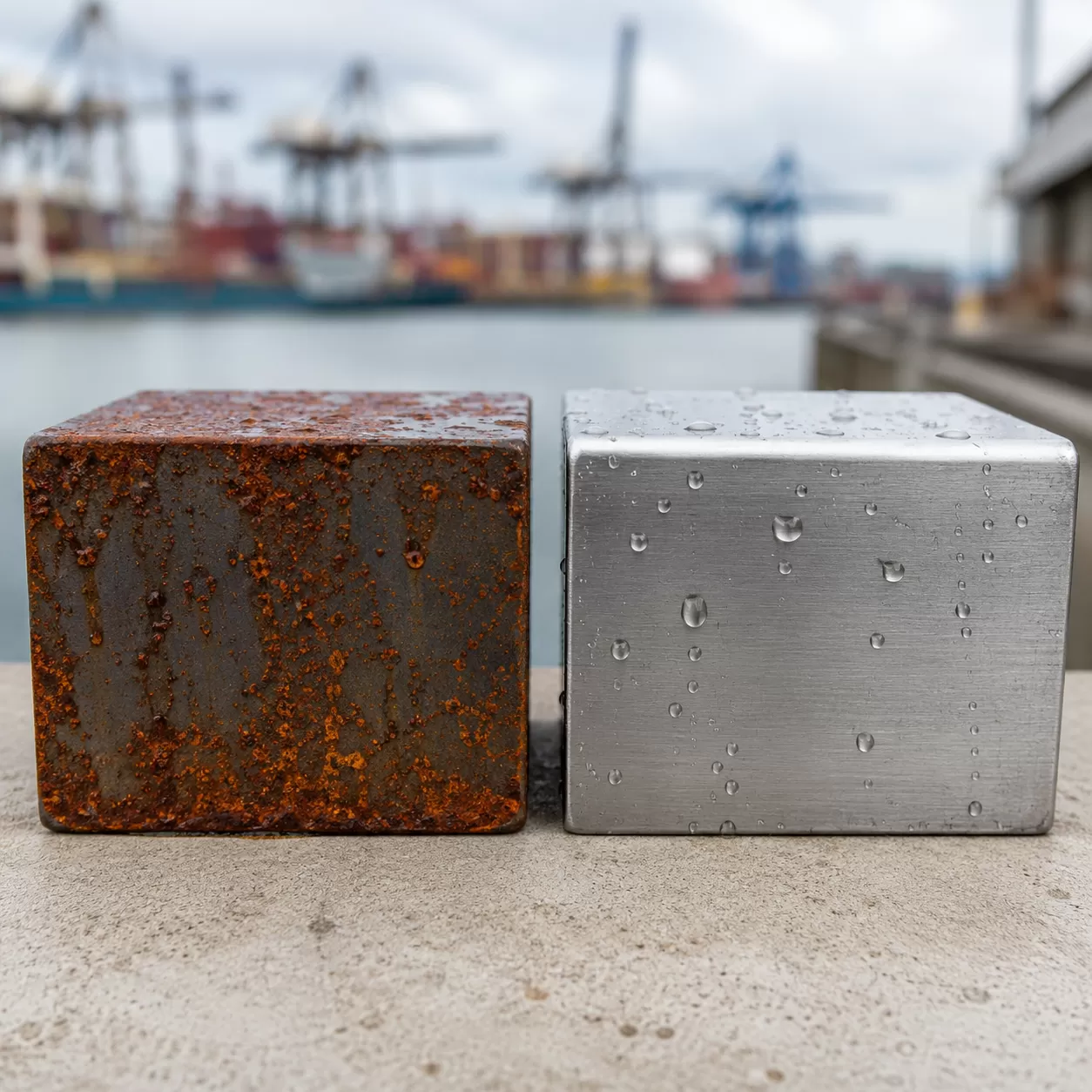
When you deploy steel components into harsh American environments, moisture and chemicals become the ultimate test of material longevity. Choosing between carbon steel and alloy steel determines whether your parts will survive or degrade rapidly under environmental stress.
Oxidation Mechanics: Why Unprotected Carbon Steel Rusts
Unprotected carbon steel is highly susceptible to oxidation. Because its chemical matrix lacks sufficient protective elements, exposure to oxygen and atmospheric moisture triggers a rapid chemical reaction. This process generates iron oxide, commonly known as rust. Unlike a stable oxide film, this rust layer is porous and flaky. It continuously peels away, exposing fresh metal underneath to ongoing degradation, which ultimately compromises the structural integrity of the component.
Passive Layer Engineering: The Alloy Steel Advantage
Alloy steel combats environmental degradation through precise elemental engineering. By integrating intentional additives like chromium and nickel, the molecular structure gains the ability to form a passive surface layer.
- Chromium Integration: When exposed to oxygen, chromium reacts to form an invisible, microscopically thin chromium oxide film.
- Self-Healing Properties: This passive layer acts as a barrier that halts oxygen penetration, preventing deeper rust formation.
- Nickel Additions: Nickel further stabilizes the iron matrix, boosting resistance to acidic and high-chloride environments.
Lifecycle Analysis: Coating Costs vs. Native Resilience
Choosing the right material requires balancing upfront material costs against long-term maintenance expenses. While carbon steel is more economical initially, it demands continuous investment in surface treatments like hot-dip galvanizing, painting, or specialized plating to prevent failure.
| Feature | Carbon Steel | Alloy Steel |
|---|---|---|
| Native Corrosion Resistance | Low (Requires protective coatings) | Moderate to High (Built-in elemental protection) |
| Maintenance Requirements | High periodic recoating cycles | Low to minimal maintenance |
| Long-Term Cost Profile | Higher lifecycle costs in humid environments | Higher initial cost, lower long-term overhead |
For critical industrial applications, relying on the native resilience of a high-performance corrosion resistant steel alloy eliminates the risk of coating scratches and subsequent localized pitting, ensuring a much longer part lifespan.
Comparative Industry Applications Matrix
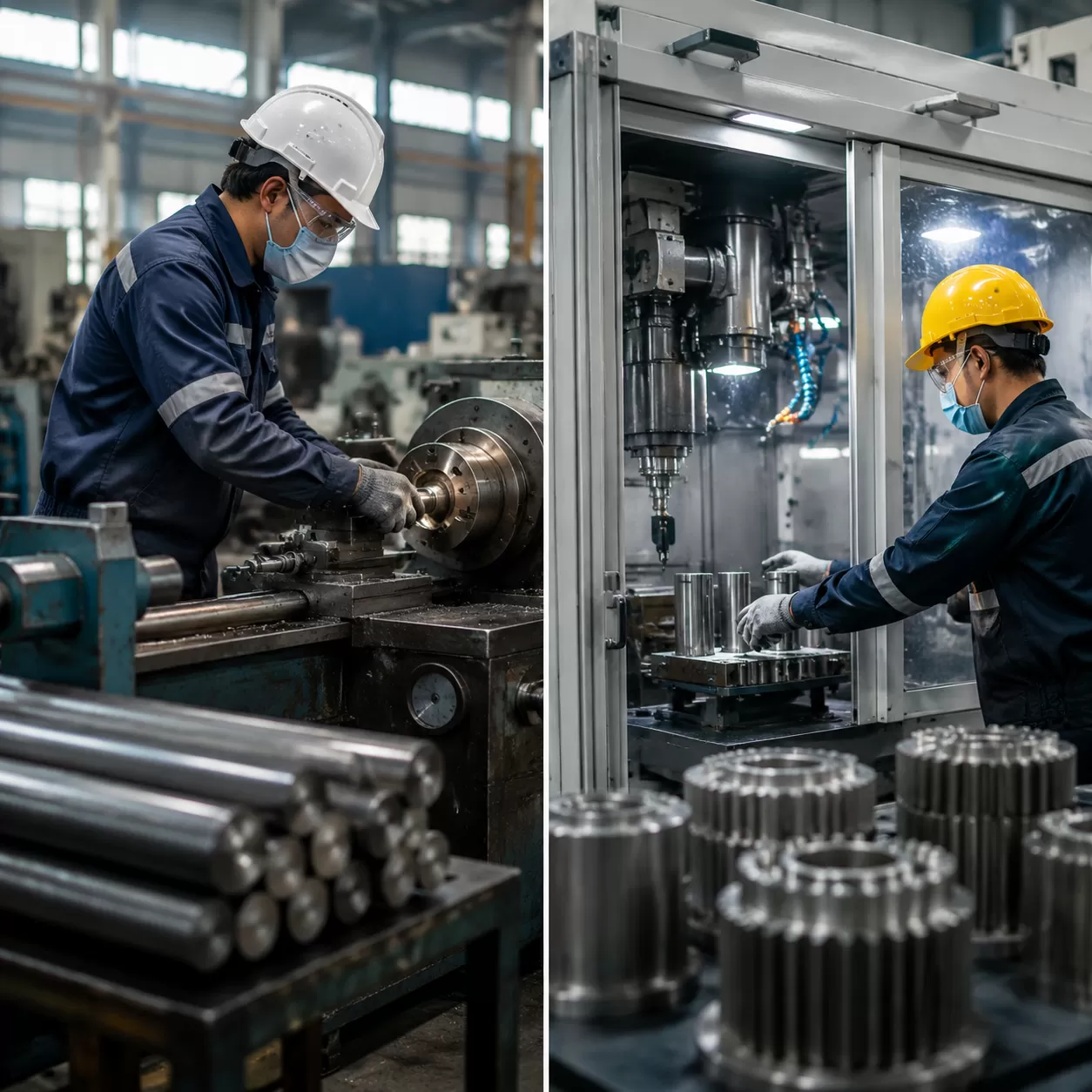
Choosing between carbon steel vs alloy steel isn’t just about comparing raw numbers—it comes down to where the part lives and how hard it has to work. Below is a breakdown of how these materials split duties across major United States industrial sectors.
Carbon Steel vs Alloy Steel Application Breakdown
| Industry Sector | Carbon Steel Applications | Alloy Steel Applications |
|---|---|---|
| Automotive & Heavy Machinery | Frame rails, brackets, crossmembers, truck beds | High-load drivetrain parts, transmission gears, axles, crankshafts |
| Aerospace & Defense | Ground support equipment, non-structural brackets | Flight-critical components, landing gear, high-tensile fasteners |
| Energy, Oil & Gas | Surface pipelines, storage tanks, low-pressure valves | Deep-well drills, high-pressure pipelines, fracking manifolds |
| Tooling & Infrastructure | Structural beams, building flanges, standard fasteners | Cutting dies, stamping tools, industrial molds, high-wear plates |
Automotive & Heavy Machinery: Structural Frameworks vs. High-Load Drivetrains
In the automotive and heavy equipment sectors, we use mild steel and other carbon steel grades for high-volume structural frameworks. It provides the necessary structural rigidity and energy absorption during impacts for chassis rails and brackets.
However, when a component faces extreme, repetitive stress, we switch to high-tensile steel alloys. High-load drivetrain components like transmission gears, crankshafts, and axles rely heavily on quenched and tempered steel like AISI 4140 alloy steel to handle massive torque without shearing. For high-wear internal components, using a specialized case hardening steel ensures a rock-hard outer surface while maintaining a tough, impact-absorbing core.
Aerospace & Defense: Weight-to-Strength Requirements
Aerospace engineering demands an exceptional strength-to-weight ratio and flawless reliability under fatigue.
- Carbon Steel: Limited to ground support tooling, fixture jigs, and non-structural cabin components where weight and extreme temperature resistance are secondary concerns.
- Alloy Steel: Utilized for flight-critical components, landing gear assemblies, and engine mounts. Chrome-moly steel grades deliver the required tensile strength vs yield strength balance, allowing us to machine thinner, lighter parts that carry the same structural loads as thicker carbon alternatives.
Energy, Oil & Gas: Harsh Environment Infrastructure
The choice of CNC machining steel raw material in the energy sector is dictated by pressure, depth, and chemistry.
We deploy carbon steel for cross-country surface pipelines, storage infrastructure, and standard structural beams where the medium is non-corrosive. But once you go down-hole or offshore, the rules change. Deep-well drills, high-pressure pipelines, and petrochemical infrastructure require a true corrosion resistant steel alloy or heavy-duty low alloy steel bars. These materials resist hydrogen embrittlement, sulfide stress cracking, and the brutal pressures typical of modern extraction environments.
Tooling and Infrastructure: Fabrication and Support
For domestic infrastructure, carbon steel is the undisputed backbone. It is the primary industrial metal stock used for structural beams, base plates, flanges, and standard construction fasteners because it welds easily on-site and keeps budgets intact.
For the manufacturing floor itself, standard carbon grades won’t cut it. Heavy industrial fabrication relies on specific tool steel composition variants. Cutting dies, stamping punches, and forming tools require the deep hardenability and thermal stability found only in premium tool steels to endure millions of high-speed cycles without losing their edge.
Cost and Procurement: Carbon Steel vs Alloy Steel
Raw Material Cost Analysis
When comparing carbon steel vs alloy steel, your upfront budget is the first major differentiator. Carbon steel is the ultimate budget-friendly powerhouse. Because it relies primarily on an iron-carbon matrix without expensive additives, raw material costs stay low.
Alloy steel, on the other hand, carries premium alloy surcharges. Elements like chromium, nickel, and molybdenum drive up the base price. If your project demands alloy steel castings for high-stress environments, you are paying for that specialized metallurgical blueprint.
Tooling and Total Manufacturing Lifecycle Costs
Initial material costs don’t tell the whole story. You have to look at the total manufacturing lifecycle:
- Machining Wear: Standard mild steel is easy on your shop’s tooling, keeping machine downtime low. High-tensile alloy steels accelerate tool wear, requiring frequent replacements.
- Replacement Intervals: Carbon steel parts exposed to the elements rust quickly without protective coatings, leading to frequent maintenance.
- Long-Term Value: Alloy steel thrives in harsh environments. The upfront premium reduces long-term replacement intervals and unexpected downtime.
Precisionvast Supply Solutions
We streamline your industrial metal stock procurement to protect your bottom line. At Precisionvast, we eliminate supply chain headaches with tailored tolerances and custom sizing specs. Whether you need high-volume structural steel grades or specialized low alloy steel bars, our sourcing optimization ensures you get the exact performance you need without overpaying for over-engineered materials.
Frequently Asked Questions (FAQs)
Is carbon steel stronger than alloy steel?
Not necessarily. When comparing carbon steel vs alloy steel, standard mild steel actually has lower tensile strength than most alloy options. While high-carbon steel can achieve exceptional surface hardness through heat treatment, it becomes brittle. Alloy steel integrates elements like chromium and molybdenum to achieve a superior balance of high tensile strength and core toughness without sacrificing ductility.
Which is harder to machine: carbon steel or alloy steel?
Alloy steel is generally more difficult to machine. The addition of elements like manganese and nickel increases work-hardening tendencies and tool wear during CNC machining. Low-carbon steel offers excellent machinability and faster cycle times, whereas quenched and tempered steel grades require specialized tooling and optimized speeds to prevent premature tool failure.
Does alloy steel rust as fast as carbon steel?
No, alloy steel typically resists rust better than standard carbon steel. Unprotected carbon steel readily forms iron oxide when exposed to moisture and oxygen. While low-alloy steel bars still require protective coatings, certain grades with higher chromium content develop a passive layer that slows down environmental degradation far better than raw mild steel. For applications demanding extreme chemical resistance, comparing a nickel alloy vs stainless steel can help you select the ultimate corrosion-resistant steel alloy.
When should I source from precisionvast for my steel components?
You should source from precisionvast when your project requires tight tolerances, specialized material grading, and dependable supply chain logistics. Whether your application calls for complex Swiss turning of AISI 4140 alloy steel or high-volume processing of structural steel grades, we optimize the entire manufacturing process to deliver reliable, high-performance industrial metal stock tailored to your exact specifications.


 English
  German