

CNC router machines for wood plastic and metal with desktop and industrial options for every budget and workspace
Engineered for Production: The PrecisionVast CNC Routing Solution
When your shop is backed up and production deadlines are looming, the last thing you need is a machine that flexes, loses steps, or forces you to throttle your feed rates. We engineered our heavy-duty cnc router lineup to eliminate those exact bottlenecks. Built for non-stop industrial output, this platform delivers the rigidity, speed, and accuracy required to turn raw sheets into finished profits shift after shift.
Primary Material Compatibility
Our computer numerical control router systems handle a diverse range of substrates without breaking a sweat. We calibrate each machine to transition seamlessly between different material densities:
- Woods: Hardwoods, softwoods, MDF, plywood, and composite panels.
- Plastics & Acrylics: HDPE, PVC, polycarbonate, acrylics, and sign foam.
- Non-Ferrous Metals: Optimized as an aluminum CNC cutting machine for clean cuts in brass, copper, and aluminum plate.
Industry Deployments
We supply high-output shops across the United States with rugged CNC routing equipment tailored to specific commercial applications.
| Industry | Primary Applications | Key Machine Requirement |
|---|---|---|
| Cabinetry & Furniture | Nesting, grooving, and cutting 4×8 sheets | High-speed vacuum hold-down |
| Sign Manufacturing | 3D lettering, engraving, and contour cutting | Multi-tool flexibility |
| Aerospace & Marine | Aluminum part profiling and composite trimming | High-torque precision CNC machinery |
| Architectural Millwork | Complex moldings, wall panels, and custom trim | Large-format 3-axis CNC router table |
Why Leading Machine Shops Choose PrecisionVast CNC Machinery
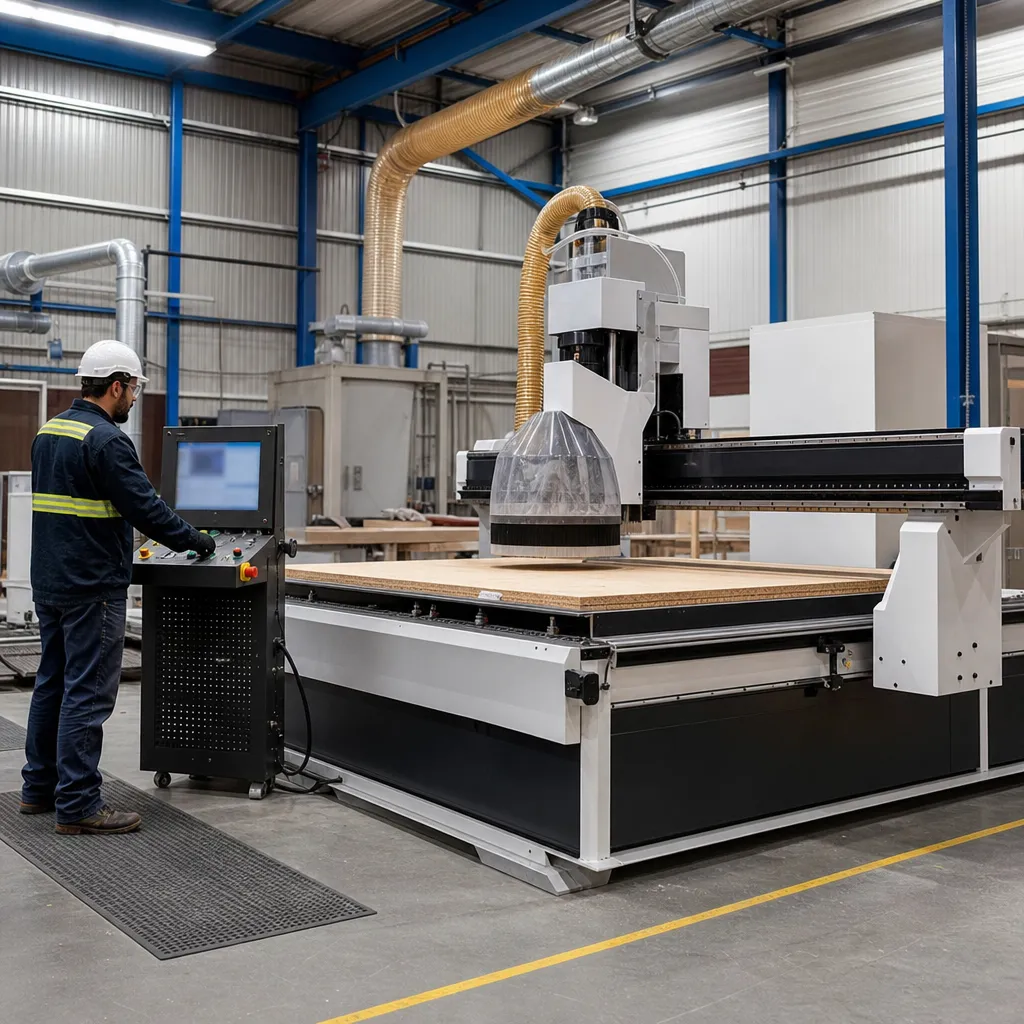
We design our cnc router systems to handle the heaviest workloads without breaking a sweat. When production deadlines are tight, you need a machine that delivers repeatable accuracy every single run. Our platform focuses on rigid engineering, faster cycle times, and smooth operation to give your shop a clear competitive edge.
1. Monolithic Welded Steel Frame Construction
Stability starts from the ground up. We build each heavy-duty CNC gantry and frame using thick, stress-relieved structural steel. Vibration Dampening: Heavy steel eliminates chattering, ensuring flawless surface finishes. Long-Term Alignment: The monolithic frame resists warping and twisting under heavy loads. High-Speed Stability: Stays perfectly rigid even during rapid directional changes.
2. High-Torque Spindles & Automatic Tool Changer (ATC) Options
Manual tool changes kill your momentum. Our high-torque spindles keep your production line moving. Versatile Cutting: Cuts through hardwoods, plastics, and acts as a high-efficiency aluminum CNC cutting machine. Continuous Production: The Automatic Tool Changer (ATC) CNC functionality switches tools in seconds without operator intervention. Optimized RPM: Delivers consistent torque across both low-speed cutting and high-speed carving.
3. Closed-Loop Servo Drive Systems & Precision Linear Guides
Step loss isn’t an option when tolerances are tight. We use premium motion components to ensure every cut hits the exact mark.
| Feature | Production Benefit |
|---|---|
| Closed-Loop Servos | Continuous position feedback eliminates skipped steps and errors. |
| Precision Linear Guides | Delivers ultra-smooth, low-friction travel along every axis. |
| Helical Rack & Pinion | Maximizes contact area for higher speeds and acceleration. |
4. Industrial Motion Control & G-code Compatibility
Our machines integrate seamlessly into your existing digital workflow. Driven by a reliable G-code motion controller, our industrial routing tables translate your CAD/CAM designs into flawless physical parts. Whether you are running a standard 3-axis CNC router table or a complex 4-axis rotary CNC router setup, the control system ensures fluid execution and real-time feed-rate adjustments.
Discover how our advanced precision CNC machinery can scale up your daily shop output and eliminate costly manual rework.
Machine Configurations & Models
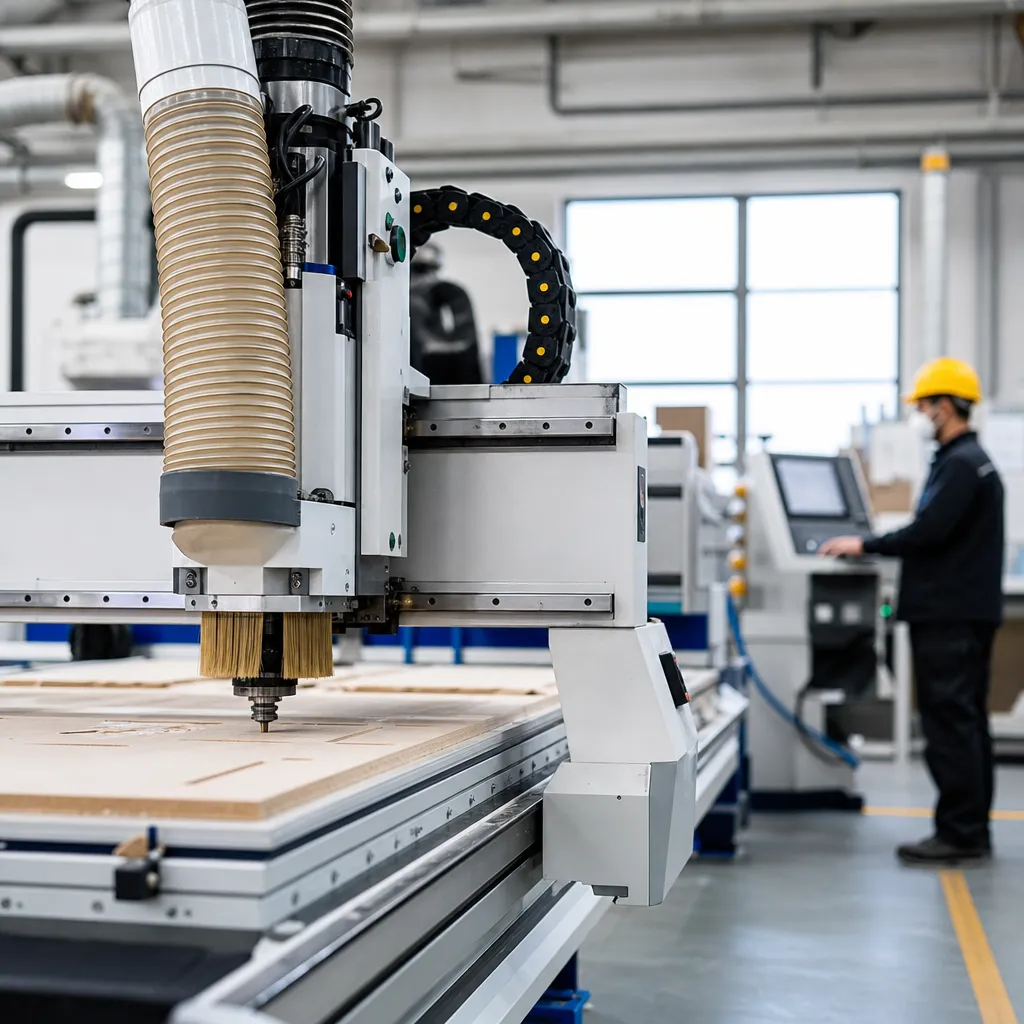
Every shop has different space constraints and production goals. We engineer our cnc router lineup in three distinct configurations to match your specific material size and throughput needs. Whether you are processing standard sheets or running 24/7 industrial fabrication, we have a machine scaled for your floor.
4×8 CNC Router Sheet Configuration
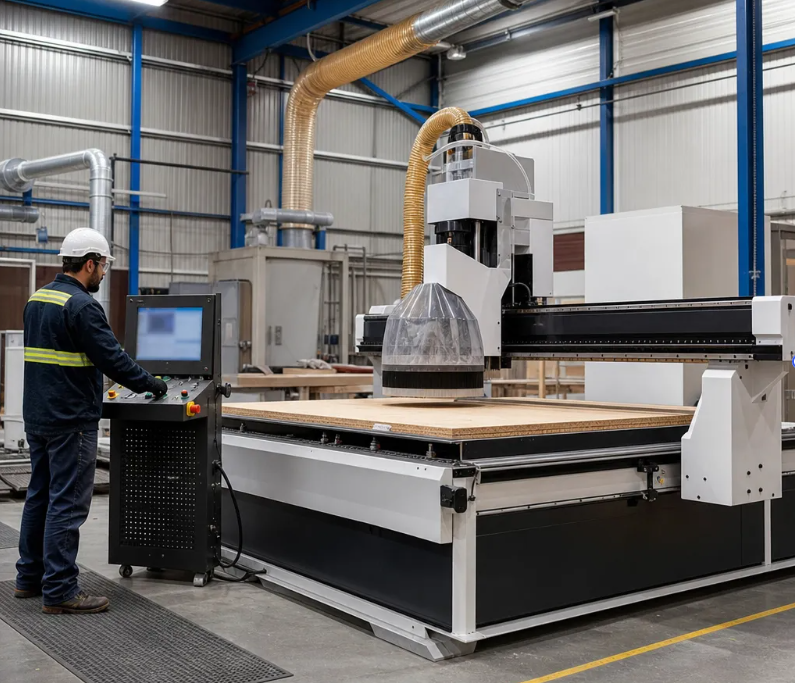
This is the workhorse of the US fabrication industry. Built specifically to handle standard 4×8 CNC router sheet stock, this model eliminates the need to pre-cut your materials. It is the go-to choice for cabinet makers, sign shops, and commercial woodworkers who need maximum material yield with zero wasted footprint.
3-Axis CNC Router Table
Our standard 3-axis CNC router table delivers rigid X, Y, and Z-axis control for flat panels, complex 2.5D carving, and sheet nested profiling. It features a heavy-duty CNC gantry that prevents flexing under heavy loads, ensuring absolute accuracy across the entire vacuum table surface.
4-Axis Rotary CNC Router
For advanced manufacturing, our 4-axis rotary CNC router setup adds a fully integrated rotational axis. This configuration lets you switch between standard flat-bed sheet routing and full 3D carving for turned posts, columns, and complex architectural millwork.
| Model Series | Footprint (Feet) | Primary Target | Key Drive System |
|---|---|---|---|
| PV-408 Standard | 4 x 8 | Cabinetry & Sign Shops | Closed-Loop Servo |
| PV-510 XL | 5 x 10 | Oversized Plastic & Aluminum | High-Torque Closed-Loop |
| PV-R4 Rotary | 4 x 8 + Rotary | 3D Carving & Millwork | 4-Axis Synchronized |
Production Tip: If 80% of your incoming material arrives on standard pallets, stick with the 4×8 setup to minimize material handling times and keep your workflow lean.
From CAD File to Finished Part: The PrecisionVast Workflow
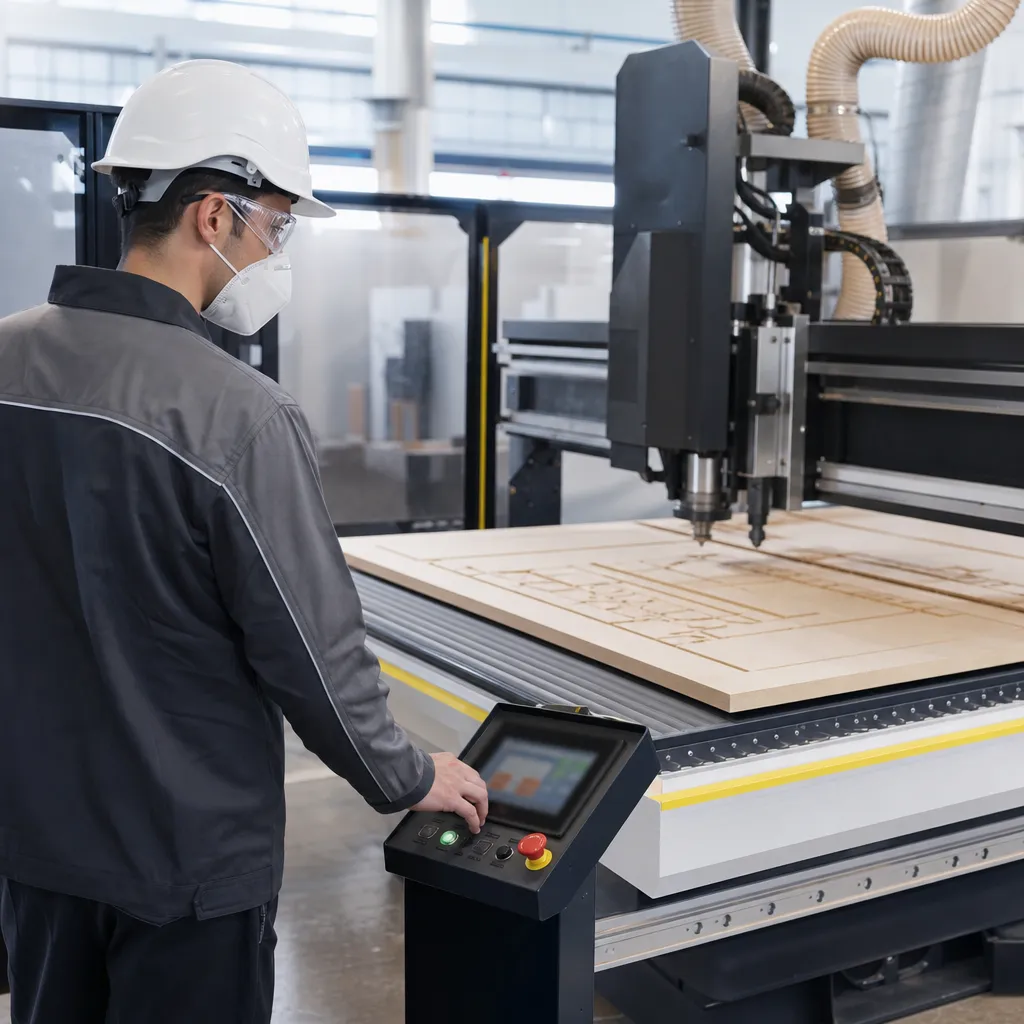
We engineered our computer numerical control router line to eliminate the friction between design and physical production. When you run a PrecisionVast cnc router, your workflow follows a streamlined, foolproof process that maximizes shop floor efficiency and reduces scrap material.
- Step 1: Design (CAD): Create your 2D profiles or 3D models in any standard CAD software. Our systems accept clean vector data from all industry-standard design platforms.
- Step 2: Toolpath Generation (CAM): Export your design into your preferred CAM program to define cutting depths, feed rates, and tool selections.
- Step 3: G-Code Export: Output the project file to the G-code motion controller. Our industrial controllers feature universal compatibility, meaning no complex file conversions or post-processor headaches.
- Step 4: Machine Setup: Secure your stock material onto the high-vacuum grid table, set your work coordinate zeros, and let the Automatic Tool Changer (ATC) CNC system handle the tool calibration automatically.
- Step 5: Execution: Execute the program. The heavy-duty gantry moves with absolute precision, turning your digital blueprint into a finished, high-tolerance part.
Quality Inspection and Certification Standards
We don’t just build a heavy-duty CNC gantry and hope for the best. Every single PrecisionVast cnc router undergoes a rigorous, multi-point factory inspection before it ever loads onto a truck. We treat our computer numerical control router manufacturing with the same intensity you bring to your shop floor. Our goal is simple: when your machine arrives, it cuts perfectly from day one.
Included Quality Metrics Per Shipment
Every machine ships with a verified quality report tracking its exact performance baseline. We measure, test, and sign off on these critical metrics for your specific unit:
- Laser Interferometer Calibration: We map the entire travel distance to guarantee positioning accuracy down to the micron.
- Spindle Runout Verification: Tested at maximum RPM to ensure your high-torque spindle delivers perfectly clean edges without chatter.
- G-code Motion Controller Stress Test: A continuous 48-hour dry-run simulation to push the electronics and closed-loop servos to their limits.
- Squaring and Leveling Metrics: Digital dial indicator testing across the entire 4×8 CNC router sheet area to confirm the gantry is perfectly perpendicular to the bed.
| Tested Component | Target Specification | Documented Result |
|---|---|---|
| X/Y Axis Positioning | ±0.02 mm | Verified per unit |
| Z-Axis Repeatability | ±0.01 mm | Verified per unit |
| Spindle Taper Runout | < 0.005 mm | Verified per unit |
| Vacuum Table Hold-Down | Maximum multi-zone pressure | Verified per unit |
Industrial CNC Router FAQ
We get these questions from shop owners every day. Here is the straight truth on how a PrecisionVast cnc router handles real-world production.
What is the difference between a stepper motor and a closed-loop servo system on a CNC router?
A stepper motor moves in fixed steps but doesn’t verify its actual position. If a bit hits a hard knot or binds, it loses steps, ruining your part. Our closed-loop servo systems use continuous encoder feedback to track position in real-time. If it encounters resistance, it corrects instantly, eliminating lost steps and maintaining perfect accuracy.
Can a PrecisionVast CNC engraving machine cut structural metals like steel?
No. While a PrecisionVast CNC engraving machine handles non-ferrous metals like aluminum and brass easily, it is not an industrial CNC milling machine built for structural steel. Machining steel requires vastly different spindle RPMs, massive structural dampening, and high-pressure flood coolant systems.
What power requirements are necessary for running these industrial routing tables?
Most of our industrial 3-axis CNC router table configurations require standard 220V three-phase power at 30 to 50 Amps to run the heavy-duty CNC gantry, high-torque spindle, and vacuum hold-down pump. We can custom-configure certain models for single-phase shops upon request.
How does the Automatic Tool Changer (ATC) optimize shop throughput?
An Automatic Tool Changer (ATC) CNC eliminates manual operator intervention during multi-tool jobs. Instead of stopping the machine, zeroing the new bit, and restarting, the system swaps tools in under 10 seconds.
| Operational Metric | Manual Tool Change | ATC CNC System |
|---|---|---|
| Average Swap Time | 2 – 3 minutes | 8 – 12 seconds |
| Operator Intervention | Required every tool change | Zero required |
| Z-Axis Re-Zeroing | Manual measurement required | Automatic via calibration block |
| Risk of Scrap Part | High (human error in re-zeroing) | Extremely low |
What type of after-sales technical support and warranty does PrecisionVast provide?
We protect your investment with a comprehensive support package designed for US manufacturing schedules: 2-Year Heavy Hardware Warranty: Covers the gantry, linear rails, and structural frame components. U.S.-Based Technical Support: Direct phone and remote-desktop diagnostic access to our engineers. Guaranteed Parts Availability: Critical components are stocked in our US warehouse for overnight shipping to minimize your downtime.

 English
  German