

Casting ferrous metals with investment casting for precise durable steel parts and expert support.
You likely already know that casting ferrous metals presents a massive thermal challenge compared to aluminum or zinc.
The melting points are extreme.
Standard die-casting molds simply cannot survive the heat.
But you still need the structural integrity of carbon steel and the precision of a complex geometry.
So, how do we solve this manufacturing paradox?
The answer lies in Investment Casting.
In this guide, we’re going to show you exactly why the lost wax casting process is the superior solution for high-strength ferrous parts.
We’ll cover the critical differences between ferrous vs. non-ferrous metals, how to achieve tight dimensional tolerances, and the specific surface finishing standards required for success.
Let’s dive right in.
Ferrous vs. Non-Ferrous: Understanding the Heat Constraints
When we talk about casting ferrous metals, we are dealing with a completely different thermal environment compared to non-ferrous options like zinc or aluminum. The primary challenge isn’t just achieving the correct shape; it is ensuring the manufacturing process can survive the pour. At Dongying Vast, we specialize in navigating these extreme thermal conditions to deliver high-precision components that standard low-temperature foundries simply cannot produce.
The Melting Point Gap: Steel vs. Aluminum
The most critical factor in our process is temperature management. While non-ferrous metals like aluminum alloys melt at relatively manageable temperatures (around 1,200°F), the ferrous materials we cast—such as carbon steel, alloy steel, and stainless steel—require temperatures soaring well above 2,500°F.
This massive heat gap dictates every step of our production line. We utilize advanced investment casting processes specifically designed to handle high melting point alloys without compromising the structural integrity of the final part.
Why Permanent Molds Fail in Ferrous Casting
A common question we receive is whether steel parts can be produced using high-pressure die casting. In most cases, the answer is no, and here is why permanent metal molds struggle with ferrous applications:
- Thermal Shock: The extreme heat of molten steel causes rapid expansion and contraction, leading to “heat checking” or cracking on the mold surface.
- Tooling Erosion: High-temperature ferrous metals are aggressive and will quickly erode reusable metal dies, destroying dimensional accuracy.
- Cost Prohibitive: The lifespan of a permanent mold used for steel is incredibly short, making it economically unviable for most projects.
The Expendable Mold Advantage for Durability
To overcome the limitations of permanent tooling, we rely on the expendable mold casting method, specifically the lost-wax technique. Instead of trying to force a permanent mold to survive extreme heat, we build a custom ceramic shell for every single pour.
Using a ceramic shell offers distinct advantages for casting ferrous metals:
- High Refractoriness: Our ceramic shells can withstand temperatures far exceeding the melting point of steel without deforming.
- Surface Quality: Because we use a fresh mold for every part, we avoid the surface degradation common in worn-out permanent tooling.
- Complex Geometries: The shell is broken away after cooling, allowing us to cast intricate features and undercuts that would be impossible to eject from a rigid metal die.
Why Investment Casting is the Superior Choice
When it comes to casting ferrous metals, the investment casting process (often called lost wax casting) offers distinct advantages that other manufacturing methods simply cannot match. We utilize this technique to deliver high-performance components that meet strict industrial demands without the limitations of traditional sand casting or the high tooling costs of die casting for high-melting-point alloys.
Unlocking Design Freedom for Complex Geometries
One of the biggest hurdles in manufacturing is dealing with intricate shapes. Our process removes these barriers. We can produce complex geometries with undercuts, thin walls, and internal passageways that would be impossible or too costly to machine from a solid block. This flexibility allows engineers to design for function rather than manufacturing limitations, especially when leveraging carbon steel casting benefits for structural components. We regularly handle “problem parts” that require a single, seamless pour rather than multiple welded assemblies.
Achieving Better Surface Finishes
Surface quality matters. Sand casting often leaves a rough, grainy texture that requires aggressive grinding and finishing to fix. In contrast, our ceramic shell building process creates a much smoother surface right out of the mold. This superior finish reduces the workload for post-casting surface treatments and ensures a professional look for visible hardware in industries like marine and food machinery.
Hitting Tight Tolerances Without Extra Machining
We focus on “near-net shape” production. By adhering to strict international dimensional tolerances, we produce parts that are incredibly close to their final dimensions. This high precision significantly reduces—and sometimes eliminates—the need for secondary machining. You get a part that is ready for assembly faster, keeping your project on schedule and under budget.
Step-by-Step: The Ferrous Casting Process
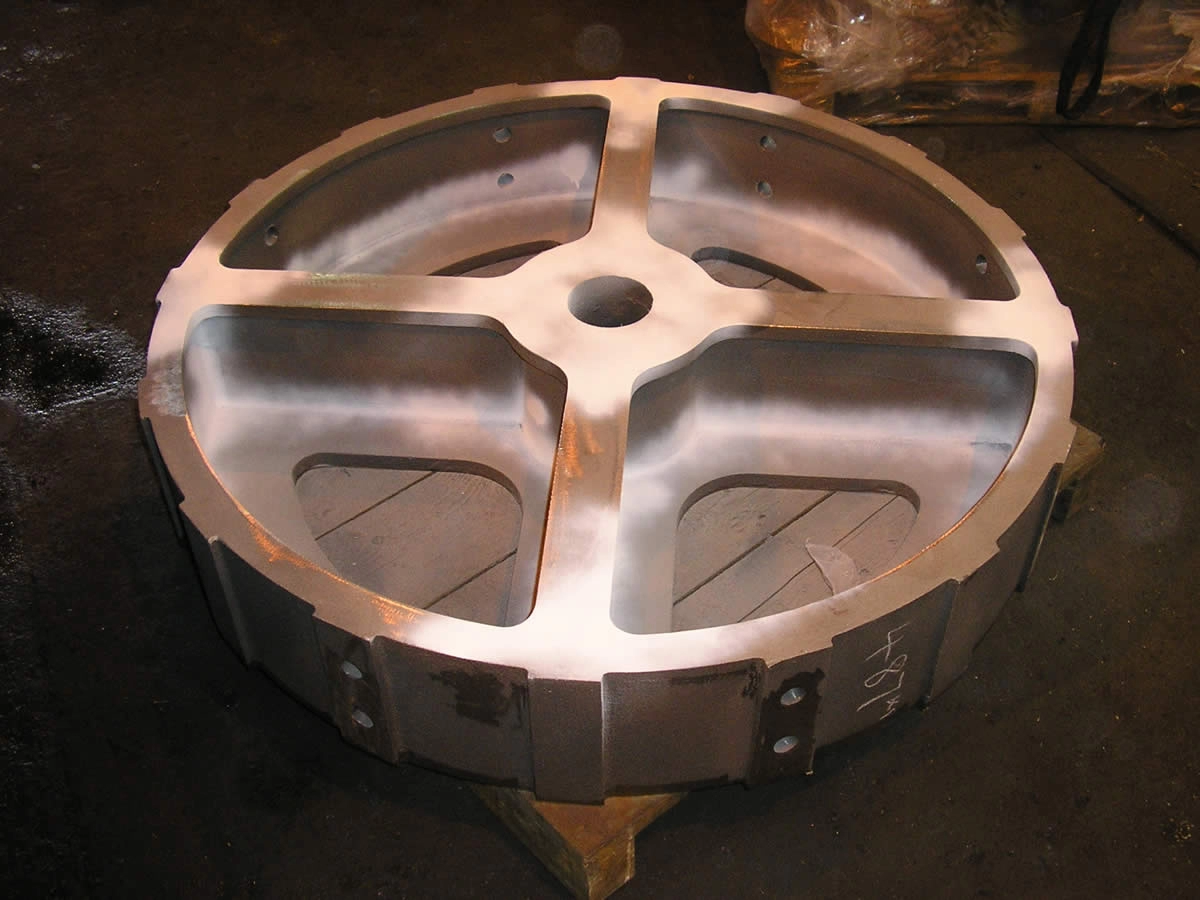
At Dongying Vast, we rely on the investment casting process—often called lost wax casting—to handle the high melting points and strict quality requirements of steel and other iron-based alloys. This method allows us to maintain tight tolerances that other methods simply cannot match.
Pattern Assembly and Ceramic Shell Building
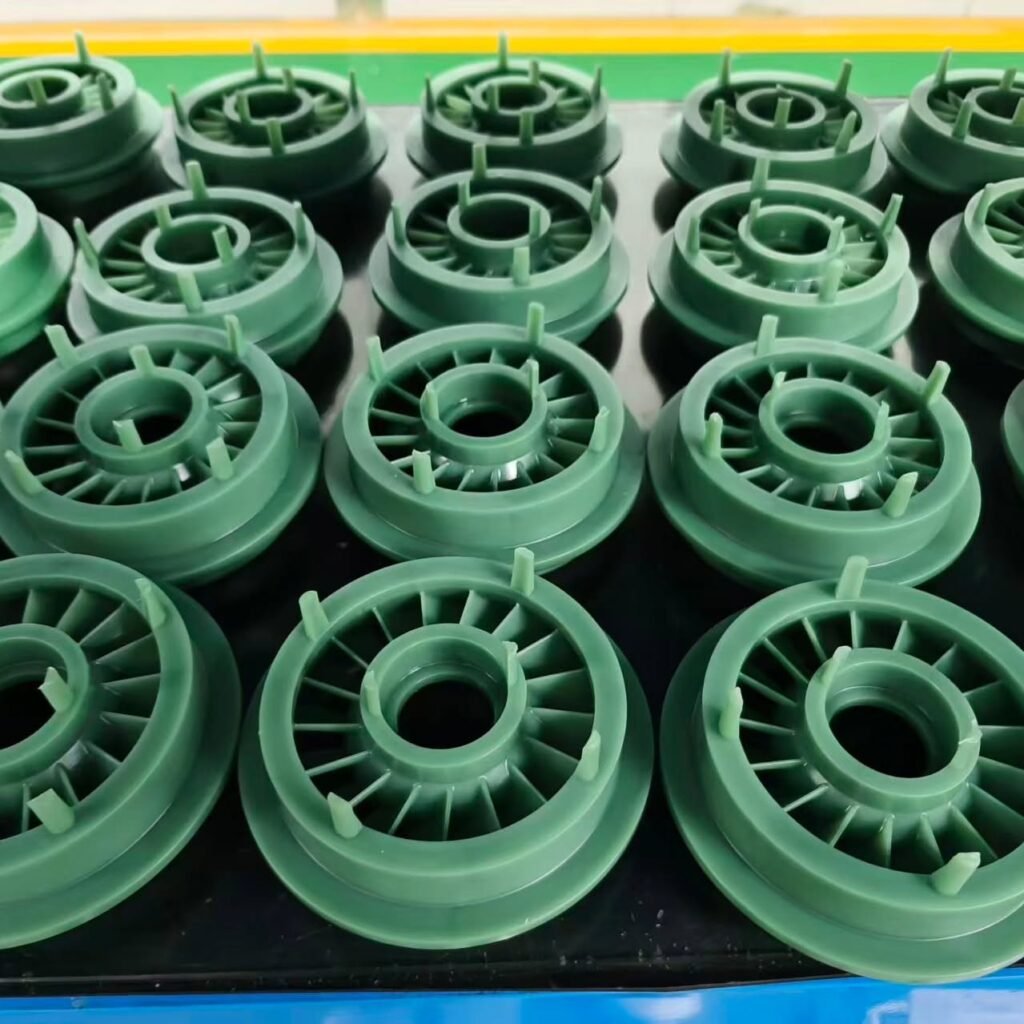
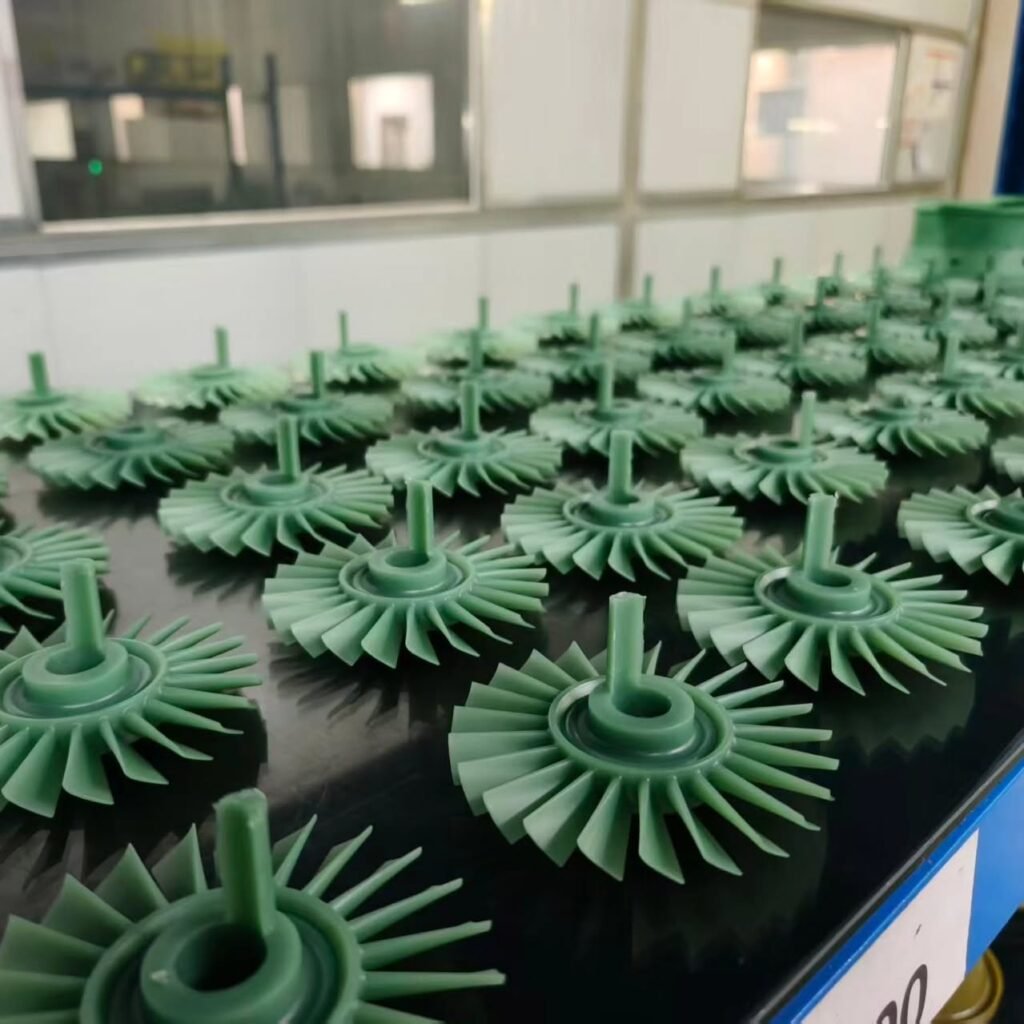
The process begins with precision. We inject wax into a metal die to create an exact replica of the final component. Once the wax patterns are ready, we assemble them onto a central wax “tree” or sprue. This assembly is then dipped into a high-grade ceramic slurry and coated with fine sand. We repeat this dipping and drying cycle multiple times to build a robust ceramic shell. This shell must be thick and durable enough to withstand the extreme thermal shock involved in casting ferrous metals.
The Dewaxing and High-Temp Pouring Phase
Once the ceramic shell is fully cured, we place it in an autoclave. The steam heat melts the wax, allowing it to drain out completely and leaving behind a hollow cavity. This is the “lost wax” phase. We then fire the empty ceramic shell in a kiln to strengthen the mold and remove any moisture.
While the shell is still hot, we pour the molten metal. This pre-heating prevents the metal from solidifying too quickly, ensuring it fills even the most intricate details of the mold. This step is critical whether we are pouring standard carbon steel or specialized heat-resistant metals that require precise temperature control.
Shell Removal, Blasting, and Grinding
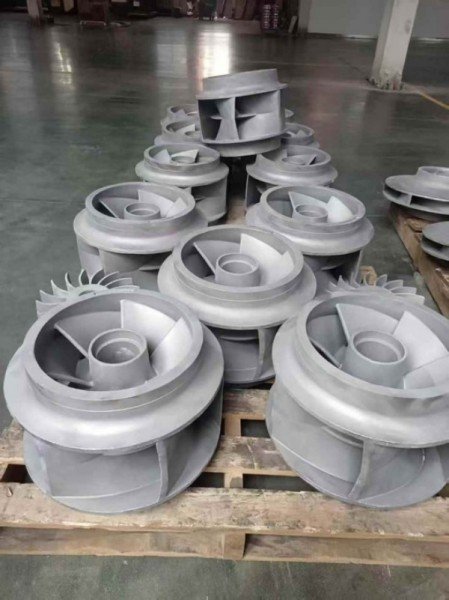
After the metal has cooled and solidified, the ceramic shell is broken away using vibration or mechanical knockout methods. We then cut the individual parts from the assembly tree. To ensure a clean finish, the parts undergo shot blasting to remove any remaining ceramic residue and oxidation. Finally, our team grinds down the gate marks (where the metal entered the part) to ensure the component meets exact dimensional specifications. This meticulous process is why investment casting is often preferred for complex geometries compared to simpler methods used for basic cast iron vs. cast steel applications.
Material Capabilities: What We Cast
When it comes to casting ferrous metals, versatility is non-negotiable. At Dongying Vast, we don’t limit ourselves to a single material grade. We process a wide spectrum of ferrous alloys to meet specific mechanical requirements, ensuring your components perform exactly as intended whether they are sitting in a gearbox or exposed to the ocean.
Carbon Steel for High-Strength Parts
Carbon steel casting is the backbone of industrial manufacturing. It provides an excellent balance of durability, strength, and cost-effectiveness, making it the go-to choice for automotive components, construction hardware, and heavy machinery. We produce parts ranging from low carbon grades, known for their weldability, to high carbon grades that offer superior hardness and wear resistance.
If you are looking to streamline your supply chain for these durable components, understanding how to import carbon steel precision castings is a critical first step for international buyers.
- Low Carbon: High ductility and toughness.
- Medium Carbon: Balanced strength and wear resistance.
- High Carbon: Maximum hardness for high-stress applications.
Stainless Steel for Corrosion Resistance
For parts that face moisture, chemicals, or salt spray, our stainless steel foundry capabilities provide the necessary protection. We routinely cast widely used grades like 304 and 316. These materials are essential for industries requiring strict hygiene and rust prevention, such as food machinery, medical equipment, and marine hardware. By utilizing precision investment casting, we achieve smooth surfaces that enhance the natural corrosion resistance of the material.
Duplex Stainless and Custom Alloys
Standard stainless steel works for most jobs, but some environments demand more. We cast Duplex stainless steels, which offer roughly twice the strength of regular austenitic stainless steel and superior resistance to stress corrosion cracking. Additionally, we handle specialized high melting point alloys for extreme conditions.
Our facility is equipped for high temperature alloy casting, allowing us to produce components that maintain their integrity even under intense thermal stress.
- Duplex Stainless: High strength and excellent corrosion resistance.
- Alloy Steel: Customized for specific toughness or wear properties.
- Heat-Resistant Alloys: Designed for engines, turbines, and high-heat processing equipment.
Secondary Operations and Finishing
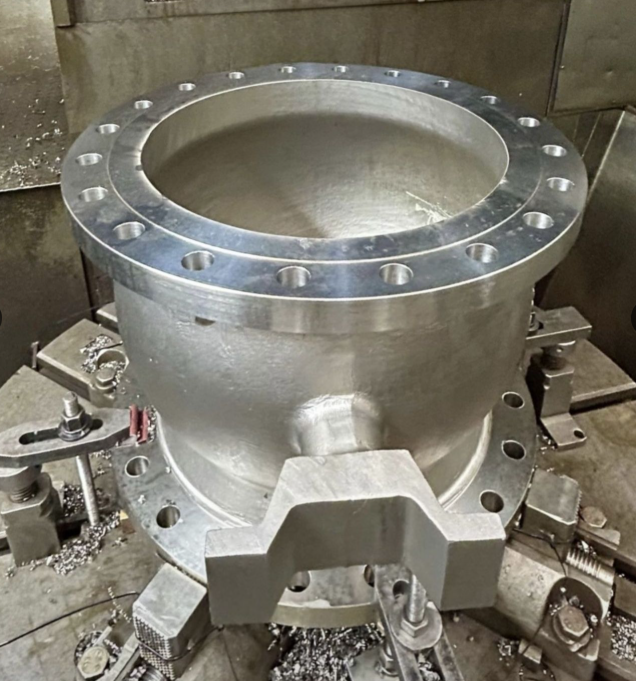
At Dongying Vast, we understand that raw casting ferrous metals is often just the starting point. To deliver a truly finished component ready for assembly, we provide a complete range of secondary operations. This “one-stop” approach streamlines your supply chain, taking your part from the mold directly to the final specification without the hassle of managing multiple vendors.
CNC Machining for Precision Surfaces
While the investment casting process delivers excellent near-net-shape parts, certain applications demand tighter tolerances than casting alone can achieve. We utilize advanced precision machining (CNC) to refine critical dimensions and mating surfaces.
Whether it is facing, drilling, or threading, our in-house machining capabilities ensure that your carbon steel or stainless steel parts meet exact dimensional tolerances. This is essential for components used in complex assemblies where fit and function cannot be compromised.
Heat Treatment for Mechanical Properties
To unlock the full potential of ferrous alloys, we perform specialized heat treatment processes. Casting heat treatment alters the microstructure of the metal, significantly enhancing its metallurgical properties.
- Hardening: Increases wear resistance for heavy-duty applications.
- Tempering: Balances hardness with toughness to prevent brittleness.
- Annealing: Softens the metal to improve machinability before final finishing.
- Solution Treatment: Optimizes the corrosion resistance of stainless steel grades.
Surface Polishing and Plating Options
The final step involves ensuring the part looks professional and resists environmental factors. We offer comprehensive surface treatments tailored to the specific needs of your industry, from marine hardware to food machinery.
Standard finishing options include:
| Treatment | Primary Benefit |
|---|---|
| Shot Blasting | Removes casting scale and creates a uniform matte texture. |
| Pickling & Passivation | Removes surface contaminants and enhances corrosion resistance. |
| Electropolishing | Provides a bright, smooth, and sanitary finish ideal for medical and food applications. |
By managing these investment casting surface treatments in-house, we ensure that every ferrous part we ship meets high aesthetic and performance standards.
Quality Assurance and NDT Testing
When casting ferrous metals, we know that visual inspection simply isn’t enough. The high melting points and complex solidification rates of steel and iron require rigorous validation to ensure structural integrity. We operate under strict ISO9001 standards, treating quality control as an integrated part of our manufacturing cycle rather than just a final step. Our goal is to deliver parts that perform reliably in demanding industries like marine, automotive, and food machinery.
Preventing Porosity and Shrinkage Issues
Internal defects like gas porosity and shrinkage cavities are the biggest risks in ferrous casting. We tackle this before the metal is even poured. By utilizing advanced CAE casting simulation software, we analyze the mold filling and solidification process digitally. This allows us to optimize the gating system and riser design to feed the casting properly as it cools.
Our prevention strategy includes:
- CAE Simulation: Predicting hot spots and shrinkage areas.
- Process Control: Strictly monitoring pouring temperatures and shell pre-heating.
- Material Purity: Using high-grade raw materials to minimize gas inclusions.
Spectrometer and X-Ray Verification
To guarantee the metallurgical properties of every batch, we employ precise material testing. We use a spectrometer to verify the chemical composition of the molten metal before casting, ensuring the carbon steel or stainless steel alloy meets exact international standards.
Once the parts are cast, we utilize Non-Destructive Testing (NDT) to see what the naked eye cannot.
- X-Ray Testing: We inspect internal structures to detect hidden cracks or porosity without damaging the part.
- Magnetic Particle Inspection: This is crucial for detecting surface and near-surface discontinuities in ferromagnetic materials.
- Hardness Testing: We verify that heat treatment has achieved the required mechanical strength.
CMM Inspection for Dimensional Accuracy
Precision is the hallmark of our investment casting process. To ensure we are hitting tight dimensional tolerances, we utilize Coordinate Measuring Machines (CMM). This equipment allows us to verify complex geometries and critical dimensions against the original CAD files with micron-level accuracy. Whether it is a simple bracket or a complex valve body, we provide detailed inspection reports to prove that the final component matches your specifications perfectly.
FAQs: Casting Ferrous Metals
Can you die cast ferrous metals like steel?
Generally, no. Die casting limitations are significant here because ferrous metals have extremely high melting points that would rapidly degrade or destroy the permanent metal molds used in die casting. Instead, we utilize the investment casting process (lost wax casting). This method uses ceramic shells that can withstand the intense heat required for pouring steel and stainless steel without compromising the mold’s integrity.
What is the most cost-effective method for ferrous casting?
For simple, low-precision parts, sand casting is often cheaper upfront. However, for complex geometries requiring tight tolerances, investment casting is usually more cost-effective overall. By achieving a “near-net shape” right out of the mold, we significantly reduce or eliminate the need for expensive secondary operations. If you are looking to optimize your budget, understanding how to source carbon steel precision castings can help you balance quality and cost effectively.
How does investment casting differ from sand casting?
The main differences lie in surface finish and dimensional tolerances. Sand casting typically results in a rougher surface texture and requires more machining allowance. In contrast, our precision investment casting delivers a superior surface finish and high dimensional accuracy. This makes it the preferred choice for intricate components like pump valves and medical equipment where precision is non-negotiable.
What are the typical lead times for ferrous parts?
Lead times vary based on the complexity of the design, the volume of the order, and required post-processing like heat treatment processes or testing. Since we offer a one-stop solution ranging from mold design to final CNC machining services, we can streamline the timeline better than fragmented suppliers. For urgent needs, we also utilize rapid prototyping technologies to expedite development. Contact us for a custom timeline; we guarantee a quote response within 8 hours.
 English
  German