

Technical guide comparing casting vs forging for strength cost design flexibility and why to choose Precisionvast investment casting.
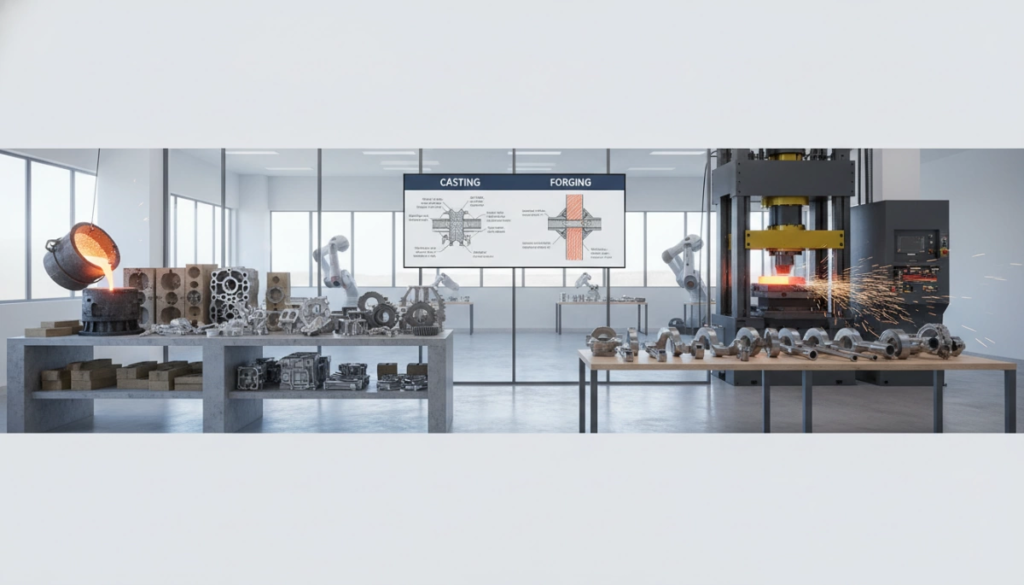
When you are designing a critical component, choosing the right manufacturing method is the difference between a part that fails under pressure and one that lasts decades. You need parts that meet strict tolerances without blowing your production budget. The debate almost always comes down to casting vs forging.
Process Overview: Understanding the Fundamentals
To make the right engineering decision, you need to understand exactly how the metal is manipulated. Both industrial metalworking methods have proven track records, but they solve completely different manufacturing problems. Let’s break down the mechanics behind each process.
What is Metal Casting? (Focus on Investment Casting)
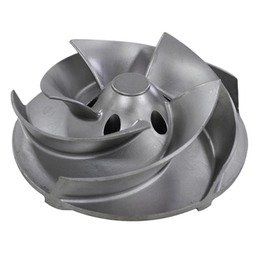
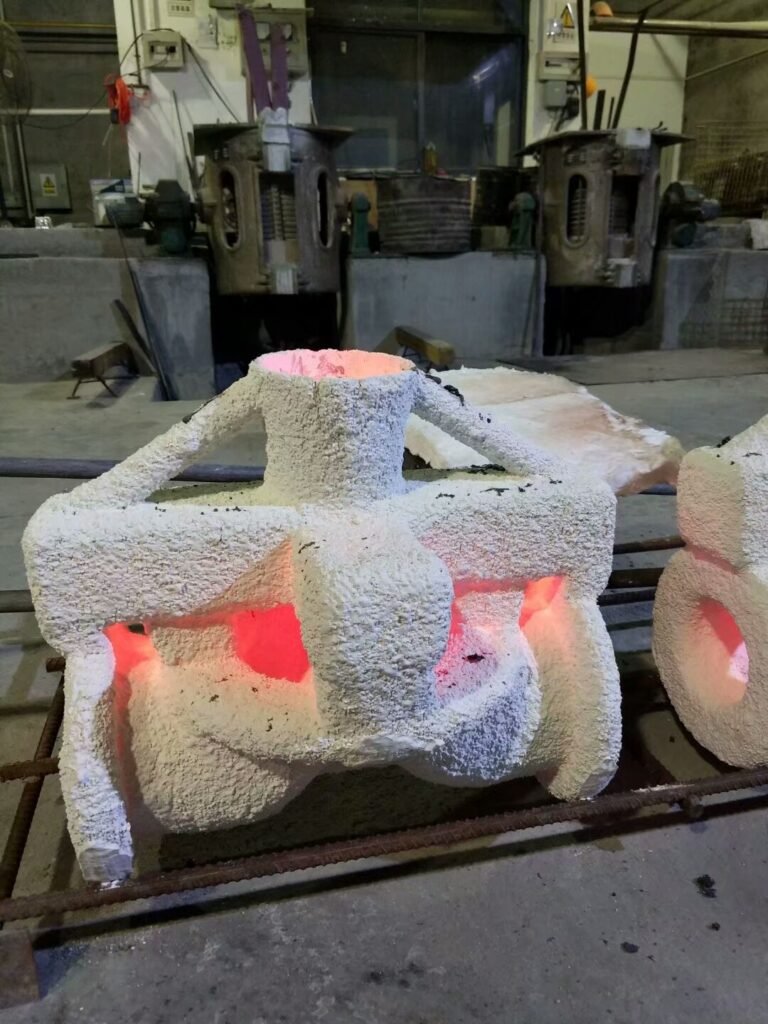
At its core, metal casting involves heating metal until it is completely liquid and pouring that molten metal into a custom-designed mold. At our facilities, we focus specifically on precision investment casting, traditionally known as the lost wax casting process.
Instead of forcing solid metal into a shape, we let the liquid metal naturally fill every microscopic detail of a ceramic shell. This allows us to produce parts with extreme precision.
Key Characteristics of Investment Casting:
- Complex Metal Geometry Fabrication: Easily produces intricate internal cavities, undercuts, and thin walls.
- Near Net Shape Manufacturing: Parts come out of the mold very close to their final dimensions, drastically reducing the need for secondary CNC machining cast parts.
- Ultimate Material Versatility: Capable of forming everything from standard aluminum to complex high-temperature alloy forming.
What is Metal Forging?
Metal forging is fundamentally different. Instead of melting the metal, forging takes a solid block of metal (a billet), heats it until it is malleable, and uses massive localized compressive forces to hammer or press it into shape.
Whether you are looking at closed die forging or traditional drop forging, the process relies on brute mechanical force to reshape the material.
Key Characteristics of Metal Forging:
- Directional Strength: The pressing action aligns the metal grain structure to follow the shape of the part, offering high impact resistance.
- Dense Integrity: The high pressure eliminates internal voids, reducing concerns about porosity.
- Design Limitations: Forging struggles with highly complex shapes, internal channels, and tight initial tolerances, often requiring extensive post-machining.
Quick Process Comparison
| Feature | Precision Investment Casting | Metal Forging |
|---|---|---|
| State of Metal | Liquid (Molten) | Solid (Heated/Malleable) |
| Forming Method | Poured into a ceramic mold | Hammered or pressed via dies |
| Complexity Level | Extremely High | Low to Moderate |
| Machining Required | Minimal | Extensive |
Casting vs Forging: Mechanical & Physical Properties
When choosing between manufacturing methods, understanding the direct physical and mechanical differences is crucial. Here is how these two processes stack up.
Metal Grain Structure & Strength
In a direct metal grain structure comparison, forging fundamentally alters the metal. The pressure of forging aligns the grain flow to the shape of the part, giving it exceptional directional strength and impact resistance. This is why, when measuring forged vs cast tensile strength, forged parts generally take the lead.
However, casting produces a random, isotropic grain structure. This means a cast part has uniform strength in all directions. Whether you are dealing with cast steel vs forged steel, casting is highly reliable for parts facing multi-directional stress. While casting historically dealt with occasional porosity, modern testing like magnetic particle inspection guarantees our cast components meet strict safety and structural standards.
Design Flexibility & Complexity
If your design demands intricate details, casting is the clear winner. Forging is mostly limited to simpler, bulkier shapes. Casting allows for complex metal geometry fabrication, including internal cavities, blind holes, and incredibly thin walls.
This process excels at near net shape manufacturing, meaning the part comes out of the mold extremely close to its final dimensions, drastically reducing the need for secondary machining. We see this heavily utilized when revolutionizing automotive performance with precision castparts, where exact, lightweight, and complex designs are required directly off the line.
Material Versatility
Casting offers unmatched freedom in material selection. We can melt down and pour an extensive range of metals, which is ideal for custom metal component manufacturing.
Forging requires metals that are malleable enough to be hammered or pressed into shape without cracking. Casting has no such limitation. It is particularly effective for high-temperature alloy forming, allowing us to create parts from incredibly hard or brittle alloys that are simply impossible to forge.
Direct Comparison
| Feature | Precision Casting | Metal Forging |
|---|---|---|
| Grain Structure | Random, isotropic (equal strength everywhere) | Aligned, directional (high strength in one direction) |
| Tensile Strength | Good, uniform | Excellent, highly impact-resistant |
| Design Complexity | High (handles intricate details and internal cavities) | Low to Medium (best for simple, solid shapes) |
| Material Range | Excellent (works with almost any alloy) | Good (limited by the metal’s malleability) |
| Machining Required | Low (Near net shape) | Moderate to High |
Casting vs Forging Cost Analysis: Production Economics
When evaluating casting vs forging, the bottom line often dictates the best path forward for custom metal component manufacturing. We break down the true costs across three critical areas to help you protect your margins.
Tooling & Upfront Costs
- Forging: Requires incredibly durable, expensive steel dies built to withstand massive impact and pressure. This translates to severe upfront capital requirements before a single part is made.
- Casting: Investment casting relies on much simpler molds to create wax patterns. These molds are significantly cheaper and faster to produce, giving casting a massive cost advantage for new product launches, prototypes, and lower-volume runs.
Material Yield
- Near Net Shape Manufacturing: Investment casting is a near net shape process. The part you pour comes out incredibly close to its final required dimensions. This drastically minimizes scrap metal and reduces the need for expensive secondary machining.
- Machining Waste: Forged parts generally feature simpler shapes that require extensive post-process machining to achieve tight tolerances or intricate details. This cuts into your material yield and adds labor time—a critical cost factor when working with heavy-duty materials like the strongest steel used in cars.
Volume Scalability
- Mass Production: Forging excels in massive, continuous production runs. Once the high upfront tooling is paid off, the sheer speed of the drop forging process drives the per-part cost down efficiently.
- Agile Scaling: Casting wins in low to medium production tiers. With lower tooling expenses, less material waste, and extreme design flexibility, investment casting scales perfectly for short runs, complex geometries, and phased market rollouts without tying up your cash flow in tooling.
When to Choose Forging
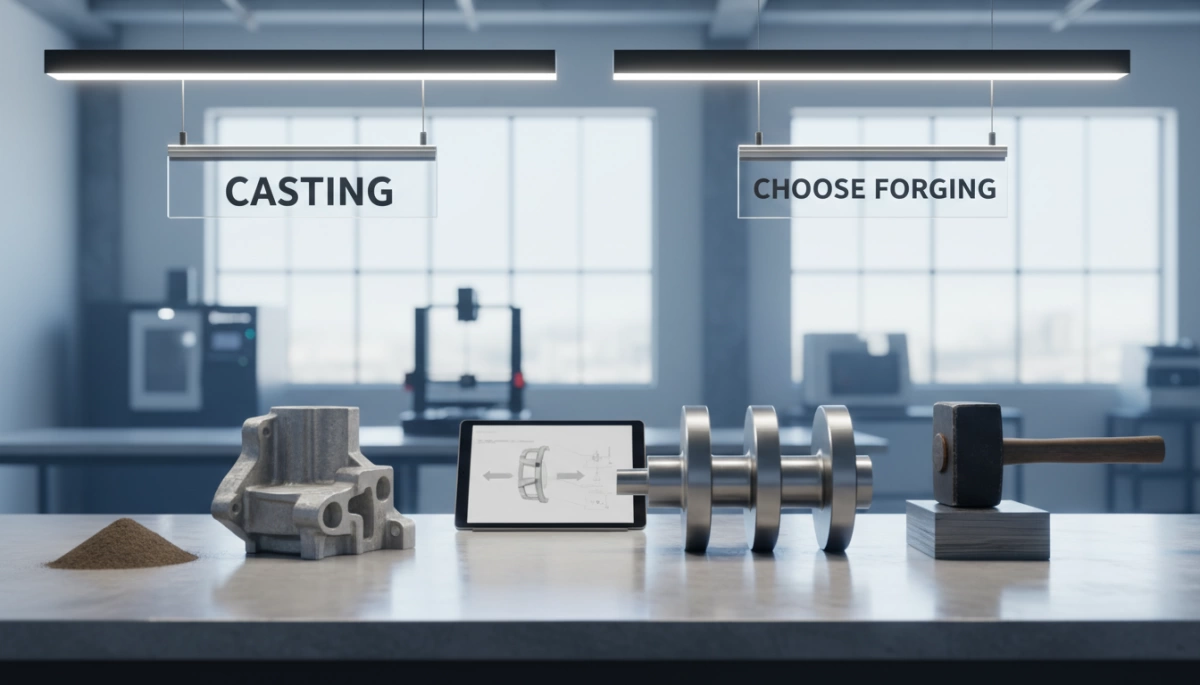
In the ongoing casting vs forging debate, we always recommend forging when raw, unyielding strength is your top priority. Because the forging process physically compresses the metal under massive pressure, it aligns the internal grain flow to follow the exact shape of the part. When analyzing a metal grain structure comparison, forged components eliminate the internal voids that can sometimes lead to porosity in metal casting.
You should opt for forging when your project demands maximum impact resistance and fatigue strength. For example, when testing forged vs cast tensile strength, forged steel consistently outperforms cast steel under extreme, repetitive stress.
Here is a quick look at when forging is the smartest route for your industrial metalworking methods:
Ideal Scenarios for Forging
- Simple Geometries: Parts that are solid and do not require intricate internal cavities. If your project demands complex metal geometry fabrication, you are much better off exploring our steel casting methods instead.
- High-Stress Applications: Critical load-bearing components like engine crankshafts, heavy-duty axles, and structural beams.
- Consistent Heavy Wear: Environments where the metal part takes a constant, physical beating and cannot afford to fail.
- High Volume Production: Situations where the steep upfront tooling costs for forging dies are easily absorbed by massive, ongoing production runs.
Quick Decision Table: Forging vs Casting
| Project Requirement | Recommended Approach | The Reason Why |
|---|---|---|
| Ultimate Tensile Strength | Forging | Compressed, dense grain structure prevents metal fatigue. |
| Complex Internal Cavities | Casting | Forging cannot easily form detailed internal voids or channels. |
| Tight Budgets on Small Runs | Casting | Forging requires expensive, heavy-duty custom dies. |
| Heavy Load-Bearing Parts | Forging | Continuous grain flow maximizes long-term durability. |
While near net shape manufacturing usually favors precision casting for highly detailed parts, choosing forging over casting is the definitive answer if your custom metal component manufacturing requires structurally simple parts built to survive the harshest conditions.
When to Choose Precision Investment Casting
When evaluating casting vs forging for your next project, precision investment casting—often referred to as lost wax casting—is the clear winner when complexity and accuracy are non-negotiable. We consistently recommend this method for custom metal component manufacturing that requires tight tolerances right off the line.
If your part demands intricate internal cavities or thin walls, forging simply cannot deliver. Investment casting allows us to achieve near net shape manufacturing, which significantly reduces material waste and minimizes the need for secondary CNC machining on cast parts. It also opens up incredible material versatility; whether you need standard stainless steel or specialized alloys, exploring the different investment casting materials available gives you exact control over the final physical properties of your product.
Key Scenarios for Choosing Investment Casting:
- Complex Metal Geometry Fabrication: Perfect for intricate designs, blind holes, and complex undercuts that are impossible to forge.
- Reduced Tooling Budgets: Much lower upfront tooling costs compared to the expensive dies required for investment casting vs drop forging comparisons.
- Hard-to-Machine Alloys: The ideal choice when working with high-temperature alloys or tough metals that are difficult to cut or shape mechanically.
- Minimal Secondary Operations: Achieves an excellent surface finish and dimensional accuracy straight from the mold.
Quick Decision Matrix
| Project Requirement | Choose Investment Casting | Choose Forging |
|---|---|---|
| Part Geometry | Highly complex, internal features | Simple, solid shapes |
| Tooling Budget | Lower upfront cost | High initial investment |
| Machining Needs | Minimal (Near net shape) | Extensive post-forging machining |
| Production Volume | Flexible (Low to High runs) | Strictly high volume (to justify dies) |
The Precisionvast Advantage: Redefining Casting Quality
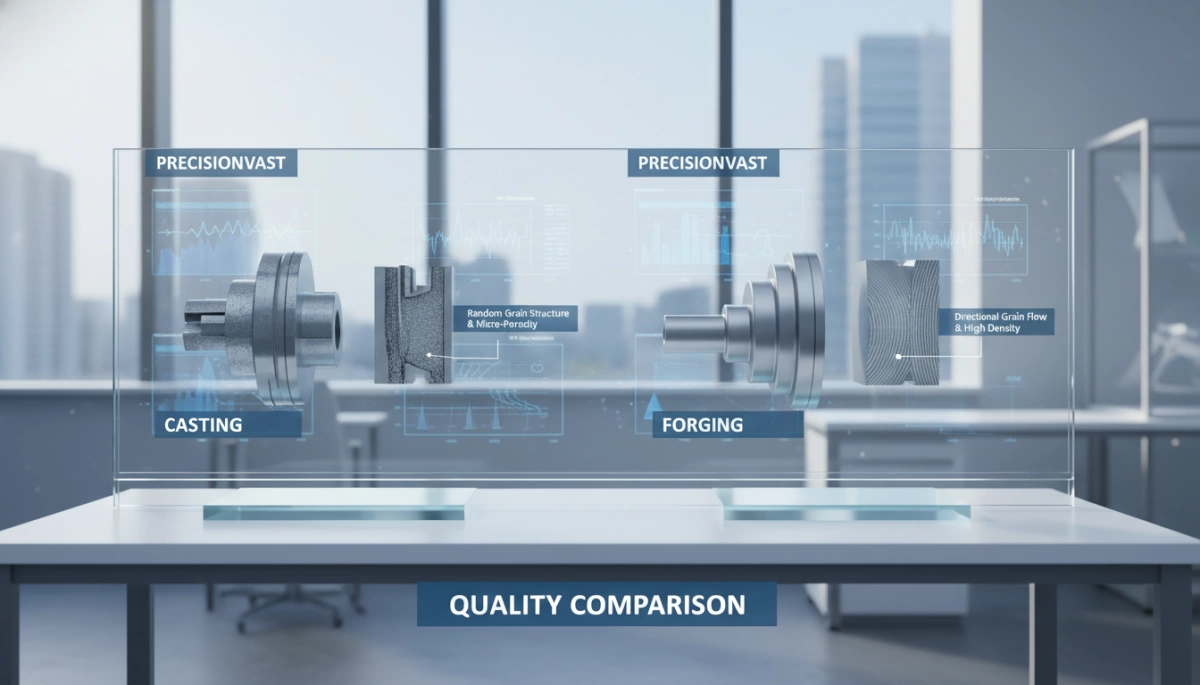
When you are looking at the realities of casting vs forging, the deciding factor often comes down to the reliability of the manufacturer. We bridge the gap between these metal forming processes by elevating investment casting to a standard that rivals, and often exceeds, traditional expectations. We don’t just pour metal; we engineer solutions that make custom metal component manufacturing efficient and exact.
Advanced Simulation
We use cutting-edge casting simulation software to map out the pour before a single drop of molten metal cools. This proactive approach helps us identify and eliminate potential structural issues early in the design phase. For instance, advanced modeling is a crucial step in preventing common defects in titanium investment casting, ensuring the metal flows perfectly for complex metal geometry fabrication. By predicting exactly how the material behaves, we guarantee tight tolerances and exceptional structural integrity right out of the gate.
Rigorous QA
The biggest concern buyers have when evaluating casting vs forging is consistency. We eliminate the guesswork through an uncompromising quality assurance protocol. Our QA process ensures that every component meets the strictest industrial metalworking methods and standards.
- Non-Destructive Testing (NDT): We utilize advanced X-ray and ultrasonic testing to verify internal integrity and ensure zero hidden porosity.
- Material Analysis: We strictly control the chemical composition of our metals, which is essential for specialized applications like high-temperature alloy forming.
- Performance Verification: We rigorously test mechanical properties so that our parts can compete directly when evaluating forged vs cast tensile strength.
One-Stop Manufacturing
We handle your project from the initial blueprint straight through to the finished, ready-to-use component. By keeping the entire workflow under one roof, we maintain absolute control over quality, cut down lead times, and streamline the entire supply chain.
Our Integrated Process Flow:
- Precision Casting: Delivering highly accurate, near net shape manufacturing.
- Secondary Operations: Expert CNC machining cast parts to achieve those final, ultra-tight tolerances.
- Surface Finishing: Providing the exact heat treatments, plating, and polishing your parts require.
Whether your project requires complex aluminum geometries or durable carbon and low alloy steel castings, our one-stop manufacturing approach ensures you get superior parts without the logistical headaches of managing multiple vendors.
Frequently Asked Questions on Casting vs Forging
Complex Parts Cost: Casting vs Forging
When running a casting vs forging cost analysis for highly intricate designs, investment casting is almost always the more cost-effective choice.
- Forging: Requires expensive, multi-stage dies to physically hammer or press metal into shape, making complex geometries difficult and expensive.
- Casting: Achieves near net shape manufacturing in a single step directly from the mold.
If your component features complex internal cavities, tight undercuts, or thin walls, casting significantly slashes secondary machining costs and accelerates your production timeline.
Cast Steel vs Forged Steel Reliability
Yes, modern cast components absolutely match the reliability of forged parts. While forging naturally aligns the metal’s grain structure for high impact resistance, today’s advanced foundry techniques have leveled the playing field. By rigorously controlling pour temperatures and utilizing advanced vacuum technology to eliminate porosity in metal casting, we create incredibly strong, fatigue-resistant parts. Many industries demanding heavy-duty OEM carbon steel castings trust our components for their most critical, high-stress applications.
Precision Tolerances in Investment Casting
At Precisionvast, we hold extremely tight tolerances that often eliminate the need to extensively CNC machine cast parts after the fact.
- Standard Linear Tolerance: ±0.005 inches per inch.
- High Repeatability: Thanks to our top-tier investment casting tooling, we maintain strict dimensional accuracy from the first part to the final batch.
This precise control over custom metal component manufacturing guarantees your parts fit perfectly right off the production line.
 English
  German