
High-Quality Brass Investment Casting for Complex Components
Are you facing challenges with loose tolerances or rough surface finishes in your current supply chain? At PrecisionVast, we specialize in high-precision brass investment casting using the advanced lost-wax process. Since 2003, our facility has delivered “problem parts” that other foundries turn away, utilizing CAE casting simulation to optimize mold design before metal is ever poured. We provide a complete manufacturing solution, transforming complex engineering prints into durable, high-performance components.
Advantages Over Traditional Sand Casting
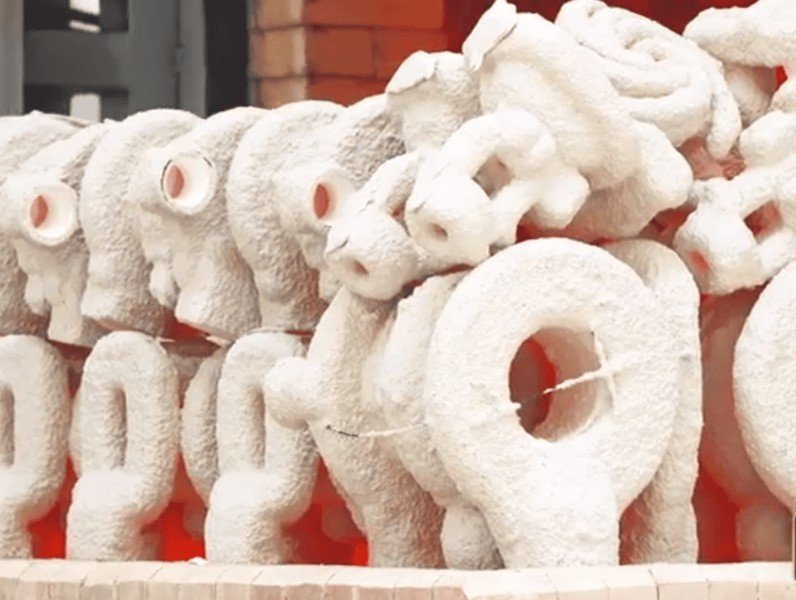
While sand casting serves specific low-fidelity applications, our lost wax brass casting process offers superior results for critical components. By utilizing precision wax patterns and ceramic shells, we achieve:
- Superior Surface Finish: We deliver smooth surfaces that often eliminate the need for extensive polishing.
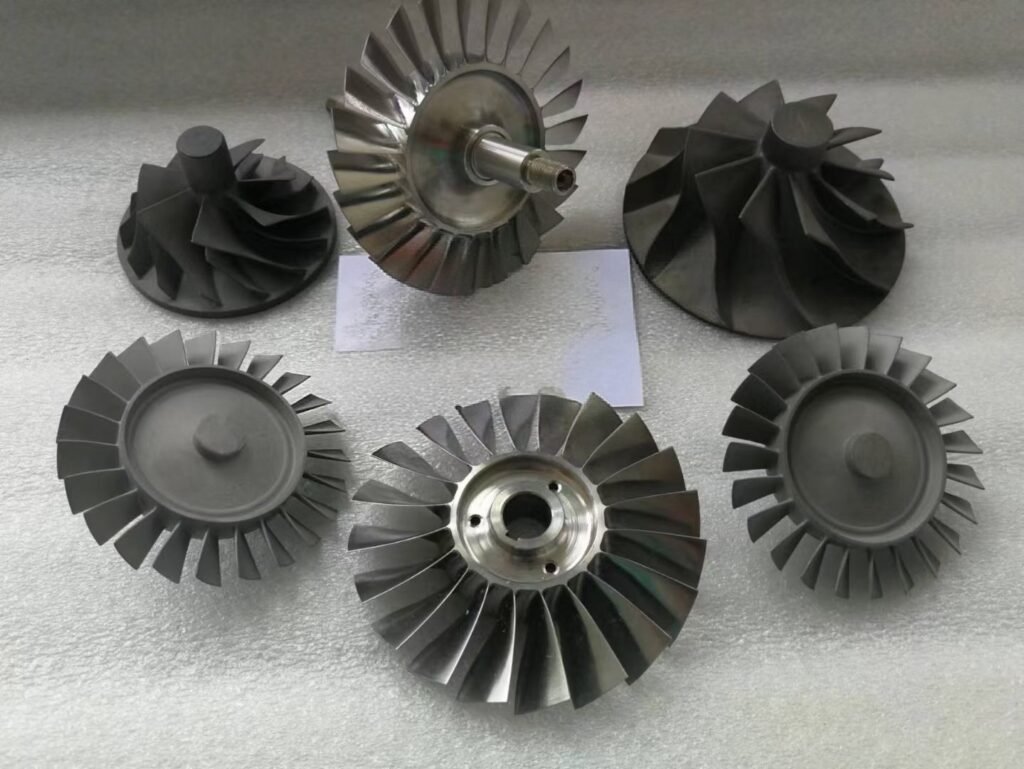
- Complex Geometries: Our process handles thin walls, undercuts, and intricate internal passages that are impossible with a brass sand casting alternative.
- Near Net Shape: We cast parts closer to their final dimensions, significantly reducing material waste and machining time.
Factory Direct Benefits: Cost & Control
As a direct manufacturer with an annual production capacity of over 700 tons, we offer factory direct pricing without the markup of trading companies. Our end-to-end control ensures accountability at every stage of the 14-step workflow. From rapid prototyping via SLA printing to final heat treatment and inspection, we manage the entire lifecycle of your custom bronze casting and brass projects under one roof. This integration guarantees consistent quality, faster lead times, and a seamless communication loop for our global clients.
Our Brass Casting Capabilities & Specifications
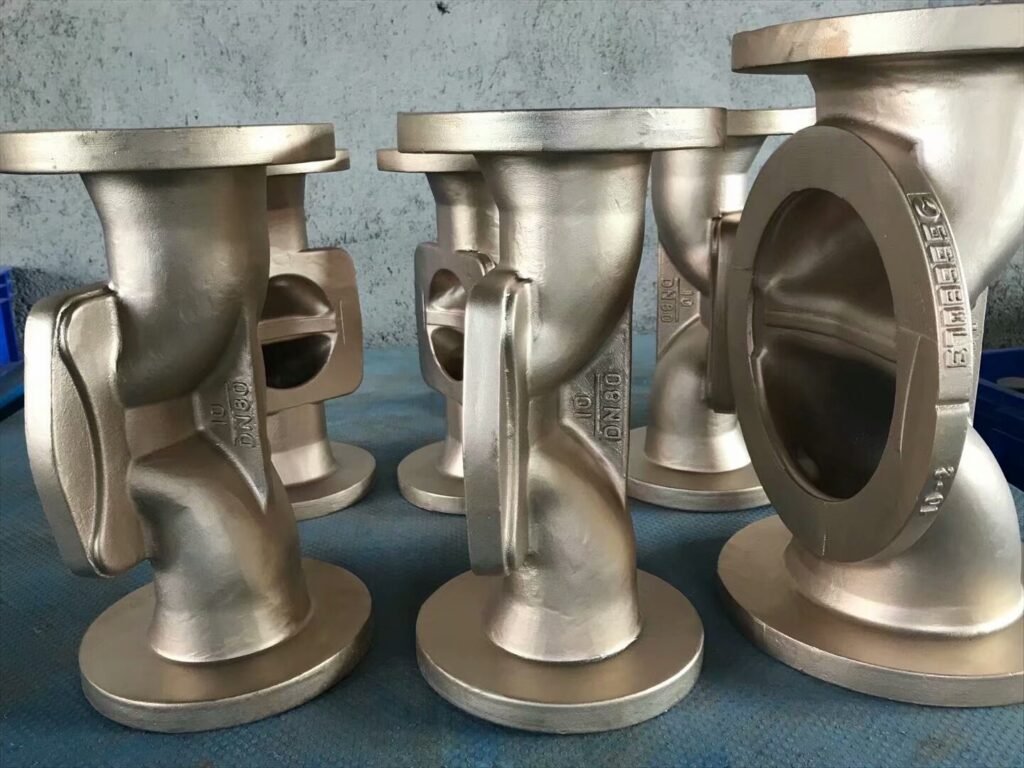
We deliver precision copper alloy casting solutions tailored to meet the rigorous demands of the US market. Our manufacturing floor operates on a strict 14-stage workflow, ensuring consistency from the initial wax injection to the final surface treatment. For clients needing speed without the initial commitment to hard tooling, we utilize SLA rapid prototyping to create precise wax patterns directly from CAD data, significantly accelerating product development.
To guarantee part integrity, our specifications adhere to ISO 8062 CT4-CT6 tolerance standards. We ensure every component meets strict quality criteria, often utilizing advanced validation methods like magnetic particle inspection to verify surface soundness before shipment.
Alloy Versatility and Material Options
As a specialized C83600 red brass foundry, we cast a wide range of alloys to suit specific mechanical and environmental requirements. We also offer lead-free brass manufacturing compliant with strict plumbing and medical regulations (such as the Safe Drinking Water Act).
| Alloy Category | Common Grades | Key Characteristics |
|---|---|---|
| Red Brass | C83600 (SAE 40) | Excellent machinability and corrosion resistance; ideal for valves and pumps. |
| Yellow Brass | C85700, C85400 | Cost-effective with good aesthetic appeal for architectural hardware. |
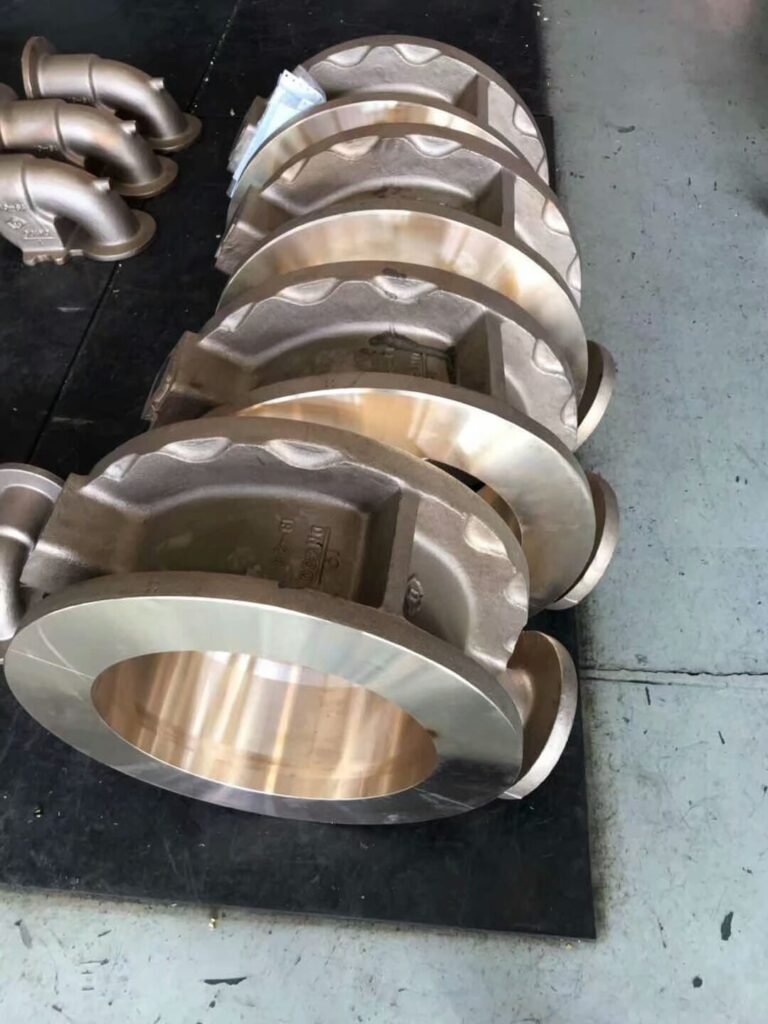
| Silicon Bronze | C87300, C87600 | High strength and corrosion resistance; perfect for silicon bronze investment casting in marine environments. |
| Aluminum Bronze | C95200, C95400 | Superior wear resistance and high tensile strength for heavy-duty industrial parts. |
Technical Specifications at a Glance
- Casting Process: Lost Wax / Investment Casting
- Weight Range: From a few grams up to heavy-duty industrial components.
- Surface Finish: Ra 3.2 – 6.3 μm (as cast).
- Dimensional Tolerance: VDG P690 D1 / ISO 8062 CT4-CT6.
- Lead-Free Options: Available for potable water and medical applications.
Why Choose Investment Casting for Brass Parts?
When you need precision that traditional sand casting simply cannot deliver, lost wax brass casting is the superior choice. We utilize this method to produce components with exceptional detail and dimensional accuracy, significantly reducing the need for secondary machining. This process allows us to create near net shape brass parts, which saves you money on raw material costs and finishing time.
Our investment casting process offers distinct advantages for complex manufacturing:
- Superior Surface Finish: We achieve a standard surface roughness of Ra 3.2-6.3 μm. This smooth finish minimizes the need for extensive polishing, making it ideal for decorative architectural hardware or visible marine components.
- Complex Geometries: Unlike die casting or sand casting, the lost wax method allows for intricate designs, including thin walls, undercuts, and complex internal passages without draft angles.
- Material Efficiency: By casting close to the final dimensions, we drastically reduce scrap rates for expensive copper-based alloys.
This level of precision makes our process essential for high-performance sectors, such as the automobile industry, where complex geometries and tight tolerances are critical for functionality.
| Feature | Brass Investment Casting | Traditional Sand Casting |
|---|---|---|
| Surface Finish | Smooth (Ra 3.2-6.3) | Rough / Grainy |
| Detail Level | High (Fine details, text) | Low to Medium |
| Wall Thickness | Thin walls possible | Requires thick walls |
| Machining | Minimal (Near Net Shape) | Extensive machining required |
Secondary Operations & One-Stop Solutions
Getting a raw casting is rarely the final step in the manufacturing journey. To provide a true turnkey solution, we integrate comprehensive secondary operations directly into our workflow. This eliminates the need for you to manage multiple vendors for machining and finishing, streamlining your supply chain and significantly reducing lead times. We take your project from the initial wax pattern all the way to a ready-to-assemble component.
Precision CNC Machining
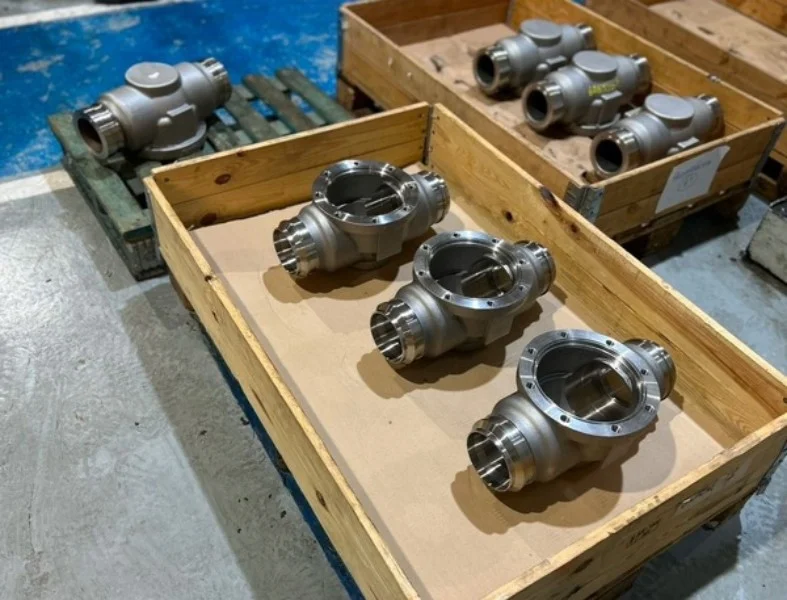
While our lost-wax process achieves near-net-shape accuracy, functional areas often require tighter tolerances than casting alone can provide. We perform in-house CNC machined brass castings to finalize critical features. Our facility is equipped to handle:
- Sealing Surfaces: Ensuring leak-proof performance for valve bodies and pump housings.
- Threading: Cutting precise internal or external threads for plumbing and hardware fittings.
- Boring and Facing: Achieving exact dimensional requirements for complex assemblies.
Surface Treatments and Finishing
Brass is often selected for its aesthetic appeal and natural corrosion resistance, but the right finish is crucial for the final application. We offer a wide range of surface treatments to enhance both the look and longevity of your parts. Understanding the specific properties of titanium and copper alloys allows us to apply these finishes effectively without compromising the metal’s integrity.
Our standard finishing capabilities include:
- Polishing: We can achieve everything from a soft satin look to a high-gloss mirror finish, ideal for architectural and marine hardware.
- Passivation and Pickling: These chemical processes remove surface contaminants, enhancing the natural corrosion resistance of the alloy.
- Plating: We offer Chrome and Nickel plating options for parts requiring extreme durability or a specific cosmetic appearance.
- Heat Treatment: To ensure long-term reliability, we perform stress-relieving heat treatments that stabilize the metal, preventing parts from warping during machining or end-use.
Industry Applications for Brass Castings
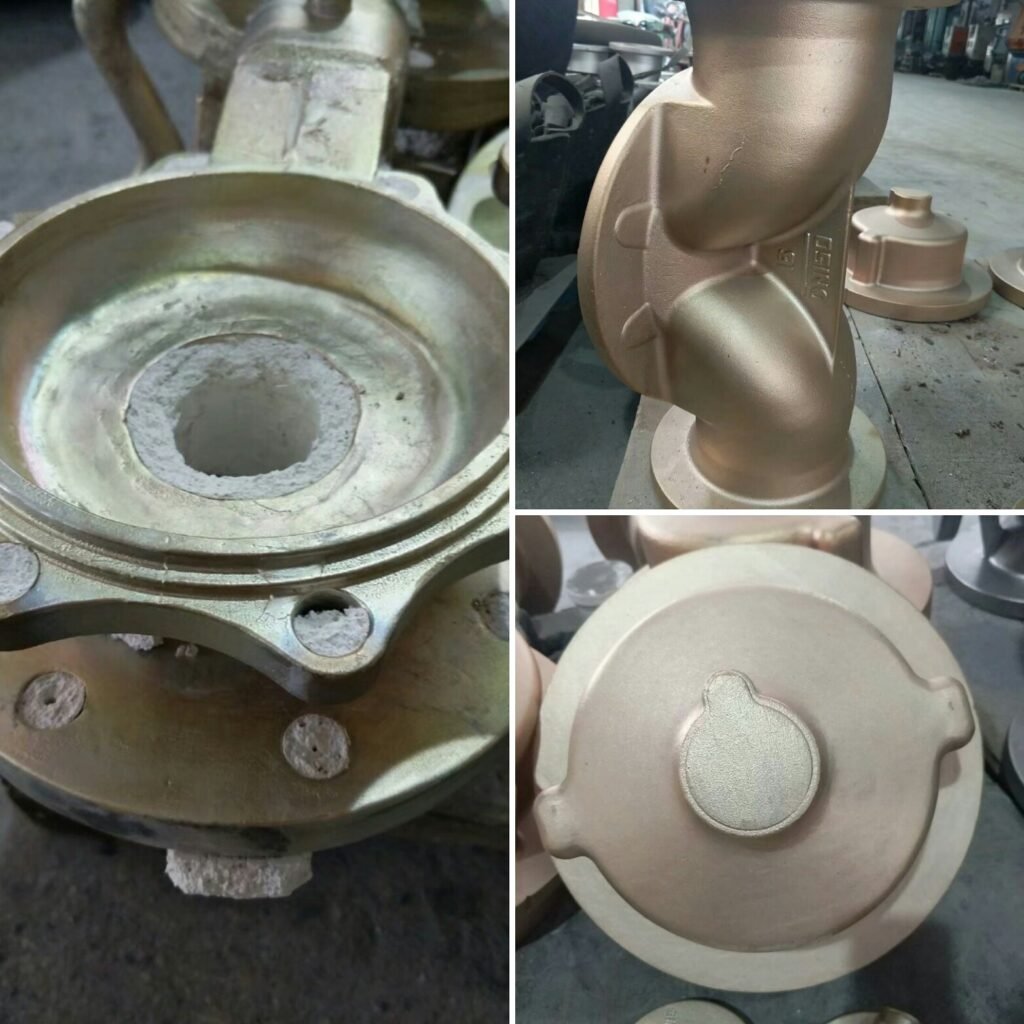
Our investment casting foundry supports a wide range of industries that demand the unique combination of corrosion resistance, conductivity, and aesthetic appeal found in copper-based alloys. We deliver precision components tailored to the specific mechanical and environmental requirements of the US market.
- Marine Hardware: We specialize in marine grade bronze casting for parts exposed to harsh saltwater environments. This includes propellers, cleats, chocks, and thru-hull fittings that require exceptional resistance to biofouling and corrosion.
- Fluid Power & Plumbing: Leak-proof performance is critical in fluid handling. We are a trusted manufacturer of OEM brass valve components, faucets, and pipe fittings. As a brass pump housing supplier, we ensure every impeller and housing meets strict pressure testing standards.
- Architectural & Lock Hardware: For applications where visual finish is paramount, our architectural brass hardware manufacturing delivers door levers, hinges, and furniture fittings with superior surface quality ready for polishing or plating.
- Electrical Components: Taking advantage of the electrical conductivity of brass, we cast connectors, terminals, and switchgear components that require precise geometry and material purity.
Quality Assurance & Testing Protocols
At PrecisionVast, we understand that material integrity and dimensional accuracy are non-negotiable, especially when manufacturing critical components. Our facility operates strictly under ISO9001 standards, ensuring that every batch of brass investment casting meets global specifications before it leaves our factory floor. We don’t just rely on visual checks; we employ a rigorous, data-driven inspection regime to guarantee performance.
Comprehensive Material & Dimensional Inspection
To ensure our custom bronze casting and brass parts meet your exact requirements, we utilize advanced in-house testing equipment. This allows us to provide full traceability and detailed inspection reports with every shipment.
- Chemical Analysis (Spectrometer): We verify the exact elemental composition of every melt using optical emission spectrometry. This ensures alloys like C83600 red brass or silicon bronze match the specific ASTM or DIN standards required for your project.
- Dimensional Verification (CMM): Our Coordinate Measuring Machines (CMM) validate complex geometries and tight tolerances, ensuring parts fit perfectly into your assembly.
- Mechanical Property Testing: We conduct tensile, yield, and elongation tests to confirm the physical strength of the metal. Hardness testing is also performed to verify durability.
- Non-Destructive Testing (NDT): For parts requiring high internal integrity, such as those used in high-pressure valves or critical medical equipment, we offer X-Ray inspection and Magnetic Particle Inspection (MPI) to detect any subsurface defects or porosity without damaging the component.
From Prototype to Production
We streamline the journey from initial design to final delivery, ensuring your brass casting projects stay on schedule and within budget. Our integrated approach allows us to validate designs quickly before committing to full-scale manufacturing.
SLA 3D Printing for Wax Patterns
Avoid the financial risk of cutting hard tooling too early. We utilize SLA rapid prototyping to print wax patterns directly from your CAD files. This allows us to produce functional custom bronze casting prototypes without the upfront cost and time delay of building expensive metal molds. It is the most efficient way to verify complex geometries and near net shape brass parts for fit and function.
Scalability and Lead Times
Our facility is designed for flexibility, supporting you from the first sample to the final container load.
- Rapid Prototyping: Immediate turnaround for design validation and physical testing.
- Standard Tooling: Mold creation typically completes within 3-4 weeks, depending on complexity.
- Flexible Volume: We handle everything from short-run custom batches for specialized machinery to high-volume mass production for global distribution.
Frequently Asked Questions About Brass Casting
What are the standard lead times for brass investment casting?
Our timelines are optimized for efficiency. By utilizing SLA 3D printing for rapid prototyping, we can bypass traditional tooling delays during the initial design verification phase. For full-scale production, we manage the entire 14-step brass investment casting workflow in-house—from wax injection to final inspection—allowing us to provide accurate delivery schedules. We typically respond to inquiries within 8 hours to get your project moving immediately.
Can you handle lead-free brass requirements for potable water applications?
Yes. We strictly control material composition using advanced spectrometers to ensure compliance with industry standards. Whether your project requires standard yellow brass or lead-free brass manufacturing for plumbing and medical applications, our chemical analysis testing verifies that the alloy meets all safety and environmental specifications before casting.
What is the minimum order quantity (MOQ) for custom brass parts?
We are set up to support both small-scale and large-scale production runs. As a direct manufacturer, we offer the flexibility to handle custom bronze casting orders ranging from low-volume prototypes to mass production. This scalability makes us an ideal partner for businesses needing OEM brass valve components or specialized hardware without the burden of excessive minimums.
How does investment casting tolerances compare to sand casting?
Lost wax brass casting delivers significantly higher precision and better surface finishes (Ra 3.2-6.3) compared to a brass sand casting alternative. While sand casting is often used for larger, less critical parts, our investment process achieves near-net-shape accuracy (ISO 8062 CT4-CT6). This precision allows for complex geometries and thin walls that sand casting cannot reliably produce, drastically reducing the need for secondary machining.