

Custom nylon machining services for PA6 PA66 and filled polyamide parts with tight tolerances wear resistance and low moisture absorption.
Understanding Nylon for Machining
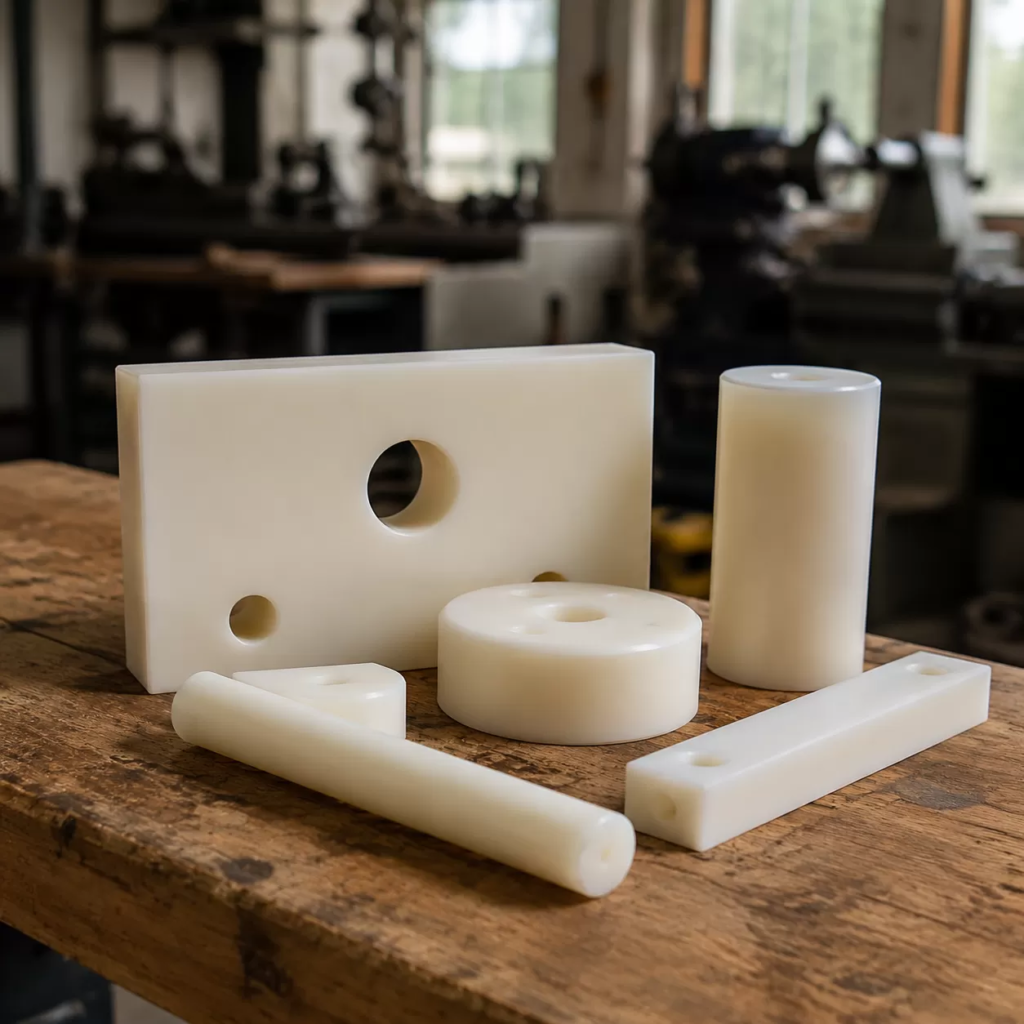
When choosing nylon for machining, selecting the right grade is the most critical step to ensure your part performs flawlessly under stress. Polyamides (PA) are not all created equal. Different molecular structures yield vastly different mechanical properties, impacting everything from PA6 vs PA66 machinability to how the material behaves on the shop floor.
We stock and process a versatile inventory of polyamide machining stock to match your exact application requirements.
Nylon 6 (PA 6) – High Impact & Cost-Effective
Nylon 6 is our go-to choice when toughness, high vibration damping, and cost-efficiency are your top priorities. It is highly flexible and boasts excellent impact resistance, making it perfect for heavy-duty structural components. If you need a budget-friendly, rugged material for high-shock environments, a black PA6 sheet machining setup is often the ideal solution.
Nylon 6/6 (PA 66) – High Strength & Thermal Resistance
When your project demands higher mechanical stiffness and better temperature limits, CNC milling nylon 66 is the industry standard. Nylon 6/6 has a higher melting point and greater structural rigidity than Nylon 6. It resists deformation under load and excels in tighter-tolerance environments, making it a preferred choice for high-tensile engineering thermoplastics.
Nylon 6/12 (PA 6/12) – Advanced Moisture Resistance
One major hurdle with standard nylon is its tendency to absorb water, which can alter part dimensions. Nylon 6/12 solves this issue. It features an advanced molecular chain that significantly minimizes water absorption. We utilize this grade for precision applications that demand stable plastic gear machining tolerances in humid or wet environments.
Specialty Modified & Filled Nylon Variants
For extreme operating conditions, standard formulations might need a boost. We machine custom, modified blends engineered for specialized industrial environments:
- Glass-Filled Polyamide Parts: Reinforced with glass fibers to drastically increase tensile strength and stiffness while cutting thermal expansion in half.
- Oil-Filled MC Nylon Wear Pads: Cast nylon injected with liquid lubricants during manufacturing, creating self-lubricating nylon bearings that require zero external grease.
- Moly-Shielded Nylon: Infused with molybdenum disulfide ($MoS_2$) to increase surface hardness and lower friction coefficients for high-speed sliding applications.
Technical Specification Comparison: Nylon vs. Other Engineering Plastics
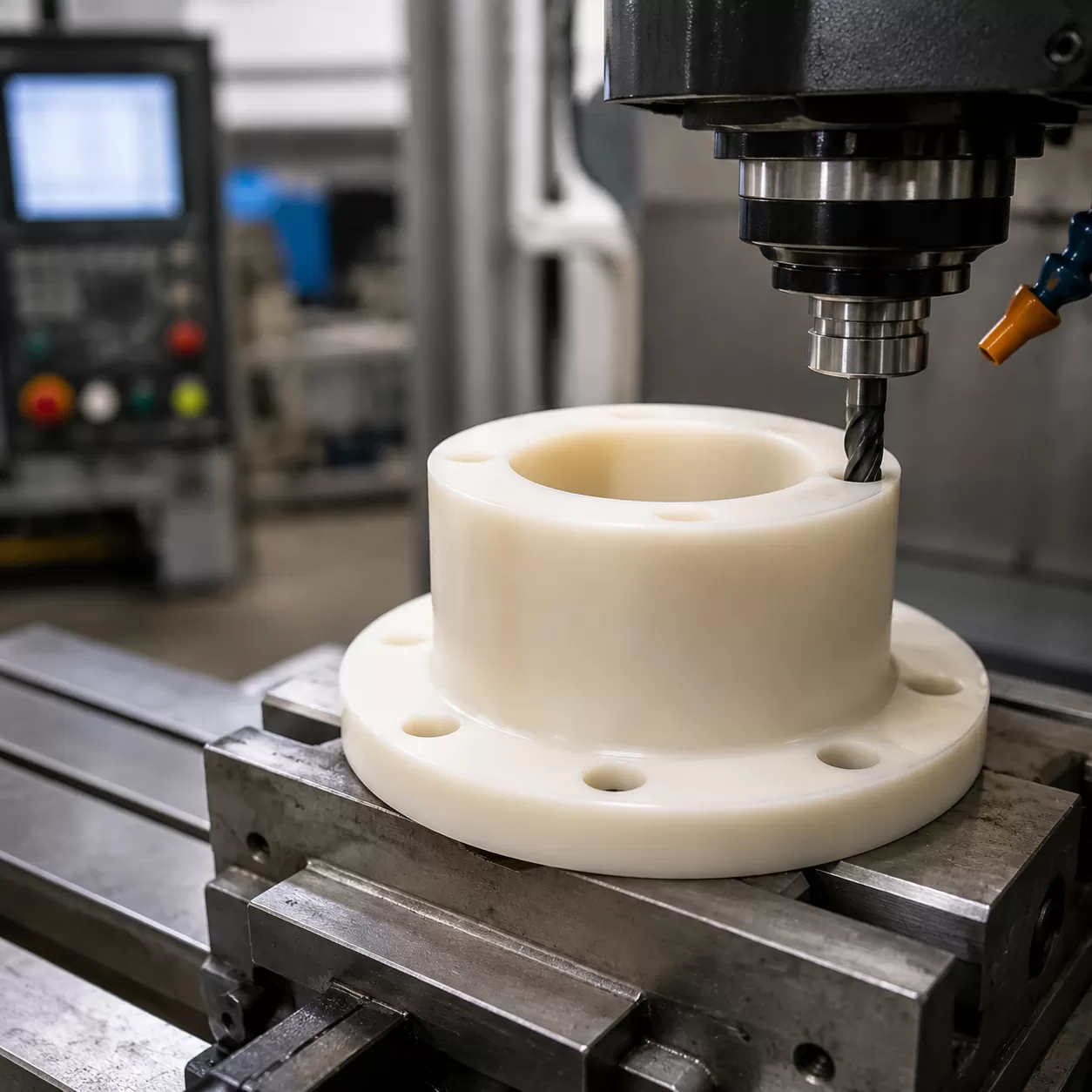
When selecting nylon for machining, it is vital to understand how it stacks up against other high-tensile engineering thermoplastics. While polyamides offer an exceptional balance of mechanical strength and wear resistance, materials like Delrin (POM), PEEK, and PTFE excel in different environments. Choosing the right material directly impacts part longevity and precision.
The table below outlines the core mechanical differences to help you choose the ideal material for your custom plastic machining services:
| Material Property | Nylon 6/6 (PA 66) | Delrin (POM) | PEEK | PTFE (Teflon) |
|---|---|---|---|---|
| Tensile Strength (psi) | 12,000 | 10,000 | 14,000 | 4,000 |
| Flexural Modulus (psi) | 410,000 | 400,000 | 600,000 | 90,000 |
| Max Operating Temp (°F) | 210°F | 185°F | 480°F | 500°F |
| Moisture Absorption (%) | 1.5% – 2.5% | 0.2% | 0.1% | < 0.01% |
| Primary Advantage | High impact & wear | Dimensional stability | Ultra-high temp & strength | Lowest friction coefficient |
Key Machinability Takeaways
- PA6 vs PA66 Machinability: Nylon 6/6 is stiffer and cuts cleaner than Nylon 6, though both require sharp carbide tools to prevent burring.
- Dimensional Stability: Delrin absorbs far less moisture than nylon, making it easier to hold tight plastic gear machining tolerances in humid environments.
- Thermal Performance: For extreme temperatures that exceed nylon’s limits, upgrading to PEEK is necessary, though it comes at a higher material cost.
For projects requiring deep technical insights into material stress, understanding how to evaluate factors affecting heat-resistant alloy properties provides excellent foundational knowledge on how thermal loads impact overall component integrity during high-speed cutting.
The Core Engineering Benefits of Machined Polyamide Parts
Choosing nylon for machining delivers structural reliability and long-term durability for demanding industrial applications. As a premier engineering thermoplastic, polyamide replaces traditional metals in high-stress environments due to its unique mechanical advantages.
Exceptional Wear Resistance and Low Friction
Machined nylon excels in sliding contact applications. Its self-lubricating properties drastically reduce friction, preventing component galling and minimizing system downtime. Utilizing oil-filled MC nylon wear pads or self-lubricating nylon bearings eliminates the need for external grease, making it an ideal choice for cleanrooms, food processing, and aerospace assemblies.
High Strength-to-Weight Ratio
Nylon provides exceptional mechanical strength without the heavy footprint of metals. For components requiring extra rigidity, glass-filled polyamide parts deliver the high-tensile performance needed to withstand heavy structural loads. This allows engineers to downsize assemblies and improve fuel or energy efficiency in moving machinery.
Superior Chemical and Abrasion Toughness
Machined polyamide withstands harsh industrial environments. It resists oils, hydraulic fluids, solvents, and fuels, ensuring parts do not degrade prematurely. Its inherent elasticity allows it to absorb impacts and resist severe abrasion far better than many metals and lower-grade plastics.
Performance Comparison: Nylon Properties
| Material Property | Unfilled Nylon (PA6/PA66) | Glass-Filled Nylon | Benefit to CNC Machining & Application |
|---|---|---|---|
| Tensile Strength | High | Very High | Resists deformation under heavy mechanical loads |
| Friction Coefficient | Extremely Low | Moderate | Ideal for continuous sliding and wear components |
| Impact Resistance | Excellent | Moderate | Absorbs shocks without cracking or chipping |
| Chemical Resistance | High | High | Withstands industrial oils, fuels, and solvents |
Our advanced custom plastic machining services ensure that every machined polyamide component meets exact print tolerances, delivering peak performance where you need it most.
Critical Challenges & Best Practices in Precision Nylon Machining
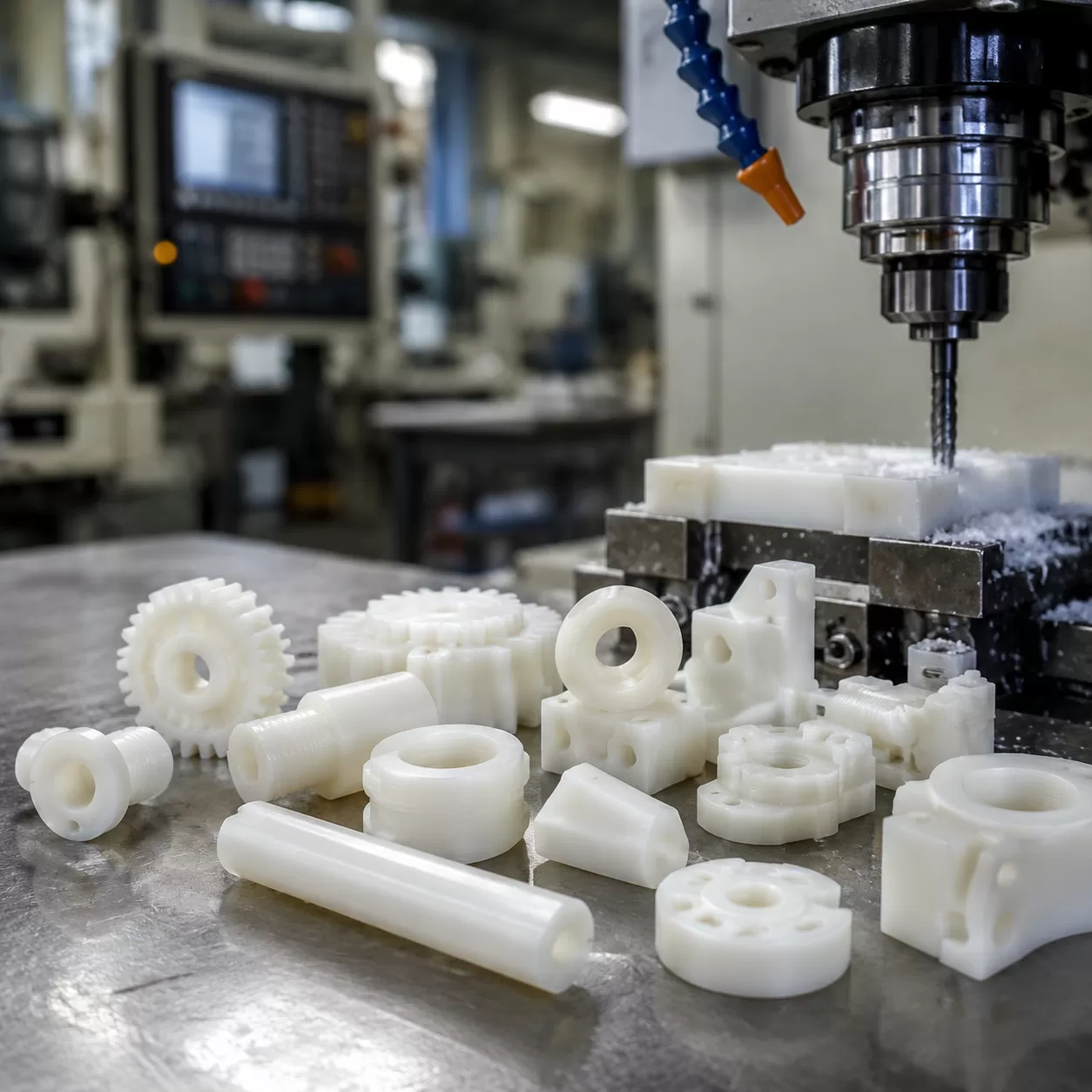
Machining nylon for manufacturing requires a deep understanding of how this polymer behaves under mechanical stress and temperature shifts. Unlike metals, polyamides are highly sensitive to heat and environmental conditions. To maintain tight plastic gear machining tolerances and prevent part distortion, engineers must implement specific stabilization and cutting strategies.
Mitigating Thermal Expansion & Deformation
Nylon has a high nylon thermal expansion coefficient compared to metals, meaning it expands rapidly when exposed to frictional heat during cutting. If the material overheats, it will deform, leading to dimensional inaccuracies once the part cools down.
- Sharp Tooling: Always use razor-sharp carbide tools for cutting nylon to minimize friction and heat generation.
- Flooded Coolant: Use water-soluble coolants to keep the cutting zone cool and wash away chips before they melt onto the workpiece.
- Stress Relieving: For complex or thick-walled parts, utilize pre-machined annealed blanks to relieve internal material stresses.
Managing Moisture Absorption Before & After Machining
One of the trickiest aspects of managing moisture absorption in engineering plastics is nylon’s naturally hygroscopic behavior. Polyamides absorb moisture from the air, which causes the material to swell and changes its machinability.
- Pre-Machining Storage: Keep polyamide machining stock in sealed, moisture-proof packaging or climate-controlled environments before loading it onto the CNC machine.
- Dimensional Allowance: Factor in a 0.5% to 2% dimensional change depending on whether you are working with standard nylon 66 or more stable glass-filled polyamide parts.
- Post-Machining Seal: If parts must maintain strict tolerances in humid environments, consider post-machining moisture conditioning or applying a protective barrier coating.
Optimized CNC Cutting Parameters
Achieving a flawless surface finish on black PA6 sheet machining or oil-filled MC nylon wear pads requires balancing high spindle speeds with fast feed rates. This setup ensures that heat is carried away in the chip rather than transferring into the stock material.
| Machining Parameter | Recommended Range for Unfilled Nylon | Recommended Range for Glass-Filled Nylon |
|---|---|---|
| Cutting Speed (SFM) | 800 – 1,500 | 500 – 900 |
| Feed Rate (IPR) | 0.005 – 0.015 | 0.004 – 0.010 |
| Axial Depth of Cut (DOC) | 0.040″ – 0.150″ | 0.030″ – 0.100″ |
| Tool Material | Uncoated Carbide / High-Speed Steel (HSS) | Diamond-Coated (PCD) or Micro-Grain Carbide |
Using these optimized parameters prevents the material from gumming up, ensuring clean chip evacuation during high-speed CNC milling nylon 66 operations and complex nylon plastic turning capabilities.
Industrial Applications of CNC Machined Nylon Components
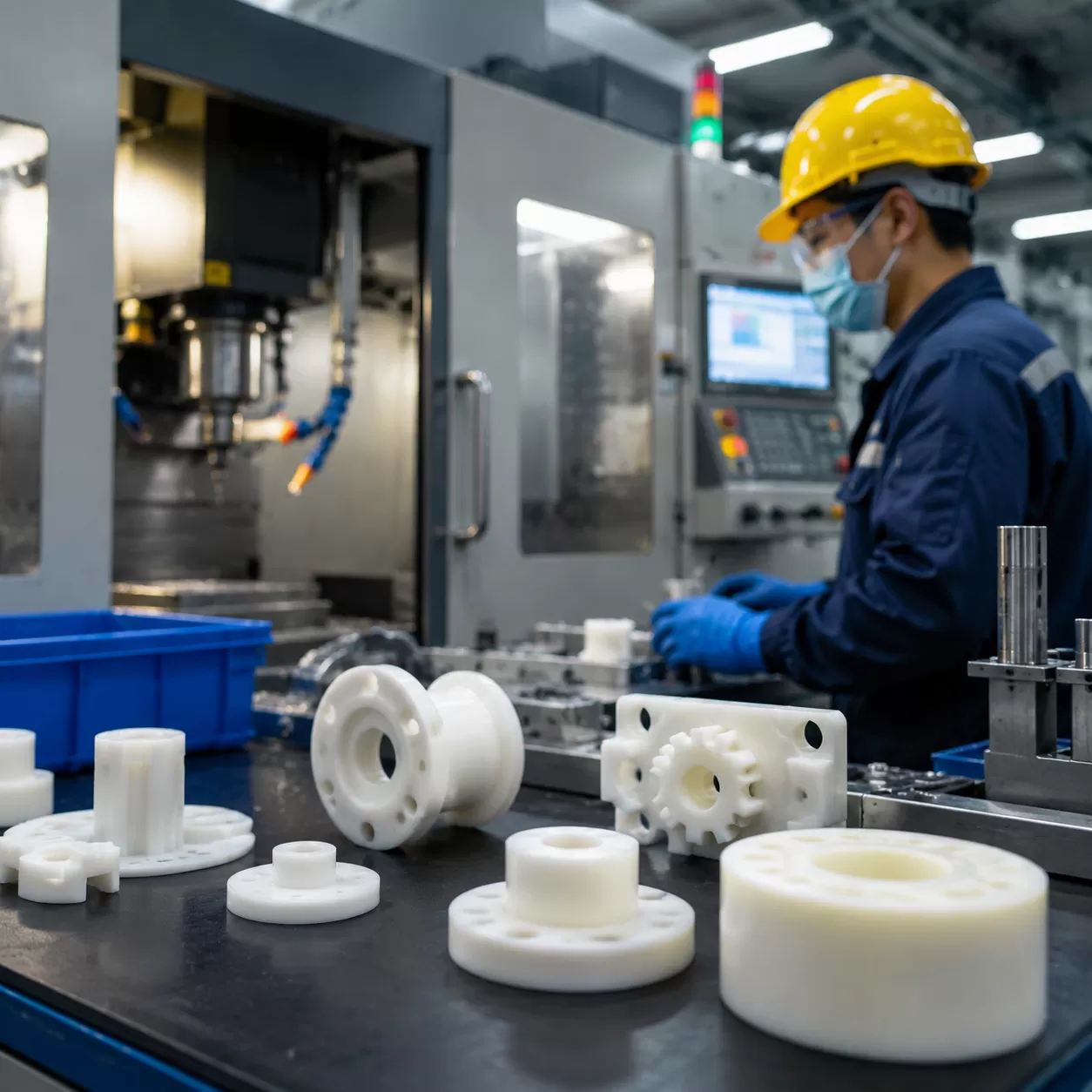
Nylon for machining is a staple across United States manufacturing due to its incredible versatility and wear resistance. We routinely precision-engineer this high-tensile engineering thermoplastic into heavy-duty components that replace metal, lower equipment noise, and extend machinery lifespans.
The unique mechanical profile of polyamide allows it to thrive in demanding environments where lubrication is difficult and friction is high.
- Automotive & Aerospace: We machine custom engine components, lightweight brackets, and specialized wire guides. Utilizing glass-filled polyamide parts allows us to deliver structural components that withstand high under-hood temperatures and intense vibration.
- Heavy Machinery & Industrial Conveyors: From custom plastic machining services, we produce robust rollers, wear strips, and slide blocks. Utilizing oil-filled MC nylon wear pads ensures conveyor systems run smoothly without constant manual lubrication.
- Power Transmission & Gearing: Standard metals can be noisy and require heavy grease. We specialize in maintaining tight plastic gear machining tolerances to produce quiet, shock-absorbing gears and self-lubricating nylon bearings that reduce system downtime.
- Food Processing & Packaging: Because certain grades resist washing chemicals and handle friction gracefully, machined nylon is a top choice for star wheels, sorting guides, and bushings in bottling and packaging plants.
Our advanced Nylon plastic turning capabilities and CNC milling infrastructure ensure that every industrial component we ship meets exact print specifications, delivering reliable field performance where your operation needs it most.
Post-Processing & Finishing Options for Machined Nylon
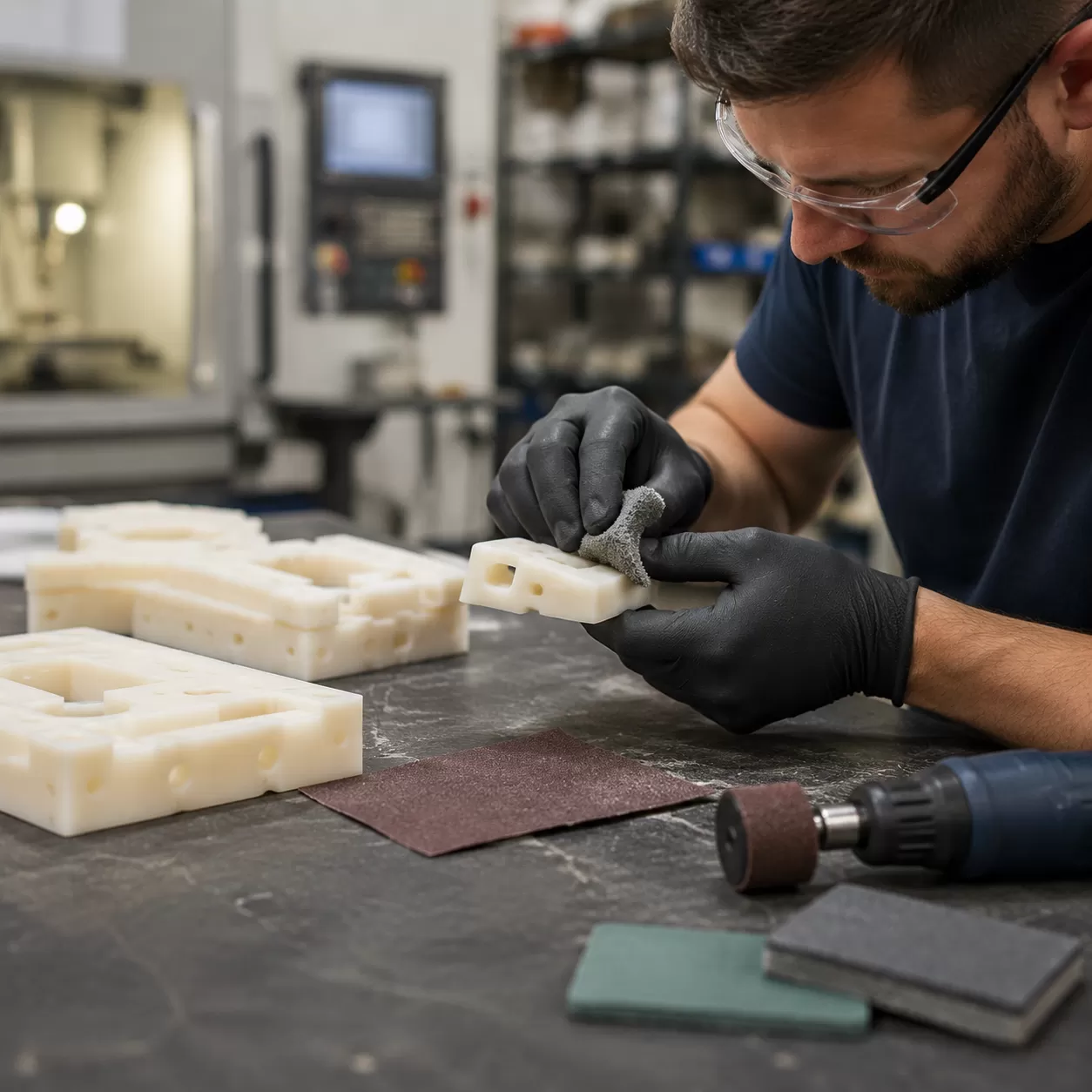
While our precision CNC processes deliver exceptional surface quality right off the mill, applying the right post-processing and finishing techniques elevates the functionality, aesthetics, and fit of your custom parts. Nylon responds beautifully to specific mechanical and chemical treatments, allowing us to hit tight tolerances and match your exact application requirements.
Mechanical Tumbling & Deburring
CNC milling nylon 66 or machining black PA6 sheet stock can occasionally leave behind microscopic burrs or sharp edges. Mechanical tumbling is our go-to automated solution for high-volume part runs. By placing the machined components into a vibratory tumbler with specialized ceramic or plastic media, we can efficiently smooth out parting lines and edge imperfections without compromising the core dimensional accuracy of the parts.
Vapor Smoothing & Polishing
For applications requiring an ultra-smooth surface finish, a fluid-tight seal, or enhanced aesthetic appeal, we utilize chemical vapor smoothing. This process exposes the nylon components to a controlled gaseous solvent that briefly melts the outermost microscopic layer of the plastic. As the surface resolves, it seals minor peaks and valleys, leaving a semi-glossy or high-gloss finish. This is highly effective for medical components, fluid manifolds, and food-processing equipment where bacteria cannot be allowed to trap in machining marks.
| Finishing Process | Primary Benefit | Ideal Applications | Surface Roughness ($Ra$) Impact |
|---|---|---|---|
| Mechanical Tumbling | Removes sharp burrs, creates a uniform matte finish | High-volume industrial components, self-lubricating nylon bearings, structural brackets | Moderate reduction |
| Vapor Smoothing | Seals surfaces, eliminates tool marks, improves hygiene | Fluid handling manifolds, food-grade parts, visible consumer enclosures | Significant reduction (Ultra-smooth) |
| Manual Deburring | Target-specific cleanup on complex geometries | Low-volume custom plastic machining services, intricate internal channels | Localized improvement |
Whether your project requires raw precision or a highly polished, sealed surface, we adapt our finishing workflow to match the specific structural demands of your high-tensile engineering thermoplastics.
Why Partner with PrecisionVast for Custom Nylon Machining?
Choosing the right manufacturing partner makes all the difference when machining high-performance polyamides. At PrecisionVast, we deliver top-tier custom plastic machining services tailored specifically to the rigorous demands of the United States industrial market. Our facility is fully equipped to handle everything from tight-tolerance plastic gear machining tolerances to heavy-duty industrial components.
Here is why OEM manufacturers and engineering teams rely on us:
- Advanced CNC Machining Capabilities: We utilize specialized carbide tools for cutting nylon alongside high-speed spindles to prevent material deformation, ensuring crisp edges and exact dimensions on every part.
- Deep Material Expertise: From standard black PA6 sheet machining to complex glass-filled polyamide parts and oil-filled MC nylon wear pads, we understand how different grades react to heat and cutting forces.
- Strict Quality Control: Nylon is notorious for its moisture absorption engineering plastics profile. We monitor environmental conditions during production and manage material stabilization to guarantee that your parts arrive fully within print specifications.
- Prototyping to High-Volume Production: Whether you need a handful of custom self-lubricating nylon bearings or thousands of complex CNC milled nylon 66 components, our scaling capabilities keep your supply chain moving without delays.
We combine domestic engineering standards with highly efficient production workflows to deliver premium results on tight timelines. When your application demands exceptional wear resistance, precise dimensions, and structural integrity, PrecisionVast is your go-to source for reliable nylon machining solutions.

 German
  English