

Rapid injection molding services for low volume production 100 to 10000 plus parts in 7 to 15 days with DFM feedback and production grade materials.
What is Rapid Injection Molding?
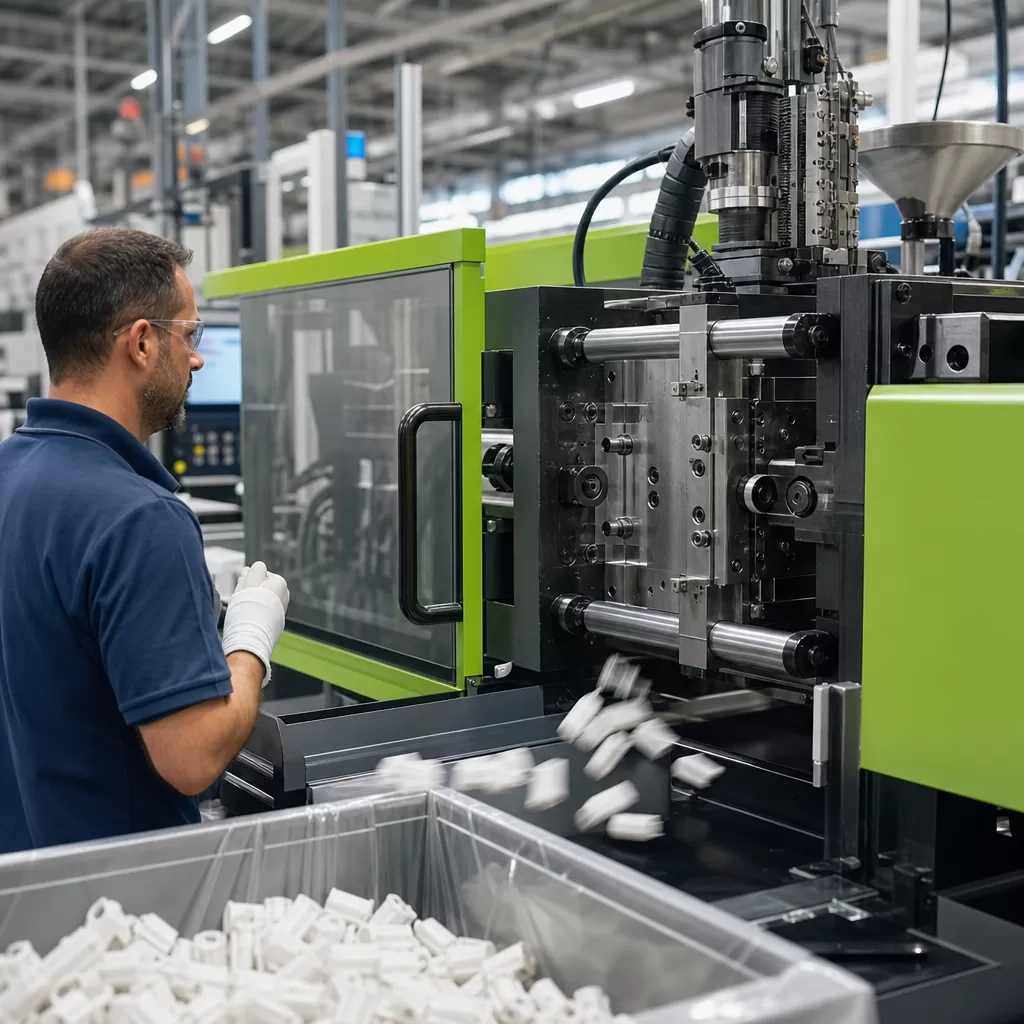
When you need real, production-grade plastic parts fast, traditional manufacturing can slow you down with months of tooling lead times. That is where rapid injection molding comes in. We utilize advanced manufacturing techniques to bridge the gap between initial design and full-scale production. By using standard mold bases and high-strength aluminum injection molds, we skip the lengthy setup times of conventional steel tooling. This allows us to deliver high-quality, custom plastic molding in a fraction of the time, giving you a competitive edge in the United States market.
The Bridge Between Rapid Prototyping and Mass Production
We designed our quick-turn injection molding service to act as the ultimate transition phase for hardware developers. 3D printing is great for early concepts, but it cannot match the material properties or tolerances of a true molded part. Our bridge tooling fills this critical void by allowing you to:
- Test the market with low-volume injection molding runs (from 100 to 10,000+ parts) without heavy capital investment.
- Validate functional designs using final, production-grade thermoplastics.
- Secure on-demand plastic parts to fulfill early customer orders while your high-volume production steel tooling is being built.
How the precisionvast Rapid Tooling Process Works
Our proprietary rapid tooling workflow streamlines every step of the manufacturing cycle to get parts into your hands faster than traditional mold makers.
- Digital Upload & DFM Analysis: You upload your 3D CAD files. We immediately run a comprehensive design for manufacturing (DFM) analysis to catch any potential molding issues like improper draft angles or thick walls.
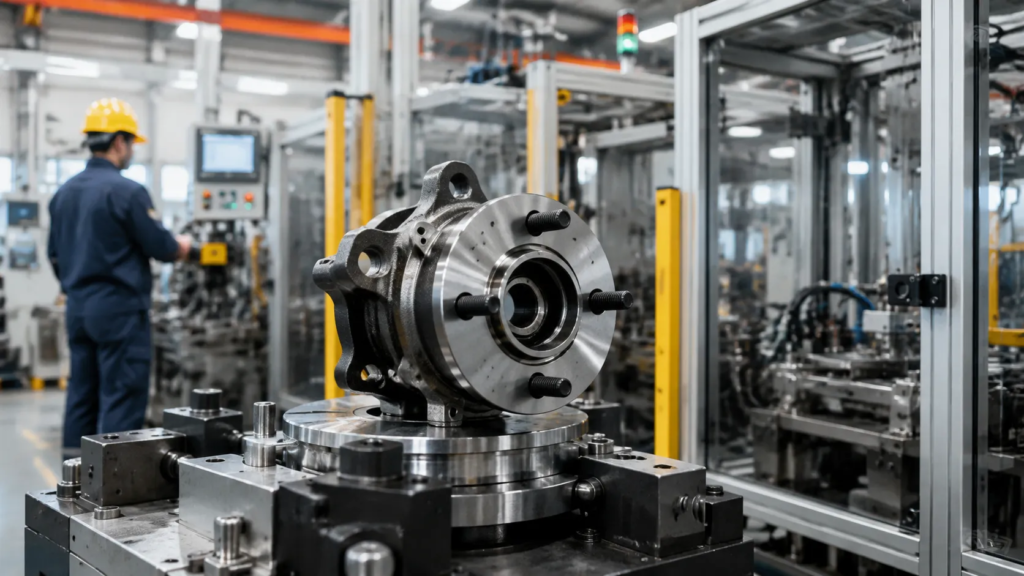
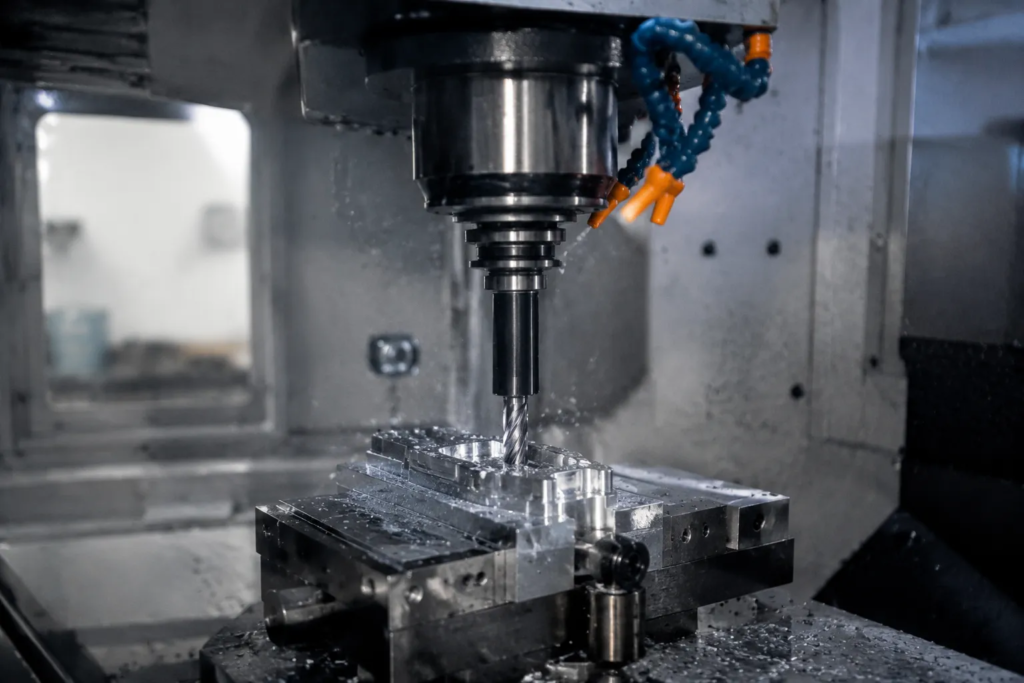
- Milling the Tool: We use high-speed CNC machining to cut your part geometry into aluminum injection molds or modular injection mold inserts. Aluminum transfers heat much faster than steel, which speeds up both tool creation and part cycle times.
- Part Injection: We load the mold into our injection presses, inject your chosen thermoplastic injection molding resin under precise pressure, and produce your plastic injection molding prototypes or short-run production parts with absolute consistency.
Why Choose Rapid Injection Molding? (Key Benefits)
When you need to scale up from a 3D-printed prototype to market-ready parts, traditional tooling can bottleneck your timeline and drain your budget. Our rapid injection molding services bridge this gap, offering a fast, cost-effective way to produce real, functional plastic parts using production-grade resins.
By utilizing advanced aluminum injection molds and modular injection mold inserts, we eliminate the long lead times of conventional steel tooling. Here is why product developers and engineers choose this process for their low-volume injection molding needs:
- Accelerated Speed to Market: Get custom plastic parts in days, not months. This allows you to launch faster and beat the competition.
- Massive Cost Savings: Soft tooling and bridge tooling significantly lower your initial upfront mold investment, making short-run production highly viable.
- Production-Grade Materials: Unlike 3D printing, thermoplastic injection molding utilizes actual production resins, ensuring your parts meet strict functional and mechanical requirements.
- Design Verification: Catch design flaws early with a fully functional plastic injection molding prototype before committing to high-volume mass production.
Rapid Molding vs. Traditional Tooling
| Feature | Rapid Injection Molding | Traditional Injection Molding |
|---|---|---|
| Tooling Material | High-grade Aluminum / Pre-hardened Steel | Hardened Tool Steel |
| Typical Lead Time | 1 to 3 weeks | 6 to 12 weeks |
| Production Volume | 100 to 10,000+ parts | 100,000+ parts |
| Upfront Tooling Cost | Low to Moderate | Very High |
| Design Flexibility | High (Easy to modify inserts) | Low (Costly to change steel molds) |
Whether you need on-demand plastic parts to manage supply chain fluctuations or a reliable short-run injection molding partner for pilot builds, we deliver the precision and speed your project demands.
Our Engineering Capabilities & Technical Specifications
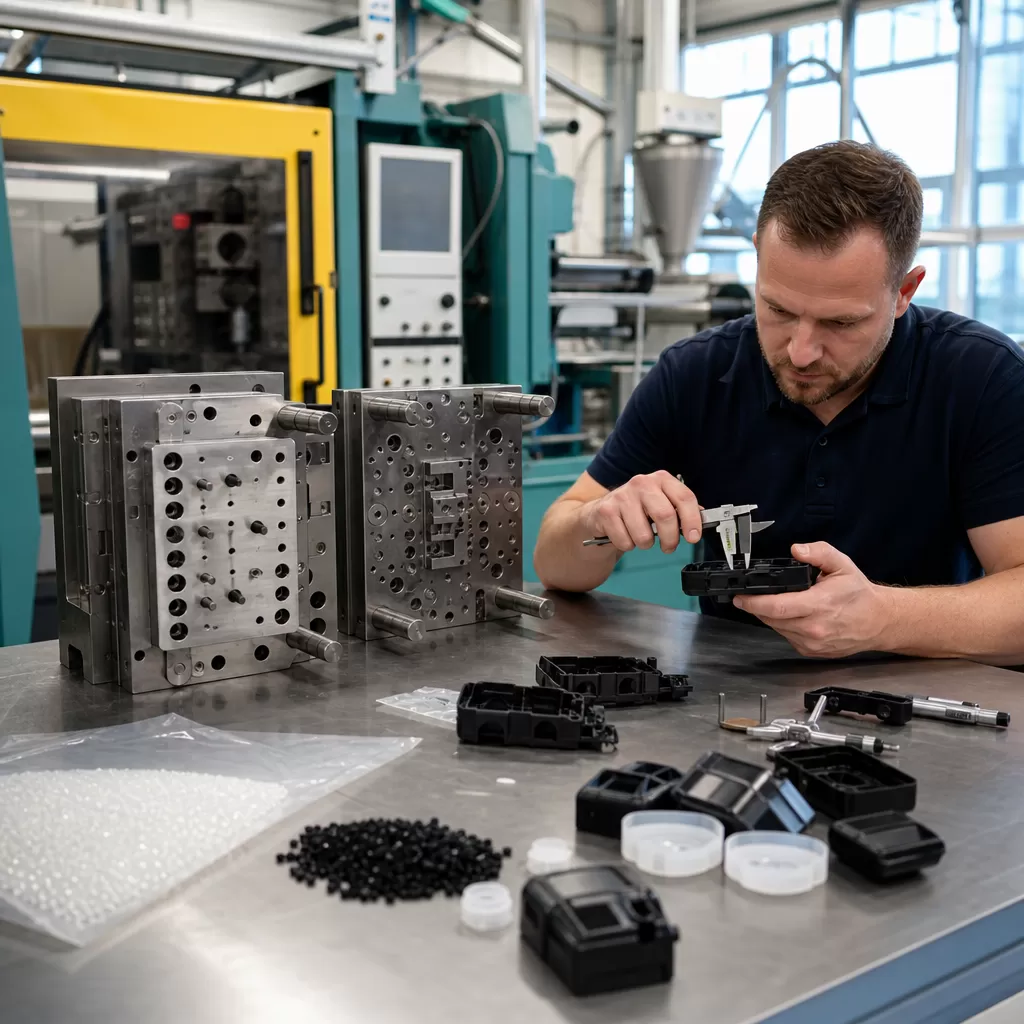
We leverage advanced rapid injection molding techniques to turn your CAD models into functional parts in days. Our facility is optimized for both quick-turn prototyping and low-volume injection molding, ensuring you get production-grade components without the traditional long lead times.
Molding Types Offered
- Prototype Injection Molding: Ideal for form, fit, and functional testing before committing to high-volume production.
- Bridge Tooling: Fills the manufacturing gap by delivering thousands of parts while your permanent steel molds are being built.
- Short-Run Injection Molding: Cost-effective, on-demand plastic parts tailored for niche markets or limited product rollouts.
- Overmolding & Insert Molding: Integrates multiple materials or metal components into a single, cohesive part for enhanced functionality.
Manufacturing Capacities
Our specialized aluminum injection molds and modular mold inserts allow us to maintain tight tolerances and fast turnaround times. Below is a breakdown of our standard technical capabilities:
| Specification | Capability Details |
|---|---|
| Maximum Part Dimensions | 18″ x 18″ x 3″ (457mm x 457mm x 76mm) |
| Part Weight Range | 0.05 oz to 25 oz (1.4g to 708g) |
| Standard Machining Tolerance | $pm 0.005text{ in.}$ ($pm 0.127text{ mm}$) |
| Molding Tolerance | $pm 0.002text{ in.}$ plus $pm 0.002text{ in./in.}$ for resin shrinkage |
| Minimum Wall Thickness | Thermoplastics: $0.040text{ in.}$ ($1.0text{ mm}$) / Elastomers: $0.030text{ in.}$ ($0.76text{ mm}$) |
| Draft Angle Requirement | 0.5° to 1° minimum (2° to 5° preferred for textured finishes) |
| Clamping Force | 50 tons to 400 tons |
Comprehensive Material Selection
Choosing the right material is critical for the success of your rapid injection molding project. We stock a vast inventory of production-grade resins to ensure your final parts perform exactly as intended under real-world conditions. Whether you need rigid structural components or flexible seals, our material lineup delivers production-quality results fast.
Production Plastics & Thermoplastics
We work with a wide range of standard, engineering-grade, and high-performance thermoplastics. These materials ensure your plastic injection molding prototypes and short-run parts match the exact mechanical properties of full-scale mass production.
- ABS: Impact-resistant and tough, perfect for electronic housings and consumer goods.
- Polycarbonate (PC): High strength and excellent optical clarity for rugged applications.
- Nylon (PA): Outstanding wear resistance and low friction, highly utilized in machinery parts and industrial components.
- Polypropylene (PP): Excellent chemical resistance and flexibility, ideal for living hinges and packaging.
Elastomers and Flexible Resins
For applications requiring flexibility, impact absorption, or rubber-like properties, we offer advanced elastomeric materials. These resins are perfect for gaskets, seals, grips, and overmolded components.
- TPE (Thermoplastic Elastomer): Delivers a soft-touch feel with excellent flexibility and weather resistance.
- TPU (Thermoplastic Polyurethane): Highly resistant to abrasion, oil, and tearing, making it ideal for rugged outdoor environments.
Performance Additives & Fillers
To meet demanding mechanical or thermal specifications, we can modify standard resins with performance additives. These enhancements optimize your low-volume injection molding parts for extreme environments.
- Glass Fiber Fillers: Significantly increases tensile strength, stiffness, and heat deflection temperatures.
- Carbon Fiber Fillers: Provides maximum rigidity and weight reduction for structural aerospace or automotive parts.
- UV Stabilizers & Flame Retardants: Protects components from outdoor degradation and ensures compliance with strict safety ratings.
Industrial Surface Finishes and Post-Processing for Rapid Injection Molding
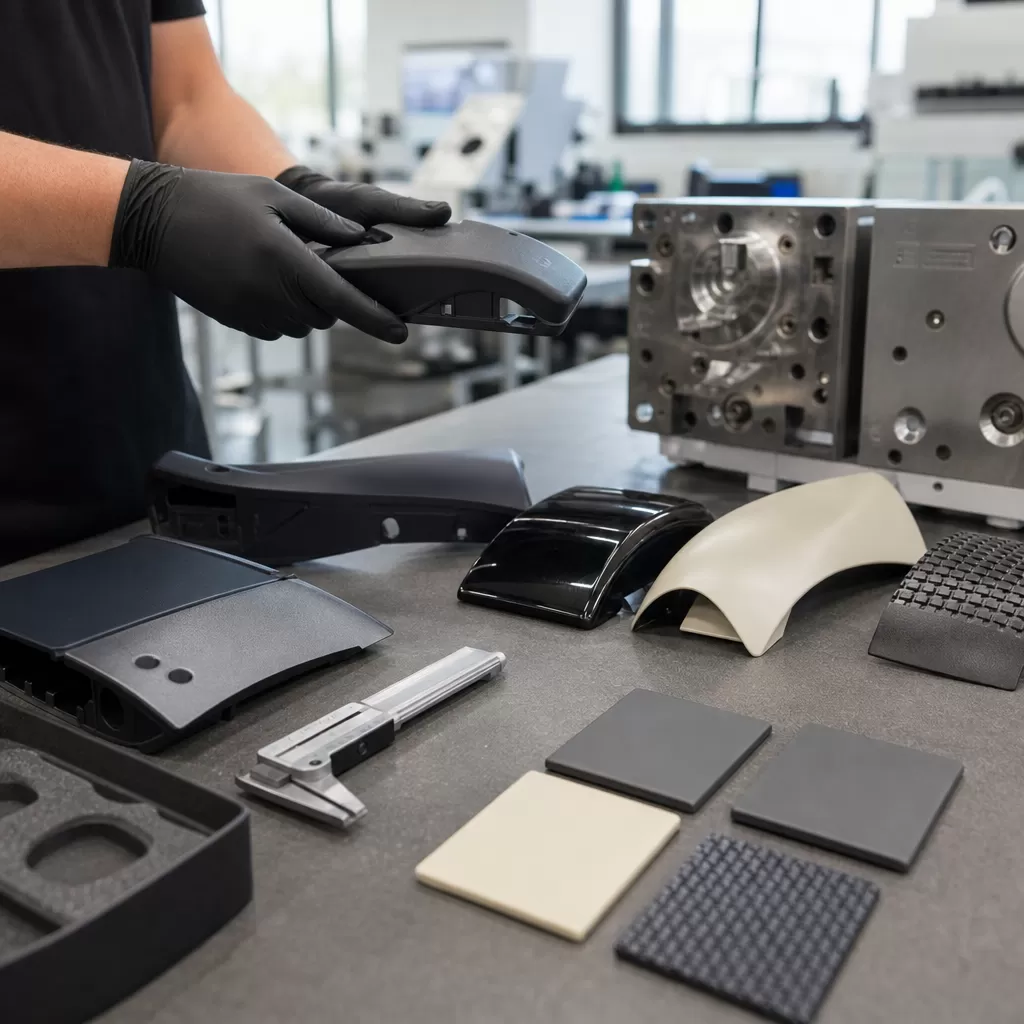
At precisionvast, we know that the look and feel of your low-volume injection molding parts matter just as much as how they work. Whether you need a utility component that hides scratches or a crystal-clear lens for an aerospace display, our quick-turn injection molding process offers a full range of industrial surface finishes.
We apply standard industry finishes directly to our aluminum injection molds and steel tooling inserts, saving you time and keeping your project on budget.
Standard Molded Surface Finishes
- SPI Finish A (Glossy): Achieved using diamond buffing, ideal for high-polish, clear, or mirror-like cosmetic parts.
- SPI Finish B (Semi-Gloss): A fine grit paper finish that offers a smooth, high-quality look with minimal sheen.
- SPI Finish C (Matte): Uses stone polishing to remove machining marks, leaving a clean, untextured matte appearance.
- SPI Finish D (Textured/Sandblasted): Creates a rougher, textured grip using bead blasting, which is perfect for hiding sink marks and fingerprints on hand-held devices.
Advanced Post-Processing Options
For custom plastic molding that requires extra durability or specific aesthetic branding, we offer secondary post-processing operations after the parts leave the tool:
| Post-Processing Option | Primary Benefit | Common Application |
|---|---|---|
| Laser Engraving | High-precision permanent marking | Serialization, logos, and part numbers |
| Pad Printing | Applies crisp, multi-color graphics | Branding, buttons, and UI indicators |
| Ultrasonic Welding | Strong, permanent plastic bonding | Multi-part enclosures and sealed housings |
| Threaded Inserts | Durable, reusable metal threads | Frequently disassembled electronics covers |
Every rapid tooling project undergoes a strict design for manufacturing (DFM) analysis to ensure your chosen finish won’t impact part ejection or warp the final geometry. From prototype injection molding to final short-run injection molding production, we deliver the exact look, texture, and function your application demands.
Essential Design for Manufacturing (DFM) Guidelines
Getting your parts ready for rapid injection molding means optimizing your 3D models early. A proper design for manufacturing (DFM) analysis helps prevent common molding flaws like sink marks, warping, and voids, ensuring your prototype tooling transitions smoothly into production.
Maintaining Uniform Wall Thickness
Keeping your wall thickness consistent is the golden rule of quick-turn injection molding. When walls are uneven, the plastic cools at different rates, leading to part distortion and cosmetic issues.
- Target Thickness: Maintain a wall thickness between 0.040″ (1mm) and 0.130″ (3.3mm) for most thermoplastic injection molding materials.
- Gradual Transitions: If your design requires varying thicknesses, use a chamfer or fillet with a 3-to-1 profile transition to minimize stress concentrations.
- Cooling Efficiency: Consistent walls allow the aluminum injection molds to dissipate heat evenly, shortening cycle times and lowering your costs.
Implementing Proper Draft Angles
Draft angles are slopes engineered into the vertical faces of your part. Without a proper draft, the part will stick to the mold core during ejection, damaging both the surface finish and the tool itself.
- Core and Cavity: Apply a minimum draft angle of 0.5° to 1° on all vertical walls parallel to the mold opening direction.
- Texture Requirements: If your on-demand plastic parts require a heavy industrial surface texture, increase the draft angle to 3° to 5° to prevent scuffing.
- Deep Pockets: Deeper draw areas require larger draft angles to reduce the vacuum force created during part ejection.
Radii, Ribs, and Undercuts
Smart geometry choices prevent structural failures and keep your prototype injection molding projects within budget. Similar to how high-pressure aluminum die casting relies on radius corners to reduce stress under immense force, plastic injection molding prototypes require specific structural features to handle the stress of the molding cycle.
- Radii (Corners): Avoid sharp corners. Internal radii should be at least 0.5 times the wall thickness, and external radii should be 1.5 times the wall thickness to maintain uniform flow.
- Ribs: Use ribs to add structural strength instead of making walls thicker. Design ribs at 40% to 60% of the nominal wall thickness to eliminate sink marks on the cosmetic face.
- Undercuts: Minimize external and internal undercuts. While we utilize custom injection mold inserts and hand-loaded cores to handle complex geometries, eliminating undercuts altogether simplifies the tool design and accelerates your production turnaround.
Comparison: Rapid Injection Molding vs. Traditional Molding vs. Additive Manufacturing
Choosing the right production method comes down to your project’s volume, timeline, and budget. While 3D printing handles early concepts and traditional tooling manages massive production runs, rapid injection molding serves as the ultimate bridge. It delivers real, on-demand plastic parts faster than traditional methods and with better material properties than 3D printing.
The table below breaks down how these manufacturing methods stack up against each other:
| Feature | Rapid Injection Molding | Traditional Molding | Additive Manufacturing (3D Printing) |
|---|---|---|---|
| Primary Tooling Material | Aluminum injection molds / Soft steel | Hardened steel | None (Toolless) |
| Typical Lead Time | 1 to 3 weeks | 6 to 12 weeks | 1 to 3 days |
| Production Volume | 25 to 10,000+ parts | 10,000 to 1,000,000+ parts | 1 to 100 parts |
| Initial Tooling Cost | Moderate (Low-cost prototype tooling) | Very High | None |
| Part Cost (Per Piece) | Low | Lowest (At high volumes) | High |
| Material Properties | Production-grade thermoplastics | Production-grade thermoplastics | Limited photo-polymers or filaments |
| Design Flexibility | Moderate (Requires DFM analysis) | Low (Hard to modify steel molds) | Very High (Complex geometries) |
Making the Right Choice for Your Project
- Choose Additive Manufacturing when you need a handful of plastic injection molding prototypes within days to check form and fit, without worrying about structural strength.
- Choose Rapid Injection Molding if you need functional prototype injection molding, short-run injection molding for market testing, or low-volume injection molding to scale up without massive upfront tooling investments.
- Choose Traditional Injection Molding only when your design is 100% locked in and you are ready to commit to high-volume mass production.
For projects moving from design to the physical market, bridge tooling via rapid molding eliminates the long wait times of traditional manufacturing while using the exact end-use materials your customers expect. If your project requires high-durability metal components instead of plastic, exploring alternative options like what is die casting process types advantages uses can help you select the right process for your broader hardware manufacturing needs.
Industry Applications Served by precisionvast
At precisionvast, we deliver high-quality rapid injection molding solutions across a wide range of demanding US industries. Our advanced low-volume injection molding and bridge tooling capabilities ensure your on-demand plastic parts are manufactured to exact specifications, bridging the gap between design and full-scale market launch.
Automotive & Aerospace
We manufacture durable plastic injection molding prototypes and functional end-use components that withstand extreme environments. From dashboard components and interior trim to complex under-the-hood brackets, our quick-turn injection molding process utilizes high-performance top-6 high-temperature alloys for maximum durability in our tooling to ensure flawless part geometry and material integrity.
Medical & Healthcare Devices
The medical industry relies on precisionvast for medical-grade thermoplastic injection molding. We produce enclosures, surgical instrument handles, and diagnostic equipment components that meet strict regulatory standards. Our prototype tooling allows medical device designers to perform rigorous functional testing and verification before committing to expensive mass-production molds.
Consumer Electronics & Goods
Getting consumer products to market ahead of the competition is vital. We utilize aluminum injection molds and interchangeable injection mold inserts to create sleek, high-finish enclosures, wearable tech housings, and custom internal brackets. Our rapid design for manufacturing (DFM) analysis catches molding issues early, saving you time and capital.
Industrial Machinery & Equipment
We support the industrial sector with rugged, wear-resistant components built for heavy daily use. Whether you need specialized gears, custom seals, or robust structural housings, our short-run injection molding services deliver the reliability required for heavy-duty industrial applications, including specialized components used in food machinery.
Rigorous Quality Assurance and Inspection Standards for Rapid Injection Molding
At precisionvast, we do not compromise on part quality just because a project is on a fast timeline. Our low-volume injection molding and rapid tooling processes are backed by strict quality control protocols to ensure every single part meets your exact engineering specifications. From the moment the raw material arrives at our facility to the final shipment of your on-demand plastic parts, we track, measure, and validate every step.
Our Standard Inspection Protocols
To guarantee dimensional accuracy and structural integrity, our QA team utilizes advanced inspection equipment for every rapid injection molding run:
- Incoming Material Verification: We use spectrometer testing to confirm the grade and purity of all resins, fillers, and colorants before production begins.
- First Article Inspection (FAI): Before launching full production, we inspect the initial parts out of the mold using automated coordinate measuring machines (CMM) and optical comparators.
- In-Process Monitoring: Real-time sensor tracking monitors injection pressure, barrel temperature, and cycle times to maintain part-to-part consistency.
- Dimensional & Cosmetic Checks: Every batch undergoes a strict visual inspection for surface defects alongside a final dimensional check against your original 3D CAD models.
Comprehensive Quality Documentation
We believe in complete transparency and data-driven validation. Depending on your project requirements and industry regulations, we provide full quality documentation packages:
| Documentation Type | What It Includes | Best For |
|---|---|---|
| Certificate of Compliance (CoC) | Verifies materials and processes meet specifications. | Standard commercial parts |
| Material Test Reports | Actual chemical and physical property data from the resin manufacturer. | Aerospace & medical devices |
| Dimensional Inspection Reports | Detailed measurement data comparing actual part dimensions to the CAD print. | High-precision engineering |
Whether you need prototype injection molding for functional testing or a short-run injection molding production batch, our quality framework ensures your parts arrive right the first time. If your project also requires custom metal components alongside your plastic parts, you can rely on our expertise in delivering high-quality aluminum castings for structural use to ensure seamless assembly and matching industrial standards.
Frequently Asked Questions About Rapid Injection Molding
What is the typical lead time for rapid injection molding?
We deliver custom plastic parts in as fast as 2 to 5 business days for simple geometries. For more complex projects requiring detailed bridge tooling or specific industrial finishes, standard turnaround typically ranges from 1 to 2 weeks. Our streamlined production process ensures you bypass the months-long waiting periods associated with traditional manufacturing.
How do aluminum molds compare to steel molds for low-volume runs?
Aluminum injection molds are the go-to choice for low-volume injection molding due to their cost-effectiveness and speed. Aluminum dissipates heat much faster than steel, which shortens cycle times and accelerates production. While steel molds are built to survive millions of cycles, our high-grade aluminum soft tooling easily handles up to 10,000+ runs, making it the ideal choice for plastic injection molding prototypes and market testing.
What is the minimum and maximum order quantity?
We offer true on-demand plastic parts with no strict minimum order quantity (MOQ)—we can spin up production for as few as 10 to 100 prototype injection molding pieces. On the higher end, our short-run injection molding capabilities efficiently scale up to 10,000+ parts per run before full-scale mass production is even required.
Can I use my own production-grade resin for the molding process?
Yes. Unlike standard 3D printing or basic prototyping limitations, our thermoplastic injection molding process supports your specific, production-grade materials. Whether your project demands standard commercial plastics or specialized performance resins, we can utilize your supplied material or source it directly to guarantee that your parts meet precise functional requirements. For insights on handling material properties in demanding applications, check out our guide on high-temperature alloys to see how we approach complex material engineering.

 German
  English