

PrecisionVast cast and die tooling for custom die casting molds with DFM high grade tool steels and long life for aluminum and zinc parts.
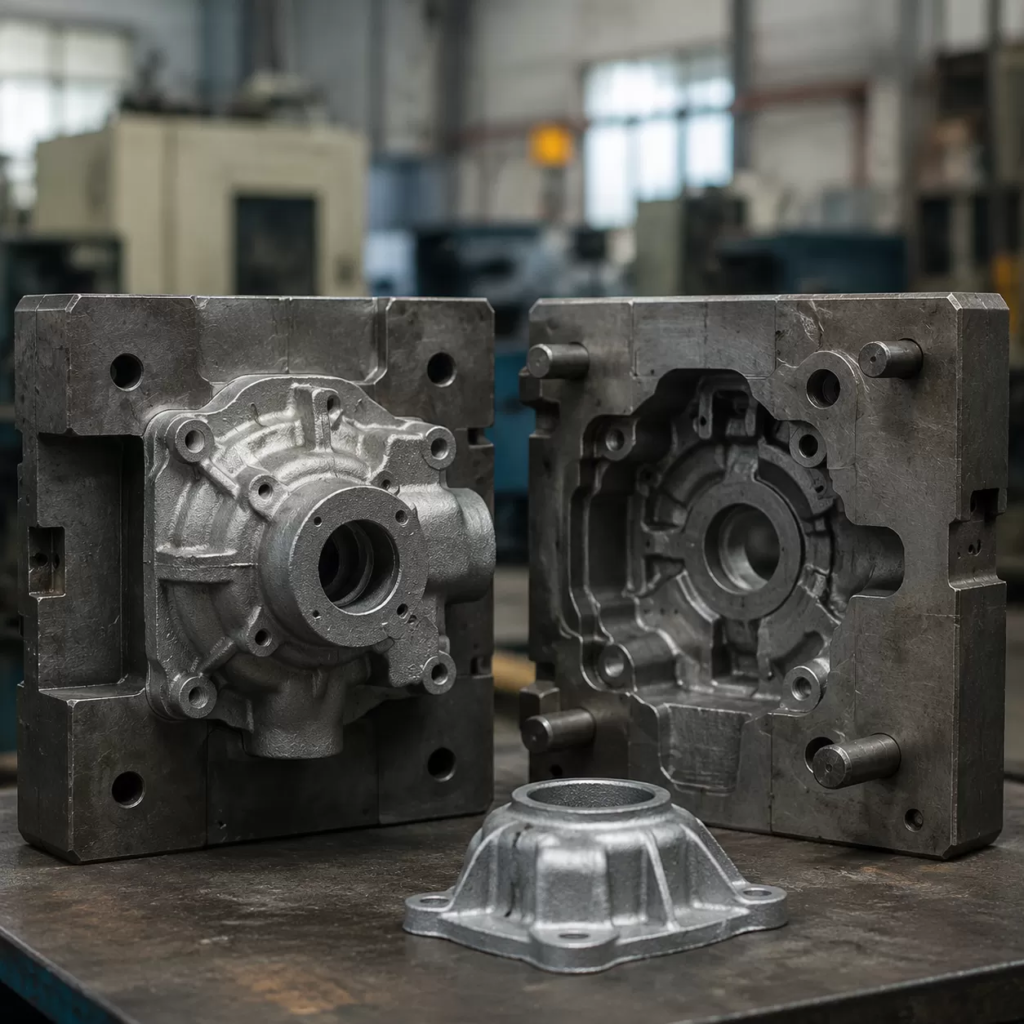
The Foundation of High-Volume Metal Forming
When you need to manufacture thousands of identical metal parts with flawless consistency, your success hinges entirely on the quality of your cast and die setup. At PrecisionVast, we design and build custom-engineered, high-pressure die casting (HPDC) molds that serve as the backbone of your production line. Every tool we make is a heavy-duty, two-part hardened steel mold system consisting of a cover die and an ejector die half.
The cover die remains securely bolted to the stationary platen of the casting machine, while the ejector die moves to open the mold and safely push out the finished component.
Controlling Quality from Liquid to Solid
Our custom die casting tooling does far more than just hold the shape of your molten metal. It is an active thermal management system engineered to control the entire manufacturing environment.
- Cooling Cycle Management: Built-in internal cooling lines precisely regulate the dissipation of heat, ensuring rapid solidification and faster cycle times.
- Porosity Control: By balancing thermal loads and managing metal flow, our tool designs minimize internal air pockets (structural porosity), giving you stronger parts.
- Pristine Surface Finishes: Mirror-smooth CNC machined mold surfaces eliminate cosmetic defects right out of the tool, cutting down your post-processing costs.
Built for Extreme High-Pressure Environments
Die casting is a brutal process. To withstand thousands of repetitive cycles of molten alloy slammed into the cavities under immense pressure, we build our pressure die casting dies to a higher standard. We optimize internal geometry, use premium tool steels, and engineer our cast and die systems to resist thermal cracking, erosion, and deflection under high clamping forces. You get a reliable tool that runs flawlessly, shot after shot, maximizing your uptime in the competitive US manufacturing market.
Industrial Tooling Classifications & Design Capabilities
We design and engineer our cast and die systems to match your specific production volumes, part complexities, and budget requirements. By utilizing distinct tooling classifications, we optimize manufacturing efficiency for the North American market, ensuring you get the right tool for the job.
Single-Cavity Molds
Optimized for large components and complex internal geometries, single-cavity molds are the go-to choice for medium production runs. This configuration allows for dedicated thermal management and precise pressure distribution, ensuring heavy-duty parts meet strict dimensional standards without warping.
Multi-Cavity & Combination Dies
Engineered for maximum throughput, our multi-cavity die casting molds balance thermal loads across the tool to produce multiple identical or complementary parts per cycle. This setup significantly lowers per-part costs and accelerates delivery times for high-volume supply chains.
Unit Dies & Interchangeable Inserts
For projects requiring rapid product iterations or family parts, we utilize cost-effective unit dies featuring replaceable rapid prototyping mold inserts. Instead of building an entirely new tool from scratch, you only replace the cavity blocks, saving your team substantial upfront tooling costs and reducing lead times.
Custom Trim Dies
Post-cast accuracy is just as critical as the casting cycle itself. Our custom trim dies function as automated flash, runner, and gating removal tools. They guarantee pristine post-cast aesthetics and strict dimensional accuracy before your components ever leave our facility.
Tooling Classification Quick Reference
| Tooling Type | Ideal Production Volume | Key Benefit | Best Applied To |
|---|---|---|---|
| Single-Cavity | Medium | Maximum control over complex geometries | Large housings, structural brackets |
| Multi-Cavity | High | Lowest per-part cost and high throughput | Small to medium identical components |
| Unit Dies | Low to Medium | Low upfront cost and rapid modifications | Prototype runs, evolving part designs |
| Trim Dies | Post-Casting | Automated, highly precise flash removal | All high-volume production lines |
Optimizing Cast and Die Lifespan Before the First Cut
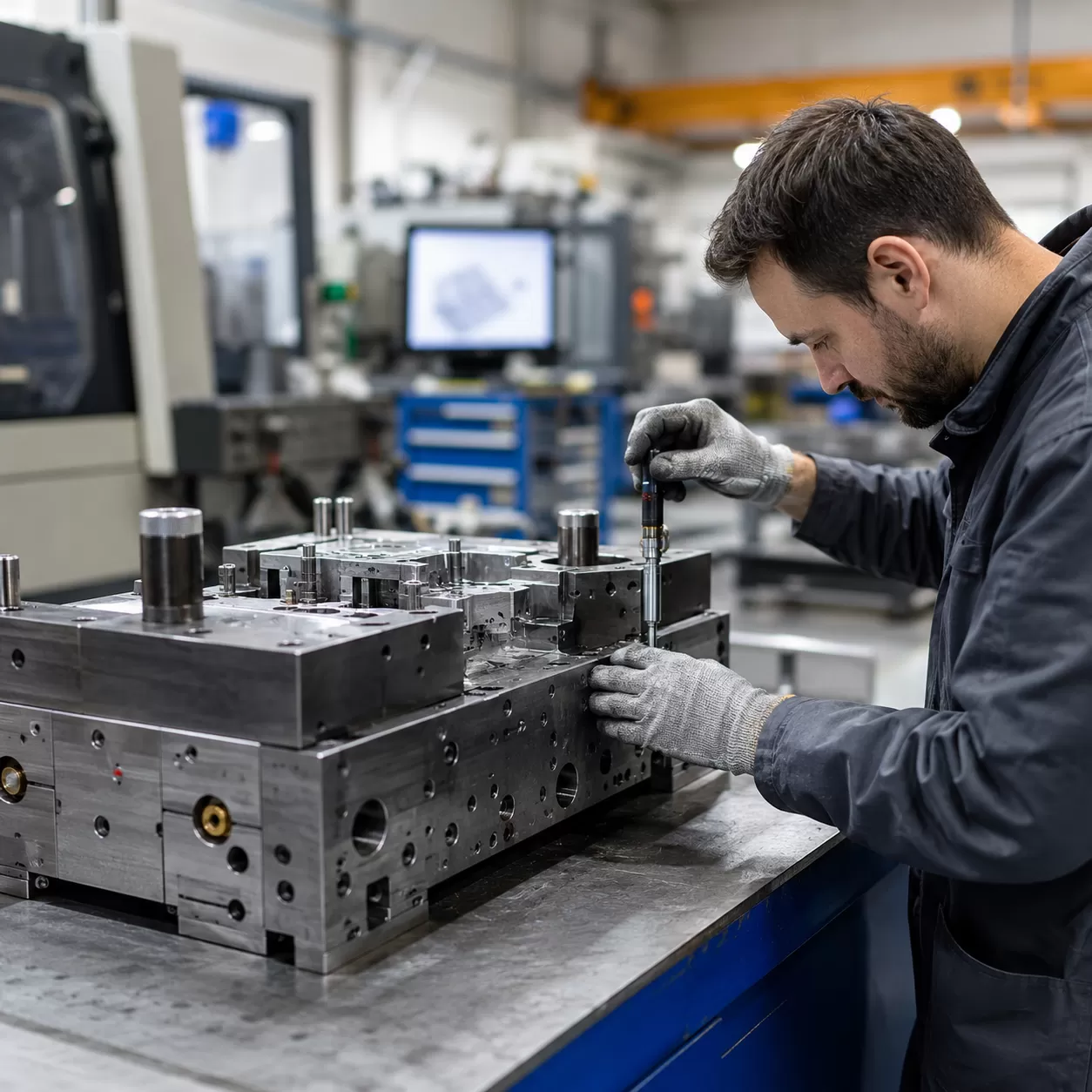
We don’t believe in guesswork. Before our team cuts a single piece of steel, we run your custom die cast molds through a rigorous digital stress test. By addressing potential failure points during the design phase, we lock in dimensional accuracy and maximize your tooling investment.
Our front-end engineering focus centers on three critical pillars:
- Mold Flow & Thermal Analysis: We utilize advanced mold flow simulation analysis to predict exactly how molten metal fills the cavity. This allows us to pinpoint and eliminate gate erosion, balancing thermal loads to ensure optimal cooling efficiency.
- Strategic Feature Design: We fine-tune draft angles and radius fillets to guarantee smooth component ejection. This reduces structural stress on both the part and the tool, preventing premature cracking.
- Precision Tolerance Allocation: Our engineers design tight tolerance zones that prevent flash formation. This proactive approach significantly extends the production life of your pressure die casting dies.
By integrating smart Design for Manufacturability (DFM) in tooling, we catch defects on screen so they never show up on your factory floor. For applications demanding extreme reliability under intense thermal stress, understanding how to assess thermal stability of heat-resistant alloys is essential to choosing the right foundational engineering approach. We ensure your tooling is optimized for the long haul from day one.
High-Grade Tool Steels for Extreme Cast and Die Thermal Cycles
We engineer our custom die cast molds to endure brutal thermal environments. Choosing the right metal for each part of the tooling prevents premature failure and keeps your production line moving.
Premium Insert Materials
The core and cavity inserts bear the brunt of the heat. We select specific tool steel H13 mold inserts and premium alternatives based on your target alloy:
- Standard H13: The industry workhorse, delivering excellent toughness and thermal fatigue resistance for standard aluminum runs.
- Premium Dievar: Engineered for high-demand applications, providing superior resistance to heat checking (thermal cracking) and cracking under pressure.
- DIN 1.2367: A specialized tool steel tailored for extreme casting temperatures up to 1,200°F for aluminum, ensuring long-term dimensional stability.
Robust Holder Blocks
To support these high-performance inserts, we utilize robust 4140 pre-hardened steel for our holder blocks. This structural backbone offers maximum deflection resistance, keeping the cover die and ejector die halves perfectly aligned under immense clamping force.
Heat Treatment & Advanced Surface Coatings
Raw steel isn’t enough to survive high-pressure die casting (HPDC) molds. We apply precise thermal and surface treatments to maximize tool longevity:
- Vacuum Quenching: Achieves uniform hardness throughout the tool steel without distorting critical dimensions.
- Nitriding: Creates a hard, wear-resistant outer skin that prevents erosion from high-velocity molten metal.
- Multi-Layer Coatings: Specialized barriers designed to mitigate soldering (molten metal sticking to the die) and thermal fatigue.
Custom Cast and Die Solutions Tailored to Your Specific Alloy
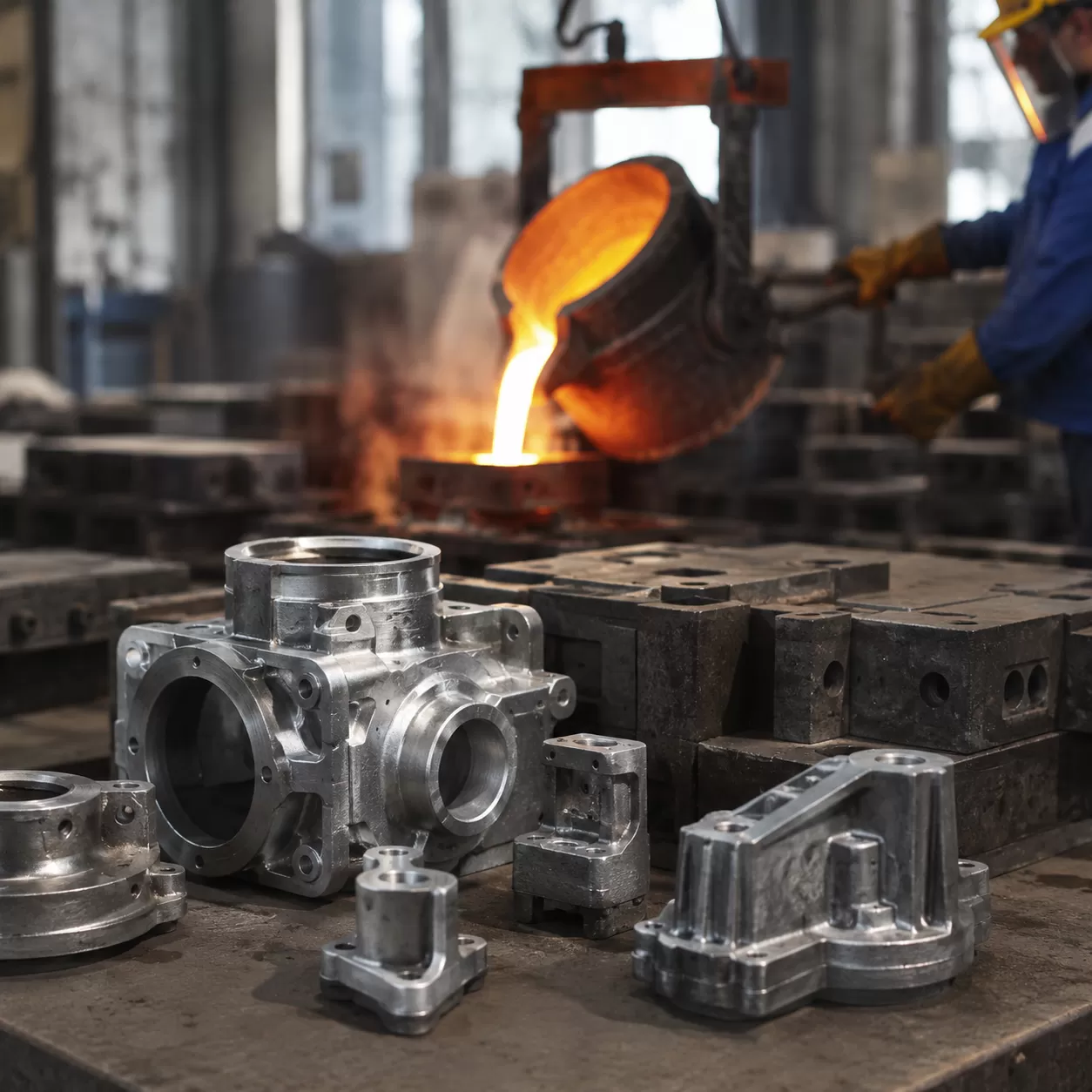
At PrecisionVast, we match your exact material needs with custom engineered cast and die tooling built to handle the unique thermal and physical demands of your chosen metal. Choosing the right alloy is only half the battle; your tooling must be tough enough to handle the pressure.
We specialize in high-performance tooling for the three most demanded manufacturing alloys in the United States market:
- Aluminum Casting Dies: Engineered specifically to manage high melting points and aggressive abrasive wear. We design these heavy-duty tools to process popular grades like A380, A360, and A413, ensuring optimal thermal dissipation and structural integrity over long production runs.
- Zinc Casting Dies: Optimized for high-fluidity, thin-walled, and highly complex component geometries. Because zinc melts at a lower temperature, these dies leverage rapid cycle times to maximize your throughput and deliver pristine, net-shape surface finishes.
- Magnesium Casting Dies: Built for advanced lightweight structural parts. These tools require highly precise thermal management systems to safely control the unique solidification properties of magnesium while maintaining extreme dimensional accuracy.
Different metals place different stresses on a mold. For instance, while aluminum demands extreme heat resistance, certain high-stress structural components are better served by looking into how different steel grades handle raw stress, such as understanding what carbon steel is used for casting when constructing robust base components. We customize the core inserts, gating systems, and internal cooling lines for your specific alloy to prevent premature tool failure and keep your supply chain moving without interruption.
Serving Mission-Critical Global Supply Chains
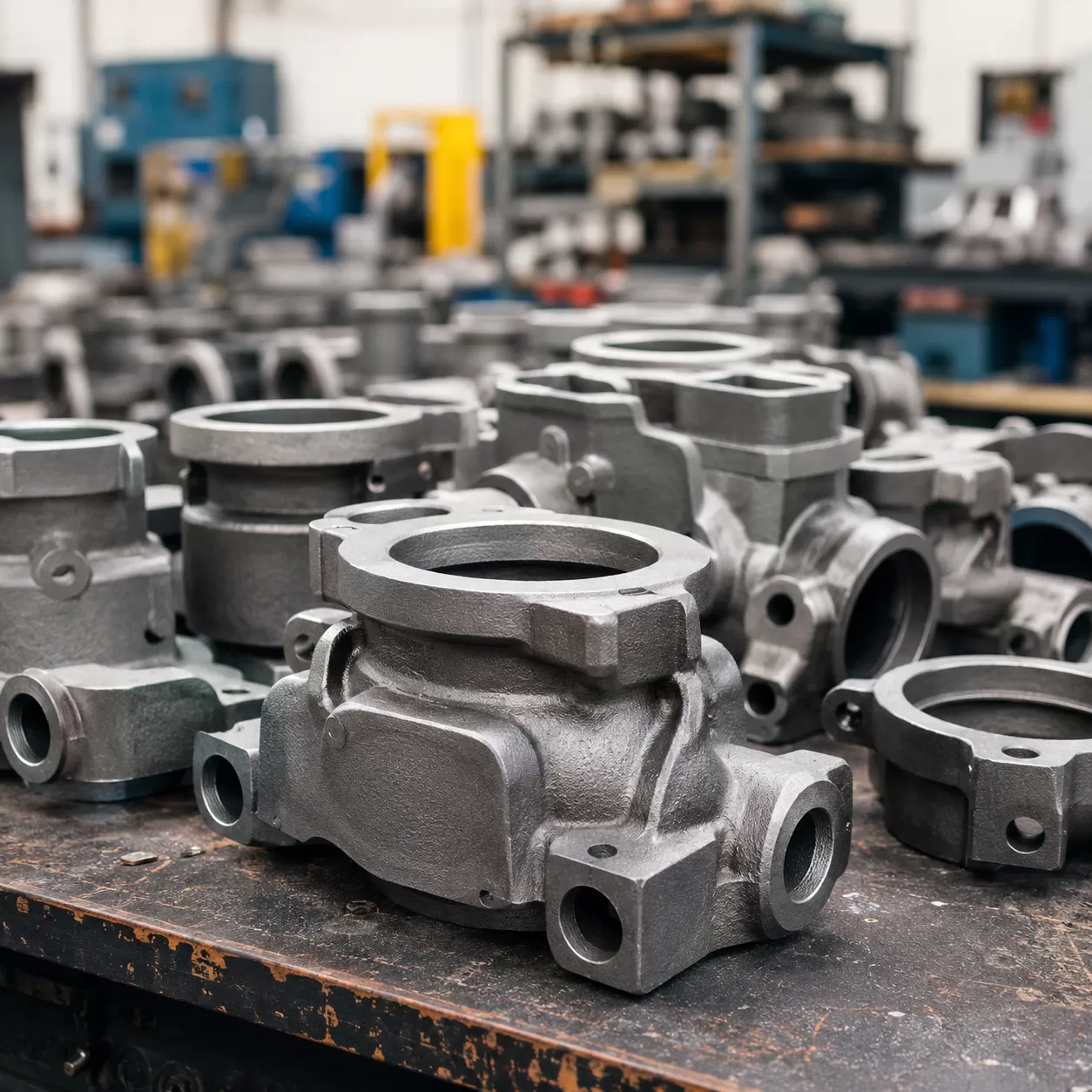
At PrecisionVast, we engineer custom die cast molds that anchor the supply chains of the world’s most demanding industries. When failure is not an option, tier-one manufacturers rely on our high-pressure die casting (HPDC) molds to deliver relentless repeatability and structural integrity. We understand the unique pressures of the US manufacturing sector, where tight deadlines and zero-tolerance quality control are the standard.
Our cast and die solutions are purpose-built for high-performance applications across key sectors:
- Automotive: We produce high-durability tooling for powertrain housings, structural brackets, and transmission cases that withstand intense mechanical stress.
- Electronics & Telecom: Our multi-cavity die casting molds deliver the precise, thin-walled geometries required for high-density heat sinks, connectors, and EMI/RFI shielded enclosures.
- Industrial Equipment: We build robust tooling for heavy-duty pump bodies, gearbox casings, and pneumatic tool components designed for extended service lives.
- Aerospace & Defense: We specialize in tight-tolerance tooling for lightweight, flight-grade brackets and structural fittings that meet strict regulatory standards.
Modern manufacturing demands an optimized die casting process to keep production lines moving without unexpected downtime. By integrating advanced thermal management directly into our tool designs, we ensure our international and domestic partners receive parts that drop right into their assembly lines with total dimensional consistency.
Zero-Defect Standards & Lifetime Cast and Die Maintenance
We don’t leave quality to chance. To ensure every cast and die system performs flawlessly, we implement rigorous Coordinate Measuring Machine (CMM) dimensional verification alongside non-destructive testing (NDT). This strict process guarantees perfect core alignment and catches internal microscopic flaws before production ever begins.
Our commitment to your bottom line continues long after the initial build. We back our manufacturing with the PrecisionVast “Like-New” tooling guarantee, which absorbs routine preventative maintenance directly into your production lifecycle costs.
Our Comprehensive Tooling Protection Plan
- Routine Preventative Maintenance: Regular cleaning, lubrication, and stress-relieving cycles to prevent thermal fatigue.
- Precision Gate Repair: Restoring high-wear gating areas to maintain optimal metal flow and eliminate flash.
- Core Replacement Programs: Pre-planned fabrication of high-wear inserts to minimize unexpected downtime.
- Advanced Quality Checks: Continuous monitoring to ensure our aluminum die casting services consistently hit your exact dimensional tolerances.
Our Cast and Die Tooling Capabilities Matrix
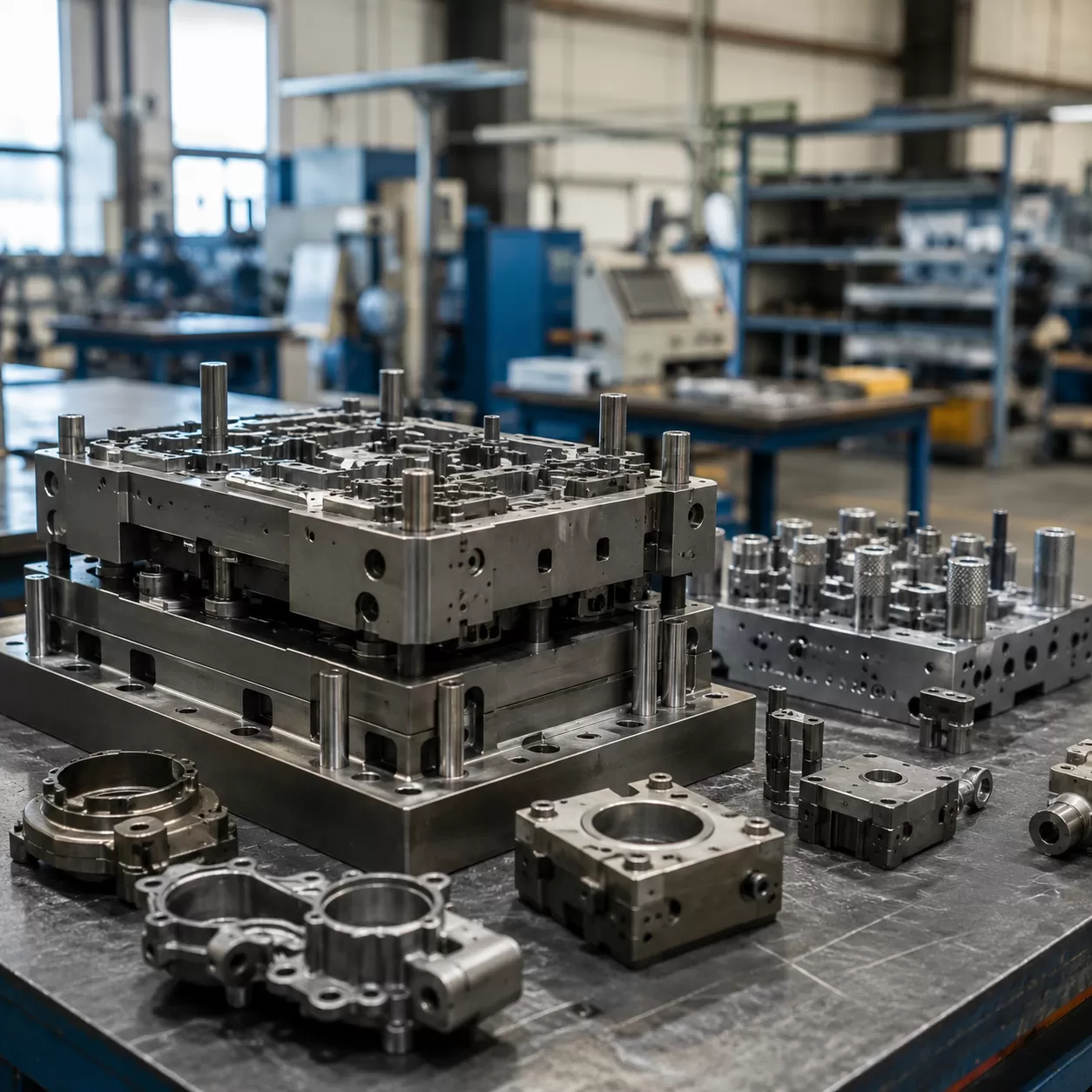
We engineer every cast and die system to match your exact production volumes, machine specifications, and go-to-market timelines. Whether you need rapid prototyping mold inserts or massive multi-cavity production tooling, our facilities handle the entire spectrum.
The breakdown below outlines our core technical capacities for high-pressure die casting (HPDC) molds:
| Capability Metric | Specification & Limits |
|---|---|
| Maximum Machine Tonnage | Compatible with presses up to 2,000 tons |
| Maximum Mold Weight | Up to 25 tons |
| Achievable Part Tolerances | Precision CNC machined molds yielding standard tolerances of $pm 0.0051text{ mm}$ ($pm 0.002text{ inches}$) |
| Expected Die Life (Aluminum) | Up to 100,000+ shots (utilizing premium tool steel H13 mold inserts) |
| Expected Die Life (Zinc) | Up to 500,000+ shots |
| Prototyping Lead Time | 2 to 4 weeks (including full Design for Manufacturability (DFM) in tooling) |
| Production Tooling Lead Time | 6 to 10 weeks (depending on structural complexity and cavity count) |
We optimize our tooling setups to balance thermal loads and minimize cycle times. For a deeper look at how we design these systems for specific metals, see our breakdown of what aluminum casting molds are and how they are made to ensure long-term structural integrity. All of our custom die cast molds are built to withstand heavy domestic production schedules while eliminating post-cast dimensional variations.
Frequently Asked Questions About Cast and Die Tooling
What is the difference between a hot-chamber and a cold-chamber die casting mold?
The main difference lies in how the molten metal is introduced into the cast and die system. In a hot-chamber mold, the injection mechanism is submerged directly in the molten metal bath, which allows for incredibly fast cycle times. This setup is ideal for lower-melting-point alloys like zinc.
Conversely, a cold-chamber mold receives molten metal ladled from an external furnace for every single shot. We utilize cold-chamber systems for high-melting-point alloys like aluminum to prevent the injection components from melting or degrading prematurely.
What causes a die-casting tool to wear out, and how do we prevent it?
Die-casting tools face extreme thermal shock, abrasive alloy flow, and immense pressure. Over time, this leads to common industry headaches like heat checking (thermal fatigue cracks), soldering (metal sticking to the mold), and gate erosion.
At PrecisionVast, we actively fight this wear right from the start. We use premium insert materials like Dievar and H13 tool steel, paired with advanced vacuum quenching and multi-layer surface coatings. Our strict routine maintenance and gate repair protocols keep your tooling running efficiently without unexpected production drops.
Can existing tooling be modified, or do I need to buy a completely new die?
You do not always need a brand-new die. If you are introducing minor design updates—such as adding a rib, changing a hole diameter, or modifying a logo—we can often precision-machine or swap out interchangeable inserts within your existing holder blocks. However, if the overall part dimensions, gating system layout, or structural load requirements change completely, investing in new custom die cast molds is the safest path to ensure structural integrity and prevent flashing.
How do I choose between aluminum and zinc for my custom die?
Your choice depends on your part’s final application, weight targets, and production volume:
- Choose Aluminum: If your priority is low weight, high thermal conductivity, and structural strength for high-temperature environments. It is a staple for automotive and aerospace components.
- Choose Zinc: If your design features ultra-thin walls, complex cosmetic details, or requires strict tight tolerances. Zinc also flows easily at lower temperatures, which dramatically extends your expected die life to over 500,000 shots.
 German
  English