

Explore aluminum anodizing colors with PrecisionVast Type II and Type III finishes custom matching for A356 AD12 6061 meeting MIL A 8625.
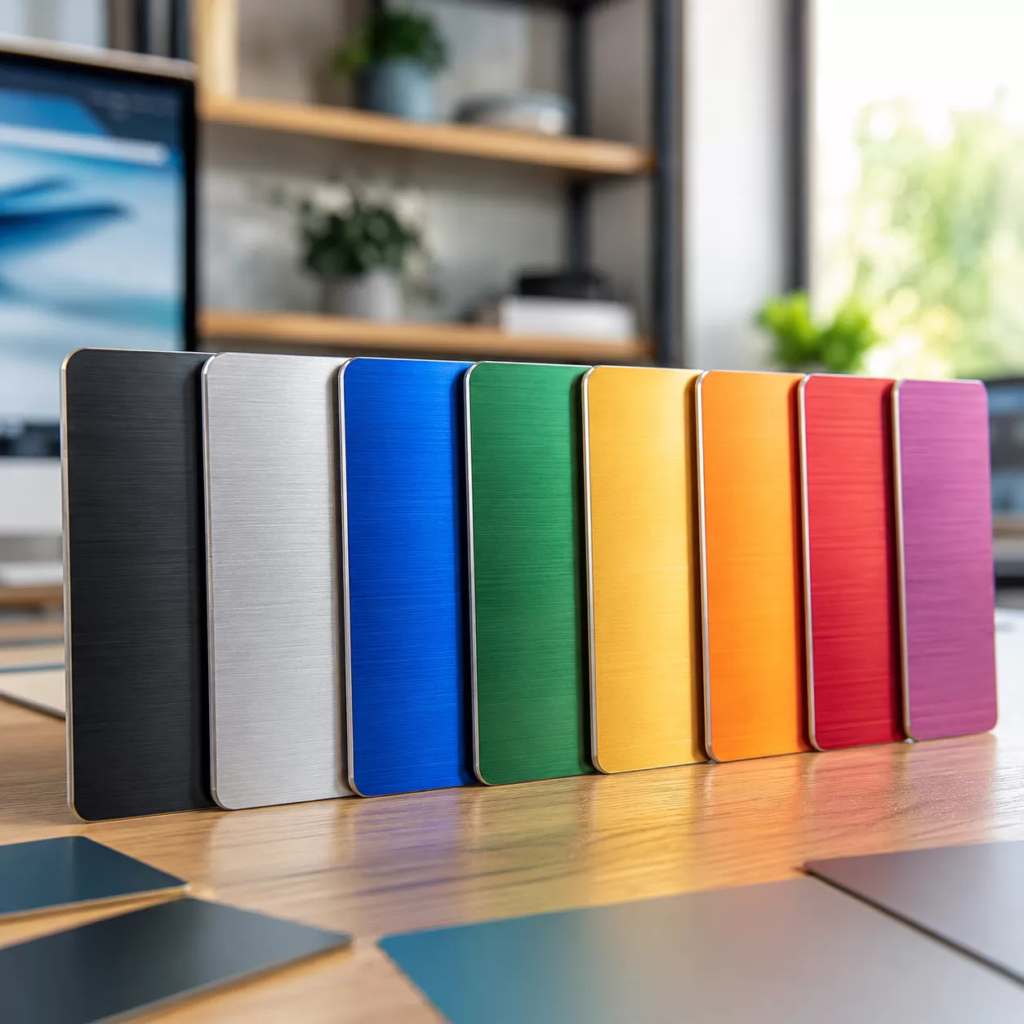
Understanding the Aluminum Anodizing Color Process
Ever wonder how we get those vibrant, durable aluminum anodizing colors to lock into bare metal? It isn’t just paint sprayed on top; it is a microscopic transformation. Anodizing converts the aluminum surface into a porous aluminum oxide layer. This porous structure acts like a sponge, perfectly prepped to absorb specialized pigments before we seal them in permanently.
The Science of Dyeing
The secret to a flawless decorative aluminum finish lies in controlling the microscopic pores of the anodic coating. We submerge the aluminum in an acid bath—typically a sulfuric acid anodizing solution—and run an electrical current through it. This grows a controlled oxide layer filled with billions of nano-pores. When we introduce a UV-stable metal dye, the color flows deep into these pores. We then seal the surface in a hot chemical bath, locking the color underneath a glass-hard protective layer that will never peel or flake.
Type II vs. Type III Anodizing
Choosing the right aluminum surface treatment depends entirely on your project goals. We break down the two primary methods below:
| Feature | Type II Anodizing | Hardcoat Anodize (Type III) |
|---|---|---|
| Primary Use | Vibrant aesthetics & moderate protection | Extreme wear resistance & industrial durability |
| Coating Thickness | Thinner layer, ideal for bright aluminum anodizing colors | Thicker, denser layer for heavy duty use |
| Color Vibrancy | Excellent; yields bright, clear, and custom hues | Limited; naturally darkens the metal, best for dark colors |
Electrolytic Coloring vs. Dip Dyeing
We utilize two primary methods to introduce color to the anodic coating, depending on your specific performance requirements:
- Dip Dyeing: We submerge the porous aluminum directly into organic or inorganic dyes. This method offers an unlimited spectrum of vibrant aluminum anodizing colors, making it the go-to choice for consumer goods and decorative parts.
- Electrolytic Coloring: Also known as two-step anodizing. After the initial oxide layer forms, we use an alternating current to deposit metal salts (like tin or nickel) into the base of the pores. This creates incredibly durable, UV-resistant bronze, champagne, and black tones that excel in harsh outdoor environments.
The Precisionvast Color Spectrum
We offer a massive palette of aluminum anodizing colors designed to give your parts both a striking look and a high-performance finish. Whether you need a standard industrial look or a highly specific aesthetic, our aluminum surface treatment process delivers vibrant, durable results.
Standard Industrial Colors
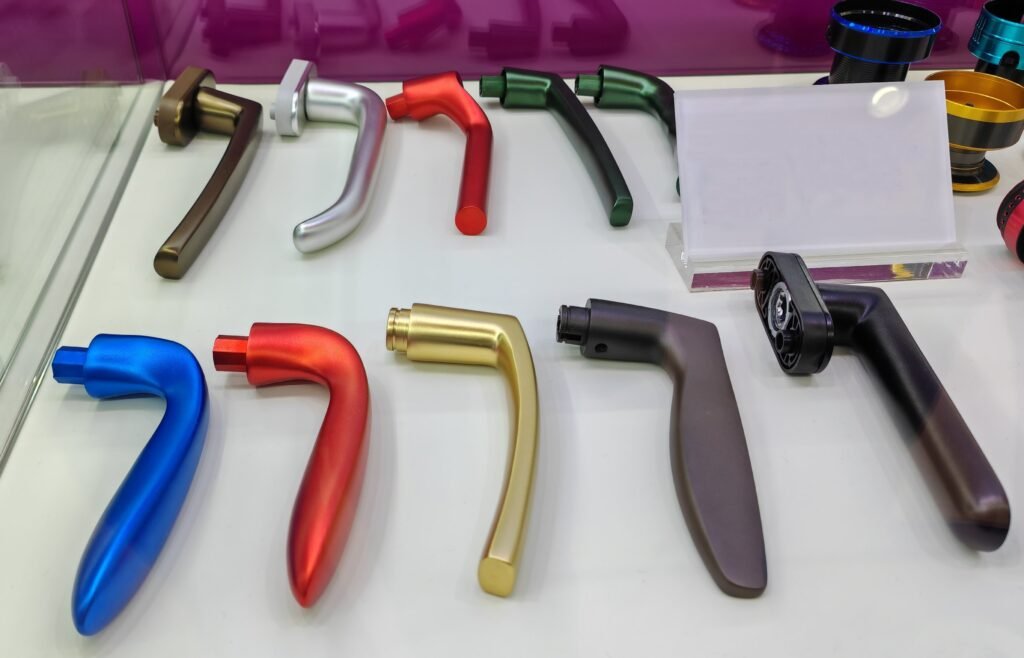
For everyday manufacturing needs, we maintain a robust inventory of standard industrial colors. These are our most requested options, optimized for fast turnaround times and exceptional consistency:
- Deep Black: A classic, high-density black oxide alternative often used to eliminate glare and provide a sleek, premium look.
- Clear Coat Aluminum: Preserves the natural, metallic silver appearance of the metal while adding a rugged protective layer.
- Industrial Reds, Blues, and Golds: Bright, recognizable shades ideal for safety components, color-coding, and brand identification.
Custom Color Matching
If your project requires a unique brand color or a precise aesthetic match, we don’t limit you to a standard chart. Our advanced decorative aluminum finish capabilities allow us to match custom color targets with tight tolerances. By carefully adjusting the immersion time, temperature, and dye concentration, we replicate your specific color profile across high-volume production runs.
Matte vs. Glossy Finishes
The final look of your colored anodic coating depends heavily on the surface preparation before it hits the chemical tanks. We offer two primary finishes to match your design requirements:
| Finish Type | Surface Prep Method | Best For | Visual Appearance |
|---|---|---|---|
| Matte / Satin | Bead blasting or chemical etching | Hiding manufacturing tool marks and reducing reflections | Soft, non-reflective, modern look |
| Glossy / Bright | Mechanical polishing or bright dipping | High-end consumer goods and decorative trim | Vibrant, reflective, jewelry-like shine |
Note on Part Testing: Achieving the perfect color and gloss level requires precise control over the base metal’s condition. For complex projects, we utilize hardness testing and alloy verification to ensure the raw material responds uniformly to our finishing processes.
Alloy Impact on Color Consistency: A356, AD12, and More
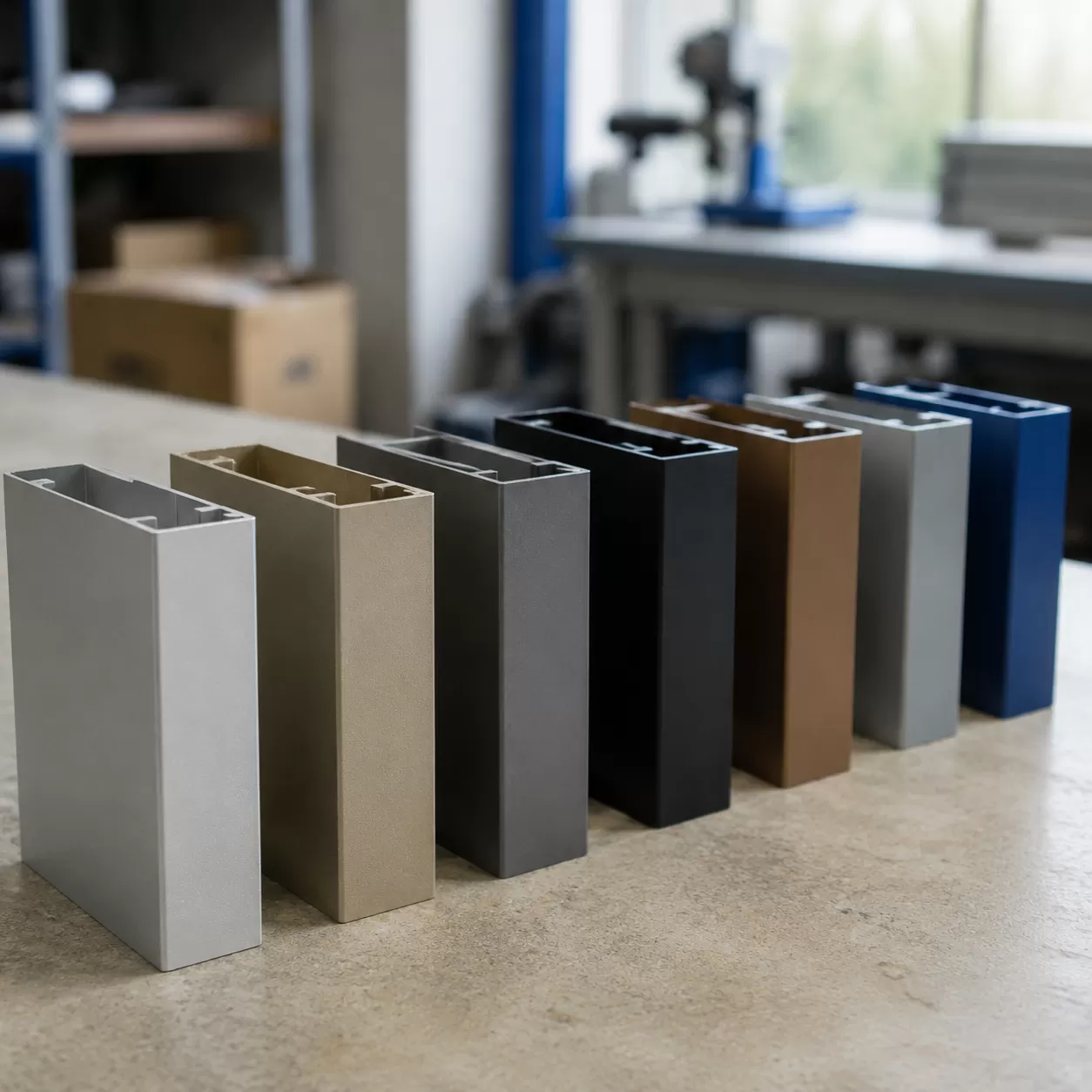
Achieving vibrant, uniform aluminum anodizing colors depends heavily on the specific metallurgy of the part. Different aluminum alloys react uniquely to the sulfuric acid anodizing bath, meaning a color dye that looks flawless on one material might appear dull or mismatched on another. Selecting the right alloy up front is the most critical step for ensuring a high-quality decorative aluminum finish.
Anodizing Cast Aluminum (A356)
Anodizing cast components presents a unique set of challenges compared to working with wrought materials. A356 is a popular choice in our aluminum casting lineup due to its excellent structural strength. However, its high silicon content directly impacts the anodic coating. The silicon does not dissolve during the aluminum surface treatment, which can cause the final aluminum anodizing colors to look slightly gray or matte. To get a clean color match on an A356 casting finish, we utilize specialized desmutting chemistry and precise thickness control to mask the silicon variance and lock in the desired hue.
Die-Casting Challenges (AD12)
AD12 die cast anodizing requires extreme technical precision. Die-casting alloys like AD12 are engineered for fluid mold flow, meaning they carry high concentrations of silicon and iron. These elements often create surface segregation and micro-porosity. When subjected to Type II anodizing, these surface imperfections can cause uneven dye absorption, resulting in a mottled or splotchy appearance. For AD12, we recommend darker aluminum anodizing colors, such as a deep black oxide alternative, which effectively masks underlying structural variations and delivers a premium, uniform look.
Wrought Alloys (6061 and 7075)
When absolute color perfection and batch-to-batch consistency are required, wrought alloys are the industry gold standard.
- 6061 Aluminum: This is the most popular alloy for decorative aluminum finishes. It accepts structural dyes beautifully, resulting in bright, clear, and highly repeatable colors.
- 7075 Aluminum: Known for its high strength, 7075 can also be color anodized. However, its high copper content gives the raw anodic layer a naturally yellowish tint, which slightly alters the final color tone.
| Alloy Type | Silicon/Copper Content | Color Vibrancy Rating | Best Color Choices |
|---|---|---|---|
| 6061 (Wrought) | Very Low | Excellent | All colors (Clear, Blue, Red, Gold) |
| 7075 (Wrought) | High Copper | Good | Darker shades, Reds, Blacks |
| A356 (Cast) | High Silicon | Moderate | Medium to dark tones, Matte finishes |
| AD12 (Die Cast) | Very High Silicon | Challenging | Dark grey, Black oxide alternatives |
Technical Performance & Specifications of Aluminum Anodizing Colors
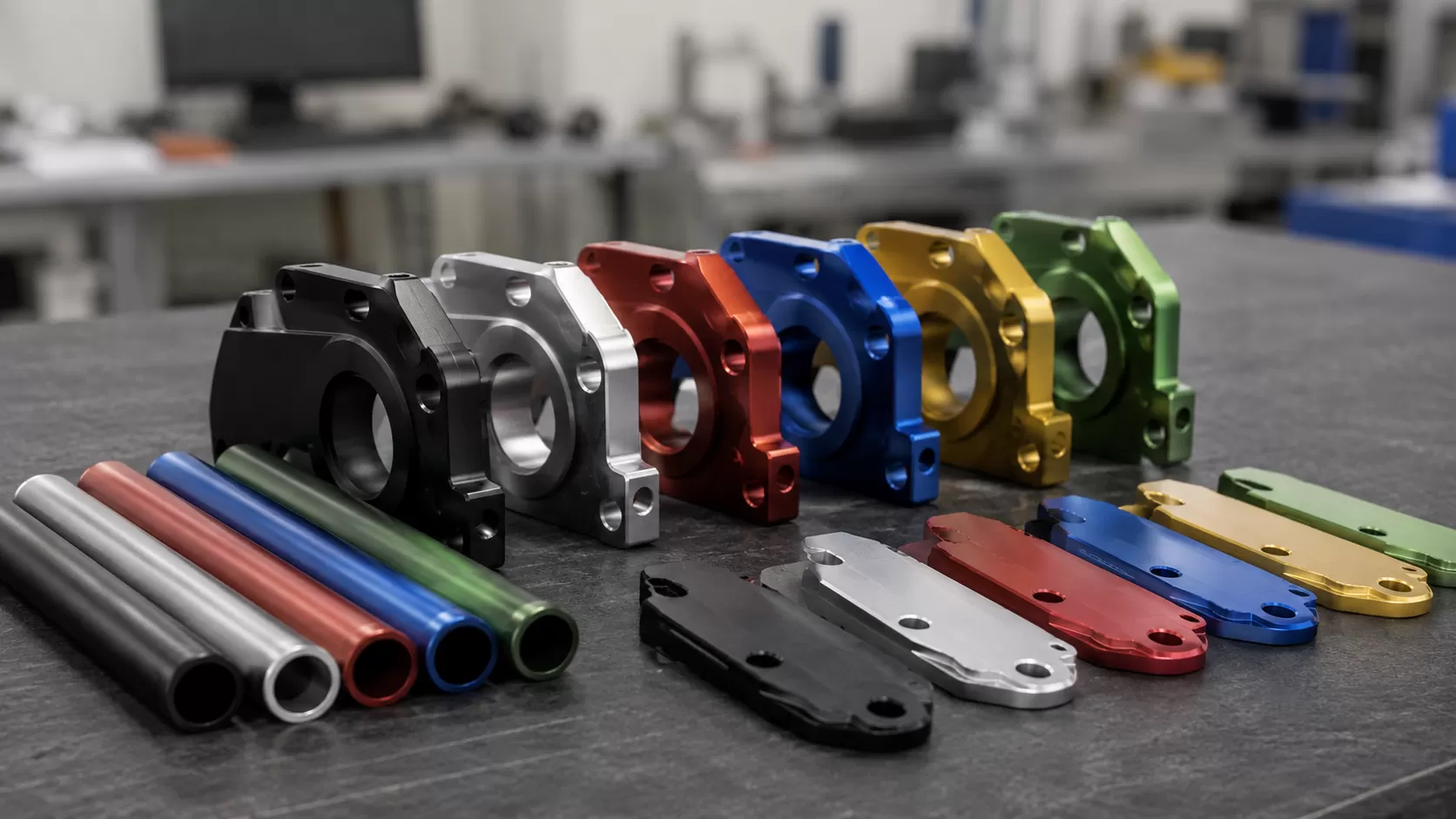
When we apply aluminum anodizing colors to your parts, we aren’t just focusing on aesthetics. The resulting anodic coating serves as a heavy-duty shield engineered to withstand harsh environments. Here is how our color finishing holds up against rigorous mechanical and environmental standards.
Corrosion Resistance
The sulfuric acid anodizing process converts the raw aluminum surface into a highly durable aluminum oxide layer. This layer acts as a powerful barrier against moisture, salt spray, and atmospheric chemical attacks. For cast parts, the structural integrity of the finish depends heavily on the initial casting quality. Choosing the right casting method—such as evaluating die casting vs. gravity casting—ensures a denser surface structure that optimizes the corrosion-resistant finish.
UV Stability
Outdoor performance demands exceptional fade resistance. We utilize advanced organic and inorganic UV-stable metal dyes to lock in aluminum anodizing colors.
- Inorganic Dyes: Exceptional UV resistance, ideal for architectural hardware and rugged outdoor components.
- Organic Dyes: Offers a wider, more vibrant decorative aluminum finish spectrum, perfect for consumer electronics with controlled indoor or moderate outdoor exposure.
Thickness Control
Achieving batch-to-batch color consistency requires tight control over the oxide layer thickness. The depth of the microscopic pores dictates how much dye is absorbed.
| Anodizing Type | Specification Thickness | Best Used For |
|---|---|---|
| Type II Anodizing | 0.3 to 1.0 mil (8 to 25 μm) | Vibrant decorative colors, standard corrosion resistance |
| Hardcoat Anodize (Type III) | 1.0 to 3.0 mil (25 to 75 μm) | Extreme wear resistance, dark/industrial colors |
Compliance
Our metal finishing services meet strict global and industrial regulations, ensuring your products are ready for the US and international markets.
- MIL-A-8625 Standard: Fully compliant for military, aerospace, and defense applications.
- RoHS & REACH Compliant: Our chemical baths and sealing processes are entirely free of heavy metals and hazardous substances.
- Dimensional Predictability: We calculate the exact buildup and penetration of the anodic coating so your final part dimensions match your print precisely.
Why Choose Precisionvast for Aluminum Anodizing Colors?
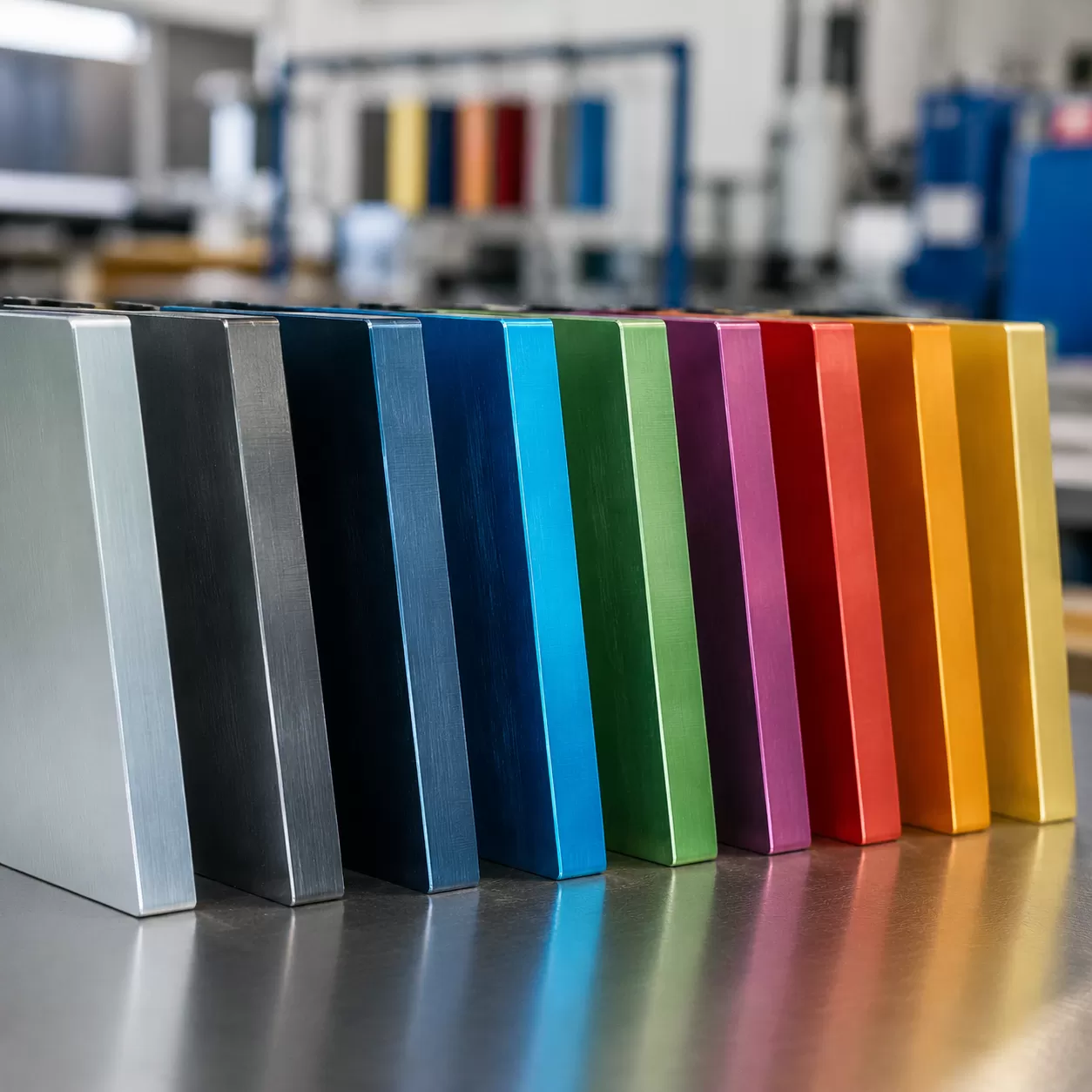
Getting the exact aluminum anodizing colors you need requires a mix of tight chemistry, stable execution, and real-world engineering support. At Precisionvast, we have refined our metal finishing services to deliver vibrant, durable, and uniform finishes that meet strict U.S. industrial standards.
Here is how we ensure your parts come out exactly as specified:
Advanced Chemistry
We utilize premium, UV-stable metal dyes and highly controlled sulfuric acid anodizing baths. By constantly monitoring pH levels, aluminum concentrations, and tank temperatures, we achieve deep dye penetration into the anodic coating. This advanced chemical control prevents color bleeding and guarantees long-lasting vibrancy.
Batch-to-Batch Consistency
Color shifting between production runs is a massive headache for assembly lines. We solve this by automating our dipping cycles and using digital color spectrophotometers to verify the finish. Whether you are running a prototype batch or high-volume production, the color stays uniform.
| Feature | Precisionvast Standard | Typical Industry Standard |
|---|---|---|
| Color Variance ($Delta E$) | Controlled under 1.0 | Often exceeds 2.0+ |
| Process Control | Automated timing & digital monitoring | Manual tracking |
| Sealing Quality | Dual-stage hydrothermal sealing | Single cold seal |
Expert Consultation
Not every aluminum alloy accepts color the same way. Our team works directly with your engineers to select the right material and finishing spec—such as Type II Anodizing for bright decorative looks or Hardcoat anodize (Type III) for rugged functionality. We analyze your part geometry beforehand to prevent uneven dye distribution and nesting issues.
Industry Applications for Aluminum Anodizing Colors
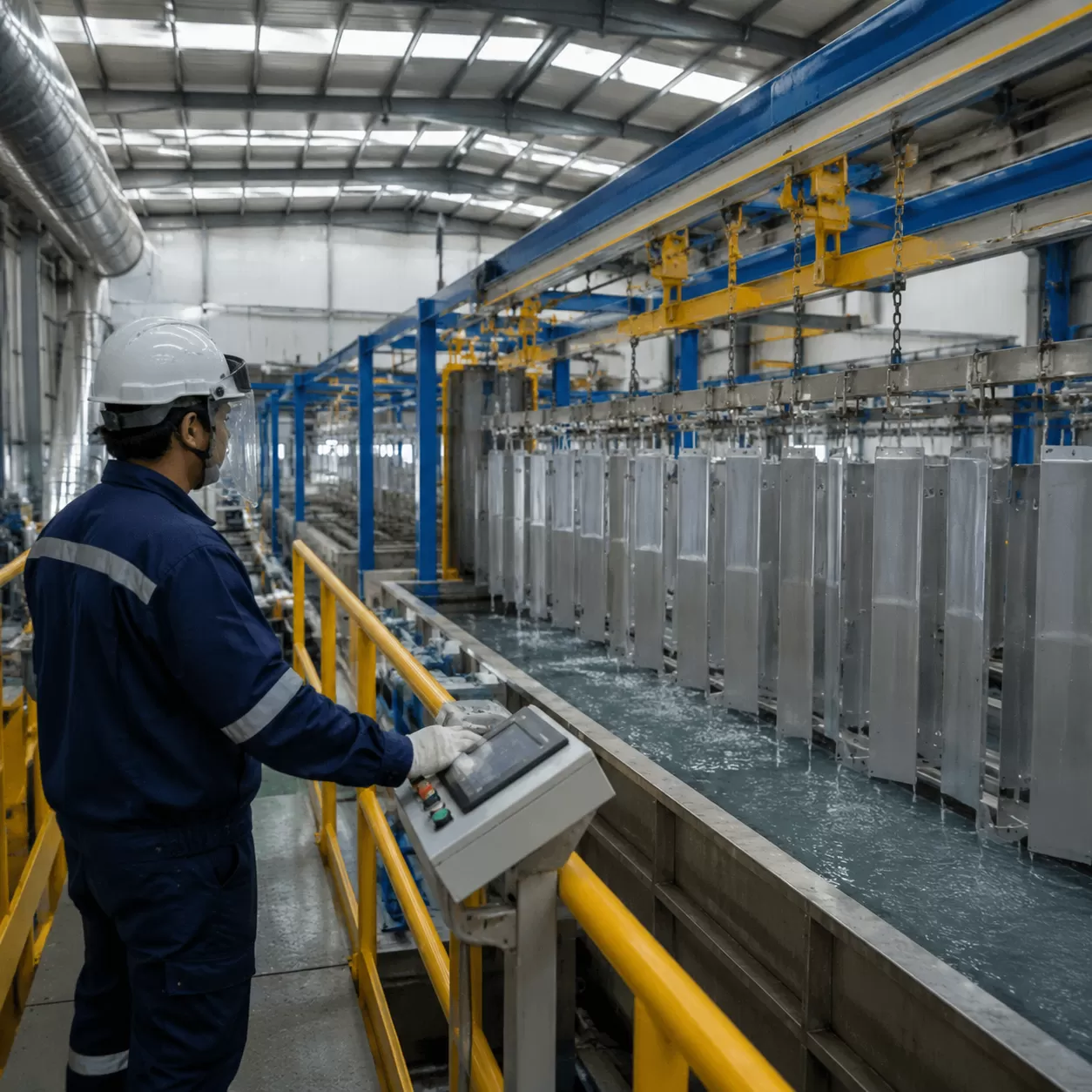
Vibrant, durable aluminum anodizing colors do more than just make a product look good. Across major United States industries, this specialized aluminum surface treatment provides critical surface protection and distinct visual branding that stands out in the marketplace.
Consumer Electronics
In the electronics sector, a high-end decorative aluminum finish is everything. Handheld devices, laptop enclosures, and premium audio gear rely on Type II anodizing to achieve sleek, modern aesthetics. This process creates a metallic luster that resists daily wear, fingerprints, and scratches while maintaining excellent thermal conductivity.
Medical Devices
Medical equipment demands absolute reliability and compliance. We utilize specific aluminum anodizing colors for surgical trays, diagnostic tools, and device housings to allow for quick, foolproof identification in fast-paced hospital environments. This anodic coating withstands repeated sterilization cycles without fading or degrading. Because many intricate medical components rely on precise housing designs, our advanced CNC machining capabilities ensure that every color-anodized part maintains its exact dimensional tolerances.
Automotive Components
From aftermarket shift knobs to high-performance engine brackets, the automotive industry uses color anodizing for both style and survival. Our UV-stable metal dye options ensure that components exposed to intense sunlight and engine heat keep their deep color without bleaching. The resulting corrosion-resistant finish protects vital parts from road salt, moisture, and automotive fluids.
Architectural Hardware
For American commercial and residential buildings, architectural hardware must endure decades of heavy use and weather exposure. We provide heavy-duty aluminum anodizing colors for window frames, door handles, and brackets. This process delivers exceptional UV stability and weather resistance, ensuring the metal elements look pristine and remain structurally sound for years to come.
Frequently Asked Questions (FAQ)
Can all aluminum alloys be color anodized?
Not all aluminum alloys react the same way to aluminum anodizing colors. While wrought alloys like 6061 or 7075 take on vibrant dyes beautifully, cast options present unique challenges. For instance, A356 casting alloys can be anodized but often yield a darker, more matte finish due to high silicon content. On the other hand, AD12 die castings are notoriously difficult to color anodize because the surface impurities cause structural splotches and uneven dye absorption. For the best aesthetic results, sticking to high-grade wrought series is recommended.
How long does the color last in outdoor environments?
The lifespan of an anodic coating outdoors depends entirely on the coloring method and UV exposure. Standard organic dyes will eventually fade under intense sunlight. However, if your project demands maximum UV stability, we utilize electrolytic coloring (two-step anodizing) or inorganic dyes. This process locks metallic pigments directly into the pores of the aluminum, ensuring the finish remains vibrant and UV-stable for decades, even in harsh architectural applications.
Does the anodizing process change the dimensions of the part?
Yes, anodizing is a conversion coating that alters the physical dimensions of your component. Unlike plating, which only sits on top of the metal, anodizing grows both into the material and outward.
- Type II Anodizing: Typically adds about 0.0002″ to 0.001″ to the total thickness.
- Hardcoat Anodize (Type III): Can build up to 0.002″ or more.
Because half of the coating thickness penetrates the surface and half builds up, your part’s final dimensions will increase. We strictly control these tolerances during our metal finishing services to ensure your final assemblies fit perfectly without the need for post-machining. For complex assemblies where precision matters, understanding how these shifts impact your final product is just as critical as understanding investment casting tolerances during the initial manufacturing stages.
 German
  English