

PrecisionVast OEM ODM metal rivets solid blind semi tubular in stainless carbon steel or aluminum ISO quality for aerospace and industrial use.
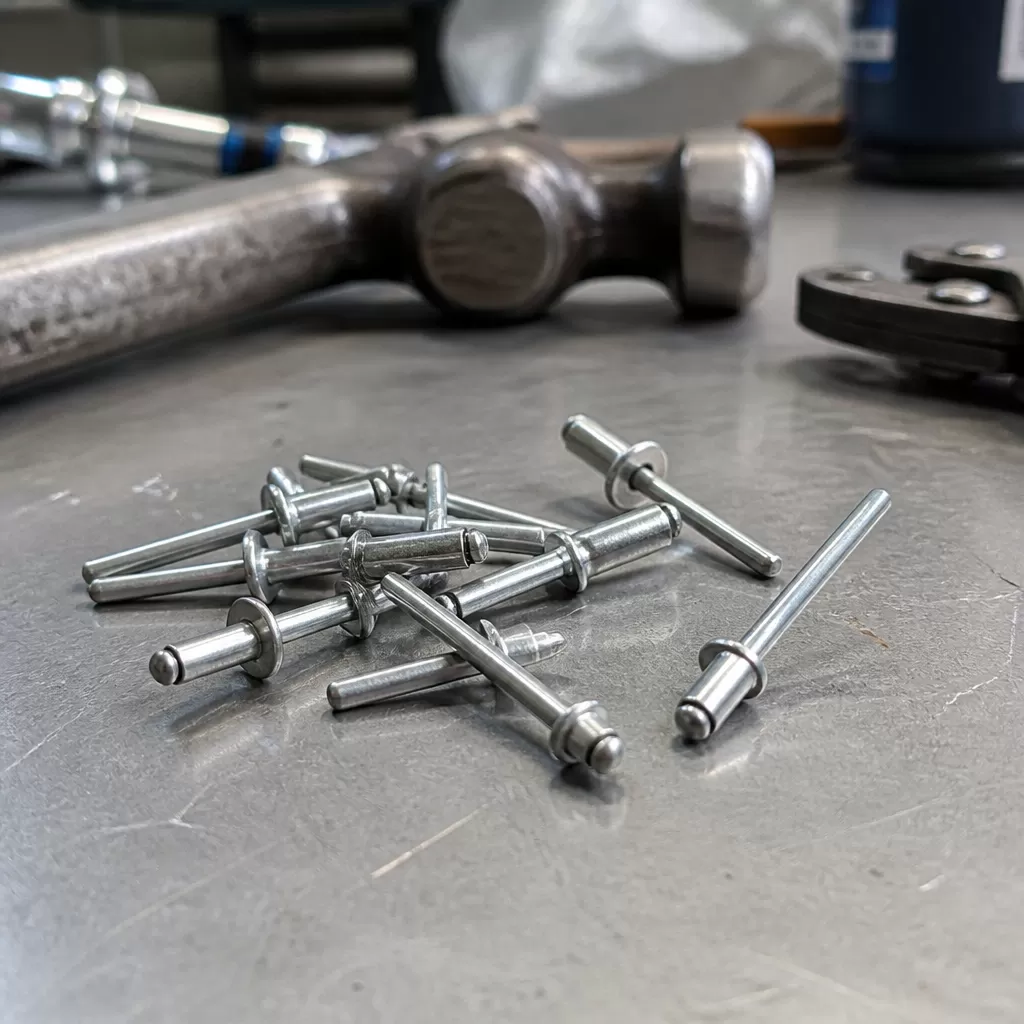
Engineered Permanent Fastening for High-Stress Applications
When you are dealing with extreme vibrations or high-stress loads, standard bolts eventually loosen, and welds can crack under fatigue. That is where our metal rivets come in. We engineer these permanent mechanical fasteners to create a localized “clamp” that won’t budge, ensuring the structural integrity of your project stays intact for the long haul.
Why Metal Rivets Beat Welding and Bolting
In high-vibration environments, traditional threading often fails. We focus on industrial fasteners that offer superior shear and tensile strength because they expand to fill the entire hole, leaving zero room for movement.
- Vibration Resistance: Unlike bolts, they won’t back out.
- Material Integrity: No heat-affected zones (HAZ) like you get with welding.
- Speed: Faster installation for high-volume production lines.
Industry-Specific Rivet Applications
We provide specialized solutions across the most demanding U.S. sectors:
| Industry | Primary Fastener Type | Key Benefit |
|---|---|---|
| Aerospace & Aviation | Countersunk head rivets | Eliminates drag with a flush finish. |
| Automotive & EV Chassis | Structural blind rivets | Joins dissimilar metals without heat. |
| Heavy Construction | Solid shank rivets | Maximum load-bearing for steel bridges. |
| Electronics | Semi-tubular rivets | Precision fastening for delicate circuits. |
High-Performance Solutions
- Aerospace & Aviation: We use flush-fit countersunk rivets to maintain aerodynamic profiles while securing critical airframe components.
- Automotive & EV Chassis: Our self-piercing and structural blind fasteners are essential for modern aluminum EV frames where welding isn’t an option.
- Heavy Construction: For infrastructure that lasts decades, our solid steel rivets provide the “old-school” reliability required for massive structural loads.
- Electronics & Appliances: We manufacture precision semi-tubular and hollow rivets that offer a secure hold without crushing sensitive internal components.
Comprehensive Types of Industrial Metal Rivets
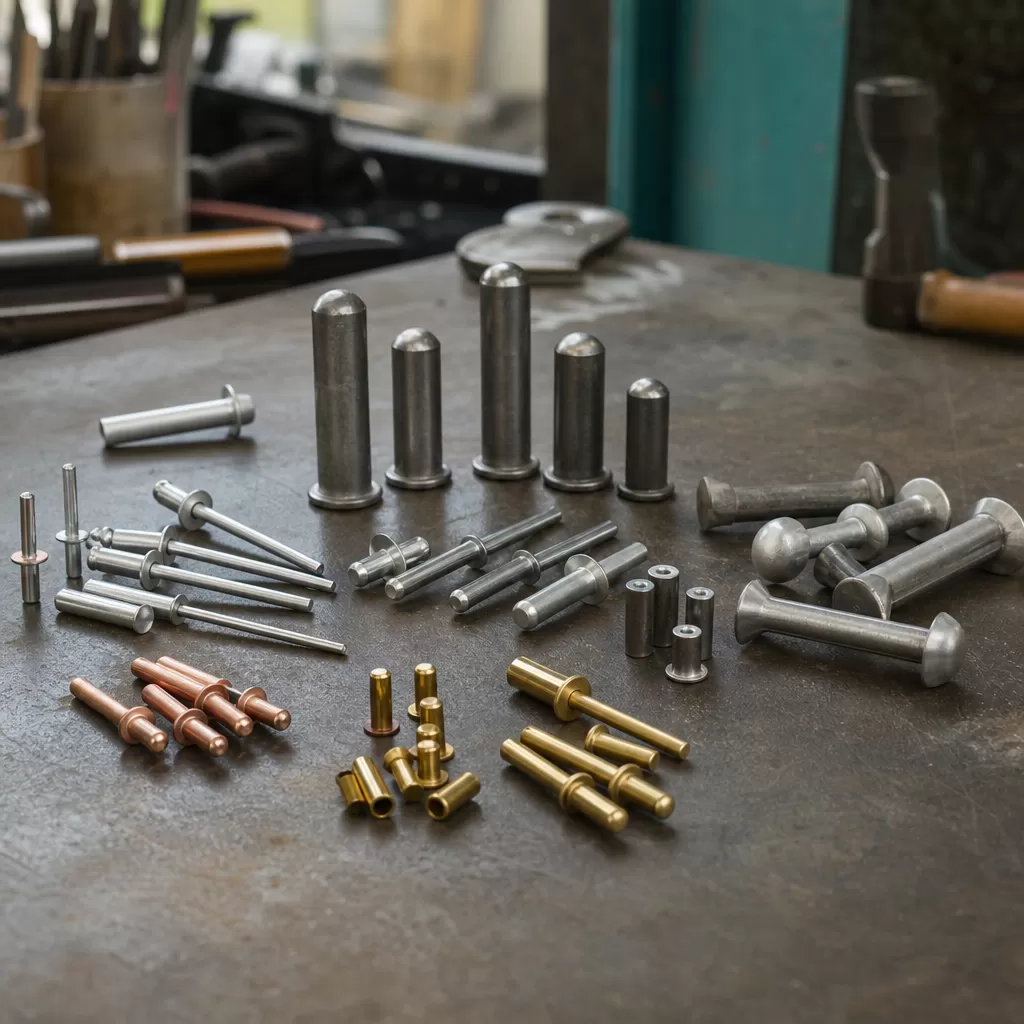
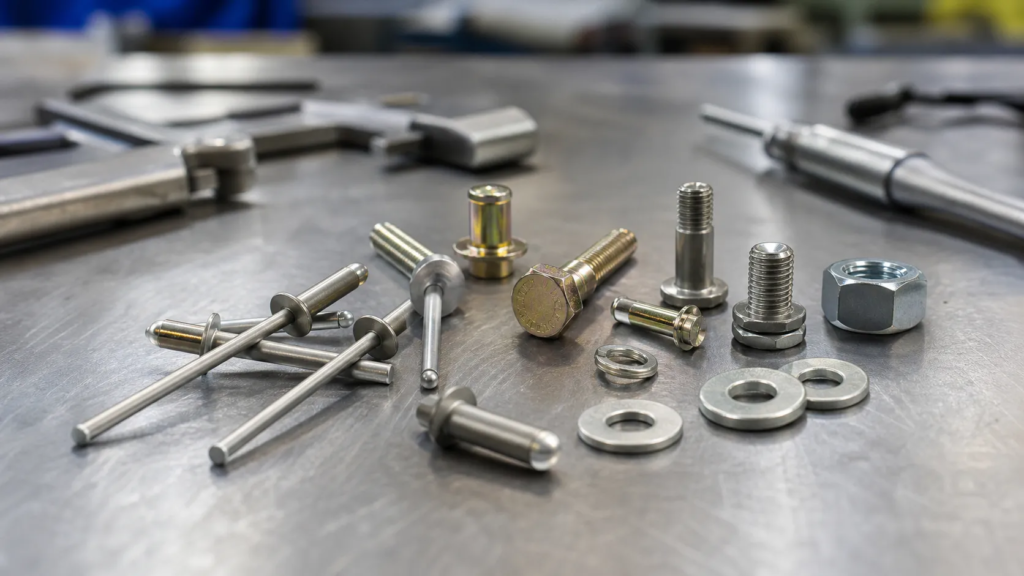
Choosing the right industrial fasteners means understanding the specific mechanics of each rivet type. Different jobs demand different configurations, whether you need maximum shear strength or access to a joint from only one side. We manufacture a comprehensive lineup of heavy-duty metal fasteners designed to handle diverse mechanical loads.
Solid Rivets (Round, Flat, Pan, & Button Heads)
Solid shank rivets are the gold standard for high-stress applications. These are original, tried-and-true permanent mechanical fasteners that require access to both sides of the structure for installation.
- Round & Button Heads: Ideal for heavy structural steel work, providing maximum bearing surface.
- Flat & Pan Heads: Low-profile options that offer excellent holding power without adding excessive clearance height.
Blind Rivets / Pop Rivets (Open-End, Closed-End, Multi-Grip)
When you only have access to one side of an assembly, pop rivets (or blind fasteners) are the industry go-to. They use an internal mandrel to expand the rivet body before snapping off.
- Open-End: The standard choice for general manufacturing and quick assemblies.
- Closed-End: Features a sealed end to prevent moisture or gas passage—frequently utilized alongside our specialized aluminum casting services for lightweight, weather-resistant enclosures.
- Multi-Grip: Highly versatile options that accommodate varying material thicknesses, reducing overall inventory needs.
Semi-Tubular & Tubular Rivets
Semi-tubular rivets feature a hollow cavity at the tip of the shank. This design requires significantly less force for installation compared to solid alternatives, making them perfect for high-speed automated assembly lines. They create a strong, clean pivot point without distorting the joined materials, making them popular in electronics, commercial appliances, and pivot-joint assemblies.
Specialty Rivets (Drive Pin, Split, & Countersunk Flush Rivets)
For unique design and manufacturing challenges, specialized metal rivets offer targeted solutions:
- Drive Pin Rivets: Installed quickly with a simple hammer strike, perfect for blind holes in masonry or heavy panels.
- Split (Bifurcated) Rivets: Feature split prongs that pierce through softer materials like plastics, wood, or leather without pre-drilled holes.
- Countersunk Head Rivets: Sit completely flush with the material surface to eliminate aerodynamic drag or physical interference.
Engineering Specifications & Material Grades for Metal Rivets
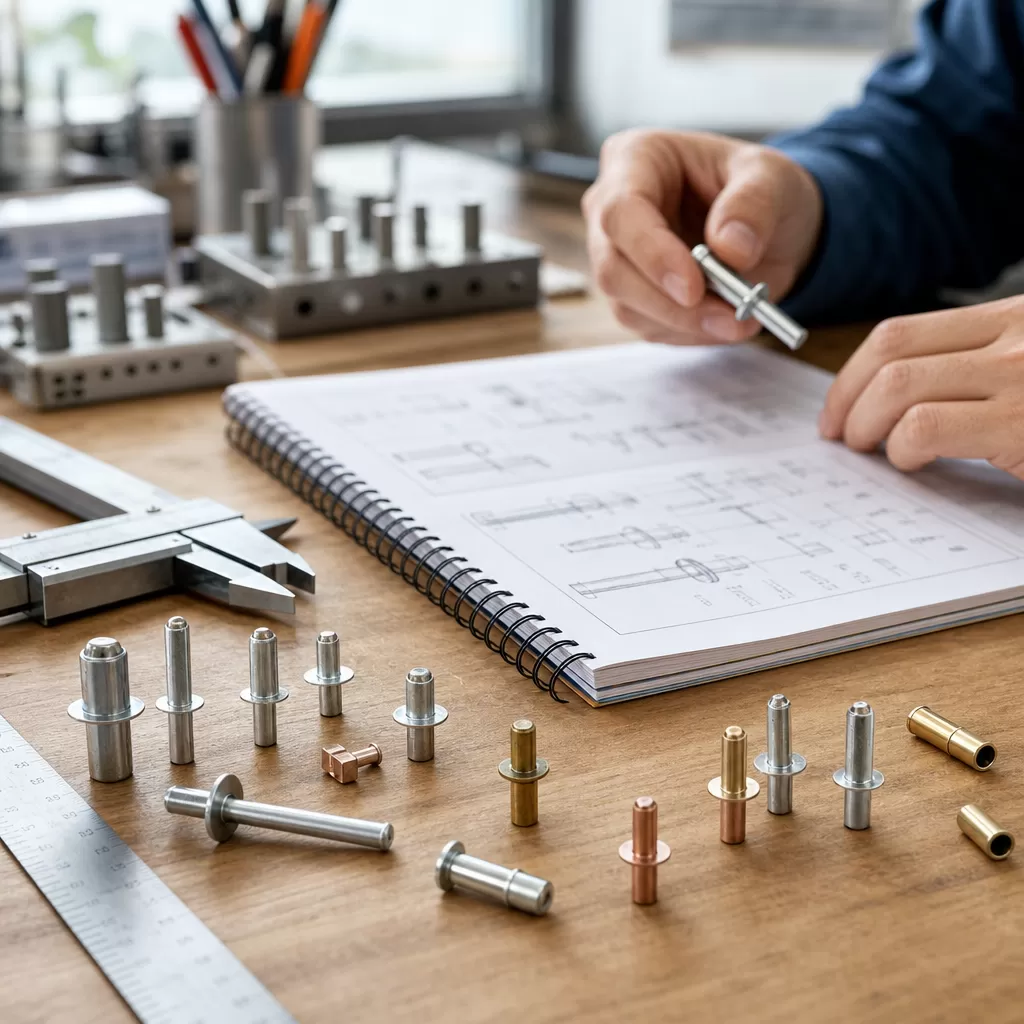
Getting the right technical spec isn’t just about finding a fastener that fits; it’s about ensuring structural integrity for the long haul. When we manufacture metal rivets, we look at the exact physics of your assembly to prevent premature joint failure.
Material Compatibility & Galvanic Corrosion
When you fasten dissimilar metals, you risk galvanic corrosion—an electrical reaction that eats away at the weaker metal. To prevent this, we match the rivet alloy to your base materials. For example, we use aluminum pop rivets for aluminum sheets, and stainless steel rivets for carbon steel or heavy-duty applications. If you are working with complex assemblies that require specialized material matching, understanding understanding carbon steel casting benefits and applications can help you select the right base metals to pair with your industrial fasteners.
Technical Comparison Table
Here is how our most popular heavy-duty metal fasteners stack up under real-world stress:
| Material Grade | Shear Strength | Tensile Strength | Corrosion Resistance | Best Used For |
|---|---|---|---|---|
| Aluminum (5052/5056) | Low to Medium | Low | High | Automotive panels, electronics |
| Stainless Steel (302/316) | High | High | Excellent | Marine, food processing, EV chassis |
| Carbon Steel (A36/Grade 2) | High | Medium to High | Moderate (Requires plating) | Infrastructure, structural steel |
| Copper / Brass | Low | Low | High | Electrical contacts, appliances |
Dimensional Engineering Controls
A secure joint relies entirely on tight manufacturing tolerances. We control every fraction of a millimeter during production so your automated assembly lines run without a hitch.
- Rivet Grip Range: This is the total thickness of the materials you are joining. If your material stack-up is $6text{ mm}$, your rivet grip range must explicitly cover that measurement. Too short, and the shop head won’t form; too long, and the rivet will bend inside the hole.
- Head Styles: We manufacture countersunk head rivets for flush finishes, dome head blind rivets for extra bearing surface, and standard round heads.
- Shank Tolerances: All production runs adhere strictly to DIN, ANSI, and ISO manufacturing benchmarks to guarantee consistent hole expansion and tight mechanical locking.
Advanced OEM/ODM Manufacturing Capabilities for Metal Rivets
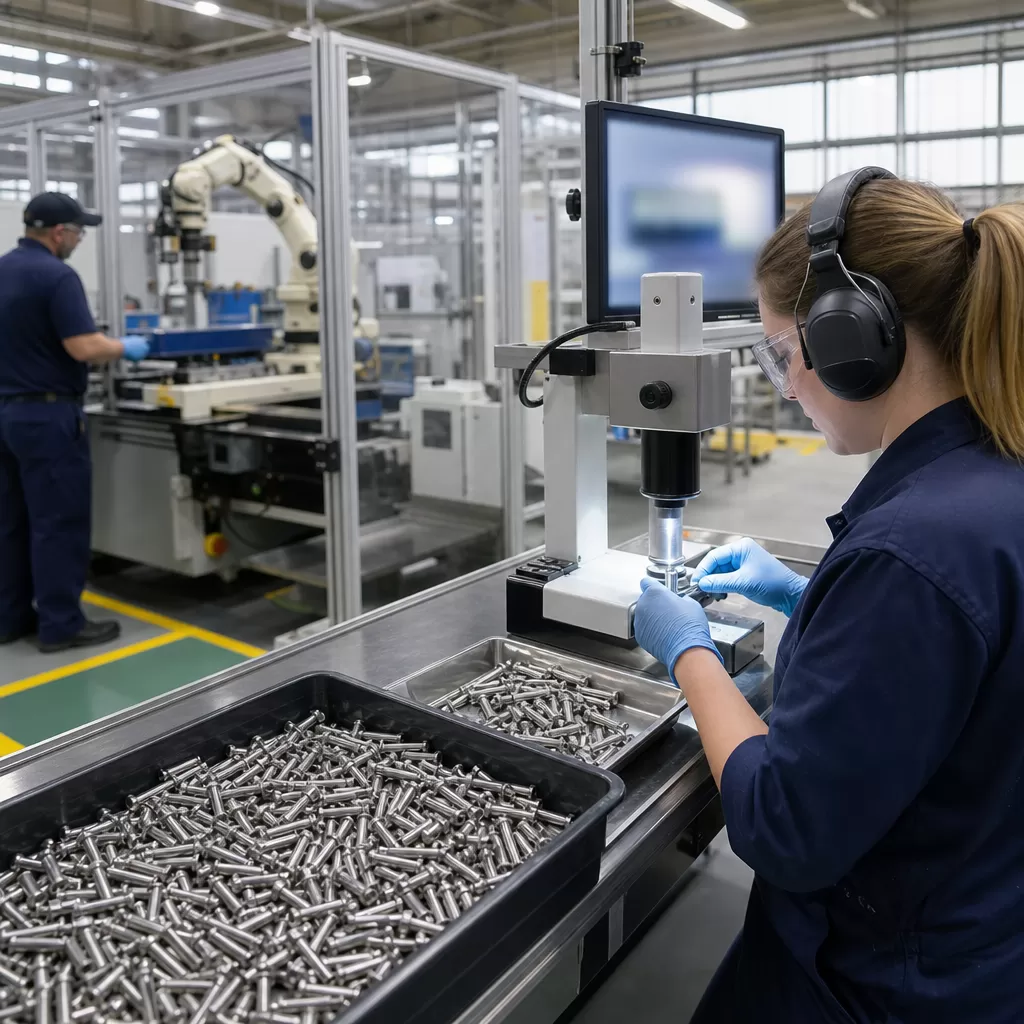
We deliver high-performance metal rivets engineered to meet your exact specifications. By combining advanced production technologies with strict quality standards, we ensure every fastener performs flawlessly in the field.
Advanced Metal Processing
Our manufacturing facility utilizes high-speed cold-forming to mass-produce exceptionally strong industrial fasteners with zero material waste. For complex designs and specialized alloy requirements, we leverage precision investment casting materials to achieve intricate geometries and outstanding structural integrity. This dual-approach capability allows us to process everything from lightweight aluminum to heavy-duty stainless steel.
Rigorous Quality Control
We don’t guess; we verify. Every production batch undergoes a strict quality assurance protocol to guarantee tight tolerances and reliable field performance:
- CMM (Coordinate Measuring Machines): Verifies dimensional accuracy down to the micron.
- Optical Sorting: Automated high-speed cameras scan for surface flaws and dimensional anomalies to ensure zero-defect shipments.
- Destructive Testing: We push our parts to the limit, verifying exact rivet shear and tensile strength ratings before they ever leave our floor.
Flexible Supply Scale
We understand the logistical demands of US businesses, from tight launch timelines to massive supply chain requirements.
- Large-Scale Production Runs: High-volume output with consistent quality for major OEM automotive and aerospace assembly lines.
- Small-Batch Customization: Flexible ODM services to prototype and produce specialized heavy-duty metal fasteners without demanding massive upfront minimum order quantities.
Industrial Metal Rivets: Frequently Asked Questions
What is the main difference between solid rivets and blind rivets?
Solid rivets (or solid shank rivets) feature a single, solid piece of metal that requires access to both sides of the assembly to hammer or compress the head. They offer maximum shear strength for heavy-duty metal fasteners. Pop rivets (blind fasteners), on the other hand, only require access to one side of the material. A rivet gun pulls an internal mandrel to expand the body, making blind rivets the go-to choice for hollow structures, tubing, and tight automotive assemblies.
How do I calculate the proper grip range for a metal rivet?
The rivet grip range is the total thickness of the materials you need to join together. To find the correct rivet length, use this standard formula:
$$text{Rivet Length} = text{Material Thickness (Grip Range)} + (1.5 times text{Rivet Shank Diameter})$$
Choosing a length within the manufacturer’s specified grip range ensures the fastener deforms correctly and creates a secure, permanent mechanical bond without under-clenching or cracking.
Can PrecisionVast manufacture custom-dimension rivets from exotic alloys?
Yes, we manufacture custom-dimension industrial fasteners tailored to your exact specs. Through our advanced cold-forming capabilities and precision investment casting tooling, we process high-grade stainless steel rivets, specialized aluminum alloys, and custom exotic metals. We handle everything from micro-sized electronics rivets to heavy structural steel rivets, meeting strict ANSI and ISO tolerances.
How do you prevent galvanic corrosion when joining dissimilar metals with rivets?
Galvanic corrosion happens when two different metals touch in the presence of moisture, causing the weaker metal to degrade. You can prevent this by following these industry practices:
- Match Material Potentials: Use aluminum pop rivets for aluminum sheets and stainless steel rivets for stainless steel assemblies.
- Apply Protective Coatings: Use zinc plating, anodizing, or specialized chemical films to create a barrier.
- Install Non-Conductive Washers: Place a polymer or nylon isolation washer between the rivet head and the base metal to block the electrical path.

 German
  English