

Discover all major types of casting processes with pros cons materials and cost tips for smart manufacturing choices
Industrial Metal Casting Overview
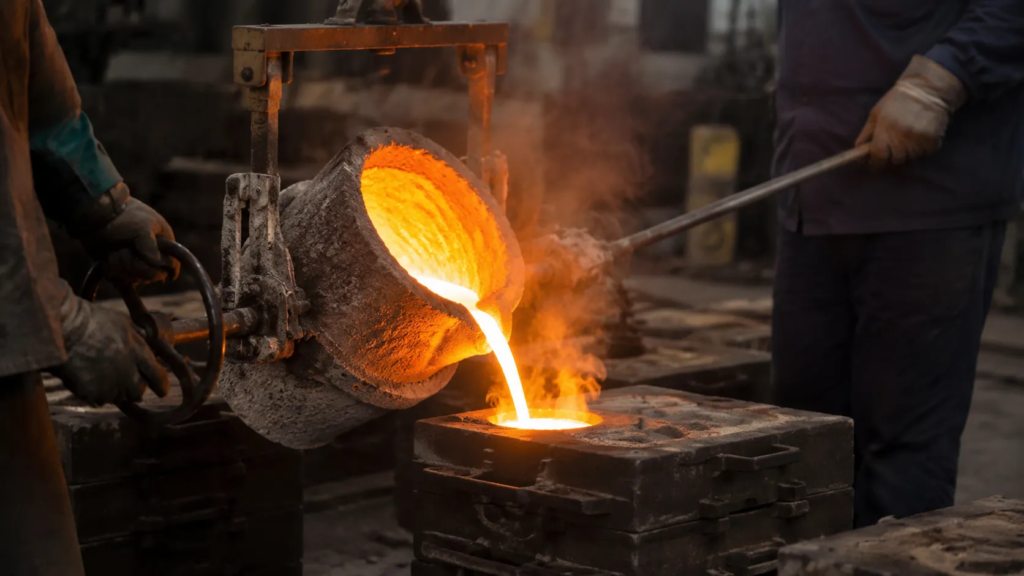
Metal casting sits at the very heart of modern manufacturing. From critical aerospace components to daily automotive parts, this foundational process shapes the modern world by turning liquid metal into complex, high-strength geometries. Without it, scaling heavy industry and precision engineering would grind to a halt.
Choosing the right types of casting for your project determines your production speed, surface finish, and final unit cost. A wrong choice in the design phase leads to costly tooling modifications, material waste, and unexpected structural failures down the line. Process selection is not just a technical detail—it is a critical business decision.
At Precisionvast, we streamline this choice through our world-class industrial foundry services. We combine decades of metallurgical expertise with advanced manufacturing technology to deliver flawless components. Whether you need complex, near-net-shape parts or high-volume production runs, our facility handles your toughest engineering challenges with absolute precision.
Macro-Categorization of Casting Methods
When you are deciding how to manufacture your metal parts, the first major step is understanding how different metal casting processes are categorized. At Precisionvast, we divide these methods into two primary branches based on the life cycle of the mold itself. Choosing between these systems will fundamentally dictate your production speed, part cost, and design freedom.
Expendable Mold Processes vs Permanent Mold Casting
The manufacturing world splits casting techniques into two clear-cut families:
- Expendable Mold Systems: These methods use a temporary mold that must be destroyed to extract the finished metal part. This category includes the lost wax casting method (investment casting) and sand casting. Because the mold is broken away each time, you can create incredibly complex geometries with intricate internal cavities that would be impossible to slide out of a rigid mold.
- Permanent Mold Casting: This approach utilizes reusable metal molds—often made of high-strength steel or iron—to produce thousands of parts sequentially. Processes like pressure die casting fall under this umbrella. While it offers excellent speed and surface finish for high-volume runs, you are limited to shapes that can easily eject from the split die without trapping the part.
Choosing the Right System for Your Design Geometry
Selecting the ideal setup depends heavily on your part’s shape, wall thickness, and internal features. If your design features complex undercut geometries, thin walls, or requires exceptional internal details, expendable mold systems give you the ultimate design freedom without costly tooling alterations. Conversely, if your component has straightforward exterior lines, uniform walls, and requires massive production volumes, a permanent mold setup is often the most cost-effective path forward.
Main Types of Casting Processes
When choosing between different types of casting, you must balance design complexity, material choice, and surface finish. Here is a breakdown of the primary industrial metal casting processes used in modern manufacturing.
Precision Investment Casting
Also known as the lost wax casting method, this is our core specialty at Precisionvast. We use this process to create highly complex, near-net-shape parts with exceptional surface finishes and tight tolerances.
- How it works: We coat a wax pattern with a ceramic slurry to build a rigid shell. Once the wax is melted out, we pour molten metal into the remaining cavity.
- Best for: Intricate geometries, thin walls, and demanding materials like stainless steel, titanium, and high-temperature superalloys.
- Key benefit: Virtually eliminates the need for heavy secondary machining, saving you time and material costs.
Sand Casting
This traditional method uses compacted sand molds to shape metal parts. It is generally split into green sand (clay-bonded) and no-bake (resin-bonded) systems.
- How it works: A pattern is pressed into a sand mixture to create a mold cavity, which is then filled with molten metal.
- Best for: Large, heavy components like engine blocks or large pump housings.
- Key benefit: Low initial tooling costs and excellent suitability for massive structural parts, though it requires more surface finishing.
Pressure Die Casting
This process forces molten metal into reusable steel molds (dies) under high pressure. It is split into hot-chamber (for low-melting-point metals like zinc) and cold-chamber (for metals like aluminum) systems.
- How it works: High-pressure hydraulic systems inject liquid metal rapidly into a permanent die.
- Best for: High-volume production of thin-walled, non-ferrous parts.
- Key benefit: Fast cycle times and excellent dimensional consistency for mass production.
Centrifugal Casting
This specialized method uses a spinning mold to distribute molten metal.
- How it works: Inertial forces drive the liquid metal outward against the walls of a rotating mold as it solidifies.
- Best for: Cylindrical parts like pipes, tubes, and bushings.
- Key benefit: Produces highly dense parts with a clean outer structure, as impurities naturally collect near the hollow center.
Engineering Performance of Different Types of Casting
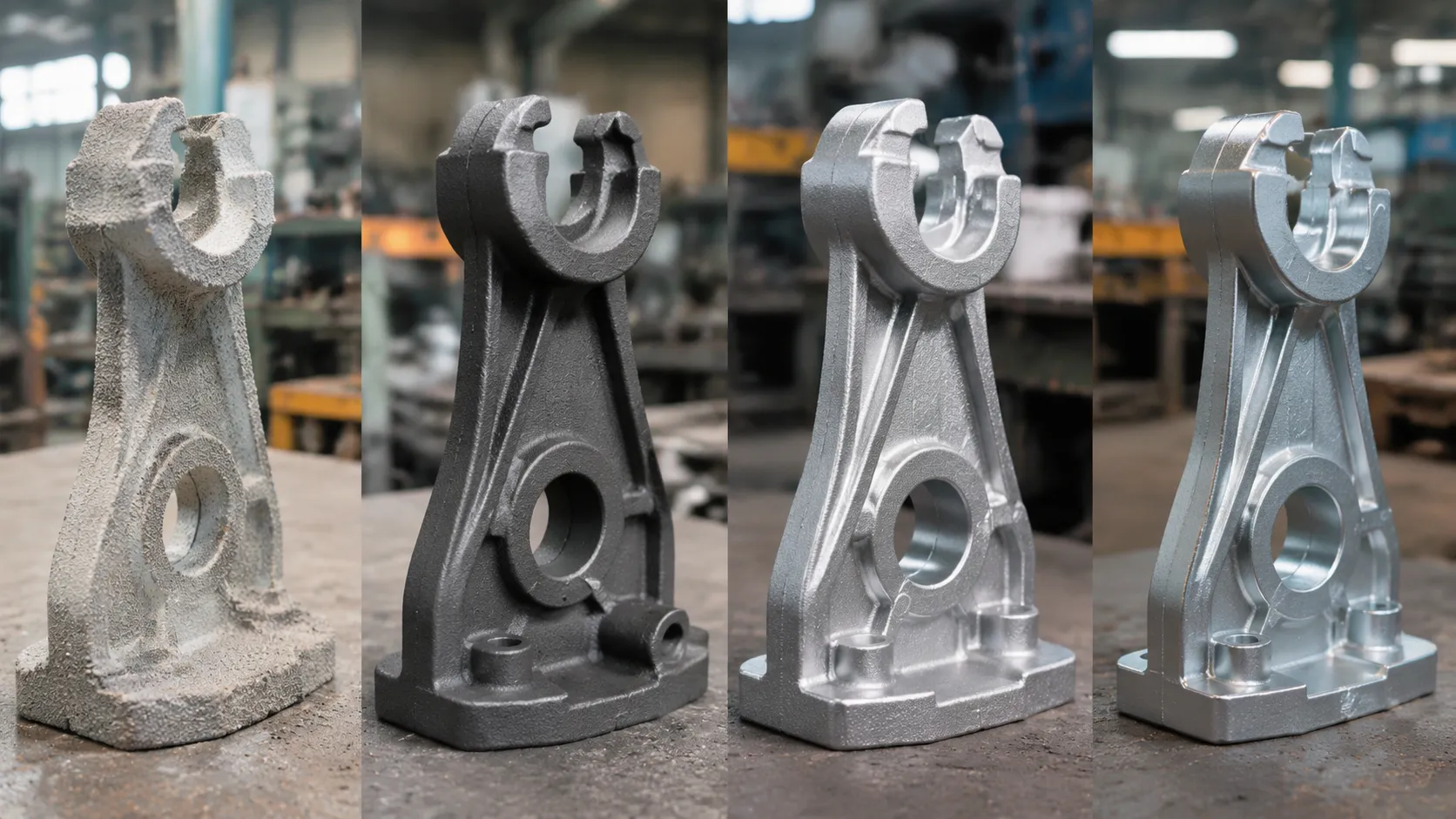
When selecting the right types of casting for your project, you must balance dimensional accuracy, surface finish, and overall production costs. Different metal casting processes yield vastly different engineering results.
Below is a direct technical comparison of the primary casting methods we analyze when optimizing customer designs:
| Performance Factor | Precision Investment Casting | Sand Casting | Pressure Die Casting |
|---|---|---|---|
| Dimensional Tolerances | Excellent (CT4 – CT6) | Coarse (CT10 – CT13) | Very Good (CT3 – CT5) |
| Surface Roughness (Ra) | 1.6 to 3.2 µm (Smooth) | 12.5 to 25 µm (Rough) | 0.8 to 1.6 µm (Very Smooth) |
| Initial Tooling Cost | Moderate | Very Low | High to Very High |
| Per-Part Unit Cost | Moderate | Low (for simple parts) | Low (only for high volumes) |
| Production Scalability | Highly flexible (low to high volume) | Best for low volume | Best for ultra-high volume |
| Material Versatility | High (Steels, Aluminum, Superalloys) | High (mostly Iron/Steel) | Limited (primarily Non-Ferrous) |
Key Performance Takeaways
- Dimensional Tolerances in Casting: Our precision investment casting process delivers near-net-shape parts. This high level of accuracy reduces the need for expensive, time-consuming secondary CNC machining.
- Surface Finish Quality: Investment casting provides a superior surface finish (typically 1.6 to 3.2 µm Ra). This is critical for fluid flow applications, sanitary food machinery, and clean medical equipment.
- Tooling vs. Unit Cost: Sand casting features the lowest setup cost but requires significant machining later. Pressure die casting offers low piece prices but demands massive upfront tooling investments. We design our investment casting tooling to offer the perfect middle ground—affordable setup costs paired with highly competitive per-part pricing.
Material Compatibility Across Types of Casting
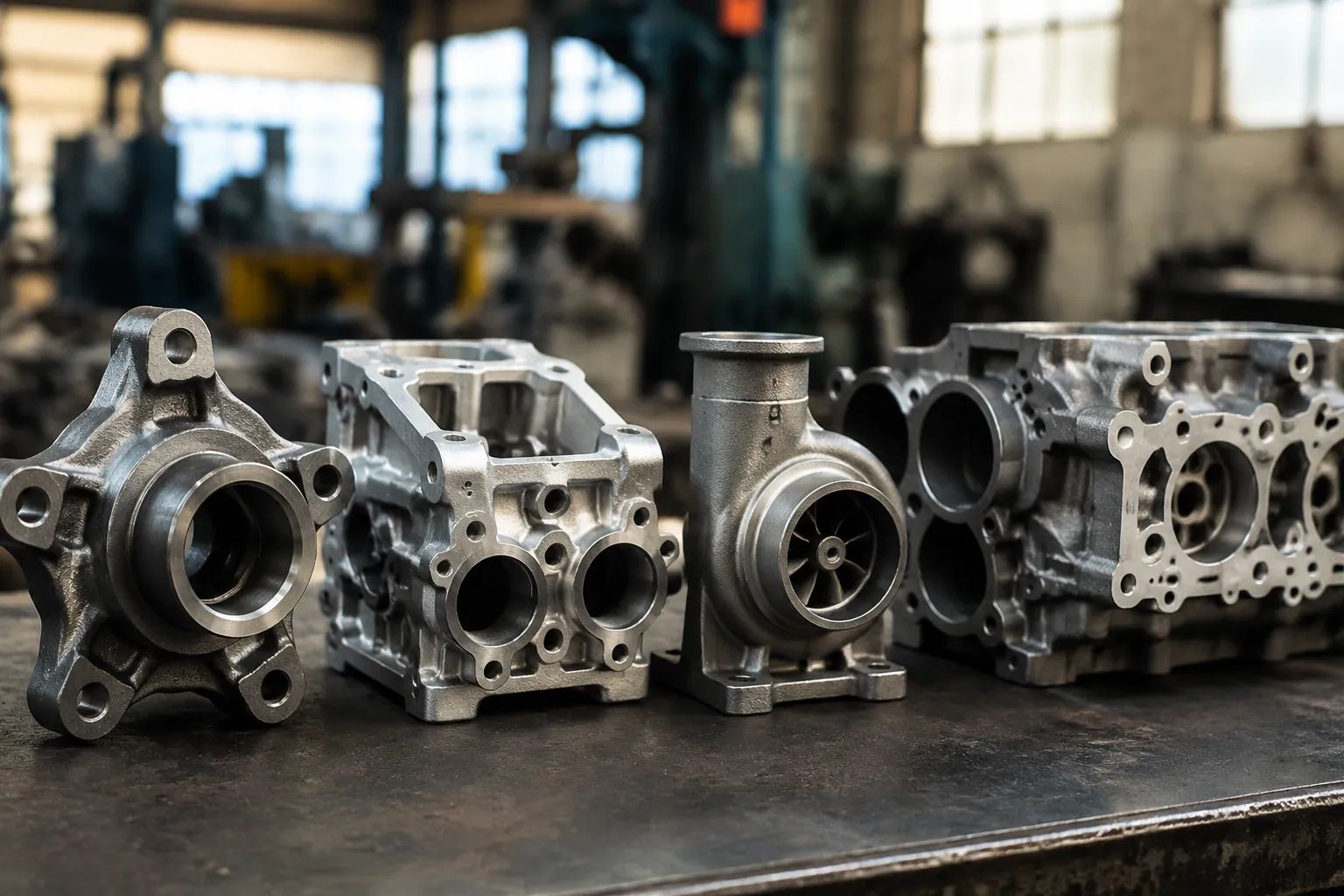
Choosing the right metal for your project depends heavily on the specific types of casting methods you use. Not every foundry process can handle every metal. At Precisionvast, we match your structural and thermal requirements to the exact metallurgical process needed for peak performance.
Ferrous Metallurgy: Stainless Steel Casting and Alloy Steels
Ferrous metals require robust mold systems due to their high melting points. Stainless Steel Casting: Ideal for corrosion resistance and medical-grade parts. We consistently pour 300 and 400-series stainless steel. Alloy Steels: Perfect for high-strength industrial components, gears, and structural frames that face extreme wear and tear.
Non-Ferrous Metallurgy: Aluminum, Titanium, and Brass
Non-ferrous metals offer lightweight properties and excellent thermal conductivity, making them staple choices for US aerospace and automotive manufacturing. Aluminum: Lightweight and easy to machine; heavily utilized in die casting and sand casting. Titanium: Highly valued in aerospace components casting for its strength-to-weight ratio, though it requires specialized vacuum casting environments. Brass & Bronze: The go-to alloys for marine fittings, plumbing valves, and low-friction bushings.
Specialized Metallurgy: High-Temperature Superalloys
When your application operates under extreme thermal stress—like gas turbine blades or exhaust manifolds—standard metals fail. We pour high-temperature superalloys (including cobalt and nickel-based alloys) to ensure your components resist oxidation, creep, and mechanical deformation at elevated temperatures.
Metal Compatibility Matrix
| Casting Method | Ferrous (Stainless Steel) | Non-Ferrous (Aluminum/Brass) | Superalloys |
|---|---|---|---|
| Precision Investment Casting | Excellent | Excellent | Excellent |
| Sand Casting | Good | Good | Poor |
| Pressure Die Casting | Poor | Excellent | Not Applicable |
Why Precision Investment Casting Offers Maximum Alloy Versatility
If your design requires exotic alloys or strict material purity, precision investment casting (the lost wax casting method) is your best choice.
Because we use premium ceramic shells rather than metal dies or packed sand, we can pour almost any metal alloy without risking chemical contamination or thermal shock to the mold. This gives you total design freedom to select the exact chemistry your engineering team demands, from standard aluminum up to complex, custom alloy formulations.
The Precisionvast Advantage: Advanced Investment Casting Excellence
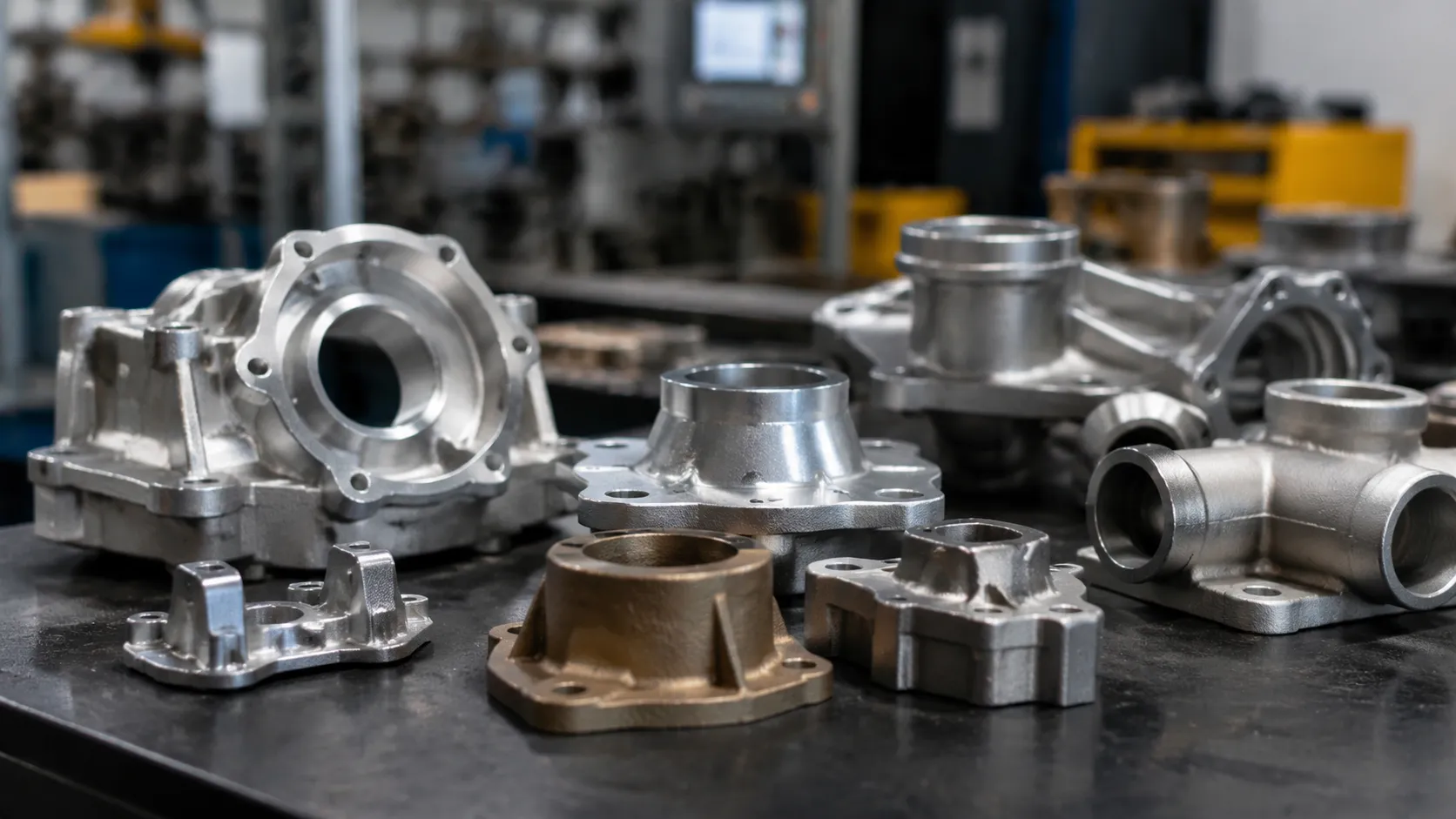
At Precisionvast, we have scaled our industrial foundry services to handle everything from short-run engineering prototypes to high-volume production. We don’t just pour liquid metal into molds; we engineer predictable, high-performing components right from the start.
Advanced CAE Simulation to Stop Defects
We eliminate guesswork before the first pour. By using advanced CAE solidification simulation software, we analyze fluid flow and thermal behavior in real time. This engineering-led design process lets us identify and fix potential metal solidification defects—like shrinkage cavity issues or trapped gas—before cutting any tooling.
Rapid Prototyping via SLA 3D Printing
Time-to-market matters for US manufacturers. To speed up your development cycle, we integrate rapid prototyping casting directly into our workflow using high-precision SLA 3D printing. We print accurate sacrificial patterns directly from your CAD files, completely bypassing the traditional tooling phase. This allows us to deliver functional metal prototypes for testing in days rather than weeks.
Our 14-Step Monitored Custom Metal Foundry Workflow
Quality requires absolute consistency. We manage every project through our strict, 14-step monitored custom metal foundry workflow to guarantee that your parts match your exact blueprints.
- Step 1: Detailed CAD design review and gating system optimization.
- Step 2: Advanced CAE solidification simulation to verify metal flow.
- Step 3: High-precision wax pattern injection or SLA 3D printing.
- Step 4: Manual cluster assembly (tree building) for optimal feeding.
- Step 5: Multi-layer ceramic shell building with controlled drying cycles.
- Step 6: High-pressure steam dewaxing to clean the mold cavity.
- Step 7: High-temperature shell firing to maximize structural strength.
- Step 8: Precise induction melting of the selected alloy with spectrum analysis.
- Step 9: Controlled atmosphere pouring into the pre-heated ceramic shell.
- Step 10: Knockout and mechanical removal of the ceramic shell.
- Step 11: Cut-off and gate grinding to clean the part profile.
- Step 12: Custom heat treatment to achieve specified mechanical properties.
- Step 13: Blasting and surface finishing for optimal roughness parameters.
- Step 14: dimensional inspection and non-destructive testing.
Quality Control and Secondary Operations
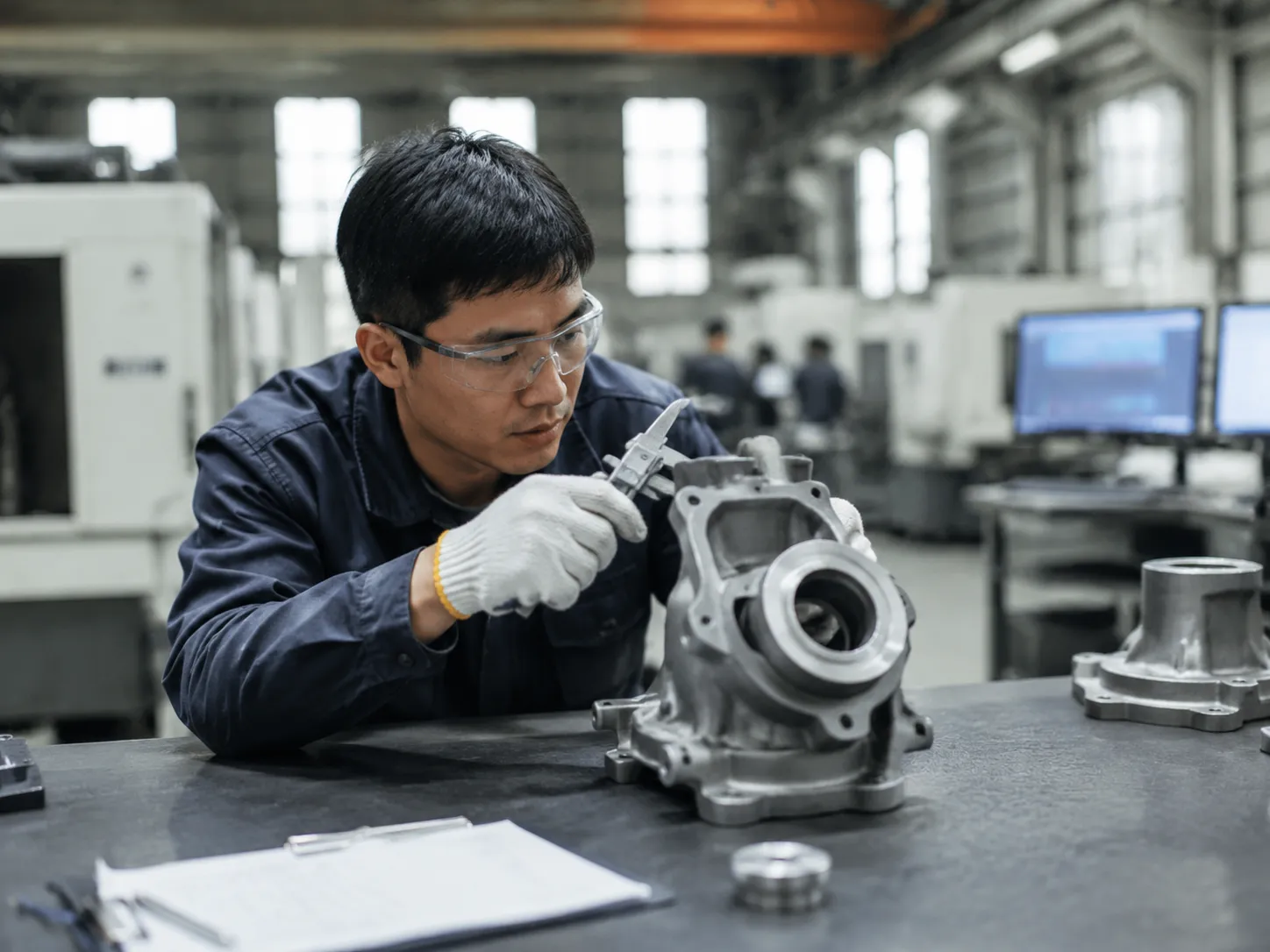
Getting the right geometry from various types of casting is only half the battle. To deliver ready-to-use, high-precision components, we back our industrial foundry services with strict quality control and complete secondary finishing operations.
In-House Precision CNC Machining
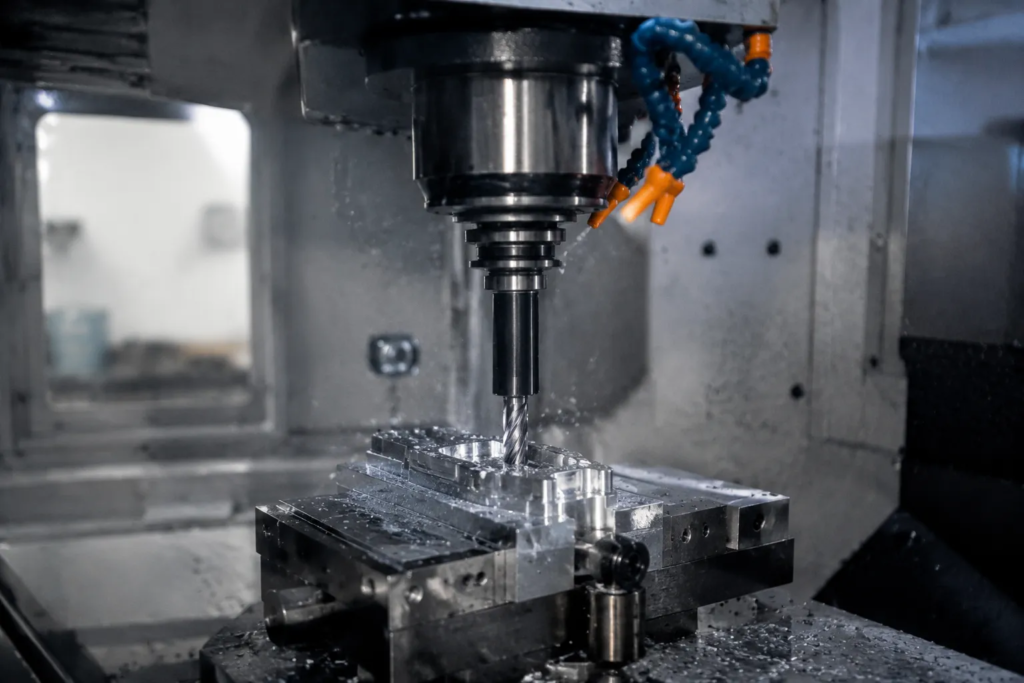
While some metal casting processes yield near-net shapes, critical components often require tight dimensional tolerances that only precision machining can achieve. Tight Tolerances: We use advanced CNC milling and turning to hit exact engineering specifications. Single-Source Efficiency: Handling machining in-house eliminates shipping delays and keeps your project costs down. Surface Finishing: We manage everything from surface roughness Ra value adjustments to final surface treatments.
Advanced Metallurgy and Mechanical Testing
We do not guess when it comes to part integrity. Our testing lab ensures that every component—regardless of the types of casting methods used—is structurally sound and free of metal solidification defects.
- X-Ray Inspection: Non-destructive testing to detect hidden internal porosity or voids.
- Magnetic Particle Inspection (MPI): Identifies tiny surface and near-surface cracks before parts leave our facility.
- Coordinate Measuring Machines (CMM): Validates precise dimensional tolerances in casting against your original CAD design models.
Global Industry Applications for Different Types of Casting
Different types of casting serve different industrial needs. At Precisionvast, we specialize in precision investment casting to deliver high-integrity components for the world’s most demanding sectors. Our direct-factory capabilities allow us to supply critical parts across several key industries.
Aerospace Components Casting and Defense Systems
Aerospace applications require exceptional strength-to-weight ratios and resistance to extreme temperatures. We manufacture critical parts using advanced materials: Titanium alloys and high-temperature superalloys for engine and structural components. High-precision parts that meet strict quality standards to ensure safety and performance in flight.
Medical Equipment and Implants
Medical devices demand tight dimensional tolerances and flawless surface finishes. Our investment casting process delivers: Biocompatible components for surgical instruments and medical machinery. Highly detailed, complex geometries in stainless steel and specialized alloys that require minimal post-machining.
Flow Control, Valves, and Marine Fittings
Corrosive environments require materials that stand up to harsh conditions. We produce durable components for marine and fluid handling systems: Pumps, valves, and pipe fittings cast from duplex stainless steel and corrosion-resistant alloys. Heavy-duty marine hardware designed to withstand saltwater exposure and high pressure.
Automotive and Industrial Wholesale Components
For high-volume industrial and automotive needs, we provide scale and consistency: Engine, transmission, and structural parts for the automobile industry. Door lock hardware, food machinery components, and custom metal parts for industrial wholesale distribution.
Frequently Asked Questions About Types of Casting
What is the main difference between sand casting vs die casting and precision investment casting?
Each method serves a different production need based on part complexity, surface finish, and volume. Here is how these major types of casting stack up:
| Casting Type | Best For | Surface Finish | Design Complexity |
|---|---|---|---|
| Sand Casting | Large, heavy components | Rough (requires machining) | Low to Medium |
| Pressure Die Casting | High-volume non-ferrous parts | Smooth and precise | Medium to High |
| Precision Investment Casting | Complex geometries in any alloy | Excellent (net-shape) | Extremely High |
How do tooling costs compare between pressure die casting and investment casting?
Pressure die casting requires expensive, hardened steel molds capable of withstanding extreme pressure, making initial tooling costs very high. Precision investment casting uses less complex wax injection molds, resulting in significantly lower upfront tooling costs. This makes investment casting ideal for both low-to-medium volumes and high-mix production.
What dimensional tolerances in casting can Precisionvast consistently guarantee for stainless steel parts?
For our stainless steel casting runs, we consistently hold linear tolerances within ±0.005 inches per inch based on standard CT4 to CT6 ISO specifications. For critical features, our in-house secondary CNC machining capabilities can tighten those tolerances down to ±0.0005 inches.
Can you support small-scale engineering prototypes alongside mass-production runs?
Yes. We seamlessly bridge the gap between development and scale. By utilizing rapid prototyping casting methods like SLA 3D-printed wax patterns, we can cast a handful of functional engineering prototypes without building hard tooling. Once validated, we transition your project directly into our automated custom metal foundry lines for mass production.
What is the standard turnaround time from design blueprint to first-article inspection?
- Rapid Prototypes (3D Printed Patterns): 2 to 3 weeks.
- Standard Tooling & First-Article Inspection (FAI): 4 to 6 weeks, depending on part complexity.
We optimize every step of our industrial foundry services to keep your supply chain moving fast without sacrificing quality.

 German
  English