

High strength industrial rivets blind solid semi tubular and rivet nuts in steel and aluminum for durable vibration resistant fastening.

Engineered For Permanent, Vibration-Resistant Fastening
When traditional threaded fasteners back out and fail under stress, our precisionvast industrial rivets step in to deliver a permanent, unyielding hold. We manufacture these mechanical fasteners with strict precision, translating directly into predictable shear and tensile strength across the most demanding industries. Whether you are assembling heavy-duty commercial vehicles, working on aerospace components, building marine hulls, or optimizing high-speed sheet metal fabrication lines, our rivets are engineered to perform flawlessly under dynamic stress.
Our manufacturing focus centers on eliminating the guesswork from structural joints, providing a reliable alternative to screws and bolts that loosen over time.
Why Industries Rely on Our Industrial Rivets
- Maximum Shear & Tensile Strength: Built as heavy-duty structural rivets, these components offer exceptional load-bearing capacities that withstand continuous vibration and shifting forces.
- Vibration-Proof Joints: Enjoy a permanent mechanical lock that completely outlasts traditional nuts and bolts, saving you massive downtime and maintenance costs.
- Single-Sided Access Efficiency: Our advanced blind fasteners allow for lightning-fast installation on rapid assembly lines, even when you only have access to one side of the work piece.
Industrial Rivet Classification & Structural Types
Choosing the right hardware means matching the fastener geometry to your specific joint requirements. We manufacture four primary categories of industrial rivets, each engineered to solve distinct structural challenges on the assembly line.
To help you optimize your assembly line efficiency, we have broken down our core lineup of mechanical fasteners by their structural design and primary US industrial applications.
| Rivet Type | Core Feature | Best Used For |
|---|---|---|
| Blind Rivets (Pop Rivets) | Single-sided installation access | Restricted backside access, rapid assembly lines |
| Solid Rivets | Maximum shear strength, fully solid shank | High-stress structural joints (aerospace, bridges) |
| Semi-Tubular & Full Tubular | Partially hollow shank, lower setting force | Delicate base materials, smooth rolled clinches |
| Threaded Rivet Nuts (Inserts) | Dual-function blind internal threads | Thin-walled profiles needing reusable threads |
1. Blind Rivets (Pop Rivets)
When you cannot access the backside of a workpiece, pop rivets are the industry standard. These blind fasteners use an internal mandrel that pulls through the rivet body, expanding it securely against the hidden side before snapping off. Our inventory includes:
- Open-End: The go-to standard for cost-effective, general-purpose assembly.
- Closed-End: Moisture-resistant and leakproof configurations that seal out fluids and gases under pressure.
- Multi-Grip: Adaptable designs that accommodate varying material thicknesses, reducing your overall inventory SKU count.
2. Solid Rivets
As the undisputed gold standard for high-stress structural joints, solid rivets offer unmatched mechanical integrity. These are permanently deformed via impact or compression tools to create a flawless, ultra-strong field head. You will find our heavy-duty structural rivets anchoring critical infrastructure, aircraft frames, and heavy machinery throughout the United States.
3. Semi-Tubular & Full Tubular Rivets
These options feature a hollow or partially hollow shank that requires significantly less installation force than solid alternatives. The design protects delicate base materials—like plastics, composites, or thin sheet metals—from cracking or warping while still ensuring a clean, smooth, professionally rolled clinch.
4. Threaded Rivet Nuts (Inserts)
When working with thin-walled profiles or blind enclosures where tapping a thread is impossible, threaded inserts bridge the gap. They install like a standard blind fastener but leave behind a permanent, load-bearing internal thread. This allows you to bolt and unbolt secondary components cleanly without stripping the base metal.
Material Engineering & Environmental Resistance of Industrial Rivets
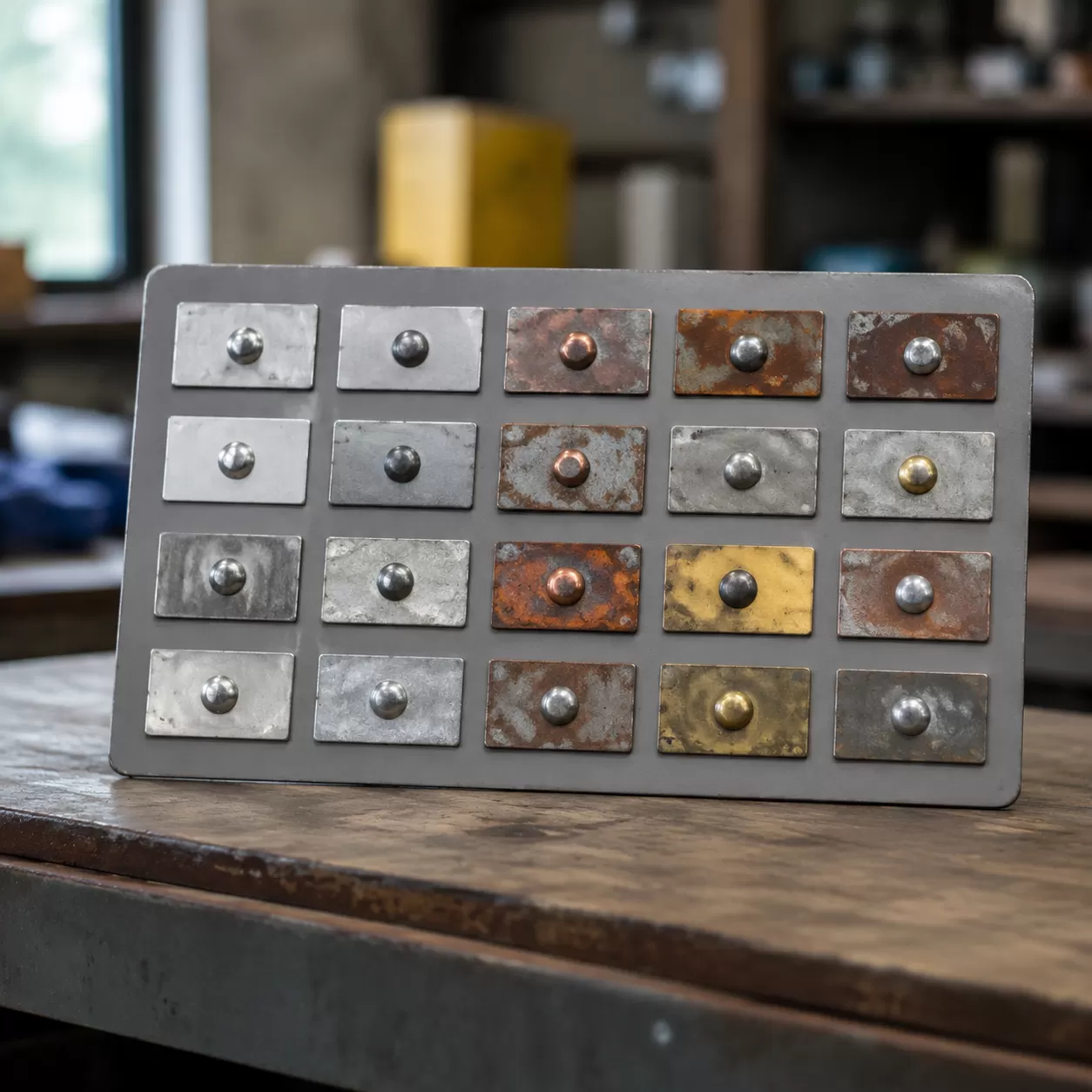
Choosing the right metallurgy for your mechanical fasteners is the only way to permanently stop galvanic corrosion before it starts. When you install rivets, matching the rivet alloy to your base metal ensures maximum environmental durability and prevents premature joint failure under harsh field conditions.
We engineer our stainless steel rivets, aluminum blind fasteners, and heavy-duty structural rivets to handle specific atmospheric challenges, from marine salt spray to high-heat manufacturing environments. For specialized assemblies utilizing advanced lightweight metals, understanding specific a356 aluminum alloy properties and uses helps ensure optimal material compatibility and joint longevity.
Rivet Material Specification Matrix
| Material Type | Common Grades | Key Performance Benefits | Best Used For |
|---|---|---|---|
| Stainless Steel | Grade 304 / 316 | Ultimate corrosion resistance, extreme tensile strength, high heat tolerance. | Marine, chemical processing, outdoor structural joints. |
| Aluminum | 5052 / 5056 / 6061 | Lightweight, excellent strength-to-weight ratio, naturally rust-resistant. | Aerospace, automotive body panels, commercial signage. |
| Carbon Steel | Low / Medium Carbon | High shear load capacity, cost-effective, zinc-plated for moisture defense. | Heavy machinery, automotive chassis, agricultural equipment. |
| Copper & Brass | Solid Copper / Alloy 260 | High electrical conductivity, spark-resistant, decorative appeal. | Electrical grounding, roofing, architectural fabrication. |
Head Style Configurations & Geometry
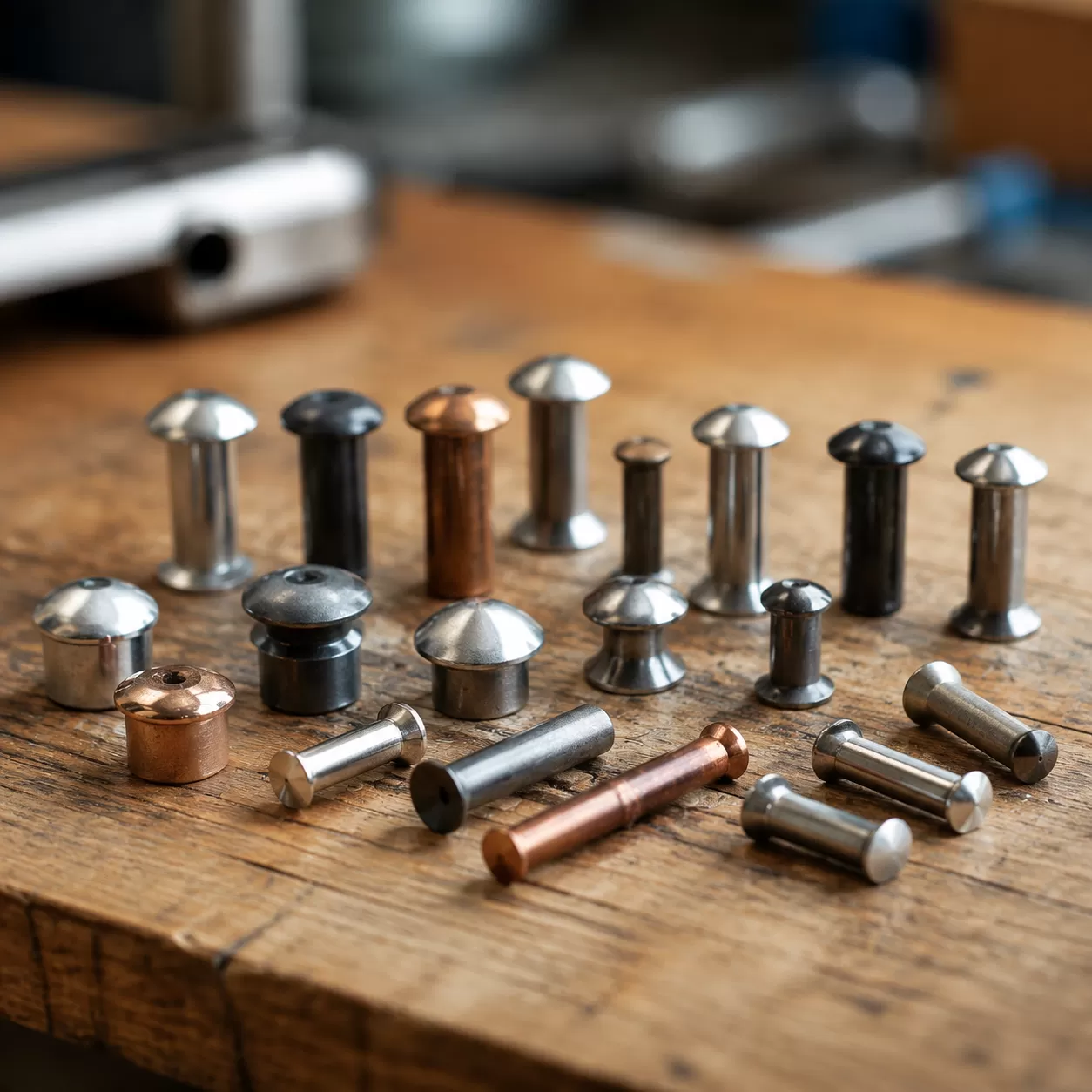
The geometry of a rivet head determines exactly how it seats against your material and handles load distribution. Selecting the right head style ensures the mechanical fasteners align perfectly with your structural and aesthetic requirements.
- Dome / Button Head: The ultimate universal profile for multi-purpose applications. These dome head rivets offer a low-profile, rounded finish with enough surface area to deliver dependable clamping force across standard metal joints.
- Countersunk Head: Engineered specifically for flush finishes and zero-clearance component designs. By seating completely flat within a pre-drilled chamfer, countersunk fasteners eliminate snag points and keep aerodynamic or mechanical surfaces perfectly smooth.
- Large Flange Head: Designed with an oversized surface area to spread clamping pressure safely across soft metals, plastics, or brittle composites. This extra wide footprint prevents the rivet from pulling through or crushing delicate base materials during high-stress operation.
How to Calculate Your Rivet Requirements

Getting the math right before installation prevents joint failure and saves assembly time. When specifying permanent metal fasteners for your project, three critical calculations determine the success of the mechanical bond.
Hole Size Optimization
Exact hole tolerances are non-negotiable. If the drilled hole is too large, the rivet expands prematurely, leading to loose joints or a broken mandrel before the clinch fully forms. If the hole is too small, the rivet shank will not fit, or the protective coating on your sheet metal will scrape off during insertion. Always match your drill bit to the manufacturer’s specified decimal tolerance.
Determining the Precise Grip Range
The grip range specification is the total thickness of the materials you are joining. To ensure a perfect clinch formation, use this foundational formula to select the ideal rivet shank length:
$$text{Minimum Rivet Length} = text{Total Material Thickness} + (1.5 times text{Rivet Shank Diameter})$$
- Under-specifying results in an incomplete shop head that can pull through under stress.
- Over-specifying causes the shank to bend or deform outside the workpieces rather than clamping them together tightly.
Dynamic Load Analysis
A secure joint balances two distinct forces: shear load (sliding forces acting perpendicular to the fastener) and tensile load (pulling forces acting parallel to the fastener).
| Load Type | Risk of Incorrect Calculation | Mitigation Strategy |
|---|---|---|
| Shear Load | Structural rivets slice or deform under side-to-side shifting. | Increase shank diameter or upgrade to stainless steel rivets. |
| Tensile Load | The rivet head pulls straight through thin or soft base materials. | Utilize large flange head styles to distribute clamping pressure. |
When working with components exposed to extreme environments alongside these mechanical stresses, selecting the right base metal is just as crucial. For applications facing intense operating conditions, pairing the correct mechanical layout with top heat resistant metals for high temperature durability ensures the entire assembly maintains its structural integrity over time.
Industrial Rivet Manufacturing and Uncompromising Quality

We do not compromise on the reliability of our rivets. Every batch we manufacture adheres to rigorous IFI, ASME, DIN, and ISO quality benchmarks, ensuring seamless integration into your production lines. From micro-diameters for electronics to heavy-duty structural rivets for heavy industry, our custom engineering capabilities meet your exact specifications.
Our advanced testing protocols include:
- Salt Spray Corrosion Analysis: Testing finishes to ensure maximum survival in harsh environments, crucial for components destined for the marine hardware industry.
- Dimensional Repeatability: Guaranteeing tight tolerances so every fastener fits perfectly.
- Destructive Mechanical Testing: Verifying exact shear and tensile thresholds before any product leaves our facility.
Frequently Asked Questions About Industrial Rivets
Q: How do I prevent galvanic corrosion when riveting dissimilar metals?
Galvanic corrosion happens when two different metals touch in the presence of moisture. To prevent this, always try to match the rivet material to the base metal—such as using aluminum blind rivets on aluminum sheets. If you must join dissimilar metals, use protective coatings, zinc plating, or insert non-conductive washers to isolate the materials and block the electrical path.
Q: What is the primary operational difference between open-end and closed-end blind rivets?
The main difference comes down to seal and moisture resistance. Open-end pop rivets are the standard choice for general assembly where a watertight seal isn’t required. Closed-end blind fasteners feature a unique cup-shaped end that completely retains the mandrel head. This design blocks moisture, liquid, and gas from leaking through the joint under pressure.
Q: Can precisionvast accommodate custom head markings or custom grip lengths for proprietary components?
Yes, we specialize in tailoring mechanical fasteners to your exact production needs. We can manufacture custom grip range specifications, specialized head geometry, and unique head markings for your proprietary builds. To ensure structural integrity before custom rivet production, we utilize advanced quality checks similar to our rigorous steel casting basics to guarantee consistent mechanical performance under dynamic stress.


 English
  German