

Key Drivers Propelling Market Growth
At PrecisionVast, we are witnessing a significant shift in the global manufacturing landscape. The precision casting market isn’t just expanding; it’s evolving to meet the rigorous demands of next-generation engineering. Three primary sectors are fueling this growth, each pushing the boundaries of what investment casting can achieve.
Aerospace & Defense Resurgence
The aerospace sector is back, and the technical requirements are steeper than ever. Modern jet engines and defense systems require components that can withstand extreme thermal stress without failure. We are seeing a massive surge in demand for superalloys like Inconel and Hastelloy, as well as high-strength Titanium.
This isn’t just about pouring metal; it’s about verification. The resurgence relies heavily on advanced Non-destructive testing (NDT). Before a turbine blade leaves our facility, it undergoes rigorous inspection—X-ray and dye penetrant testing—to ensure internal integrity matches the external finish.
Automotive Lightweighting
The electric vehicle (EV) revolution is rewriting the rules of automotive design. Efficiency is king, and weight is the enemy of range. This has forced a transition from traditional heavy iron castings to complex, thin-walled automotive lightweight components.
We are increasingly utilizing stainless steel casting and aluminum alloys to produce parts that are structurally sound yet significantly lighter. By leveraging the lost-wax casting process, we can combine multiple parts into a single, seamless cast, reducing assembly weight and eliminating potential failure points in the chassis and drivetrain.
Medical Device Expansion
The medical sector demands perfection. As the global population ages, the market for orthopedic implants—knees, hips, and spinal components—is exploding. This industry requires bio-compatible materials, primarily Cobalt-Chrome and Titanium, cast with microscopic accuracy.
In this field, dimensional tolerances are non-negotiable. A variance of a few microns can mean the difference between a successful surgery and a recalled product. Our focus here is on achieving near-net-shape consistency that minimizes secondary machining, ensuring that critical medical devices are both safe and cost-effective to manufacture.
Technological Trends Reshaping the Supply Chain
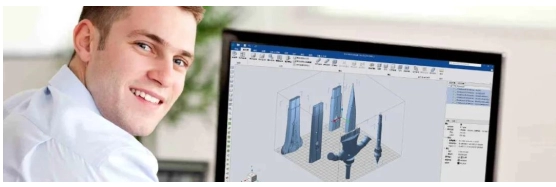
The precision casting market isn’t just about pouring hot metal anymore; it’s about how smart technology is rewriting the rules of the supply chain. We are seeing a massive shift where traditional methods are being augmented by digital tools to improve speed, accuracy, and consistency.
The Drive Toward Sustainable Investment Casting (Green Foundry Trends)
As global industries prioritize ESG (Environmental, Social, and Governance) goals, the precision casting market is actively adopting eco-friendly manufacturing practices. Modern foundries are moving away from energy-intensive legacy systems toward sustainable investment casting.
- Energy-Efficient Melting: We are transitioning to advanced induction furnaces that significantly reduce electricity consumption and minimize carbon footprints during the melting process.
- Material Recycling: From reclaiming ceramic shell materials to reusing premium gating metal and recycling casting wax, modern facilities are creating closed-loop systems that drastically reduce industrial waste. Choosing a supplier committed to green foundry practices not only ensures compliance with stringent international environmental regulations but also supports your own brand’s sustainability targets.
Integration of 3D Printing (Rapid Prototyping)
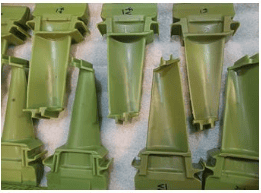
One of the biggest bottlenecks in the traditional investment casting process has always been tooling. Waiting weeks for a metal die to be machined just to test a prototype is a thing of the past. Today, we leverage rapid prototyping technologies like SLA (Stereolithography) and SLS (Selective Laser Sintering) to print wax patterns directly.
This hybrid approach means we can go from a CAD file to a cast metal part in days, not months. It significantly reduces lead times for prototype molds and allows engineers to test complex geometries without committing to expensive hard tooling upfront. It’s a game-changer for industries that need to iterate fast.
Simulation Software (CAE)
Guesswork is expensive in manufacturing. That’s why Computer-Aided Engineering (CAE) simulation software has become a standard in modern foundries. Before we even melt the first ingot, we run simulations to predict how the metal will flow and solidify inside the mold.
This software helps us identify potential defects like shrinkage, porosity, or cold shuts before they happen. By optimizing the gating system virtually, we reduce scrap rates and ensure tighter dimensional tolerances. It’s about predicting defects before casting to reduce waste and cost, ensuring that the final product meets the rigorous standards of sectors like aerospace and medical.
Automation in the Foundry
Consistency is key when you are producing thousands of parts. Manual processes, while skilled, introduce human variability. To combat this, we are seeing a surge in foundry automation.
Robotic arms are now handling the shell building process—dipping wax trees into ceramic slurry with perfect repeatability. Automated dewaxing and pouring systems ensure that every batch receives the exact same treatment. This level of automation not only boosts production capacity but also stabilizes quality, making the supply chain more resilient and reliable for high-volume orders. For a deeper dive into how different methods stack up against these automated processes, it is worth comparing casting techniques like investment casting vs. die casting to see where automation adds the most value.
Market Restraints & Challenges (And How to Mitigate Them)
The precision casting market faces real hurdles that can impact supply chain stability if you don’t choose the right partner. We navigate these challenges daily to ensure consistent delivery and pricing for our US clients.
- Raw Material Price Volatility: The cost of essential elements like Nickel, Chrome, and Steel fluctuates based on global demand. This volatility directly impacts the bottom line for casting projects. To mitigate this, we rely on efficient factory-direct manufacturing and optimized production runs. Whether you are sourcing complex steel casting components or high-temperature superalloys, working directly with the foundry helps stabilize costs compared to using multiple middlemen.
- Environmental Regulations: Stricter controls on foundry emissions are reshaping the industry. Sourcing from non-compliant factories creates a risk of sudden shutdowns. We mitigate this through strict adherence to international standards. As an ISO9001 certified manufacturer, we maintain rigorous process controls—from pickling to surface treatment—ensuring that your supply chain remains uninterrupted and compliant with global environmental standards.
Regional Analysis: The Role of Asia-Pacific
The Manufacturing Hub: Why Asia-Pacific Dominates
When we look at the global precision casting market, Asia-Pacific isn’t just a participant; it is the engine room. Operating directly from Shandong, China, we see firsthand why this region commands the supply chain. It comes down to mature infrastructure and scale. Unlike emerging regions that are still building their foundational capabilities, established hubs here offer an integrated ecosystem.
At Dongying Vast, our facility leverages this regional advantage to deliver an annual output of 700 tons. We aren’t just pouring metal; we have immediate access to raw material suppliers for carbon steel, stainless steel, and superalloys, alongside a skilled workforce of over 200 employees. This density of resources allows us to maintain consistent production schedules that newer markets struggle to match.
The “China Plus One” Context
There is a lot of talk about diversifying supply chains, but China remains the undisputed leader for high-complexity projects. While other nations offer low-cost labor, they often lack the advanced engineering capabilities required for strict quality control. In the precision casting market, the ability to consistently meet specifications is non-negotiable.
We utilize advanced CAE (Computer-Aided Engineering) simulation and comprehensive testing—including X-Ray and CMM—to ensure every part meets international standards. This level of technical maturity is crucial when understanding investment casting tolerances for critical aerospace or medical components. While the “China Plus One” strategy offers options for simple parts, the deep expertise required for complex geometries and “problem parts” keeps the center of gravity firmly in China’s established industrial zones.
Material Selection Guide: Matching Alloys to Industry Demands
Selecting the right material is the cornerstone of a successful casting project. As the precision casting market evolves, understanding material properties is critical for cost-effectiveness and performance:
- Stainless Steel (304, 316, 17-4PH): The backbone of industrial and food-grade components. Known for excellent corrosion resistance and durability, making it ideal for pump housings and marine hardware.
- Titanium Alloys (Ti-6Al-4V): Lightweight yet incredibly strong. This is the material of choice for the aerospace resurgence and critical medical orthopedic implants where biocompatibility is required.
- Superalloys (Inconel, Hastelloy): Engineered for extreme environments. These heat-resistant alloys are non-negotiable for gas turbine blades and high-stress automotive lightweighting applications.
- Carbon Steel: The go-to option for high-strength, heavy-duty mechanical components where cost-efficiency in mass production is a primary consideration.
Sourcing in a Growing Market: What to Look for in a Supplier
Navigating the precision casting market requires more than just finding the lowest bidder; you need a manufacturing partner who understands the engineering behind the metal. As supply chains tighten, the difference between a successful project and a delayed launch often comes down to the reliability of your foundry.
Capacity vs. Flexibility
You shouldn’t have to switch vendors just because your production volume changes. We operate with the agility to handle rapid prototyping (using SLA printing for quick design validation) while maintaining the muscle for large-scale industrial runs. With an annual output of 700 tons and over 200 skilled employees, we bridge the gap between boutique customization and mass manufacturing. A capable supplier must be able to solve “problem parts” and complex geometries without sacrificing speed.
The “One-Stop” Advantage
The biggest bottleneck in this industry is usually the logistics between multiple vendors—one for casting, another for machining, and a third for finishing. A true turnkey solution eliminates that headache. We integrate the entire workflow directly from our factory:
- Mold Design & Casting: Expert lost-wax processes.
- Secondary Operations: In-house CNC machining and mechanical processing.
- Finishing: Heat treatment, pickling, and polishing.
This integrated approach allows us to strictly control the quality of the best materials for investment casting from the initial melt to the final polish, ensuring consistency across every single batch.
Quality Assurance Transparency
In high-stakes sectors like aerospace and medical, trust is built on data, not promises. Transparency is non-negotiable. We provide comprehensive testing reports for every shipment, including CMM (Coordinate Measuring Machine) data, X-Ray inspection, and material analysis. Whether you are sourcing complex stainless steel casting components or standard hardware, ensure your supplier is ISO9001 certified and willing to show their work. If a supplier cannot provide a detailed material certificate or dimensional report, they aren’t ready for the modern market.
Frequently Asked Questions About the Precision Casting Market
Is the precision casting industry growing?
Absolutely. The demand for high-precision metal components is climbing steadily, driven by the resurgence in aerospace and the push for lightweight automotive parts. We are seeing firsthand how the cost-effectiveness of casting in mass production makes it the go-to choice for OEMs needing complex geometries without the waste of traditional machining. As long as industries require durable, tight-tolerance parts, this sector remains a secure and expanding market.
What technologies are shaping the future of casting?
The days of relying solely on manual labor are fading. At our facility, we integrate SLA printing (Rapid Prototyping) to create wax patterns quickly, drastically reducing lead times for new designs. We also utilize CAE (Computer-Aided Engineering) simulation software. This allows us to predict how molten metal will flow and solidify, helping us eliminate potential defects before we even build the shell.
Where are the best regions for sourcing precision parts?
While there are foundries globally, the Asia-Pacific region—specifically China—remains the manufacturing powerhouse. The infrastructure here supports a true “one-stop” solution. For example, our Shandong facility doesn’t just cast parts; we handle CNC machining, heat treatment, and surface polishing all in-house. This consolidation simplifies logistics and ensures stricter quality control compared to fragmented supply chains.
What are the risks in the current market?
The primary challenge is raw material price volatility, particularly with nickel and steel. Fluctuating costs can impact project budgets if not managed correctly. To mitigate this, it is crucial to work with suppliers who have established supply chains and deep metallurgical expertise. Understanding how to navigate these material shifts and source wholesale carbon steel castings effectively is key to maintaining stable pricing and consistent delivery.
Conclusion: Ready to Optimize Your Precision Casting Supply Chain? The precision casting market in 2026 is defined by rapid technological integration, strict quality tolerances, and a demand for agile supply chains. Whether you are developing next-generation aerospace turbines, lightweight EV chassis parts, or life-saving medical devices, your choice of manufacturing partner matters.
At PrecisionVast, we combine the established infrastructure of our Shandong facility with cutting-edge 3D prototyping and CAE simulation. We don’t just supply parts; we engineer solutions.
Contact Our Engineering Team Today for a Custom Quote or DFM (Design for Manufacturability) Review.
 English
  German